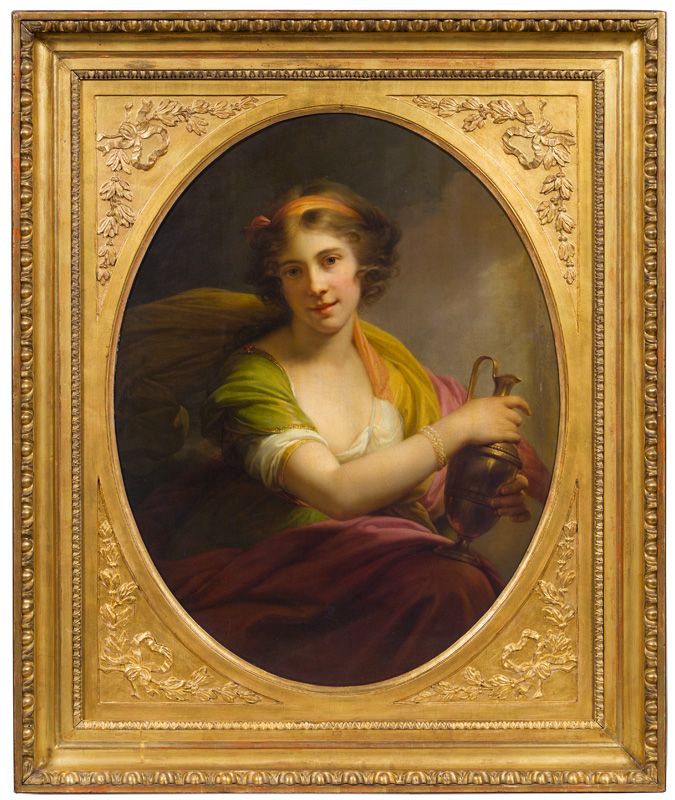
Jan Chrzciciel Lampi (1751 – 1830)

Jan Chrzciciel Lampi. Portrait of Godess Heba

Im Kinsky w Austrii sprzedaje 28 listopada 2013 portret bogini Heby (lot # 62) z wyceną € 15,000 – 30,000.


Öl auf Leinwand, oval; 82 x 62 cm. Rechts auf der Kanne signiert: Lampi pinxit
Provenienz: Sammlung Baron Jean de Bourgoing, Wien; deren Versteigerung Gilhofer & Ranschburg, Wien, 27. Februar 1936, Nr. 153 (Tafel 20); seit mehreren Generationen in österreichischem Privatbesitz
Literatur: Joseph Raymond Fournier-Sarlovèze, Artistes oubliés, Paris 1902 (Johann Baptist Lampi, S. 91-116), S. 105 “Hebe”, Abbildung der Lithographie vom M. Fuchs nach dem Originalgemälde im Besitz des Baron de Bourgoing, Wien

Die junge Dame in unserem Gemälde personifiziert Hebe, die Göttin der Jugend, Tochter des Zeus und der Hera, und Mundschenk der Götter. In einem bezaubernden Porträt, das den jugendlichen Charme der Göttin zeigt, demonstriert Lampi sein malerisches Talent und Können. Reizend lächelnd blickt das Mädchen den Betrachter an. Ihre Wangen schimmern rosig, ihr gelocktes Haar wird von einer zarten Schleife geziert. Das prächtige Perlenarmband und ihr in frischen Farben leuchtendes Gewand unterstreichen weiter die liebliche Anmut des Gemäldes. In den Händen hält die Dargestellte eine goldene Kanne, jenes Gefäß mit dem sie den Göttern Nektar reichen darf. Neben unserem Gemälde mit dem Motiv der Hebe schuf Lampi ein vergleichbares Gemälde desselben Sujets, welches sich heute in der Tretyakov Gallery, Moskau, befindet und ein Bildnis der Prinzessin Ekaterina Fyodorovna Dolgorukova darstellt. (SK)

Johann Baptist Lampi der Ältere wurde 1751 in Romeno in Südtirol geboren. Er lernte sein Handwerk bei dem Maler Franz Xaver König in Salzburg und studierte bei F. N. Streicher. In der Folge ging Lampi nach Verona, wo er bei Francesco und Domenico Lorenzi arbeitete und 1773 in die Akademie aufgenommen wurde. Bis dahin war sein Werk noch vorwiegend von religiösen Darstellungen bestimmt. Die nächsten Jahre seines Schaffens verbrachte er in Trient, wo er unter anderem die Fürstbischöfe und Adelige porträtierte. Innsbruck und Klagenfurt zählten zu weiteren Stationen Lampis, bevor er 1783 nach Wien kam. Dort genoss er Zutritt in die höchsten Kreise und verewigte unter anderem Kaiser Josef II. in mehreren Bildnissen. 1786 wurde Lampi als Professor an die Kunstakademie berufen. 1788 wurde der Künstler vom polnischen König Stanislaus August II. nach Warschau geholt. 1791 folgte schließlich eine Einladung nach Russland an den Zarenhof in St. Petersburg. Die folgenden Jahre sollten sein künstlerisches Oeuvre nachhaltig prägen und durch zahlreiche Porträts der Zarenfamilie und des russischen Adels bereichern. Erst 1796 kehrte Lampi nach Wien zurück, wo er in den Ritterstand erhoben und ein Jahr später zum Ehrenbürger ernannt wurde.
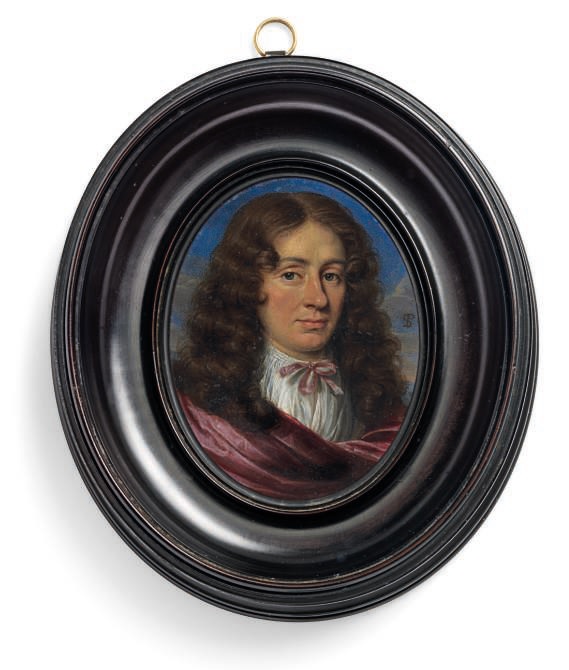
Franciszek Smiadecki (działał ok 1660)

Franciszek Smiadecki. Portrait of a Gentleman

W katalogu Christie’s (UK), wyprzedającej  dnia 20 listopada 2013 kolekcję zmarłego kolekcjonera T. S. Elliota znalazła się praca polskiego miniaturzysty Franciszka Smiadeckiego (lot # 176). Praca sygnowana jest wiązanym monogramem. W UK miniaturzysta ten ceniony jest wysoko.


A gentleman, in white shirt tied with pink ribbon, pink cloak, long curling brown hair; sky background; signed with monogram ‘FS’ (mid-right), oil on copper, oval, 2 3/4 in. (70 mm.) high, black turned wooden frame, engraved on reverse ‘PARR’. Estimate £6,000-8,000

PROVENANCE: With Edwin and Rosalind Bucher, in 1992.

Jacek Malczewski (1854 – 1929)

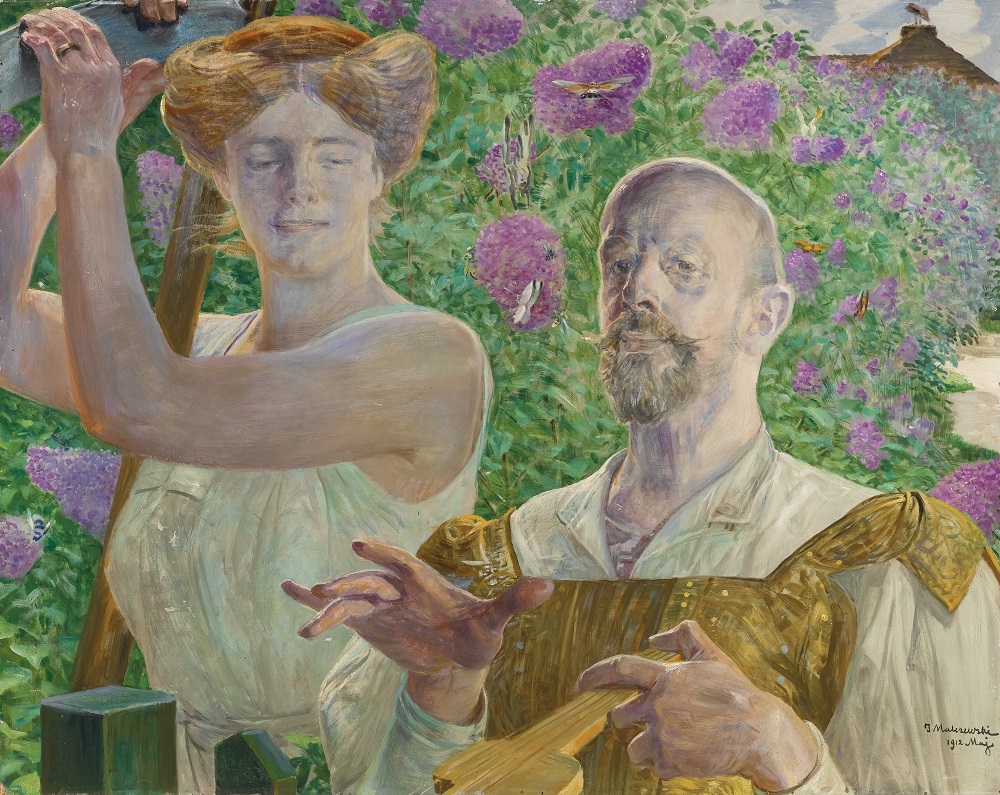
Jacek Malczewski. SELF-PORTRAIT WITH MUSE AND BUDDLEIA, 1912

Symboliczna praca Jacka Malczewskigo z 1912 roku będzie licytowana w londyńskim Sotheby’s (lot # 27) w dniu 20 listopada 2013 roku. Cena szacunkowa, 30,000-50,000 funtów,  jest stosunkowo niska jak na polskie wyceny ale rzetelna jak na rynek poza-polski. Warto zwrócić uwagę na solidną proweniencję. Sprzedano za 128 5000 funtów.


SELF-PORTRAIT WITH MUSE AND BUDDLEIA, signed and dated J Malczewski 1912 Maj lower right, oil on board, 73 by 91.5cm., 28¾ by 36in.

Provenance
In the family of the present owner since 1923
Exhibited
Cleveland, Museum of Art, 1926-29 (on loan)
Detroit, Institute of Art, Polish Paintings: A Loan Exhibition, 1945

Wojciech Fangor (1922)

Wojciech Fangor. E 18, 1966

Jedno z klasycznych ‘wirujących kół‘, cenionych Polsce i na zagranicznych rynkach aukcyjnych. Praca  w niemieckim Villa Grisebach 29 listopada 2013 (lot 709) z wyceną 40,000-60,000 euro. Tytuł „E 18“. Namalowana w 1966 r .

Oil on canvas. 127 x 127 cm ( 50 x 50 in.). Signed, titled and dated in black brush on the reverse: FANGOR E 18 1966. On the stretcher, a label from each of the Galerie Springer, Berlin, and the Dom Galerie, Cologne. Minor margin imperfections. [3381]. Provenienz: Private collection, Southern Germany. Ausstellung: Fangor. Ölbilder. Köln, Dom Galerie, 1966 (according to label on the reverse)

Tadeusz Kuntze (Konicz, Tadeo Polacco) (1727 – 1793)

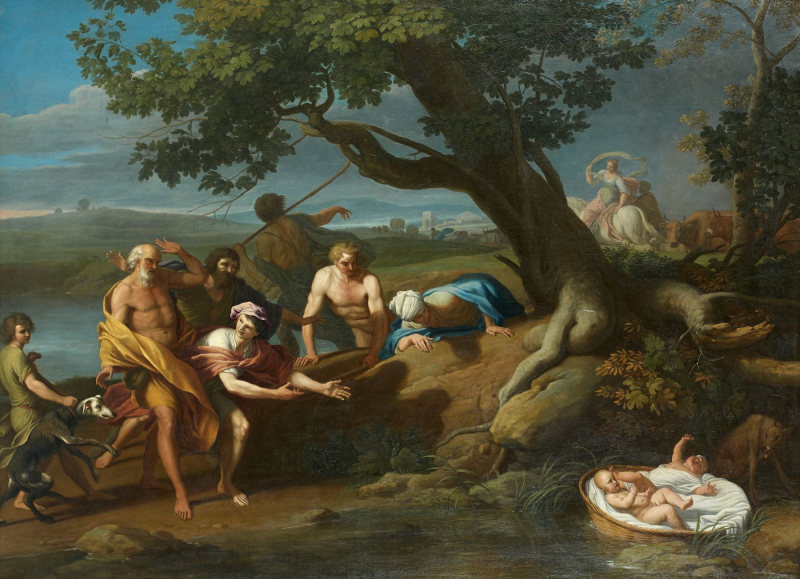
Tadeusz Kuntze. Pasterz Faustulus znajduje Romulusa i Remusa

Francuski Artcurial wystawił 13 października 2013 r. płótno Tadeusza Kuntze ‘Pasterz Faustulus znajduje Romulusa i Remusa‘ (99 x 136 cm, lot # 65). Olej wyceniony na 10,000-15,000 euro ma niebywałą proweniencję. Pracę sprzedano za 11,691 euro.

Provenance :
Ancienne collection du Comte Szembek, château de Siemianice, Pologne (1845-1896) ;
Ancienne collection de la Comtesse Jadwiga Szeptycka (après 1896) ;
En dépôt au Musée National de Varsovie (Musée Narodowe), son numéro d’inventaire au dos : ‘181863’ ;
Collection particulière, Pologne, après 1964

Commentaire :
Originaire de Pologne, Tadeusz. Kuntze s’installa à Rome à partir de 1754, où il étudia à l’Académie de Saint-Luc ainsi que dans l’atelier du sculpteur Francisco Bergara. Selon le Dr. Monika Ochnio, notre tableau aurait été peint vers 1754, lors de cette première année romaine.
Elle le rapproche de deux compositions allégoriques de l’artiste, ‘L’Art’ et ‘La Fortune’, datées de la même année et conservées au musée national de Varsovie.
Le peintre était apparenté à la famille Szeptycki, qui fut en possession de notre tableau à la fin du XIXe siècle.
Nous remercions le Dr. Monika Ochnio, ainsi qu’Aneta Bialy, spécialiste de Kuntze au Musée National de Varsovie, d’avoir confirmé l’attribution de cette œuvre d’après une photographie.
Nous remercions le Pr. Giancarlo Sestieri, qui a également identifié le tableau comme une œuvre de Konicz.

Henryk Stażewski (1894 – 1988)

Henryk Stażewski. Untitled, 1961

W katalogu amerykańskiego  Los Angeles Modern Auctions pojawiła się praca Henryka Stażewskiego (lot 203).  Cena szacunkowa $10,000 – 15,000. Aukcja dnia 13 października 2013.

Cymes dla kolekcjonera polskiego współczesnego malarstwa.

Label

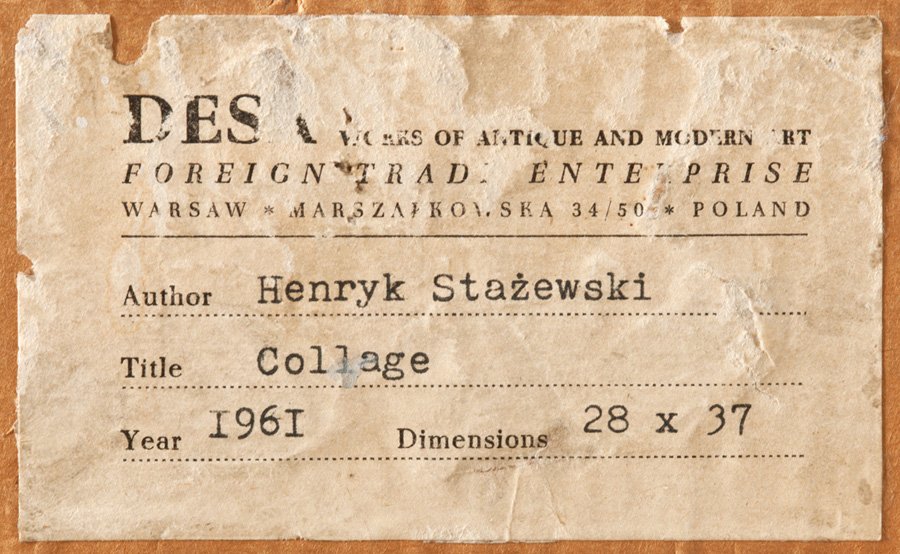
Henryk Stażewski. Untitled, 1961. Painted paper on hardboard relief. Retains DESA Unicum Gallery label verso; retains paper label with printed inventory number “F2003-132 (Stazewski-1)”. Image: 11″ x 14.25″; Frame: 17″ x 20.5″. Provenance: Richard Gray Gallery, Chicago; Private Collection, Chicago (acquired directly from the above, 1963); Thence by descent
Illustrated: Wei, Lilly. Works on Paper: The Natalie and Irving Forman Collection. Buffalo: Albright-Knox Art Gallery, 2008. pp 78-79.
Exhibited: “Works on Paper: The Natalie and Irving Forman Collection,” Albright-Knox Art Gallery, Buffalo, August 15-November 30, 2008

Estimate: $10000 – $15000

MORE INFORMATION:

Although he was in his early sixties, 1957 marked the beginning of a new age for the Polish artist and art theorist Henryk Stazewski (1894-1988). In that year, he was featured in the monumental “Précurseurs de l’art abstrait en Pologne,” the first post-war exhibition to include Polish Constructivist and Avant-garde works, at Galerie Denise René in Paris. He showed alongside artists and friends including Kazimir Malevich and Wladyslaw Strzeminski. Leading up to this point, Henryk had been forgotten for years. Most of his paintings had been destroyed during the World War II bombings of Warsaw. The Nazi and Soviet invasions of Poland in 1939 threw Henryk into a state of shock. He no longer cared to explore his thoughts on the principles of color and shape, as he often did when he was co-editor for the radical and avant-garde magazine Blok which he helped organize in 1924. It was not until the late 1950s that Stazewski experienced his awakening. At a frenzied pace, Stazewski began work on a series of abstract and geometric reliefs. In the first issue of Praesens (1926), another quarterly where the artist served as editor, Stazewski writes, “The rapprochement between painting and architecture has been brought about by a new awareness of the inseparable nature of space, colour, and matter. The impact which colour exerts on shapes in the sense of being able to alter their dimensions, creates a whole new treasury of architectural instruments…these are the main foundations on which the great style of modern art is being built…”

Tied to his powerful manifestos from the mid-1920s, Untitled (Collage) from 1961 is a miraculous three-dimensional work that not only illustrates but also validates his words. Razor-thin lines of white and black paint are meticulously applied to barrel-like shapes mounted to a rectangular board replete with lines shooting across vertical, horizontal, and diagonal axes. If one looks closely, the lines appear to swell, throb, and twist with the shift of an eye. A stationary and nonrepresentational image becomes animated and vivid when the opposing lines of the backboard meet the forms placed at the center. Like the works of the De Stijl movement’s architect, Theo van Doesburg, Stazewski’s collage promotes the idea that modern art need not be symmetrical, and that color is an organic form of expression which possesses the distinct ability to distort and alter forms when applied. Similar relief works from this critical period in the artist’s career reside in the permanent collections of major institutions such as the Brooklyn Museum and the Tate Gallery.

Obraz sprzedano za $21,000.

Katarzyna Kobro (1898 – 1951)

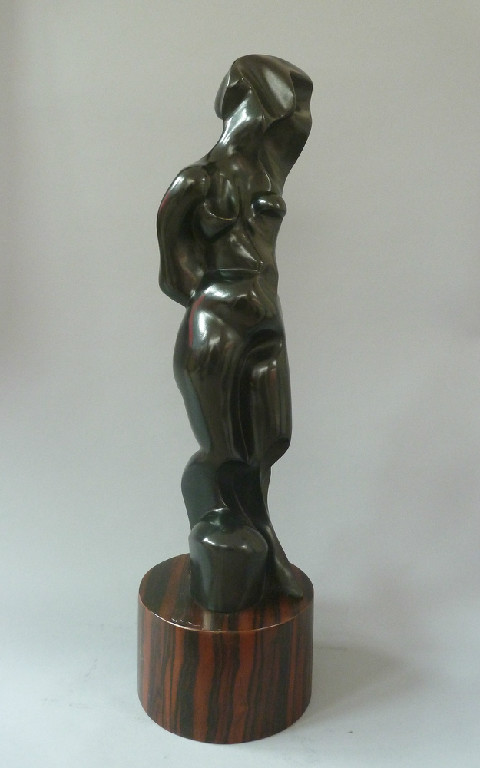
Katarzyna Kobro. Nu debout,1948

Akt stojący Katarzyny Kobro na aukcji 28 września 2013 w belgijskim domu Louiza z wyceną 20,000-25,000 € (lot #141). Praca pochodzi z ostatniego, tragicznego, okresu życia artystki i jest francuskim odlewem z 1948 roku. Póżniejsze odlewy tej rzeżby z roku 1989, z zachowanego gipsowgo modelu, były dwukrotnie sprzedane na aukcjach w Rempexie w 2009 i 2010 roku w przedziale 210,000 i 270,000  złotych (być może był to ten sam egemplarz).

Niezwykła rzeźba niezwykłej artystki, niebywała okazja.


Katarzyna KOBRO (Moscou, 1898 – Lodz, 1951) Nu debout,1948. Bronze à patine noire, signé “Kobro” sur la base. Porte le cachet du fondeur Tillo VALSUANI. Hauteur: 47,3 cm. Provenance : Galerie Franka Berndt, Paris Collection particulière, Paris 20.000/25.000 €

Jerzy Tchórzewski (1928 – 1999)

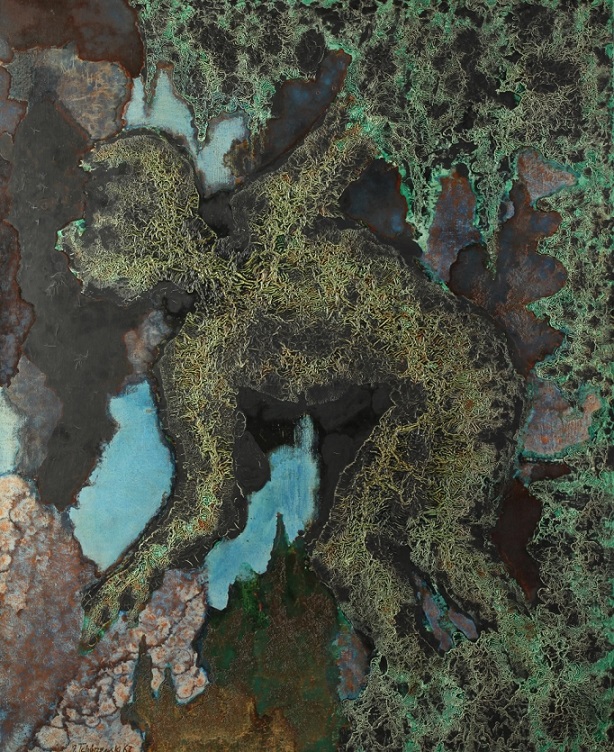
Jerzy Tchórzewski. Man in Space, 1967

Amerykański Sloan’s and Kenyon wystawił w dniu 21 września 2013 duże płótno autorstwa Jerzego Tchórzewskiego z 1967 roku z ceną szacunkową $5,000-7,000 (lot 1276).

CZEOWIEK PRZESTRZEN, (MAN IN SPACE), signed and dated ’67 lower left, also signed, dated and titled on verso. Oil on canvas – Framed, 63 in. x 51 in.

Prawie bez walki licytacyjnej, obraz został sprzedany za $16,000. Praca ta była wystawiana na XXIV Biennale Sztuki Międzynarodowej w Wencji w roku 1968.

Warto w tym momencie zastanowić się ile ta praca będzie warta w Polsce. Wskażnikiem mogą byc sprzedaże dwoch prac tego autora o podobnych wymiarach z tej samej serii Postaci.

Jedną z nich, Postać w płonącym krajobrazie z roku 1968 została sprzedana w 2008 roku w Agrze-Art za 150,000 złotych (ok $68,000):

Jerzy Tchórzewski. Postać w płonącym krajobrazie, 1968

Drugą z prac, Postać  z 1968r, sprzedano w 2002 roku (Polski Dom Aukcyjny Sztuka) za 107,000 złotych.

Jerzy Tchórzewski. Postać, 1968

Na marginiesie, narzuca się oczywista uwaga, że polskie malarstwo (z nielicznymi wyjątkami) nie zdobyło rynków światowych a jedynym rynkiem jest Polska. Druga uwaga to ta, że warto szukać poloników poza Polska i dobrze na nich zarobić w kraju, choć moim zdaniem lepiej je kolekcjonować.

Walery Płauszewski (1833 -1908)

Walery Płauszewski. POLNISCHES PAAR IN KRAKAUER TRACHT, 1899

Na niemieckim rynku antykwarycznym, raz na 2-3 lata, pojawia się praca Walerego Płauszewskiego przedstawiająca parę wieśniaków w ludowych strojach. Ostatnio, praca ta pojawila sie w firmie Hampel w Monachium na aukcji 20 września 2013 (lot 1343) z wyceną 1,000-1,500 euro:

Walery Plauszewsky, 1833 “” 1908 POLNISCHES PAAR IN KRAKAUER TRACHT Öl auf Holz. 35 x 24 cm. Rechts unten signiert und datiert “W. Plauszewski 1899”. Gerahmt. Das Paar im Freien vor einer teils nicht mehr verputzten Ziegelmauer stehend. Der Mann mit Schnauzbart, die Hände an den Gürtel gelegt. Die Frau links leicht hinter ihm mit einem Korb unter dem Arm und der anderen Hand in überraschter Geste an die Wange gelegt.

Jest to ta sama praca jaka była wystawiona w 2002 roku w Polsce w domu aukcyjnym Altus (26 września 2002, lot # 53) i sprzedana za 5,500 złotych.

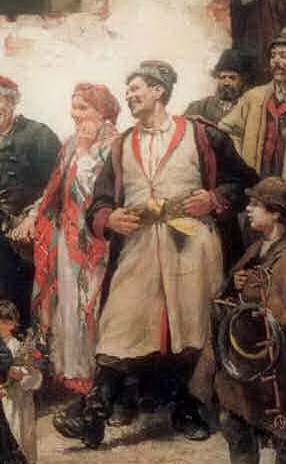
Ciekawe jest to, że praca Płauszewskiego nie jest aż tak pracą oryginalną tematycznie.  Jest to kopia fragmentu dużego obrazu Wincentego Wodzinowskiego Na swojską nutę (1889, olej na płótnie, 151 x 247 cm), własność Muzeum Narodowego w Krakowie.  O tym fakcie żaden z domów aukcyjnych  nie pisze i nie pisał, może z braku informacji lub celowo by uzyskać dobrą cenę za pracę tego malarza.

Wincenty Wodzinowski. Na swojską nutę, 1889

Powiększenie centralnego fragmentu dwóch postaci z obrazu Wodzinowskiego  i ich  ‘wycięcie’  pozwala skupić sie na znanym nam, z pracy Płauszewskiego, motywie. Porównanie jest jednoznaczne.

Wincenty Wodzinowski.Na swojską nutę, 1889 (powiększenie fragmentu)

Warto zauważyć, że Płauszewski miał już 66 lat w roku powstania tej kopii (1899) . Czy miał tak dobre oczy by namalować tę prace z takimi detalami? Gdzie ją kopiował? Może to jest póżniejsza praca innego malarza? Nie znam niestety twórczości Płauszewskiego by mieć materiał porównawczy. Dobry historyk sztuki wątpliwości moje w mig rozwieje.

Notatka biograficzna o Walerym Płauszewskim podana jest na stronach polskiego forum sztuki artinfo.pl:

Walery Płauszewski (Plauszewski), syn emigranta 1831 pochodzącego z Podola, Piotra, naukę rozpoczął w Szkole Polskiej w Paryżu w 1842 roku. Przerwał uczęszczanie do szkoły i wybrał się w drogę do Polski z zamiarem przystąpienia do Powstania Wielkopolskiego. Zawrócony przez rodzinę kontynuował naukę do roku 1851. W szkole otrzymał nagrodę za rysunek i pejzaż w roku 1849/1850. Po skończeniu szkoły zajmował się projektami haftów i tkanin. Był nauczycielem rysunku w Szkole Polskiej. Żywo angażował się w życie emigracji polskiej w Paryżu. Brat Walerego Płauszewskiego, Piotr (1845-1910) był fotografem i rysownikiem, jego syn, Ludwik również wykazywał uzdolnienia artystyczne, był studentem szkoły sztuk plastycznych w Paryżu; zginął w czasie I wojny światowej, w 1914 roku.
Walery Płauszewski kopiował dzieła z Luwru. Jedną z jego kopii malarskich Galeria Apollina zakupiła w roku 1875 rządowa komisja sztuk pięknych. Jednak głównie malował portrety. Dwa portrety jego pędzla znajdują się w zbiorach Muzeum Zamoyskich w Kozłówce, o innym portrecie, w zbiorach rapperswilskich, ukazującym generała J. Dwernickiego, istnieje informacja z roku 1928.

Aleksander Gierymski (1850 – 1901)

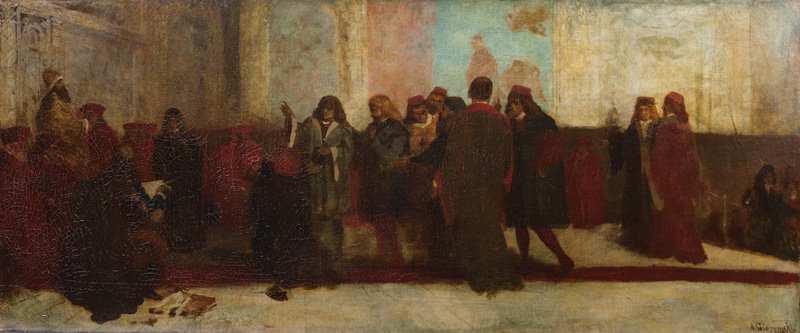
Aleksander Gierymski. The Merchant of Venice

27 września 2013 niemiecki Auktionhaus Stahl wystawił pracę Aleksandra Gierymskiego “Kupiec wenecki”. Nie jest to praca skradziona przez Niemców w czasie II wojny światowej a jedynie druga ze znanych wersji szkicowych (modello).

Lot-Nr. 419. Gierymski, Alexander. (Warschau 1850 – Rom 1901). The Merchant of Venice

Ca. 1872/73, oil/canvas, 47 x 116 cm, lo. ri. sign. A. Gierymski, some rest., unframed. – Prov.: Bought by the great-grandfather of of the consigner in Munich in the late 19th cent. – It’s a study for G.s lost early masterpiece depicting the court scene from Shakespeares ‘Merchant of Venice’. – Polish history, figure a. landscape painter, younger brother of Maximilian G., 1868-72 he studied at the Munich academy, among others under K. von Piloty, a. was awarded a gold medal for his complementary work ‘The merchant of Venice’. 1873-79 he mainly lived a. worked in Rome. Thereafter he moved to Warsaw, but as recognition by the public failed to appear he left Poland a. lived in Germany, France a. Italy. G. is considered to be one of the most important polish artists. Starting from academic tradition he developed a naturalism which wasn’t understood by his contemporaries. Guided by his interest for light a. colour he later painted in a quasi impressionist manner. – Mus.: Warsaw (Nat. Mus.), Cracow, Wroclaw a. others. – Lit.: Saur, Thieme-Becker, Bénézit a. others. Reserve price: € 5.000,00. Pracę sprzedano za 110,000 euro.


Znany jest drugi szkic do “Kupca weneckiego” z 1872 roku, znajdujący się w prywatnej kolekcji:


Praca ukradziona w czasie ostatniej wojny należała do Kazimierza Moritza z Łodzi. Poniżej,  zachowana jej fotografia:

Scena z sądu “Kupca weneckiego”, 1873. 91×230 cm, olej na płótnie.