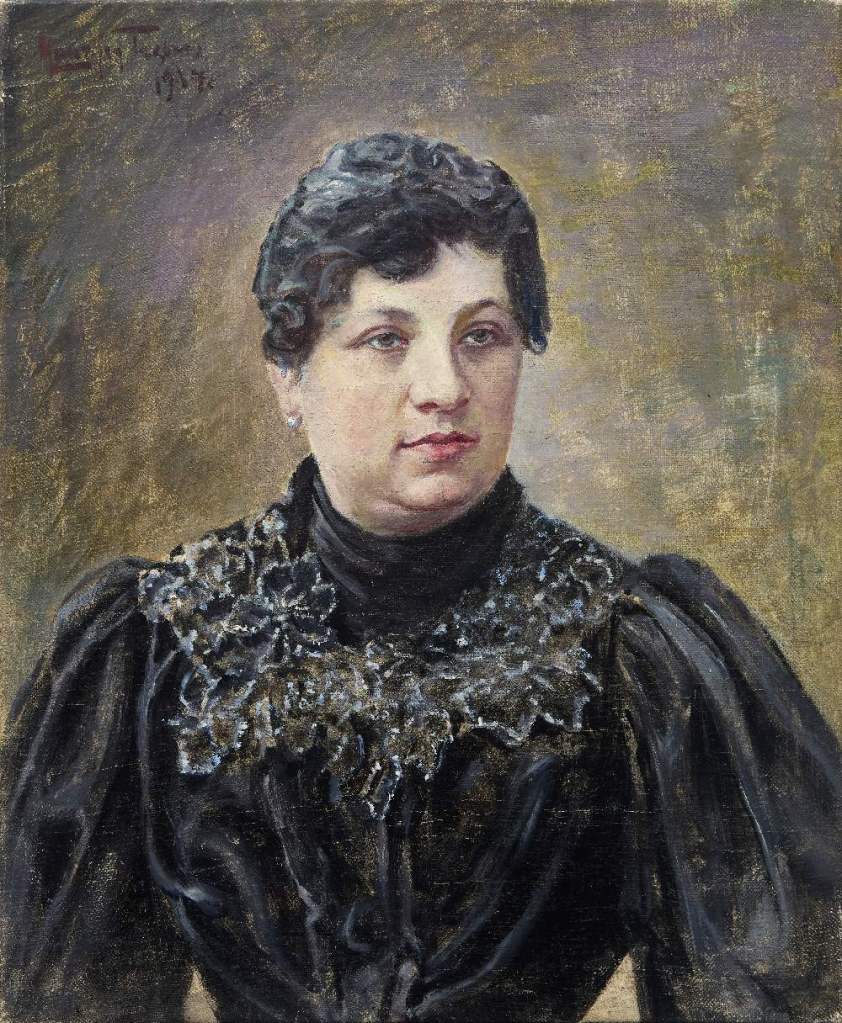
Lot 333. Maurycy Trębacz, Polish 1861-1941- Portrait of a lady, bust-length, wearing a black dress with white lace; oil on canvas, signed and indistinctly dated ‘Maurycy Trębacz / 1917[?]’ (upper left), 63.4 x 52.1 cm. (unframed). Estimate £700 – 900. Roseberys. 11/11/26
Maurycy Trębacz miał w dorobku prace, o których pisano szeroko i z uznaniem. Był malarzem o wyraźnej, rozpoznawalnej ręce. Tym bardziej uderza, jak niewiele z tej indywidualności zostało w portrecie kobiety w dojrzałym wieku z aukcji w UK. To obraz słaby, i trzeba to wprost powiedzieć.
Modelka pozuje sztywno, frontalnie, z twarzą wygładzoną niemal do maski. Karnacja jest woskowa, spojrzenie puste, a w ustach i oczach nie ma psychologicznego napięcia, które ożywia dobry portret. Jedynym fragmentem, w którym czuć dawną sprawność pędzla, jest koronkowy kołnierz: gęsty, migotliwy, malowany śmiało i z wyczuciem materii. Reszta to ciemna, ciężka masa sukni i brunatne, niewiele mówiące tło. Wszystko wskazuje na zamówienie od zamożnej mieszczanki, która chciała przede wszystkim mieć na ścianie reprezentacyjny wizerunek, a nie malarskie wyzwanie. Artysta, jak wielu jemu współczesnych, spełnił zlecenie i nie więcej, kto wie może nawet kobietę upiększył.
Takie prace często mówią więcej o warunkach życia malarza w okresie I wojny światowej niż o jego talencie. Trębacz był artystą, który musiał żyć z pędzla, a rynek portretu mieszczańskiego dawał pewny, choć mało ambitny zarobek. Dlatego ten obraz warto traktować raczej jako świadectwo rzemiosła i epoki niż jako reprezentatywną realizację jego możliwości.
Los malarza był tragiczny. Trębacz zmarł z głodu w getcie łódzkim w 1941 roku, a jego śmierć obciąża niemieckich barbarzyńców.
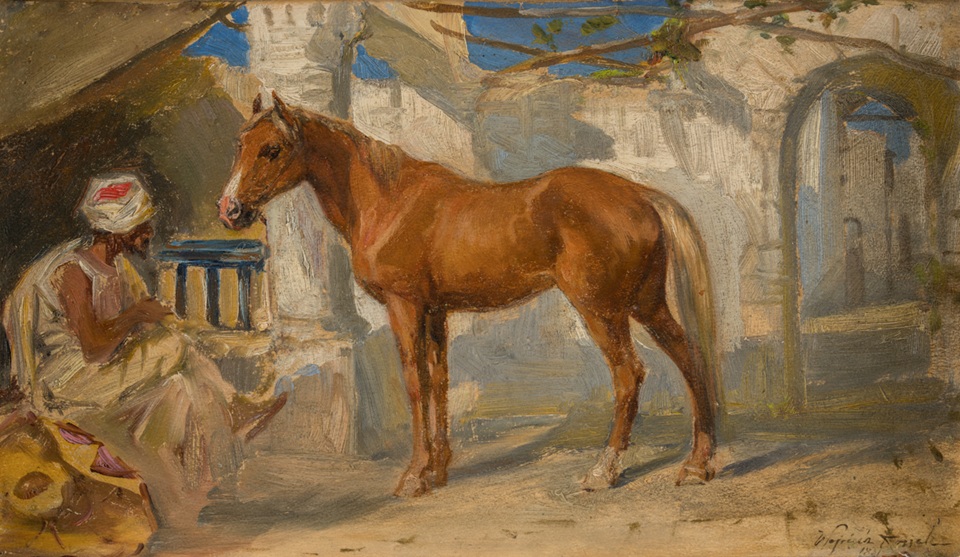
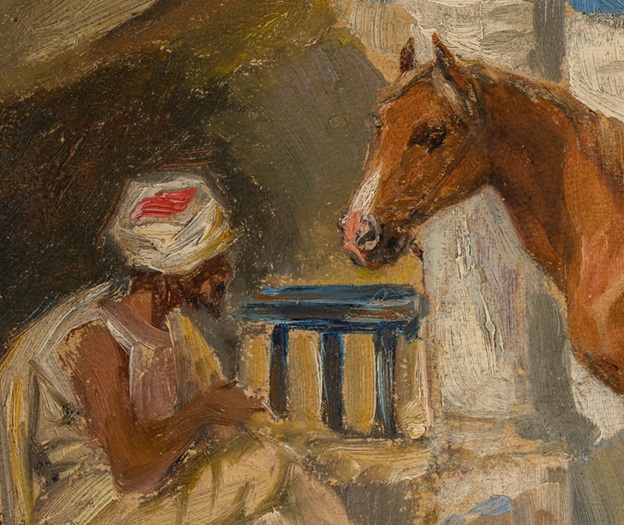
Lot 1866. Kossak, Wojciech von 1857 Paris – 1942 Krakau Araber mit Pferd. Signiert. Öl/Papier/Malk., 22 x 38 cm. Starting €800. Dusseldorfer Auktionshaus. 11/26-28/26
Otrzymałem w ostatnich dniach kilka listów dotyczących niemieckiego domu aukcyjnego Dusseldorfer Auktionshaus. W jedych z nich korespondencji pytają generalnie co myślę o tym domu aukcyjnym zaś w innych dopytują konkretnie o prace zawarte w bieżącym listopadowym katalogu.
Od wielu lat przeglądam katalogi tej firmy i zdarzało się, że moi znajomi kupowali w nim drobiazgi, jak również ja chyba w dalekiej przeszłości coś u nich mogłem kupić.
Pierwsza rzecz jak narzuca się to niskie ceny wyjściowe obiektów tam wystawianych. Oceniam to jako chwyt marketingowy by przyciągnąć jak najwięcej zainteresowanych, liczących na okazyjny zakup. Większość małych firm ma swoje podejście pod kątem cen wyjściowych i wycen. Moim zdaniem, w przypadku typowych prac, najlepszym podejściem jest wycena odzwierciedlająca ceny rynkowe z ostatnich kilku lat. To jednak wymaga sporej pracy i wiedzy ze strony pracowników. Dusseldorfer wybrał opcję niskich cen i w dodatku (chyba) bez cen rezerwowych. Przy takim podejściu łatwo jest ukryć zepsuty towar licząc na zaintesowanie mało zorientowanych klientów. Czy widziałem i czy widzę falsyfikaty w katalogach tej firmy? Oceniam subiektywnie, że były i są. Jest to oczywiste bo nie ma firm zagranicznych czy też firm polskich w których falsyfikaty by się nie pojawiały.
Czy pracownicy Dusseldorfer Auktionshaus przykładają się do swojej pracy by rozwiać wątpliwości klientów w kwestii autentyczności? Wydaje mi sie, że nie. Znam wiele przykładów o lakonicznym zbywaniu pytań. Jedne z czytelników napisał mi kilka dni temu:
„(…) moja historia jest bardzo krótka … zadałem im kilka pytań o konkretny obiekt co skończyło się zablokowaniem mojego konta…kiedy do nich zadzwoniłem … zdenerwowany jegomość powiedział mi że są domem z wieletnim doświadczenie i że jak piszą że autorem jest ten i ten autor to tak jest… a skoro mam wątpliwości to niech zrezygnuje z udziału w aukcji( trudno zrezygnować kiedy ma się już zablokowane konto!).(…)”
Gwoli sprawiedliwości, pytania o dodatkowe fotografie są zwykle dość dobrze tam spełniane a kwestia oceny autentyczności to odpowiedzialność, moim zdaniem, również kupującego. Inna rzecz, gdy po zakupie i dostarczeniu pracy do domu, klient stwierdza, że kupił ordynarny falsyfikat a mając potwierdzenie znanego w Polsce eksperta domaga się stamtąd zwrotu pieniędzy. Dość ciekawy przypadek na tym tle był niedawno (chyba mniej jak rok temu) przedmiotem sporu sądowego w Niemczech pomiędzy polskim klientem a Dusseldorfer Auktionshaus. Sąd niemiecki podjął decyzję (jest zaskarżalna lecz nie wiem czy doszło do jej zakarżenia), że dom aukcyjny jest jedynie pośrednikiem pomiędzy sprzedającym a kupującym i nie musi znać się czy dany obiekt jest autentyczny czy też nie. Taka interpretacja otwiera szerokie drzwi innym niemieckim domom aukcyjnm. A co będzie, gdy polskie domy dowiedzą się o takiej interpretacji prawa i spróbują przenieść na polskie tereny?
Myślę, że Dusseldorfer Auktionshaus został uznany za ‘łatwy’ dom aukcyjny dla polskich hanlarzy fałszerstwami i prace tego typu były i są im dostarczane z polskich terenów. Inna sprawa, że Dusseldorfer na taką politykę chyba się zgadza, czerpiąc zyski ze sprzedaży i macha na resztę ogonem.
Jak sytuacja przedstawia sie w obecnym, listopadowym katalogu? Wydaje mi się, że bardzo podobnie do poprzednich.
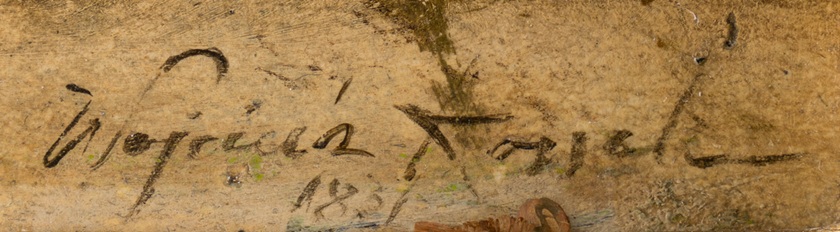
Obraz Wojciecha Kossaka, przedstawiony na górze tego postu, pewnie jest falsyfikatem, choć w katalogu przypisano go temu malarzowi. Bardzo intesujące jest nieoczekiwane datowane tej pracy na rok 1831. Taka pomyłka u Wojciecha?
Duża niestaranność u fałszerza, abstrahując od niepodobnego do Wojciecha pędzla. Jednak ten obraz wisi w katalogu i założę się, że znajdzie się na niego kupiec bo teraz chyba wydano nakaz w Polsce, że w każdym domu musi wisieć ‘Kossak’, zwłaszcza Wojciech lub Jerzy. Ci zaś nadal dwoją się troją by podołać zamówieniom.
Na marginesie fatalnych pomyłek fałszerzy przypomina mi się sytuacja pojawienia sie ok 20 lat temu w katalogu Bonhams dużej akwareli Juliana Fałata przedstawiającej zimową scenę z polowania. Praca była niezła, brakowało jej proweniencji. Udało mi się przekonać Bonhams do wycofania pracy po wyjaśnieniu, że słowo „Nieświesz” występujące obok sygnatury winno być zapisane jako „Nieśwież”.
Patrząc na obecny katalog Dusseldorfer pod kątem poloników krzywią mi się czasami oczy. Warto uczulić potencjalnych kupujących, że potrzebna jest bardzo krytyczna kwerenda. Mamy tę przewagę nad każdym domem aukcyjnym, że nie musimy u nich niczego kupić. Fuksy na rynku zdarzają się ale bardzo rzadko. W większości przypadków obiekt wyglądający na ‘okazję’ okazuje się pomyłką. Jeśli jednak doszło do zakupu i koszty były nieduże (dla jednego małe dla drugiego duże) to na takiej pomyłce można się czegośc nauczyć i wykorzystać utratę pieniędzy by nie powtórzyć błędu w przyszłości.
Generalnie radzę przeglądać katalogi firmy Dusseldorfer Auktionshaus, lecz z wielką nieufnością. Zawsze trzeba odsiewać ziarna od plewów.
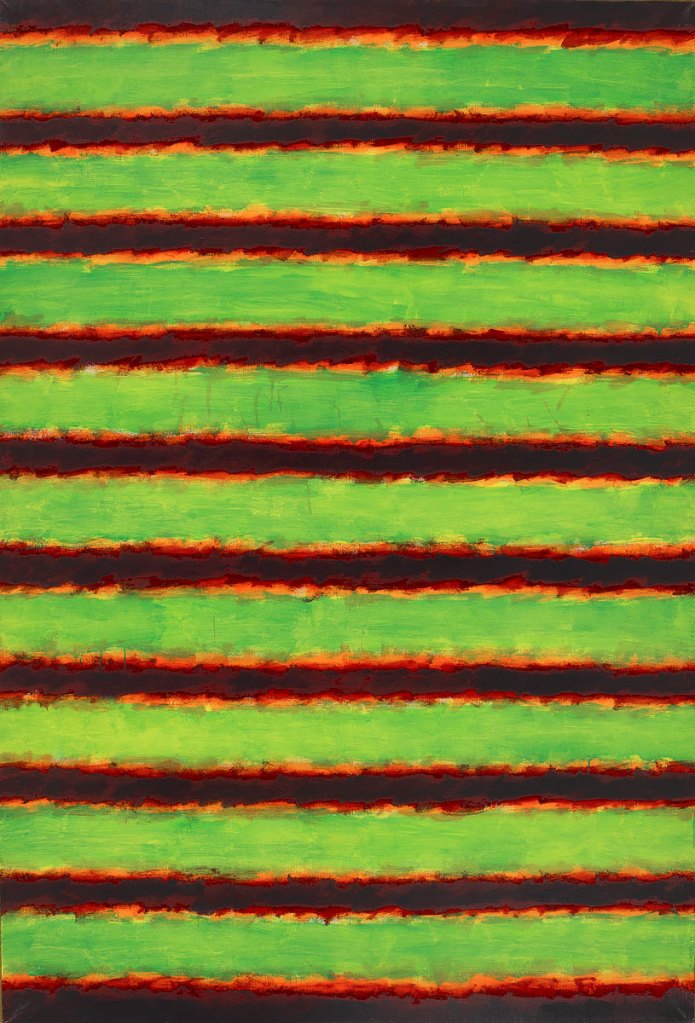
Lot 286. Tarasewicz, Leon (Walily 1957 – lebt in Walily); o.T. (Blumenfelder). Acryl auf Leinwand. 1995. 190 x 130 cm. Verso signiert u. datiert sowie von fremder Hand mit “WKZ-5333/13/98” bezeichnet. Estimate €12,000. Dr. Lehr. 10/24/26
Ja nie mam nic przeciw malowaniu kolorowych pasków na płótnie oraz bardzo szanuję malujących w tak wielkim natchnieniu twórczym. Można te prace wyceniać jak się komu podoba i sprzedawać w dowolnym miejscu na świecie. Muzy, które dawniej prowadziły rękę artysty były biedne i często głodowały no i powymierały. Te obecne obżerają się kiełbasami. Ciekawi mnie motywacja kupujących.
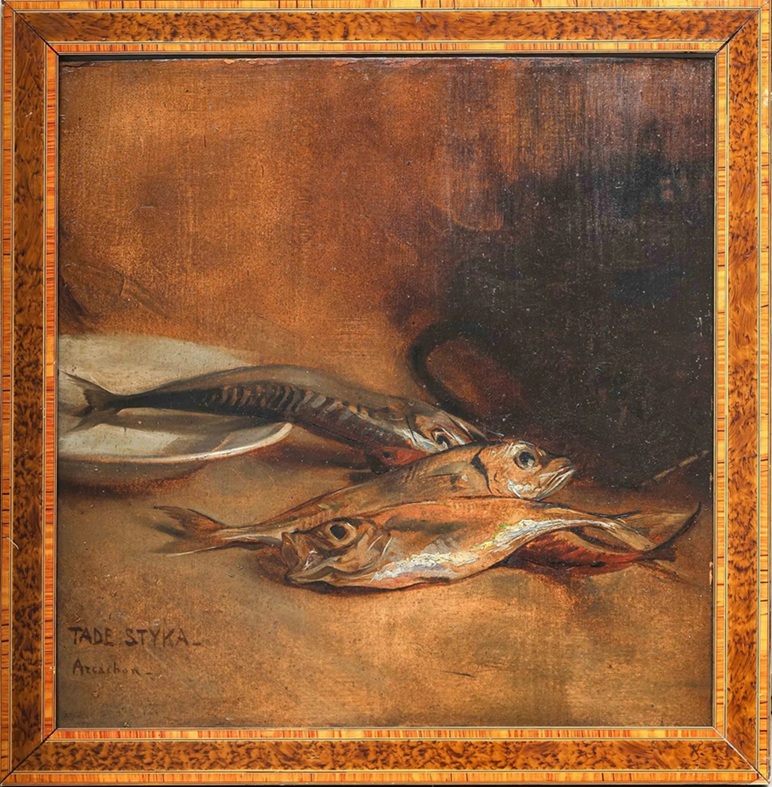
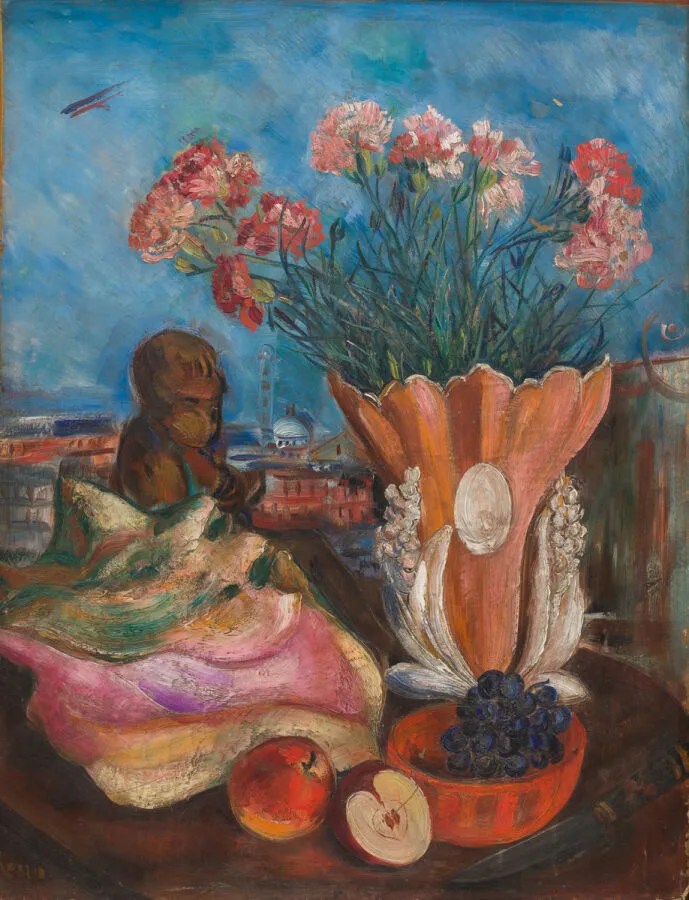
Tadeusz (Tade) Styka. Still Life with Herring, Mackerel, and Red Mullet
Lot 593. Tadeusz STYKA (1889–1954). Still Life with Herring, Mackerel, and Red Mullet. Oil on cardboard Signed and dated “Archachon” in the lower left corner 47 x 46.5 cm. Estimate €1,000 – 1.500. Cannes Encheres. 10/23/26. Sold €2,500
Martwa natura Tadeusza Styki, przedstawiająca śledzie, makrele i barwenki, wyróżnia się na tle jego twórczości portretowej kameralnym surowym ujęciem tematu. Sygnatura z nazwą Arcachon wskazuje na francuskie miasto nad Zatoką Biskajską, związane z rybołówstwem i tradycją nadmorską. Wybór ryb jako motywu można więc odczytać jako bezpośrednie nawiązanie do lokalnego otoczenia, a nie jedynie akademickie studium martwej natury. Oczekiwania kolekcjonerów w stosunku do prac Tadeusza Styki są jednak dużo wyższe i dlatego obraz ten tak nisko został sprzedany.
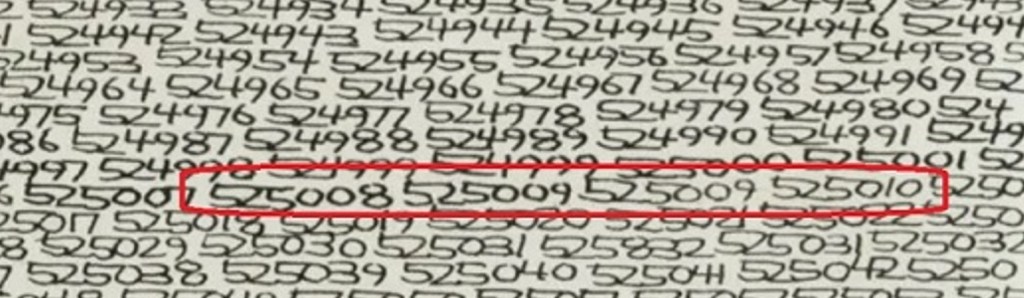
Lot 508. Roman Opałka (1931-2011). OPALKA 1965⁄1 – ∞ Détail 105689 – 123294. Carte de voyage, inscrit ‘ROMAN OPAŁKA / von Ciklus ,,Beschreibung der Wel” / 105689-123294’ (sur une étiquette au dos), encre sur papier, 80 x 60 cm. Appartient à un processus artistique lancé en 1965. Provenance: Galerie Krinzinger, Innsbruck, Acquis auprès de celle-ci par le propriétaire actuel en 1993. Exhibited: Stuttgart, Staatsgalerie Stuttgart, Magie der Zahl in der Kunst des 20. Jahrhunderts, février-mai 1997, p. 268, No. 7. 45 (illustré au catalogue d’exposition p. 176). Further details: Cette œuvre sera incluse sous le n° De 6 dans le catalogue caisonné de Roman Opałka établi par Michel Baudson et qui sera publié par Rainer Michael Mason, que nous remercions pour les informations fournies. Estimate 50,000 – 70,000. Christe’s. 10/23/26. Sold €120,000
Dla jednych Prace liczone Romana Opałki to Mount Everest sztuki a dla drugich jest to Rów Mariański. Kiedyś, śledziłem te z mozołem malowane na płótnie liczby i… przypadkowo dopatrzyłem sie pomyłki Mistrza. Nie wiem na ile taka pomyłka wpływa na wartość stworzonej pracy bo pewnie oprócz mnie nikt tego ciągu liczb nie sledził i nie będzie śledził.
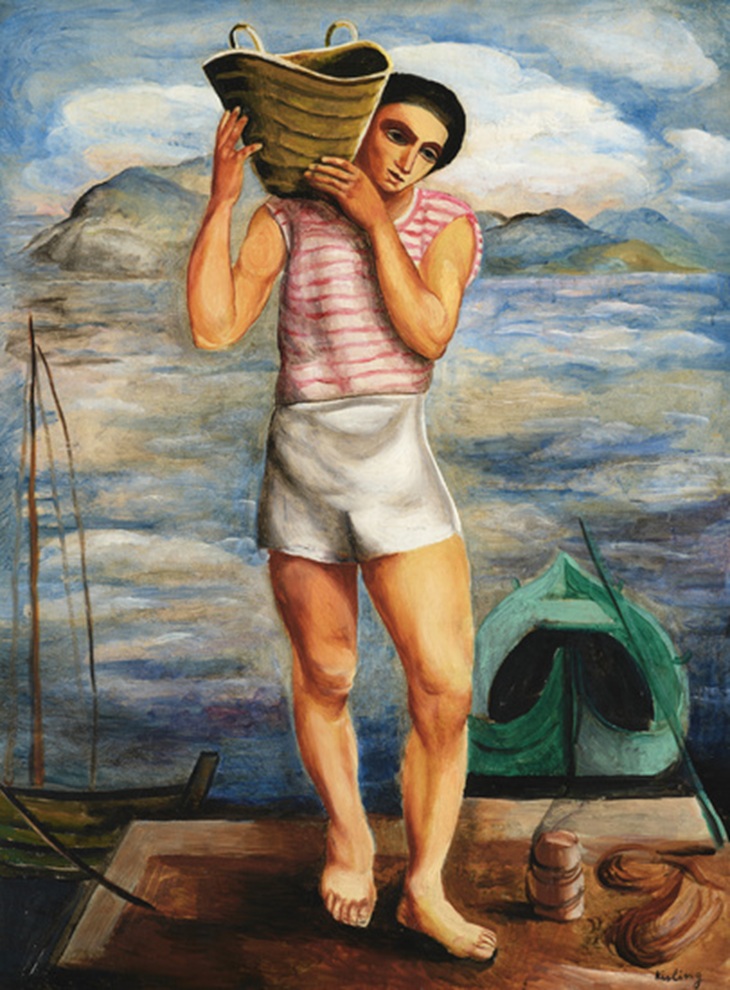
Lot 389. Moïse Kisling (1891-1953). Le Pêcheur, signed ‘Kisling’ (lower right), oil on canvas; 81.7 x 60.8 cm. Painted circa 1924. Provenance: Collection particulière, New York; vente, Parke-Bernet Galleries, Inc., New York, 25 janvier 1961, lot 102. Jewel Garlick, New York (acquis au cours de cette vente). Collection particulière, État-Unis (par descendance). Collection Nahmad (avant 2019). Vente, Christie’s, New York, 13 mai 2023, lot 772. Acquis au cours de cette vente par le propriétaire actuel. Literature: Das Zelt, juin 1924 (illustré). Der Querschnitt, mars 1925 (illustré). J. Dutourd, Kisling, Turin, 1995, vol. III, p. 101, no. XVIII (illustré en couleurs). Exhibited: Tokyo, Tokyo Metropolitan Teien Art Museum; Okazaki, Okazaki City Museum; Akita, Akita Museum of Art; Miyoshi, Okuda-Genso-Sayume Art Museum; Sapporo, Hokkaido Museum of Modern Art; Kagoshima, Kagoshima City Museum of Art et Kyoto, EKI Museum, Kisling, Grande figure de l’École de Paris, avril 2019-octobre 2020, p. 97, no. 76 (illustré en couleurs). Further details: Cette œuvre sera incluse au Tome IV et Additifs aux Tomes I, II et III du catalogue raisonné de l’œuvre de Moïse Kisling actuellement en préparation par Marc Ottavi. Estimate €70,000 – 100,000. Christie’s. 10/23/26. Sold €70,000
Ten pewny siebie młody rybak z koszem na ramieniu wygląda, jakby wyszedł wprost z antycznego fryzu, a jednocześnie jest całkowicie współczesny: w pasiastej koszulce, białych szortach, boso, na tle morza i niskich wzgórz. Kisling namalował człowieka jak rzeźbę. Gładkie, niemal porcelanowe ciało, migdałowe oczy i stylizowana poza tworzą monumentalną figurę. Wokół niej kłębią się wibrujące błękity nieba i wody, a zielona łódź i drewniane pomosty dopowiadają południowy, nadmorski klimat.To obraz z czasów, gdy Kisling zyskiwał sławę. Powstał około 1924 roku i już wtedy był reprodukowany w prasie awangardowej.
W jednym płótnie jest wszystko, co ceni się u Kislinga: klasyczna harmonia, zmysłowy kolor i spokojna pewność rzemiosła. To rzadka okazja, żeby zobaczyć na rynku jego wczesną, w pełni dojrzałą figurę w pełnym świetle południa.
Tamara Lempicka. Portrait de petite fille III, 1972
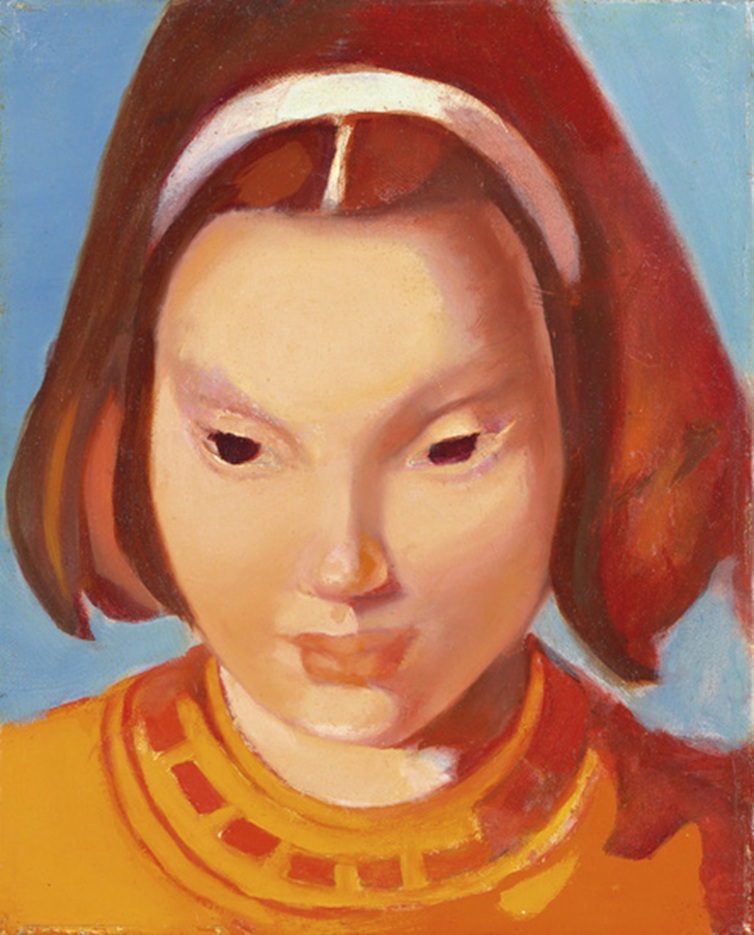
Lot 31. Tamara de Lempicka (1898-1980). Portrait de petite fille III. Peint vers 1972; signed with the initials ‘T.L.’ (on the reverse); oil on canvas; 25.4 x 20.5 cm. Provenance: Collection particulière, Mexique (acquis auprès de l’artiste); vente, Christie’s, New York, 14 novembre 1989, lot 216 (titré “Portrait of a Child’; erronément daté ‘1945’). Collection particulière, Royaume-Uni. Vente, Me Kohn, Paris, 6 décembre 1999, lot 19 (titré ‘Portrait de jeune fille’; erronément daté ‘1945’). Acquis au cours de cette vente par le propriétaire actuel. Literature: A. Blondel, Tamara de Lempicka, Catalogue raisonné, 1921-1979, Lausanne, 1999, p. 415, no. B. 481 (illustré en couleurs). Estimate €60,000 – 80,000. Christie’s. 10/23/26. Sold €60,000 (€76,800 with bp)
Portret dziewczynki ręki Tamary Łempickiej namalowany już pod koniec jej kariery artystycznej. Gdyby nie nazwisko Łempickiej to portret mógłby przejść niezauważony a tak wzbudzi w Polsce niepotrzebne silne emocje dużego na nim zarobku.
Irena Hassenberg-Reno. View of Irène Réno’s studio on Boulevard Raspail in Paris
Lot 118. Irène RÉNO (1884–1953), also known as Irena Hassenberg. View of Irène Réno’s studio on Boulevard Raspail in Paris. Oil on cardboard, signed lower left (on the back: a sketch of a figure composition, in charcoal and colored pencils), annotations, edges of the cardboard very slightly damaged, a small loss of material 73 cm x 54 cm. Estimate €8,000 – 10,000. Boisgirard – Antonini. 10/22/26. Not sold
Około dziesięć prac Ireny Reno było dzisiaj przedmiotem aukcji w Boisgirard – w większości były to rysunki. Jedyny jej olej, przedstawijący widok z jej paryskiego okna, został nie wiadomo czemu bardzo wysoko wyceniony lecz spadł. Pozostałe rysunki oscylowały w okolicach €1,000 plus minus €400 nie wzbudzając żadnego mojego zachwytu.
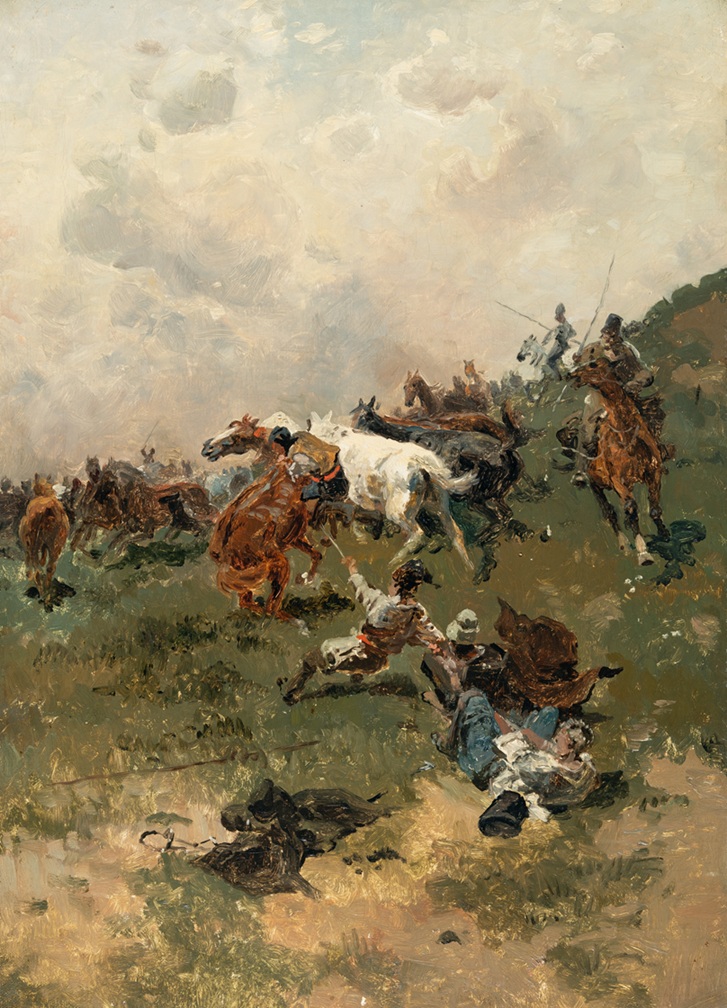
Lot 78. Józef von Brandt (1841 Szczebrzeszyn/Polen – Radom/Polen 1915), Horse-catching in the Puszta (Catching a horse with a lasso). Oil on canvas, relined. (C. 1880). Approx. 56 x 41 cm. Provenienz: Aus dem Besitz von Carl Spitzweg, im Erbgang an den heutigen Eigentümer. Estimate €60,000 – 80,000. Karl und Faber. 11/12/26
Brawurowy, niesygnowany szkic w oleju Józefa Brandta. Obraz pochodzi z kolekcji Carla Spitzwega, jednego z najważniejszych niemieckich malarzy okresu biedermeierowskiego.
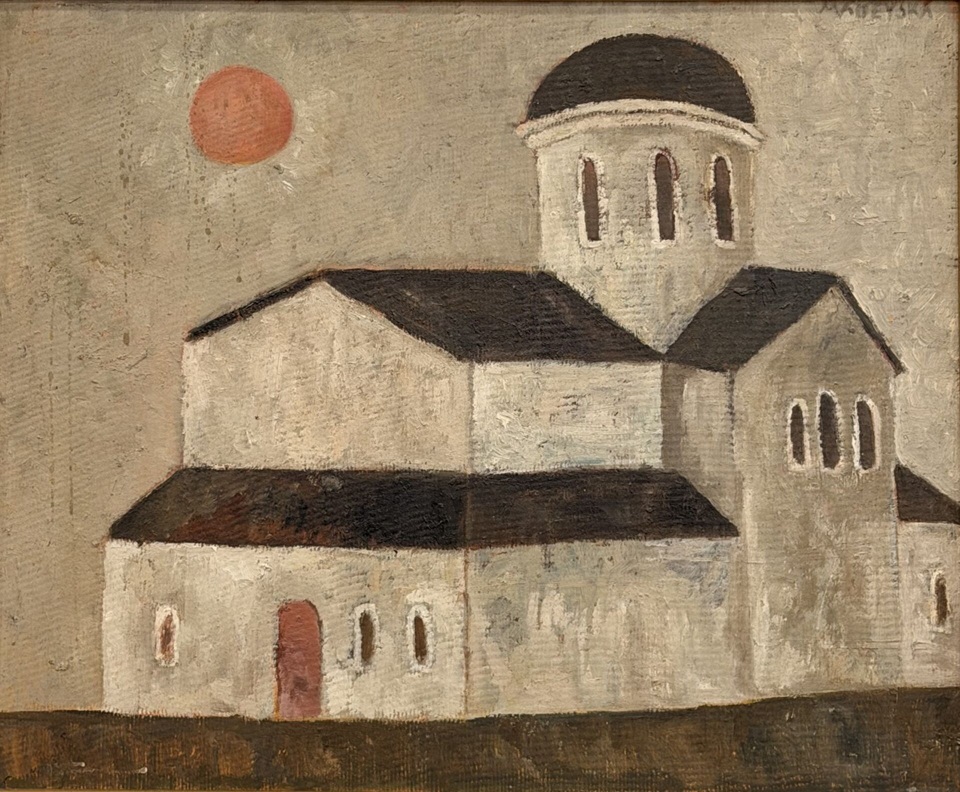
Lot 352. Arika MADEYSKA (Poland, 1928–2004). View of a Church. Oil on cardboard. Signed upper right 48 x 57 cm. Estimate €200 – 300. Hôtel des Ventes de Toulon Côte d’Azur. 10/22/26. Sold €280
Arika Madeyska (właśc. Jadwiga Lubicz-Orłowska) we wczesnym okresie malowała głównie pejzaże miejskie i nadmorskie, martwe natury, portrety i studia postaci. Później doszła do abstrakcji opartej na formach zbliżonych do kół, owali i łuków, najczęściej w wyciszonych, monochromatycznych tonacjach. Przez całe życie pozostała wierna małym formatom i stonowanej kolorystyce
Wobec braku datowania można przypuszczać, że Widok kościoła należy najprawdopodobniej do jej figuratywnego okresu poprzedzającego abstrakcję. Bryła kościoła została zredukowana do kilku czystych elementów: białych, prawie płaskich ścian, ciemnych, geometrycznych dachów, rytmu wąskich okien i kopuły na cylindrycznym tamburze. Cisza, statyczność i brak postaci nadają obrazowi kontemplacyjny charakter.