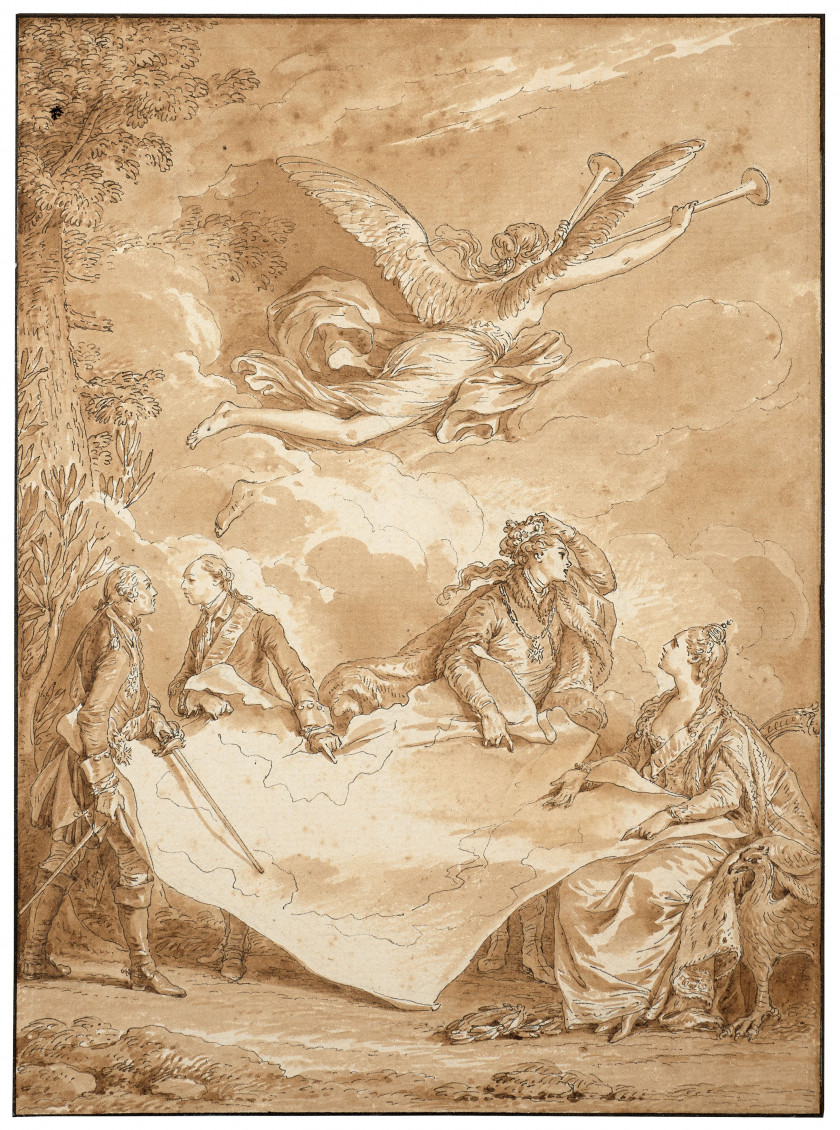
Kołacz królewski czyli alegoria pierwszego rozbioru Polski. Jean-Michel Moureau (1741 – 1814)

Jean-Michel Moureau. Le gâteau des rois ou Le partage de la Pologne

Udało mi się wytropić na rynku cymes nad cymesami! Jest to oryginalny tusz/tusz lawowany wykonany w 1772 lub 1773 roku przez Jeana-Miachela Moreau ‘Kołacz królewski – alegoria pierwszego rozbioru Polski”. W Polskich szkołach ta scena była szeroko kolportowana w podręcznikach historii. Miedzioryt, na podstawie tego tuszu, został wykonany w 1773 roku przez Noela Le Mire’a we Francji i prawie cały nakład odbitek został zaraz skonfiskowany, zaś płyta miedziana została zniszczona. Jedynie nieliczne egzemplarze ocalały i te były kolportowane. Ta satyra była zbyt oczywista dla francuskiego dworu królewskiego wobec jego politycznej bezczynności w stosunku do rozbioru Polski i chyba dlatego dokonano tej prewencyjnej cenzury. Tusz stanowi oczywiście odbice lustrzane miedziorytu. Dość ważna to praca wystawiona na aukcję. Poniżej miedzioryt.
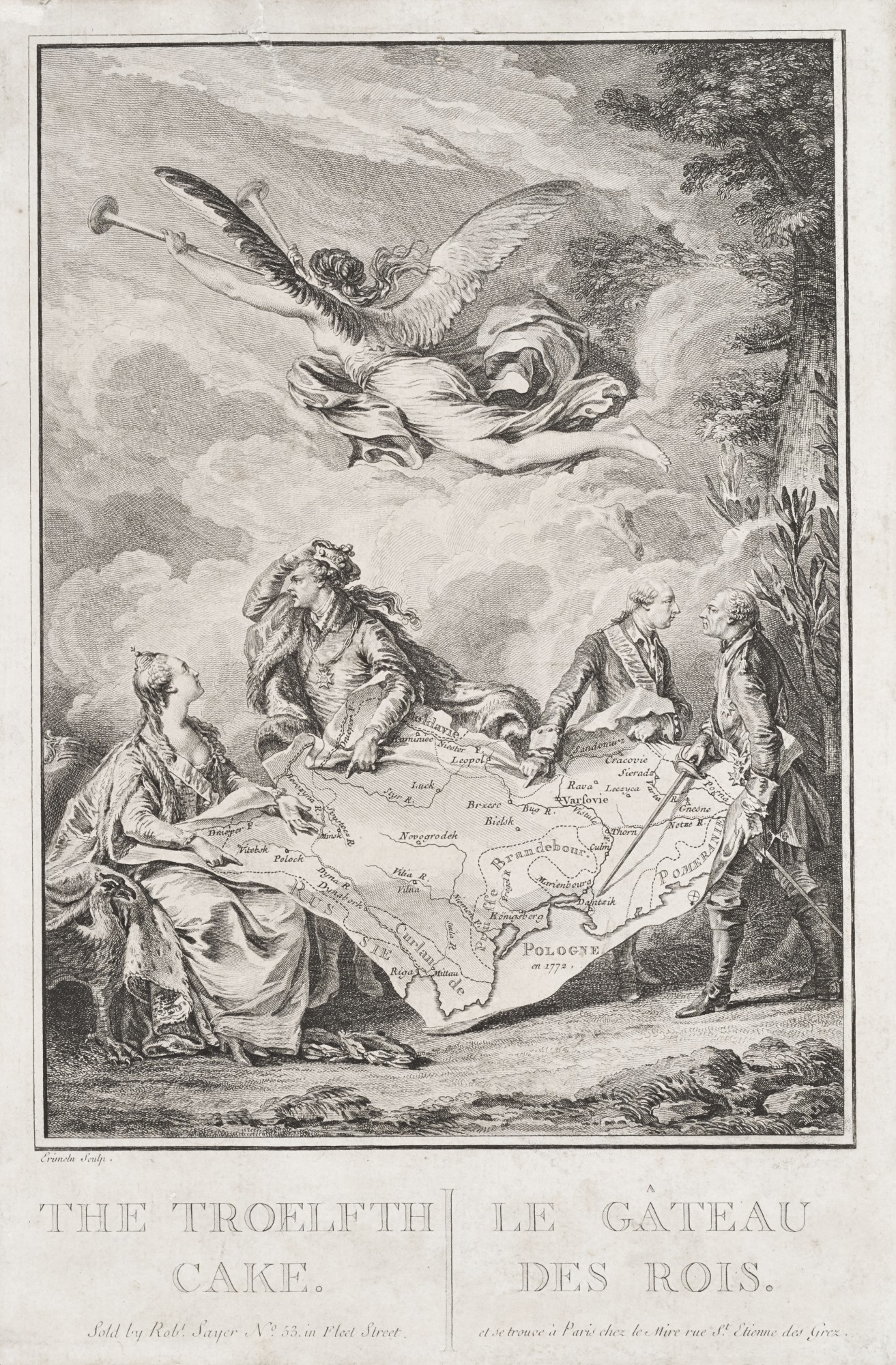
Noël Le Mire. Le gâteau des rois ou Le partage de la Pologne, 1773. Miedzioryt

Jean-Michel MOREAU, dit MOREAU le Jeune Paris, 1741 – 1814
Le gâteau des rois ou Le partage de la Pologne
Plume et encre noire, lavis brun
(Piqûres)

The Troelfth cake, pen and black ink, brown wash, by J. M. Moreau the younger
h: 22,20 w: 16,20 cm

Provenance : Collection du libraire Lamy ;
Sa vente, Paris, 11 janvier-11 avril 1808, partie du n°2107 (“douze dessins de Moreau le Jeune”);
Collection Marie-Joseph François Mahérault ;
Sa vente, Paris, Hôtel Drouot, Mes Pillet et Delestre, 27-29 mai 1880, n°198 ;
Collection Louis Lebeuf de Montgermont ;
Sa vente, Paris, Galerie Georges Petit, Me Lair-Dubreuil, 18 juin 1919, n°258 ;
Collection Paul Desmarais, Paris ;
Puis par descendance

Bibliographie : Marie-Joseph François Mahérault, ‘L’oeuvre de Moreau le Jeune. Catalogue raisonné et descriptif’, Paris, 1880, p. 453-454, n° 398 (l’estampe) et supplément, p. 486, n° 492
Edmond et Jules de Goncourt, ‘L’Art du XVIIIe siècle. Troisième Série’, Paris, 1882, p. 151
Emmanuel Bocher, ‘Catalogue raisonné des estampes, vignettes, eaux-fortes, pièces en couleur au bistre et au lavis, de 1700 à 1800. Jean-Michel Moreau le Jeune’, Paris, 1882, p. 92, mentionné dans la notice du n°243
Adrien Moureau, ‘Les Moreau’, Paris, 1893, p. 46-47 (l’estampe de Le Mire)
André Blum, “L’estampe satirique et la caricature en France au XVIIIe siècle”, in ‘Gazette des Beaux-Arts’, Paris, août 1910, p. 114

Commentaire : Gravure :
Par Noël Le Mire, 1773

L’Histoire se répète inlassablement et la géopolitique trop peu souvent varie. Nous constatons cruellement en cette année 2022 dans une région voisine de la Pologne que la loi du plus fort l’emporte presque toujours. Le premier partage de la Pologne en 1772 est la conséquence de l’appétit et de la puissance grandissante de trois voisins aux politiques militaires efficaces, des Etats dirigés de mains de fer par des souverains éclairés. Nous distinguons sur notre feuille, d’une fraicheur miraculeuse, à droite, l’impératrice de Russie Catherine II assise sur son trône, à gauche, Frédéric II de Prusse désignant avec son épée l’objet principal de sa convoitise qu’est le port de Dantzig (toujours Dantzig…), l’empereur Joseph II qui tend la main vers les régions limitrophes de son empire et enfin le roi élu de Pologne Stanislas Poniatowski qui se désespère et peine à maintenir la fragile couronne que porte sa tête.
La carte est bien sûr à lire à l’envers puisque la finalité de ce dessin hautement politique était d’être diffusé au plus grand nombre par la gravure qui, son épreuve aboutie, en inversera le sens de lecture. Très peu d’épreuves sont néanmoins parvenues jusqu’à nous puisque très vite les exemplaires furent saisis chez le graveur Le Mire1 et le cuivre détruit dès le lendemain de la saisie2. Le dessinateur comme le graveur avaient conscience que leur action pouvait être considérée comme un acte de défiance vis-à-vis du pouvoir royal français qui était resté silencieux devant cette confiscation par la force. Afin de rester discret, c’est en effet de l’anagramme Erimeln que N. Le Mire signa son estampe publiée en 1773.

Le ‘Mercure de France’ en date du 6 février 1773 commente la gravure de Le Mire réalisée d’après notre dessin : ” A ce titre allégorique [Le gâteau des rois] on juge que c’est une caricature satyrique mais noble et décente (…). Elle [la Renommée] embouche la trompette pour aller annoncer à l’Europe cette nouvelle intéressante “. Mais Moreau n’a-t-il pas en réalité représenté une Renommée qui tourne le dos à l’Histoire et au spectateur pour relever que l’action qui est en train de se dérouler sous nos yeux doit être considérée comme un fait indigne et honteux ?

1. Le ‘Mercure de France’, 11 février 1773, ” [la gravure] a été enlevée avant d’être mise en vente par ordre du gouverneur (…). On présume que c’est une tournure pour prévenir les plaintes des Ministres qu’elle intéresse “.
2. A. Moureau, ‘op. cit.’, p. 46.

Estimation 12 000 – 15 000 €. Artcurial. 09/21/22
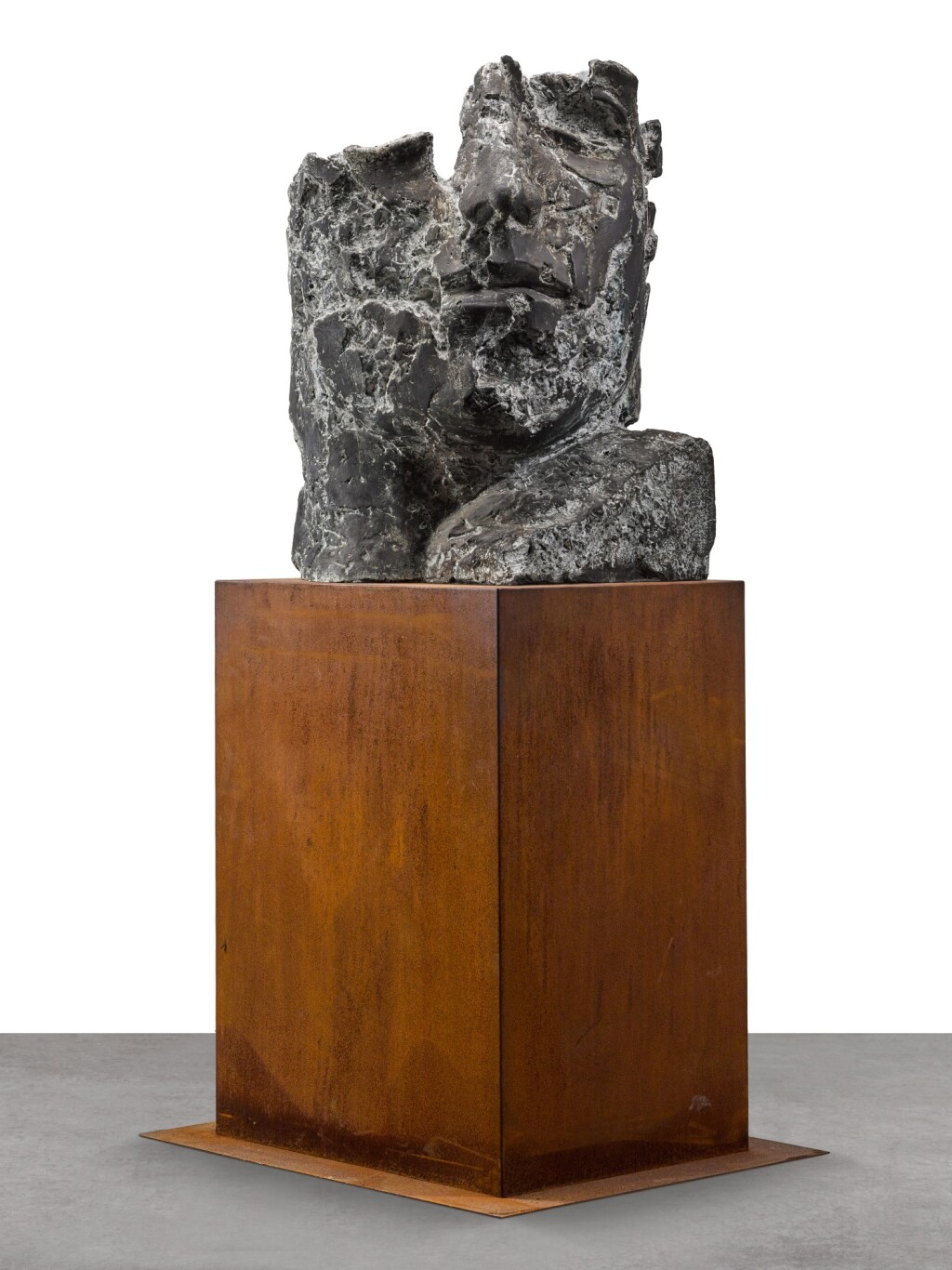
Igor Mitoraj (1944 – 2014)

Igor Mitoraj. Terra Amara, 1990

Jednostkowy egzemplarz? Jest to jedna z zaledwie sześciu kopii.

Lot 75. Igor Mitoraj 1944 – 2014. Terra Amara, incised with the artist’s signature, patinated bronze, head: 92.4 by 66.5 by 54.9 cm. 36⅜ by 26⅛ by 21⅝ in.; including base: 194.8 by 95.9 by 79.6 cm. 76¾ by 37¾ by 31⅜ in. Executed in 1990. Estimate 35,000 – 45,000 GBP. Sotheby’s. 09/13/22. Sold 100,800 GBP

Jan Lebenstein (1930 – 1999)

Jan Lebenstein. Ohne Titel

Prawdopodobnie jest to jedna z wcześniejszych Figur Jana Lebensteina, być może z lat 1955-57.

Lot 19. Jan lebenstein (Brzesc nad Bugiem 1930-1999 Krakow). Ohne Titel, signiert Lebenstein, signiert und rückseitig beschriftet mit der Nummer 96, Tusche und Gouache auf Millimeterpapier, 57 x 33 cm. Estimate 2,500 – 3,500 €. Dorotheum. 09/20/22

Jan Chełmiński (1851 – 1925)

Jan Chełmiński. Officer on Horse

Nie chce mi się wierzyć, że ten obrazek – niemal miniaturkę oficera jadącego na kucyku– namalował Jan Chełminski. Takich koni Chełmiński raczej nie malował; jego konie były wielkie, budzące podziw. Nie bardzo udał się Chełmińskiemu ten obrazek. Dom aukcyjny myśli inaczej skoro wycenił go w przedziale $5,000 – 10,000. Dolar mocno się wzmocnił wobec euro i w USA nie jest już taniej lecz nie należy przesadzać w przypadku tego obrazka, nawet jesli cena wyjściowa to tylko $2,500.

Lot 100. JAN V. CHELMINSKI, O/C, Officer on Horse. Oil on canvas painting of a mounted Polish officer in a winter scene by Jan van Chelminski (Polish, 1851-1925). Signed at lower left. Windsor and Newton marked canvas measures 9 3/4″ x 7 3/4″. Ornate Newcomb Macklin frame measures 17″ x 14″. Estimate $5,000 – 10,000 euro. Blackwell Auctions. 09/17/22. Sold $3,750

Edward Dwurnik (1943 – 2018)

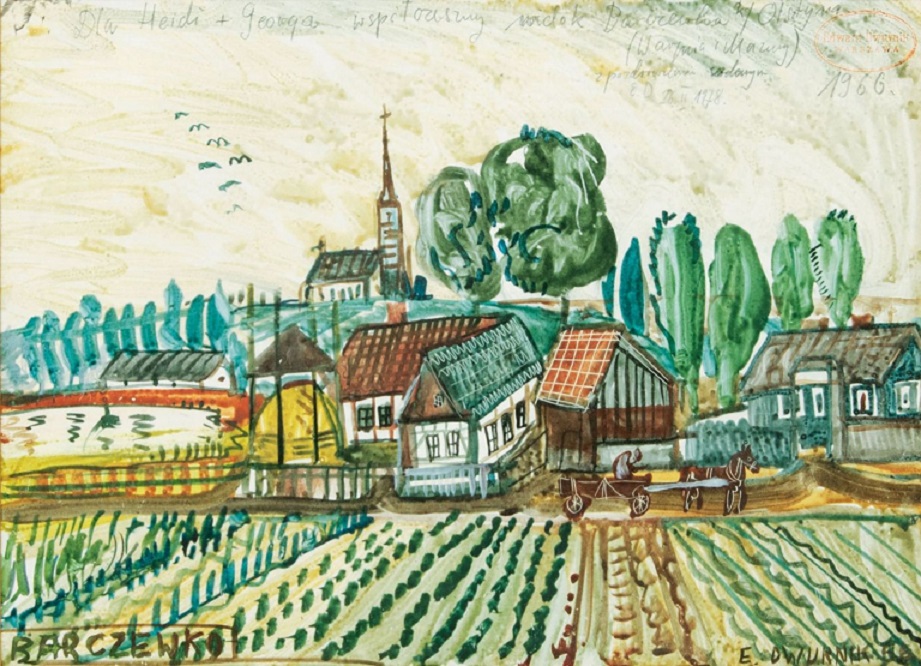
Edward Dwurnik. Barczewko, 1966

Lot 401. Dwurnik, Edward (Radzymin 1943 – Warschau 2018). Barczewko. 1966. Oil and tempera/paper. 30 x 41,5 cm. Lo. ri. sign. and dat. E. Dwurnik 66, lo. le. titled, att the upper margin inscribed by the artist as well as artist’s stamp, matted and framed under glass, uninscpected out of frame. – Polish artist. D. studied painting and sculpture at the Academy of Warsaw 1963-70. He exhibited at Documenta VII, MoMA in New York and Museum Ludwig in Cologne, among others. Mus.: Warsaw (Nat. Mus.), Cologne (Mus. Ludwig), Vienna (Albertina), Moscow (Pushkin Mus.), Dresden a. others. Opening 3,000 euro. Stahl. 09/17/22. Sold 3,000 euro

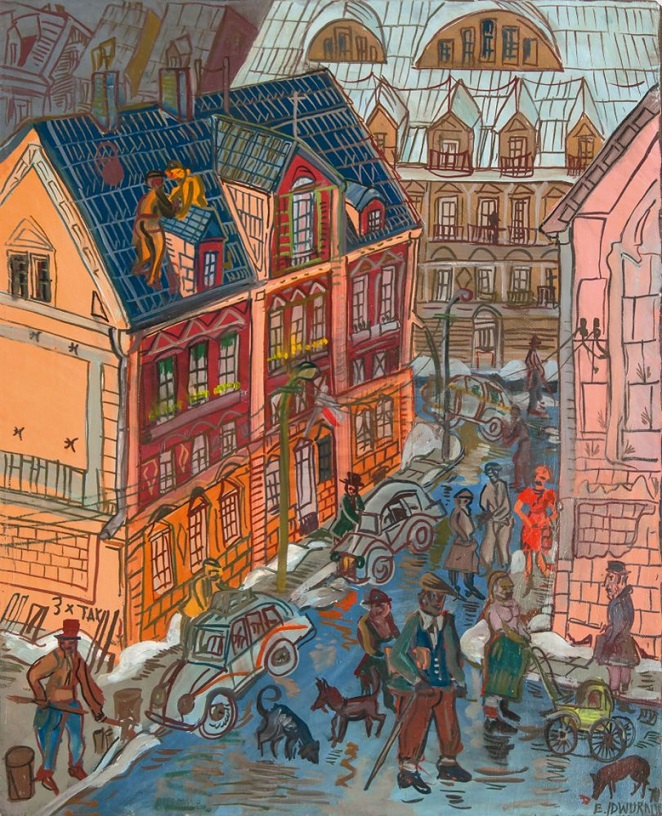
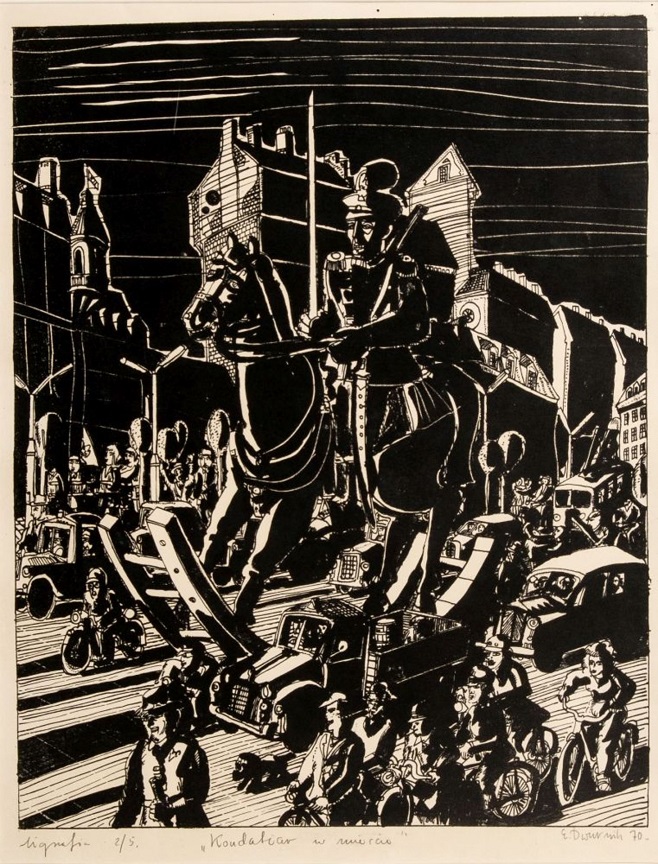
Dwa oleje i dwie litografie Edwarda Dwurnika znajdują na nadchodzącej aukcji w Niemczech. Wszystkie należą do dość wczesnych prac artysty a zatem nie powinno by c szeptów, że ktoś mu pomagał w malowaniu. Olej powyższy aż pachnie Nikiforem, tudzież poniższy, choć widać na obydwu pracach świeżą rekę. Litografie są, moim zdaniem, o wiele ciekawsze od tych dwóch olejów i o nie bym walczył.


Edward Dwurnik. Ul. PCK, 1975

Lot 402. Dwurnik, Edward (Radzymin 1943 – Warschau 2018). Ul. PCK w R. 1975. Oil/canvas. 82 x 66 cm. Unframed. Lo. ri. sign. E. Dwurnik, on the reverse sign. again and dat. 1975, on the reverse and on the stretcher two Polish labels with title. – Provenance: Private collection North Rhine-Westphalia, Germany. – Polish artist. D. studied painting and sculpture at the Academy of Warsaw 1963-70. He exhibited at Documenta VII, MoMA in New York and Museum Ludwig in Cologne, among others. Mus.: Warsaw (Nat. Mus.), Cologne (Mus. Ludwig), Vienna (Albertina), Moscow (Pushkin Mus.), Dresden a. others. Opening 12,000€. Stahl. 09/17/22. Sold 12,000 euro


Edward Dwurnik. Condottiere – Kondotier II, 1966 (2/6)

Lot 399. Dwurnik, Edward (Radzymin 1943 – Warschau 2018). Condottiere – Kondotier II. 1969. Lithograph. 58,5 x 46 cm. Lo. ri. autographed and dat. E. Dwurnik 69, lo. le. num. 2/6, lo. middle titled, framed under glass, uninspcted out of frame. – Polish artist. D. studied painting and sculpture at the Academy of Warsaw 1963-70. He exhibited at Documenta VII, MoMA in New York and Museum Ludwig in Cologne, among others. Mus.: Warsaw (Nat. Mus.), Cologne (Mus. Ludwig), Vienna (Albertina), Moscow (Pushkin Mus.), Dresden a. others. Opening 400 €. Stahl. 09/17/22. Sold 750 euro


Edward Dwurnik. Condottiere – Kondotier I, 1970

Lot 400. Dwurnik, Edward (Radzymin 1943 – Warschau 2018). Condottiere – Kondotier I. 1970. Lithograph. 58 x 45 cm. Lo. ri. autographed and dat. E. Dwurnik 70, lo. le. num. 2/5, lo. middle titled, framed under glass, uninspcted out of frame. – Provenance: Private collection North Rhine-Westphalia, Germany. – Polish artist. D. studied painting and sculpture at the Academy of Warsaw 1963-70. He exhibited at Documenta VII, MoMA in New York and Museum Ludwig in Cologne, among others. Mus.: Warsaw (Nat. Mus.), Cologne (Mus. Ludwig), Vienna (Albertina), Moscow (Pushkin Mus.), Dresden a. others. Opening 400 €. Stahl. 09/17/22. Sold 600 euro

Ludwik Klimek (1912 – 1992)

Ludwik Klimek. La Vierge à la chèvre, 1965

Spokojny i ładny rysunek Ludwika Klimka.

Lot 162. Ludwig KLIMEK (1912-1992). La Vierge à la chèvre, 1965. Fusain sur papier A vue 40x29cm. Estimation: 100 – 200 €. Mercier & Cie. 08/31/22. Sold 120 €.

Jerzy Kossak (1886 – 1955)

Jerzy Kossak. Stafette der polnischen Legion, die auf österr. Seite in der Schlacht von Limanova kämpfte

Lot 115. Jerzy Kossak (Krakau 1886-1955). “Stafette der polnischen Legion, die auf österr. Seite in der Schlacht von Limanova kämpfte“, rückseitig alt betitelt und bezeichnet Ing. Alfred Levnaic Iwanski von Iwanova, 1960, Öl auf Holz, 46 x 37,5 cm. Starting 2,000 euro. Dorotheum. 09/08/22. Sold 4,500 euro

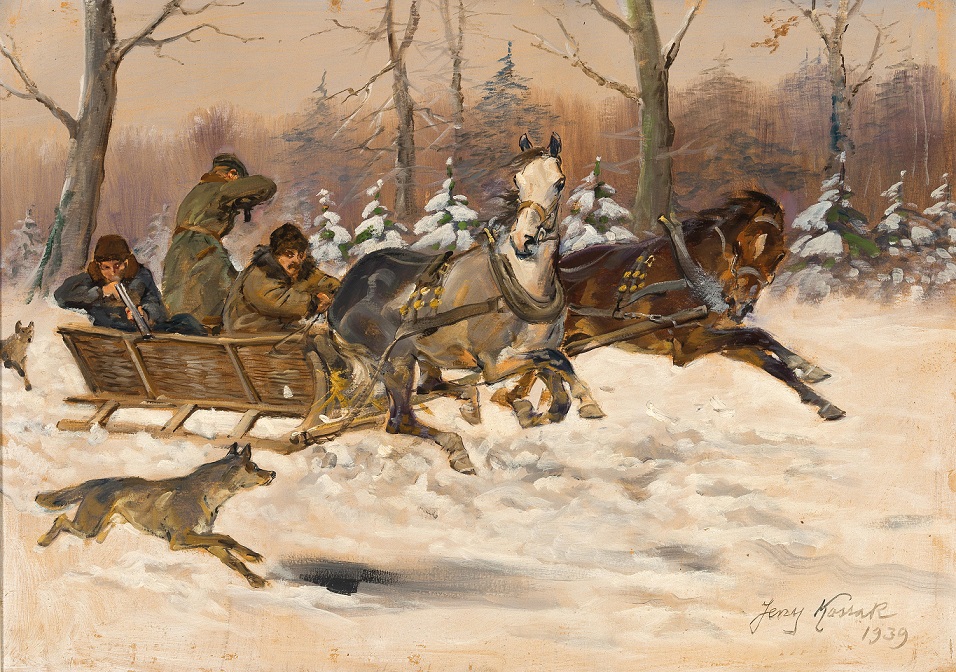
Czas zająć się tymi dwoma olejami Jerzego Kossaka z wrześniowej aukcji w Dorotheum. W zasadzie tylko jedna z prac warta jest zainteresowania w celu zakupu. Jest nią obraz przedstawiający przjeżdżających przez las konnicę Pułku Strzelców Konnych z okresu Królestwa Polskiego (1815 – 1831). Ta praca (o dziwo nie datowana) wygląda mi na wczesną Jerzego Kossaka, prawdopodobnie sprzed I wojny światowej, bez zdemoralizowania artysty pośpiechem pracy i niekończącymi się replikami. Nie sądzę by sprzedano ją poniżej 4,000 €. Natomiast drugą z prac, Jagt in Winter (kto tak na prawdę na kogo poluje?), zostawiłbym tym, którzy koniecznie chcą mieć na ścianie ‘Kossaka’. Może okazać się tania, choć to zależy od liczebności ‘chcących’, pewnie jednak handlarzy. Jesienne polowanie na Kossaków rozpoczęte!

Jerzy Kossak. Jagd im Winter

Lot 58. Jerzy Kossak (Krakau 1886-1955). Jagd im Winter, signiert, datiert Jerzy Kossak 1939, Öl auf Karton, 49 x 69 cm. Starting 2,600 euro. Dorotheum. 09/08/22. Sold 4,000 euro

Juliusz Makarewicz (1854 – 1936)

Julian Makarewicz. Edelmann im gewendetem Schafspelz im Ganzprofil, 1894

Portret chłopa w kożuchu. Trochę razi brak jakiegokolwiek tła lecz podobne prace tworzył artysta.

Lot 2553. Makarewicz, Julian (ukr. Makarevych, Yulian, 1854 Stryy – 1936 Krakau). Öl/Lwd., polnischer Edelmann im gewendetem Schafspelz im Ganzprofil, einen Prozessionsleuchter in der Hand haltend, links oben signiert, Ortsbezeichnung (Cmielów) und datiert (18)94, min. Altersspuren, Rahmung erneuert, ca. 61 x 39 cm, mit Rahmung ca. 73 x 50 cm, aus sächsischem Privatbesitz, Studium der Architektur am Polytechnikum Lemberg, 1878/79 Studium an der Wiener Akademie der Künste (Werkstatt S. Grippenherl), dann in München und Rom, studiert die Technik der Wandmalerei und die Möglichkeiten ihrer Restaurierung, 1909 Jurymitglied des Wettbewerbs für Malereiprojekte der Sobieski-Kapelle auf dem Kahlenberg in Wien, Mitglied der Gesellschaft zum Schutz polnischer Kunst- und Kulturdenkmäler. Opening 420€. Auktionshaus Heickmann. 09/17/22. Sold 1,000 euro

Emanuel Edward Geflowski (1834 – 1898)

Emanuel Edward Geflowski. Untitled (bust of woman), 1876

Rzeźba z II połowy XIX wieku polskiego rzeźbiarza o nazwisku Gawłowski, celowo zniekształconym w UK na Geflowski. Pisałem o nim więcej kilka lat temu: https://polishartcorner.com/2019/08/11/emanuel-edward-geflowski-1834-1898/.

Obecnie na rynku amerykańskim pojawiło się alabastrowe popiersie kobiety jego ręki. Jedyny problem  jest z transportem z Ohio do Polski czy też gdziekolwiek bliżej. Kiedyś za wczasu dowiadywałem się o koszt transportu na terenie Ameryki jednej z rzeźb. Było to ok $1,700 za rzeźbę wylicyowaną za ok $500. Drogo. Rzeźba Geflowskiego osiągnęła już $636 na dwa dni przez końcem aukcji.

Lot ITMGC22774. Emanuel Edward Geflowski (Polish, 1834-1898). Untitled (bust of woman), 1876. Alabaster sculpture. Signed on the reverse. 17.0″ W x 25.5″ H x 11.0″ D. EBTH Cincinnati – Blue Ash. 08/29/22. Sold $2,550

Jan Ksawery Kaniewski (1805 – 1867)

Jan Ksawery Kaniewski. Feines Portrait eines Knaben, 1832

Dużej klasy artystycznej portret chłopca, wykonany akwarelą, przez znakomitego portrecistę i miniaturzystę Jana Kaniewskiego. Portret licytowany na peryferyjnym zakamarku aukcyjnym został jednak wytropiony i doceniony.

No. 61330789. Jan Kaniewski (1809-1870) – Feines Portrait eines Knaben. Very finely crafted portrait of a boy in a blue anorak and a white ruffled shirt. Handsigned right Kaniewski 1832. Jan Ksawery Kaniewski (1805-1867), also known in Italy as Francesco Saverio, was a Polish painter who portrayed many personalities, including Tsar Alexander II, Pope Gregory XVI, his portraits of people were particularly popular with members of the imperial family and the Polish and Russian nobility. The special original frame is beautifully crafted from maple wood with an internal gilt molding. The painting comes from family ownership, will be shipped securely packed in hard cardboard via UPS. Martin. Estimate €300- 500 08/26/22. Sold €1,255