Lot 406. Mecislas RAKOWSKY École polonaise (1882-1947). Huile sur toile: “Portrait de l’artiste“. Signée et datée: M. de Rakowsky 1929, titrée au dos. Dim.: 60 x 50 cm. Estimate 400 – 600 euro. Horta. 11/15/22
Bardzo ciekawy jest ten autoportret Meiczysława Rakowskiego, tudziez pejzaż nadrzeczny wystawiany w Krakowie w 1939 roku. Jak tak dalej, to nieźle rozbujam polskie ceny:-)
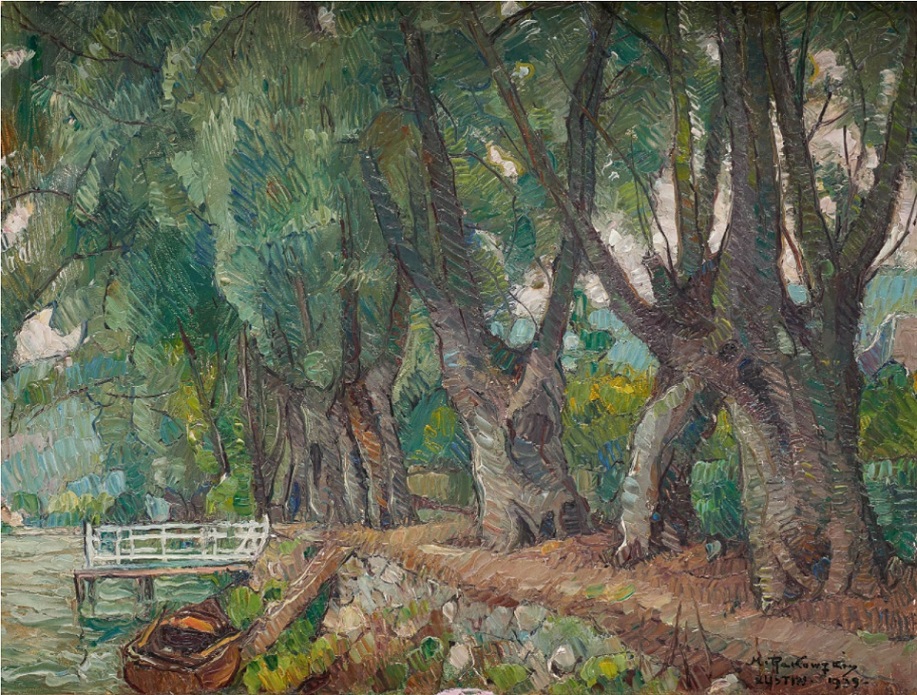
Mieczysław Rakowski. Vue de Lustin, 1939
Lot 405. Mecislas RAKOWSKY École polonaise (1882-1947). Huile sur panneau: Vue de Lustin en 1939. Signée: M. Rakowsky, étiquette d’exposition à Cracovie en 1939 au dos. Dim.: 26 x 35 cm. Estimate 500- 700 euro. Horta.
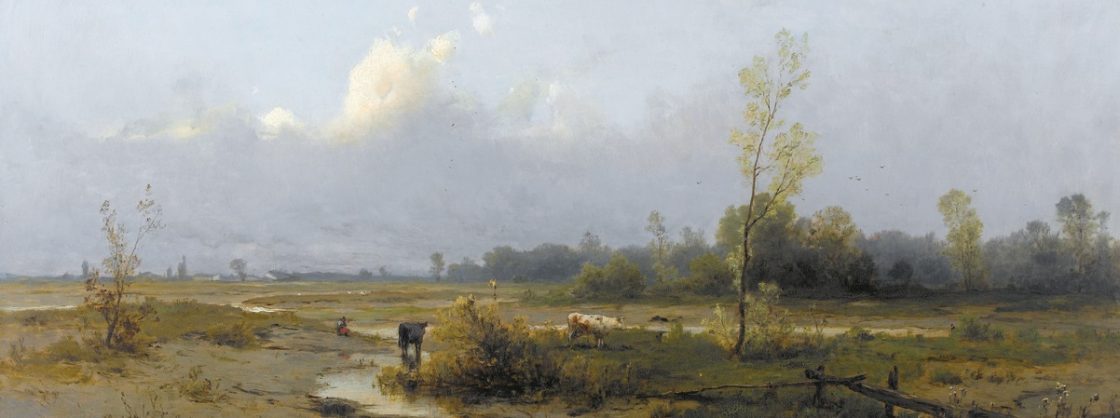
Mieczysław Rakowski. Tranquillité hivernale
Lot 404. Mecislas RAKOWSKY École polonaise (1882-1947). Huile sur toile: “Tranquillité hivernale“. Signée: M. Rakowsky, titrée sur une étiquette au dos. On y joint une plaquette d’exposition à Namur en 1946 et une photo de l’artiste devant l’œuvre. Dim.: 54 x 65 cm. Estimate 700 – 1,000 euro. Horta. 11/15/22
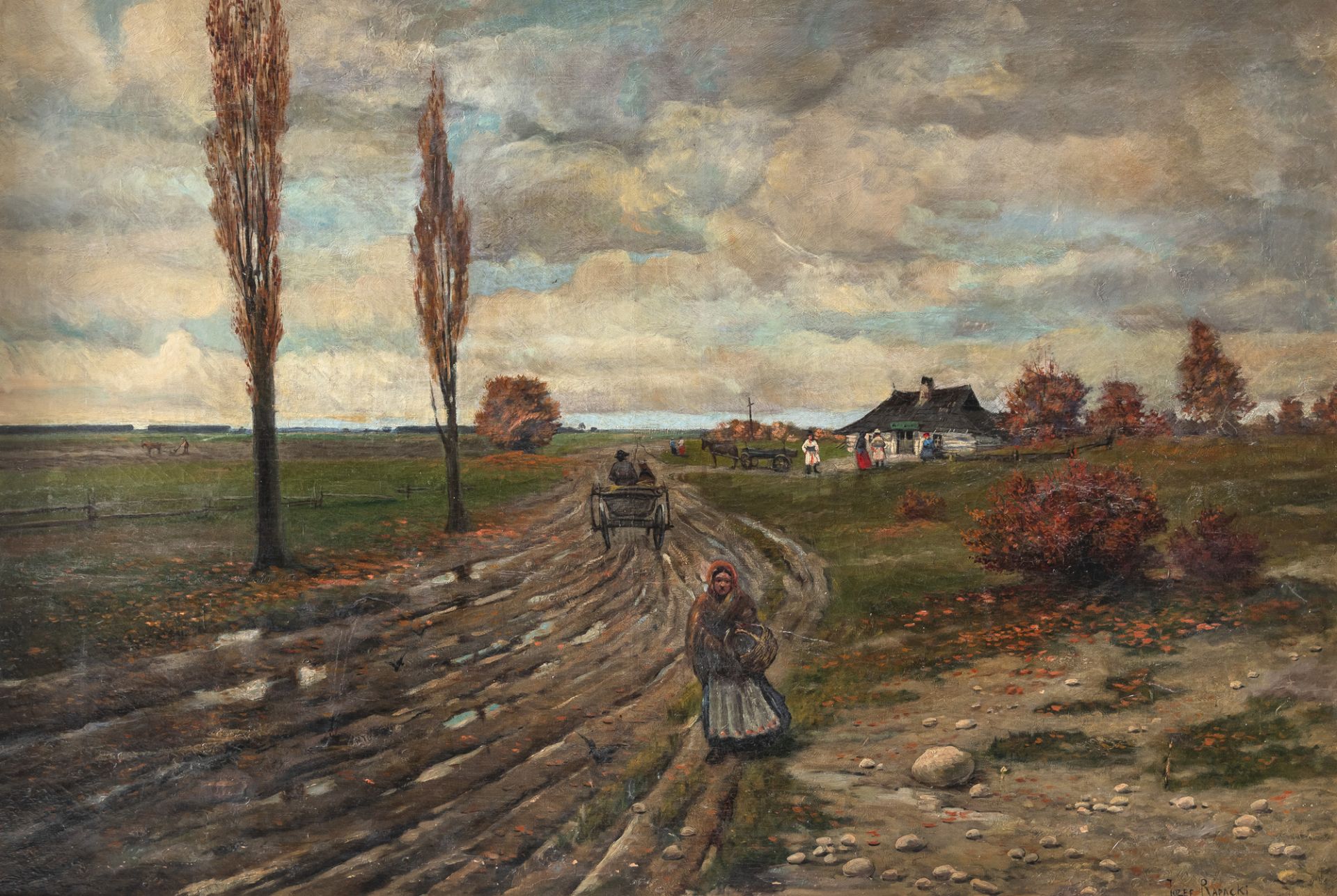
Lot 1078. Rapacki, Józef Warschau 1871 – Olszanka 1929, 84 x 124 cm. A road in an autumnal landscape. Oil/canvas, inscribed and dated z. Warszaw 1890. Southern German private collection. Estimate 3,000 – 4,000 euro. Nagel. 11/17/22
Adam Setkowicz. Party traversing the snowy Polish landscape
Dość popularny artysta przed II wojną światową, który niestety rozmienił swój talent na bardzo drobne prace, głównie z życia polskiej wsi. Nie wstydził się jednak sygnować ich swoim nazwiskiem w odróżnieniu np do kolegi po fachu, popisującego się jako Zygmuntowicz lub Wasilewski. U Setkowicza dominują małe akwarele a ten obraz jest olejem i to w dodatku ponad metrowym olejem i nie należy nim się wstydzić.
Lot 155. Adam Setkowicz (Polish, 1876-1945), oil on canvas depicting a party traversing the snowy Polish landscape, signed l.l., 15 1/4″ x 44 1/4″ overall. Estimate $800 – 1,200. Old Kinderhook Auction Company. 11/29/22
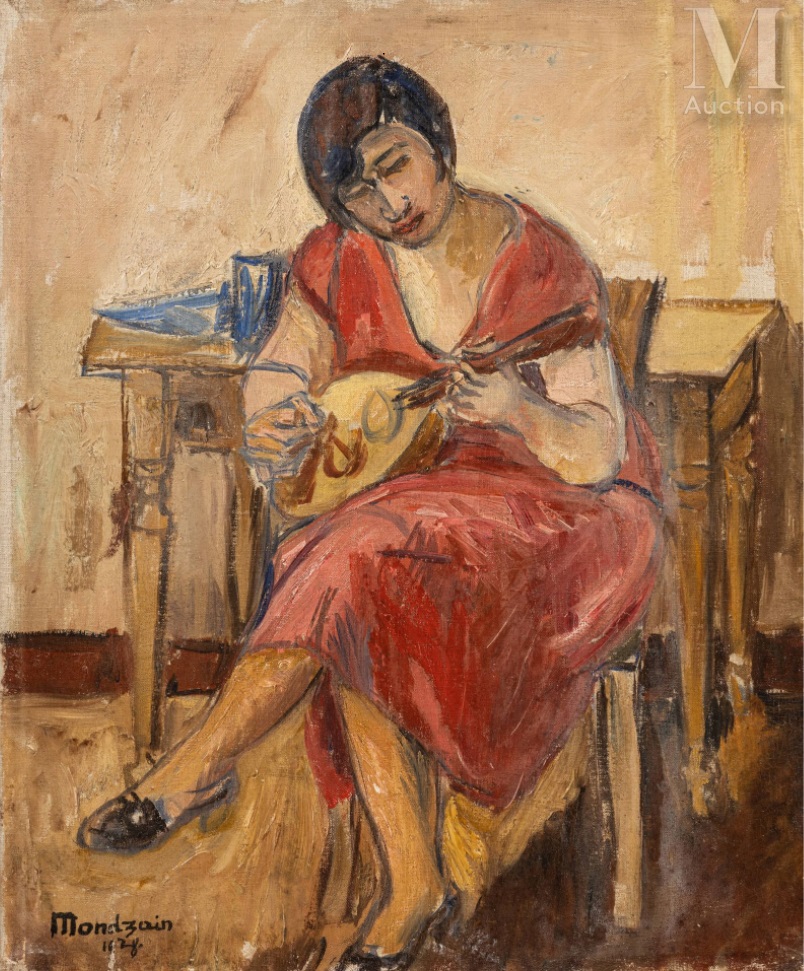
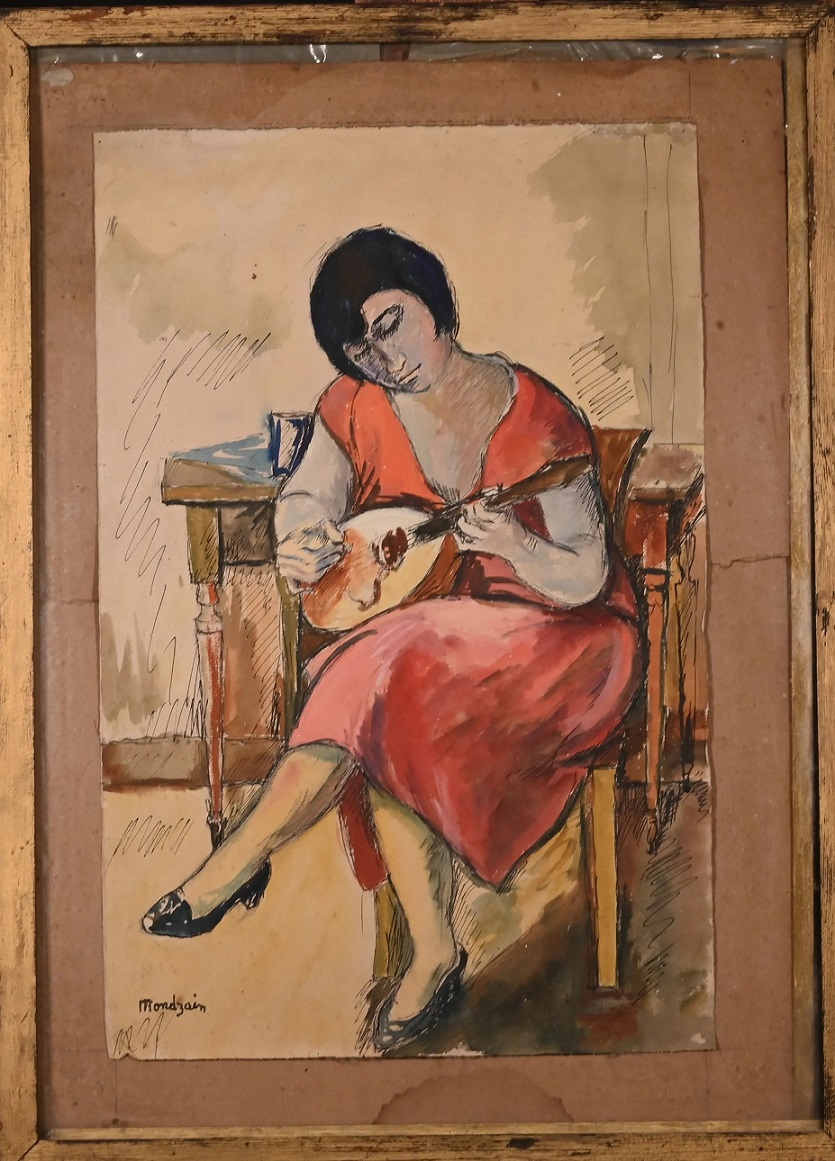
Szymon Mondzain. Portrait of Madame Mondzain learning to play the mandolin, 1928
Jeśli wierzyc opisowi, jest to szkic do nieznanego mi wykończonego z precyzją obrazu przedstawiającego żonę artysty z mandoliną. Szkic jest słaby a będąc jego żoną chyba wziąłbym z takim artystą rozwód. O niebo lepszy był jego ‘szkic’ wykonany akwarelą (https://polishartcorner.com/2021/12/11/szymon-mondzain-1890-1979-14/), o tym samym temacie, sprzedany za 600 euro, który w trymiga znalazł się w Polsce. Ile szkiców żony mandoliną arysta namalował? Chyba o jeden (olej) za dużo.
Lot 50. Simon MONDZAIN (Chelm 1888 – Paris 1979). Portrait of Madame Mondzain learning to play the mandolin. Made in 1928. Oil on canvas, 46 x 38 cm. Signed and dated lower left “Mondzain 1928 (small lacks). On the back on the canvas, countersigned, dated and handwritten by the artist 5 rue Campagne-Première Paris 1928. On the back on the frame, handwritten inscriptions in the hand of the artist N°20 Cat. This is a preparatory sketch for the final painting. Estimate 2,000 – 3,000 euro. Millon. 11/29/22. Not sold
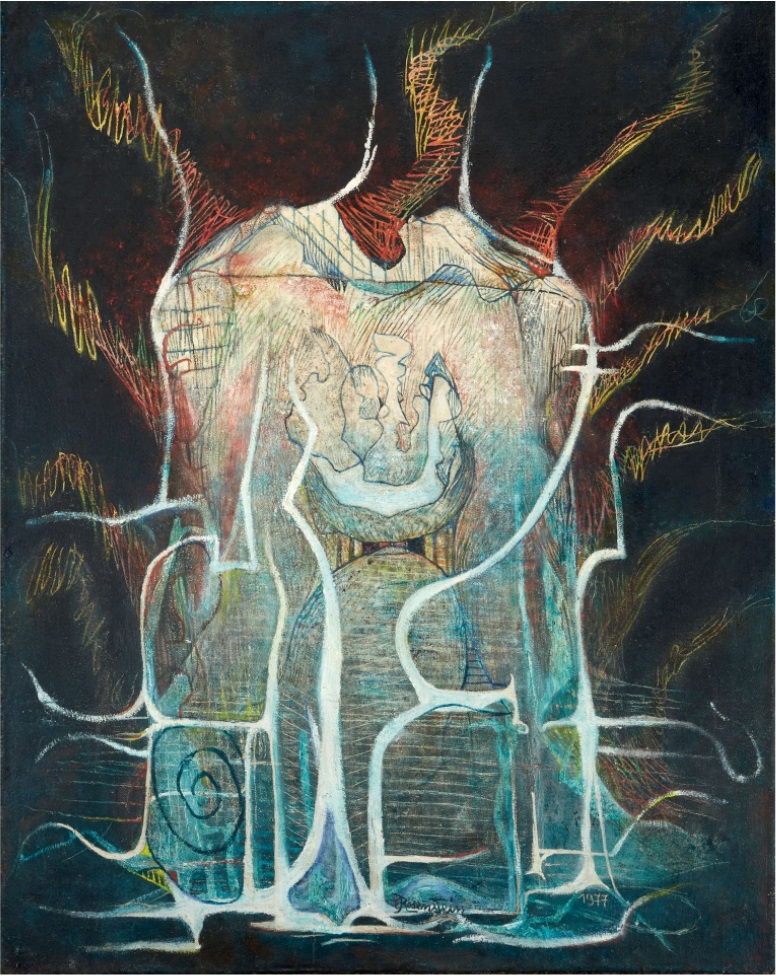
Wycena tej pracy na 200,000 euro jest bardzo śmiała i chyba tylko inwestorzy kryptocurrency, zwłaszcza ci spekulujący w platforme FTX, (nie) będą mogli sobie na nią pozwolić. Ciekawy będzie następny tydzień gdy ‘inwestorzy FTX’ przebudzą się ze snu o wypłukiwaniu z złota z powietrza. Udziały czyli „shares” spekukacji w sztuce pewnie wkrótce wylądują podobnie, czyli na śmietnisku historii.
Lot 54. Erna Rosenstein (1913-2004). Wodotrysk ognia (Fire Fountain), 1977. Oil on canvas; signed lower middle and dated lower right. 92, 5 x 74 CM – 36 3/8 x 29 1/8 in. EXHIBITIONS: Szczecin, Zamek Książąt Pomorskich, IX Festiwalu Polskiego Malarstwa Wspólczesnego, July-September 1978. New York, Hauser & Wirth, Erna Rosenstein?Once Upon a Time, April 23-July 31, 2020, reproduced on p. 117 of the exhibition catalog. Estimate 150,000 – 200,000 euro. Millon. 11/23/22. Not sold
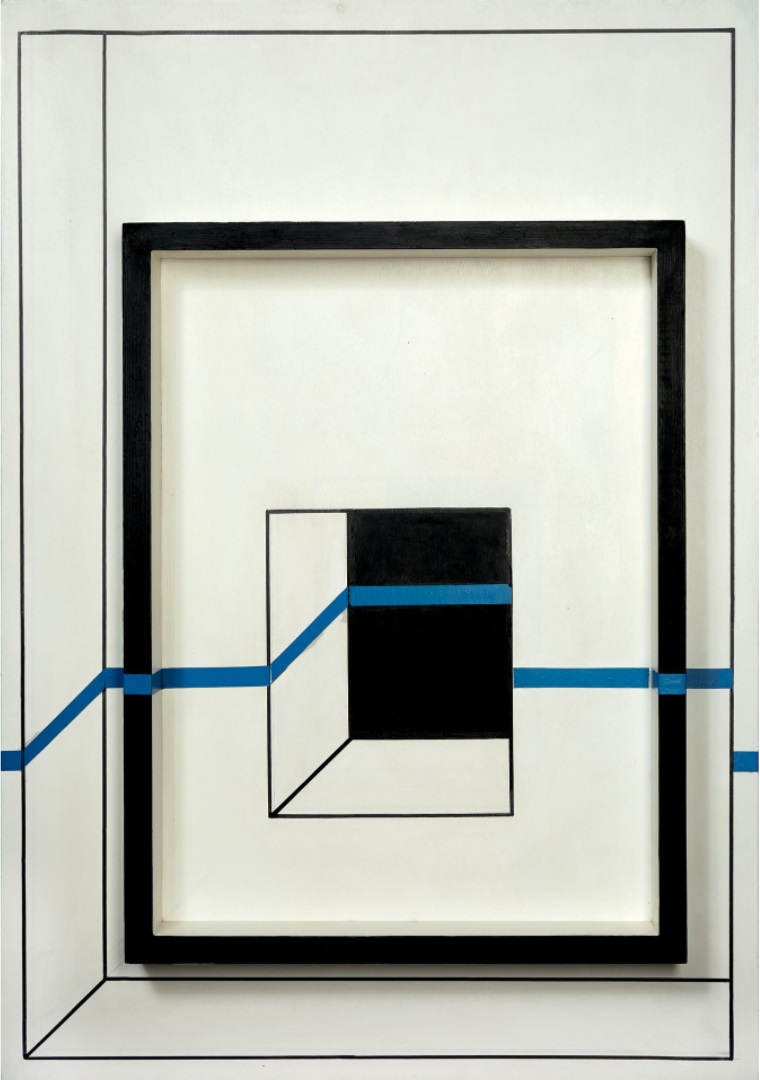
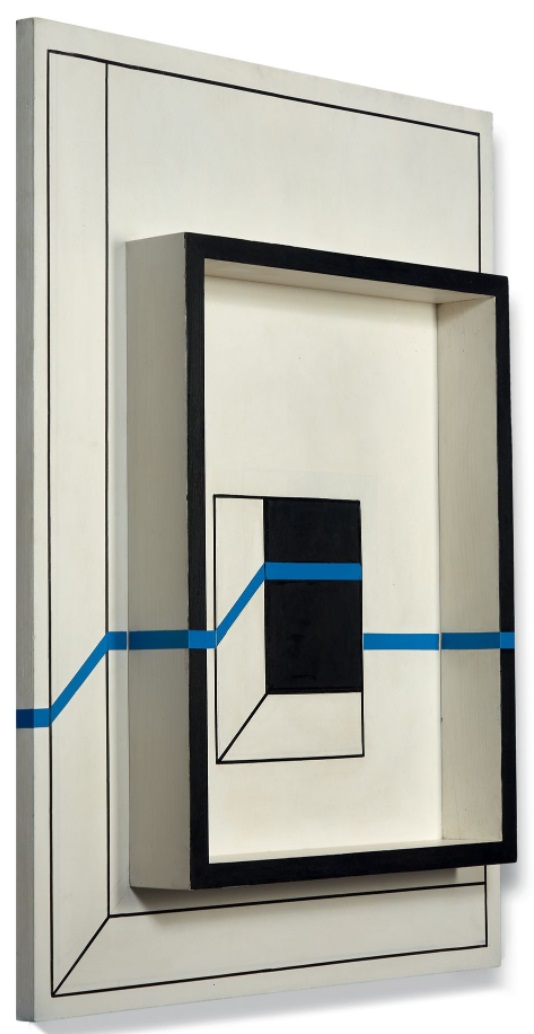
Lot 53. Edward Krasinski (1925-2004). Intervention, 1977. Wood fiberboard, acrylic and blue adhesive tape. Signed, titled and dated on the reverse, 100 x 70 x 12 CM – 39 3/8 x 27 1/2 x 4 3/4 in. PROVENANCE: Acquired directly from the artist, To the present owner through successive transfers. Estimate 120,000 – 180,000. Millon. 11/23/22. Sold 120,000 euro
Patrząc na drugą fotografię, ta praca Edwarda Krasińskiego jest trójwymiarowa. Czy dlatego jest tak wysoko wyceniona? Poniżej więcej o niebieskim pasku.
Edward Krasiński. Intervention, 1977
Considered today as one of the greatest Eastern European artists of the 20th century and a leading figure of the Polish avant-garde of the 1960s and 1970s, Edward Krasi?ski only began to receive international recognition in the canon of post-war conceptual art in his twilight years in 2004. The blue tape, as an instrument with which he marked his territory and with which he connected object and space, and which would become his signature, dates back to the late 1960s. However, his first solo exhibition outside his country was not held until 1988 in Paris at the J&J Donguy Gallery, and much later in 2002 in New York at the Anton Kern Gallery. Although Poland was one of the most open regimes in the Eastern bloc, the international art scene was indeed unaware of what was going on behind the Iron Curtain, which no doubt explains this late recognition. Born in 1925 in the present-day Ukraine, Edward Krasi?ski studied at the Academy of Fine Arts in Krakow in the 1940s before moving to Warsaw in 1954 and beginning his career as a surrealist painter. He then met a group of artists and critics gathered around Tadeusz Kantor, a charismatic figure embodying the spirit of the avant-garde, and with whom he founded the Foksal Gallery, the main platform for conceptual experimentation in Warsaw from 1966 onwards.
His career took a decisive turn in 1968 when he used blue adhesive tape for the first time (always placed at a height of 130 CM from the ground, and nineteen millimeters wide). From the simple sticking of the tape in unusual places, he then moved on to the realization of assembly constructions that incorporated it and then concentrated on axonometric designs. Through them, Krasi?ski explores forms of geometric representation and their relationship to architectural space. The artist shared his studio with Henryk Stazewski, a key figure in the Polish avant-garde of the 1920s and 1930s and a representative of the Constructivist movement. But in his work, despite the importance of line and geometric space, Krasi?ski sought to question the logic of geometry and three-dimensional space that Constructivism took for granted. Called Interventions, his axonometric paintings trap the viewer’s eye and transcend the line. Initially flat, in the mid-1970s the artist began to add three-dimensional elements to the surfaces of his axonometries, such as frames or open cubes, which complicate their reading, implying a different point of view than that suggested by the black-and-white drawing. In Intervention (1977), these elements, placed as obstacles in the path of the blue strip, confront the lateral view of the represented structure with a frontal view of the three-dimensional work, thus multiplying the visual paradoxes and revealing the complexity and heterogeneity of the immediate environment.
The exact meaning of the tape, however, remains somewhat elusive. Indeed, the artist has remained reluctant to discuss it, commenting: “The tape gave itself a meaning. Once it was born, it was free to do anything, to run around. The meaning is inherent to the tape; I only inspired its spirit” (quoted in ‘Drôle d’interview’, Edward Krasi?ski, Les mises en scène, edited by Sabine Breitwieser, Vienna, 2006). Not needing any metaphysical meaning, it is the physical transposition of Krasi?ski’s intentions: to reduce sculpture to a single line, thus challenging the traditional forms of art and its meanings. Considered today as one of the most significant Eastern European artists of the 20th century and a leading figure in the Polish avant-garde of the 1960s and 1970s, Edward Krasi?ski only began to receive the international acclaim he deserves within the canon of postwar Conceptual art at the twilight of his life in 2004. The blue adhesive tape, as an instrument with which to mark out his territory and to connect objects and spaces, that would become his trademark, dates back to the late ’60s. However, he did not have his first solo exhibition outside his country until 1988 in Paris at Galerie J&J Donguy, and much later in 2002 in the US at the Anton Kern Gallery.
Lot 24. Jan LEBENSTEIN (1930-1999). Sans titre, 1958. Encre,lavis d’encre et gouache sur papier signé et daté en bas à droite, 56,5 x 24,5 cm. Provenance: Collection particulière, Paris. Estimate 1,500 – 2,000 euro. Millon. 11/28/22. Sold 2,600 euro
Dwie bardzo wczesne (drobne) prace Jana Lebensteina.
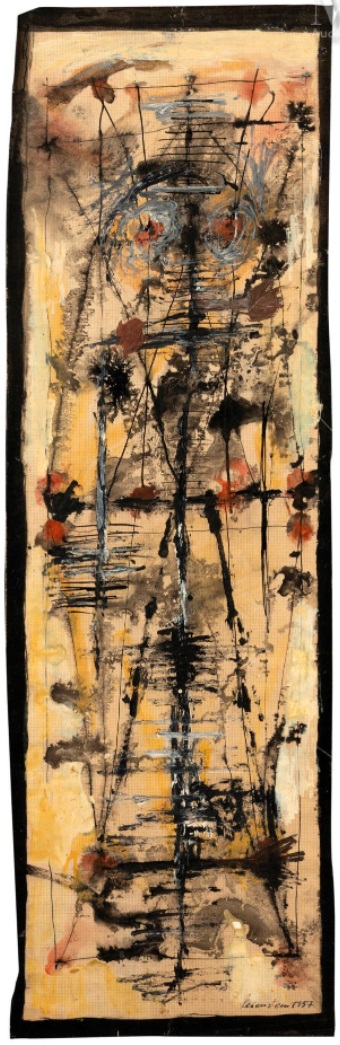
Jan Lebenstein. Sans titre, 1957
Lot 25. Jan LEBENSTEIN (1930-1999). Sans titre, 1957. Gouache, encre et lavis d’encre sur papier signé et daté en bas à droite, 57 x 18 cm. Provenance: Collection particulière, Paris. Estimate 1,500 – 2,000 euro. Millon. 11/28/22. Sold 3,000 euro
Lot 1887. Swieszewski, Aleksander 1839 Warschau – 1895 München. Paestum. Signiert. Öl/Holz, 13,5 x 25,5 cm. Opening 600 euro. Dussldorfer. 12/03/22
Dwie identyczne prace Aleksandra Świeszewskiego przedstawiające ruiny rzymskich akweduktów. Prace różnią się nieznacznie wymiarami lecz bardzo kondycją. Ta z Dusseldeorfer Auktionhaus jest gotowa do powieszenia na ścianie zaś ta druga wymaga sporej ingerencji konserwatorskiej. Obie powstały w tym samym 1882 roku i w zasadzie różnią się jedynie kompozycją chmur. Generalnie nie lubię replik autorskich bo przecież artysta mógłby zmienić kąt patrzenia, porę dnia, etc by powstały jednak dwie różne prace. Rozumiem jednak, że malarz z czegoś musi żyć, ma dylemat, i gdy jest zapotrzebowanie na konkretny ‘towar’ to trzeba temu wyjść naprzeciw. Jednak mam pewien niesmak i już kilka razy w przeszłości otrzymywałem listy od czytelników sugerujące, że oryginalną pracę to oni mają a praca sprzedawana na aukcji i przedstawiona przeze mnie na blogu to kopia. W przypadku tych dwóch prac Świeszewskiego to zwycięży moim zdaniem olej w lepszej kondycji. Nie lubię replik autorskich choć Aleksandra Świeszewskiego bardzo cenię.
Aleksander Świeszewski. Ruined aqueduct in the Roman Campagna
Lot 83. Aleksander Swieszewski 1839 Warschau – München 1895. Ruined aqueduct in the Roman Campagna. Oil on panel. 1882. 15.2 x 29.7 cm. Signed and dated lower left. Inscribed with the location “vor der Porta Giovanni de Lateran” (?) on an old label affixed to the reverse. Framed. Estimated price: € 1.500. Karlund Faber. 11/18/22. Sold 2,400 euro
Pastel pochodzi z kolekcji co do której raczej nie powinno być wątpliwości. Ciekawość budzi jedynie tematyka rusałek, eksploatowana głównie przez innych artystów. Teodor Axentowicz chyba był zajęty malowaniem ‘starości i młodości’ oraz tematów huculskich i te niekończące się już powtórzenia, dominujące na rynku, stają się nudne. Każda praca autora odbiegająca od głównego nurtu winna budzić zainteresowanie. Może tak się się stanie z ‘Rusałkami’.
Lot n°32. Teodor AXENTOWICZ (1859-1938). Baigneuses. Pastel sur papier signé “axent” en bas à gauche. 39 x 35 cm Provenance : Succession du Professeur Xénia Muratova. Estimation : 2 000 € – 3 000 €. HOTEL DES VENTES DE COULOMMIERS. 11/12/22. Sold 3,100 euro
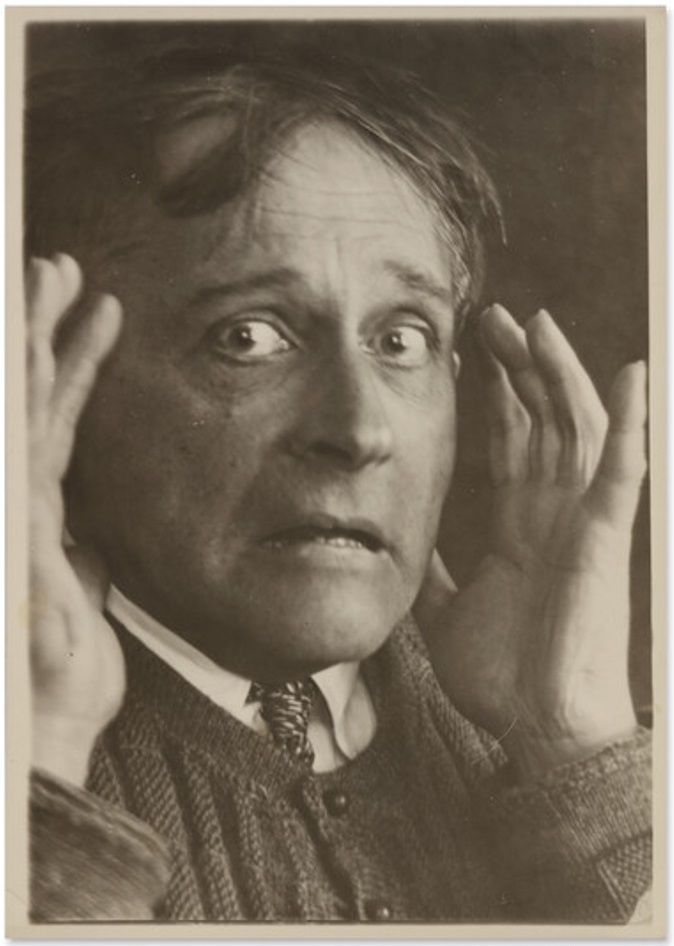
Lot 118. STANISLAW IGNACY WITKIEWICZ (WITKACY) (1885-1939). La peur du fou (Fear of the fool), gelatin silver print, 11.5 x 8.5cm. Executed in 1931. Provenance: Catherine Mayeur-Jaouen, Paris. Acquired by the present owner in 1993. Estimate 2,000 – 3,000 euro. Sotheby’s. 11/22/22






 Polish Art Corner