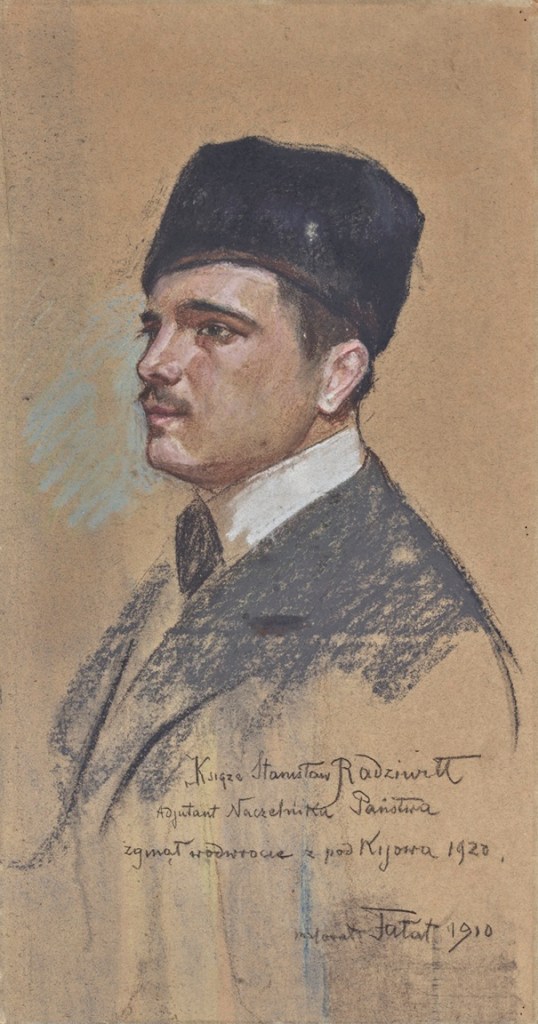
JULIAN FALAT (1853-1929). Portrait de Stanislas Radziwill à la toque, signé, titré et daté ‘1910’ (en bas à droite), pastel sur papier brun, 71 x 37,5 cm (28 x 14 ¾ in.). Estimate €300 – 500. Christie’s. 09/30/26. Sold €4,500
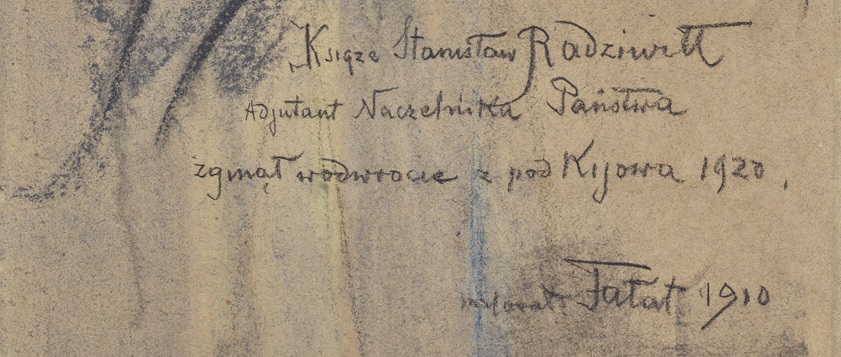
Polish painter and illustrator, Julian Falat is a leading representative of landscape and genre painting during the Young Poland period (1890-1918). He studied at the School of Fine Arts in Kraków (1869-1871) and at the Munich Academy of Fine Arts (1877-1880). A significant moment in his life is the meeting with Wilhelm Pruski (later German emperor Wilhelm II) during a hunt in Nieśwież at the estate of Prince Anton von Radziwill (1833-1904), father of Stanislas Wilhelm Radziwill (1880 – 1920) and great grandfather of Jeanne-Marie de Broglie. On this occasion, Falat was invited to Berlin where he executed many commissions for the future emperor and became a member of the Berlin Academy of Fine Arts (1893). Towards the end of his life, he retired to his estate in Bystra, Poland where he continued painting, in particular, in 1915, he painted polish soldiers and legionaries. Falat here depicts Stanislas Wilhelm Radziwill, who, as an inscription on the recto in Polish of the work recites, was ‘adjutant to the Head of State [Jozef Pilsudski (1867-1935)], fallen during the retreat of Kyiv’s troops in 1920’. This inscription was probably added ten years after the artwork was originally made, being signed by the artist and dated ‘1910’.
Stanisław Wilhelm Radziwiłł był synem dość oddalonego od polskości Antoniego Wilhelma, niemieckiego generała i adiutanta cesarzy niemieckich. Po śmieci ojca odziedziczył ogromne dobra na Polesiu. Karierę wojskową rozpoczął jako ochotnik w szeregach wojska carskiego, podczas wojny z Japonią, walczył też jako oficer rosyjski podczas I wojny światowej. W Wojsku Polskim służył od 1919 r., m.in. jako adiutant Piłsudskiego. Poprosił o przydział frontowy i został szefem sztabu 17. Pułku Ułanów. Poległ w kwietniu 1920 r. podczas ofensywy na Kijów, pod Malinem, dowodząc obroną stacji kolejowej.

