Po niedawnej moje wpadce z falsyfikatem obrazu Jerzego Dudy-Gracza w Szwecji (https://polishartcorner.com/2020/12/11/jerzy-duda-gracz-1941-2004-2/) stałem się nieco ostrożniejszy i czekam na wynik aukcji. Wydaje się, że praca jest dobra. Obraz niezwykle ‘przystępnie’ wyceniony ale to wynika raczej z nieznajomości w UK tego jednego z najlepszych współczenych polskich malarzy.
Lot 44. JERZY DUDA-GRACZ (POLISH 1941-2004). Composition 1065, signed, dated and numbered Duda Gracz.1065/1986. (upper left), oil on board, 53 x 45 cm (20 7/8 x 17 3/4 in). PROVENANCE: Private collection, Cologne, acquired in the 1970s-1980s; thence by descent to the present owner. EXHIBITED: Cologne, Art Cologne, November 1986. Estimate 800 – 1,200 GBP. Chiswick Auctions. 06/29/21. Sold 9,500 GBP
Rysunek Magdaleny Abakanowicz z lat 80-tych, jeden z serii motywów twarz i głów z tego okresu.
Lot 251. Magdalena ABAKANOWICZ (1930 – 2017). TETE N°5 – 1981. Fusain sur papier. Signé et daté en bas vers le centre gauche “M Abakanowicz, 81”, h: 100 w: 75 cm. Provenance: Galerie Jeanne-Bucher, Paris; Collection particulière, Paris (acquis directement auprès de cette dernière); A l’actuel propriétaire par descendance. Expositions : Paris, Galerie Jeanne-Bucher, “Magdalena Abakanowicz : 21 dessins au fusain”, janvier-février 1982. Commentaire : L’authenticité de cette œuvre a été confirmée par la Marlborough Gallery. Charcoal on paper; signed and dated lower centre left. Estimation 3 000 – 4 000 €. Artcurial. 06/28/21. Sold 6,500 euro
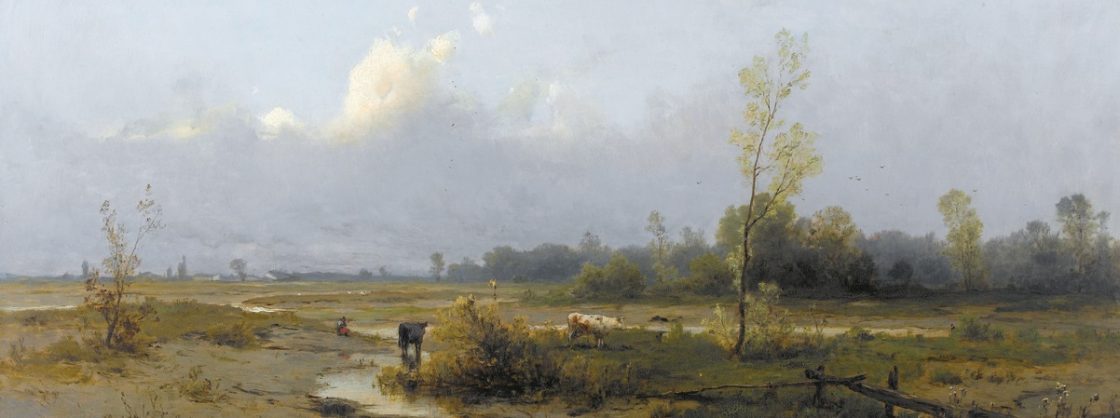
Wątpliwości nie ma odnośnie autorstwa bo tak kiepsko mógł malować tylko Ludwik Gędłek. Niemiecki dom aukcyjny dość suto wycenił te dwie prace w których dobre są jedynie ramy. Jest to karykatura malarstwa monachijskiego, choć w Polsce nie obejdzie się bez cmokania.
Ludwik Gędłek.Hochzeitszug in voller Fahrt
Lot 170. Paar Gemälde. Ludwig Gedlek 1847 Krakau – 1904 Wien “Hochzeitszug in voller Fahrt – Planwagen mit Reifenpanne” je sign. L. Gedlek Öl/Holz, 31 x 63 cm. Estimate 9,000 euro. Kunst- und Auktionshaus Döbritz. 07/10/21. Sold 13,000 euro
Lot 362. Vladimir TERLIKOWSKI (1873-1951) “Venise” hst non signée 60×92. Estimation : 2 000 – 3 000 €. Maître Philippe LANNON THIERRY-LANNON et Associés. 07/17/21
Trzy pejzaże Włodzimierza Terlikowskiego wykazującego zainteresowanie nie tylko wielką architekturą lecz również prostymi chatami z Bretanii.
Włodzimierz Terlikowski.Maison en Bretagne
Lot 533. TERLIKOWSKI Vladimir de (1873-1951) : Maisons en Bretagne. H.s.T. (non signée), 46 x 63. Estimate 300 – 400 euro. Ivoire Troyes – Boisseau-Pomez. 07/02/21
Włodzimierz Terlikowski.Maison en Bretagne
Lot 534. TERLIKOWSKI Vladimir de (1873-1951) : Maison en Bretagne. H.s.T. signée, 38 x 45. Estimate 300 – 400 euro. Ivoire Troyes – Boisseau-Pomez. 07/02/21
Lot 467. Henri HAYDEN 1883- 1970. Nature morte – 1917. Huile sur papier. Signé et daté en bas à droite “Hayden / 1917”, 42 x 36 cm (16,54 x 14,17 in.). Provenance : Galerie M.B, Paris. Offert à l’actuel propriétaire par cette dernière en 2001. Commentaire : Un certificat de la Société Civile de Défense de l’oeuvre d’Henri Hayden (S.C.O.H.H) sera remis à l’acquéreur. Estimate 15,000 – 20,000 euro. Artcurial. 06/29/21. Sold 42,900 euro
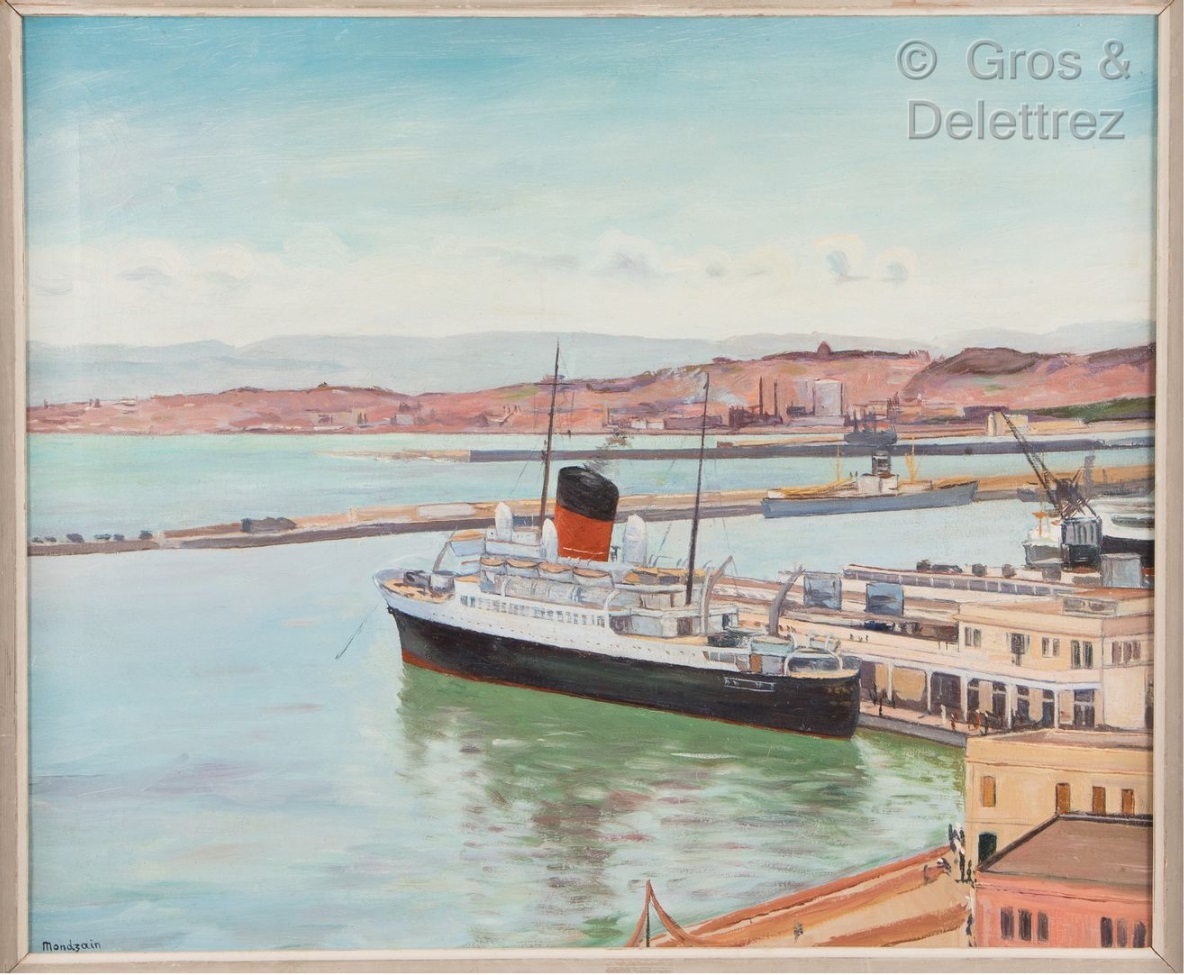
Przyjemny pajzaż mogący służyć jako plakat-reklamę portu w Algierze ale czemu aż taki drogi?
Lot 154. Simon MONDZAIN (1890-1979). The port of Algiers, station of the Transat, boat city of Algiers. Oil on canvas. Signed lower left. Titled, signed on the back. 54 x 65 cm. Estimate 8,000 – 10,000 euro. Gros & Delettrez. 06/28/21
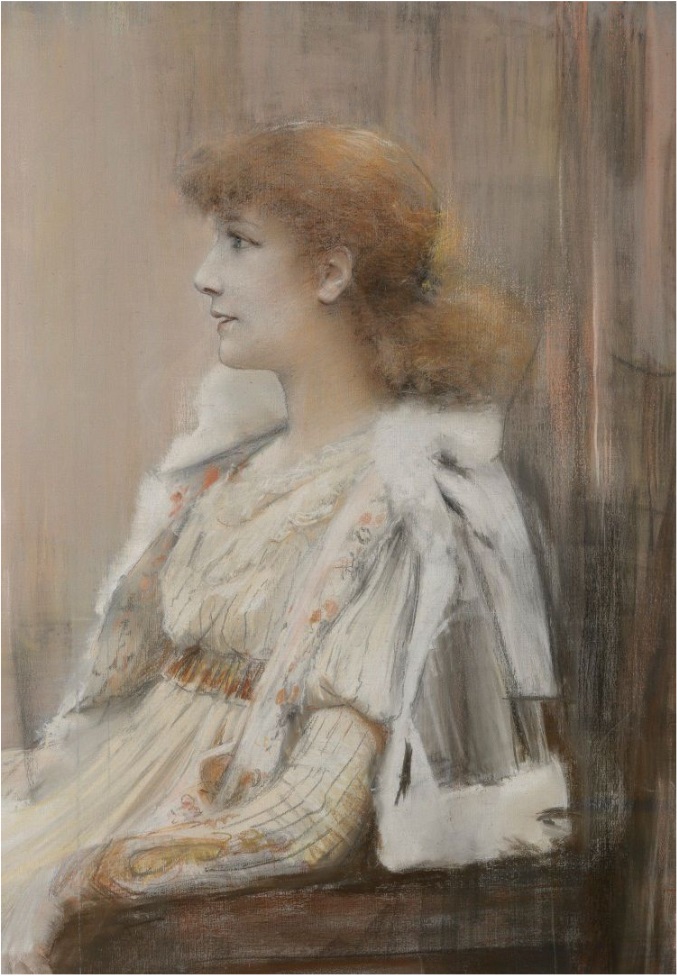
Teodor Axentowicz. “Portrait de Sarah Bernhardt dans le troisième acte de la Tosca, 1888
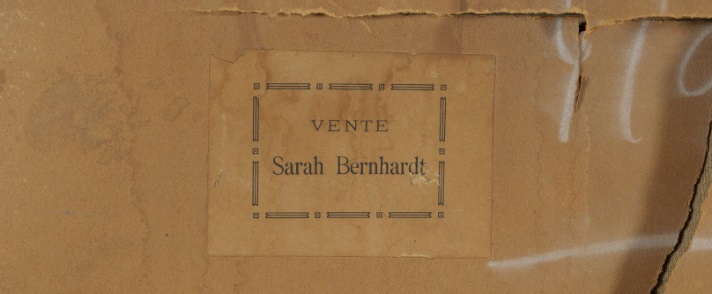
Portret Sary Benhardt (1884 – 1923) Teodora Axentowicza zostanie zauważony zarówno w Polsce jak i we Francji. Aktorka co prawda pozowała w swoim życiu do wielu portretów malowanych przez wielu malarzy lecz pamięć o niej jest chyba nadal żywa i stąd zainteresowanie pamiatkami po niej – sama również potrafiła malować i rzeźbić. Pastel Axentowicza pochodzi ze zbiorów aktorki, które zostały wyprzedane po jej śmierci. Autorzy katalogu sugerują, że ta praca mogla być prezentowana na wystawie Salon des Beaux-Arts w 1888 roku.
Sygnatura
Lot 76. Teodor AXENTOWICZ (1859-1938) :“Portrait de Sarah Bernhardt dans le troisième acte de la Tosca (de profil à gauche, assise dans un fauteuil, un mantelet garni d’hermine, jeté sur les épaules)”, pastel sur toile signé, dédicacé, situé Paris en bas à droite et daté MDCCCLXXXVIII. Au dos : étiquette de la vente Sarah Bernhardt. (n° 185 de la vente de la succession de Sarah Bernhardt, 12 juin 1923) 118 x 88 cm. Il pourrait s’agir du portrait de Mlle Sarah Bernhardt, exposé au Salon des Beaux-Arts de 1888, sous le n° 2622. Succession Nelly KAPLAN et Claude MAKOVSKI. Estimate 20,000 – 30,000 euro. Chauviré & Courant – Enchères Pays de Loire. 06/29/21. Sold 40,000 euro
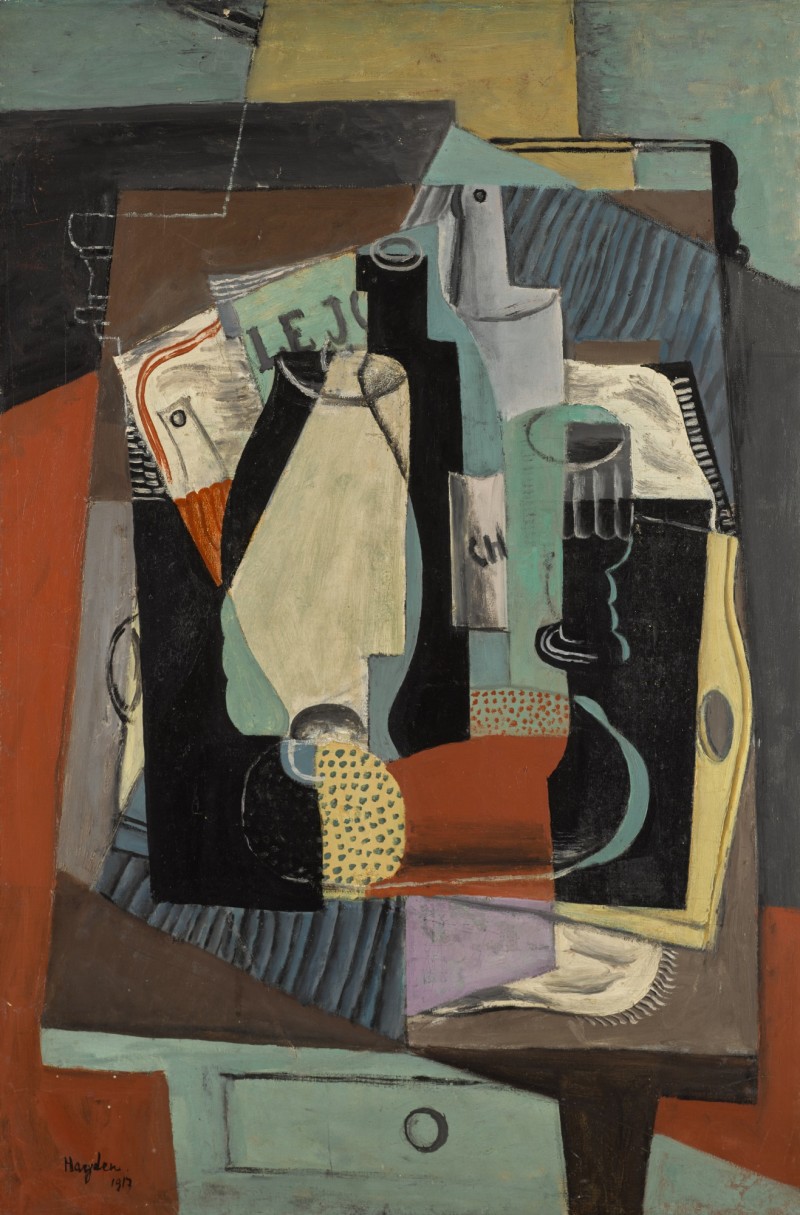
Lot 470. Henri Hayden 1883 – 1970. Table Verte. Signed Hayden and dated 1917 (lower left); titled and dated 1917 on the stretcher, oil on canvas, 81 by 54cm., 31⅞ by 21¼in. Framed: 83.3 by 56.4cm., 32¾ by 22¼in. Painted in 1917. The authenticity of this work has been confirmed by Pierre Célice. Provenance: Galerie Suillerot, Paris. Acquired from the above by the present owner in 1982. Exhibited: Bordeaux, Musée des Beaux-arts, Les Cubistes, 1973, no. 100. Estimate 180,000 – 250,000 GBP. Sotheby’s. 06/30/21. Not sold
Z długości opisu katalogowego, oraz z wyceny, mając mierne pojęcie o różnych okresach twórczości artysty, sądzę, że powinna to być ważna praca Henryka Haydena. Jeszcze ważniejsza, z 1913 roku, sprzedana została rok temu za ponad milion funtów: https://polishartcorner.com/2020/02/11/henryk-hayden-1883-1970/
“I only absorbed Cubism in 1915, after having swallowed and digested all of French painting in a few years. The rapid absorption led me, in a spirit of creative synthesis, without even realising, to Picasso and Braque’s experimentation at the time.” (Henri Hayden, quoted in: Anisabelle Berès & Michel Arveiller, Au temps des cubistes 1910- 1920, Paris, 2006, p. 252)
Having moved to Paris in 1907, Hayden was surrounded by the various artistic experiments of the French avant-garde. The Polish artist joined the Cubist movement in 1915, and befriended some of the most influential artists that were active in the capital, including Pablo Picasso, Juan Gris and Georges Braque. Through the Salon des Indépendants, the art dealer Wilhelm Unde, and Daniel-Henry Kahnweiler, Hayden discovered the masterpieces of the avant-garde.
Table Verte, painted in 1917, is one of a small number of still-life works where the Polish painter’s thoughts on form and colour are brought to their highest point. Painted a year after Hayden had signed a contract with Léonce Rosenberg, whose gallery L’Effort Moderne was at the heart of the avant-garde, the work shows the influence of what had come to be known as “Synthetic Cubism”, which involved incorporating external elements into the canvas. Picasso and Braque had pioneered and experimented with this technique between 1912 and 1914. In the present work, Hayden distances himself from the fathers of Cubism in particular in his choice of colour palette, not limited to earthy and dark tones he introduces vivid tones of red and blue rhythmically throughout the composition. The newspaper headline “Le Jou” is a direct reference to Picasso, who had often employed this in his works of the 1910s.
The present work is hence a virtuous example of Hayden’s early articulation of Cubism. The artist demonstrates a veritable flare for surface handling, trompe l’oeil effects and inventive lines: the surface of the painting is dextrously divided into juxtaposed, contrasting textures, forms and colors that transform the everyday subject matter into a vibrant hymn to painting itself. In the Cubist genre par excellence of the still-life, Hayden succeeds in creating a new sensation of space through superposed lines and planes and the juxtaposition of warm and cold colours.
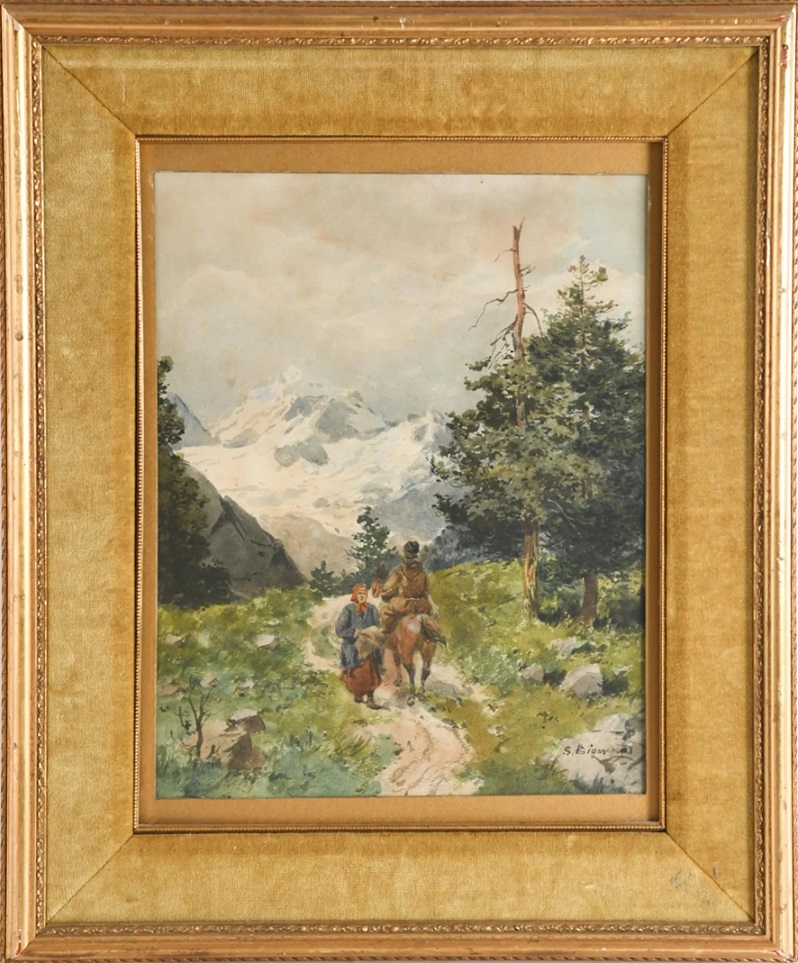
Przyzwoita, kompozycja wykonana w akwareli, scenka rodzajowa Seweryna Bieszczada przedstawiająca romawiającą parę w górkiej scenerii, być może Hucułów. Nieźle się wplata w tematykę szkoły monachijskiej, blisko podobnych statycznych prac Władysława Szernera, choć wykonanie nie z tej samej półki.
Lot 302. SEWERYN BIESZCZAD (POLAND 1852-1923). Watercolor on paper, depicting figures, one atop a horse, in a mountainous landscape. Signed lower right. Dimensions: (Frame) H 22″ x W 18.25″, (Sight) H 14″ x W 11″ Condition: Slight toning to paper including a couple stray marks. Estimate $10 – 1,000. Westpoer Auctions. 07/01/21
Lot 265. Roman OPALKA (1931 – 2011). OPALKA 1965/1-infini DETAIL 4358721-4361280 (Carte de voyage) – 1965. Encre sur papier. Signé, daté et titré au dos “Opalka, 1965, 1-infini, Détail-4358721-4361280, 2″h: 32,80 w: 23,80 cm. Provenance : Galerie Isy Brachot, Bruxelles (acquis directement auprès de l’artiste). Collection Christine Lechanjour. Expositions : Dunkerque, Ecole d’Art, “Opalka 1965/1-infini”, juin-juillet 1990, reproduit p. 90. Nice, Galerie Le Chanjour, “Roman Opalka”, 1990. Bibliographie : Cette œuvre sera incluse dans le Catalogue Raisonné de l’œuvre de l’artiste, actuellement en préparation par Monsieur Michel Baudson sous le n°Dcv 416. Commentaire : Ink on paper; signed, dated and titled on the reverse. Estimation 50 000 – 70 000 €. Artcurial. 06/28/21. Sold 60,000 euro
Jedni uważali i nadal uważają go za geniusza a inni uważali go i nadal uważają za hochsztaplera. Roman Opałka malował cyfry i liczył w tym sposób na płótnie przemijający czas. Czyż nie należy kontynuować pracy artysty przerwanej śmiercią? Osobiście wolę czas mierzony Komedią ludzką Balzaka czy Trylogią Sienkiewicza od wpatrywania się w liczby na płótnie. Jacek Malczewski mierzył się z czasem na swój sposób a Roman Opałka na swój. Jak to im wyszło to niekoniecznie trzeba pytać współczesnych krytyków bo można w sposób cichy (bez Twitera czy Facebooka) mierzyć to bezkompromisowo własnymi wartościami.
Roman Opałka.Detail 3727947-3730729
Lot 927. Roman Opalka. 1965/1-∞ Detail 3727947-3730729. Tinte auf Velin. 1965. Ca. 33 x 24 cm. Verso signiert, datiert und betitelt. Das Jahr 1965 markiert eine wichtige Zäsur im Werk des polnisch-französischen Künstlers Roman Opalka. Damals noch in Warschau lebend, beginnt er mit der Arbeit an seinem Hauptwerk – seinem Lebenswerk: „1965 / 1 – unendlich“. Mit titanweißer Farbe schreibt er in die obere linke Ecke einer dunkel grundierten Leinwand die Zahl „1“ und fährt fort, von links nach rechts unendlich weiter zu zählen. Ab 1972 dokumentiert er die Entstehung jeder Arbeit durch das Aufsprechen der Zahlen auf Tonband. Im Laufe der Jahre wird Opalkas Konzept immer strenger, die Leinwände müssen alle die gleiche Größe haben, am Ende jedes Arbeitstages fotografiert er sich selbst im offenen, weißen Hemd vor seinem Tagwerk. 1972 beschließt er zudem, die Grundierung von Leinwand zu Leinwand um 1 % aufzuhellen. Schließlich sind die Ziffern kaum mehr wahrzunehmen. Bis zu seinem Tod entstehen so 233 „Details“ auf Leinwand bis zur Zahl 5.607.249. Ist er unterwegs oder auf Reisen, nutzt Roman Opalka Papier und Bleistift bzw. Tusche zum Fortschreiben dieses gewaltigen Gesamtkunstwerks – es entstehen sogenannte „Reisekarten“ bzw. „Reisezeichnungen“. Jedes Gemälde bzw. jede Zeichnung knüpft dort an, wo die vorherige aufgehört hat. Je nach Intensität des Farbauftrags entsteht so ein vibrierendes, lebendiges Zifferngewebe vor den Augen des Betrachters. Durch diese streng konzeptuelle Haltung sind Lebenszeit und Arbeitszeit im Werk Opalkas miteinander verschmolzen: Durch die systematische Entwicklung und Materialisierung seiner Idee gelingt es ihm, Zeit sichtbar zu machen und den Betrachter mit der Frage von Zeitlichkeit zu konfrontieren. „Ein einziges Konzept, eine einzige Farbe, ein einziges Bild: Mein Vorgehen ist das minimalste des Minimalen; aber es geht um das Leben, seine Umsetzung in ein Werk, seine Verkörperung für eine maximale Kunst: die Zeit eines Daseins ohne Wiederholung und ohne Umkehr. Niemals das gleiche Bild, niemals die gleiche Fotografie, allezeit die Verschiedenheit; das Leben verzehrt sich, das Bewußtsein verstärkt sich.“ Die Konsequenz, mit der Roman Opalka sein Konzept beibehält, ist dabei absolut einzigartig: die Zeit selbst rinnt durch seine Bilder, sein Werk erfüllt sich im unendlichen Fortlaufen der Zeit.Estimate 60,000 – 70,000 euro. Karl und Faber. 07/14/21. Sold 64,000 euro





 Polish Art Corner