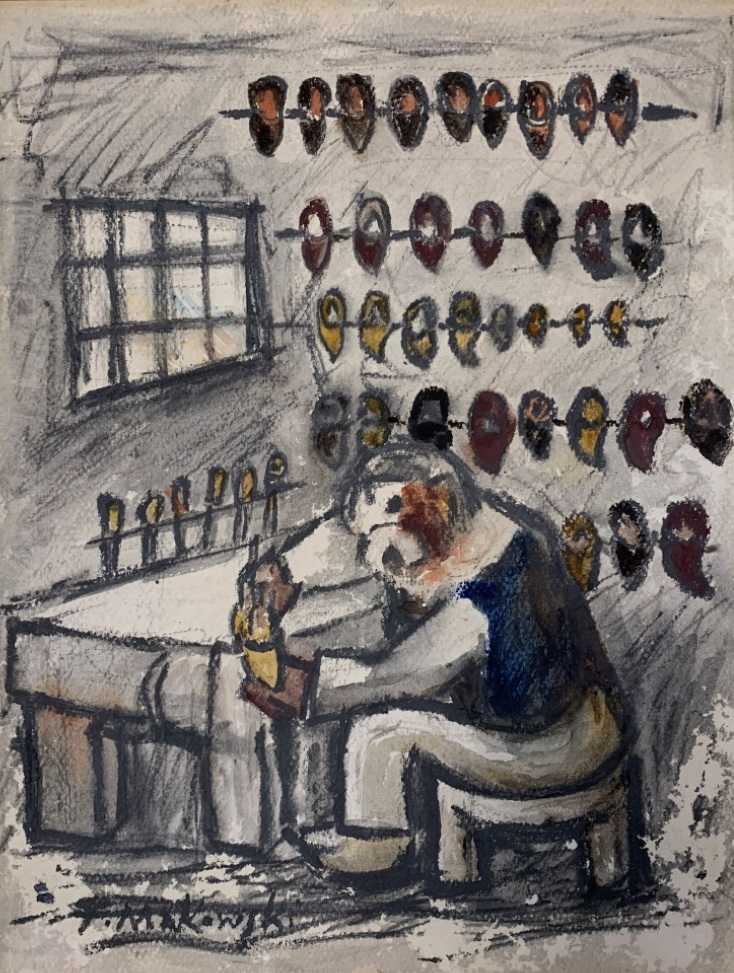
Szkic rysunkowo-kredkowy, atrybucja znanej pracy Tadeusza Makowskiego Szewc był licytowany we Francji z ceną szacunkową 600 – 800 euro. Ku uciesze i zakoczeniu domu aukcyjnego praca ta została sprzedana za 10,000 euro. Być może ktoś miał dobre informacje o proweniencji i uznał, że jest to szkic rzeczywiście Tadeusza Makowskiego lub walczyła grupa suckers i wygrał chief sucker. Co na to inni?
Lot 1. Attribué à Tadeusz MAKOWSKI (1882-1932). Le Sabotie, vers 1927 – 1930. Fusain, encre et aquarelle signé en bas à gauche. 30,5 x 23 cm. (Papier épais contrecollé sur carton. Deux petits trous dans les parties blanches, probablement frottées ou grattées, en bas à gauche et en bas à droite et deux trous de puniases en haut au centre). Oeuvre en rapport: Varsovie, Musée National d’Art, n° MPW 1115 MNW. Estimate 600 – 800 euro. Côte Basque Enchères Lelièvre – Cabarrouy. 11/05/22. Sold 10,000 euro
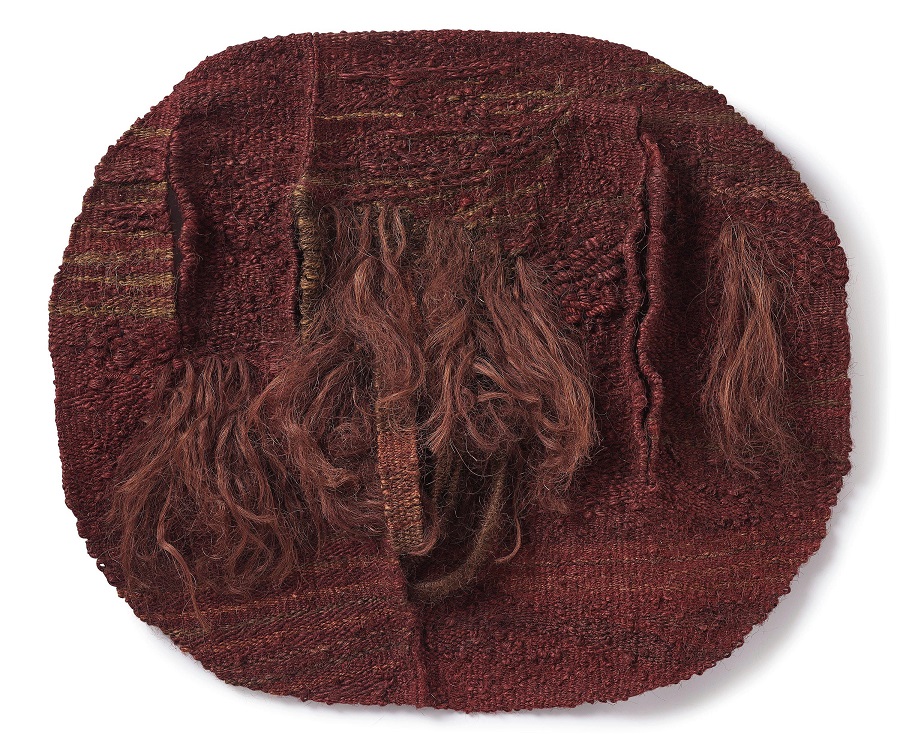
Jeden z ‘Abakanów’ p. Magdaleny powstałych w latach 60-tych na aukcji u Bukowskiego w Szwecji, który właściwie jest filią Bonhams. Trudno uwierzyć, ale przypominam sobie, że kilka takich trójwymiarowych prac widziałem na ścianach w prywatnych mieszkaniach. To było dawno temu i było to chyba pierwsze moje spotkanie ze współczesną sztuką u zwykłych ludzi, nie kolekcjonerów.
Lot 198. Magdalena Abakanowicz, A tapestry, “Bordeaux“, flat weave, ca 125 x 107 cm, signed and dated 1969 at the back. Oval, burgundy ground in sisal and attached horsetail. Estimate SEK100,000 – SEK150,000 (£7,900 – £12,000). Bukowskis. 11/16/22
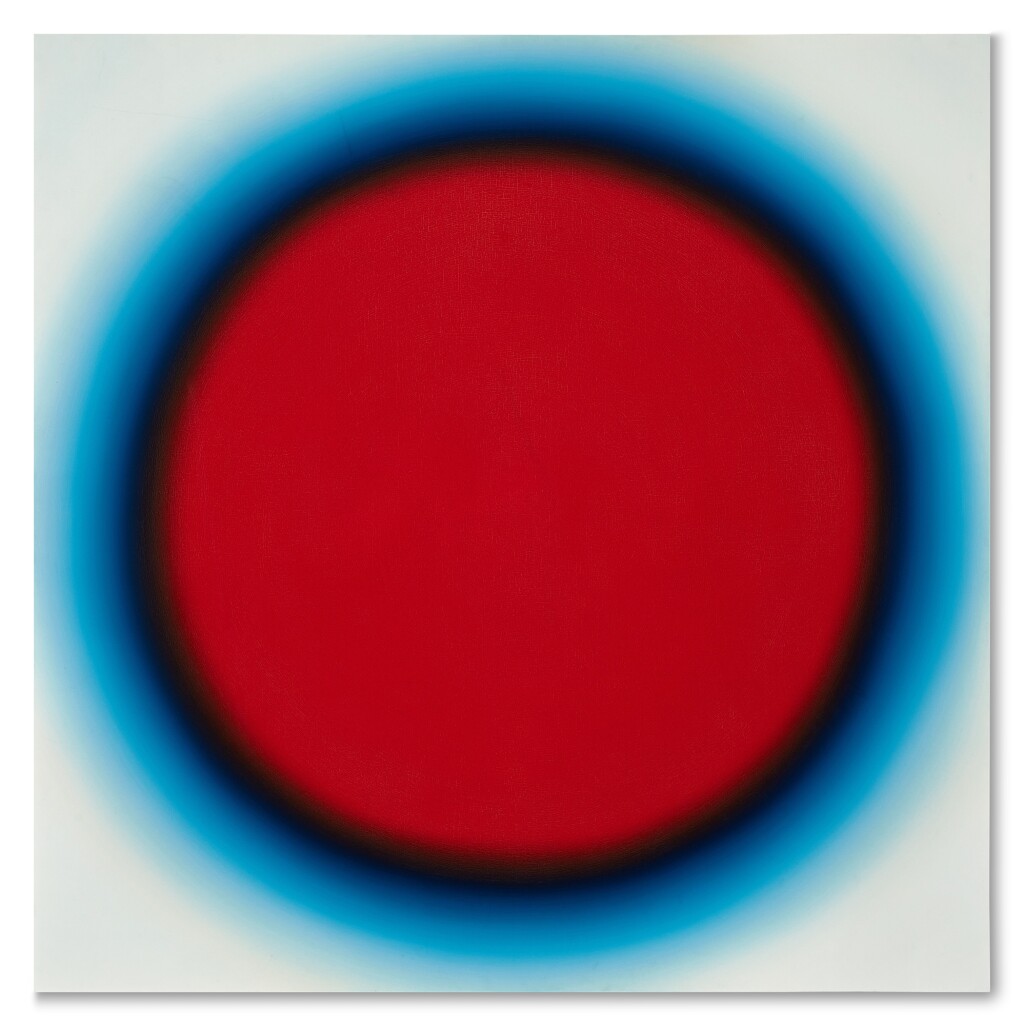
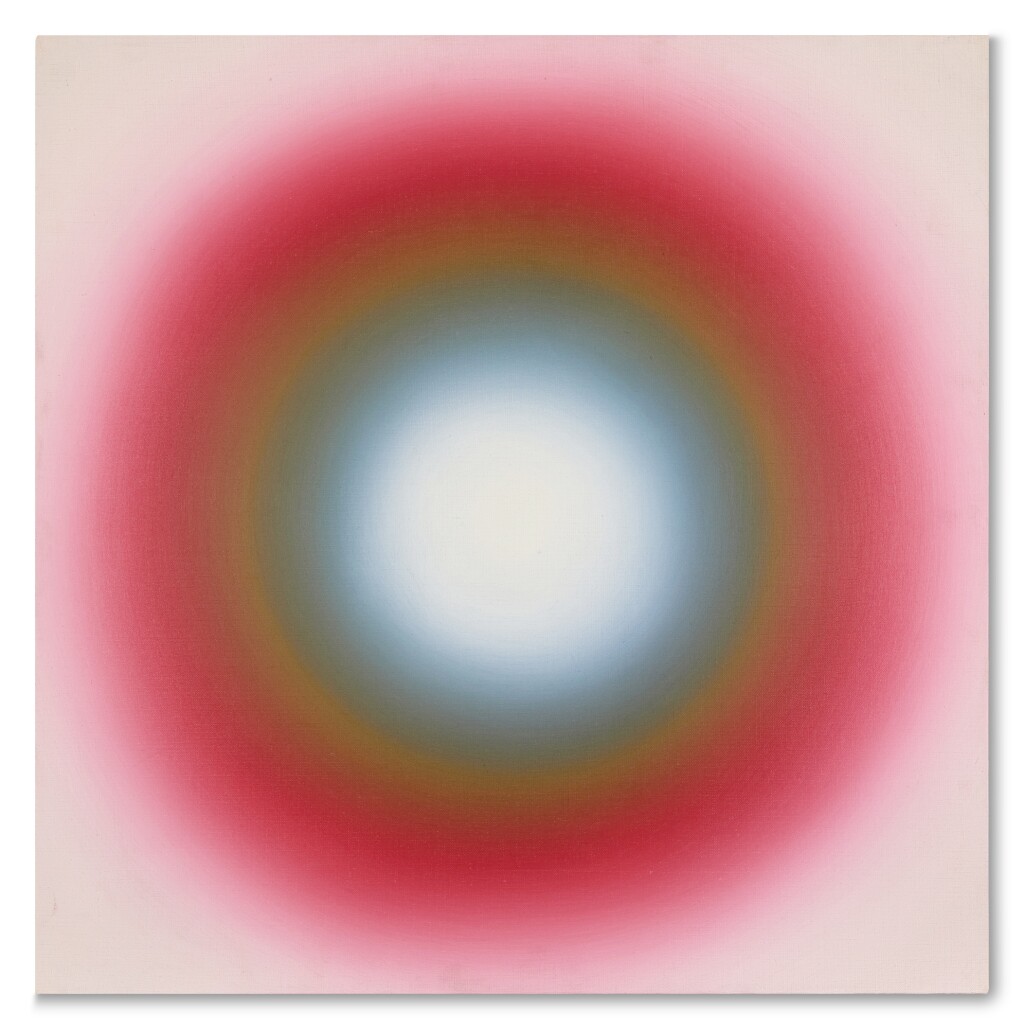
Lot 667. Wojciech Fangor 1922 – 2015. New Jersey 5, signed FANGOR, titled NJ5 and dated 1965 (on the reverse), oil on canvas, 55⅞ by 55⅞ in. 141.9 by 141.9 cm. Executed in 1965. Property from the Solomon R. Guggenheim Museum, Proceeds to Benefit the Art Fund and Collection Care
Provenance: Mary M. Peer, Short Hills (acquired directly from the artist in 1965). Acquired from the above as a gift in 1965 by the present owner. Property from the Solomon R. Guggenheim Museum, Proceeds to Benefit the Art Fund and Collection Care
Exhibited: “Reviews and Previews” Art News 66,April 1967, p. 11 (text). Margit Rowell and Linda Konheim, Selections from the Guggenheim Museum Collection, 1900-1970, New York, 1970, p.113, illustrated. Vivian Endicott Barnett, The Guggenheim Museum Collection 1900-1980: Handbook, New York, 1980, pp.500-501, illustrated. Madison, Fairleigh Dickinson University, University Art Gallery & New York, Riverside Museum, International Artists’ Seminar 1965: Optical Art, 1965. New York, Galerie Chalette, Fangor, 1967, p.14, illustrated in color. New York, Solomon R. Guggenheim Museum, Seven Decades, A Selection, 1967. Cincinnati Art Museum, A Loan Exhibition of Modern Paintings Covering the Period 1949-65, from The Solomon R. Guggenheim Museum, 1969-1970 . New York, The Solomon R. Guggenheim Museum; Fort Worth Center Museum; University of California, Berkeley, University Art Museum, FANGOR, 1970-1971, no. 1, p. 14, illustrated in color
Estimate $300,000 – 400,000. Sotheby’s. 11/17/22. Sold $630,000
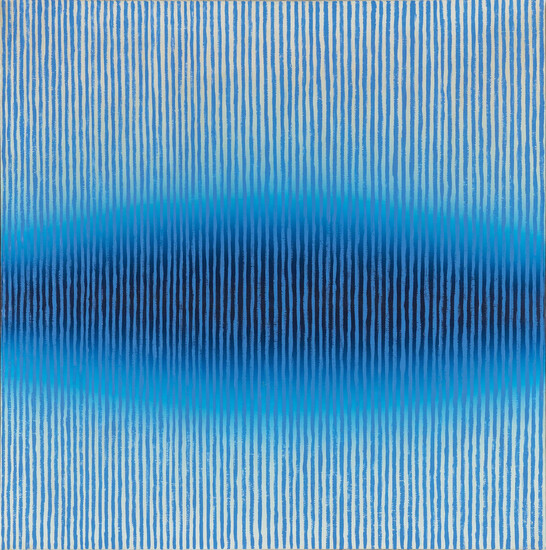
Widzę, że nawet nowojorskie Muzeum Guggehaima robi po-pandemicznie bokami i zmuszone jest do wyprzedaży ‘gorszych’ prac ze swojej kolekcji z braku odwiedzających. Taki los spotkał dwa ‘koła’ Wojciecha Fangora, które znalazły się na aukcji w Sotheby’s 17 listopada. Z jednej strony to przykro, że polska sztuka współczesna starciła tam blask w osobie Fangora (może coś jeszcze maja w magazynach?) a drugiej strony będą cieszyli się ci (prawdopodobnie z Polski), którzy kupią te dwie prace z taaaaaką proweniencją. Przypuszczam, że New Jersey 5 pobije wszelkie rekordy. Dla biegniejszych pozostanie olej N 20. Inna sprawa, że daroczyńcy, którzy przekazali muezem te dwa obrazy odpisali sobie od podatku drobną kwotę w porównaniu do tej obecnej. Również Van Ham ma na swojej aukcji pracę Fangora, choć nie jest to koło a inny op-art. Wygląda mi na to, że Tarasewicz wpatrzył się w podobne prace Fangora, choć paćka raczej w poziomie.
Wojciech Fangor. M4, 1966
Lot 668. Wojciech Fangor 1922 – 2015. M4, signed FANGOR, titled and dated 1966 (on the reverse), oil on canvas, 22⅛ by 22⅛ in. 56.2 by 56.2 cm. Executed in 1966. Property from the Solomon R. Guggenheim Museum, Proceeds to Benefit the Art Fund and Collection Care. Provenance: Andrew Powie Fuller and Geraldine Spreckels Fuller, Palm Beach. Acquired as a gift from the above in 1999 by the present owner. Estimate $100,000 – 150,000. Sotheby’s. 11/17/22
Wojciech Fangor. N20, 1963
Lot 111. Fangor Wojciech Warsaw 1922 – 2015. “N 20“. 1963.Oil on canvas. 100 x 100cm. Signed, titled and dated verso upper left: FANGOR #20 1963. The work is listed on the artist’s official website (www.catalogue.fangorfoundation.org). Provenance:- Galerie Springer, Berlin; – Private collection Northern Germany; – Private collection Berlin. Exhibitions:- Galerie Springer, Berlin 1965; – Dom Galerie Köln, 1966. Literature:- Exhibition cat. Fangor, Springer Gallery, Berlin 1965, ill. (enclosed). Estimate 100,000 – 150,000€. Van Ham. 11/30/22
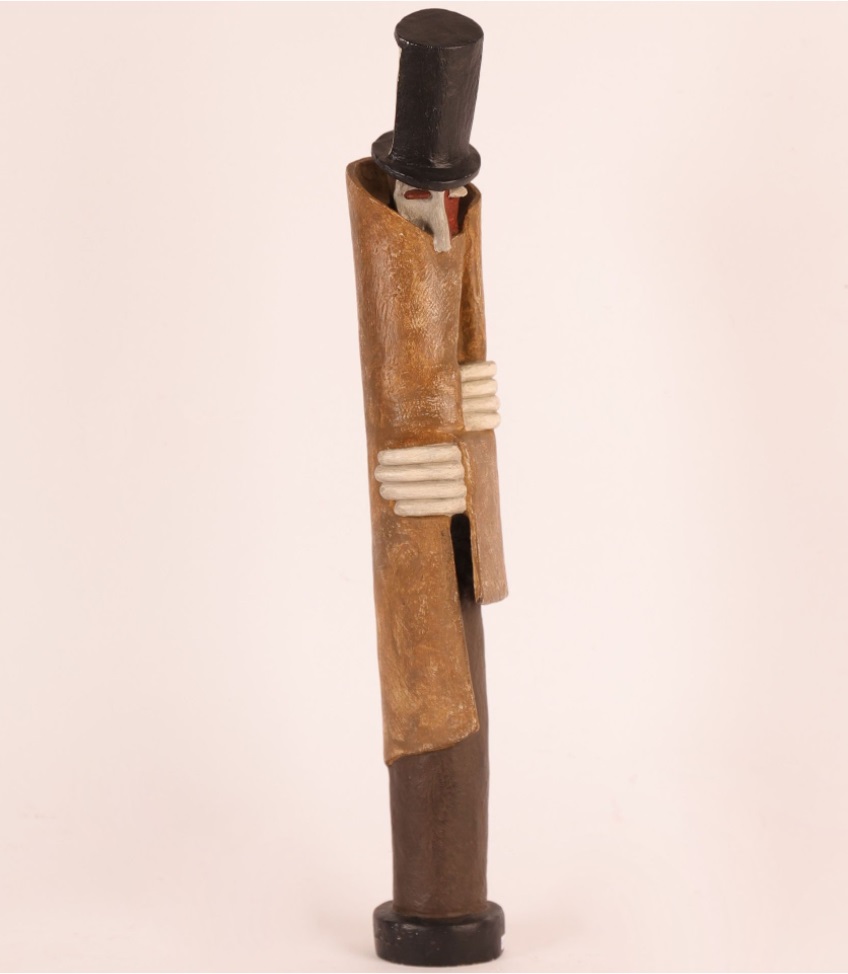
Lot 188. Jean LAMBERT-RUCKI. SCULPTURE “HOMME À LA CAPE” de Jean LAMBERT-RUCKI (1888-1967). Bronze polychrome, fonte posthume du modèle en plâtre réalisé en 1937. Signé en bas, cachet JDV, cachet de fondeur TEP, épreuve d’artiste numérotée IV/IV, H : 62 cm. On y joint de la documentation de la galerie parisienne Jacques De Vos représentant l’artiste. Provenance : Ancienne collection Sjöberg, ami proche de l’artiste. Expositions :-“Jean Lambert-Rucki, 1888-1967”, DeVos Giraud Gallery, New York, Nov/Déc 2006, -“D’hier à aujourd’hui, l’expressionnisme entre Figuration et Abstraction. Jean Lambert-Rucki et Félix Rozen” Musée des années 30, Boulogne Billancourt, Nov 2004/Janv 2005 (terre cuite polychromée). Estimate 15,000 – 20,000 euro. HÔTELS DES VENTES DE CHANTILLY & DE RESSONS SUR MATZ. 11/106/22
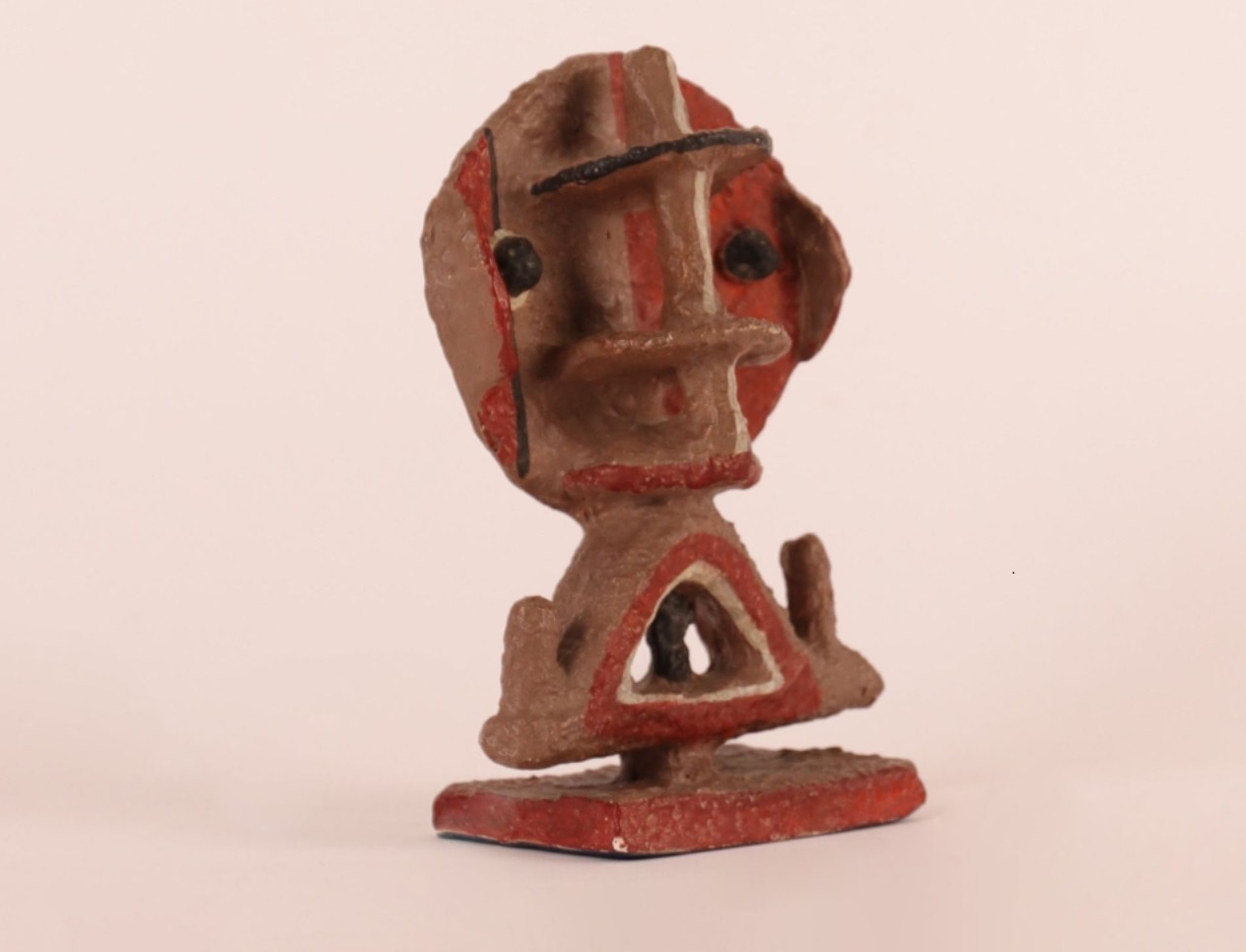
Dwie rzeźby Jeana Lambert-Ruckiego, odlewy pośmiertne.
Jean Lambert-Rucki. SOLEIL ROUGE, PM
Lot 195. Jean LAMBERT-RUCKI. SCULPTURE “SOLEIL ROUGE, PM” de Jean LAMBERT-RUCKI (1888-1967). Bronze polychrome, tirage original posthume du modèle en terre cuite réalisé en 1937. Signé à l’arrière, cachet JDV, numérotée 5/8. Fondeur Centri-Or, 18 x 12 x 6 cm. On y joint de la documentation de la galerie parisienne Jacques De Vos représentant l’artiste. Une attestation d’origine signée des filles de l’artiste sera délivrée à l’acquéreur. Estimate 5,000 – 6,000 euro. HÔTELS DES VENTES DE CHANTILLY & DE RESSONS SUR MATZ. 11/106/22
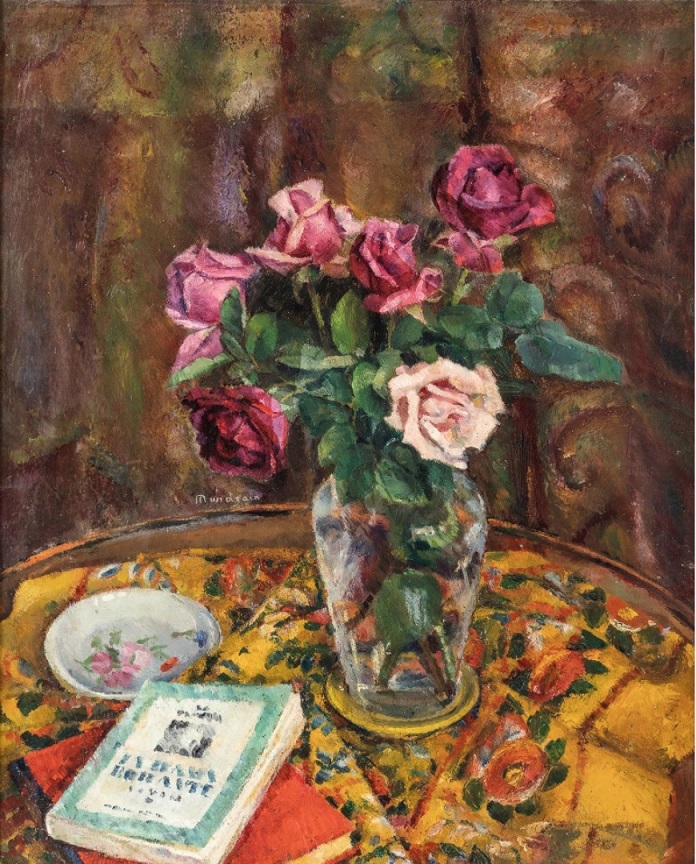
Dekoracyjna martwa natura Szymona Mondzajna, atrakcyjnie wyceniona.
Lot 1205. Mondzain, Simon 1890 Chelm/Poland – 1979 Paris. Studied at the art academies in Warsaw and Krakow, with a scholarship he came to Paris, was active in France, Algeria and Morocco. Oil/lw. Still life. On round tablecloth, glass vase with bouquet of roses, next to it a porcelain plate and books arranged. Seitl.l. sign. 61 x 48,5 cm. Opening 2,000 euro. Pege. 11/25/22
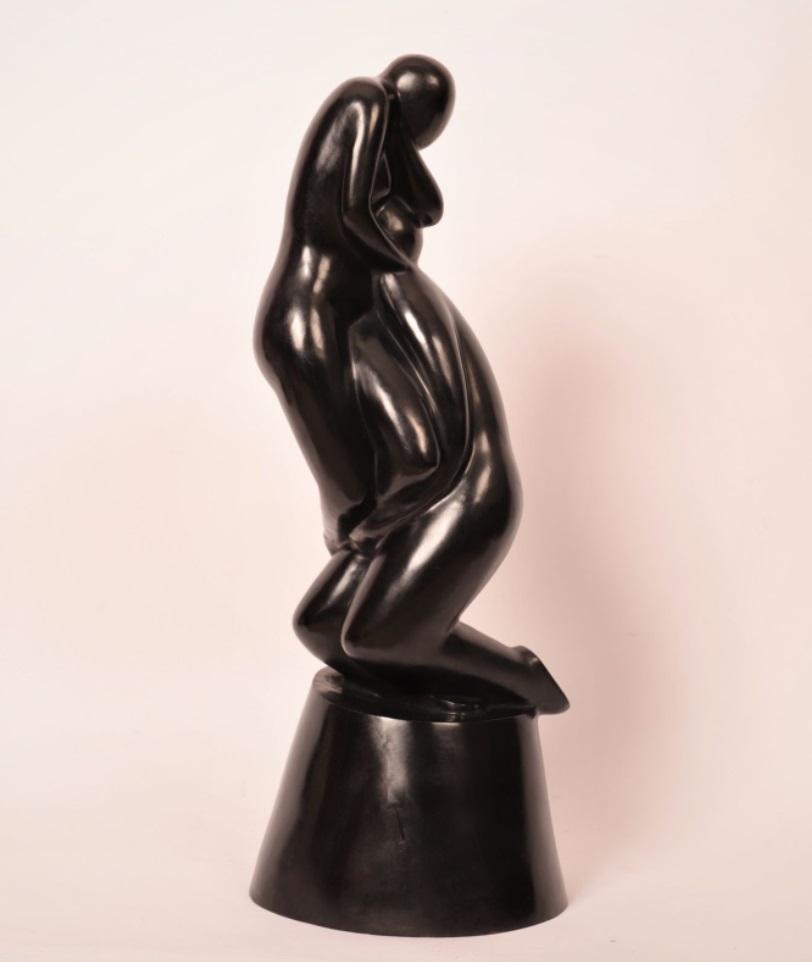
Lot 183. SCULPTURE “TANGO n°XIII” by Auguste ZAMOYSKI (1893-1970). Bronze with black patina after the model of 1922. Signed and bearing the rectangular foundry stamp “cire perdue. C.Valsuani”, XXth century. 48 x 19 x 15 cm (excluding wooden base). A certificate of Mr. Christophe Zagrodzki, CVV approved expert, will be given to the buyer.
Coming from a great aristocratic family, a man of many talents and passions, August Zamoyski remains above all one of the greatest Polish sculptors. Remaining one of the key figures of the Formists movement, he later returned to a more classical expression. Settled in Paris in 1924, he frequented the bohemian milieu of Montparnasse. He won the Grand Prix at the 1925 and 1937 International Exhibitions. After a long stay in Brazil, he returned to France and continued to work in his studio in Saint-Clar-de-Rivière. All this heritage has recently been transferred to the National Museum in Warsaw.
Estimate 20,000 – 25,000 euro. Hôtel des Ventes de Chantilly Oise enchères. 11/06/22
Trzy brązy Augusta Zamoyskiego na aukcjach w Chantilly. Rzeźby tego artysty na rynku to spora rzadkośc. Obecny na aukcji egzemplarz Tanga był sprzedany w 2021 roku w tym samym domu aukcyjnym za 20,000 euro (poznaję po słojach drewnianej podstawy): https://polishartcorner.com/2021/07/02/august-zamoyski-1893-1970-3/. Zadziwia mnie ta sama wycena co przed rokiem i gotowość sprzedaży za tę samą cenę.
Głowa Ludwika Markusa to również rzeźba z tego samego domu aukcyjnego (Chantilly), odlew późniejszy, niesprzedany (?) w 2021 roku z wyceną 15,000 – 20,000 euro.
Trzecia z rzeźb to Ich dwoje, odlew współczesny. Rok temu w tym samym domu sprzedano odlew tej rzeźby sprzed wojny, osadzony na innej podstawie, z proweniencja Garlerii Zak, za 113,000 euro (https://polishartcorner.com/2021/07/02/august-zamoyski-1893-1970-3/). Wówczas rzeźba wyceniona była w granicach 120,000 – 150,000 euro. Dziwne, bo w marcu 2022 roku ten sam lub może inny egzemplarz był znowu w Chantilly wyceniony niżej bo 70,000 – 80,000 euro (https://polishartcorner.com/2022/03/12/august-zamoyski-1893-1970-4/). W sumie brakuje mi zrozumienia co tak naprawdę dzieje się w Chantilly w stosunku do prac Zamoyskiego. Interesuje mnie, kiedy te egzemplarze zostały odlane, ile egzemplarzy wykonano i czy sa one numerowane; wygląda to tak, że Chantilly sprzedaje egzemplarz po czym po pół roku otwiera szuflade i wyciaga kolejny na aukcję. Myślę, że Pan Krzysztof Zagrodzki, dający gwarancję rzetelności obecnej aukcji zna kulisy tej i poprzednich sprzedaży.
Na marginesie, Chantilly jest sławne ze swoich koronek oraz…z piosenki z 1958 roku ‘Chantilly lace’ w wykonaniu The Big Bopper – proszę odszukać i posłuchać. Ta piosenka zdecydowanie ożywi ten mój nudny, techniczny, wpis.
August Zamoyski.HEAD OF LOUIS MARCOUSSIS
Lot 180. Auguste ZAMOYSKI. SCULPTURE “HEAD OF LOUIS MARCOUSSIS” by Auguste. ZAMOYSKI (1893-1970). Bronze with black patina, after the model of 1923. Signed and stamped by the founder “cire perdue C. Valsuani” on the back, 20th century. H : 29,5 cm. A certificate of Mr Christophe Zagrodzki, approved expert CVV, will be given to the purchaser. Estimate 20,000 – 25,000 euro. Hôtel des Ventes de Chantilly Oise enchères. 11/06/22
August Zamoyski.ENVOL ” n°V
Lot 185. Auguste ZAMOYSKI. LARGE SCULPTURE ” ENVOL ” n°V” by Auguste ZAMOYSKI (1893-1970). Bronze with black patina after the model of 1927. Signed at the bottom and stamped “cire perdue C. Valsuani”, XXth century. H : 70 cm. A certificate of Mr Christophe Zagrodzki, CVV approved expert, will be given to the buyer. Estimate 35,000 – 45,000 euro. Hôtel des Ventes de Chantilly Oise enchères. 11/06/22
Lot 60. ADAM STYKA (POL-FRA/ 1890-1959). Portrait de femme berbère. Huile sur toile marouflé sur panneau. Signé ‘ADAM STYKA’ (en bas à droite). Signé à nouveau ‘STYKA’ (au revers), 51,5 x 42 cm. Estimate 3,000 – 5,000 euro. Osenat. 11/20/22
Moje zdumienie, że takie rzeźby jeszcze się odnajdują. Brak jakiejkolwiek informacji o jej proweniencji a to może być niezwykle ciekawe.
Lot 58. Edward WITTIG (Varsovie 1879 – 1941). Bust of a woman. Circa 1906. Height : 61 cm. Width : 58 cm. Depth : 31 cm. Signed on the base on the left “E. Wittig”. Edward Wittig was born in Warsaw in 1877. He studied at the Academy of Fine Arts in Vienna with J. Tautenheim from 1897 to 1900. He then moved to Paris and entered the École des Beaux-Arts under the direction of Madeleine Jouvray, a former student of Auguste Rodin. In 1909, he returned to Poland and settled in a residence belonging to friends and produced numerous sculpted portraits and medals.
Edward Wittig is one of the greatest representatives of monumental sculpture in the inter-war period. The realization of monuments for the public space guarantees him a prestigious recognition. The sculpture of Eve, dated 1911, is one of his first commissions, which was installed both in the Ujazdowski Park in Warsaw and in the Trocadero Gardens in Paris. Guillaume Apollinaire wrote a remark about this work: “Wittig’s Eve is a perfect example of the new tendencies of modern sculpture, which do not bar either style or life”. In 1932, Wittig created the monument to the aviator among other famous monuments in Poland. Edward Wittig actively participated in the artistic and cultural life of his time. From 1914 to 1920, he was a professor at the School of Fine Arts in Warsaw and at the University of Technology in the same city. In 1921, he was appointed general curator of the Salon de la Société Nationale des Beaux-Arts at the Grand Palais. He participated in the Salon de la Société Nationale des Beaux-Arts de Paris from 1903 to 1914 as well as the Salon d’Automne in 1906. His sculptures were also presented at the Venice Biennale in 1920 and 1934. The sculptor’s works are exhibited in numerous galleries and museums in Poland (Zacheta Gallery in Warsaw and the Society of Friends of Fine Arts in Krakow), in France (Toulouse Museum) and in the Netherlands (Palace of Justice in The Hague). The National Museum in Warsaw has several works by the sculptor in its collections, as does the Musée de Grenoble in France. Edward Wittig was one of the most prestigious portraitists of his time, representing the French and Polish nobility of his time; he notably created the bust of Countess Xavier Branicka in 1914. His works are seen as a balance between academic tradition and innovative artistic trends.
This marble bust shows similarities with some of Auguste Rodin’s sculpted portraits. The smooth face, the pure line contrasts with the rougher base that keeps visible the traces of the scissors. This sculpted portrait was probably commissioned by a wealthy heiress or aristocratic figure and is a very rare example of the artist’s sculptural work.
Estimate 20,000 – 25,000 euro. Millon. 11/29/22. Sold 25,000 euro
Dość ważny obraz Leopolda Gottlieba z początków XX wieku przedstawiający malarza Leona Hirszenberga. Ciekawe jest w jaki sposób obraz ten trafił z bardzo znanej Ben Uri Collection na rynek (https://www.benuricollection.org.uk/). W tej kolekcji znajduje się obecnie tylko jeden obraz namalowany przez Leopolda Gottlieba. Zdumiewające dla mnie jest wyzbycie się tego obrazu lub może był jedynie w depozycie od 1930 roku(?). Może proweniencja tej pracy nie została dokładnie opisana. Należałoby zapytać p. Mielniczuka, eksperta tej aukcji.
Lot 30. Leopold GOTTLIEB (Ukraine 1883 – France 1934). Portrait of Leon Hirszenberg. Circa 1904-1907. Oil on canvas, 74,5 x 62 cm. Signed upper right “L. Gottlieb Provenance: Leopold Pilichowski Collection Ben Uri Collection, 1930 Exhibition: 1930, Mansell Street Gallery Opening: Catalogue and Survey of Activities, Jewish Art and Literary Society Ben-Uri 1934, Exhibition of Paintings and Sculpture by Jewish Artists, Ben Uri Jewish Art Gallery 1935, Israel Zangwill Memorial Exhibition, Ben Uri Jewish Art Gallery 1944, Opening Exhibition, Ben Uri Art Gallery 1945, Exhibition of Paintings by A. A. Wolmark (Konstam Collection), Dobrinsky Paris, and a selection of work from the Ben Uri Collection, Ben Uri Art Gallery 1946, Ben Uri Collection of Paintings, Sculpture and Drawings, Ben Uri Art Gallery 2009, Homeless & Hidden 1: World Class Collection Homeless & Hidden, Ben Uri Gallery 2016/17, Bracia Hirszenbergowie. W poszukiwaniu ziemi obiecanej/Hirszenberg Brothers. In search of the Promised Land, Museum of the City of Lodz, Lodz; Emanuel Ringelblum Jewish Historical Institute, Warsaw
Bibliography: Walter Schwabe and Julia Weiner, eds, Jewish Artists: The Ben Uri Collection – Paintings, Drawings, Prints and Sculpture (London: Ben Uri Art Society in association with Lund Humphries Publishers Ltd, 1994), reproduced p. 48 Bracia Hirszenbergowie. W poszukiwaniu ziemi obiecanej/Hirszenberg Brothers. In search of the Promised Land (Lodz, Warsaw: Muzeum miasta Lodzi and Emanuel Ringelblum Jewish Historical Institute, 2017), p. 93 The Ben Uri Gallery and Museum in London holds one of the most important collections of works by immigrant artists of the late 19th, 20th, and 21st centuries in the United Kingdom and the international museum sector. Emerging from and representing the Jewish community, the Ben Uri Gallery and Museum’s collection primarily reflects the work, lives and contributions of British and European artists of Jewish origin, interpreted within the broader context of 20th and 21st century art history, politics and society. The funds raised will be reinvested to finance new acquisitions and to strengthen the museum’s research unit.
Various subjects are represented in the work of Leopold Gottlieb (1879 Drohobycz – 1934 Paris). There are figurative scenes, religious scenes and landscapes. But it is in the portrait that the artist excels. After studying art at the Academy of Fine Arts in Krakow and in Munich, Gottlieb went to Paris for the first time in 1904. He returned in 1908 and remained there for many years. It was during this period that he painted powerful effigies of prominent figures in the artistic and intellectual life of the French capital: the writer André Gide, the poet André Salmon and the sculptor Rembrandt Bugatti. The painter was also involved in the life of the Polish artist colony in Paris. Befriended by many of them, he often painted their portraits, such as the sculptor Xawery Dunikowski or the painter Mieczysław Jakimowicz. The striking portrait of another of his compatriots, the painter Leon Hirszenberg, which we present here was painted around 1904. We do not know exactly how Leon and Leopold met, but their Jewish background certainly brought them together. They were part of a larger circle that included the sculptor Elie Nadelman and the painter Mela Muter. Their works also met in the columns of the Polish art magazine “Sztuka” [Art] published in Paris by Antoni Potocki. In issues 8-9 of this magazine, a reproduction of Hirszenberg’s painting (From Brittany) is displayed alongside portraits painted by Gottlieb.
Léon (Lajbuś) Hirszenberg (Herszenberg) born in 1869 in Łódź and died in 1945 in Paris, came, like Gottlieb, from a family of artists. He was the younger brother of Samuel, also a painter, dedicated to themes related to the Jewish diaspora, and elder to Henryk (Izrael Hersz), an architect. Leon’s life is still a secret. He studied painting either with his brother Samuel or in Munich around 1890. He was present in Paris from 1902. His work testifies to his attachment to Brittany, where he made several trips, notably to Concarneau and probably lived in Perros Guirec. He exhibited at art shows in the capital as well as in Poland. Having become blind at the end of the 1920s, he was no longer active as an artist. Léon made his debut in Paris at the Salon de la Société Nationale des Beaux-Arts in 1904 and was noticed by French and Polish critics. His portrait by a renowned Polish painter, Olga Boznańska, was presented at the same salon and met with a lively
Estimate 50,000 -60,000 euro. Millon. 11/29/22. Sold 44,000 euro
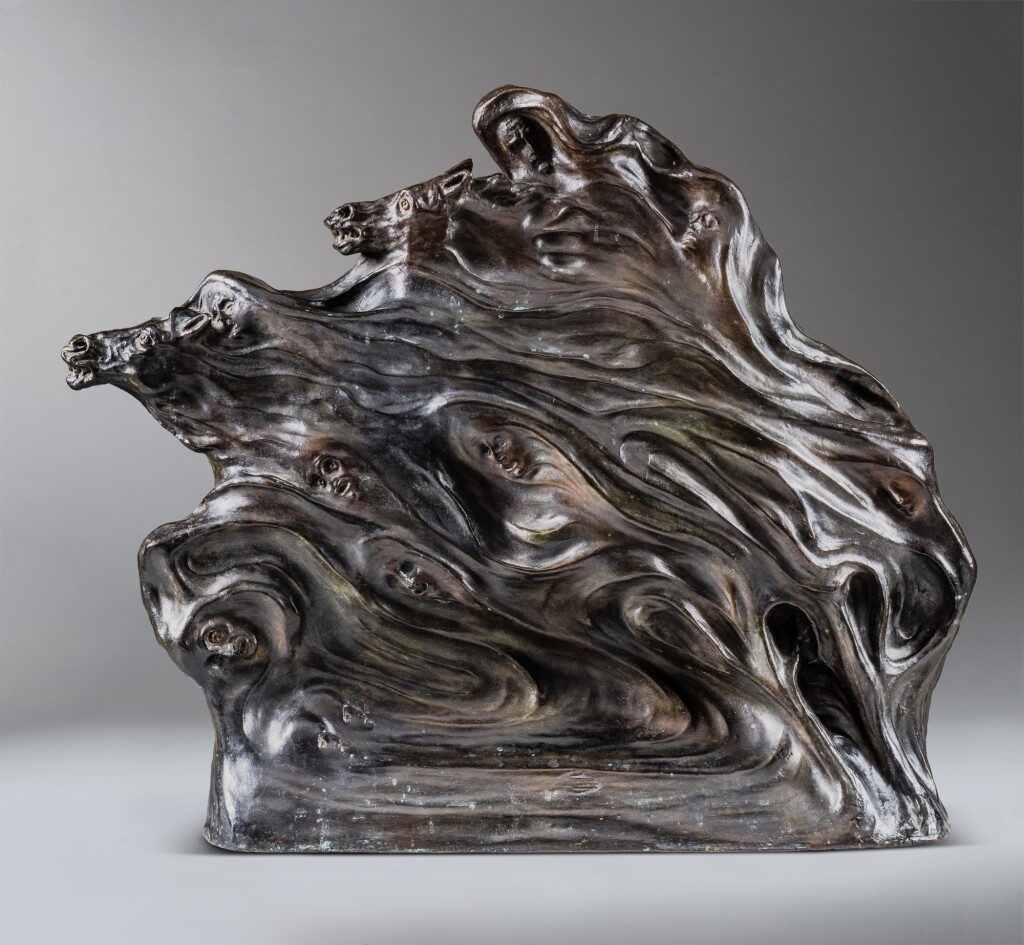
Lot 118. Bolesław Biegas 1877 – 1954. Horses of Hell, bronze, black patina, signed, dated and located B. Biegas / Paris / 1904, inscribed Susse Fondeur Paris, numbered ¼. Cast in 1975, 53 by 64 cm; 20 ⅞ by 25 ⅕ in. Estimate 7,000 – 10,000 euro. Sotheby’s. 11/10/22. Sold 12,600 euro
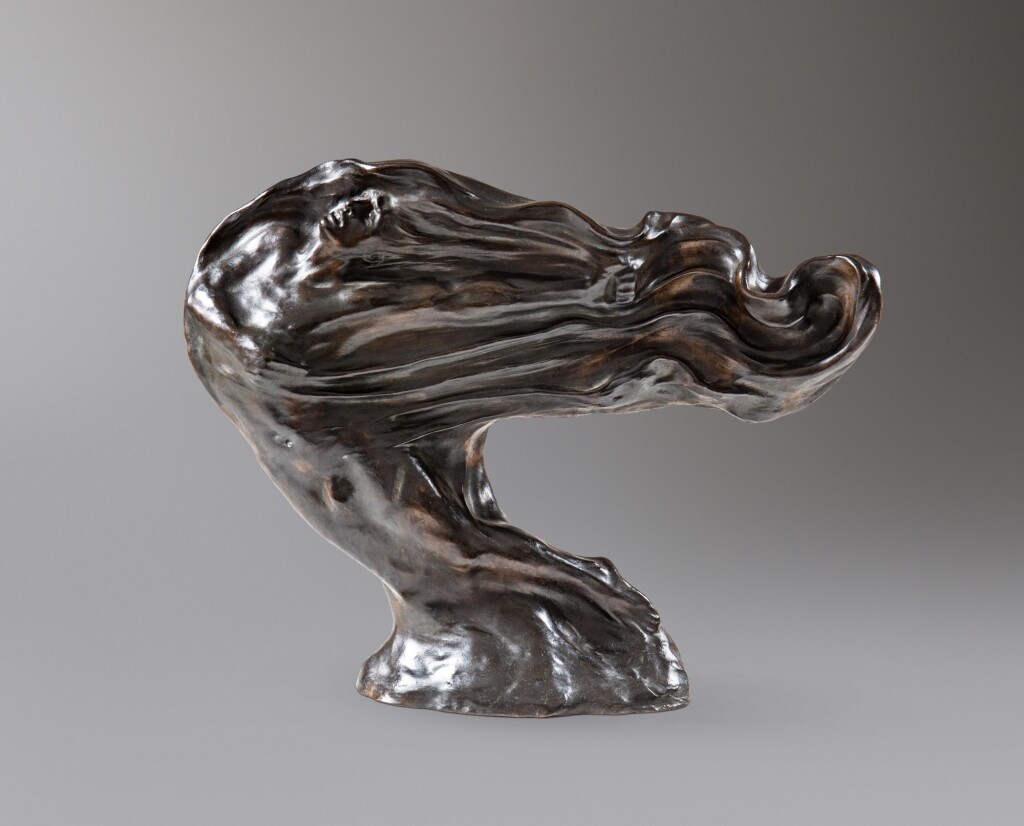
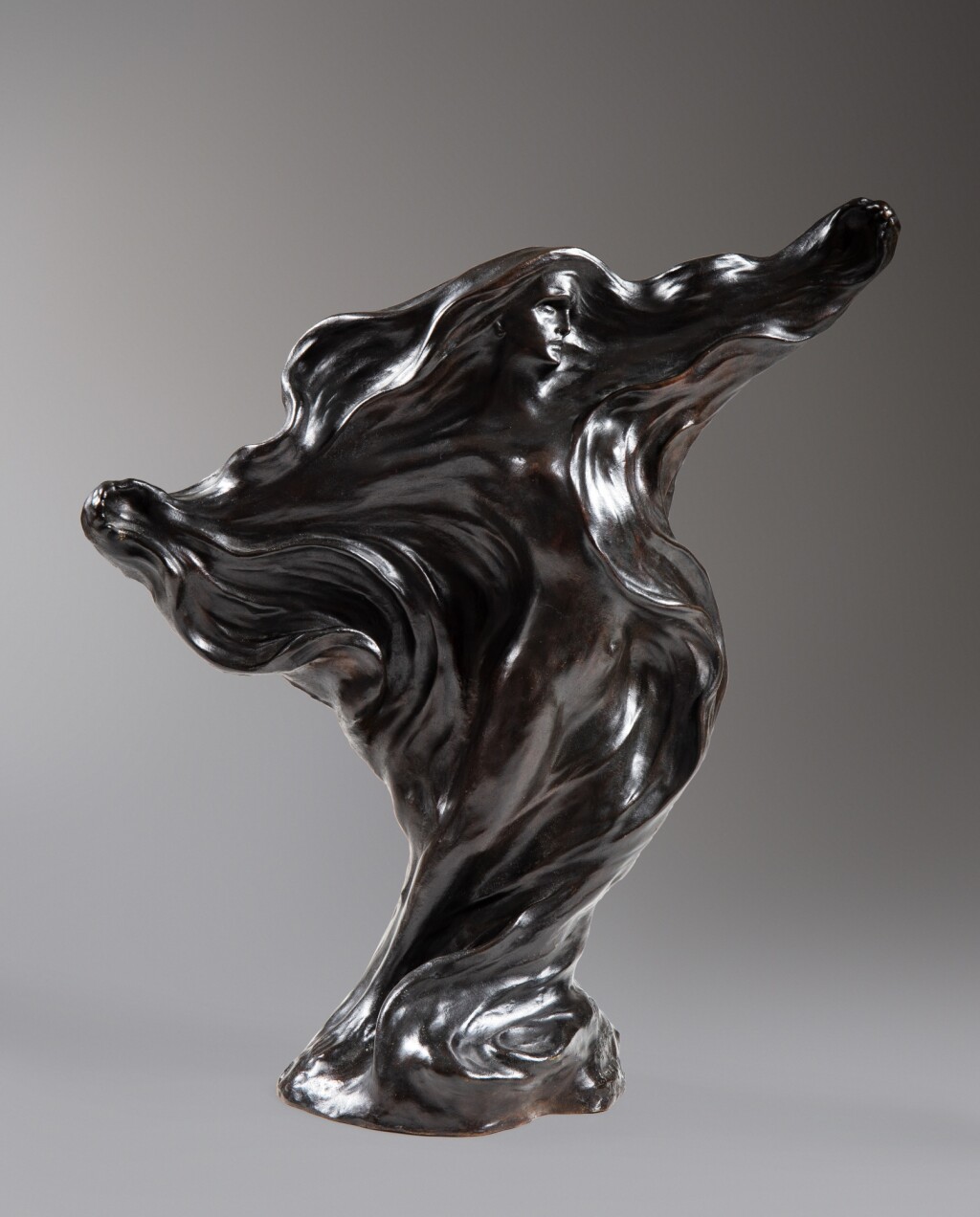
Aż trzy odlewy rzeźb Bolesława Biegasa w Sotheby’s. Problem w tym, że są to odlewy pośmiertne. W przypadku jednej z nich (Horses of Hell) wiadomo, że jest to jeden z czterech odlewów wykonanych w 1975 roku. Nie ma takiej informacji o Wounded Life. Natomiast rzeźba Flame Dancer miała już (chyba) kilka serii odlewówi zdołalem naliczyc 12 egzemplarzy – niektóre sposród nich były pokazane wczesniej na łamach tego blogu. Dlatego powstaje dylemat: czy kupować wyłącznie odlewy wykonane za życia artysty, które przeszły przez jego ręce, czy też mając ogromną chęć zdecydować się na odlew pośmiertny. Odlew pośmiertny wykonuje właściciel gipsu i on ma władzę nad nią niemal absolutną; po piewszej serii może zdecydować się na drugą serię a potem na trzecią, itd. Można w ten sposób rozwodnić rynek by zaspokoić zapatrzebowanie. Sotheby’s jedynie w przypadku jednej rzeźby podaje rzetelnie, że to jest współczesny odlew. Dwie pozostałe zbywa milczeniem. Można jednak popatrzeć sobie na fofografie odlewów wykonanych za życia Biegasa by je odróżnić, choćby po patynie.
Bolesław Biegas (Biegalski).Wounded Life
Lot 119. Bolesław Biegas 1877 – 1954. Wounded Life, bronze, black patina, signed Boleslaw Biégas, with an indistinct inscription, 38 by 50 cm; 15 by 19 ⅔ in. Estimate 4,000 – 6,000 euro. Sotheby’s. 11/10/22. Sold 21,420 euro
Bolesław Biegas (Biegalski).Flame dancer
Lot 120. Bolesław Biegas 1877 – 1954. Flame dancer, bronze, black patina, signed, dated and located Boleslaw / Biegas / Paris 1907 / (indistinct inscription), with an old label to the reverse numbered 12, H. 50 cm; 19 ⅔ in. Estimate 4,000 – 6,000 euro. Sotheby’s. 11/10/22. Sold 4,788 euro