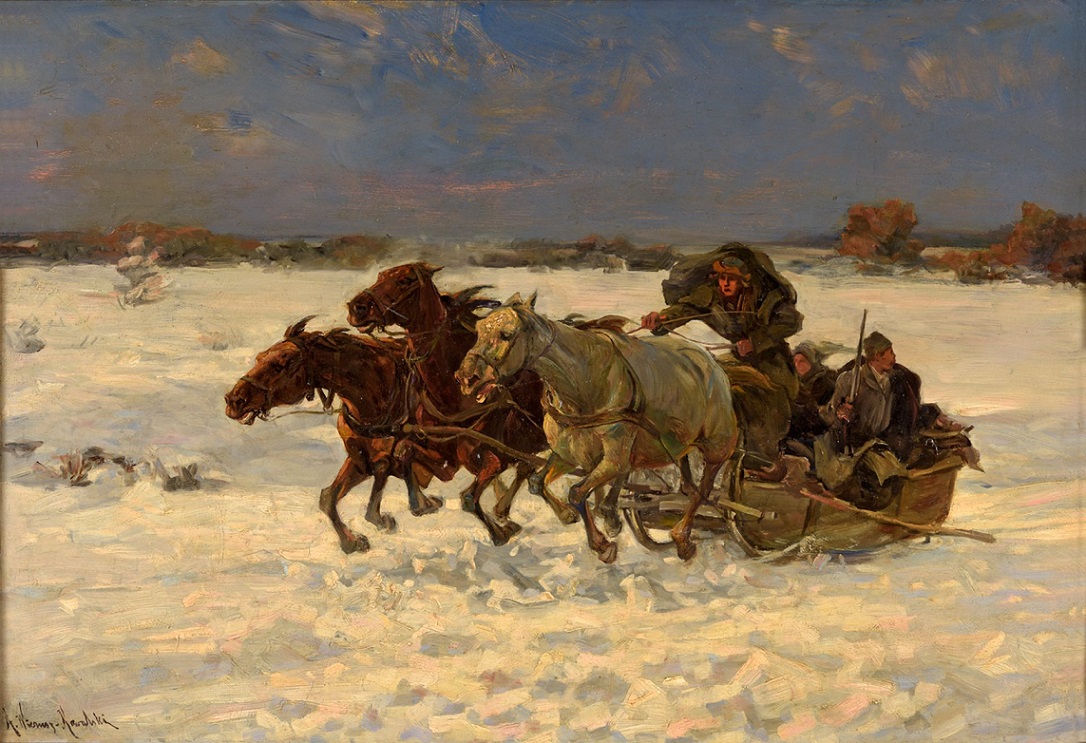
Tak blisko jest do tematu malowanego przez Wierusza, że aż szkoda wypuścić z rąk taką okazję. Należy wyrazić głęboki żal, że Konarski nie był pseudonimem Wierusza. Ten obrazek jednak zawsze można wycenić w Polsce odpowiednio wysoko. Ludzie kupią teraz wszystko choć trzeba liczyć w tym przypadku na klienta mało zorientowanego i zagubionego. Skoro maleńka praca Wieusza (16 x 12 cm, https://polishartcorner.com/2021/03/04/alfred-wierusz-kowalski-1849-1915-51/) sprzedała się niedawno za 45,000 euro to czemu nie oczekiwać, że ta, znacznie większa, nie uzyska w Polsce ceny 15-20% wieruszowskiej (np. 30,000 zlotych)? Wszystko teraz jest możliwe i wystarczy popatrzeć na polskie wyceny i ceny Konarskiego. Ceny idą w górę nawet na erzatze.
Lot 1335. Konarski, Jan Polen 19. Jhdt. Polnische Paare mit Pferdekutschen. Signiert. Öl/Malk., 24 x 19 cm. Starting 300 euro. Dusseldorfer. 05/07-08/21. Sold 2,200 euro
Pragnę Was uprzedzić o wkrótce nadchodzących zmianach. Otrzymałem niedawno ofertę nawiązania stałej współpracy z kolekcjonerem / inwestorem polskiego malarstwa. Będę zajęty wyszukiwaniem obiektów głównie do jego kolekcji, skutkiem czego Polish Art Corner prawdopodobnie zostanie przekształcony w blog prywatny. Dziękuję czytelnikom za wieloletnie zainteresowanie i zapraszam do zaglądania na strony o podobnym charakterze, prowadzone przez innych.
Jedynie kilku korespondentów poznało się i uznało mój wpis za żart. Pozostałym dziękuję za dobre słowa i życzenia na nową drogę. Nie ma jednak nowej drogi – będę kroczył dalej starą drogą. Żadnej oferty nie otrzymałem…ale kto wie co przyniesie przyszłość? Wczoraj, został pobity rekord świata zainteresowania moim blogiem. Pozdrawiam na wesoło.
Nie jestem przekonany czy tej pracy pomoże jakakolwiek ekspertyza, choć jak wiadomo z niedawnych rozważań jeden ekspert nie jest równy drugiemu ekspertowi.
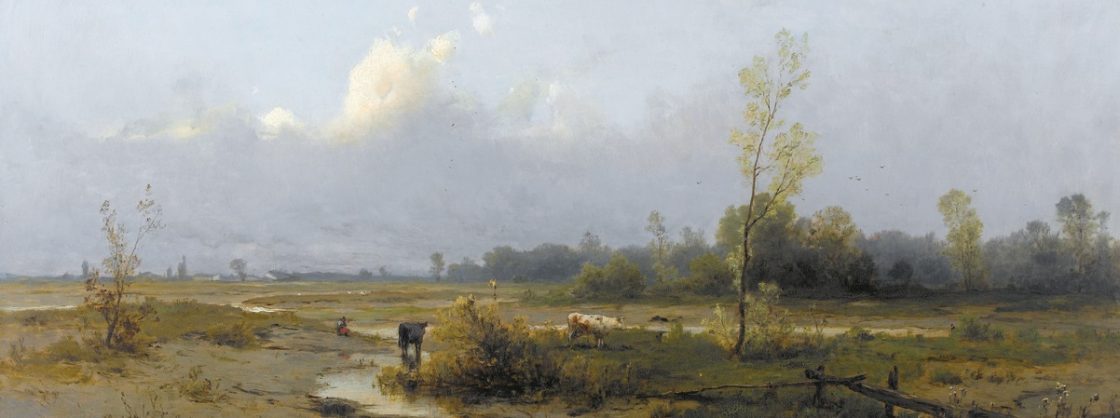
Lot 1045. Wierusz-Kowalski, Alfred von 1849 Suwalki – 1915 München (zugeschr.) Von Wölfen verfolgt. Signiert. Öl/Malk., 70 x 100 cm. Provenienz: Alte rheinische Privatsammlung. Starting 3,000 euro. Dusseldorfer. 05/08/21. Sold 11,000 euro.
c aysages de Pologne (Halerowo, Poznan, Hel et Gdynia), 1938-39
Lot 58. Mecislas DE RAKOWSKI École belgo polonaise (1882-1947). Huiles sur panneau (lot de six): Paysages de Pologne (Halerowo, Poznan, Hel et Gdynia). Signées et datées: M. Rakowski 38 et 39. Dim.: 24 x 33 cm. Estimate 1,800 – 2,200 euro. Horta. 04/19/21
Ciekawa sytuacja: sześć olejów Mieczysława Rakowskiego namalowanych w Polsce oraz jedynie jeden z terenów Belgii. Myślę, że warto zainteresować się tymi sześcioma i poprosić o lepsze fotografie.
Mieczysław Rakowski.La traversée du pont à Bruges, 1925
Lot 59. Mecislas DE RAKOWSKI École belgo polonaise (1882-1947). Huile sur toile: La traversée du pont à Bruges. Signée et datée: M. De Rakowski 1925. Dim.: 42 x 48 cm. Estimate 400 – 600 euro. Horta. 04/19/21
Prawdopodobnie jest to obraz namalowany w 1971 roku o oryginalnym tytule ‘Behemot i Małgorzata’ jako ilustracja do pracy Michała Bułhakowa ‘Mistrz i Małgorzata’. Urokliwa praca Marii Żaboklickiej – Budzichowej.
Lot 60. Maria ZABOKLICKA École polonaise (1924-1977). Huile sur toile: “L’as de pique“. Par Maria Zaboklicka. On y joint un certificat titrant l’œuvre. Dim.: 100 x 81 cm. Estimate 600 – 800 euro. Horta. 04/19/21
Lot 37. ZAMOYSKI Auguste 1893-1970 : Tête d’Antoni Stonimski, 1923. Bronze à patine dorée, signature et cachet de fondeur. Fonte post-mortem de Valsuani. 16x25cm (sans le socle). Provenance : Ancienne collection Andrieu-Toulouse. Acquis de cette collection par Mr Ousset en 1987 (facture d’achat de l’époque remise à l’acquéreur). On remettra également un catalogue des expositions Zamoyski organisées en 1994 en Pologne, dédicacé par la veuve de l’artiste aux époux Ousset, confirmant que ce couple a connu l’artiste. ” Cette excellente tête très expressive du poète Stonimski, garde une grande ressemblance physique avec le modèle, comme aucune des têtes formistes de Zamoyski “. Estimate 15,000 – 20,000 euro. Chaville. 04/11/21
Trzy rzeźby Augusta Zamoyskiego sprzed 100 lat to rzecz niepotykana na aukcjach. W dodatku, dwie sposród nich to portrety Antoniego Słonimskiego oraz Ludwika Markusa. Polecam uwadze osobom polującym głównie na Perseusze i Aklepsiosy.
August Zamoyski. Tête de Louis Marcoussis,1923
Lot 35. ZAMOYSKI Auguste 1893-1970 : Tête de Louis Marcoussis,1923. Bronze à patine noire, signature. Fonte post mortem de Clementi. Haut :27 cm. Prov : collection particulière,Paris. Cette tête du peintre Marcoussis est la plus synthétique de toutes les pièces formistes de Zamoyski. Estimate 10,000 – 13,000 euro. Chaville. 04/11/21
August Zamoyski. Tango, 1922
Lot 36. ZAMOYSKI Auguste 1893-1970 : Tango, 1922. Bronze à patine marron, signature et n°2/8. Fonte post mortem de Clémenti. Haut 47 cm. Prov : collection particulière, Paris. ” D’instinct je tenais à présenter ici deux anges déchus qui veulent s’unir afin de créer cette unité où se perd toute différence de sexe… C’est comme le retour à la source, à l’état de la création, de la perfection. “, Zamoyski en 1968. Estimate 15,000 – 20,000. Chaville. 04/11/21
PS. Obecnie Desa-Unicum sprzedaje inna kopię tej rzeźby wyceniając ją na 300,000 – 400,000 złotych. We Francji może byc taniej!
Lot: 35188117.ZLADISLAW CYANKIEWICZ (Bialystok, Poland 1912 – Paris, France 1981). “Women“. Oil on canvas. Signed in the lower left corner. Measurements: 27 x 40 cm. Estimate 1,200 – 1,500 euro. Setdart. 03/30/21
To już druga seria olejów Zdzisława Cyankiewicza w hiszpańskim domu aukcyjnym. Moim zdaniem, zdecydowanie lepsze od jego abstrakcji. Powoli poznajemy twórczość tego artysty z okresu i okolic II wojny światowej.
Zdzisław Cyankiewicz (Cyan).Woman and girl
Lot: 35188121.ZLADISLAW CYANKIEWICZ (Bialystok, Poland 1912 – Paris, France 1981). “Woman and girl“. Oil on canvas. Signed and dated in the lower left corner. Measurements: 46 x 38 cm. Estimate 1,000 – 1,200. Setdart. 03/30/21
Zdzisław Cyankiewicz (Cyan).Nude of a woman
Lot: 35188122. ZLADISLAW CYANKIEWICZ (Bialystok, Poland 1912 – Paris, France 1981).”Nude of a woman“. Oil on burlap. Signed in the lower right corner. Measurements: 65 x 45 cm. Estimate 800 -1,000 euro. Setdart. 03/30/21
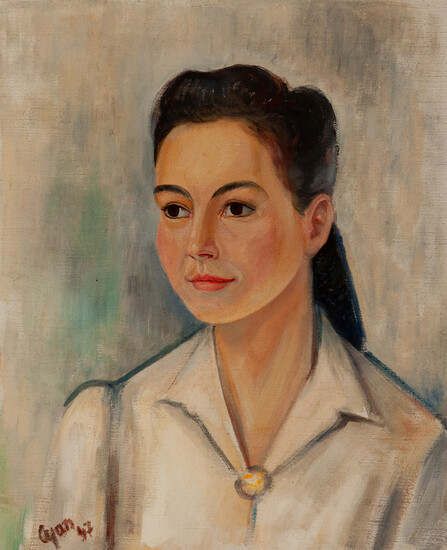
Zdzisław Cyankiewicz (Cyan).Portrait of a Woman , 1947
Lot: 35188119.ZLADISLAW CYANKIEWICZ (Bialystok, Poland 1912 – Paris, France 1981). “Portrait of a Woman“, 1947. Oil on canvas. Signed and dated in the lower left corner. Measurements: 46 x 37 cm. Estimate 1,000 – 1,200. Setdart. 03/30/21
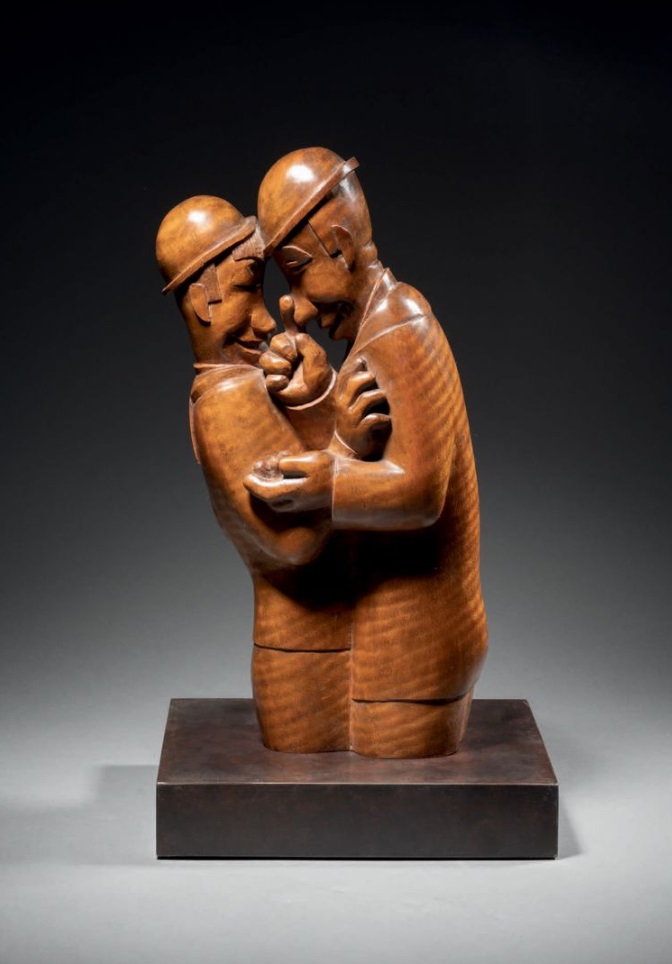
Egzemplarz unikatowy. Rzeźba wystawiana niedawno w Villi La Fleur w Konstancinie k/Warszawy oraz zamieszczona w katalogu, niedawno omawianym na łamach blogu (Book Reviews). Dla konesera.
Lot 65. Jean LAMBERT RUCKI (1888-1967). Confidence – c. 1923-25. Sculpture en noyer. Taille directe. Monogrammée sous la base. Pièce Unique. H. 32 cm Provenance : Collection particulière Paris Expositions : Centenaire de la naissance de Jean Lambert-Rucki, Galerie Jacques De Vos, Paris Oct./Nov. 1988 (Bronze). Lambert-Rucki, Les Parisiens et les autres, Galerie J. De Vos, Mai/Juin 1993. Lambert-Rucki, De Vos & Giraud Gallery, New York, Nov./Déc. 2006 (Bronze). Jean Lambert-Rucki, 1888-1967, Arthur Wniarski, Villa La Fleur, Konstancin-Jezornia (Varsovie), Pologne, 21 sept – 21 déc 2017. Bibliographie: Jean Lambert-Rucki, 1888-1967, Arthur Wniarski, Villa La Fleur, Konstancin-Jezornia (Varsovie), Pologne, reproduit p.80 Estimate 20,000 – 30,000 euro. Binochet e Giquello. 04/15/21. Sold 20,000 euro
W internetowym portalu www.parket.com w dziale sztuka podany jest przykład obrazu Bronisławy Rychter-Janowskiej jako potencjalnej dobrej lokaty kapitału (https://www.parkiet.com/Sztuka/303279980-Obraz–na-wage-zlota.html) . Załączona jest też fotografia tej pracy jaka będzie aukcjonowana w Sopockim Domu Aukcyjnym (lot 28, aukcja 10 kwietnia 2021). Z kolei na moim blogu jeden z czytelników ocenił tę konkretną pracę, rekomedowaną przez parkiet, jako falsyfikat: https://polishartcorner.com/2020/06/09/bronislawa-rychter-janowska-1868-1953-6/. Jak widać , istnieją aż trzy wersje tej pracy, włączywszy falsy (wg. opinii czytelnika), czyli spore zamieszanie. Aż prosiłoby się komentarz autora książki o tej artystce, czyli p. Bogdana Podgórskiego.
Z Sopockiego Domu Aukcyjnego nadszeł do mnie pilny list w sprawie prezentowanego tam obrazu Bronisławy Rychter-Janowskiej:
Szanowny Panie:
Piszę w sprawie obrazu Rychter Janowskiej. Otóż przed umieszczeniem obrazu w ofercie aukcyjnej obraz był zweryfikowany przez naszych ekspertów.
Proszę więc o sprostowanie tej szkodliwej dla nas uwagi na stronie lub podanie dokładnie ekspertów którzy uważają ten obraz za fałszywy. Sprzedając obraz ponosimy pełną odpowiedzialność za jego autentyczność a wszelkie sugestie, iż obraz nie jest autentyczny uderzają w nasze dobre imię i renomę domu aukcyjnego działającego od 30 lat. (…)
Tak więc moja osobista prośba aby nie sugerować na Pana blogu, że praca jest falsyfikatem jeśli nie ma Pan na to dowodów. Jest to bardzo szkodliwe działanie.
Proszę więc o sprostowanie lub wyjaśnienie, iż praca ta została dokładnie zweryfikowana przez nas i ponosimy pełną odpowiedzialność za jej autentyczność.
[Imie i Nazwisko]
Sopocki Dom Aukcyjny
Zamieszczam zatem list z SDA (pomijając mały jego fragment nt osobisty) z którego wynika, że obraz ma atest ekspertów SDA i jest autentyczny.
Dodam od siebie, że opinia czytelnika (nie wiem czy jest on ekspertem czy też nie jest) nt obecnego obrazu była zamieszczona w czerwcu 2020 roku, czyli 9 miesięcy temu, jako komentarz do innego obrazu Bronisławy Rychter-Janowskiej z aukcji amerykańskiej. Bywa tak, że czytelnicy się mylą a czasami eksperci się mylą. W obecnym przypadku, zamieściłem mocny list SDA i to powinno wystarczyć. Osobiście, zastanawiają mnie trzy wersje tej samej kompozycji ale przecież inni malarze również tworzyli repliki swoich kompozycji. Zwróciłem się listownie do autora książki o artystce, p. Bogdana Podgórskiego, z prośbą o opinię w tej sprawie. Czy odpisze, tego nie wiem. Wydaje mi się, że SDA mogło źle ocenić intencje tego wpisu.
Ponieważ jako autor monografii Bronisławy Rychter-Janowskiej zostałem wywołany do tablicy przez prowadzącego znakomity portal poświęcony Sztuce, podzielę się kilkoma swoimi uwagami dotyczącymi obrazu artystki, który został wystawiony na aukcję w Sopockim Domu Aukcyjnym.
Obraz, który może zostać uznany za replikę obrazu, o który toczy się spór – to obraz sprzedany na aukcji w Domu Aukcyjnym Rynek Sztuki (03.03.2018) za kwotę 5.000 zł. Obraz ten różni się jednak wymiarem (17×24 cm) oraz drobnymi szczegółami i zmianami koloru. Podobnie jak obraz wystawiony przez Desę Katowice (19.10.2019) za cenę wywoławczą 6.000 zł.
Obrazy namalowane przez artystkę prezentujące to samo wnętrze, jednak z pewnymi zmianami w ustawieniu mebli i kolorystyce, możemy odnaleźć na innych aukcjach – m.in. w Domu Aukcyjnym Agra Art. (19.06.2016), Polswiss Art (01.03.2009), Desa Katowice (02.06.2007), Ostoya (25.03.2001), oraz Ostoya (15.10. 2000).
Pozostaje do wyjaśnienia jeszcze kwestia, czy Rychter-Janowska malowała repliki swoich prac. Otóż z całą pewnością można stwierdzić, że malowała ich całkiem sporo. W dorobku artystki możemy spotkać wiele prac przedstawiających ten sam dwór, czy jego salon oświetlone porannym bądź popołudniowym słońcem. Jak pisała w swoich pamiętnikach artystka, intrygowała ją zmiana oświetlenia malowanego obiektu w zależności od pory dnia czy też pory roku.
Wśród licznych replik artystki dominowały właśnie liczne widoki polskich dworów oraz ich wnętrz tzw. „interiorów”. Powodów było kilka. Rychter-Janowska za obrazy przedstawiające wnętrza dworu, otrzymała nagrodę fundacji Probusa Barczewskiego w wysokości 2160 koron. Po ukazaniu się tej informacji w prasie, artystka zaczęła otrzymywać liczne zamówienia na „interiory”. Po utracie przez Polskę kresów wschodnich wzrosło także zapotrzebowanie na widok polskiego dworu oraz sielskiego emanującego spokojem jego wnętrza.
Niewątpliwie w wielu polskich domach znajdują się liczne repliki wnętrz polskiego dworu autorstwa Rychter-Janowskiej. Artystka w swoich pamiętnikach podała, że namalowała kilka tysięcy obrazów.
Obrazy o podobnej tematyce Rychter-Janowska malowała przez wiele lat. Stąd też mogą wynikać różnice w poziomie prac artystki, który należy przyznać, jest dość nierówny. Zależy bowiem od okresu w którym prace artystki powstawały. Najlepszy okres artystki, to okres Młodej Polski, kiedy tworzyła głównie z natury podczas licznych podróży po Galicji i krajach śródziemnomorskich. Zatem zestawienie pracy artystki o podobnej tematyce z dobrego okresu, z pracą późniejszą może sugerować, że gorsza praca nie jest autentyczna. Podobnie jak się to ma z malarstwem Jerzego Kossaka.
Rychter-Janowska malowała także, jak podają źródła „na obstalunek”, czyli na zamówienie klienta, który podawał, co ma być namalowane na obrazie. Artystka nie ukrywała tego faktu i tłumaczyła powody w swoich pamiętnikach. Największa ilość prac o zbliżonej tematyce powstała w okresie okupacji, kiedy Rychter-Janowska malowała jak sama podaje „z pamięci”, zmieniając w swoich pracach jedynie niewielkie detale. Często wówczas malowała nowy obraz z własnego obrazu. Także później, kiedy wzrok artystki się pogorszył, postępowała podobnie, nie mogąc już malować z natury.
Zarzut Pańskiego czytelnika, że w rzeczonej pracy poddanej krytyce, jest ewidentny błąd perspektywy. Nie musi on jednak świadczyć o braku autentyczności obrazu, ponieważ artystka miała problem z perspektywą zbieżną, której brak można zauważyć w niektórych jej pracach.
Absolutnie nie uważam się za eksperta w kwestii wyrokowania, czy rzeczony obraz jest autorstwa Bronisławy Rychter-Janowskiej. Bliżej mi do pokory Sokratesa w tym względzie. Przy ocenie własnych zakupów posługuję się zarówno oceną rzeczoznawców jak i zdobywaną przez lata wiedzą merytoryczną oraz własnym wyczuciem. W pracach Rychter-Janowskiej prezentowanych na Pańskim portalu, mimo pewnych różnic, czy też braków warsztatowych, widoczny jest jednak ten nieuchwytny duch nastroju oraz atmosfera wnętrza, tak trudne do namalowania przez kogoś innego niż sama artystka.
Dlatego mogę stwierdzić, że gdybym miał zamiar kupić obraz Rychter-Janowskiej przedstawiający wnętrze staroświeckiego dworku, to byłbym zainteresowany obrazem tej artystki, prezentowanym na aukcji Sopockiego Domu Aukcyjnego. Jedyne zastrzeżenie jakie mógłbym wnieść, to że obrazowi przypisano zbyt wysoką estymację (16.000 – 18.000 zł).
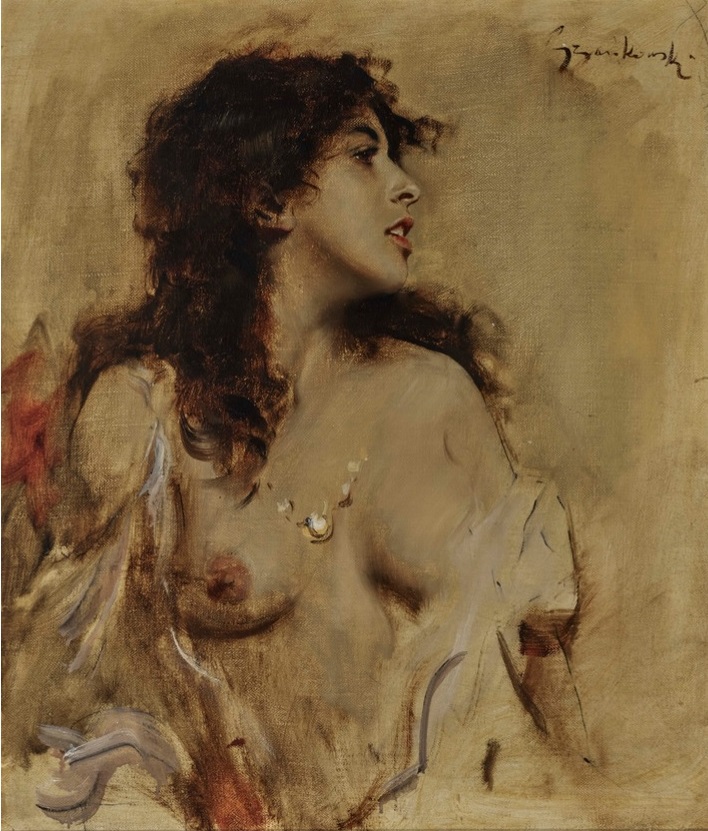
W tym przypadku byłbym ostrożny. Kto raz widział na własne oczy portret Józefa Brandta wykonany przez Bolesława Szańkowskiego to powinien zastanowić się dobrze nad zakupem tej pracy.
Lot 635. Boleslav von Szankowski 1873 Warsaw – 1953 Tegernsee. Female semi-nude. Signed upper right. Oil on canvas. 65.5 x 55.5 cm. Minor damage to frame. Estimate 1,500 – 2,000 euro. Neumeister. 04/14/21