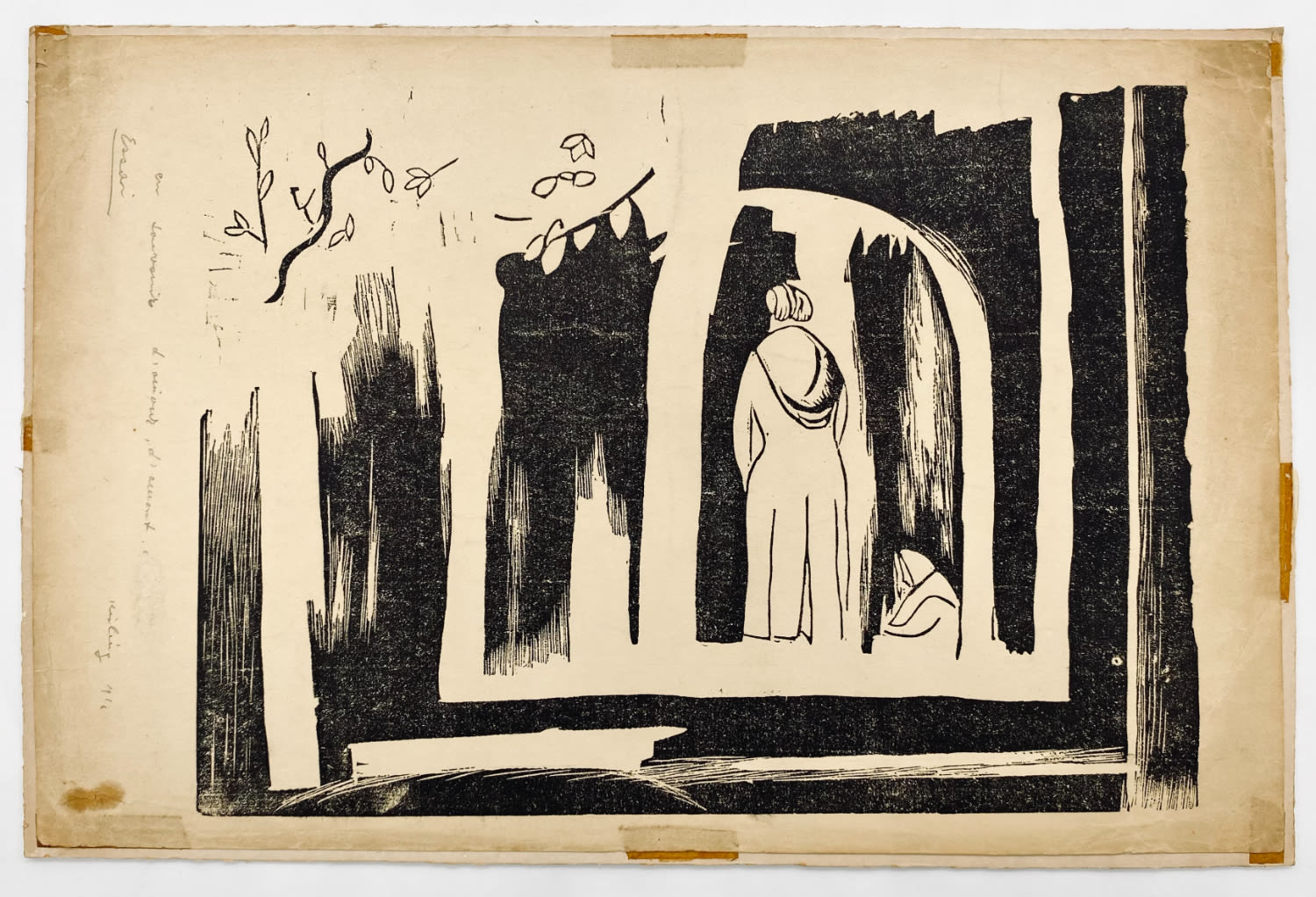
Drzeworyt Mojżesza Kislinga z 1916 roku. W tym okresie nie malował jeszcze nudnych i ślicznie opracowanych w detalach, chodliwych u marszandów martwych natur, czy też portretów głównie pań. Każdego tygodnia te wymuskane prace znajduja się w katalogach domów aukcyjnych we Francji czy też u wielkich graczy na rynku. Drzeworyty z 1916 roku (powstało ich znacznie więcej) są spontaniczne i nie wyrachowane. Ten z katalogu z Izraela nosi dedykację, której przetłumaczenie zawdzięczam p. K. Z „Na pamiątkę miłości (od?) amanta Kislinga”. Taki drzeworyt kupi kolekcjoner a dowolne kwiaty w wazonie chyba jedynie ‘inwestor’. Dodatkowa uwaga dla ‘inwestorów’: kupując w Polsce przepłacacie 100%. Kupujcie we Francji skoro jesteście inwestorami. Mnogo tam tego.
Dedykacja
Lot 124. Moïse Kisling – Two Women – 1916. Woodcut. Signed in pencil. Sheet size: 45X29 cm. Print size: 36 X 27 cm. Good-fair condition: some folds and wear, stains on the margins. Moise Kisling (1891-1953) was a Jewish painter born in Poland, who lived and worked most of his life in the Montparnasse district of Paris. Kisling befriended important artists of his time and was influenced by their style, including Modigliani and Chagall. Known mainly for nude paintings and surrealist portraits. Start $50. Tre Zouze. 03/28/23. Sold $180.
Lot 101. Malczewski, Rafal (1892-1965). Snowy house. Watercolor on paper, signed on lower left Rafal Malczewski, 15″ x 22″, 38.1 x 55.9 cm. Estimate CA$1,500 – CA$2,000. Champaigne Auctions. 03/28/23. Sold CA$2,200
Lot 100. Malczewski, Rafal (1892-1965). Snowy house. Watercolor on paper, signed on lower right Rafal Malczewski. 15″ x 22″. 38.1 x 55.9 cm. Estimate CA$1,500 – CA$2,000. Champaigne Auctions. 03/28/23. Sold CA$2,200
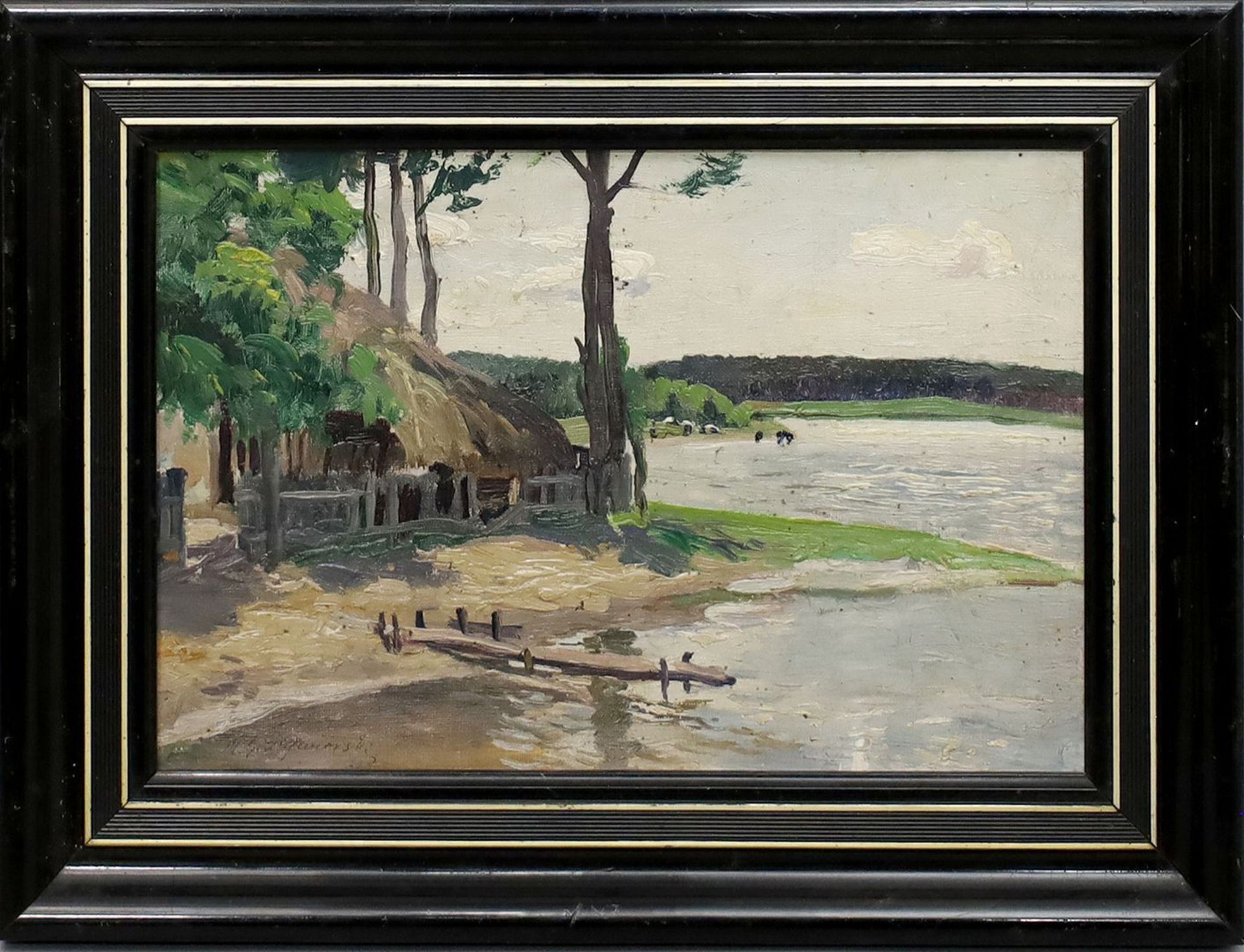
Michał Wywiórski-Gorstkin. Sommerliches Seeufer mit Hütte
Ładny pejzaż Michała Wywiórskiego.
Lot 8689. Wywiórski, Michael Gorstkin (1861 Warschau/Polen – Berlin 1926). Sommerliches Seeufer mit Hütte. Öl/Lwd. auf Karton (min. Farbfehlstellen am u. Rand), li. u. sign. 22x 32 cm. Dannenberg. 03/28/23. Sold 1,300 euro
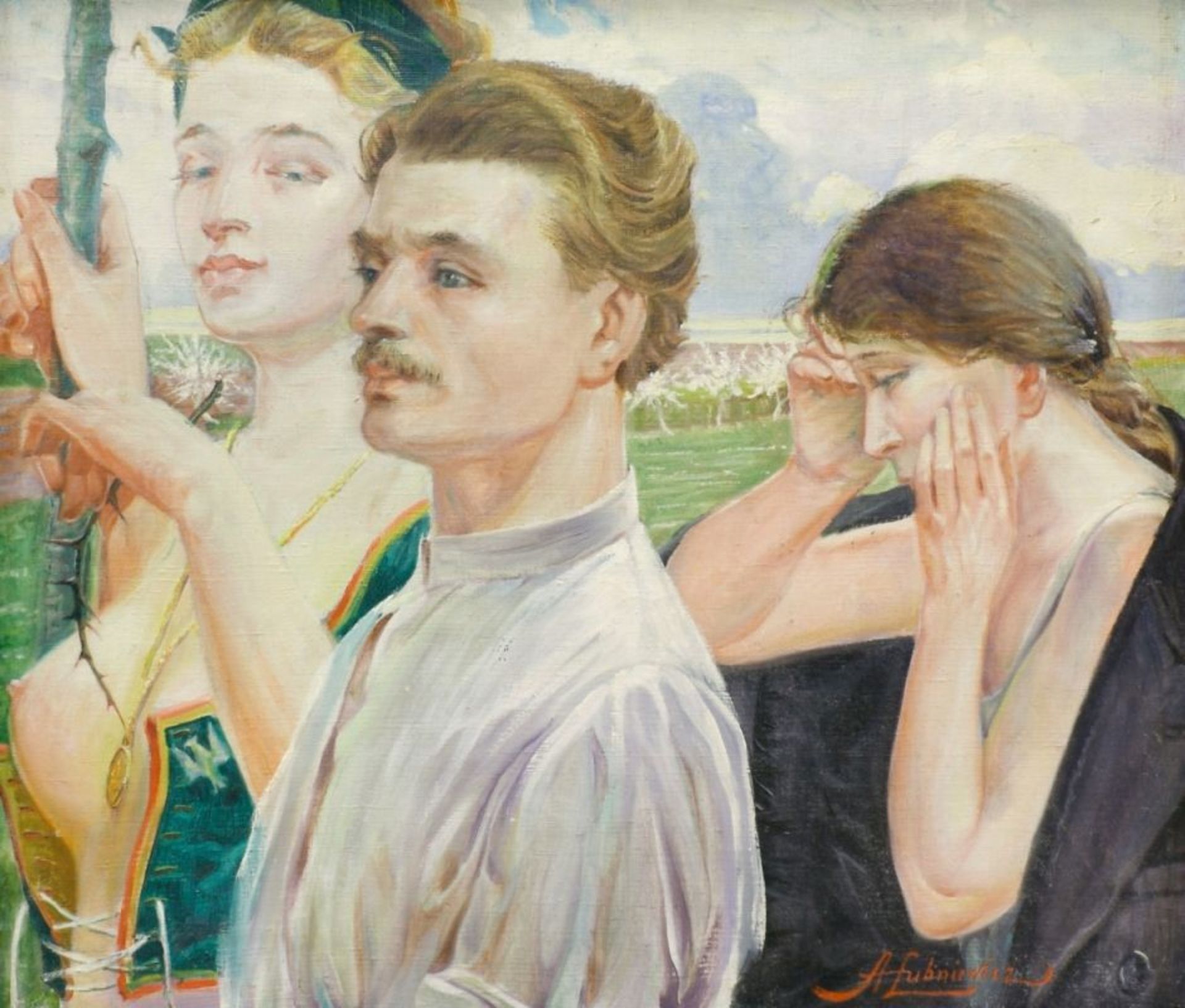
Albin Łubniewicz. Frühlingslandschaft mit zwei jungen Frauen und einem Mann
Jeśli kupować prace malarza to należy starać się o najlepszą z tych znanych czy widzianych. Być może jest to najlepszy olej Albina Łubniewicza o wyraźnych wpływach Jacka Malczewskiego (lewa strona płótna) z połączeniem Wlastimira Hofmana (prawa strona). Ciekawe czy był jednostkowy wybryk tego artysty. Mało jest materiału porównawczego.
Lot 56. Lubniewicz, Albin (1910 Vilnius – 1986 Lodz). Frühlingslandschaft mit zwei jungen Frauen und einem Mann. Öl auf Leinwand. 55,5 x 64,5 cm. Rechts unten signiert. Gerahmt. – 1957 erhielt der Künstler den Preis der Stadt Lodz für sein Lebenswerk auf dem Gebiet der Staffelei- und Wandmalerei (WiKi, nach öffentl. Infomationsbulletin). Estimate 450 euro. Quentin. 04/22/23. Sold 6,500 euro
Lot 1696. Buchbinder, Simeon (Szymon) Radzyn Podlaski 1853 – 1908 Berlin, polnischer Maler. “Rauchender“, junger Mann mit einer Pfeife in der Hand, an einem Tisch mit Glas Wein und ausgebreitetem Kartenspiel sitzend, oben rechts sign. und dat. 1888 (?), Öl/Holz, HxB: 14/11 cm. Altersspuren, rest., ret.. Mit Rahmen (besch.). Provenienz: Erwin-Warth-Stiftung. Opening 700 euro. Siebers. 03/23/23. Sold 1,300 euro
By zakończyć wpisy o kilku minionych marcowych aukcjach zachowałem na ostatek dwa oleje Szymona Buchbindera. Żaden z nich nie osiągnął sukcesów cenowych, porównując do badziewia Zygmuntowicza vel Wasilewskiego nieco wcześniej tutaj pokazanych. Szymon Buchbinder był dość popularny i ceniony za swojego życia, jego prace osiągały wysokie ceny na rynku niemieckim i amerykańskim. Obecnie jego malarstwa nie cenią polskie domy aukcyjne a publika jest przez nich wychowywana jest zbyt leniwa by dotrzeć do źródła i samemu się czegoś nauczyć. Liczy sę tylko forsa i zarobek nawet na falsach Kossaków o czym niedawno pisał jeden z handlarzy. Pędzące konie i śnieg są lepiej rozumiane od pewnej wyciszonej i subtelnej symboliki XVII wiecznego malarstwa holenderskiego, przetworzonej dwa wieki później przez Buchbindera. Aż żał było mi patrzeć, że ani uśmiechnięty żołnierz siedzący przy stole ani portret młodego człowieka z fajką nie znalazł większego zainteresowania. Temu drugiemu obrazowi nie pomogła nawet jego fotografia umieszczona w niemieckim opracowaniu XIX wiecznego malarstwa monachijskiego (Bruckmans Lexikon, ca 1980 rok) na stronie omawiającej biografię Szymona Buchbindera. W uproszczeniu, jestem mocno zesmaczony upadkiem i prostocie gustów współczesnych kolekcjonerów. Po cholerę prowadzić dalej ten blog skoro wiadomości o ‘opłacalności’ zakupów znajdziecie bez problemów na innych polskich portalach?
PS. Już chyba jest faktem, że ‘Rynek sztuki dostał zadyszki’ o czym informuje nawet jeden z największych napędzaczy cen polskiego malarstwa czyli https://www.parkiet.com/inwestycje/inwestycje-alternatywne. Pisałem o tej zapaści ponad rok temu, nazywanej obecnie eufemistycznie ‘zadyszką’. Nadszedł zatem czas dla kolekcjonerów by z wiedzą wyłuskiwali klejnoty z rynku. Proszę szukać tych klejnotów i w Polsce i w na rynkach zachodnich bo handlarze będą powoli tracili źródlo dochodu lub pozostaną z obrazami wartymi jedynie sprzedaży na śmieciowisku Allegro. Przewiduję, że wieloletnie, bezrozumne windowanie cen okaże się teraz strykiem na szyjach wielu domów aukcyjnych.
Szymon Buchbinder. Der Pfeifenraucher, 1886
Lot 45. Simeon Buchbinder (Radzyn Podlaski 1853-1908 Berlin). Der Pfeifenraucher, signiert, datiert S. Buchbinder Münch 1886, Öl auf Holz, 15,5 x 11,5 cm, verschmutzt, gerahmt (Rahmen beschädigt). Estimate 1,200 – 1,400 euro. Dorotheum. 03/07/23. Sold 950 euro
Ignacy Zygmuntowicz vel Czesław Wasilewski. Schlittenfahrt
Ilość prac Zygmuntowicza vel Wasilewskiego stała się wulgarnie wielka tak jak ich wycena, cena sprzedaży a poten odsprzedaży w Polsce. Wulgarnie słaba polskia sztuka dla ‘słabych’ klientów zalewa rynek. Kto wie ile ich powstaje współcześnie w pracowniach?
Lot 1966. Zygmuntowicz, Ignacy auch Czeslaw Wasilewski, Warschau um 1875 – 1947 Lodz, stud. ab 1911 an der Warschauer Kunstschule und später bei Wojciech Kossak. “Schlittenfahrt“, Vierspänner im Galopp aus einem verschneitem Hof eines kleinen Herrenhauses ausfahrend, unten rechts sign., Öl/Leinwand, HxB: 56/71cm. Altersspuren, rest.. Mit Rahmen. Opening 2,000 euro. Siebies. 03/23/23. Sold 2,400 euro
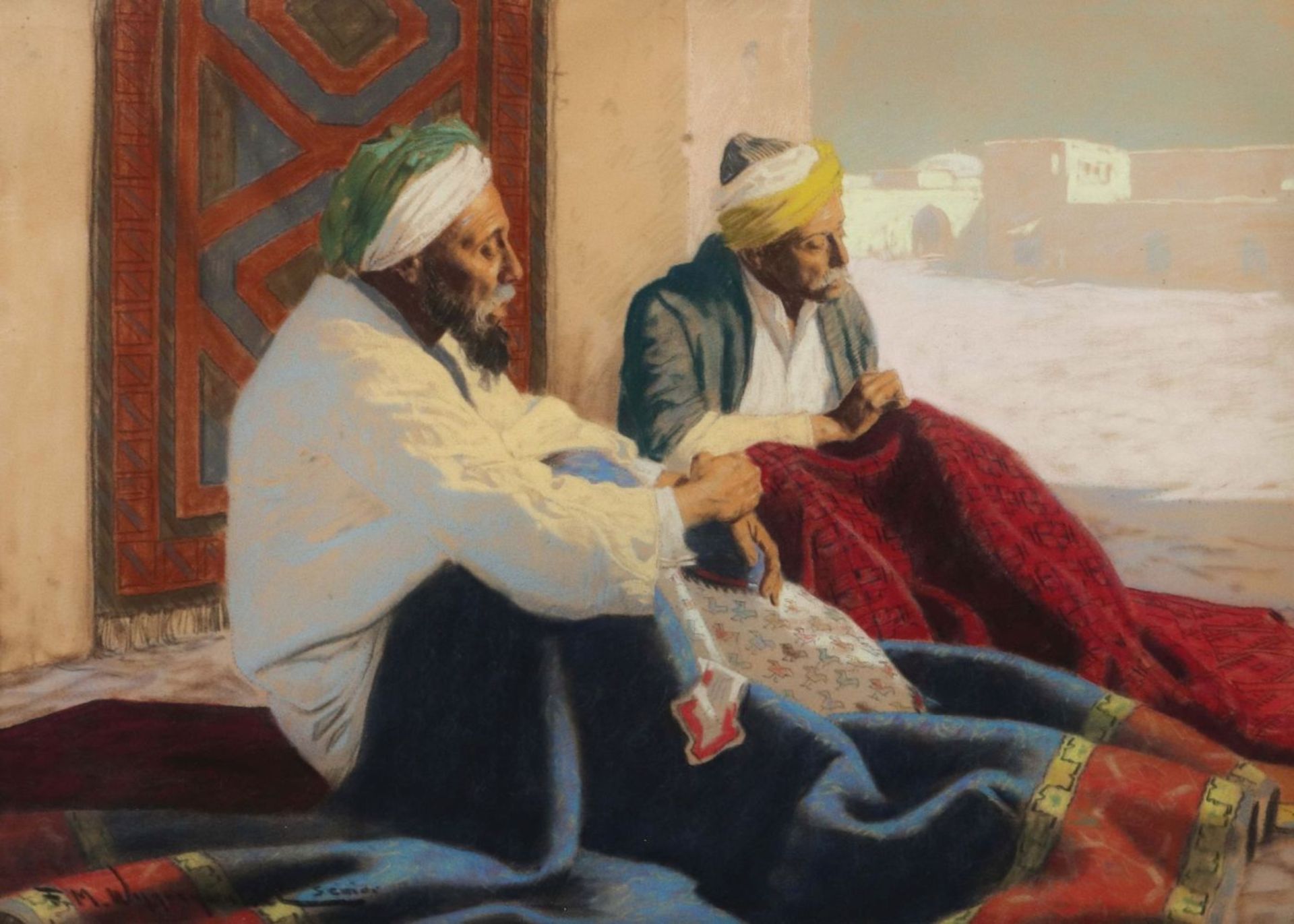
Feliks Michał Wygrzywalski.Teppichhändler im Gespräch
Lot 1960. Wygrzewalski, Feliks Michal Przemysl 1875 – 1944 Rzeszow, polnischer Maler, Mitglied der Münchner Schule. “Teppichhändler im Gespräch“, Darstellung mit einer orientalischen Stadt im Hintergrund, unten links sign. “F.M. Wygrzewalski sen.”, Pastell/Papier, HxB: 50/70 cm. Mit verglastem Rahmen. Opening 1,000 euro. Siebers. 03/23/23. Sold 1,500 euro
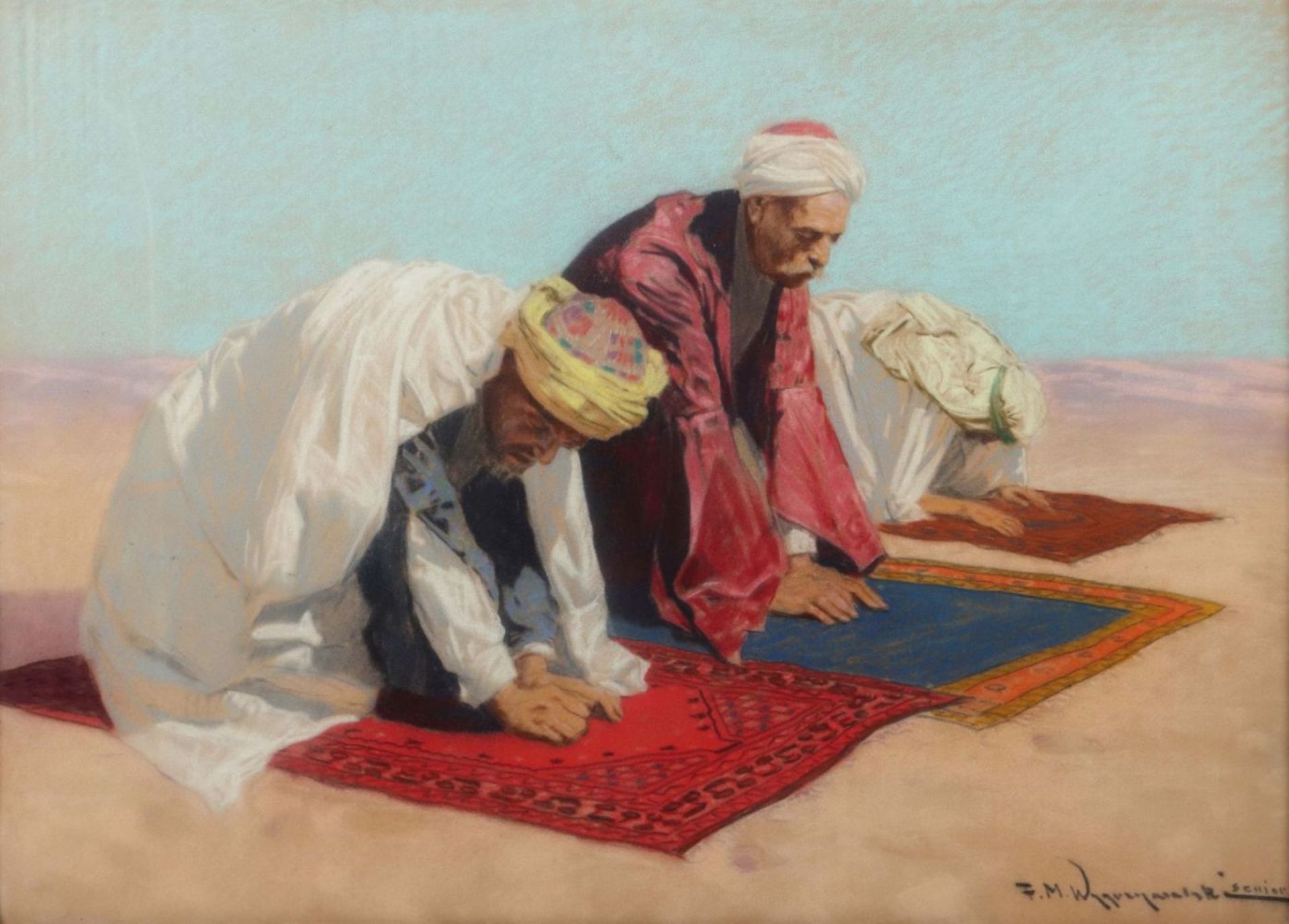
Widziałem bardzo dobre i dobre prace Feliksa Wygrzywalskiego. Te dwie do nich nie należą. Założę się, że tanio kupił je handlarz i teraz będzie miał problem.
Feliks Michał Wygrzywalski.Das Gebet
Lot 1961. Wygrzewalski, Feliks Michal Przemysl 1875 – 1944 Rzeszow, polnischer Maler, Mitglied der Münchner Schule. “Das Gebet“, drei Männer in Wüstenlandschaft auf den Teppichen betend, unten rechts sign. “F.M Wygrzewalski sen.”, Pastell/Papier, HxB: 50/70 cm. Mit verglastem Rahmen. Opening 1,000 euro. Siebers. 03/23/23. Sold 1,400 euro
Moje niskie ukłony dla artysty za ten pejzaż oraz dla nabywcy. Niewątpliwie to był najlepszy polonik na aukcji w Siebers.
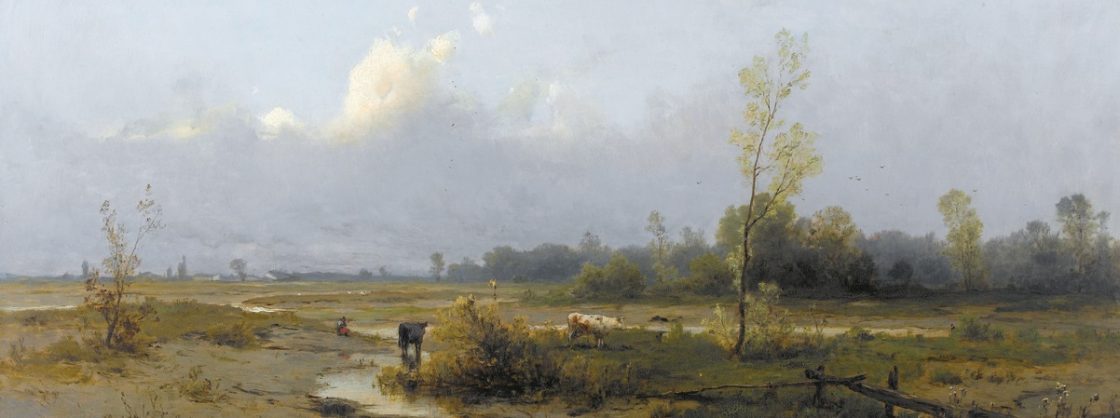
Lot 1897. Rapacki, Jozef Warschau 1871 – 1929 Olszanka, polnischer Maler. “Heidelandschaft“, mit Wald im Hintergrund, herbstliche Darstellung unter bewölktem Himmel, unten sign. und dat. 1910, Öl/Leinwand, HxB: 85/145 cm. Mit Rahmen. Opening 9,000 euro. Siebers. 03/23/23. Sold 13,000 euro
Zbyt wielkie były oczekiwania sprzedającego a woda za płytka.
Lot 1856. Kotarbinski, Wilhelm Nieborów 1848 – 1921 Kiew, polnischer Maler. “Venezianische Serenade“, Szene mit zwei jungen Frauen in einer Gondel sitzend, daneben ein Kavalier Mandoline spielend, der Gondoliere sie durch die Kanäle führend, unten rechts sign., Öl/Leinwand, HxB: 60/125 cm. Altersspuren, rest., ret. überwiegend im Randbereich, rückseitig Restaurierungsflicken. Mit Rahmen. Opening 30,000 euro. Siebers. 03/23/23. Not sold
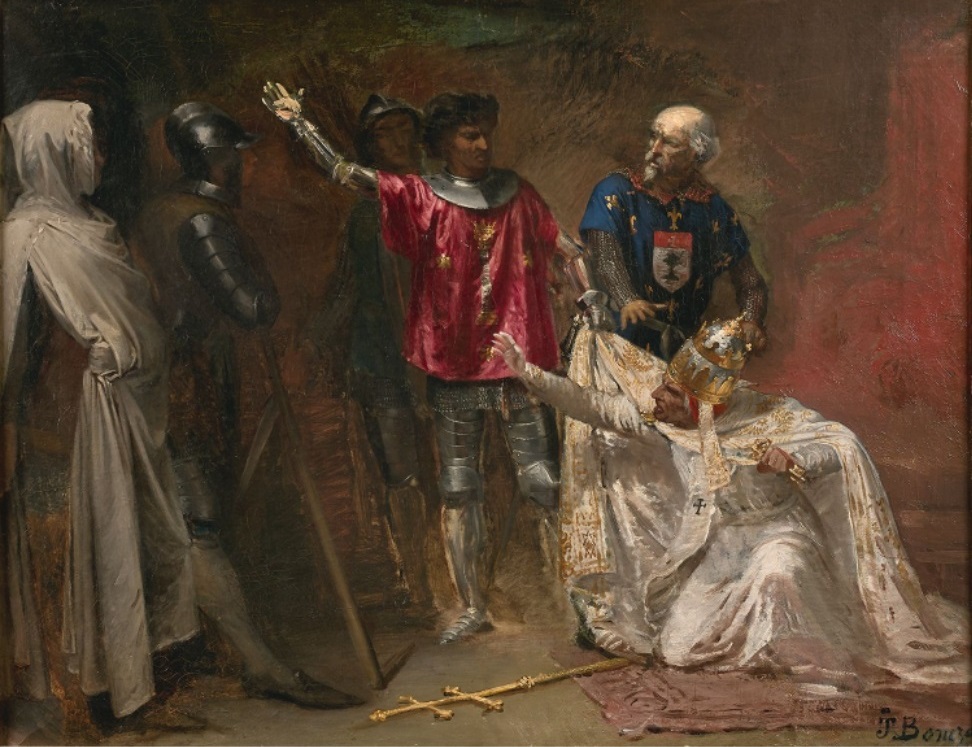
Spora rzadkość na rynku aukcyjnym z tym historycznym obrazem Juliana Bończy-Tomaszewskiego. Artysta jest obecny w Polsce na aukcjach ale najlepsze jego obrazy znajdują sie nadal poza granicami kraju. Olej z aukcji w Tajan nawiązuje do szorstkiej relacji i rywalizacji Francji (króla Filipa Pięknego) z Watykanem (papież Bonifacy VIII) na przełomie XIII/XIV wieku. Sytuacja na obrazie jest trochę inna od omówionej przez dom aukcyjny Tajan. Ta scena to próba(?) spoliczkowania Bonifacego VIII przez Giacomo Colonnę, przedstawiciela włoskiego rodu przeciwnemu papieżowi. Scena ma rzeczywiście miejsce w mieście Anagni, niedaleko Rzymu, w której odpoczywał Bonifacy. Centralną postacią jest oczywiście Bonifacy VIII, osoba z podniesioną reką gotową do uderzenia papieża to Giacomo Colonna, zaś trzecim filarem kompozycji jest William Nogaret, doradca króla Francji. Wiele fascynujących informacji i interpretacji na temat tego momentu można przeczytać w pracach historycznych. Julian Bończa-Tomaszewski to w dużej mierze artysta hołdujący historyzmowi lecz niestety nie związanemu z Polską. Stąd też małe i chyba niesłuszne zainteresowanie polskich kolekcjonerów jego twórczością. Biografię tego artysty opublikował w Polsce około 1912 roku Henryk Piątkowski.
Lot 85. Jules BONCZA TOMASZEWSKI (PETROGRAD, 1834 – NICE, 1920). THE ATTACK OF ANAGNI/ Original canvas. The Anagni attack, original canvas 63,50 x 81 cm – 25 x 31,9 in. At the turn of the 13th century, many issues of discord opposed Pope Boniface VIII, and the King of France Philippe IV le Bel. The bishop of Pamiers, Bernard de Saiss, contested the legitimacy of the king who had him arrested and locked up in a secular prison. The pope contested this decision and reaffirmed the primacy of the Holy See over the temporal sovereigns while the king advocated Gallicanism. In 1295, Philip IV set up a tax on the clergy without the agreement of the pope, which upset him. Faced with this, Boniface VIII threatened the king with excommunication in 1303. Guillaume de Nogaret, the king’s chancellor, was sent to notify the pope, who was then staying in the city of Anagni, that he had been summoned to a council with the aim of deposing him. For this, he was accompanied by the Colonna, who were opposed to the pope. An argument broke out as the Colonna’s used force to get the pope to renounce his office. Consputed and molested, Boniface VIII dies one month later. Estimate 1,500 – 2,000 euro. Tajan. 03/23/23. Sold 2,200 euro.