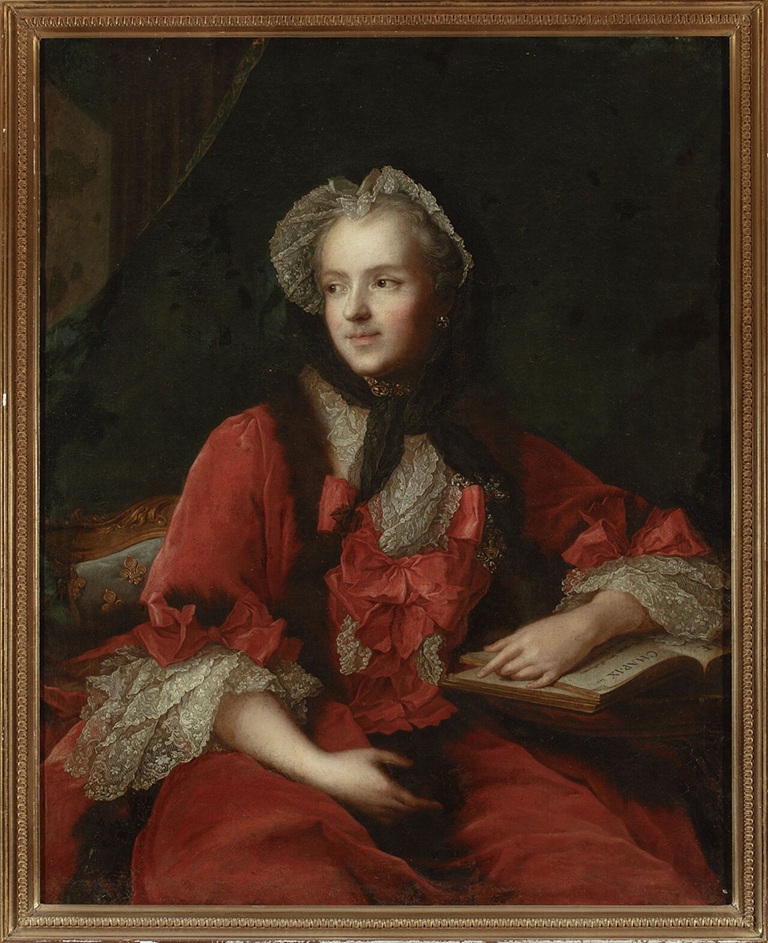
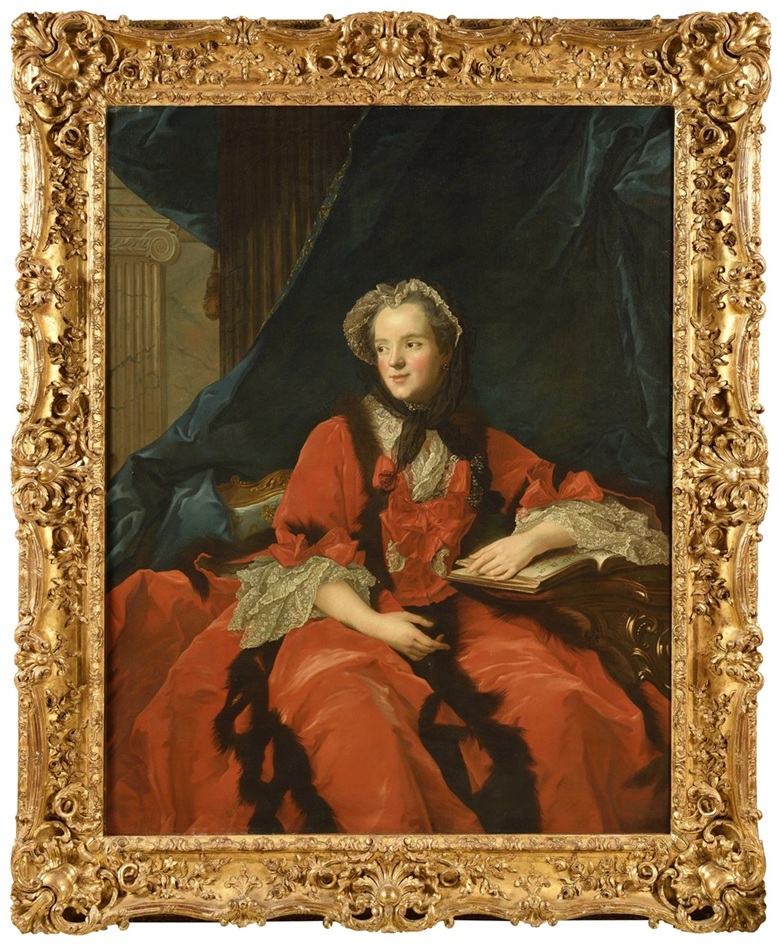
Lot 180. Jean-Marc NATTIER (1685–1766), follower of. Portrait of Marie Leczinska (1703–1768). Oil on canvas H_147 cm W_115 cm. Re-stretched, with previous restorations. Exceptional gilded carved wooden frame with rocaille decoration. Estimate €12,000 – 15,000. Osenat. 11/08/26
Provenance: -Anonymous sale, April 15, 1999, lot 125, Sotheby’s London -Auction “Le Pavillon Chougny: A Private Collection of Objets d’Art, French Furniture by Alberto Pinto,” December 10, 2004, lot 478, Christie’s Paris, where it was acquired by the seller Related Works: -Jean Marc Nattier, portrait of Marie Leczinska, held at the Palace of Versailles, MV 5672 -Jean Marc Nattier, portrait of Marie Leczinska, Christie’s Paris auction of May 25, 1999, lot 142 -A follower of Jean-Marc Nattier, Portrait of Marie Leczinska, variant with the philosophical book, Musée des Bonnat-Helleu -Jean-Marc Nattier, Portrait of Marie Leczinska in an oval, Musée Cognacq-Jay -Studio of Jean-Marc Nattier, Portrait of Marie Leczinska, National Museum in Warsaw.
Our painting follows the composition of the famous portrait of Queen Marie Leczinska, painted by Jean-Marc Nattier at the queen’s request and exhibited at the 1748 Salon. Although this portrait depicts a queen, nothing in its staging seeks to emphasize her rank. Indeed, at her request, Nattier departed from the traditional conventions of ceremonial portraiture in favor of a more intimate and natural depiction. The queen is depicted wearing a red dress trimmed with ermine, devoid of the sumptuous jewelry and monarchical regalia typically found in royal portraits. This simplicity reflects the queen’s desire to be portrayed with modesty. Presented at the 1748 Salon, the work was a resounding success, both for its faithful depiction of the queen’s features and for the gentleness and sensitivity it conveys. The success of this composition led to the creation of several replicas, two of which are mentioned in the accounts for the 1748 fiscal year. The composition also gained popularity beyond the realm of painting, notably through its adaptation into a tapestry by the Gobelins workshop.
Born in 1703, Marie Leczynska was the daughter of Stanislas Leszczynski, who was elected King of Poland in 1704 before being dethroned in 1709. After several years in exile with her family, she married Louis XV in 1725 and became Queen of France. Pious and discreet by nature, she gradually distanced herself from court intrigues, devoting much of her time to religion, charitable works, and the arts. This composition stands out as one of the most iconic depictions of Marie Leczynska. Its widespread circulation through various copies attests to the painting’s popularity during the reign of Louis XV and establishes it as one of Jean Marc Nattier’s most iconic works.
Maria Leszczyńska była żoną francuskiego króla Ludwika XV. Malarze mu współcześni wykonali wiele portretów przedstawiających królewski majestat jego żony w różnych pozach, na różnym tłach. Na aukcjach zachodnich czasami pojawiają się takie prace. Aby ocenić rzetelność tego rzemiosła należy mieć rzetelną wiedzę i dlatego zostawiam ocenę muzealnikom. Jeden z portretów Marii Leszczyńskiej, opisany jako ręki Jean-Marc Nattiera, jest własnością Muzeum Narodowego w Warszawie. Trudno jest przewidzieć na podstawie wyceny wartość portretu oferowanego na aukcji w Osenat lecz może warto zainteresować sponsorów jednego z polskich muzeów.