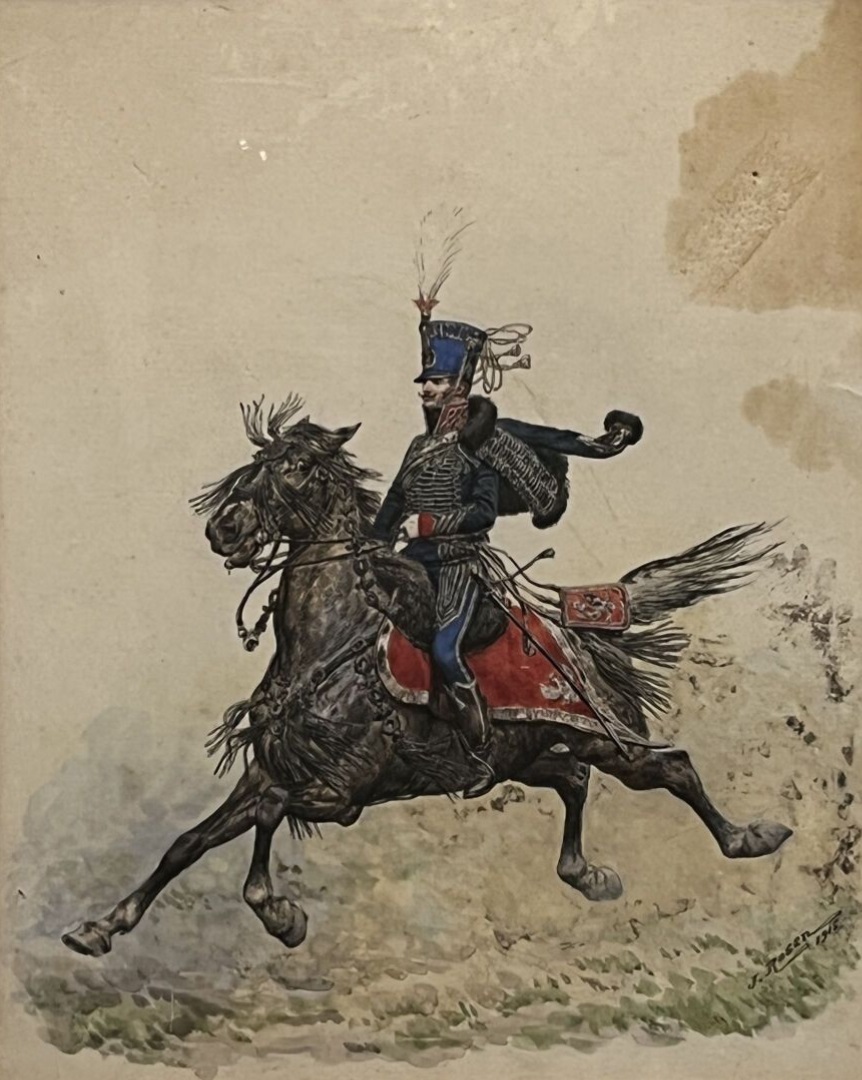
Tanio wyceniona akwarela Jana Rosena, wymagająca konserwacji. Może dlatego nisko wyceniona.
Lot 147. Jan ROSEN (1854-1936). Rider. Watercolor signed lower right and dated “1915. 38 x 30 cm; (humidity stain). Estimate 80 – 120 euro. Marambar – de Melafosse. 10/19/22. Sold 850 euro.
Martwa natura z owocami Mojżesza Kislinga z dość atrakcyjną wyceną. Obraz ma się znaleźć w katalogu prac zbiorowych tego artysty.
Lot 46. Moïse Kisling 1891 – 1953. Compotier et fruits, signed Kisling (lower right), oil on canvas, 60 by 73.2cm., 23⅝ by 28¾in. Framed: 78.6 by 92cm., 31 by 36¼in. This work will be included in the Volume IV et Additifs aux Tomes I, II, et III of the Catalogue Raisonné of the Work of Moïse Kisling currently in preparation by Marc Ottavi. Estimate 35,000 – 45,000 GBP. Sotheby’s. 10/19/22. Sold 40,320 GBP
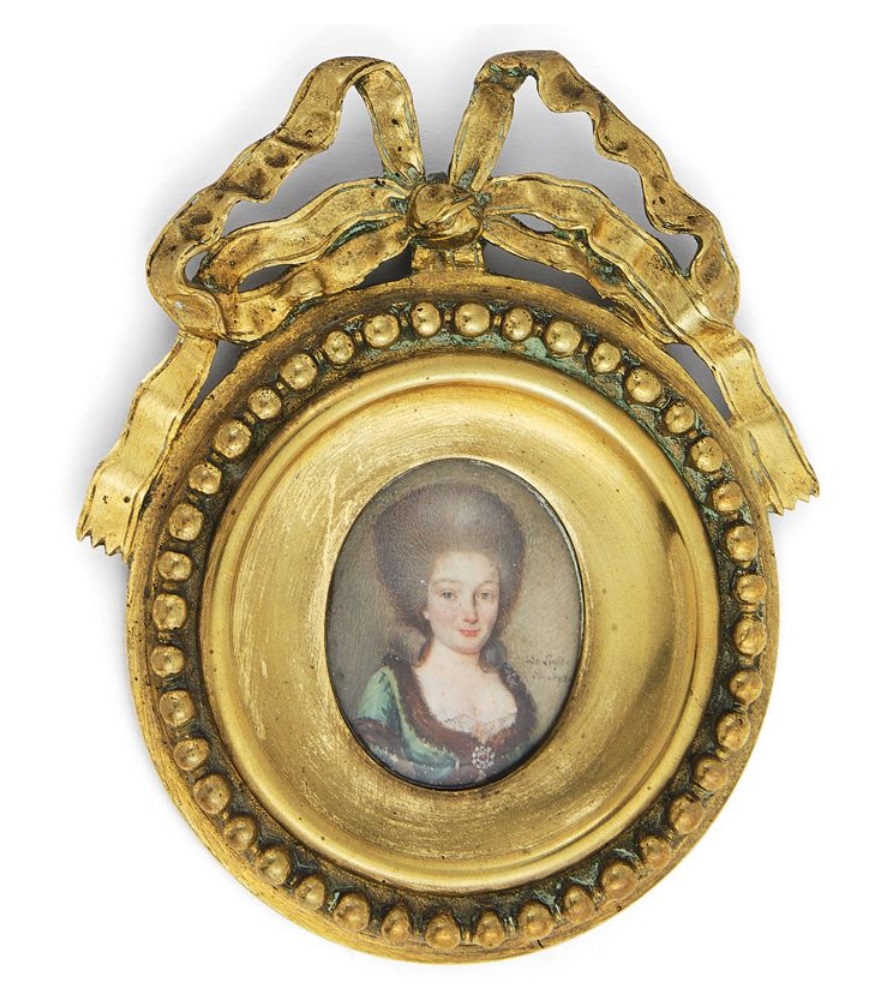
DE LUSSE Jean-Jacques Thérésa. Izabella Poniatowska
Miniatura przedstawiająca Izabellę Poniatowską, siostrę Stanisława Augusta Poniatowskiego. Możliwość otarcia się w salonach o rodzinę królewską choć portret wykonany obca ręką.
Lot 114. DE LUSSE Jean-Jacques Thérésa (1758-1833). Portrait of Countess Isabella PONIATOWSKA (1730-1808) Oval miniature, signed and dated on the right De Lusse/Pinxit 178-, depicting the sister of the King of Poland Stanisłas Auguste PONIATOWSKI, known as Madame Krakow, in bust, three-quarter right, in green dress edged with fur. In its original round gilt bronze frame bordered with a frieze of pearls and topped with a ribboned bow. On the back a handwritten paper in Polish identifying the subject sabella z Poniatowska hetmanowa Graf Branicka Pani krakowska Babka Isabelli Starzynski. 4.4 x 3.5 cm. Frame: 12.5 x 10.5 cm. Provenance: Izabella STARZYNSKA (1804-1897), born Countess MOSTOWSKA, wife of Edouard STARZYNSKi (1807-1864). To his son the count Boleslaw STARZYNSKI (1834-1917), historian born in Poland and established in Paris. Bequeathed by the latter to his cousin Joseph Marie Clément de NICOD de NEUVILLE, count of MAUGNY (1873-1944) and to his wife Margaretha, called Rita, Jeannette Émilie BUSSE (1882-1937). Then by descent. Estimate 600 – 800 euro. Fraysse @ Associes. 10/19/22
Nieduży i spokojny pejzaż, opisany jako ręki Stefana Bakałowicza. Dla niejednej osoby może stanowić pamiątkę z wycieczki na Capri. Pejzaż bardzo przyjemny i dekoracyjny, znakomitego artysty.
Lot 106. STEFAN W. BAKALOWICZ (Varsovie 1857 – Rome 1947). CAPRI. Huile sur panneau, 22 x 37 cm. Signé, daté “Capri 1923”, en bas à gauche. Cadre doré. ORIGINE: Famille romaine. Estimate 1,200 – 1,800 euro. Aste Babuino. 10/18/22. Sold 2,300 euro
Zastanawia mnie Leon Tarasewicz jako profesor na ASP. Co też przekazywał lub przekazuje studentom jako nauczyciel akademicki? Przyznam, że bardzo nieuczciwie przedstawiam jego dzieło (Bizony w sniegu – moja interpretacja) jako kontrast do wczoraj pokazanego oleju Canaletta.
Lot 148 1418830. Leon Tarasewicz (Poland, Born 1957). Untitled. Signed L. Tarasewicz and dated Värnanäs 1985 verso. Canvas 127 x 167 cm. Estimate: 100 000 – 125 000 SEK (9 380 – 11 700 EUR). Bukowskis. 10/26/22
Bernardo Bellotto (Canaletto). Equestrian Portrait of the King of Poland’s Page Gintowt, 1773
Lot 16. Bernardo Bellotto (Canaletto) (1720 – 1780). „Equestrian Portrait of the King of Poland’s Page Gintowt“, 1773, oil on canvas, 60 x 55.5 cm. Estimate: € 250.000 – 500.000. ImKinsky. 11/08/22. Sold 730,000 euro
Myślę, że minister Gliński, zamiast wykładać kasę na współczesne badziewie, powinien dość agresywnie licytować tę pracę lub może nawet zawrzeć ugodę przed aukcją. Inny tytuł tego portretu to “The royal page Gintowt on horseback attended by a groom in royal livery”.
Provenance:
Commissioned in 1773 by Stanislas-August Poniatowski, King of Poland; his collection, Royal Palace of Warsaw; Prince Joseph Poniatwoski, Belvedere Palace, Warsaw, 1798; Henry Kent, Florence 1910-11; Private collection, France; Sotheby’s Monaco, 5 December 1991, lot 167; collection Erna Weidinger (1923–2021)
Exhibition:
Milan 1910, Le tre espositioni rettrospecttive MCMVIII-MCMX. Mostra Miniature e ventagli, Giovanni Carnevali detto il Piccio, ritrati del settecento, p. 72, no. 18, pl. XIII Florence 1911, Mostra del ritratto italiano dalla fine del sec. XVI all’ anno 1861, p. 80, no. 13
Literature:
Catalogue des tableaux appart enant a sa Majeste le Roi de Pologne, Varsovie, Chateau Royal, 1795, no. 459 (catalogue manuscrit publie dans Mankowsk i [op. cit. infra]) Sebastiano Ciampi, Bibliografia critica delle antiche reciproche corrispondenze, vol. II., Florence 1839, p. 237, no. 34 E. Ratawiecki, Slownik malarzow polski ch tudziez obcych w Polsee osiadlych lub czasowo w niej przebywajncych, Warsaw, 1850, vol. I, p. 55, no. 35 Ramond Foumier-Sarloveze, les peintres de Stanislas-Auguste II, Roi de Pologne, Paris, 1907, p. 144, no. 459 A. Koltonski, “Wystawa portetu we Florencyi” in: Sfinks, November 1911, no 47, p. 258 Pawel Ettinger, “Bellotto v Varshave” in: Stariye Godiy, October-December 1914, pp. 13-14 Tadeusz Mankowski , Galerja Stanislawa Augusta, vol. 1, Lwow, 1932, pp. 62, 161 Hellmuth Allwill Fritzsche, Bernardo Bellotto genannt Canaletto, Burg b. Magedburg 1936, p. 126, no. 197 Egidio Martini, La Pittura veniziana de/ Settecento, Venice, 1964, pl. 218 Barbara Krol-Kaczorowska, “Svolta di lavori fomiti alla Corte di Varsovia ed altri documenti bellotiani del periodo polacco” in: Bulletin du Musee National de Varsovie, 1966, VII, p. 68 Stefan Kozakiewicz, “Ricostruzione di un gruppo di dipinti bellotiani del periodo polacco” in: Bulletin du Musee National de Varsovie, 1967, VIII, no. 1-2, pp. 32-45, (fig. 9, p. 39) Stefan Kozakiewicz, Bernardo Bellotto, London1972, vol. II, cat.-no. 434, pp. 390-391; Ettore Camesasca, l’ Opera completa del Bellotto, Milan, 1974, p. 116, no. 253 Alberto Rizzi, Bernardo Bellotto. Warschauer Veduten, Munich 1991, p. 133; Bozena Anna Kowalczyk, Bellotto and Canaletto. Wonder and Light, Milan 2017, p. 268 (colour ill.)
The painting is part of a series of four well-known equestrian or horse portraits by Bernardo Bellotto and was created for the Polish King Stanislaus II August Poniatowski (1732-1798). In 1773, Bellotto noted in his records of works delivered for the court: “quattro picolli quadri di invenzione con cavalli presi dalla natura e Figure…”, for which he had received the sum of 200 ducats in total (Kozakiewicz, 1972, p. 388). While two of these paintings, “Colonel Königsfels teaching Prince Joseph Poniatowski how to ride” (fig. 1) and “Stable boy leading a horse” (fig. 2), are now in the National Museum in Warsaw, the “Equestrian Portrait of a Hussar Officer” (fig. 3) is in the Kunsthistorisches Museum, Vienna (cf. Kozakiewicz, 1972, pp. 387-91, nos. 431-433). The whereabouts of the present work were unknown for a long time. Around 1910/11 it was documented through exhibitions and a black-and-white illustration in the Kent Collection, Florence, until it finally reappeared at an auction in Monaco in 1991, coming from a French private collection. In 2017, it was then illustrated in colour (probably for the first time) in a scientific publication by Bozena Anna Kowalczyk (Kowalczyk 2017, p. 268).
The almost square series of four – created for the Polish king – consists of two slightly horizontal formats and two slightly vertical formats. Presumably due to a lack of documentation, however, the literature gives the same dimensions for this painting as for the work in the Kunsthistorisches Museum, while the illustration in the exhibition catalogue of 1910 corresponds to today’s image. A comparable Capricci series by Bellotto with different formats, two horizontal and two vertical formats, can be found in the Galleria Nazionale in Parma (cf. Kowalczyk 2017, pp. 268 and 148). The two Warsaw paintings depict horses and figures against the background of an imaginative, monumental Baroque architecture with palace wings, porticos, and an arcade; while the two vertical works show the proud horsemen riding out in a southern, equally imaginary landscape, which contains Capricci-like structures in the background. All four works are connected by the brilliant white horses that dominate them. The uniforms, glowing in red and green, also run through the paintings as a unifying element.
In contrast to the poses of the other works, the “Page Gintowt” and his white horse are depicted almost frontally. Both look up at the viewer and seem almost to be riding towards them. Alberto Rizzi describes this emotional expressive unity of horse and rider as follows: “This rider, seated in the saddle with Anglo-Saxon confidence, is somewhat reminiscent of those servants who adopt the manner of their masters, caricaturing them in the process… The young man’s upper body, as well as the head of his no less elegant horse, stand out against the sky, an effect that lends the depiction a majestic character.” (cf. Rizzi 1991, p. 133). The subject is clearly identified by the original title “Le page Gintowt à cheval, suivi d’un palfrenier à livrée du Roi”, listed in the 1795 catalogue of the gallery of King Stanislaus II August Poniatowski (Mankowski 1932). Stefan Kozakiewicz devoted a separate essay to this group of horse paintings in 1967 and notes that the rider is wearing the Polish officer’s uniform, in contrast to the title (“Nobleman in Saxon Costume”) that was incorrectly transmitted in earlier exhibitions. It is possibly Celestino Dziewialtowski Gintowt, later Major of the Royal Army and Adjutant General to the King (“È probabilmente Celestino Dziewialtowski Gintowt, figlio di Antonio, nel 1779 maggiore dell’esercito della Corona, nel 1780 aiutante di campo generale del re”, cf. Kozakiewicz 1967, p. 42, footnote 21).
Even though the roots of such depictions of horses in the context of portraits of rulers or illustrations of riding schools go back to the 16th century, this series is unique in Bellotto’s oeuvre. They are the artist’s first genre paintings. “Although scenes from real life played a major role in his vedute, they were never before the main subject of representation. The fact that they became such in the Warsaw period corresponds to the greater importance that the staffage generally assumed in the views from that period. Even if they were not given a leading position in the vedute, they were still in full harmony with the real surroundings; here, however, where they are the main subject, the artist places them in an unreal setting”. Whereas until now horses had only been staffage elements in Bellotto’s vedute, here they become the protagonists. Both the figures depicted are certain people close to the court and the horses were presumably studied directly by Bellotto in the royal stables – “presi dalla natura”, as the artist himself notes. “The artist probably received the inspiration for these paintings from the king while working on the large “View of Warsaw from the Terrace of the Royal Castle” (fig. 4), painted in the same year 1773: it had familiarised Bellotto with the subjects and persons of his first genre paintings.” (cf. Kozakiewicz 1972, vol. 1, pp. 165 + 174ff.). In addition to the preferences of his royal patron, the artist’s own interest in horses probably also played a major role in the creation of these late works – Bellotto died in Warsaw in 1780 as a result of a stroke. Trained in the workshop of his famous uncle Antonio Canal (1697-1768), whose nickname “Canaletto” he subsequently adopted, Bernardo Bellotto specialised primarily in vedute: first, following the tradition, of his native Venice, then later the cities of his respective clients, such as Dresden, Munich, Vienna and finally Warsaw. In “Capricci with the Capitol” (Galleria Nazionale, Parma), painted in 1746, Bellotto used a horse as a striking figure element for the first time. From then on, horses, riders and carriages increasingly played a role as staffage in his capricci and vedute. In addition to his own studies, the depictions of contemporary artist colleagues, such as the famous English horse painter George Stubbs (1724-1806), presumably also served as inspiration (cf. Kowalczyk 2017, pp. 268 and 148).
Pytia to akwaforta którą wykonał Cyprian Kamil Norwid około 1863 roku w niewielkiej ilości egzemplarzy. Źle się wówczas mu sprzedawały. Do chwili obecnej niewiele spośród nich dotrwało i stanowią cymes dla kolekcjonerów. Oglądałem aukcję na żywo. Jeden z biedaków wisiał na telefonie lecz nie mógł nadążyć z gwałtownymi zmianami ceny. W końcu nie miał odwagi licytować 950 euro.
Lot 34. Cyprian Kamil NORWID (1821-1883). “La Folie” Estampe sur papier 25.2 x 16.2 cm. Estimate: 100 € – 150 €. Arcadia. 10/15/22. Sold €930.
Lot 566. Piotr Stachiewicz (Nowosiółki Goµcinne 1858–1938 Krakow). Collection of Alms, signed, dated Piotr Stachiewicz 1894, oil on panel, 34 x 28.3 cm. Estimate 5,000 – 7,000 euro. Dorotheum. 11/08/22. Sold 5,000 euro
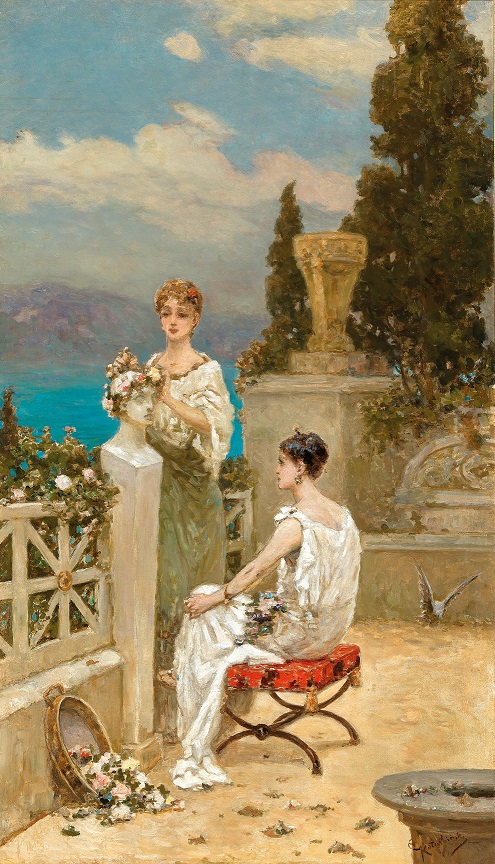
Znowu myślę o pewnym braku przejrzystości rynku aukcyjnego w Polsce lecz może to wynikać z mojego braku zrozumienia polskich realiów. Obecnie wystawiona w Dorotheum praca Wilhelma Kotarbińskiego była aż trzy razy sprzedana w ostatnich 10 latach w Polsce, konkretnie na aukcjach Desy-Unicum (jako ‘Rzymskie partycjuszki’). Pierwsza sprzedaż miała miejsce w 2013 roku (110,000 zł), druga w 2018 roku (240,000 zł, ~€55,000) – o tej aukcji podaje teraz Dorotheum w swoim katalogu – po czym trzecia sprzedaż była w 2021 roku (również 240,000 złotych, ~€53,300). Dorotheum wycenia ją teraz na €35,000 – 45,000, czyli 175,000 – 225,000 zł. Mogę uwierzyć w sprzedaż w 2013 i z trudem w 2018 roku lecz nie w 2021 roku. Znowu coś tu nie gra i nie wiem o co chodzi. Jakiś zdesperowany ‘europejski kolekcjoner’ godzi się sprzedać ze stratą obraz w Dorotheum, który rok temu wcześniej kupił w Desie. A może nadszedł właśnie czas sprzedaży prac malarskich kupionych w Desie ze stratą – to już drugi przykład w ciągu dwóch dni? Kolekcjoner a może handlarz kiedyś zarobił a teraz jest czas by stracił (what goes up must go down; first loss is the best loss). Jakże łatwo odnajduję takie przykłady i to wcale ich nie szukając!
Praca Wilhelma Kotarbińskiego z tej aukcji jest słaba w moich oczach, sztuczna scena i trochę wyegzaltowana. Artysta malował znakomite obrazy lecz ten do najlepszych nie należy – dopuszczam jednak inne opinie.
Lot 637. Vasili (Wilhelm) Kotarbinsky (Nieborów near Lodz 1849–1921 Kiev). Roses for Eternity, signed Kotarbinski, oil on canvas, 138 x 79 cm, framed. Provenance: Auction, Desa Unicum, Warsaw, 21 June 2018, lot 123; European Private Collection. Estimate 35,000 – 45,000 euro. Dorotheum. 11/08/22. Not sold
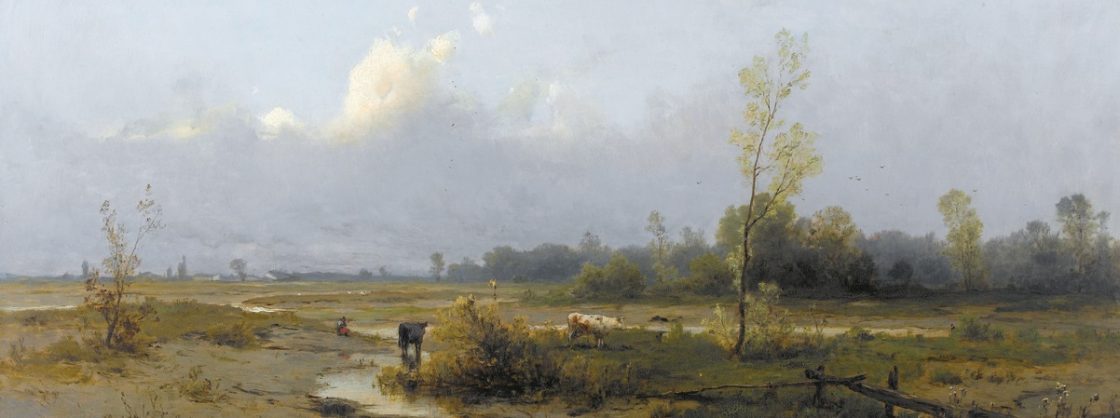
Jeszcze raz o tym samym. Pokazuję ten obrazek jedynie dlatego bo wkrótce może pojawić się już w Polsce jako rzeczywiście praca Władysława Szernera. Nie mam jednak pretensji do szwedzckich specjalistów od polskiej sztuki skoro w Polsce nie jest lepiej. Tak łatwo przecież usunąć te literki ‘iun’ koło sygnatury. Kilka takich obrazów z usuniętymi literkami krąży(ło) po polskich aukcjach znajdując naiwnych. Przynajmniej ślad zostanie na blogu. Obrazek sam w sobie jest bardzo banalny, przesłodzony w treści, o znikomej w moich oczach wartości artystycznej.
74. 2437376. WLADISLAW SZERNER (1836 – 1915). Rural idyll, oil on canvas, 36 x 49 cm. Estimate: 1 088 – 1 360 EUR. Stockholms Auktionsverk. 10/20/22




 Polish Art Corner