Sukces sprzedaży Parnassus Henryka Siemiradzkiego w Polswissart. 5 milionów złotych za pomalowaną monochromatyczną fotografię.

Henryk Siemiradzki. Parnas, olej, płótno, 91 x 147 cm

Jeden z czytelników napisał do mnie obszerny list w sprawie sprzedaży w Polswissart obrazu Henryka Siemiradzkiego Parnas (Parnassus). Obraz był na aukcji w Polswissart 11 marca i został sprzedany za 5,100,000 złotych (cena estymacyjna 5-7 mln, cena wywoławcza 4 mln) a został sprowadzony do Polski z aukcji w Sotheby’s w 2020 roku. Nie omieszkałem wówczas napisać na blogu dość krytycznie (https://polishartcorner.com/2020/11/19/henryk-siemiradzki-1843-1902-30/). Link do aukcji w Sotheby’s, gdzie sprzedano ten obraz za 680,000 GBP (z opłatami), przy wycenie 400,000 – 600,000 GBP: https://www.sothebys.com/en/buy/auction/2020/russian-pictures-2/parnassus.

Oryginalna praca Parnas to kurtyna o wymiarach ok 6 x 9 metrów, którą artysta wykonał około 1900 roku dla lwowskiego Teatru Miejskiego.

Proweniencja tej zredukowanej wymiarami pracy nie budzi żadnych wątpliwości i jest niezwykle dobrze udokumentowana. Jedynie czego brakuje na stronach Polswissart to napisanie o eseju mówiącym o tym, że obraz ten wykonał Henryk Siemiradzki na podstawie fotografii rzuconej na światłoczułe płótno. O tym wszystkim można sobie poczytać na stronach Sotheby’s (link powyżej) jak też zaznajomić się o powielaniu przez Siemiradziego techniki fotograficznej w celu dokonania późniejszych podmalowań. Mamy tam również informacje (link) do innej pracy artysty (Idylla) powstałej w ten sam sposób.

Polska prasa zachłystuje się sumą sprzedaży, podobnie jak to czyniła w przypadku Rubensa kilka lat temu: https://polishartcorner.com/the-red-flag/.

Podsuwam jeden z wczorajszych linków prasowych, z krótkim cytatem: https://dzieje.pl/wiadomosci/obraz-parnas-henryka-siemiradzkiego-sprzedany-za-rekordowe-6-mln-zl.

„Obraz olejny, niezbędny do takiej realizacji, powstał w finalnej fazie prac nad kurtyną. Jest to praca olejna na płótnie dublowanym o wymiarach 91 na 147 cm”.

Obraz ten chyba powstał później, gdy kurtyna była gotowa a nie odwrotnie – chyba nadużycie reprezentanta domu aukcyjnego p. Marty Rydzyskiej. Identyczny artykuł był wielokrotnie powielany przez różne gazety czy TV np. https://warszawa.naszemiasto.pl/absolutny-rekord-w-warszawie-sprzedali-125-letni-obraz-polskiego-artysty-powalajaca-kwota-zakupu/ar/c13p2-27358697. W sumie Polswissart ponownie bryluje PR-em, kopiowanym bezkrytycznie przez prasę.

Ja jestem daleki by krytykować polskiego kolekcjonera za wydanie ok 6 mln PLN (z opłatami) na obraz, który jest w końcu pomalowaną przez artystę monochromatyczną fotografią. Każdy przecież ma prawo wydać w dowolny sposób przez siebie zarobione pieniądze. O eseju opublikowanym przez Sotheby’s oraz o eseju Dominiki Sarkowicz (poniżej) trzeba jednak wiedzieć i o nim powinien napisać Polswissart lub się do niego ustosunkować. A tak pozostał kolejny niesmak powstały z ukrycia przez warszawski dom aukcyjny zastosowanej techniki fotograficznej. Obraz rzeczywiście jest pracą Siemiradzkiego ale technika przypomina mi malowanie widoków Starego Miasta powstałych przez rzucenie slajdu na płótno lub papier i obróbkę konturów przez artystę. Wracając, technika fotokopii była powszechnie znana w czasach Henryka Siemiradzkiego i była dość powszechnie stosowana do powielania prac.

Poniżej skopiowane fragmenty z katalogu Sotheby’s:

“The present work, almost identical in composition only far smaller than the Lviv version (which measures 6 by 9 meters), is dated 1900. Technical analysis has shown that the artist used an innovative photographic method to transpose the contours of the Lviv composition onto the canvas, serving the artist as a preparatory drawing. It is therefore obvious that the present work is not a study; rather it is a later, smaller and highly finished version, most likely the result of a commission.”

Henryk Siemiradzki’s materials and techniques: the case of Parnassus
By Dominika Sarkowicz, PhD, National Museum in Krakow

The painting Parnassus by Henryk Siemiradzki, a reduced-scale replica of the large-curtain of Lviv Opera House, is a unique example of the artist’s use of a photographic technique in the execution of his work. The composition, which is an almost exact reproduction of the first version, is executed in oil on canvas. However, instead of a traditional ground, the canvas was coated with a protein-based medium (most likely gelatin) containing photosensitive silver compounds. In the layer covering the canvas, gypsum has also been detected. A negative, most likely taken of the original Lviv curtain, was then projected onto the prepared support. Then the image was developed and fixed as part of the photographic process. As a result, a monochromatic image of the curtain was reproduced on the canvas support, a copy of the Parnassus composition only on a significantly smaller scale. The contours and details would have been slightly blurred, however they would still have been sufficient for the painter to use as a preparatory drawing to determine the proportions and distribution of particular components. It is important to emphasise that it was not a print made on photosensitive paper adhered to the canvas but a photograph enlarged and fixed directly onto it. Using this photographic technique, the artist simplified his work by omitting the stage of transferring the outlines of the composition onto a new canvas (and moreover, on such a reduced scale) with the use of a grid of auxiliary lines. Maria Siemiradzka, the artist’s wife, described this latter method in a letter as ‘boring and tedious’, certainly citing her husband’s opinion. Parnassus is not the only example that shows evidence of Siemiradzki’s use of a photographic technique to replicate a composition. The other is Idyll, executed after 1895, in which a very similar method was applied. (…)

Sarkowicz D., Klisińska A. 2017, Investigation of the Painting ‘Idyll’ Attributed to Henryk Siemiradzki: The Unusual Technology of a Canvas Painting Executed on an Enlarged Photograph, ‘Studies in Conservation’ (2017), access online: https://www.tandfonline.com/doi/full/10.1080/00393630.2017.1364876

Uwagi czytelników nie zgadzających się ze mną są zawsze akceptowane na łamach PAC.

Antoni Kozakiewicz (1841 – 1929)

Antoni Kozakiewicz. A village entertainment

Lot 39. Anton Kozakiewicz (Polish, 1841-1929). A village entertainment, signed ‘Kozakiewicz’ (lower right), oil on panel, 92.5 x 65.5cm (36 7/16 x 25 13/16in). Estimate £10,000 – £15,000. Bonhams. 03/26/25. Sold 22,000 GBP

Sygnatura

Dwa oleje Antoniego Kozakiewicza, dwie scenki rodzajowe w Bohhams. Duży obraz z kataryniarzem powstał być może w Monachium. Jest on przegadany, nafaszerowany wieloma drobnymi detalami, łącznie z golębiami na niebie. Takie sceny ekscytowały niemieckich kunsthandlerów bo takie było wówczas zapotrzebowanie mieszczaństwa. Artysta umieścił aż 19 osób na tej pracy, przedstawiając przekrój miasteczkowego społeczeństwa, malując bardzo realistycznie i niezwykle precyzyjnie, choc niektóre z postaci wypadły drętwo. Druga z prac jest z późniejszego okresu i jest to niskiego kalibru scenka i w dodatku słabo namalowana. Dobrze się stało, że takie dwa różne w wykonaniu obrazy tego artysty znalazły się niemal równoczesnie na rynku. Osobiście cenię prace Antoniego Kozakiewicza z bardzo wczesnego okresu, gdy nie ulegał jeszcze modom. Malowanie pod gust publiczności z wymyślaniem scenek sprowadza się po latach do ich zwietrzenia i przewartościowania w dół.


Antoni Kozakiewicz. A rude awakening, 1917

Lot 60. Anton Kozakiewicz (Polish, 1841-1929). A rude awakening, signed and dated ‘Kozakiewicz 1917’ (lower left), oil on canvas51 x 67cm (20 1/16 x 26 3/8in). Estimate £3,000 – £5,000. Bonhams. 03/19/25. Passed


Czytelnik poświęcił sporo pracy detektywistycznej nad historią Kataryniarza (dziękuję!):

Obraz ten zatytułowany był pierwotnie “Z panoramą” oraz “Wędrowna panorama”. Tytuł “Z panoramą” znajduje się w “Kuryer Krakowski” z 16.10.1876 r. str.3 .

Obraz ten był prezentowany w Monachium razem z pracą A.Kozakiewicza “Kobziarz”, https://www.google.pl/books/edition/Kuryer_Krakowski/GKYC5AucmjMC?hl=pl&gbpv=1&dq=Antoni+kozakiewicz+panorama+1876&pg=PP139&printsec=frontcover

Pod nazwą “Wędrowna panorama” kopia tego obrazu pojawia się na łamach”Tygodnika Powszechnego” nr 38 z 21.09.1879 s. 600, https://bc.radom.pl/dlibra/doccontent?id=7067

W “Pamiętniku Towarzystwa Przyjaciół Sztuk Pięknych w Krakowie” 1854-1904 (wyd.1905) aut. Emmanuela Swieykowskiego znajduje się informacja,że za obraz zatytułowany “Kataryniarz” podczas pobytu w Monachium Kozakiewicz otrzymał  honorowy dyplom. https://one.bid/nl/papers/Pamietnik-Towarzystwa-Przyjaciol-Sztuk-Pieknych-w-Krakowie-1854-1904/K

Praca “Kataryniarz” pojawia się następnie w 1877 r. w Warszawie w Królestwie Polskim na wystawie Towarzystwa Zachęty Sztuk Pięknych, co potwierdza zapis w katalogu wystawy, https://mbc.cyfrowemazowsze.pl/Content/35350/PDF/35350.pdf

W 1879 roku. kopię tego obrazu z ww. wystawy Towarzystwa Zachęty Sztuk Pięknych opublikowano w “Kłosy” czasopismo ilustrowane, tygodniowe, poświęcone literaturze, nauce i sztuce, 16.01.1879 r., T.XXIV, nr 707 str.5 -pt “Sceny z życia ulicznego w Krakowie -“Kataryniarz”

Kopia obrazu A. Kozakiewicza, z Wystawy Obrazów Tow. Z. S. P. w Król. Pol. https://sbc.wbp.kielce.pl/dlibra/doccontent?id=13305

W mojej ocenie obraz ten datowany jest na rok 1876 r. gdyż taka data znajduje się na kopii w prawym roku tego obrazu obok sygnatury autorskiej A.Kozakiewicza w “Tygodniku Ilustrowanym” 1880, Seria 3, T. 9 nr 221, s. 184, https://mbc.cyfrowemazowsze.pl/dlibra/publication/64017/edition/58898/content?ref=L3B1YmxpY2F0aW9uLzU3MDY1L2VkaXRpb24vNTI2MDg

Wersja kolorowana: https://img1.one.bid/img/2631/565592_1b.jpg?1631553446

Obraz był b.popularny -drzeworyt rosyjski: ВСЕМИРНАЯ ИЛЛЮСТРАЦИЯ. 1881. Том XXV. № 6; http://lib.sptl.spb.ru/ru/nodes/15195-vsemirnaya-illyustratsiya-1881-tom-xxv-locale-nil-6#mode/inspect/page/9/zoom/4

Niemiecki z 1881 r.: https://www.ebay.com/itm/374383224040

Warto na stronie domu aukcyjnego https://www.bonhams.com/auction/30631/lot/39/anton-kozakiewicz-polish-1841-1929-a-village-entertainment/ w dużym powiększeniu przyjrzeć się dokładnie jak Antoni Kozakiewicz z pietyzmem odmalowuje  na twarzach swoich  bohaterów cały wachlarz emocji. Ile w nich kolorytu i życia!

Z powodu ruchomego teatrzyku kukiełkowego w katarynce zrobił się taki harmider na podwórku, że nawet sędziwy patriarcha rodu z siwą brodą oraz jarmułką na głowie oderwał się od modlitwy nad Torą i wyjrzał ciekawy tego co dzieje się na świecie! Cymes!

Jak nucił Świniopas z baśni Hansa Christiana Andersena: Ach, kochany Augustynie, Wszystko minie, minie, minie! Ach, Du lieber Augustin / Alles ist væk, væk, væk!

Pozdrawiam, Adartem

Jerzy Potrzebowski (1921 – 1974)

Jerzy Potrzebowski. Black Horse

Lot 4127471. Jerzy Potrzebowski (1921 – 1974). Black Horse, oil on canvas. Signed. 58x82cm. Estimate 460 euro. Crawfoord Auktioner. 03/11/25. Sold 1,168 euro

Dużo dynamiki jest w tym obrazie Jerzego Potrzebowskiego. Dobra praca.

Jean Lambert-Rucki (1888 – 1967)

Jean Lambert-Rucki. Woman with muff (8/8)

Lot 46. Jean LAMBERT-RUCKI (1888 – 1967). Woman with muff, circa 1926. Brown patina bronze, signed, stamped J.D.V. La Plaine foundry, justified 8/8. Made from the original plaster, with the authorization of the heirs to the moral rights. A certificate of origin signed by the artist’s daughters will be issued to the purchaser. 40.5 x 10.5 x 9 cm. Exhibitions ” Lambert-Rucki, Les Parisiens et les autres “, Galerie J. De Vos , May/June 199. “Jean Lambert-Rucki, 1888-1967”, De Vos&Giraud Gallery, New York, Nov./Dec. 2006. Note: In this bronze sculpture with brown patina, Jean Lambert-Rucki expresses with elegance and modernity the refined silhouette of a woman with a muff. Made from the original plaster with the permission of the heirs, this work reflects the influence of Cubism and Art Deco in its stylized treatment of form. The balance of the volumes and the refined simplicity of the composition underline the artist’s singular approach, between abstraction and figuration. This 8/8 justified print, published by La Plaine fondeur, continues the artistic legacy of Lambert-Rucki, whose work has been regularly featured at international exhibitions. Estimate 8,000 – 10,000 euro. Expertisez. 03/11/25. Passed

Pośmiertny odlew jednej z rzeźb Jeana Lambert-Ruckiego. Wykonano jedynie 8 odlewów a nie 6,000 jak w przypadku… mniejsza z tym. Podchodzę z ostrożnością do pośmiertnych odlewów zleconych przez rodzinę bo nie wiadomo jak rodzina zachowa się w przyszłości, gdy jej zabraknie gotówki.

Najwyższa oferta 6,800 euro była jednak niższa od ceny rezerwowej i rzeźba spadła. Na aukcji były również trzy bardzo pospolite rzeźby typu pamiątkarskiego Igora Mitoraja, wyprodukowane w olbrzymiej ilości. Jedną z nich, Centuriona II (1,500 sztuk wyłoczonych a nie odlanych) sprzedano za 2,650 euro.

Ludwik Gędłek (1847 – 1904)

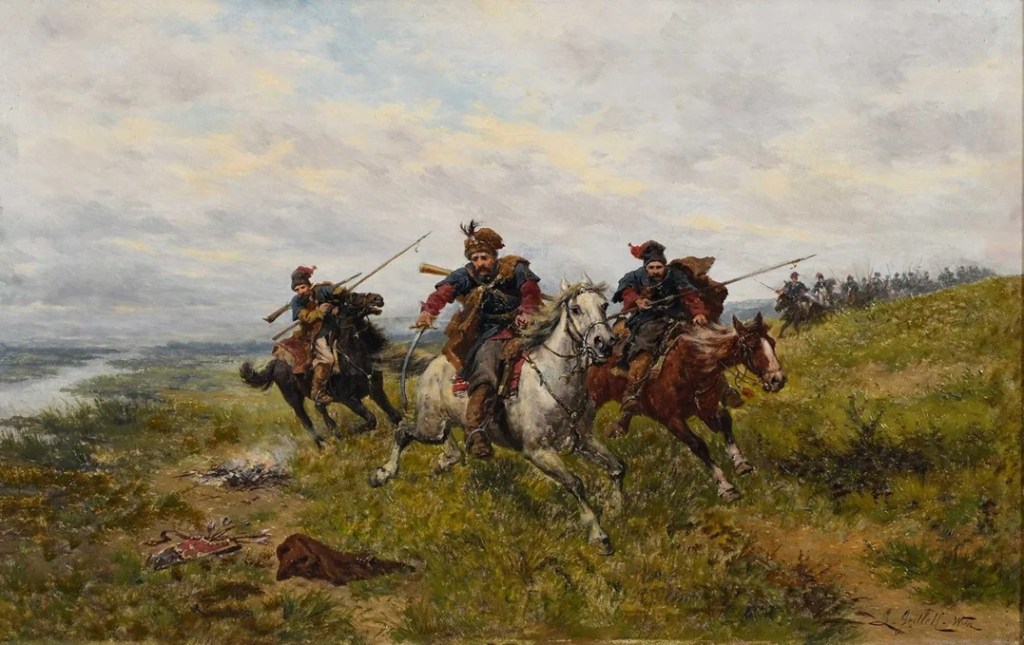
Ludwik Gędłek. Cavalry Charge

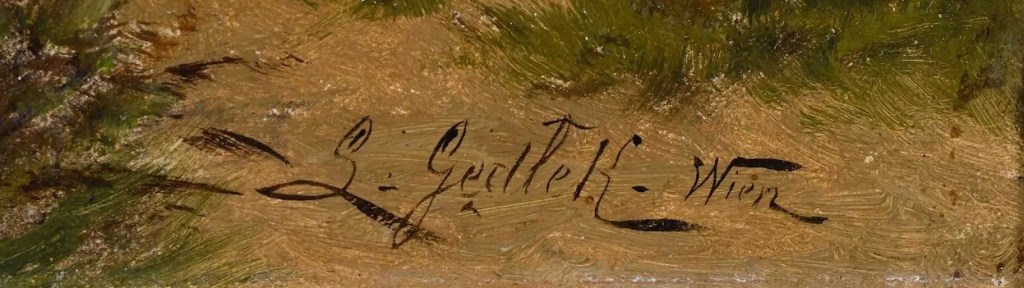
Lot 72. Ludwig Gedlek (Austrian/Polish, 1847-1904). Cavalry Charge, signed lower right “L. Gedlek Wien”, oil on canvas, 14-5/8 x 22-3/4 in.; gilt wood and composition frame, 25 x 23-1/4 x 3-5/8 in. Estimate $1,000 – 2,000. Brunk Auctions. 03/11/25. Sold $6,500

Sygnatura

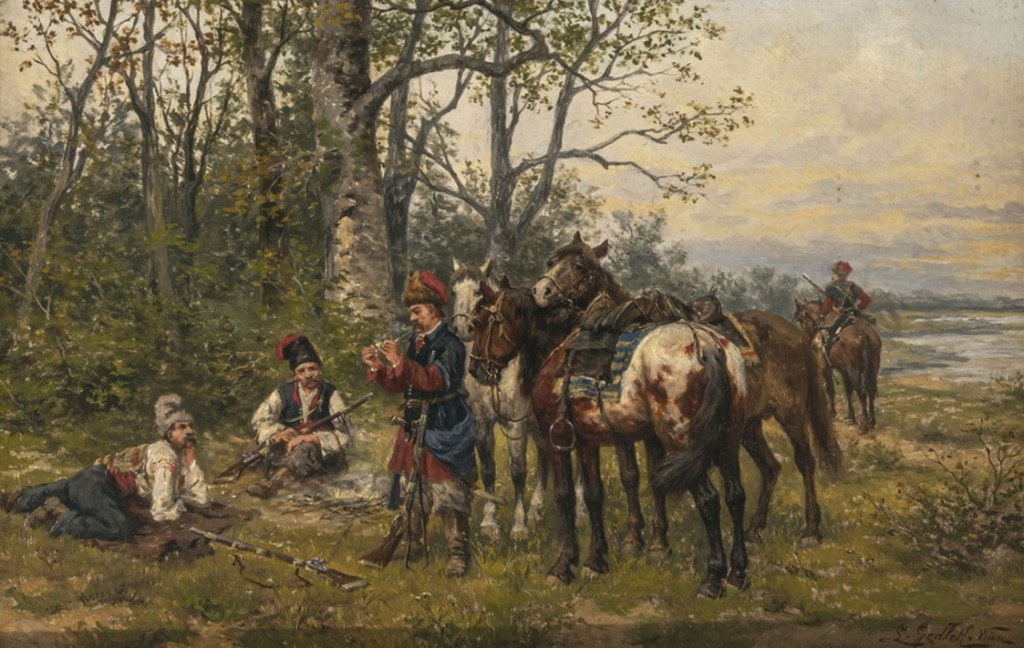
Oleje Ludwika Gędłka są bliźniaczo podobne do siebie, o tej samej palecie, i dlatego nie budzą zaskoczenia. Zwykle są to odpoczywający kozacy ewentualnie stojący na straży. Inne sytuacje są dość rzadkie. Subiektywnie, Cavalry Charge, wyróźnia się pozytywnie na tle innych ze względu na ruch na płótnie pędzącej kawalerii. Powtarzalność strojów, czapek, twarzy, nawet wąsów jest jednak trochę męcząca. Prace Gędłka w Polsce rosną w sile bo skąd brać podobne tematy uzuprpujące szkołę monachijską – dobrych prac innych malarzy jest mało i są drogie i dlatego ‘Gędłek to the rescue’. Materiał na handel. Na pozytywnie, obraz z Neumeister ma dobrą ramę.


Ludwik Gędłek. Resting Cossack riders.

Lot 328. Ludwig Gedlek 1847 Krakau – 1904 Wien. Resting Cossack riders. Signed and inscribed with the place name Wien lower right. Titled “Vorpfosten” and various numbers verso. Oil on panel. 20.5 x 31 cm. Minor rubbing to edges. Minor damage to frame (41 x 51.5 cm). Estimate 4,000 – 6,000 euro. Neumeister. 03/19/25. Sold 5,500 euro

Włodzimierz Terlikowski (1873 – 1951)

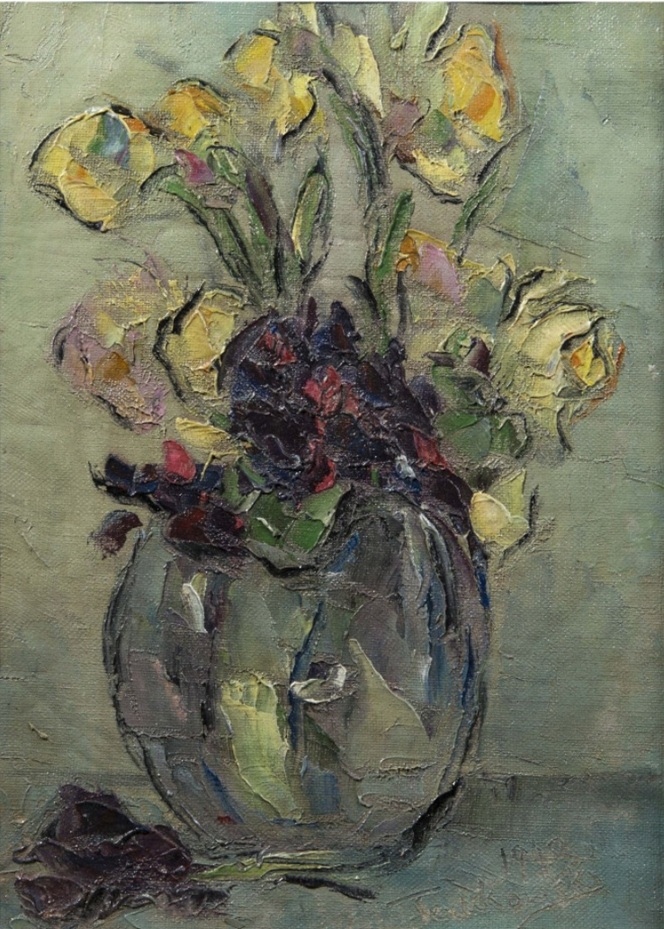
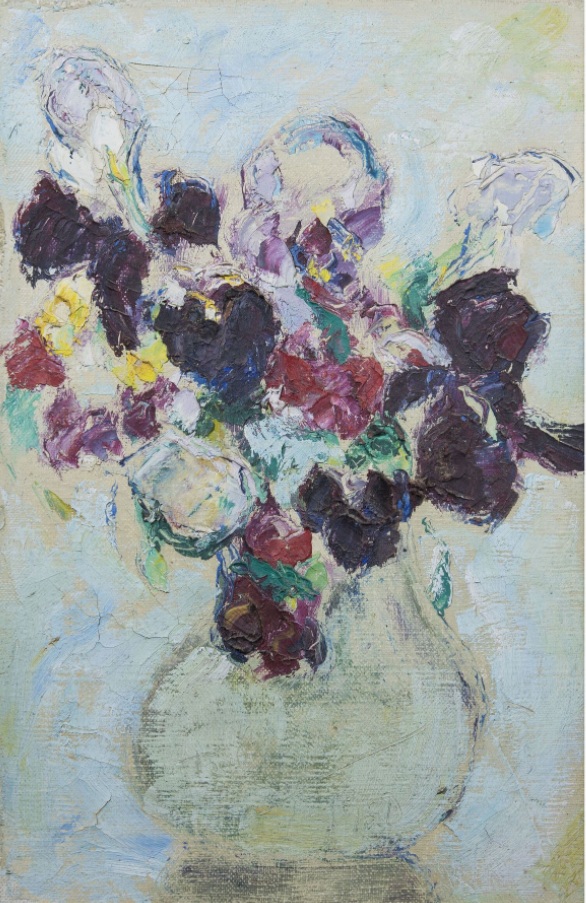
Włodzimierz Terlikowski. Bouquet of yellow and violet flowers, 1940

Lot 72. Wlodzimierz TERLIKOWSKI (1873-1951). Bouquet of yellow and violet flowers. Oil on canvas. Signed and dated ‘1940’ lower right; 35 x 25 cm. Provenance: acquired from the artist’s family. Estimate 800 – 1,200. Osenta. 03/09/25. Sold 1,000 euro

Przekrój twórczości Włodzimierza Terlikowskiego na aukcji w Osenat. Kolekcja wygląda na powstałą z zakupów po śmierci artysty. Niektóe oleje są sygnowane przez artystę lecz na niektórych są obecne jedynie faksymilie sygnatury. Spośród prac ew. wybrałbym martwą naturę z kwiatami w wazonie powstałą w 1940 roku


Włodzimierz Terlikowski. Bouquet of violet flowers, 1950

Lot 73. Wlodzimierz TERLIKOWSKI (1873-1951). Bouquet of violet flowers. Oil on canvas. Signed and dated ‘1950’ on the vase, 41 x 28 cm. Provenance: acquired from the artist’s family. Estimate 1,000 – 1,500 euro. Sold 1,300 euro


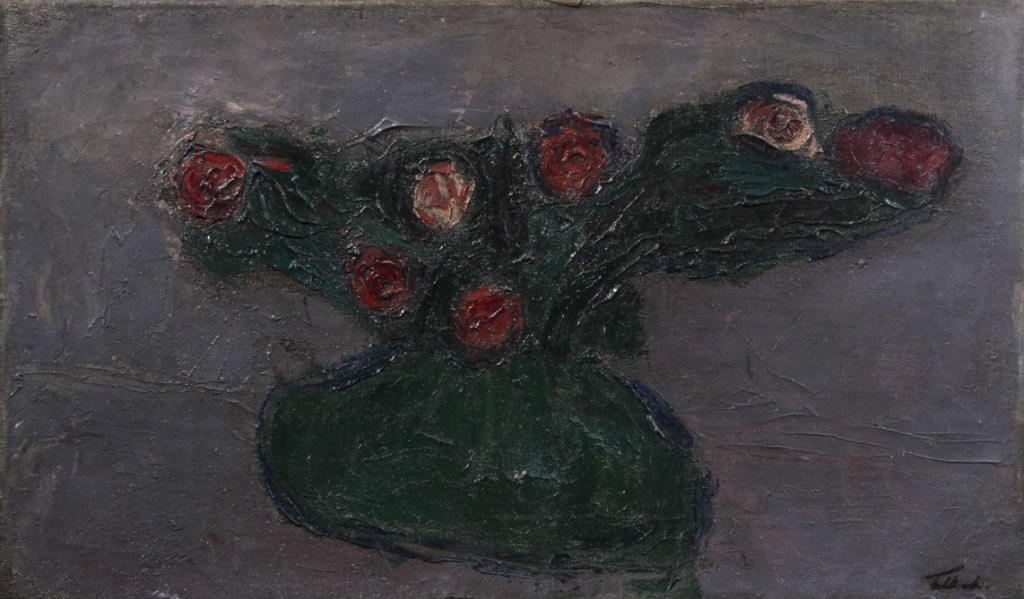
Włodzimierz Terlikowski. Bouquet of flowers in a glass vase

Lot 70. Wlodzimierz TERLIKOWSKI (1873-1951). Bouquet of flowers in a glass vase. Oil on canvas. Signature stamp lower, right 28 x 46 cm. Provenance: acquired from the artist’s family. Estimate 400 – 600 euro. Sold 400 euro


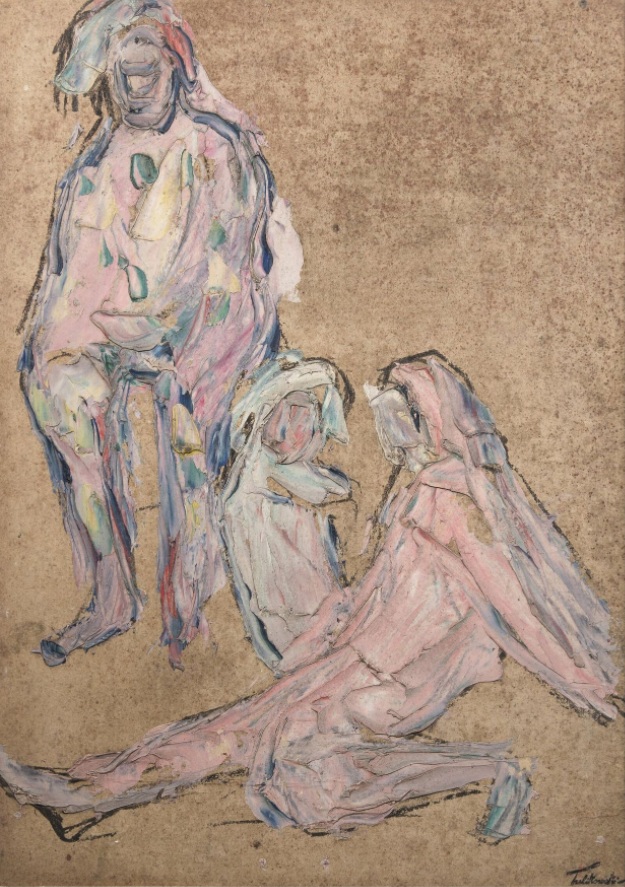
Włodzimierz Terlikowski. Vladimir Terlikowski Characters.

Lot 71. Wlodzimierz TERLIKOWSKI (1873-1951). Vladimir Terlikowski Characters.. Oil on cardboard Signature stamp lower right, 46 x 33 . Provenance: acquired from the artist’s family. Estimate 600 – 800 euro. Sold 600 euro


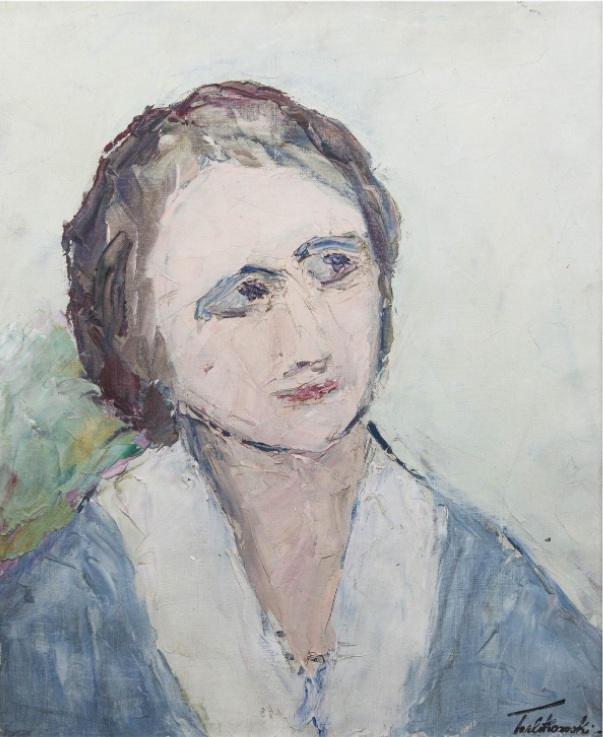
Włodzimierz Terlikowski. Portrait of a woman

Lot 74. Wlodzimierz TERLIKOWSKI (1873-1951). Portrait of a woman. Oil on canvas. Signature stamp lower right, 46 x 38 cm. Provenance: acquired from the artist’s family. Estimate 400 – 600 euro. Sold 500 euro


Włodzimierz Terlikowski. Abstract composition, 1944

Lot 75. Wlodzimierz TERLIKOWSKI (1873-1951). Abstract composition. Oil on canvas. Signed and dated ‘1944’ upper right, 43 x 33 cm. Provenance: acquired from the artist’s family. Estimate 400 – 600 euro. Sold 400 euro


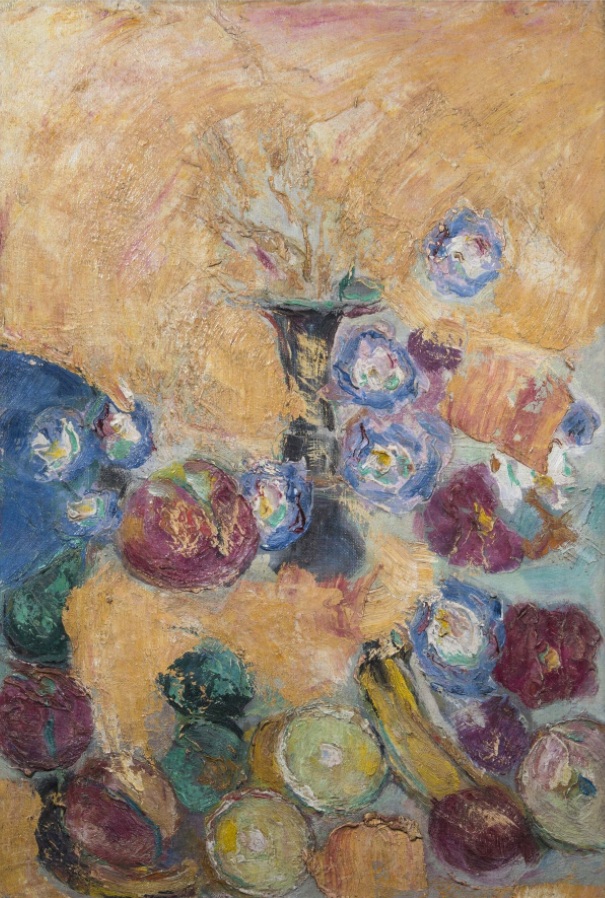
Włodzimierz Terlikowski. Composition with fruit and flowers

Lot 76. Wlodzimierz TERLIKOWSKI (1873-1951). Composition with fruit and flowers. Oil on canvas. Signature stamped on the back top left, 55 x 38 cm. Provenance: acquired from the artist’s family. Estimate 1,000 – 1,500 euro. SOld 1,300 euro

Franciszek Starowieyski (1930 – 2009)

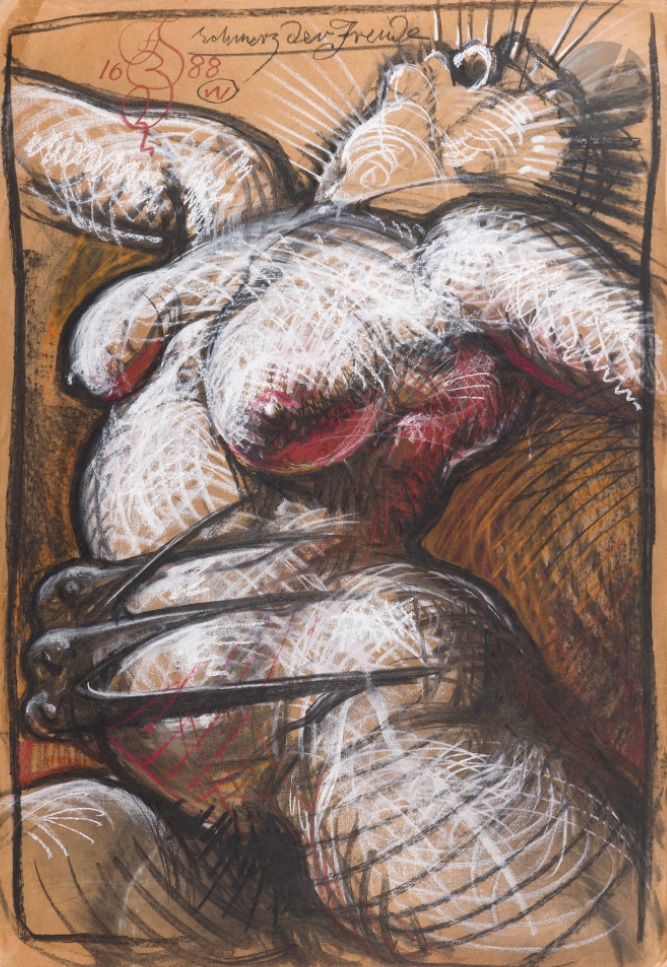
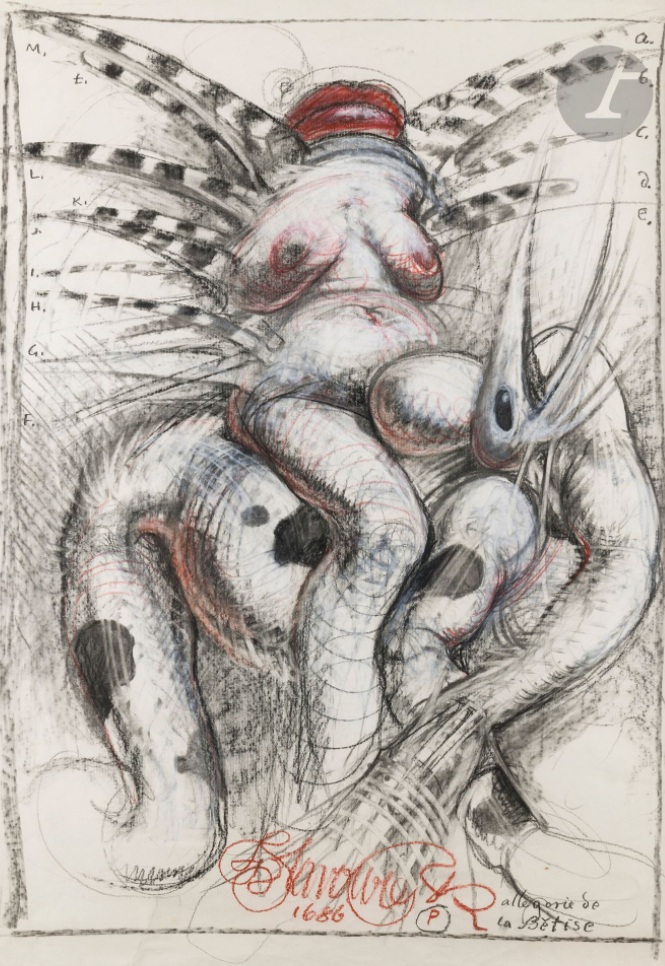
Franciszek Starowieyski. Schmerz der Freude, 1988

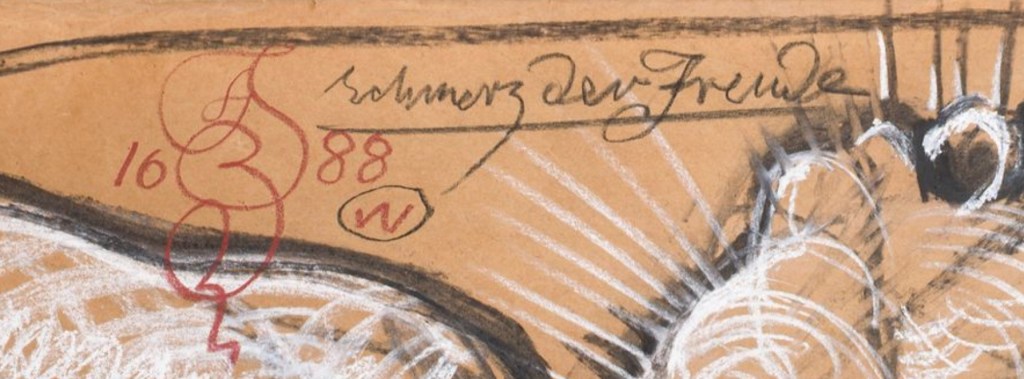
Lot 171. Franciszek STAROWIEYSKI (1930-2009). Schmerz der Freude, 1988. Charcoal and pastel. Signed, titled and backdated 1688 above. 102 x 71 cm. Estimate 3,000 – 4,000 euro. Ader. 03/20/25. Sold 6,000 euro

Sygnatura

Ostatni wielki polski artysta, który potrafił narysować ludzkie ciało.


Franciszek Starowieyski. Allegory of stupidity, 1986

Lot 172. Franciszek STAROWIEYSKI (1930-2009). Allegory of stupidity, 1986. Charcoal and pastel. Signed, titled and backdated below. 99 x 69 cm (on view). Estimate 3,000 – 4,000 euro. Ader. 03/20/25. Sold 5,200 euro


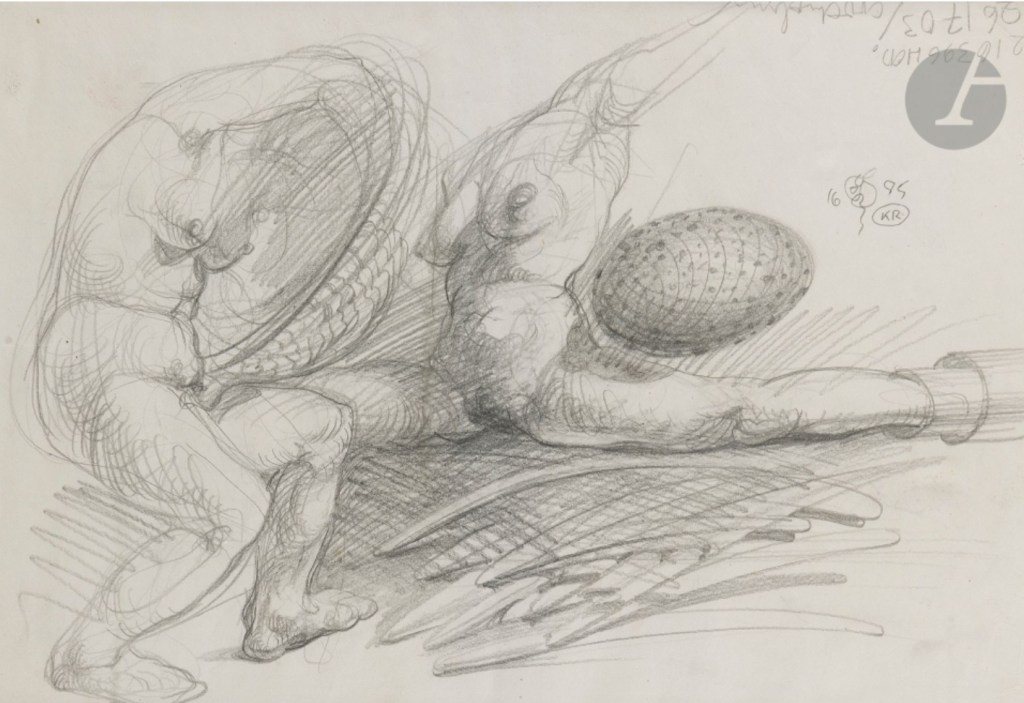
Franciszek Starowieyski. Composition, 1985

Lot 173. Franciszek STAROWIEYSKI (1930-2009.) Composition, 1985. Lead pencil. Signed and backdated on the right. 28 x 41 cm. Estimate 400 – 600 euro. Ader. 03/20/25. Sold 420 euro

Magdalena Abakanowicz (1930 – 2017) ?

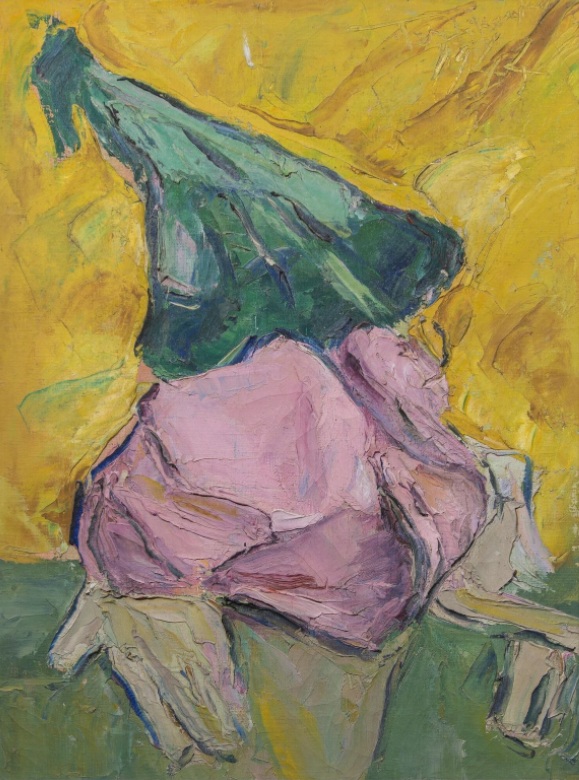
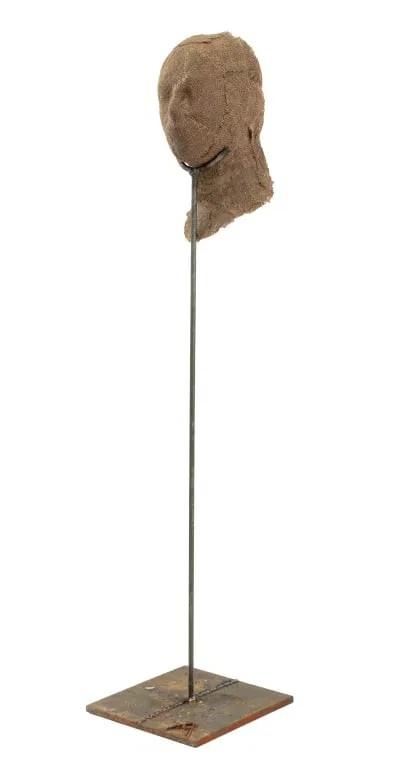
Magdalena Abakanowicz? Head Sculpture

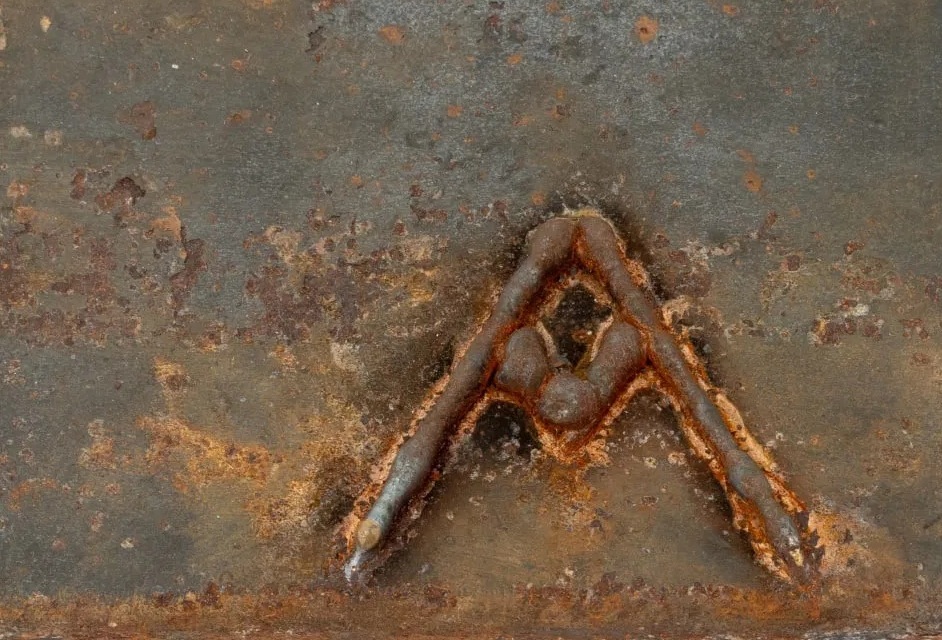
Lot 13. Magdalena Abakanowicz (Polish, 1930-2017) Head Sculpture, circa 2000, burlap and resin mounted on a steel stand, signed “MA” to the square base. Overall: 46″ H x 11.5″ W x 10″ D. Provenance: From a New Jersey Collection. Estimate $8,000 – 12,000. Auctions at Showplace. 03/06/25. Sold $15,000

Sygnatura wyspawana na podstawie

Ciekawi mnie, czy ta rzeźba znajdzie uznanie w oczach Fundacji Madaleny Abakanowicz Kosmowskiej i Jana Kosmowskiego. Przypomnę, że na tej samej aukcji została dzisiaj sprzedana inna rzeźba rzekomo tej artystki za $4,000, pomimo, że Fundacja nie potwierdziła jej autentyczności (https://polishartcorner.com/2025/02/06/magdalena-abakanowicz-1930-2017-62/). Boleję bardzo, że blog ten czyta jedynie garstka ‘inwestorów’ bo przeboleć utratę $4,000 można lecz $15,000 będzie już trudniej. Szkoda, że Fundacja nie reaguje proaktywnie, oficjalnie i stanowczo na podobne przypadki, bo wkrótce będziemy mieli sytuację podobną do pastelowych ‘kół wirujących’ Fangora wyskakujących na aukcjach w USA już co tydzień. Apel do obu Fundacji (Fangora i Abakanowicz): nabierzcie życia i zacznijcie dbać o dobre imię obu artystów lub rozwiążcie się!

Bronisława Rychter-Janowska (1868 – 1953)

Bronisława Rychter-Janowska. Interieur mit Lesender

Lot 756. Bronislawa Rychter-Janowska, Interieur mit Lesender, Ölgemälde, gerahmtBronislawa Anna Waleria Rychter-Janowska, 1868 Krakau – 1953 ebd., polnische Malerin und Publizistin, Großes Wohnzimmer-Interieur mit Durchblick zu einem weiteren Zimmer mit einer Lesenden, Öl/Bristolkarton, li. u. sign., 50 x 70 cm. Estimate 2,500 – 3,500 euro. Kunst und Kuriosa. 03/07/25. Sold 2,800 euro

Sygnatura

Duży i dekoracyjny olej Bronisławy Rychter-Janowskiej. Warty byłby szcególnego polecenia, gdyby artystka nie namalowała aż tak wiele podobnych prac przedstawiających oświetlony słońcem i zadbany salon, z kanapami, obrazami wiszącymi na ścianach, żyrandolem, podłogą ułożoną z klepek drewnianych. Ta powtarzalność, co prawda mniejszych formatów, jest jedynym frasunkiem lecz trzeba pamiętać, że artyści malowali czasami to co narzucał rynek, tj. co udawało się sprzedawać (podobnie jak niedawno pokazane “Pojenie konia” w wykonaniu Jerzego Kossaka i jego ‘stajni’). Nie jest to jednak wierna kopia innych prac lecz wykorzystanie pomysłu przez Bronisławę Rychter-Janowską do pokazania mędzywojennych salonów. Takich salonów obecnie już nie ma. Oby obraz ten pasował do obecnych ‘salonów’.

Amedeo Modigliani (1884 – 1920)

Amedeo Modigliani. Portrait de Lunia Czechowska

Lot 9. AMEDEO MODIGLIANI (1884-1920). Portrait de Lunia Czechowska, signed ‘Modigliani’ (upper right), oil on canvas laid on board, 18 1⁄8 x 14 7⁄8 in. (46 x 37.8 cm.). Painted circa 1917-1918. Provenance: Walther Halvorsen, Oslo & Paris, by whom probably acquired from the artist. Galerie Bernheim-Jeune, Paris (no. 22306), by whom acquired from the above on 3 September 1920. Biassano, by whom acquired from the above on 27 November 1920. Jos Hessel, Paris, by 1930. Marcelle Bourdon, Paris, by 1952; her sale, Guy Loudmer, Paris, 25 March 1990, lot 35. Corporate collection; sale, Briest, Paris, 28 November 1996, lot 33. Private collection, Europe, by whom acquired at the above sale. Acquired from the above in 2003, and thence by descent to the present owner. Estimate GBP 4,000,000 – GBP 7,000,000. Christie’s. 03/05/25. Sold 6,290,000 GBP (bp)

Portret Luni Czechowskiej wykonany przez Amedeo Modiglianiego. Polonik o którym można pomarzyć. W pracy tej zawiera się opowieść o znakomitym malarzu, kobiecie którą wielokrotnie portretował, oraz marszandzie artysty Leopoldzie Zborowskim. Zamiast więcej pisać zacytuję poniej esej opublikowny przez dom aukcyjny Christie’s. Na zakup tej pracy mogłoby pozwolic sobie kilku zamożnych polskich kolekcjonerów tyle, że sprowadzenie jej do kraju pewnie wiązałoby się z pozostawieniem jej w Polsce na stałe a tym samym trudności z odsprzedażą w przyszłości na rynkach światowych.

Rendered in soft, expressive brushstrokes, Amedeo Modigliani’s Portrait de Lunia Czechowska was painted circa 1917-1918, and is a depiction of one of the artist’s most loyal and cherished friends. Known in his day and admired among his circle of friends primarily as a portraitist, Modigliani prided himself on his skill as an acute observer of the variety and nuances of human character, and his ability to evoke the serene, beatific beauty of l’éternel féminin in his paintings of women. ‘To do any work, I must have a living person,’ he explained to the painter Léopold Survage, ‘I must be able to see him opposite me’ (quoted in J. Modigliani, Modigliani: Man and Myth, New York, 1958, p. 82). Modigliani constantly sought to capture the essence of his sitter, not as a naturalistic likeness, but as an abstract, depersonalized representation stemming from his own pictorial synthesis of seeing and style.
Born Ludwika Makowska in Prague in 1894, Lunia’s father was a Polish patriot who actively opposed the Russian and Austrian partition of the Polish homeland. In 1907, after serving two years of a fifteen-year prison sentence for his role in a workers’ strike in Warsaw, Makowski moved his family to Krakow in the Austrian zone. Upon graduating from the gymnasium in 1913, Lunia followed her father’s wishes and moved to Paris. There she met Kazimierz Czechowski, another recent Polish émigré, also a patriot, with whom she fell in love; they married on 21 June 1915. Czechowski was a childhood friend of Léopold Zborowski, who was to become Modigliani’s devoted dealer and friend from 1916 until the end of the artist’s life. It was the painter Moïse Kisling who introduced Zborowski to Modigliani, and the aspiring dealer first saw the Italian artist’s paintings later that year, in a group show at the Lyre et Palette, the Montparnasse atelier of the Swiss painter Émile Lejeune.
According to Les Souvenirs – Lunia’s autobiographical recollections of Modigliani that she wrote in 1953 and was published in Ambrogio Ceroni’s 1958 monograph on the artist – this 1916 event at the Lyre et Palette was where the artist and muse met. In an interview with William Fifield in the 1970s she recalled: ‘We went to the exhibition,’ she recalled for Fifield, ‘it was the Lyre et Palette, and Modigliani was present… He said he hadn’t time for Léopold, but seeing that we women were with him he returned and said we should perhaps meet in an hour. And we went to the Rotonde’ (quoted in W. Fifield, Modigliani: The Biography, New York, 1976, pp. 222 and 274).
‘He came and sat next to me,’ Lunia wrote in Les Souvenirs. ‘I was struck by his distinctiveness, his luminosity, and the beauty of his eyes. He was at once very simple and very noble’ (‘Les Souvenirs de Lunia Czechowska,’ in A. Ceroni, Amedeo Modigliani, Peintre, Milan, 1958, pp. 20, 21). Modigliani began to sketch Lunia. ‘I was quite young and very shy,’ she continued ‘and I became frightened, when Modigliani asked, after several minutes, in the presence of my husband, to go out with me that very night. Because to Modigliani, I was alone. He felt so strongly towards me he would have liked me to abandon everything to follow him. Confused, I responded that I was not free. Poor dear friend, what seemed so natural to him seemed to me so strange! Zborowski came to my rescue, saying that plans for the evening had already been made, and he invited Modigliani to join us. He refused. Turning towards me, he asked, while offering the drawing he had made of me, to come pose the next day for a portrait’ (ibid.).
Despite all signs that she would remain faithful to her marriage with Czechowski, the artist persisted in seeking a romantic liaison with Lunia. ‘I was always the mysterious woman to him,’ Lunia told Fifield, ‘the Sphinx, Cleopatra, there were things he did not know’ (op. cit., p. 222). Modigliani must have felt especially encouraged in 1917, when in the wake of the February Revolution in Russia, which resulted in the abdication of Tsar Nicholas II, Czechowski decided to return to his homeland and agitate for independence. He joined Lenin’s Red Army following the October Bolshevik Revolution, making arrangements for Lunia to stay with Zborowski and his partner Anna (“Hanka”). Now that she lived with the artist’s dealer, Modigliani saw Lunia often, regularly coming to the apartment to paint during the afternoon, as it was at Zborowski’s that Modigliani had his studio. Czechowski did not live to see Poland freed from foreign hegemony, however. In 1918, while in a hospital recovering from wounds, his Russian comrades learned he was a Polish revolutionary – someone who would eventually turn against and fight them – and had him summarily shot. Lunia did not learn of her husband’s fate until 1921.
‘Happiness is an angel with a serious face,’ Modigliani wrote to Paul Alexandre, his earliest patron, on a postcard from Livorno, dated June 1913 (quoted in D. Krystof, Modigliani: The Poetry of Seeing, Cologne, 2006, p. 88). Lunia’s ethereal features perfectly suited the artist’s fascination with this type; her serious demeanour and youthfully lithe, feminine figure lent themselves well to the primary influences the artist liked to incorporate and show off in his portraits. The plunging ‘V’ of Lunia’s cylindrical neckline and her blade-like décolleté, stark against her white shirt in the present painting, allude to the hallmark swan-like neck and tilted head in the works of the Italian Mannerists of the Sixteenth Century, such as Parmigianino and Pontormo.
Between 1916 and 1918, Modigliani painted a small number of fully-clothed portraits of Lunia (Ceroni, nos. 169-172), including the present work, and completed another series of her in 1919 (Ceroni, nos. 317-322). Fifield stated that Lunia ‘almost certainly’ posed for Le grand nu (Ceroni, no. 200; The Museum of Modern Art, New York), ‘though she would never admit it’ (op. cit., 1976, p. 160). Among the named portraits of Lunia, the artist depicts his sitter in a variety of stances and poses – painting her standing and seated, in profile and square on. In the present work her head is softly tilted, and she regards the viewer with a collected gaze. Modigliani explored the geometry of her form with gestural brushstrokes, masterfully varying the lengths of his strokes to imbue the composition with a dynamic vitality. A powerful sense of élan vital emanates from Lunia, conveyed by the rich colour palette of the composition – accentuated by the vibrant highlights of carmine and deep blue that skirt her features. Her physicality is also emphasised by the impasto effect of the medium, where on her cheeks and neck the artist delicately tapped the oil paint onto the canvas with his fingers. With this meticulous eye for detail in play, Modigliani endowed Portrait de Lunia Czechowska with the loving admiration he held for Lunia herself. As Simonetta Fraquelli has noted, Modigliani’s portraits of Lunia differed from those of his other sitters during this time: ‘with an understanding and inquisitive air, she appears more at one with herself than the other women and Modigliani would seem to be implying that she is his equal’ (‘A Personal Universe: Modigliani’s Portraits and Figure Paintings,’ in Modigliani and His Models, exh. cat., Royal Academy of Arts, London, 2006, p. 36).
Lunia and Modigliani remained close friends after the artist met his young muse and the future mother of his child, Jeanne Hébuterne in 1917. Modigliani had relocated to the South of France in April 1918 as the Germans approached Paris, while Lunia had remained in the city. Following the artist’s return in May 1919, they resumed their close relationship and Lunia recalled: ‘after dinner, we would go for a walk in Le petit Luxembourg; it was very hot that summer. Sometimes we would go to the movies, other nights we would leisurely stroll the streets of Paris… He had so much to say that it was difficult to separate when we arrived home’ (op. cit., 1958, pp. 28-29). When Jeanne returned to Paris that summer with her and Modigliani’s infant daughter, Lunia stepped in to care for the child, her support for her friend unwavering. Though Lunia had to move south later that year for her health, the two remained inextricably intertwined, and Lunia wrote in Les Souvenirs that she dreamt of Modigliani’s death, the night before she found out about it from a friend.