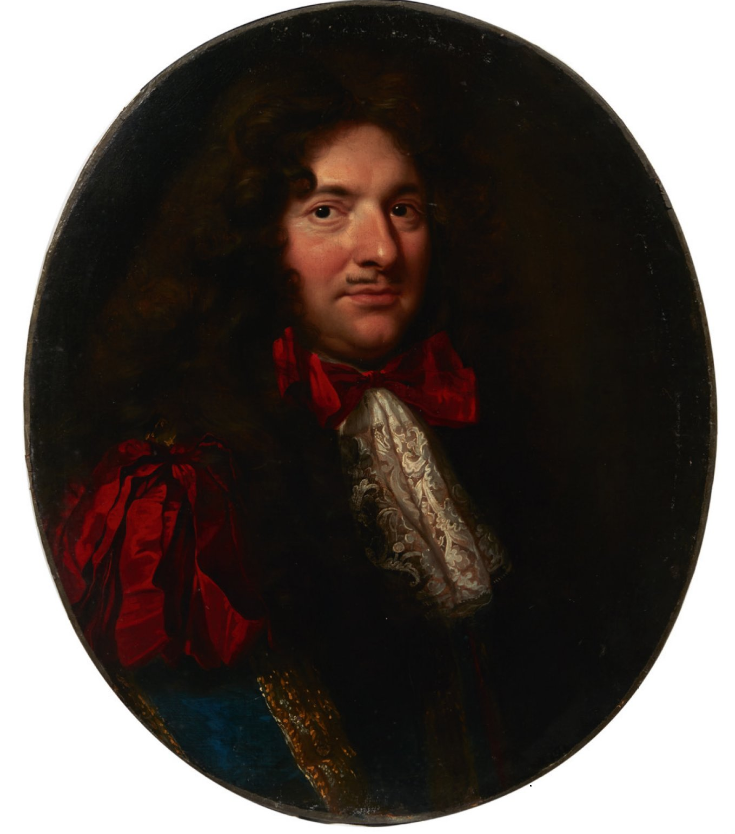
LOT n°35
ÉCOLE POLONAISE VERS 1700
Portrait de Jean Casimir II Vasa, roi de Pologne
Toile ovale.
Estimate 3,000-4,000 euro. Pierre Bergé & Associés. 12/8/17
LOT n°35
ÉCOLE POLONAISE VERS 1700
Portrait de Jean Casimir II Vasa, roi de Pologne
Toile ovale.
Estimate 3,000-4,000 euro. Pierre Bergé & Associés. 12/8/17

Lot 80. Sigmund Joseph Menkes Ukranian, 1896-1986
Interior with Two Figures, 1963-64
Signed Menkes (ll)
Oil on canvas
24 1/4 x 31 1/4 inches
Estimate: $7,000 – $9,000. Doyle. 11/21/17 (1716250)

Lot 119. Julian Stanczak Polish/American, 1928-2017
Melting in Late Color, 1972
Signed J. Stanczak and dated 1972 on the reverse
Acrylic on canvas
94 x 72 inches (238.76 x 182.88 cm)
Provenance:
Gene Baro
Private collection
Thence by descent to the current owner
Exhibited:
Julian Stanczak, Corcoran Gallery of Art, Washington, DC, Sep. 8 – Oct. 15, 1972
Estimate: $60,000 – $80,000. Doyle. 11/15/17 (1775000)
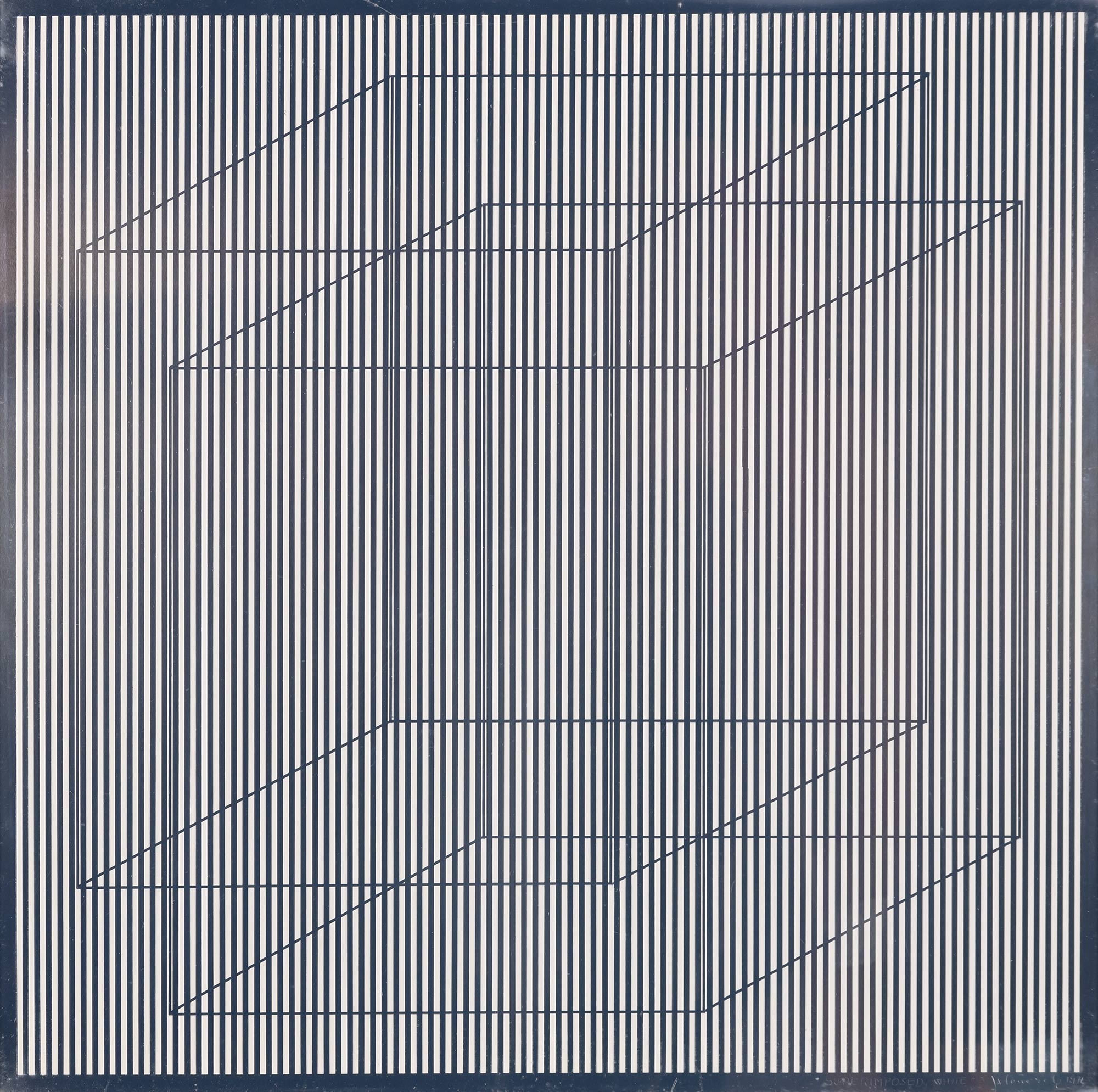
Lot 120. Julian Stanczak Polish/American, 1928-2017
Superimposed in White, 1972
Signed J Stanczak, dated 1972 and inscribed as titled (lr)
Oil on aluminum
24 x 24 inches (60.96 x 60.96 cm)
Estimate: $10,000 – $15,000 (177500)
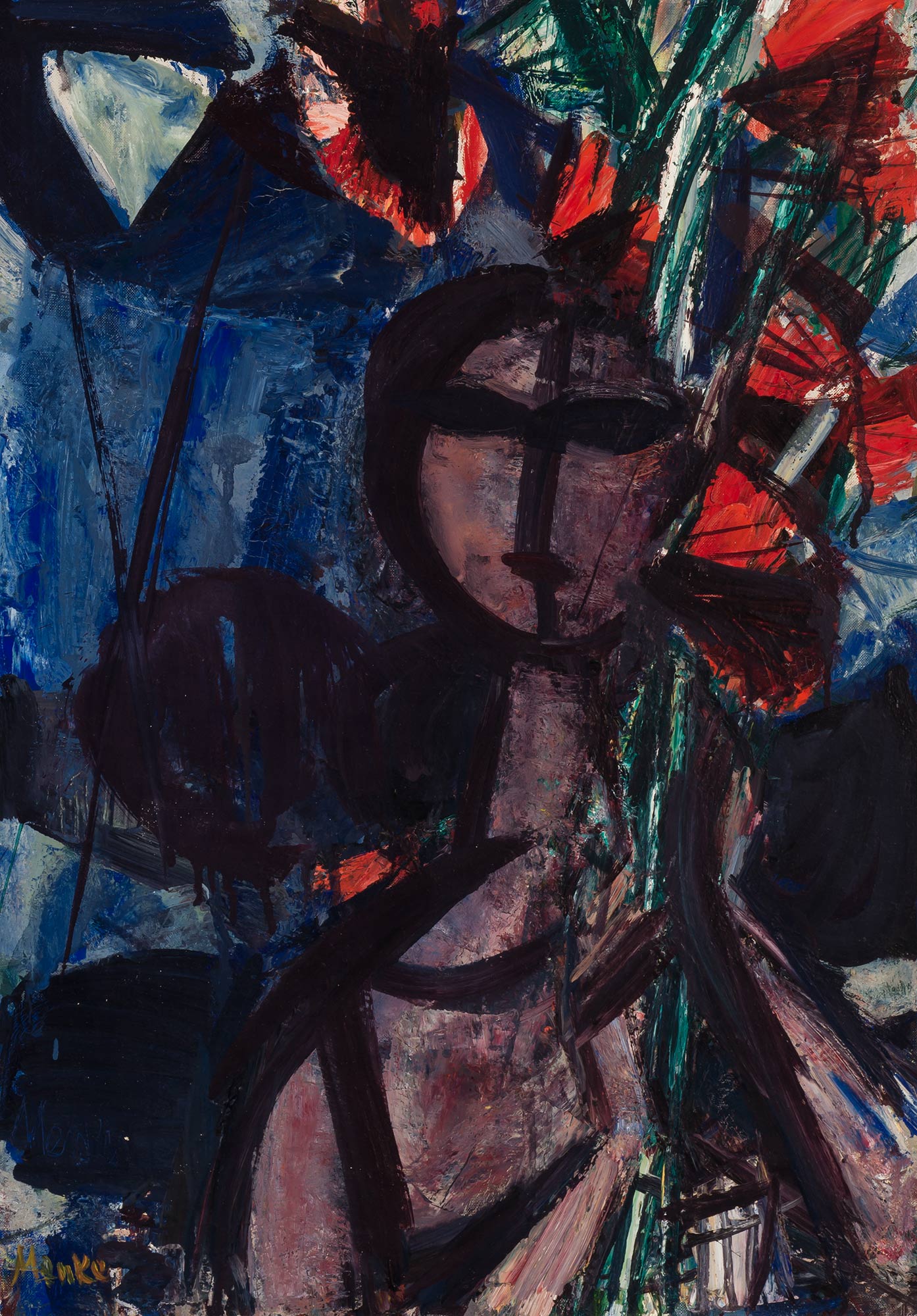
Lot 50. Sigmund Menkes
Polish/American, 1896-1986
Woman with Flowers
Signed Menkes (ll)
Oil on canvas
26 1/4 x 18 1/4 inches (66.5 x 46.5 cm)
Estimate: $12,000 – $18,000. Doyle. 11/15/17 (1712500)
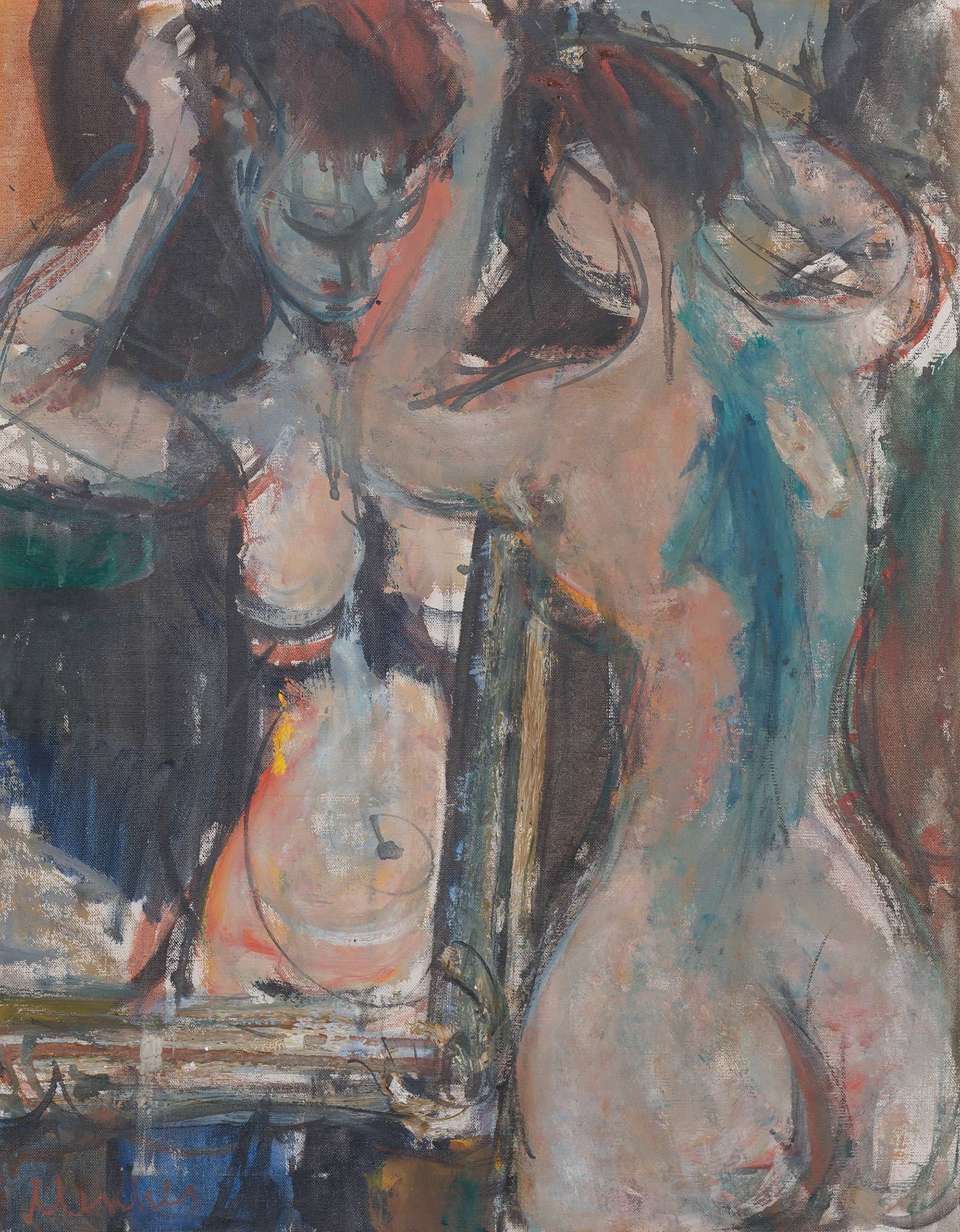
Lot 109. Sigmund Menkes
Polish/American, 1896-1986
Woman at a Mirror
Signed Menkes (ll)
Oil on canvas
27 1/8 x 21 3/8 inches (69 x 55 cm)
Estate of Rhoda Blumberg
Estimate: $10,000 – $15,000 (1718750)

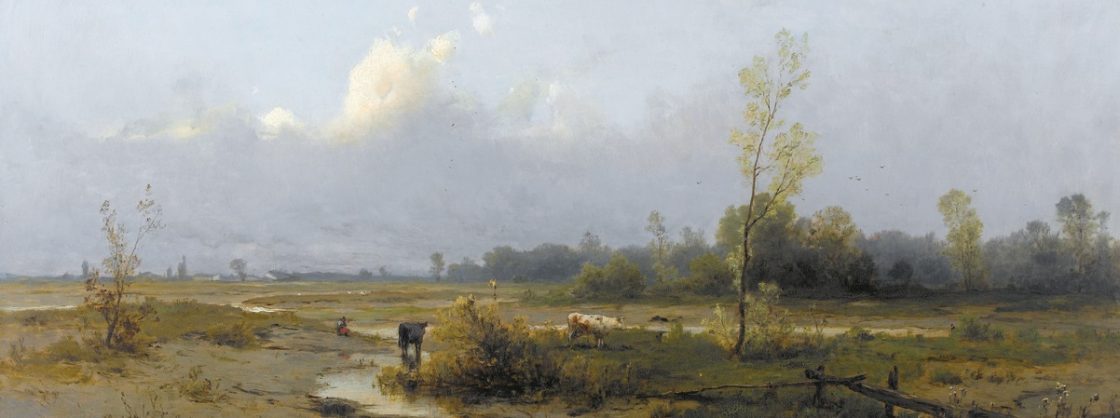
Lot 92. Alfred von Wierusz-Kowalski. Polish [1849-1915]
A SLEIGH RIDE oil on canvas 20.5 x 31 in. (52.1 x 78.7 cm) signed; titled on a plaque Provenance: Sotheby’s, New York, May 29, 1980 (lot 225)
Alfred von Wierusz-Kowalski grew up in the Russian part of Poland. He studied at the academies in Warsaw, Dresden and Prague. From 1873, he was taught by the Hungarian painter Alexander von Wagner at the Academy in Munich. He settled in Munich in 1876, and joined the Polish circle of Jozef Brand, at the Munich Academy. Encouraged by his teacher, he joined the Polish group of artists in Munich, eventually becoming their most prominent representative, and the best known Polish-born painter of the 19th Century Munich School. Alfred von Wierusz-Kowalski received innumerable awards during his lifetime for his works depicting rural life in Russian Poland. Among his favorite subjects were sleigh rides, teams of horses and packs of wolves. The winter sleigh ride, or Kulig, of which this work is an excellent example, is one of the central motifs of Polish art. It is depicted here as a fast and festive ride through the snowy, open fields of Poland on a horse-drawn sleigh. The Kulig was an event organized amongst the Polish aristocracy, where a cavalcade of horse-pulled sleighs, often beautifully decorated, travelled from one manor house to another. The event was usually accompanied by raucous singing, hooting and bonfires in the evening. Participants of the sleigh ride, often dressed in thick warm coats, would warm themselves with vodka and hearty foods. It typically ended with a large feast, held in one of the manor houses, where guest were entertained by musicians and dances.
Estimate: 50,000.00 – 70,000.00 CAD. Hodgins Art Auctions. 11/27/17 (1770000)


Lot 91. Josef Von Brandt. Polish [1841-1915]
RETURN FROM THE HORSE MARKET; ca 1884 oil on canvas 35.5 x 63.75 in. (90.2 x 161.9 cm) signed; titled on a plaque; inscribed “Monachium, Warzaway” lower left Exhibited: Dresden Exhibition, 1884 (on plaque) Provenance: Sotheby’s, New York, May 29, 1980 (lot 223) Josef von Brandt studied engineering at the school of J.N. Leszcynski and at the Nobleman’s Institute in Warsaw. In 1858, he travelled to Paris to further his engineering studies at the École des Ponts and Chausses, but his fellow Polish countryman, Juliusz Kossak, pursuaded him to devote himself to painting. Painters Kossak and Henryk Rodakowski were Brandt’s first art teachers in Paris and, for a time, he studied at the studio of the French Academic artist Léon Coignet. Josef von Brandt moved to Munich in 1862, opening his own studio and practicing under the tutelage of artists Karl Piloty and Franz Adam. During the following years, Munich became somewhat of a Mecca for Polish artists, and Von Brandt began to gain notoriety and financial success, establishing a school for young, mostly Polish, painters. Brandt remained in Munich for the remainder of his life and his studio became a gathering place for Polish artists. Between 1863 and 1875 over eighty Poles were enrolled in the Munich Academy. The Polish artists in Munich were a closed group and tended to keep to cultural themes: views of villages, genre scenes from the everyday life of country folk, motifs of horsemen, and glorious events from Polish history, all of which were extremely popular amongst the general public because of their picturesque qualities. They brought costumes, accessories and local sketches with them in order to create typical Polish scenes. The art historian Adolf Rosenberg wrote the following about Józef Brandt: “He creates the motifs for his genre and history pictures exclusively from the current life and history of his homeland, all of which are inspired by a typically Polish fervent patriotism. His pictures have a high ethnographic value thanks to his extensive study of Slavic types, old weapons and costumes and the melancholy landscape of his fatherland that resembles the Russian steppes…” While known for his depictions of Cossak wars and battle scenes, von Brandt was also highly skilled at depicting Polish peasant life, with horses being central to most of his compositions, as in the present work.
Estimate: 150,000.00 – 200,000.00 CAD. Hodgins Art Auctions. 11/27/17 (17220000)


Lot 1367. Wladyslaw Karol Szerner(1870 Przybenice – 1936 Wosniki)
Reiter mit Bauernmädchen am Feldweg
In eine sommerliche Landschaft komponierte, von lichten Pastelltönen dominierte Szenerie. Motiv- und stiltypisches Werk Szerners, der auf lebensnah geschilderte, stimmungsvolle Darstellungen des polnischen Volks- und Landlebens mit Reitern und Kosaken in der Tradition seines Vaters Wladyslaw Szerner spezialisiert war. Der Künstler studierte ab 1888 an der Münchener Akademie bei Johann Caspar Hertich, Gabriel Hackl und Wilhelm v. Diez. Ab 1894 stellte er vielfach in Warschau, Krakau und Lemberg aus. Öl/Holztafel. R. u. sign. mit Ortsangabe München. Verso Etikett der Galerie Hans Kaul, Wiesbaden, mit Echtheitsbestätigung, dat. (19)36. 50 cm x 39 cm. Rahmen.
Oil on panel. Signed with location Munich. Gallery-label with certificate of authenticity on the reverse, dated (19)36.
Reserve 6,800 euro. Kunstauktionshaus Schloss Ahlden. 12/3/17
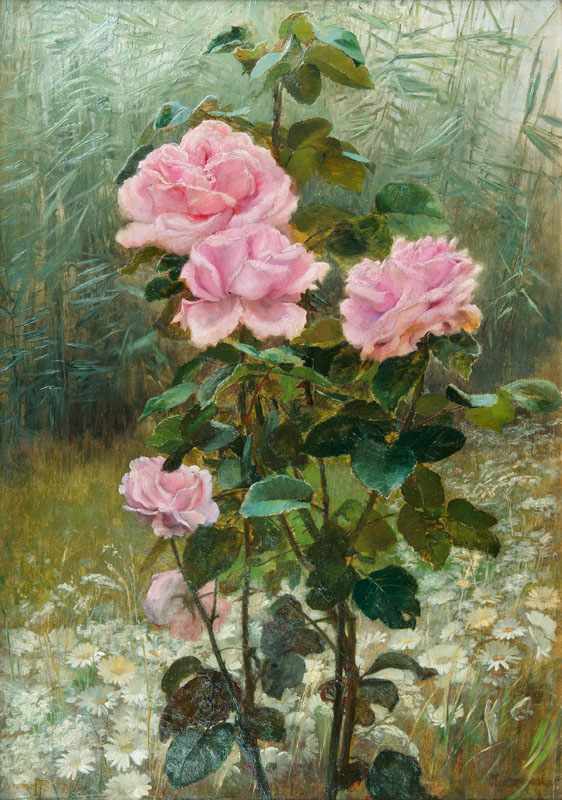
Lot 58. Kraszewska, Otolia (Zytomyr 1859 – München 1945)
Blossoming Roses
Oil/canvas, 67,5 x 49 cm, lo. ri. sign. Kraszewska. – Polish figure a. still life painter. K. studied in St. Petersburg as pupil of I. Aivazovskij. In the 1890s she settled in Munich where she worked for the magazin ‘Jugend’. Since 1892 she exhibited at the Munich Glaspalast, but also at the ‘Große Berliner Kunstausstellung’. Lit.: Thieme-Becker.
Opening 3,800 euro. Stahl. 12/2/17

LOT n°72 Jean LAMBERT-RUCKI (1888-1967)
Masque.
Plâtre polychrome monté sur un support en bois peint en blanc.
Signé sur le support en bas à droite.
19 x 11 cm
Estimate 1,200-1,500 euro. Drouot Estimations. 11/22/17

Lot 163. Leszek NOWOSIELSKI
(1918-2000)
L’hiver, 1983
Huile sur toile, signée, datée et titrée au dos
65 x 50 cm
Estimate 500-600 euro. Boisgirard Antonini Paris. 11/15/17

