Maria Mela Muter (1876 – 1967)

Maria Mela Muter. Maternity ward overlooking the Rhône

Lot 54. Mela MUTER (Warsaw 1876 – Paris 1967). Maternity ward overlooking the Rhône. Oil on panel 92.5 x 72 cm Mela. Muter was a Franco-Polish painter and draughtswoman emblematic of the École de Paris. Maria Melania Kingsland was born in Warsaw into a well-to-do Polish-Jewish family. She studied at the Warsaw School of Drawing and Painting for Women. In 1901, she arrived in Paris with her husband Michal Muttermilch and enrolled at the Académie Colarossi, then the Académie de la Grande Chaumière. By 1902, she had become an important figure in Montparnasse and Parisian artistic life. She exhibited regularly in Paris. Her first works were Symbolist landscapes and portraits, before she evolved towards a more Expressionist style. Her landscapes of the South are marked by the heritage of Cézanne, particularly in the geometrization of forms, but also by the Fauves and the Expressionists.

The painting presented here, Maternité, was painted around 1940/1950 in Avignon. During the Second World War, Mela Muter lived in hiding in Avignon. She was helped and sheltered by a number of families and residents. The painting appears to have been executed from her studio on the Rocher des Doms. The view over the Rhône is superb. Avignon’s geography is illustrated by the boats resting along the banks of the Rhône below, while the relief of Mont Ventoux is sketched in the distance.

Mela Muter distinguished herself as a talented portraitist and painter of the human figure. She portrayed numerous personalities from the artistic, literary and political worlds, including François Pompon, Raymond Lefebvre, Léopold Gottlieb and Georges Clémenceau. However, Mela Muter’s paintings are also often populated by anonymous people posing for her. Very close to people, she often finds models as she meets them. Among them are men, but women and children remain the figures she depicts most. This work reveals the presence of several characters. Maternity, at the center of the composition, is surrounded by naked children, betraying a hot summer’s day. Figures embrace in the upper left, while another maternity is visible in the upper right. A young girl in traditional dress stands to the right of the Maternity and stares at the viewer with her black-rimmed eyes. Maternity is an important and recurring subject in the artist’s work. Mela Muter painted this motif, which she particularly appreciated, from the 1910s until the end of her life. The chubby child, resting on his mother’s lap, has peacefully fallen asleep after suckling the still visible breast. Mela Muter’s touching and talented portrayal of a universal sentiment: maternal love. The presence and bustle of the surrounding characters do nothing to disturb the deep, harmonious connection that follows breastfeeding. This scene of union is conveyed in warm, vibrant colors. The painting reveals a strong, balanced construction. Mela Muter is renowned for her ability to “construct space”. A pyramidal reading around the central figure is visible, lending a strong dynamism to the composition. This scene, with its undefined contours and almost floating figures above the Rhône, is a poetic and profound example of the artist’s inner life.

Estimate €80,000 – 100,000. Millon. 04/24/28. Passed at €72,000

Dom aukcyjny, który wycenia pracę na €100,000 powinien podać informację o jej proweniencji. Nie ma znaczenia jaka jest ta proweniencja tj. czy obraz pochodzi z domu baronów czy znaleziony został w piwnicy przytułku. Jeśli Millon posiada sekretartę gotową napisać czy przepisać fragment biografii Meli Muter to powinien znaleźć się ktoś w tej fimie gotowy przewąchać skąd ta praca przywędrowała i ta informacja nie musi być tajemnicą. Warto również zaznaczyć, że obraz ten nie jest sygnowany i może dlatego proweniencja jest istotna. Jeśli obraz zostanie sprzedany jak się oczekuje za €100,000 plus 33% opłat to polskie domy aukcyjne będą zmuszone go wycenić na ponad milion złotych, tj. podwójnie aby swoje zarobić. Trudne mają życie polskie domy aukcyjne bo to one będą zmuszone za te pieniądze dotrzeć do dodatkowych informacji lub je same wymyślić.


List od czytelnika w sprawie tego obrazu:

Od 2023 r. już 2 razy w Polsce próbowano to „cóś” sprzedać z kolekcji prywatnej z Warszawy: https://onebid.pl/pl/malarstwo-dawne-mela-melania-mutermilch-muter-macierzynstwo/2008230; https://www.agraart.pl/wp-content/uploads/2023/11/Katalog-Aukcji-Sztuki-Dawnej-10-grudnia-2023.pdf; https://www.sda.pl/aukcja/obiekty/mela-muter-macierzynstwo-lata-ok-19401950,50017,pl; https://artinfo.pl/artinformacje/aukcja-dziel-sztuki-w-sopocie-b885927f-78eb-46b4-811f-4caca61ed3e0

Natomiast na moje pijane oko to jest nieudana kopia pracy MACIERZYŃSTWO, OK. 1924: https://sztuka.agraart.pl/licytacja/202/12464 co była na wystawie w 2017 r.: https://www.rmf24.pl/kultura/news-pierwsza-taka-wystawa-w-warszawie-widzowie-zobacza-niezwykle,nId,2440341

Pozdr. Adartem


Podsumowując list czytelnika obraz pojawiał się w Polsce:

1) 10 grudnia 2023 – Agra Art – cena wywoławcza 480,000 PLN

2) 31 sierpnia 2024 – Sopocki Dom Aukcyjny – cena wywoławcza 480,000 PLN, estymacja 600,000 – 1,000,000 PLN

W obydwu przypadkach obraz nie został sprzedany i w obydwu przypadkach opis towarzyszący pracy był niezmiernie długi. W jaki sposób obraz ten znalazł się w kolekcji warszawskiej tego nie podano.
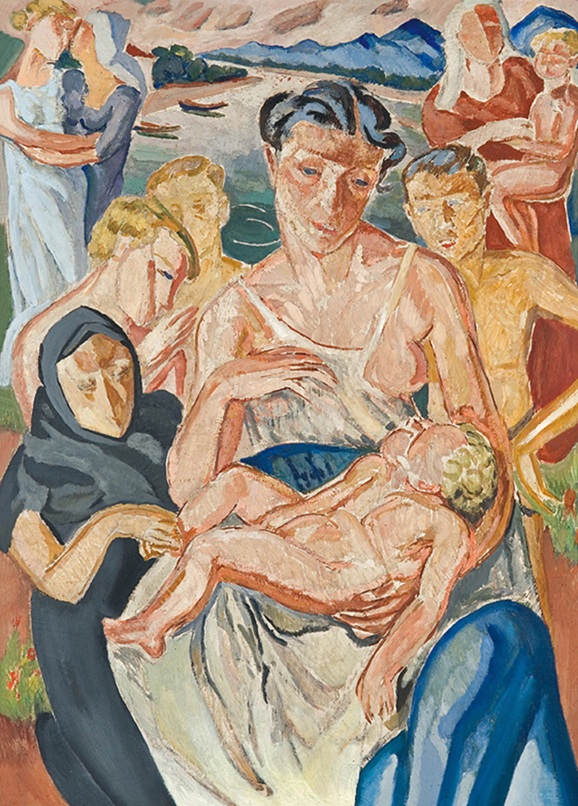

Melania Muter. Macierzyństwo. Olej, sklejka, 101 x 74 cm. https://sztuka.agraart.pl/licytacja/202/12464

Bolesław Biegas (Biegalski) (1877 – 1954)

Bolesław Biegas (Biegalski). The Calm

Lot 55. Boleslas BIEGAS (Koziczyn 1877- Paris 1954). The Calm. Circa 1907-1908. Bronze sculpture with dark brown patina. Height: 30 cm Width : 10 cm Depth : 10 cm. Signed on the base left “B. B. Biegas. Period cast, unidentified founder Avis d’inclusion dans le catalog raisonné des sculptures de Boleslas Biegas en cours d’élaboration par Xavier Deryng, sous l’égide de la Société Historique et Littéraire Polonaise/Institut Bibliothèque Polonaise de Paris, légataire universel de l’artiste. Exhibition: Biegas, Galerie des Artistes Modernes, March 23 – April 4, 1908. Estimate €5,000 – 7,000. Millon. 04-24-25. Sold €6,500.

Le Calme dates from 1907-1908 and was shown at the Galerie des Artistes Modernes, avenue Caumartin, which organized a major exhibition of Biegas’ work from March 23 to April 4, 1908. This was Biegas’ only solo exhibition in a Paris gallery before the First World War. From 1902 onwards, however, Biegas exhibited regularly at the Salon des Indépendants and the Salon de la Société Nationale des Beaux-Arts. The exhibition at the Galerie des Artistes Modernes included 81 works (41 sculptures, 11 busts and 29 paintings). It was accompanied by a small catalog, invaluable for his sculptures, as it listed those that had been cast in bronze. Le Calme (no. 33) is very similar to Un Moment (no. 31) (Chwila), but unlike the latter sculpture, it bears no title on the base, just Biegas’ signature. Le Calme has the same vertical structure as Un Moment, but is smaller (30 cm – as opposed to 38 cm). Nevertheless, in terms of form, the same intermediate treatment between a high relief and a half-relief is characteristic of Biegas’ three-dimensional creations before his conversion to the ronde bosse. The face of Le Calme is very similar to that of Un Moment, and of L’Innocence exhibited in 1997 at the Mazovian Museum in Płock. These three sculptures are not reproduced in the 1906 Album, edited by Louis Theuveny. They date from 1907 or the very beginning of 1908. These sculptures were probably exhibited in the foyer of the Théâtre Femina, 90 avenue des Champs-Élysées, from June 24 to July 5, 1912, on the occasion of the performance of his play in 6 tableaux Michel Ange, organized by the Amicale des Arts. They undoubtedly inspired Guillaume Apollinaire, who wrote in L’Intransigeant of June 28, 1912: “L’Amicale des Arts has organized an exhibition of works (sculpture and painting) by Boleslas Biegas at the Théâtre Femina. This artist’s idealism has produced works that are not bland. He expresses the deepest and purest feelings of humanity. Long meditated, his compositions are harmonious and calm (…) This elevated art, which must be linked to religious art, is worthy of arresting attention.”

Warto zanotować pojawienie się chyba po raz pierwszy od ponad stu lat unikatowej rzeźby Bolesława Biegasa “The Calm“. Praca ta pochodzi z początków kariery rzeźbiarskiej tego artysty, sponsorowanej finansowo przez baronstwo Trutschel.

Druga z prac Bolesława Biegasa w Millon to olej Komety. Firma francuska “zapomniała” uzupełnić proweniencję informacją o własnej sprzeaży tej pracy we wrześniu ubieglego roku za €4,800. Obecnie widełki wyceny firma ta ustawiła poniżej poprzedniej ceny sprzedaży. Wymaga to jakiegoś wyjaśnienia bo inaczej może dojść do brutalnej interpretacji. https://polishartcorner.com/2024/09/23/boleslaw-biegas-biegalski-1877-1954-12/


Bolesław Biegas (Biegalski). The comets

Lot 77. Boleslas BIEGAS (Warsaw 1877- Paris 1954). The comets. Produced in 1935. Oil on isorel 33 x 24 cm. Signed lower right “B. B. Biegas. Avis d’inclusion dans le Catalogue raisonné des peintures de Boleslas Biegas en cours d’élaboration par Monsieur Xavier Deryng sous l’égide de la Société historique et littéraire polonaise – Bibliothèque polonaise de Paris, légataire universel de l’artiste. Provenance : Artist’s studio, bequeathed to the Polish Historical and Literary Society. Sale Ader Picard Tajan, Paris, October 26, 1990, n°76. Estimate €3,000 – 4,000. Millon. 04/24/25. Sold €10,000

Mojżesz (Moise) Kisling (1891 – 1953)

Mojżesz (Moise) Kisling. Still life, 1946

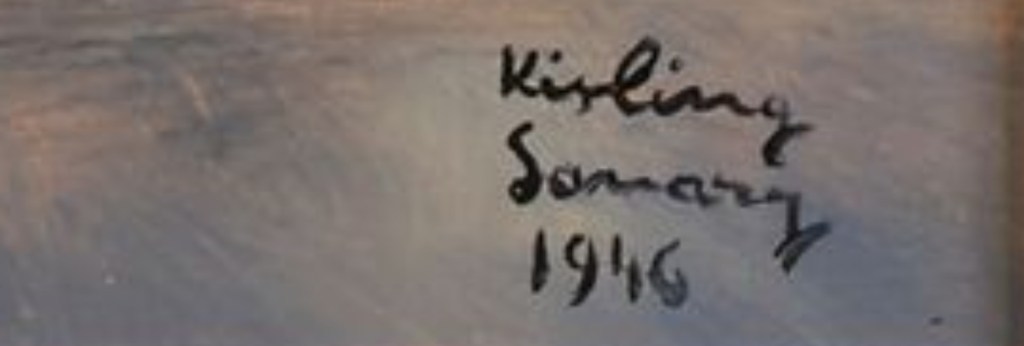
Lot 15. Moïse KISLING (1891-1953) [POLAND/FRANCE]. Still life, 1946. Oil on canvas. Signed, located Sanary and dated lower right. 46.5 x 55 cm (Restoration) -Certificate from Jean Kisling, the artist’s son, dated April 19, 1993. Provenance: -Lévy-Bruhl Collection since 1950. -Private collection in Paris, descended from the Lévy-Bruhl family. Bibliography : Catalog Raisonné de Kisling, Tome III, by Jean Dutourd, Edition Kisling,Salmon, 1995, illustrated p 407 n° 13. Estimate €30,000 – 50,000. Gros & Delettrez. 04/08/25. Sold €29,000

Niezła martwa natura Mojżesza Kislinga z certyfikatem. Pozostaje jedynie obraz wylicytować i mieć pieniądze na zapłacenie. Może ktoś wie czy nowe taryfy Trumpa obejmują również malarstwo? Pod koniec XIX wieku amerykańskie cła praktycznie zlikwidowały eksport do USA malarstwa europejskiego.

Henryk Glicenstein (1870 – 1942)

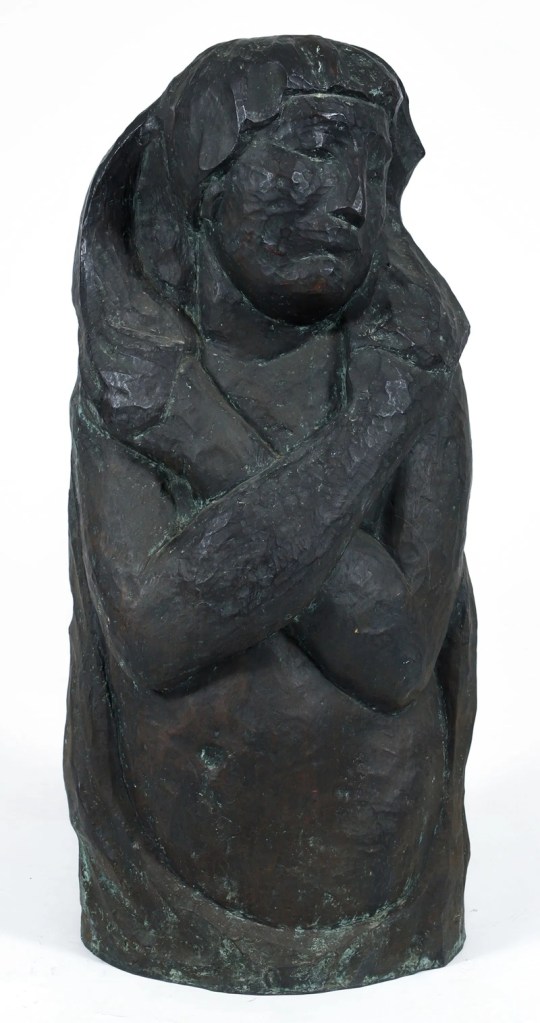
Henryk Glicenstein. Eve

Lot 79. Glicenstein, Enrico (Henryk) (Polish/Jewish/American, 1870-1942), Eve [or Rachel], 1959, cast bronze sculpture, made at the Roman Bronze Works with their stamp to the lower edge, unsigned, 37 x 16 x 13 inches. Catalogue Raisonne number 109 (an enlarged version of the upper half of number 108). According to the Glicenstein archives, this bronze cast of the upper torso of Eve was made for a posthumous exhibition at Chapellier Galleries in New York. A powerful image showing either Eve as she becomes aware of her own nakedness, or the matriarch Rachel in a time of distress. A copy of the catalogue raisonne is included with purchase. Provenance: The Estate of Hugo Dreyfuss (the son-in-law of the artist, who was married to Beatrice Glicenstein). Estimate $3,000 – 5,000. Concept Gallery. 04/26/25. Passed

To już trzecia aukcja prac Henryka Glicenteina prowadzona w USA w przeciągu ok. roku przez Concept Gallery https://polishartcorner.com/2024/12/07/henryk-glicenstein-1870-1942-8/. Obecnie obok czterech rzeźb (dwie spośród nich pokazuję) znajdują się również kilka rysunków tego artysty. Henryk Glicenstein był bardziej znany za swojego życia jak i po śmierci na zachodzie Europy oraz w USA niż w Polsce. Warto zapoznać się z katalogiem prac wszystkich tego artysty wydanej w USA kilka lat temu. Okazuje się, że nawet polskie muzea (MNK) tego katalogu nie posiadają w swoich bibliotekach.


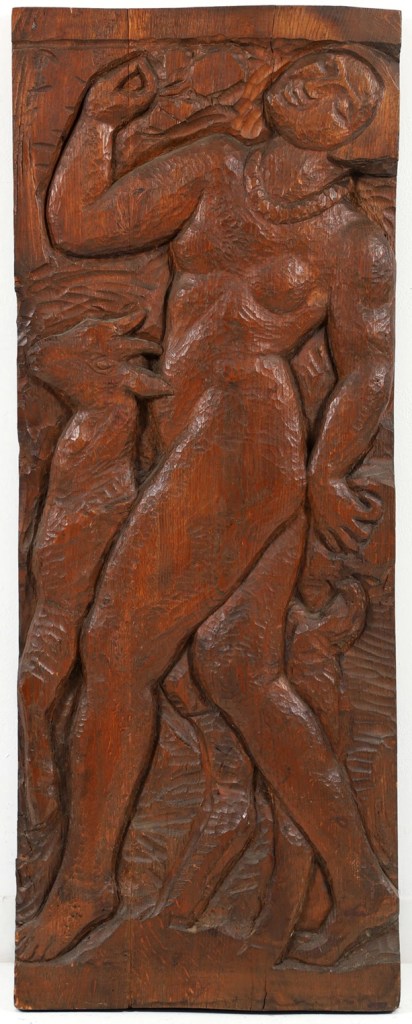
Henryk Glicenstein. Woman with Goat

Lot 86. Glicenstein, Enrico (Henryk) (Polish/Jewish/American, 1870-1942), Woman with Goat (aka, Dancer, Eve, Nude), 1930, wood bas-relief sculpture, unsigned, 49.5 x 20 x 2.75 inches. Catalogue Raisonne number 168. Exhibited: Religious Art, Renaissance Society, University of Chicago, 1931 (with original paper label glued to the back); Syracuse, 1960, Chapellier Gallery, 1965. A copy of the catalogue raisonne is included with purchase. A striking, modernist wood panel made during his sojourn in Samoens, France. Provenance: The Estate of Hugo Dreyfuss (the son-in-law of the artist, who was married to Beatrice Glicenstein). Estimate $1,000 – 2,000. Concept Gallery. 04/26/25. Sold $1,800

Stanisław Grabowski (1901 – 1957)

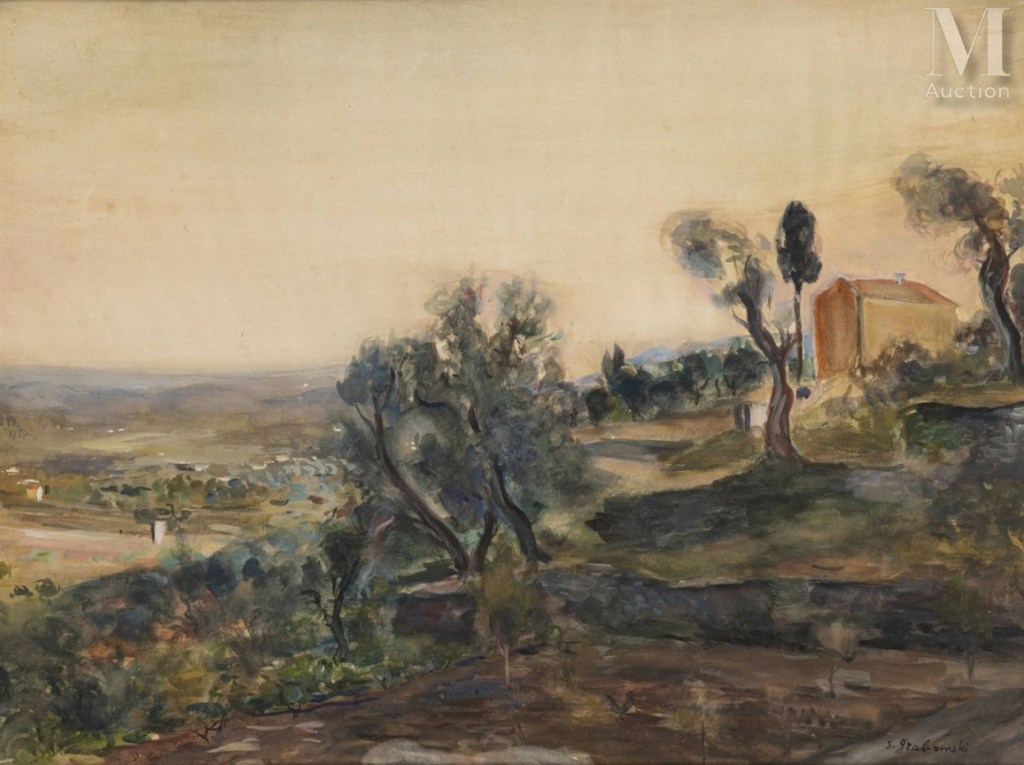
Stanisław Grabowski. Midi landscape

Lot 17. Stanislas GRABOWSKI (Libawa 1901 – Chartres 1957). Midi landscape. Watercolor on paper 47 x 63 cm. Signed lower right “S. Grabowski. Estimate €600 – 800. Millon. 04/24/25

Stanisław Grabowski był mężem Nadii Chodasiewicz, która po nieudanym z nim małżeństwie po raz drugi wyszła za mąż, za Fernanda Légera. Pisał o niej kilka dni temu p. Krzysztof Zagrodzki w swoim felietonie: https://polishartcorner.com/offside/. Dom aukcyjny Millon ma w swojej kwietniowej ofercie kilka poloników a wśród nich ten oto pejzaż Stanisława Grabowskiego, który może ktoś przygarnie a może nie.

Władysław Czachórski (1850 – 1911)

Władysław Czachórski. A Young Lady with a Floral Garland Draped Over Her Shoulders and a Pearl Necklace

Lot 556. Władisław von Czachórski (Grabowczyk 1850–1911 Munich). A Young Lady with a Floral Garland Draped Over Her Shoulders and a Pearl Necklace, signed, dated Czachórski 1904, oil on canvas, 38.5 x 26.5 cm, framed. Provenance: Sale, Sotheby’s, New York, 10 November 1998, lot 191 (as Polish School); There acquired by the current owner – Private Collection, Vienna. Estimate €140,000 – 180,000. Dorotheum. 04/28/25. Sold €140,000

Tak wyglądały kobiety zanim nie wmówiono im, że powinny walczyć o równouprawnienie, emancypację. Piękny ślad artystyczny i historyczny pozostawił po sobie Władysław Czachórski tą ‘główką’. Obrazek mały lecz pieruńsko drogi bo żaden współczesny polski artysta nie potrafi tak malować – te umiejętności zanikły szybciej od starożytnych języków.


Stały czytelnik PAC (Adartem) odnalazł wzmiankę o tym obrazie, dużo wczesniejszą od podanej przez Dorotheum: https://tpg-grabowiec.pl/articles.php?article_id=102&EFg=kv4EFRnPxdXOwRRDR9MSUwWCRANDk8WR1RHHxdAAhIWUVQAD0ABDUJVCRVVWxMGCEEBUxIDXkBSU0QEXkMNW0dWU0xSXRAAW0cOWkEGU0cAX0QDW0xCWFQYSQJdBhNHHxdZG1QOWkEAWE8BU0YEFg. Warto zapoznać sie ze wszyskimi częściami “Żywota i spraw” Władyslawa Czachórskiego.

Feliks Michał Wygrzywalski (1875 – 1944)

Feliks Michał Wygrzywalski. Pokusa

Lot 597. Felix Michael Wygrzywalski (Przemysl 1875–1944). “Pokusa” (Temptation), signed, inscribed F. M. Wygrzywalski – Pokusa, oil on canvas, 62.5 x 91.5 cm, framed. Provenance: Purchased from the grandmother of the current owner; thence Private Collection, Italy. Estimate €6,000 – 8,000. Dorotheum. 04/28/25. Sold €15,000

Takie prace Feliksa Wygrzywalskiego są poszukiwane i powinny być obiektem zainteresowania poważnych kolekcjonerów.

Maria Mela Muter (1876 – 1967)

Maria Mela Muter. In Provence

Lot 167. Marie Mela MUTER (1876-1967). In Provence. Oil on panel. Signed lower left. Inscribed on a label stuck to the back of the panel “Marie Mela Muter, en Provence, n°20F. 73 x 60 cm, prix 60 000”. Inscription on another label “N1023”. 60 x 73 cm (Small lack on the upper edge and towards the bottom right). Estimate €20,000 – 30,000. Delon-Hoebanx. 04/09/25. Sold €50,000

Dobry okres by inwestować w dobrą sztukę w momencie, gdy rynkowe akcje (stocks) okazują sie wydmuszkami i rynek papierów wali się na łeb. Giełda w dół, sztuka w górę! Ars longa, vita brevis.

August Zamoyski (1893 – 1970)

August Zamoyski. Portrait formiste de Louis Marcoussis

Lot 31. Auguste ZAMOYSKI (1893-1970). “Portrait formiste de Louis Marcoussis“. Black patina bronze after the 1923 model. Height: 29.5 cm, black patina proof with small dents and scratches, signed “A. Zamoyski”. Zamoyski”, posthumous casting with founder’s stamp “cire perdue C. Valsuani”.

 M. ZAGRODZKI Christophe Expert CVV message of December 20, 2024. “This is one of the most synthetic portraits by Zamoyski, who while pushing the stylization of his effigies to the extreme, knows how to retain the characteristic features of his models. The sculpture on display is a posthumous cast, as we know of no bronze versions from the Formista period. We do know that the original version was made by Zamoyski in black patinated plaster in 1923, with another portrait carved in stone the following year. Late editions, mainly by renowned foundrymen, fill this gap in the artist’s heritage, especially given that he destroyed much of the work from this important period in his career.”

Estimate €8,000 – 10,000. Hôtel des ventes de Lausanne. 04/04/25. Sold €5,000

Przykra sprawa związana ze sprzedażą odlewu tej rzeźby Augusta Zamoyskiego. Odlew jest pośmiertny, foundry w której wykonano egzemplarz jest bardzo znany. Brakuje jednak informacji o ilości wykonanych egzemplarzy i roku wykonania. Ten portret przedstawiający głowę Louis Marcoussisa (Markusa) był już wielokrotnym przedmiotem na aukcjach we Francji. Cena estymacyjna oscylowała czasami w widełkach €18,000 – 22,000 (np. https://polishartcorner.com/2023/10/15/august-zamoyski-1893-1970-9/) i raz najwyższa oferta w wysokości ok €17,000 nie została przyjęta. Były też i niższe wyceny lecz chyba ani razu nie doszło do sprzedaży. Obecnie, przy dość niskiej wycenie i wyjściowej ofercie €8,000 aukcjoner oferował coraz niższą cenę aż ktoś zlitował się i kupił pracę za €5,000. Nie jest to produkt wykonany taśmowo, sztancą, jak większość Perseuszów czy Asklepiosów Igora Mitoraja (6,000 i 5,000 sztuk) lecz rzeźba odlana indywidualnie na wosk tracony. Brak zaintersowania źle świadczy o kondycji polskiego rynku sztuki, który przyjmie każdą ilość pamiątkarskich wyrobów Mitoraja lecz nie znajdzie miejsca dla rzeźby Augusta Zamoyskiego (pewnie 8 sztuk). Na stronach PAC znajduje się wiele wpisów odnośnie historii sprzedaży tej rzeźby.

Józef Brandt (1841 – 1915)

Józef Brandt. Runaway horses

Lot 551. Józef von Brandt (Szczebrzeszyn 1841–1915 Radom). Runway horses (Przeprawa), 1906, signed Józef Brandt z Warszawy – Monachium, verso label of Galerie Heinemann Munich no. 8806, oil on canvas, 61 x 100 cm, framed

Provenance: Galerie Heinemann, Munich, 1907-1910 (no. 8806); Collection of Friedrich Hermann Speiser (1869-1923), Göppingen, from 1910; His heirs – Private Collection, Germany.
Exhibited: Glaspalast, Munich, 1909, cat. no. 201. Catalogued and illustrated in: Galerie Heinemann Munich, catalogue, 1907/1908, p. 36; Galerie Heinemann Munich, catalogue, 1908-1909, p. 26. Ewa Micke-Broniarek, Józef Brandt 1841–1915, Nationalmuseum Warschau, Warschau 2018, p. 335, no. I.300.

Estimate €120,000 – 180,000. Dorotheum. 04/28/25. Sold €210,000

W kwietniowym katalogu wiedeńskiej firmy Dorotheum znajduje się kilka znakomitych poloników. Pierwszym z nich jest obraz Józefa Brandta o tytule Przeprawa lub Runaway Horses. Obraz ma znakomitą proweniencję, sięgającą pojawienia się w monachijskiej firmie Heinemann w 1907 roku, znana jest fotografia tego obrazu w katalogu tej firmy (poniżej), obraz był wielokrotnie wystawiany, włączywszy w Polsce na wystawie prac Józefa Brandta w MN w Warszawie w 2018 roku. Przeglądając katalog Heinemanna można zaobserwować ciekawe szczegóły związane z zakupem/sprzedażą tego obrazu w tej firmie. Otóż obraz ten Heinemann kupił w 1907 roku za jedyne 1,400 marek, zaś sprzedał dopiero w grudniu 1910 roku za 5,200 marek. Te ceny nie były imponujące i to jeszcze za życia Józefa Brandta. Wierusz w tym samym okresie lepiej się sprzedawał. Przykładowo, obraz Wierusza o podobnym wymiarze Heineman kupił w lutym 1906 roku za 4,500 marek by sprzedać go w lipcu tego samego roku za 6,860 marek (obraz miał tytuł Am Brunnen). Dość ryzykowne to cenowe porównanie Wierusz-Brandt ale księga rachunkowa nie kłamie.

Na obrazie widać dwie sygnatury Józefa Brandta, jedna jest wytarta i pozostały wyraźne jej ślady. Można jednak spać spokojnie bo ta po raz wtórny położona została również przez Brandta, jak widać na fotografii z 1909 roku. Spodziewam się ostrej walki o ten obraz, gdyż obecnie łatwiej jest upolować obraz Wierusza niż Brandta. Inaczej mówiąc, Wierusz miał kilka córek i żonę i stąd musiał więcej pracować by płacić na ich utrzymanie bo wymagania kobiet były duże.

Fotografia w katalogu firmy Heinemann