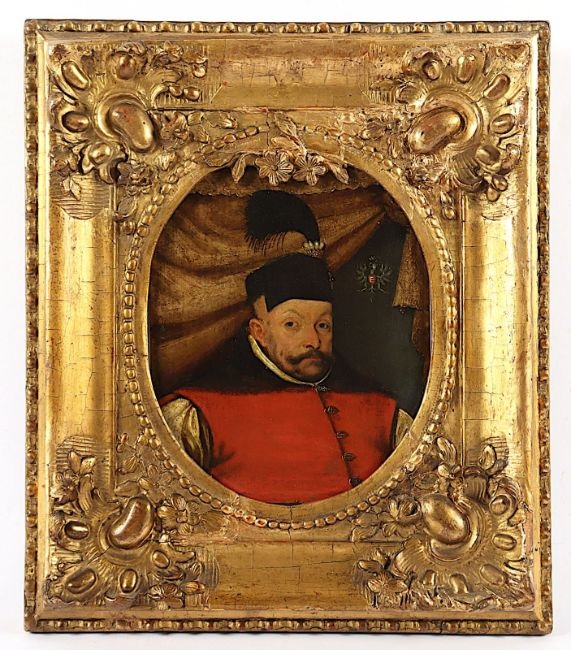
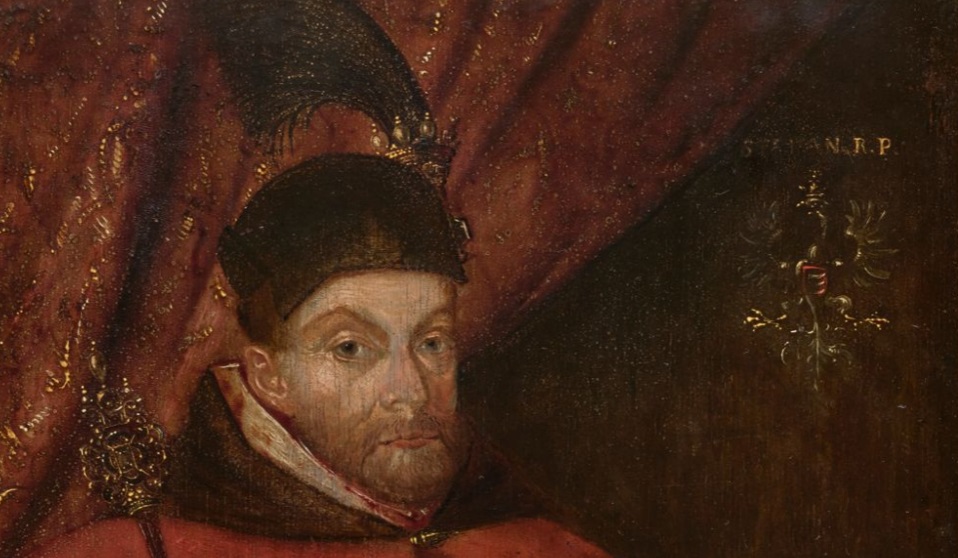
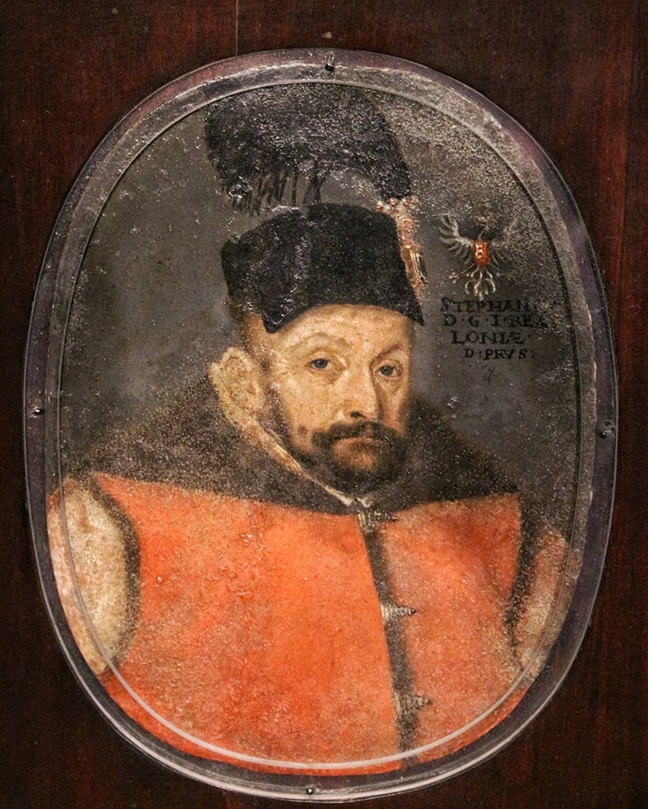
Lot 1471. Portraitmaler des 16./17.Jh., “Stephan IV Báthory, König von Polen”, Öl/Kupfer, 18 x 15, R. Opening 300 euro. Von Zengen. 11/22/24. Sold 5,500 euro
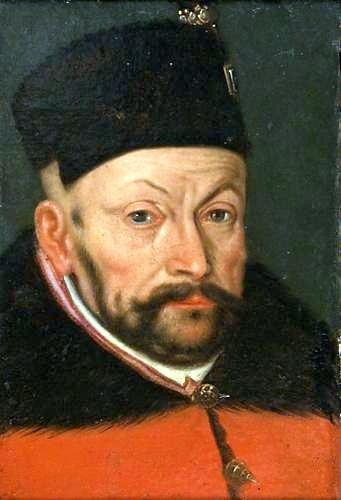
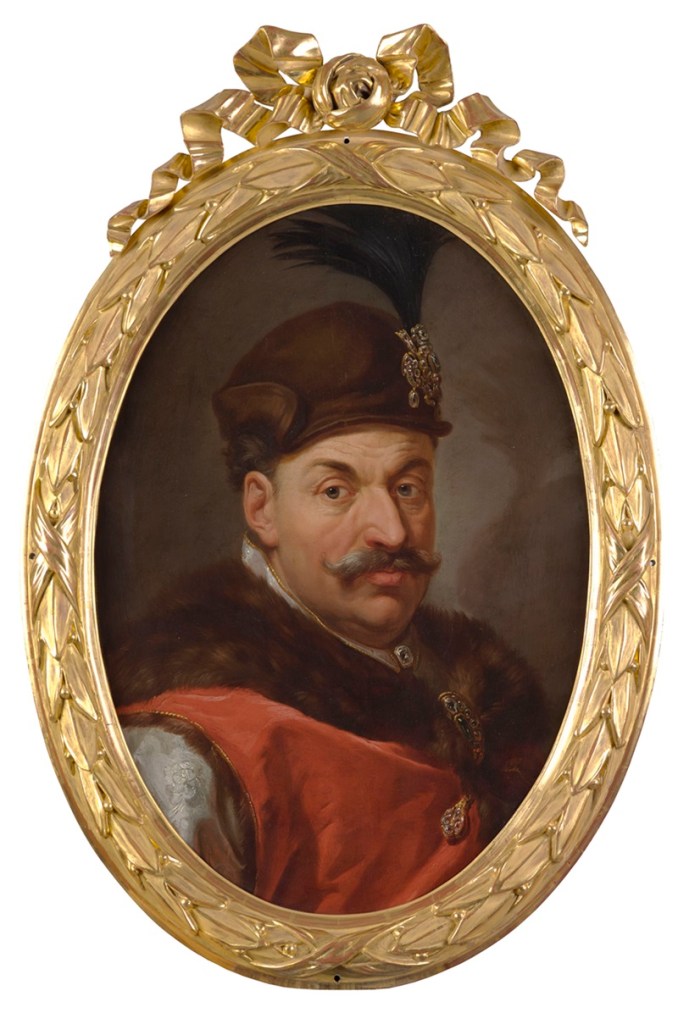
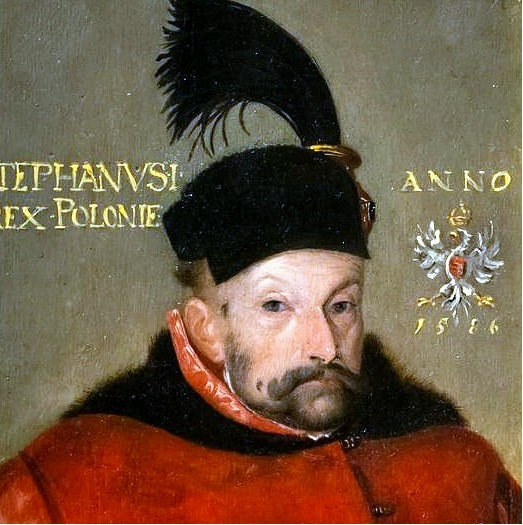
NIewielki olej na blasze miedzianej przedstawiający polskiego króla Stefana Batorego był przedmiotem aukcji w Niemczech. Praca może wyglądać iż powstałą w epoce panowania króla i jest bardzo podobna (może nawet lepsza) do znanego portretu wykonanego przez Marcina Kobera ok 1580 r. (poniżej) o nieco mniejszych wymiarach, będącego w muzealnej kolekcji w Wiedniu. Nawet sam Baciarelli namalował bardzo ‘mięsisty’ portret tego króla, wzorując sie pewnie nieco na innych znanych mu obrazach, kierując się jednak w malowaniu własną estetyką i wyobraźnią. Znanych jest również wiele jest innych portretów tego króla. Obraz z domy Von Zengen warty był zainteresowania i został słusznie zauważony.
Marcin Kober.Stefan Batory , olej, karton 16 x 13 cmMarcello Baciarelli.Stefan Batory. Muzeum Zamku Warszawskiego
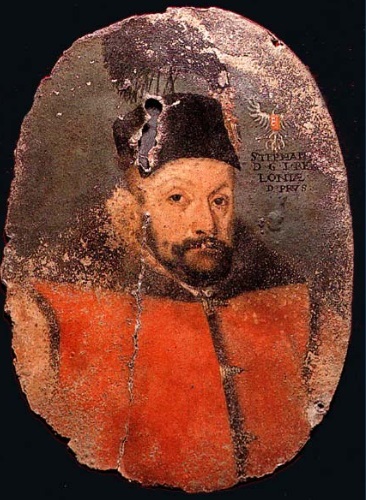
Fotografie wizerunków Stefana Batorego wymieniane w komentarzu Adartem:
Zamek Królewski na Weweluok 1583Portret trumiennyPortret trumienny
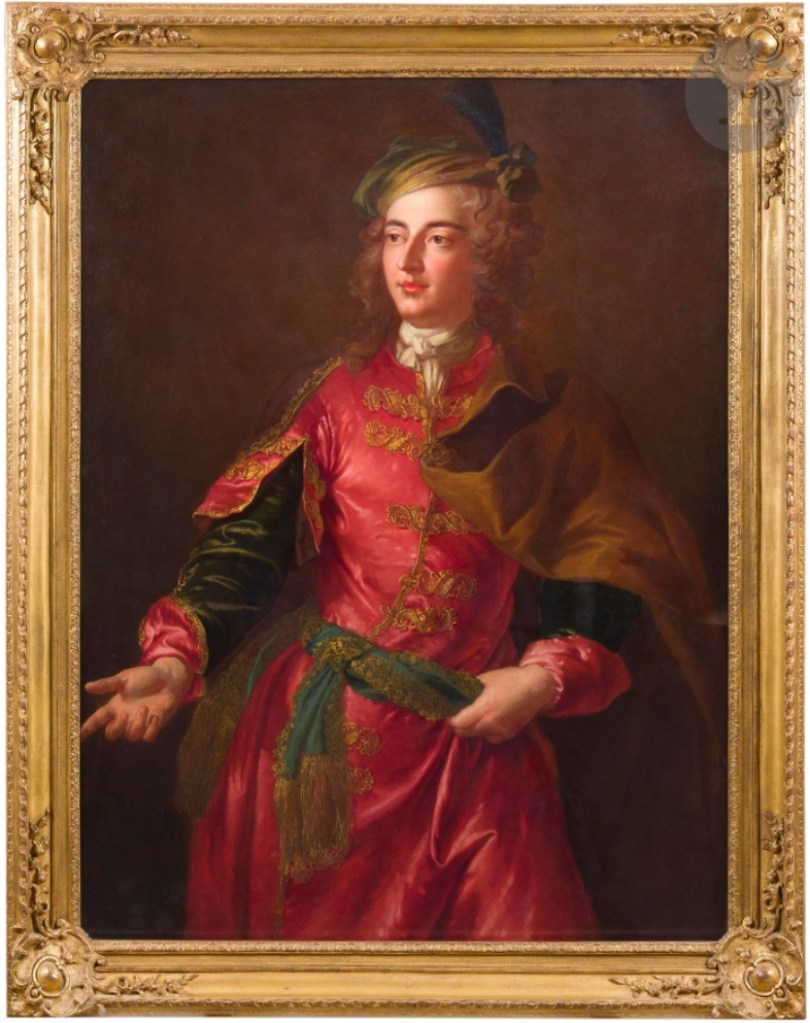
François de Troy.Portret Konstantego Sobieskiego, syna Jana III
Lot 46. François de TROY (Toulouse 1645 – Paris 1730). Presumed portrait of Prince Constantin Sobieski (1680 – 1726). Canvas 126 x 95 cm (Old restorations). Provenance : Galerie Eric Coatalem, 2013.
Wizerunek portetowanego jest przypisany Konstantemu Sobieskiemu, synowi Jana III Sobieskiego. Artysta, który malował jest przedni i może dlatego Muzeum w Wilanowie zainteresuje się tym obrazem.
Bibliography: Exhibition catalog 1704 Le Salon, les Arts et Le Roi, Sceaux, Musée de l’Ile-de-France, Domaine départemental de Sceaux, March-June 2013, no. 114, reproduced in color. Monsieur Dominique Brême dates the painting to circa 1720, based on the “free and flamboyant execution of the draperies” and the use of “colors that play on the vivid contrast of the orange-pink of the leotard and the duck-blue of the sash”. The “verticalisation of the pose, the supple wiggle of the bust and the model’s gaze ostensibly turned outwards”, enable him to compare our painting with the Portrait de Jean-François de Troy painted by François de Troy around 1716-1719 (known from the print by Simon Vallée, see the booklet published for the exhibition François de Troy 1645-1730, Sceaux, musée de l’Ile-de-France, July 23 – October 13, 1997, G28, reproduced).
Painted around 1720, our painting could be considered a posthumous portrait of the prince (probably painted after his death in 1726). So our painting cannot be the one exhibited in 1704, as has been suggested in the past. Constantin Sobieski was the third son of John III Sobieski, King of the Polish-Lithuanian Union from 1674 to 1696 and a national hero for his victory over the Turks. King Jean III Sobieski married Marie Casimire Louise de La Grange d’Arquen on July 5, 1665, and received the Order of the Holy Spirit in Poland on November 30, 1676. Marie-Casimire and Jean III are buried in Krakow’s Wawel Castle. Constantin Sobieski receives the Order of the Holy Spirit in Rome in the Church of Saint Louis on December 19, 1700. One of his portraits, formerly attributed to Hyacinthe Rigaud, is preserved in the Palace Museum of King Jan III in Wilanow.
Estimate 30,000 – 50,000 euro. Ader. 03/26/24. Sold 30,000 euro
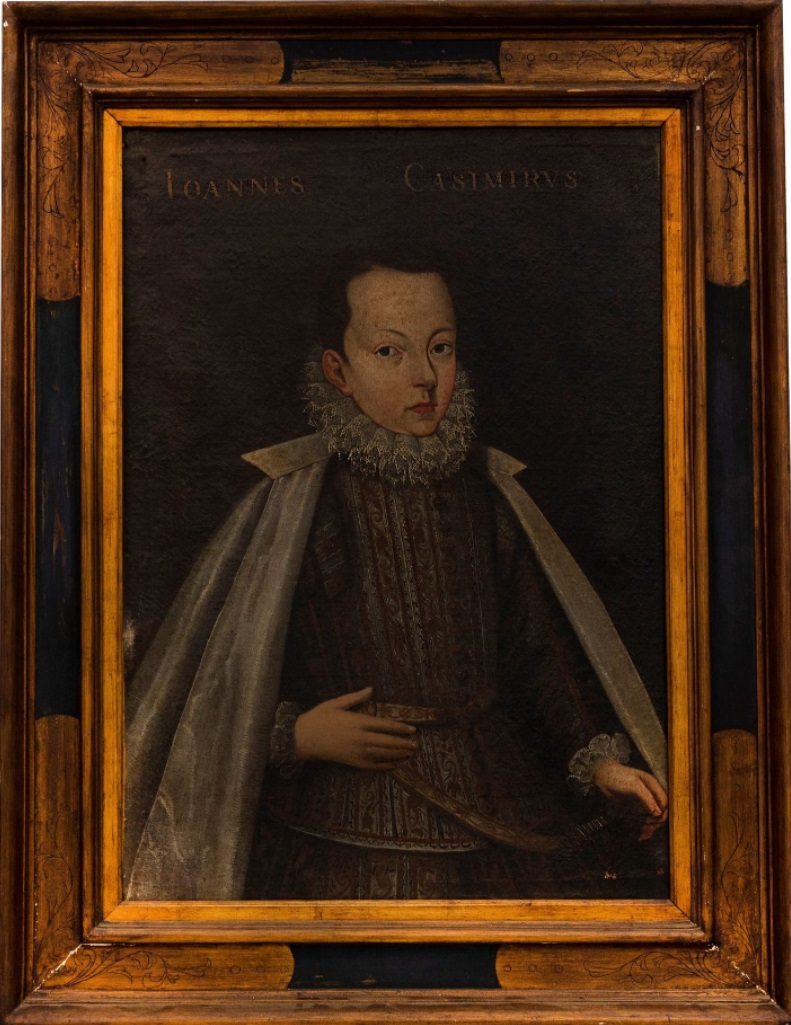
Portret Jana Kazimierza w młodym wieku, nieznanego artysty, wywołał spore zainteresowanie licytujących.
Lot 164. Pittore toscano degli inizi del XVIII secolo Ritratto di Giovanni Casimiro re di Polonia, huile sur toile cm 89×63 ; avec cadre cm 110×84 2Première toile. Estimate 800 – 1,200 euro. Gliubich Casa d’Aste. 07/07/23. Sold 5,500 euro
Portret Konstantego Sobieskiego, syna króla Jana III
Portret Konstantego Sobieskiego w młodym wieku, syna króla Jana III. Życiorys sportretowanego został opisany z detalami i nie warto bym go streszczał: https://www.wilanow-palac.pl/konstanty_wladyslaw_sobieski_1.html. Obraz jest niedrogi i pasowałby do któregoś z polskich muzeów.
Powiększony napis na obrazie
Lot 130. French school of the end of the XVIIth century Portrait of Konstanty Wladyslaw Sobieski (1680-1726) Canvas Captioned “Constantin Sobieski third son of the King of Poland and Lithuania nephew of Madame la Marquide de Béthune Selles”. Height. 92 Width. 70 cm. (old restorations and lifts) From the Chartres castle of a former mayor of Chartres under the Restoration. Estimate 1,500 – 2,000 euro. Rouillac. 03/11/23
Portrait de Catherine Opalinska, Reine de Pologne et Duchesse de Lorraine
Lot 382. Louis-Michel VAN LOO (1707-1771), atelier de. Portrait de Catherine Opalinska, Reine de Pologne et Duchesse de Lorraine. Huile sur toile. H_86 cm L_68 cm. Cette oeuvre est à rapprocher du tableau conservé au musée lorrain de Nancy et donné à l’atelier de Van Loo. Estimate 2,000 – 3,000 euro. Métayer Maison de Ventes aux Enchères Paris. 11/20/22
Kilka portretów polskich rodzin królewskiech z nadchodzących aukcji. Katarzyna Opalińska (1680 – 1747) była żoną króla Stanisława Leszczyńskiego. Jej dwa portrety, w tym miniatura znajdują sę na rynku francuskim. Obok królowej, widzimy również portret Stanisława Leszczyńskiego (1677 – 1766). Te trzy prace są wycenione dość przystepnie. Natomiast mam wątpliwości co do portretu Augusta II Mocnego (1670 – 1733) w Schloss Ahlden w Niemczech. Ten dom aukcyjny wielokrotnie już sprzedawał falsyfikaty polskiego malarstwa i nabija ceny estymacyjne pod niebiosa .
Portrait de Stanislas 1er, roi de Pologne, duc de Lorraine et de Bar.
Lot 103. ECOLE FRANCAISE du XVIIIeme siècle, entourage de Jean GIRARDET. Portrait de Stanislas 1er, roi de Pologne, duc de Lorraine et de Bar. Toile d’origine. Hauteur : 80 cm. Largeur : 65,5 cm. Inscriptions au revers de la toile : “Stanislas Roy donné par lui à Mde de Ludre chanoinesse d’Epinal ; le 5 novembre 1751”. Inscriptions “Donné par le roi à Gabriel Florent Francois Mo de Ludre, de Frolois et de Richarmenil Primier. Gentilhomme de sa chambre”. Accidents et restaurations. Estimate 2,500 – 3,000 euro. Osenat. 11/27/22
Portrait de Catherine Opalinska Leszczyńska
Lot 229. École française de la seconde moitié du XIXe siècle. Portrait de Catherine Opalinska Leszczyńska (Poznan, 1680-Lunéville, 1747). Miniature ovale peinte, figurant Katarzyna Opalińska, épouse de Stanisław Leszczyński, roi de Pologne et duc de Bar et de Lorraine, et mère de Maria Leszczyńska, reine de France et épouse de Louis XV. D’après la gravure de Nicolas IV de Larmessin de 1734, d’après Jean-Baptiste Van Loo (?), conservée au Palais des ducs de Lorraine – Musée lorrain. Cerclage en métal doré, légendée au dos en français. H. 14 x L. 11 cm. Estimate 300 – 500 euro. Millon. 11/25/22
Portrait of August the Strong as August II. King of Poland and Grand Duke of Lithuania and as Frederick August I Elector of Saxony
Lot 2266. David Hoyer (1667 Auerswalde – 1720 Leipzig) attr; Portrait of August the Strong as August II. King of Poland and Grand Duke of Lithuania and as Frederick August I Elector of Saxony This representative portrait, painted around 1700, depicts August the Strong (1670 – 1733) as a young king shortly after his acquisition of the Polish royal dignity in 1697, by which he not only achieved a significant increase in rank as crowned head, but also secured greater political sovereignty. This is also expressed in this painting. August the Strong had himself depicted with a shoulder-length allonge wig in a breastplate, wearing a red ermine cloak embroidered with golden royal crowns. As a symbol of his power and rank, a royal crown and an imperial orb are also depicted on his right. At the same time, Augustus the Strong demonstrates his power as a general by holding a corresponding staff in his right hand, while a battle scene with a horseman is indicated in the background. This could be seen in reference to the Nordic War fought in 1700-1721 for supremacy in the Baltic region, in which the Saxon-Polish army under August the Strong also participated in alliance with Tsar Peter I of Russia against Sweden. Only a few paintings by the portrait painter David Hoyer have survived, mostly only engravings after his portraits. Hoyer studied under the Bohemian portraitist Johann Kupetzky; as a sought-after artist, he worked not only for the Saxon-Polish royal and electoral court, but also for Brandenburg-Prussia and Hesse-Cassel. Oil on canvas, doubl.; 106 cm x 84,5 cm. Frame. Lit./Exhibitions: “Prussia and Saxony. Scenes of a Neighborhood,” First Brandenburg State Exhibition, Doberlug Castle 2014, cat. ed. by the House of Brandenburg-Prussian History, Sandstein-Verlag, Dresden 2014, fig. p. 142, no. 2/12; “Of Swords, Sails and Cannon – The Sinking of the Princess Hedvig Sofia,” The Maritime Museum of Finland, Kotka, 2015/16. Attributed to David Hoyer (1667 – 1720). Oil on canvas, relined. Estimate 16,000 32,000 euro. Schloss Ahlden. 12/04/22
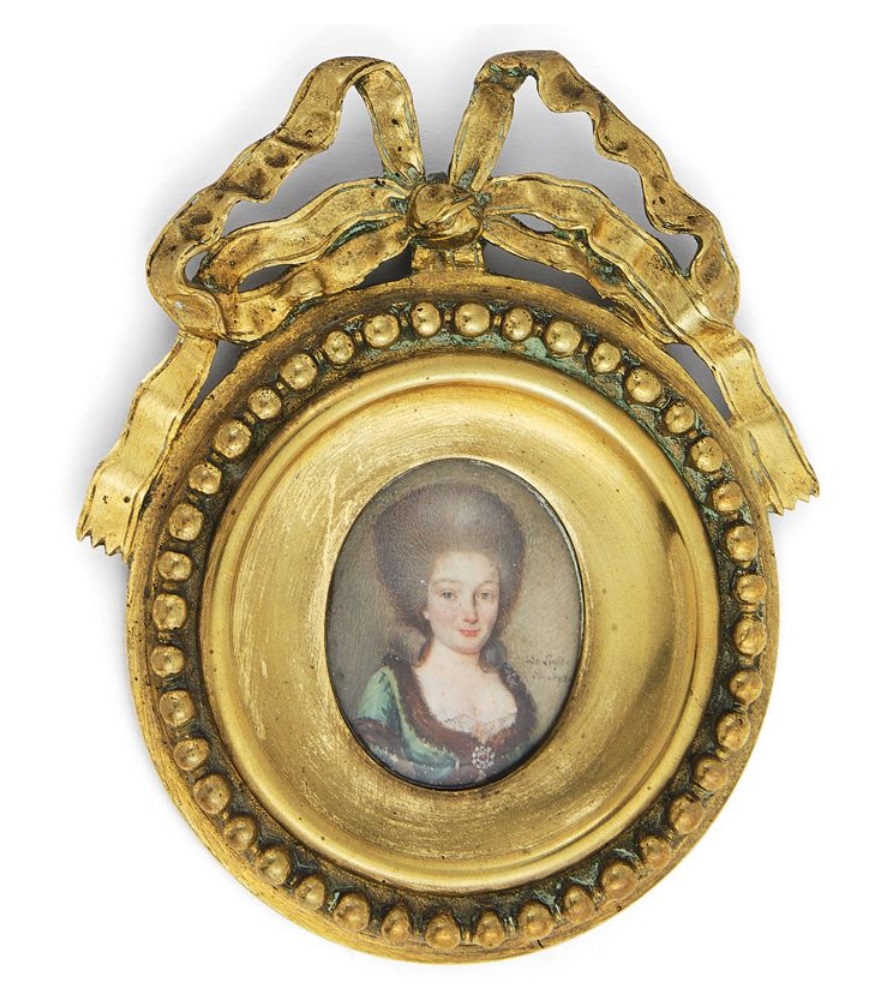
DE LUSSE Jean-Jacques Thérésa. Izabella Poniatowska
Miniatura przedstawiająca Izabellę Poniatowską, siostrę Stanisława Augusta Poniatowskiego. Możliwość otarcia się w salonach o rodzinę królewską choć portret wykonany obca ręką.
Lot 114. DE LUSSE Jean-Jacques Thérésa (1758-1833). Portrait of Countess Isabella PONIATOWSKA (1730-1808) Oval miniature, signed and dated on the right De Lusse/Pinxit 178-, depicting the sister of the King of Poland Stanisłas Auguste PONIATOWSKI, known as Madame Krakow, in bust, three-quarter right, in green dress edged with fur. In its original round gilt bronze frame bordered with a frieze of pearls and topped with a ribboned bow. On the back a handwritten paper in Polish identifying the subject sabella z Poniatowska hetmanowa Graf Branicka Pani krakowska Babka Isabelli Starzynski. 4.4 x 3.5 cm. Frame: 12.5 x 10.5 cm. Provenance: Izabella STARZYNSKA (1804-1897), born Countess MOSTOWSKA, wife of Edouard STARZYNSKi (1807-1864). To his son the count Boleslaw STARZYNSKI (1834-1917), historian born in Poland and established in Paris. Bequeathed by the latter to his cousin Joseph Marie Clément de NICOD de NEUVILLE, count of MAUGNY (1873-1944) and to his wife Margaretha, called Rita, Jeannette Émilie BUSSE (1882-1937). Then by descent. Estimate 600 – 800 euro. Fraysse @ Associes. 10/19/22
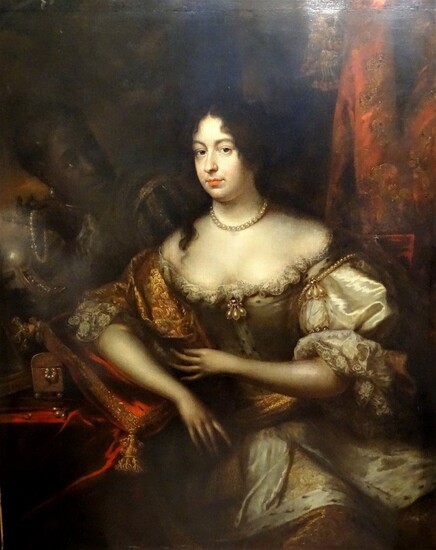
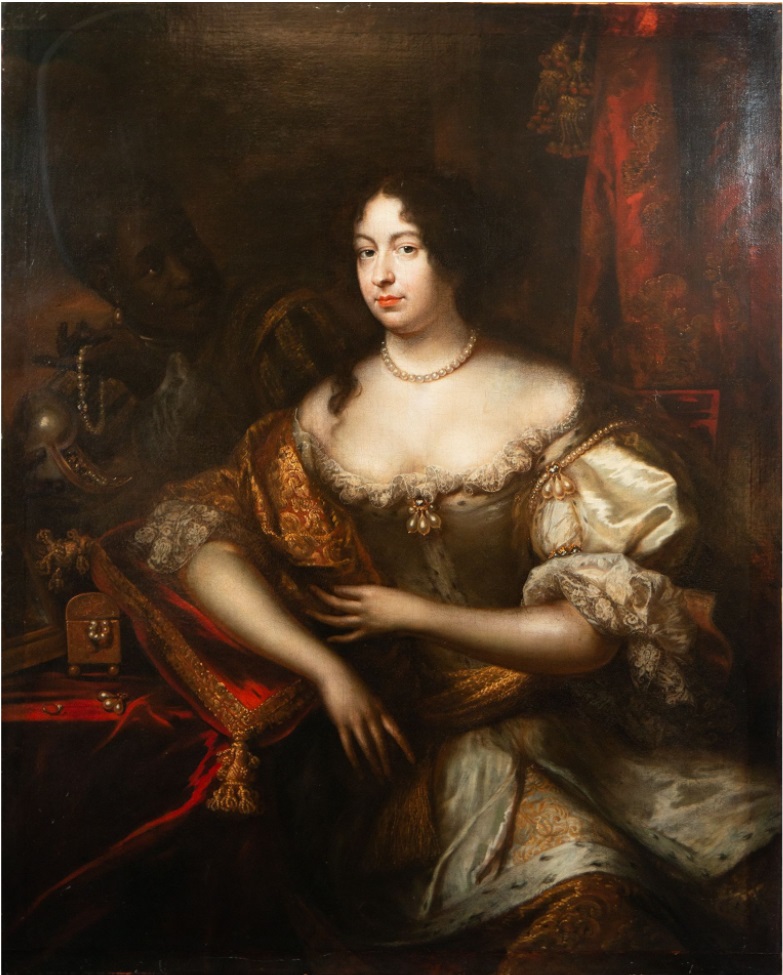
Portret Marysieńki, kopia obrazu pochodząca z attelier FRANÇOIS HYACINTHE RIGAUD (1659 – 1743). Gdzie jest oryginał? Czy Muzeum w Wilanowie posiada kopię tej pracy?
Lot 62. Atelier of FRANÇOIS HYACINTHE RIGAUD (Perpignan, 1659-1743). Portrait of Marie Casimira. Oil on canvas. Size: 130 x 104 cm. The psychological capture of deep character in the look, the point of view represented in the scene, the sumptuousness in the details of the clothes and objects, and the use of the colours between lights and shadows allow us to place the author of this work in an environment close to the school of the great French painter Hyacinthe Rigaud (1659-1743), one of the best portrait painters associated to the era of Louis XIV. He made an outstanding contribution to French painting from 1688 onwards. He was particularly noted for his portrait art, depicting members of the French royal family. Notable, for example, is his famous state portrait of “Louis XIV at Coronation Robes” (1701, Louvre, Paris), one of the finest Baroque paintings of the French court. Rigaud’s broad, vigorous style and the way he relied on the nobility of posture and splendour of his models were the basis of his success. Indeed, he is the creator of an original genre, that of the “portrait of pomp” which spread through the European courts of the first half of the 18th century. Examples of his great output can be seen in some of the finest art museums in Europe and North America. For details of other famous artists and master craftsmen active in France during his day, see: French Baroque Artists (c.1600-1700) and French Decorative Designers (c.1640-1792). The pictorial quality of the work is superb. It shows great mastery of the portrait genre. It is thought to have been executed in Rigaud’s own workshop, which, due to the multitude of royal and noble commissions at the time, had a large number of artists in its employ who worked on the completion of these portraits. Marie-Casimira Louise De La Grange was known by the nickname of “Marysie?ka”. She was born in Nevers (centre of France) on 28 June 1641 and died in Blois (France) on 1 January 1716.) She was Queen consort of Poland and Grand Duchess consort of Lithuania as the wife of John III of Poland from 1674 to 1696. She was the daughter of Henri Albert De La Grange d’arquien and Françoise de La Châtre.
Portret księcia Józefa Poniatowskiego. Atrybucja Józefa Kosińskiego.
Lot 207. Attributed to Josef Kosinski Kraków 1753 – 1821 Warsaw. Portrait of Prince Joseph Poniatowski (1763-1813). Inscribed on the reverse in Cyrillic Joseph / Poniatowksi. Oil on canvas. 77,3 x 62,5 cm ; 30⅜ by 24⅝ in. Estimate 5,000 – 7,000 euro. Sotheby’s. 06/15/22
Pierwszy z trzech portretów polskiej arystokracji na aukcji czerwcowej w Sotheby’s. Portret księcia Józefa Poniatowskiego został przypisany Józefowi Kosińskiemu. Na odwrociu płótna, nazwisko osoby namalowanej chyba jednak nie jest cyrylicą, jak sugeruje Sotheby’s, a kombinacją. Dodatkowo, obraz posiada jakieś numery inwentarzowe mogące sugerować obecnośc w zbiorach. Frapuje mnie brak informacji o proweniencji i mam nadzieję, że obecność tej pracy na rynku nie jest wynikiem wojny na Ukrainie. Obraz niewątpliwie warty grzechu.
Józef Antoni Poniatowski was the son of Andrzej Poniatowski, whose portrait by Bacciarelli is in this sale (lot 191); he was also the nephew of King Stanislaw II Augustus (see lot 190), and in 1798 inherited from him a large part of his paintings collection.
Józef Antoni Poniatowski is here wearing the uniform of a major general in the army of the Duchy of Warsaw: a blue coat with a red collar embroidered with gold, embellished with epaulettes. Two medals are visible on his chest. The first is the military Order of Virtuti Militari, created in Poland in 1792 to reward courage in the face of the enemy. The second is the Grand Eagle of the Légion d’Honneur, a decoration awarded from 1805 onwards.
Several portraits of Józef Antoni Poniatowski in a general’s uniform are known to us, and they can be dated from his decorations: in the present painting the epaulettes are plain, whereas in the portrait painted by Antoni Brodowski, they bear the crossed batons of a field marshal. Our portrait is therefore earlier than this promotion, which he received during the Napoleonic Wars.
Józef Antoni Poniatowski died a hero in 1813 during the battle of Leipzig.
Marcello Bacciarelli (atr.). Portret Stanisława Augusta Poniatowskiego
Portret Stanisława Augusta Poniatowskiego, atrybucja ręki Marcellego Bacciarelliego. Wydaje mi się, że NM w Warszawie posiada inną replikę (chyba nie oryginał?) lecz mogę sie mylić, może nawet gorszą replikę. Kupując ten obraz otrzymamy w prezencie drugi, czyli portret księżnej Elisabeth of Württemberg (1767 – 1790), w identycznej ramie i chyba tych samych rozmiarów.
Marcello Bacciarelli (atr.). Portret księżnej Elisabeth of Württemberg
Lot 1135. MARCELLO BACCIARÈLLI (attr. A). (Roma, 1731 – Varsavia, 1818). Ritratto del re di Polonia Stanislao Augusto Poniatowski. Ritratto di Elisabeth of Württemberg. Olio su tela, cm 119 X 80,5 (2). Pittore di Sua Maestà Stanislao Augusto, Re di Polonia, Bacciarelli visse e operò in Polonia per quasi mezzo secolo e svolse un ruolo importante per la pittura polacca dell’epoca. Formatosi con Marco Benefial a Roma, il pittore nel 1753 si trasferì a Dresda fino al 1756, quando a causa della Guerra dei sette anni la corte si trasferì a Varsavia. Primo pittore di corte, l’artista aveva una bottega con innumerevoli allievi e collaboratori che dovevano far fronte alle numerose commissioni. Estimate € 5,000 – 8,000. Wannenes. 06/09/22
Portret Katarzyny Opalińskiej, żony Stanisława Leszczyńskiego
Portret Katarzyny Leszczyńskiej z domu Opalińskiej, żony króla Stanisława Leszczyńskiego, matki Marii Leszczyńskiej, żony króla Francji Ludwika XV. Być może któreś z polskich muzeów mogłoby starć się kupić ten portret o ile ma jeszcze pieniądze. Kilka lat temu na rynku był miedzioryt przedstawiający królową: https://polishartcorner.com/2020/01/03/portret-katarzyny-opalinskiej-zony-stanislawa-leszczynskiego/. Brak niestety informacji o proweniencji, o potwierdzeniu, że namalowaną jest rzeczywiście Katarzyna Leszczyńska oraz sugestii o autorstwie tego niezwykłego portretu.
Lot 352. Portrait of Catherine Opalinska, Queen Consort of Poland, 18th century continental school. Oil on canvas, canvas measurements: 131 x 105. Catherine Opalinska (Polish Katarzyna Opalińska; Poznań, Poland, October 13, 1680 – Lunéville, France, March 19, 1747), was queen consort of Poland twice and great Duchess consort of Lithuania through her marriage to Stanislaus I of Poland. Catalina was the second daughter of magnate Juan Carlos Opalinski and his wife Zofia Czarnkowska. On May 10, 1698 in Kraków, she married Stanislaus I of Poland, who became Duke of Lorraine and briefly King of Poland. In 1699, she gave birth to her first daughter, Anne, and in 1703, to Mary, Queen of the French, who would be the future wife of Louis XV. Estimate 20,000 – 30,000 euro. Templum Fine Art. 05/13/22




 Polish Art Corner