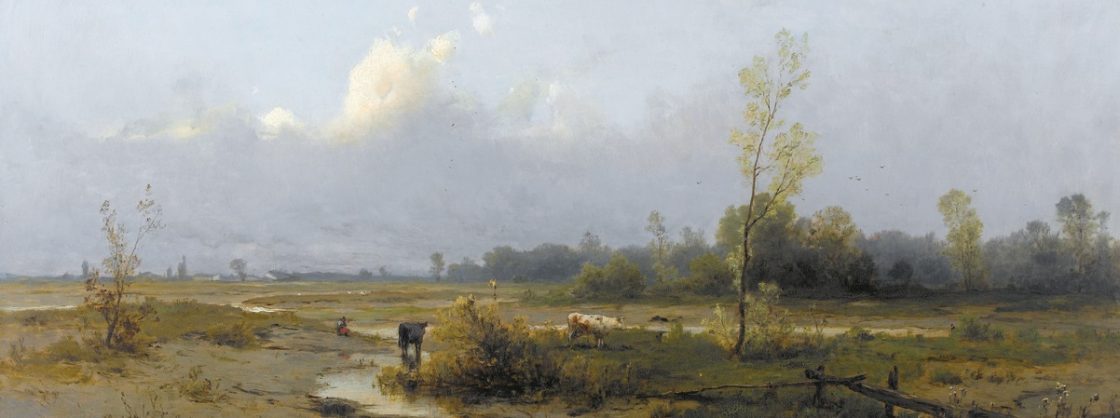
Lot 128. Zdzislaw Beksinski (F) (1929 Sanok, Polen – 2005 Warschau). Untitled, oil on hardboard, 87 × 75 cm, signed and dated 1980 on the reverse. Provenance: German private collection. Opening €65,000. Wettman. 12/02/25. Sold €100,000
Dwa obrazy Zdzisława Beksińskiego sprzedawane na aukcji u Wettmanna. Daje się zauważyć niedbałość opisu z błędami. No ale cóż, to ten sam Wettmann, który zachwycił mnie falsem ‘niebieskiego’ Fangora.
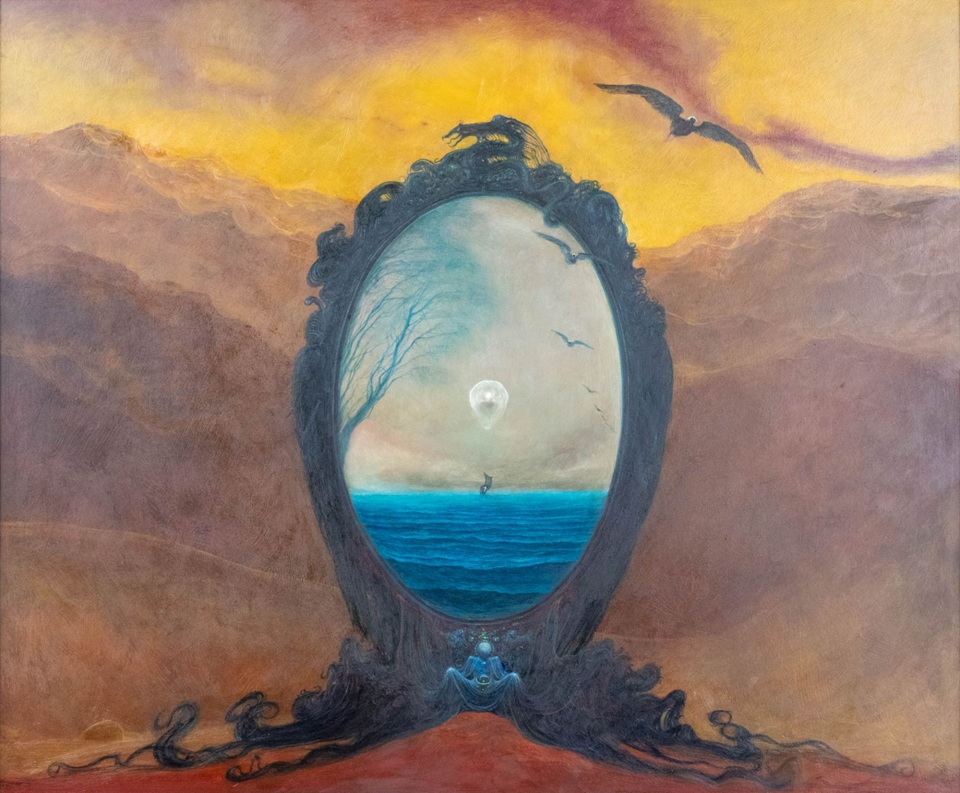
Zdzisław Beksiński. Untitled, 1975
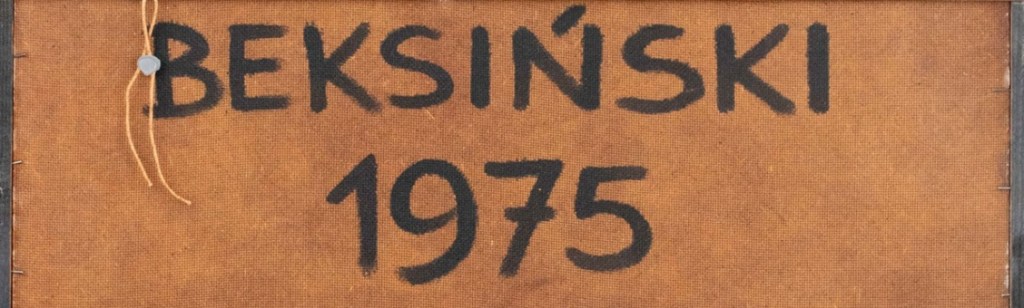
Lot 127. Zdzislaw Beksinski (F) (1929 Sanok, Polen – 2005 Warschau).Untitled, oil on hardboard, 61 × 73 cm, signed on the reverse, dated 1975, accompanied by original purchase receipts from Karstadt Cologne and DESA. Opening €40,000. Wettmann. 12/02/25. Sold €60,000
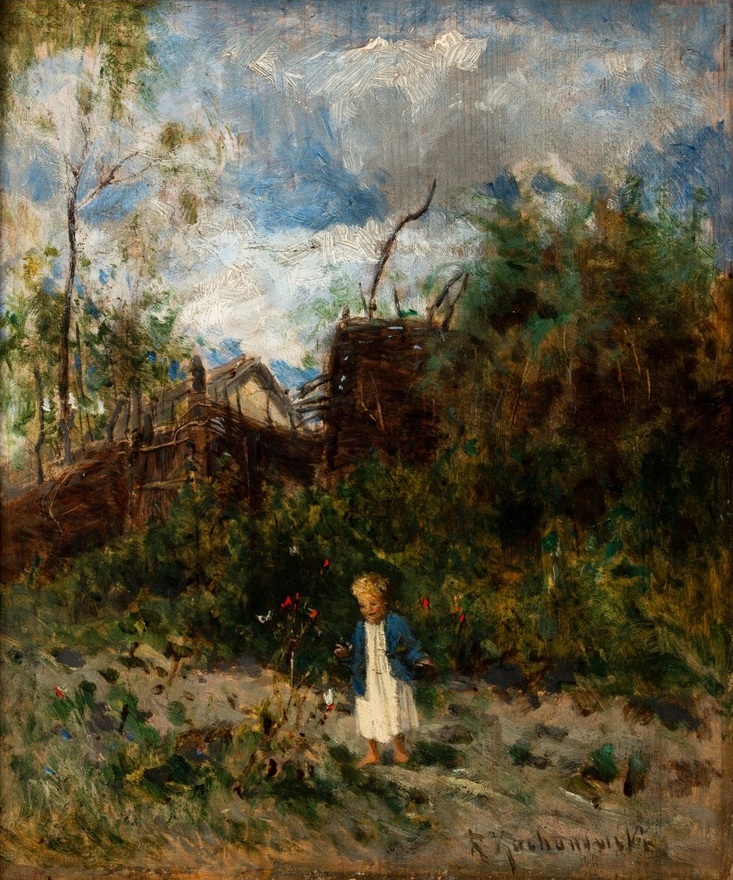
Romana Kochanowski ? “Pierwsze pąki“, olej na desce, 24 x 20 cm, sygnowany w prawym, dolnym rogu: “R. Kochanowski”. Źródło: strona Connaisseur Kraków
Otrzymałem list wczoraj wieczorem od zaprzyjaźnionego czytelnika, którego fragment prztaczam: Salon w Krakowie ma taką pracę ale jest już zarezerwowana. Trochę inna praca mistrza, ciekaw jestem z jakiego okresu? https://koneser.krakow.pl/pl/oferta/4808-roman-kochanowski-pierwsze-paki?offset=2. Dzisiaj rano znalazłem w skrzynce list od drugiego czytelnika: Przesyłam jako fanowi twórczości Romana Kochanowskiego. Myślę, że sam autor (RIP) mógłby być zaskoczony takim obrazem.
Rzeczywiście, krakowski salon mógłby się lepiej przyłożyć i spokojnie popatrzeć na ten olej. Pracują tam historycy (historyczki) sztuki wystawiające ‘Potwierdzenia autentyczności” (czy i w tym przypadku taki certyfikat został wystawiony osobie, która zarezerwowałą już ten obraz?). Ciekawe, że krakowskie Sztuki Piękne opublikowały dwa niezłe artykuły Marka Sołtysika na temat Romana Kochanowskiego, które to należy koniecznie przeczytać zanim wprowadzi się obraz do handlu (https://sztukipiekne.pl/roman-kochanowski-krakowianin-w-monachium/; https://sztukipiekne.pl/roman-kochanowski-krakowianin-w-monachium-czesc-ii/).
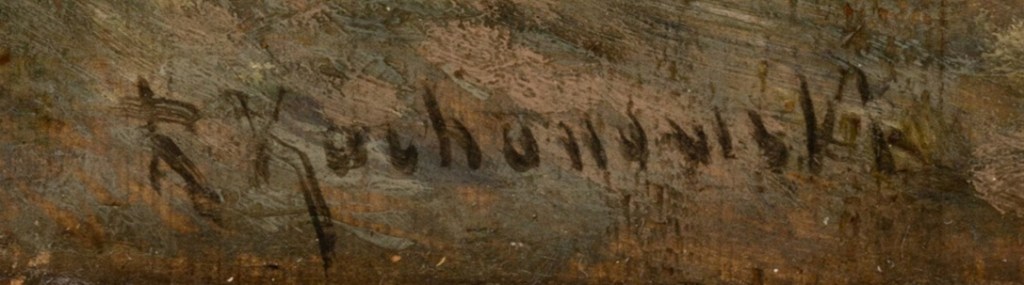
Dlaczego moim zdaniem ten obraz jest falsyfikatem? Oto argumenty. Sygnatura na obrazie sugeruje jest późne jej położenie, być może jest z lat 20-tych lub 30-tych XX wieku, czyli z okresu gdy artysta malował już niepewnie bez przekazywania detali, powiedziabym szkicowo. Skoro synatura jest późna to i sam obraz powinien być namalowany u schyłku twórczości a jedno z drugim nie współgra.
Sygnatura na obrazie
Roman Kochanowski nie malował postaci dzieci, w dodatku z tak dokładnymi fałdkami sukni. Na główce dziecka mamy nawet światłocienie układających się włosów. Widać nawet paluszek podniesiony do góry prawej ręki. To są detale których artysta nie wprowadzał na swoje małe obrazki. Inną sprawą są chmury na niebie z prześwitującym niebieskim kolorem. Artysta w inny sposób oddawał pochmurność nieba, w sposób bardzo płynny a nie uderzeniowy pędzlem. Warto przyjrzeć się chałupie, która jest ani bawarska ani też polska i odbiega od chałup (domów chlopskich) u tego malarza. Wysokie drzewo po lewej stronie nie jest drzewem jakie malował Kochanowski. Gałęzie drzew malował szerokim pędzlem wykonanym ze szczeciny i na żadnej pracy nie widzać tak punktowo wstrzelonych liści. Razi mnie również kolorystyka tej pracy z punktowo malowanymi szczegółami, gdy artysta kładł pędzel i go raczej posuwał a nie nim uderzał.
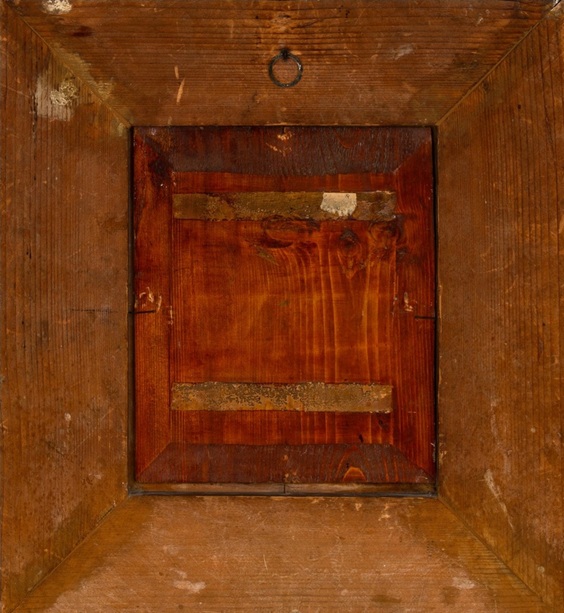
Na dokładkę, olej ten namalowany jest na grubej desce (mahoniowej?), specjalnie przygowowanej w zakładzie sprzedającym artykuły dla malarzy. To pierwsza taka gruba deska, którą widzę użytą przez RK. Kochanowski stosował cienkie deseczki, sklejki, czasami malował na wieczkach pudełek cygar, które namietnie palił. Nawet deska malarska tutaj nie pasuje i jej niespotykany, niemal ‘kwadratowy’ wymiar. W sumie oceniam tę pracę jako falsyfikat uchodzący za pracę Romana Kochanowskiego, namalowany nie wiadomo przez kogo, na któym położono sygnaturę po śmierci krakowskiego artysty. Przykro widzieć falsyfikat krakowskiego artysty sprzedawany w krakowskim salonie. Sądzę, że ten fals nie został celowo wprowadzony do obiegu a raczej przez dużą niedbałość właściciela lub jego pracowników. Chętnie zamieszczę polemikę z Koneserem jeśli ma inne zdanie i uważa ten obraz za autentyk.
Odpowiedź z salonu Koneser:
Odpiszę w sposób możliwie krótki i zwięzły – licząc na to że opublikuje Pan moją odpowiedź w całości:
Ocenianie pracy tak jednoznacznie i tak zasadniczo – wyłącznie na podstawie zdjęć jest dla mnie kwintesencją nierzetelności. Stara się Pan być ekspertem do spraw twórczości Romana Kochanowskiego i wyraża Pan „ekspercką” opinię chowając się za płaszczykiem anonimowości, co jak nietrudno się domyślić, jest pozycją komfortową i uprzywilejowaną jedynie dla anonima. Ja w zaistniałej sytuacji i podniesionych wątpliwości uznaje za bardziej zasadne by na temat pracy wypowiedziała się co najmniej dwójka zewnętrznych ekspertów mających rzetelne doświadczenie w kwestii twórczości Romana Kochanowskiego. Ich nazwisk zapewne nie będziemy upubliczniać, aby anonimowo ich Pan nie szkalował w przypadku braku zgodności z Pana wywodami. Odnośnie omawianej pracy:
Podłoże malarskie – tę kwestię bez oględzin pracy na żywo ocenił Pan błędnie. Definitywnie nie jest to deska przygotowana przez profesjonalnego dostawcę materiałów malarskich, a tym bardziej nie jest to sugerowany mahoń. Jest to barwiona deska, z europejskiego gatunku drewna z dużymi, wyraźnymi sękami i ręcznie wykonanym fazowaniem.
Sygnatura jest absolutnie spójna z warstwą malarską, co zostało zweryfikowane także przez konserwatora. Nie ma możliwości by została wtórnie dołożona do pracy namalowanej przez innego artystę. Jej zapis jest natomiast w pełni zbieżny z charakterem pisma artysty i innymi sygnaturami ze znanych prac.
Postacie dzieci pojawiają się w twórczości RK – jest na to wiele przykładów zarówno w dziełach malarskich jak również w szkicownikach artysty. W jednym ze szkicowników znajduje się zresztą szkic głowy dziecka o niezwykle zbliżonej aparycji do postaci z omawianej pracy. Dodamy te materiały do opisu obrazu w naszej ofercie.
Odnośnie nietypowo malowanego drzewa w lewym, górnym rogu kompozycji to kwestia wymagająca uzupełnienia z naszej strony. Jest to jedyna część kompozycji z widocznymi w świetle UV późniejszymi ingerencjami (dodamy stosowne zdjęcie).
Analiza geograficzna chaty na omawianej pracy jest wielce naciąganym argumentem („chałupie, która jest ani bawarska ani też polska i odbiega od chałup (domów chlopskich) u tego malarza”) – na omawianej pracy widać jedynie fragment szczytu chałupy, dosłownie malutki fragment. To co wyraźnie widoczne to pleciony, wiklinowy płot i furtka do ogrodu – gdyby analizował Pan obraz na żywo a nie małe zdjęcie z internetu mógłby Pan dostrzec ten jakże istotny fakt. Plecione płoty w twórczości RK występują natomiast bardzo często.
And last but not least – potwierdzenia autentyczności, o których Pan wspomina nie są śmiesznym świstkiem, są pisemną deklaracją dla każdego naszego klienta, że jeśli kiedykolwiek, nawet po 10 latach pojawią się istotne przesłanki negujące autentyczność sprzedanej przez nas pracy (np. odmowa przyjęcia obrazu na wystawę monograficzną artysty) to klient może liczyć na naszą bezterminową odpowiedzialność za obraz i ewentualny zwrot poniesionych nakładów.
To, że czegoś Pan nie widział nie oznacza, że nie ma szansy zaistnienia. Artysta mógł wykonać tego typu pracę na zamówienie, prośbę lub z każdego innego powodu którego nie znamy.
Pozdrawiam
Maciej Jakubowski Właściciel Salonu Dzieł Sztuki CONNAISSEUR w Krakowie
Oto moja odpowiedź, punkt po punkcie.
Ad 1. Nie jestem i nigdy nie starałem się abym został ‘ekspertem’ od twórczości Romana Kochanowskiego. Artystą tym zainteresowałem się dość przypadkowo gdy jego prace były w zasadzie pomijane na polskich rynkach a były bardzo tanie na rynku niemieckim. Dotarłem do kolekcjonerów jego prac, rozmawiałem z śp. P. Barbarą Lewkowicz, znam historię wielu prac artysty, Moje oko jest dość dobrze wyostrzone na prace RK i kilka falsów zlikwidowałem z katalogów niemieckich. Rzeczywiście, o tym obrazku z galerii krakowskiego Konesera napisałem na podstawie tylko kilku dość dobrze wykonanych, starannych fotografii. Tak zwykle bywa, że fotografia czasami wystarczy. Przecież sam p. Jakubowski w swoich Sztukach Pięknych ostrzega czytelników przed falsyfikatami. Czy zawsze wybiera się je oglądać je swoimi oczami czy też ocenia je na podstawie fotografii? Proszę mi zarzucać nierzetelności na tym punkcie bo po to są fotografie by je oglądać i oceniać. Czasami to może być za mało a czasami wystarczy. Dodam, że o tej pracy powiadomiło mnie dwóch czytelników bo bez listów od nich nie wiedziałbym o niej. Obaj czytelnicy dość jasno wyrazili swoje zdumienie a ja jestem trzeci. Ani ja ani pewnie oni nie są ekspertami.
Zarzucanie mi anonimowości jest bardzo nierzetelne. Prowadzę of 2013 reoku ten blog i jedynie polskie domy aukcyjne są zaintesowane moim prawdziwym nazwiskiem. Innym to nie przeszkadza a prowadzę dość obfitą korespondencję. Pan Jakubowski dobrze wie, że nie cieszę się popularnością w polskim środowisku antykwarycznym, choć czasami stamtąd nadchodzą pełne otuchy listy. Tajemnica korespondencji jest dla mnie święta i nie powiem kto popiera mój blog z polskiej strony. Niech p. Jakubowski wyrazi na łamach swoich Sztuk Pięknych negatywną opinie o jakiejś pracy np. z Polswissart, nawet gdyby był w 100% przekonany, że to jest fals. Byłoby wtedy o czym czytać w kronice sądowej.
Szanuję z zasady wywody innych ekspertów o ile są uzasadnione. Nie wystarcza mi opinia typu „Moim zdaniem jest to praca polskiego malarza XY” z dołączonym jego życiorysem. W przypadku tej pracy (rzekomo) RK ciekaw jestem opinii tych dwóch zewnętrzynych ekspertów do których zwrócił się p. Jakubowski. Ja swoją opinię chyba mocno uzasadniłem a nie okresliłem jednym słowem ‘falsyfikat’. Dobrze by było poznać inny punkt widzenia i nie nic złego różnić się opiniami. Zachęcam zatam p. Jakubowskiego do upublicznienia tych ekspertyz zewnętrzych (spodziewam się detalicznych), bez nazwisk ekspertów oczywiście, skoro konsultował się w tej sprawie.
Ad2. Odnośnie mahoniu to dałem wyraźnie znak zapytania bo nie znam się rzeczywiście na słojach drzew. Podtrzymuję jednak, że RK malował na ‘deseczkach’, czasami sklejkach lecz nie widziałem ani jednej jego pracy namalowanej na tak grubej desce. Mógł oczywiście namalować na takiej desce lecz nie widziałem. Składam różne argumenty ‘przeciw’ i wszystko mi się niestety układa w tym kierunku, nawet ta deska.
Ad 3. Sygnatura jest spójna i podobna na pracach RK z dość późnego okresu twórczości, lat 20-tych i 30-tych XX wieku. Nie widzę problemu by tak napisać. Obraz natomiast został namalowany (postać dziecka) dość dokładnie, mogący świadczyć o dużo wcześniejszych latach. Sygnaturę RK można nieźle prześledzić od bardzo wyszukanej w latch 80-tych XIX wieku do wyglądających niedbale kładzionych w późnym okresie twórczości. Podsumowując, ta późna sygnatura jest OK ale nie pasuje do tej pracy. Sygnatura to rzecz wtórna na którą patrzę dopiero po obejrzeniu pracy.
Ad 4. Postacie dzieci bardzo rzadko pojawiają się u RK i w zasadzie tylko jako pastuszkowie. We wczesnym okresie pastuszkowie są malowani dość dokładnie, zaś im dalej tym bardziej plamowo i niezwykle rzadko. Tutaj znowu nie pasuje mi ta postac dziecka (jak z Kostrzewskiego) do późnego, na podstawie sygnatury, okresu. U Kochanowskiego na obrazach dominują zgarbione babiny a nie dzieci. Obecność takiego, detaliczne namalowanego, dziecka stanowiłoby do pewnego stopnia cymes u RK. Dodam, że osoby na pracach RK należy traktować jako sztafaż pejzażu a nie portrety, dopełniają one krajobrazy a nie są przedmiotem samym w sobie. Wspomniałem, że postać dziecka została namalowana bardzo detalicznie czego nie znajdziesz na innych pracach przedstawiających ludzkie postaci.
Ad 5. Sposób malowania drzew przez RK to osobna sprawa warta do przyjrzenia się na jego pracach. Tego drzewa z Konesera nie namalował RK. Drzewa inaczej malował: pień, od pnia ciągnął gałęzie i wtedy ciagnął pędzlem liście. Nie kładł plam liści pędzlem ustawionym na sztorc ale malował je osobnymi pociągnięciami. Żadne z drzew, ani jedno drzewo na tym oleju, nie ma cech ręki RK i nie da znaleźć się jakiś odpowiednik na innych jego pracach. Nie mam tutaj najmniejszych wątpliwości. Nie słyszałem o późniejszych ingerencjach artysty na swoich obrazach (za wyjątkiem dużego wymiarami obrazu podarowanego przez artystę MNK z domalowanymi później przez niego postaciami kobiet, Pejzaż z okolic Krakowa). Ani jedno drzewo na pracy z Konesera nie zostało namalowane przez RK, ani też te chaszcze. UV ani X-ray ani IR nic tu nie pomogą.
Ad 6. Płoty widziałem na wielu jego pracach ale nie taki jak na fotografii z Konesera.
Ad 7. Potwierdzenia autentyczności są papierami zupełnie niepotrzebnymi i jedynie zaśmiecają rynek. Sam p. Jakubowski pisze, że w przypadku wątpliwości firma gotowa jest zwrócić pieniądze. Jeśli tak jest to jaka jest wartość tych poświadczeń? Pełno jest na terenach Polski i USA podobnych zaświadczeń z pieczątkami. To może mieć wartość by przekonać słabego klienta do zakupu bo dla kogoś kto się dobrze zna na malarstwie ten papierek jest zupełnie niepotrzebny. Jak pisze czasami mój ulubiony felietonista Stanisław Michałkiewicz „Czysty typ nordycki i bez mydła jest czysty”.
To czego nie widziałem rzeczywiście wcale nie oznacza, że nie istnieje, … np UFO. Jedni wierzą w UFO a drudzy (jak ja) nie. Nie dyskutujmy o wierze ale popatrzmy na konkrety. Ja przdstawiłem swoje zarzuty a zadaniem p. Jakubowskiego jest je zniszczyć,. Argument ostatni „ Artysta mógł wykonać tego typu pracę na zamówienie, prośbę lub z każdego innego powodu którego nie znamy” jest trochę niepoważny, wyglądający jak ostatnia deska ratunku. To czysta hipoteza, która można zaaplikować do każdej odbiegającej od kanonu pracy dowolnego malarza, prawdziwej czy fałszywej. Pozdrawiam, JD
PS1. Proszę sie dobrze przyjrzeć chmurom na pracach RK.
PS2. Jaka jest proweniencja tego oleju?
Otrzymałem list od p. Jakubowskiego w którym napisał o wycofaniu ze swojej oferty dyskutowanego tutaj oleju bowiem praca ta nie została pozytywnie zweryfikowana przez zewnętrznego ekperta. Nazwiska tego eksperta, mającego ogromną wiedzę o twórczości Romana Kochanowskiego, nie ujawniam na prośbę p. Jakubowskiego.
Myślę, że p. Jakubowski zupełnie niepotrzebnie tak agresywnie odniósł się do mnie osobiście i mojego wpisu o tym, wg. mojej oceny, falsyfikacie. (11/09/25)
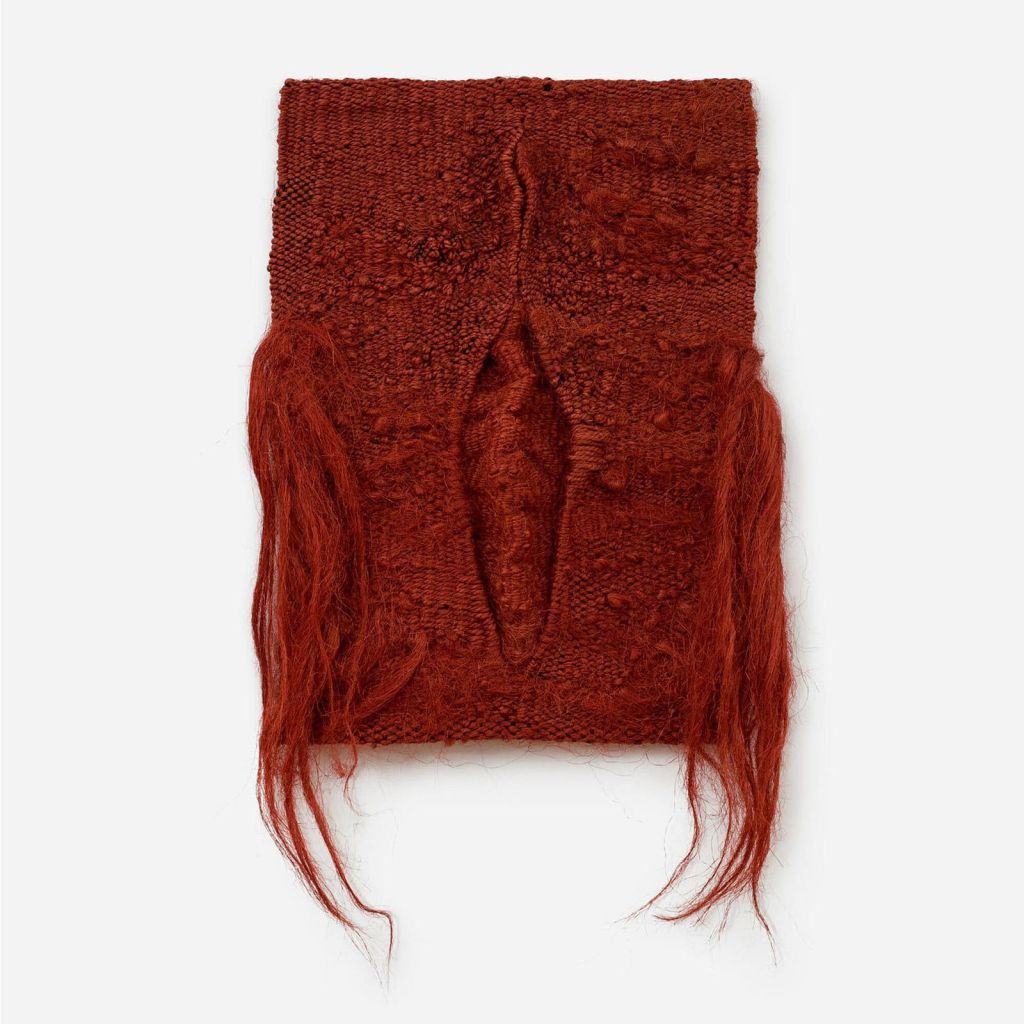
Lot 164. Magdalena Abakanowicz. Red Hair, 1970-72, hand-woven sisal, 34.25 h x 24.75 w in (87 x 63 cm). Signed, titled and inscribed on artist’s label to verso ‘M. Abakanowicz ‘RED HAIR’ 1970-72 87×63 cm’. Provenance: The Artist | Private Collection | DESA Unicum, Warsaw, Modern & Contemporary Sculpture, 6 April 2017, Lot 1 | Private Collection | Sopocki Dom Aukcyjny, Sopot, Aukcja Sztuki Wspo?czesnej, 25 March 2023, Lot 3 | Richard Saltoun Gallery, London | Private Collection. Estimate $80,000 – 120,000. Rago. 11/12/25. Sold $65,000
Skromny Abakan, który przywędrował dwa lata temu do USA z Polski znalazł swoje miejsce w katalogu domu aukcyjnego Rago z New Jersey, specjalizującym się w sprzedaży sztuki współczesnej. W Polsce Red Hair był sprzedany w 2017 roku w Desie Unicum za zaledwie 28,000 złotych. Ta cena sprzedaży była bardzo niska bo, cynicznie mówiąc, Magdalena Abakanowicz wówczas jeszcze żyła. Po jej śmierci, Sopocki Dom Aukcyjny sprzedał w 2023 roku ten sam Abakan już za 250,000 złotych. Jak to się stało, że ta sama praca nagle stała się warta 10 razy więcej? Mógłbym pociagnąć swoją cyniczną nutę by wyjaśnić ten fenomen. Obecnie, w USA ktoś usiłuje jeszcze więcej z niej wycisnąć rozciągając wycenę od $80,000 aż do $120,000. Takie oczekiwanie należy porównać z osiągniętymi cenami Abakanów w ostatnich dwóch latach na rynkach zagranicznych. Moim zdaniem, przeglądając sprzedaże większych i subiektywnie ciekawszych abakanowych tkanin/rzeźb można tutaj oczekiwać ceny wyjściowej, tj $65,000. Dodatkowym problemem dla tej pracy może stanowić jej wcześniejsza obecność na polskim rynku. Nie należy obecnie spodziewać się jej eksportu do Polski w celu ewentualnego dwukrotnego zarobku. Myślę, że nawet Desa może być bezsilna choć można spróbować reklamy: “Po dwuletnim tournee w USA Red Hair Magadaleny Abakanowicz wraca do Polski”.
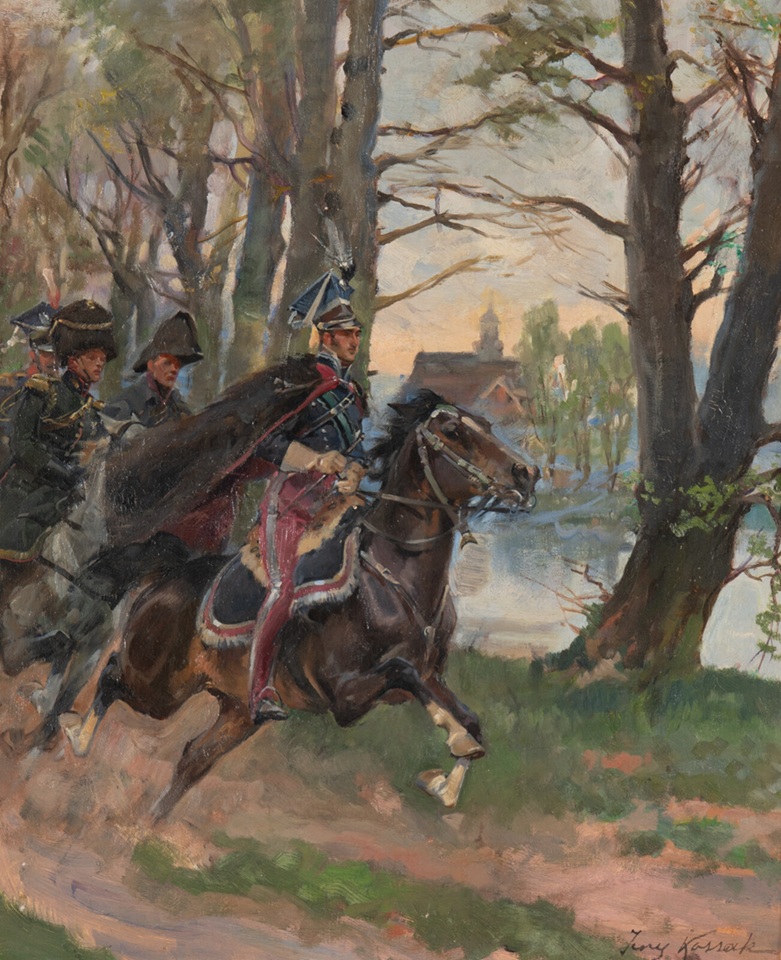
Lot 119. Jerzy Kossak (Polish, 1886-1955). Uhlans in Gallop, oil on board, signed Jerzy Kossak (lower right), 24 x 19 1/2 in. (61 x 49.5cm). Exhibited: Kraków, Salon of Polish Painters, The Vienna Exhibition, n.d. (per label verso). Estimate $4,000 – 6,000. Freemen’s. 11/04/25. Sold $12,000
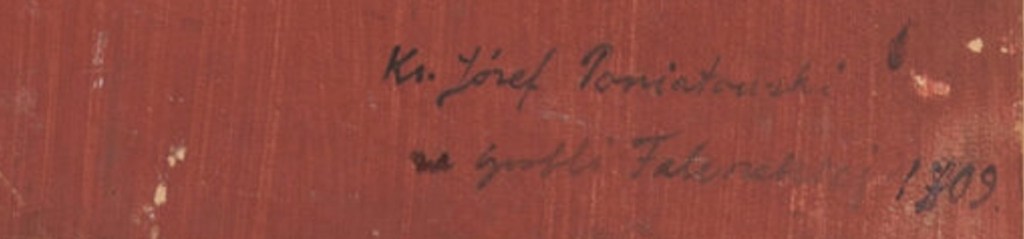
Opis pracy ręką Jerzego Kossaka “Ks. Jóżef Poniatowski na grobli Falenckiej, 1809“
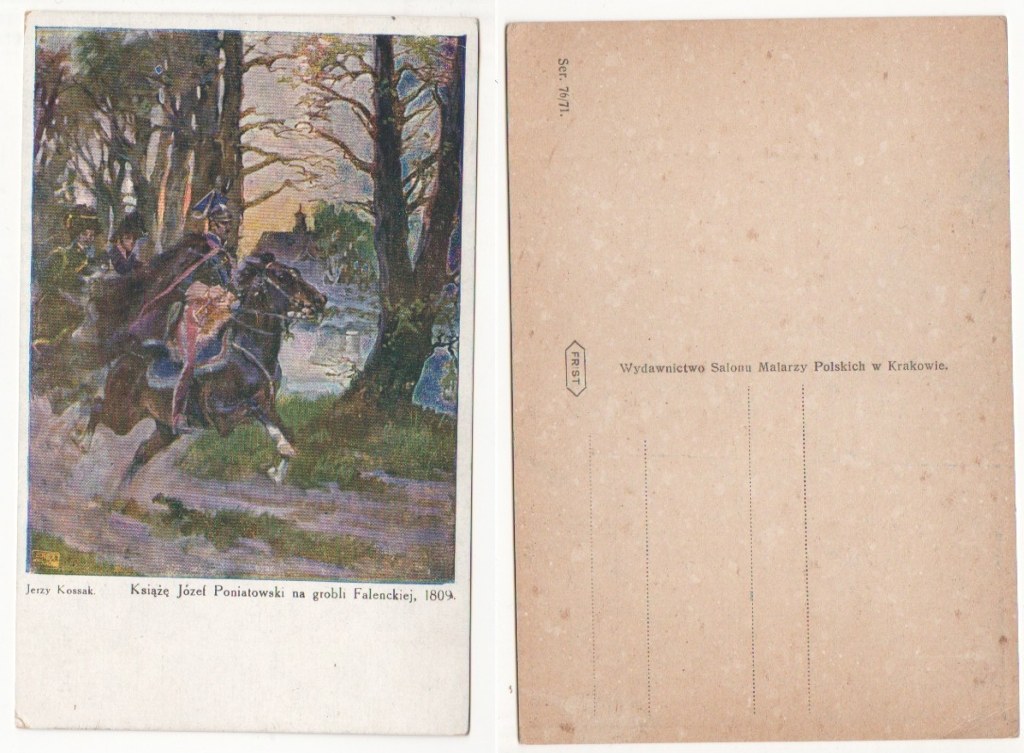
Dwa oleje Jerzego Kossaka na aukcji w USA. Jedna prac, “Książe Józef Poniatowski na grobli Falęckiej, 1809” była dość znana i reprodukowana w okresie międzywojennym w postaci pocztówek. Praca ta jest oczywiście jedną z replik autorskich ale to dobra kompozycja, wymagająca pracy artysty, nawet przy wykonywwaniu repliki. Warto o nią powalczyć.
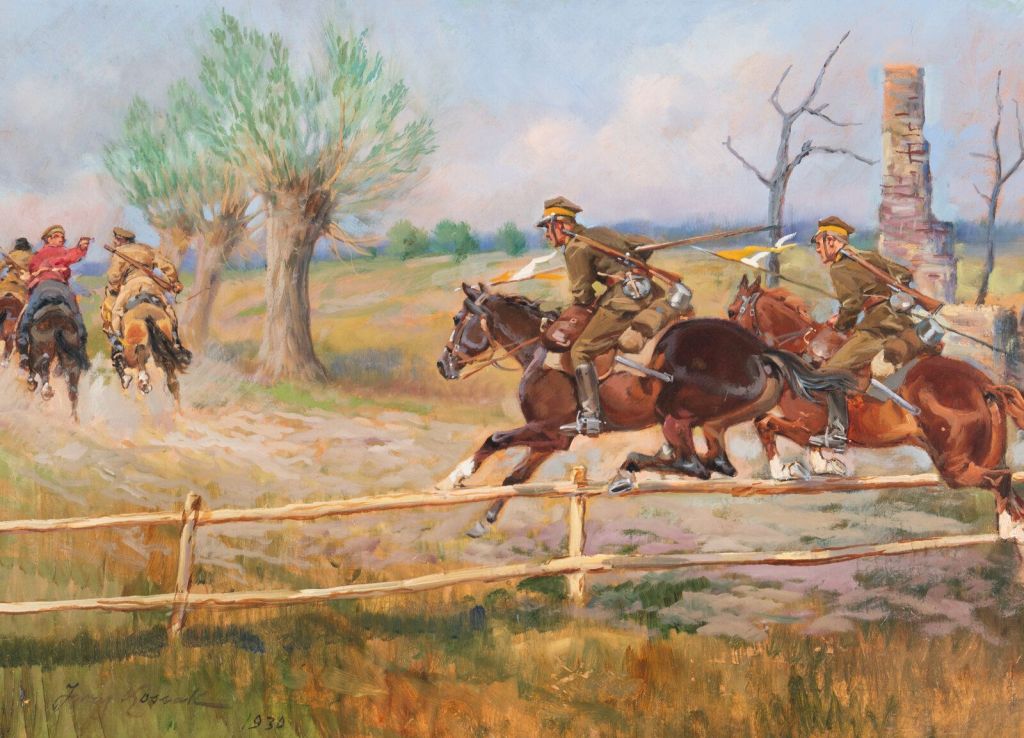
Drugi olej, “Pogoń za bolszewikami“, był często powielany przez Jerzego Kossaka w różnych scenariuszach krajobrazowych. Bywało w niedawnej przeszłości, że inne wersje podobnej pogoni można było kupić poniżej $2,000. Mając do wyboru górną lub dolną pracę przesunąłbym zdecydowanie fundusze na księcia Poniatowskiego pod Raszynem.
Jerzy Kossak. Chasing the Bolshevik, 1930
Lot 120. Jerzy Kossak (Polish, 1886-1955). Chasing the Bolshevik, 1930, oil on canvas signed Jerzy Kossak and dated (lower left) 19 3/8 x 27 1/4 in. (49.2 x 69.2cm). This lot is located in Philadelphia. Framed: 27 1/4 x 34 1/4 x 3 in. Estimate $4,000 – 6,000. Freeman’s. 11/04/25. Sold $5,500
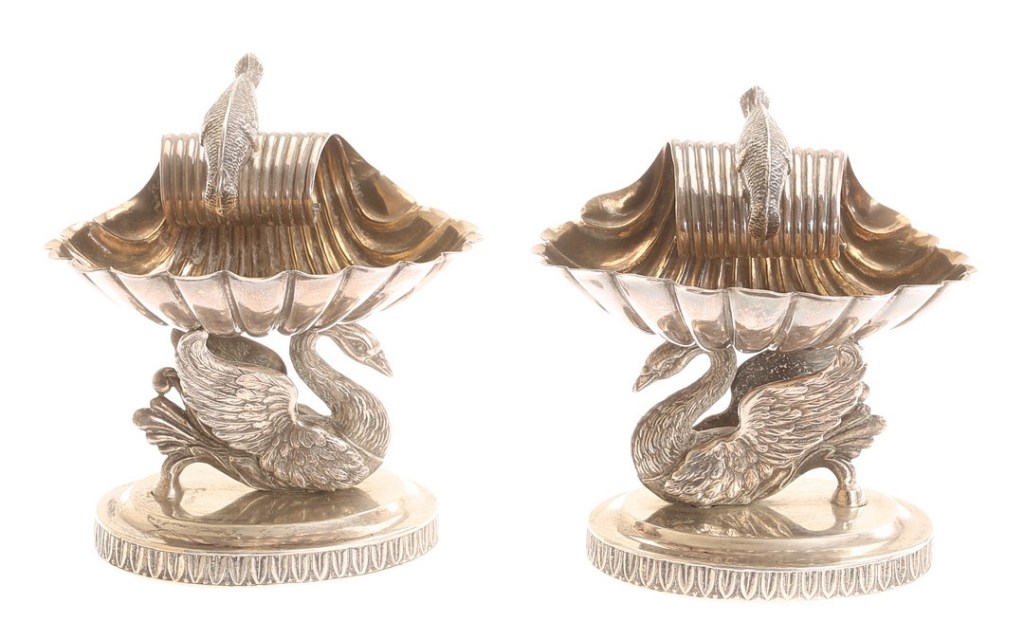
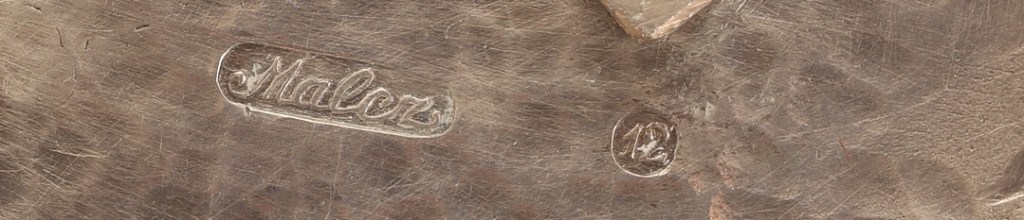
4638100. KAROL FILIP MALCZ. Two silver salt pans, 19th century, Poland. Height approx. 10 cm. Weight approx. 451 gr. Estimate €1,096. RA Auktionsverket Norrköping. 11/09/25
Para ładnych solniczek uchodzących za robotę Karola Malcza. Problem leży w tym, że obie wyglądają na ‘nówki’, mają niepełne punce zakładu Malcza (brakuje znaku kotwicy w owalu a także napisu ‘w Warszawie’) oraz pojawiają się bardzo często na rynku, zwykle jako pary, czasami jako dwie pary na jednej aukcji (https://www.dorotheum.com/en/l/6976198/) a widziałem również sześć solniczek sprzedawanych jako jeden ‘lot’. Jest to współczesna dość starannie wykonana robota, dobrze sprzedająca sie na rynkach zagranicznych i psująca rynek ‘Malczów’, zawalonych i bez nich falsyfikatami.
Jan Chełmiński. Officers on a Snowy Road with Two Monks
Lot 20. Jan van Chelminski (Polish, 1851-1925). Officers on a Snowy Road with Two Monks, signed ‘Jan v. Chelminski’ (lower right), oil on canvas, 8 x 100.5 cm (3 1/8 x 39 9/16 in); framed 77.5 x 100.5 x 8.0 cm (30 1/2 x 39 9/16 x 3 1/8 in). Provenance: From the Meacham Family Collection, Cleveland, Ohio. Thence by descent. Estimate $10,000 – 15,000. Skinner-Bonhams. 11/24/25. Sold $12,000
Dwa obrazy przypisane Janowi Chełmińskiemu; jeden w USA w Bonhams a drugi w (zabawowym) Dusseldorfer Auctionhaus. Duży wymiarami obraz z USA wygląda dobrze ale jest dość nudny bo takich ‘spotkań na drodze’ było sporo na rynku, zarówno ręki Chełmińskiego jak też i innych monachijczyków czy też malarzy nie związanych ze szkołą monachijską, np. Wasilewskiego. Dla mnie jest to dobry obraz ale (powtarzam) nudny bo Chełmiński malował lepsze a niektóre spośród nich przedstawiłem na łamach tego blogu.
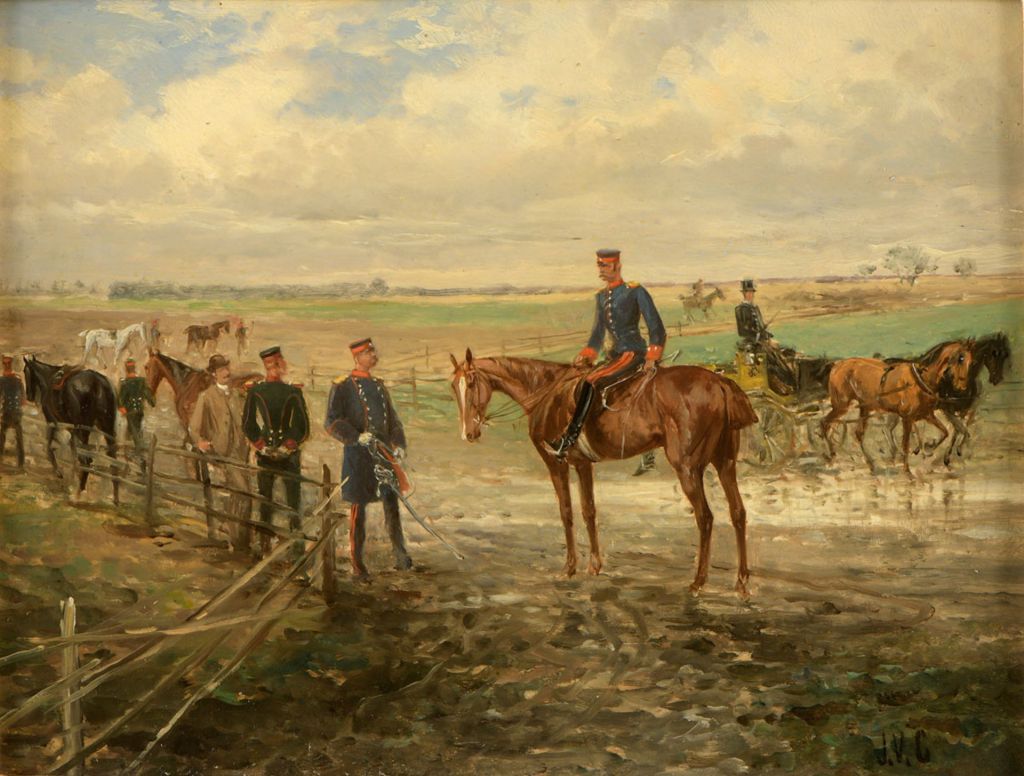
Inaczej sprawa ma się z obrazem sygnowanym monogramem (J.V.C) a uchodzącym za ręki tego malarza. Pomijam urągujące przyzwoitości ceny wyjściowe chyba wszystkich obiektów (opening price) w katalogu Dusseldorfer Auktionshaus. Problem pojawia się w tym przypadku nie z ceną wyjściową obrazu przypisanego Chełmińskiemu ale z atrybucją tej pracy. Pracę należy oglądać powiększając fotografie a okaże się, że daleko mu do ręki Jana Chelmińskiego. Artysta ten rzeczywiście sygnował niektóre swoje obrazy trzyliterowym monogramem, ale nigdy nie należy patrzeć na sygnaturę lecz na całość pracy. Nieporadne są namalowane postacie ludzkie, nieporadnie jest namalowany koń na pierwszysm planie, podobnie są namalowane konie na drugim planie a te na trzecim planie mają już mało wspólnego z tymi zwierzętami. Przypuszczam, że Roberto z Dusseldorfer (czyli człowiek z którym prowadzi się zwykle korespondencję)może mieć słabą głowę i został przekonany mocniejszym polskim trunkiem do przyjęcia tego obrazu. Dom aukcyjny z Dusseldorfu stara się prezentować na aukcjach prawdziwe polskie prace ale powinien być bardziej czujny w stosunku do dostawców towarów z Polski bo sądzę, że stamtąd dostarczono mu ten obraz.
Jan Chełmiński ? Sattelplatz
Lot 1437. Chelminski, Jan van 1851 Brzustow – 1925 New York. Sattelplatz. Monogrammiert. Öl/Malk., 23,5 x 31 cm. Opening €300. Dusseldorfer Auktionshaus. 11/29/25
Lot 5321. RAFAL MALCZEWSKI Canada/Poland, 1892-1965. Winter landscape. Signed lower left “Rafal Malczewski”. Watercolor on paper, 14.25″ x 21″ sight. Framed 21.25″ x 28″. Estimate $2,000 – 3,000. Eldred’s. 11/20/25. Sold $2,100
Dość przeciętna choć dobrze zachowana akwarela Rafała Malczewskiego. Pewnie kanadyjskie pagórki zimą.
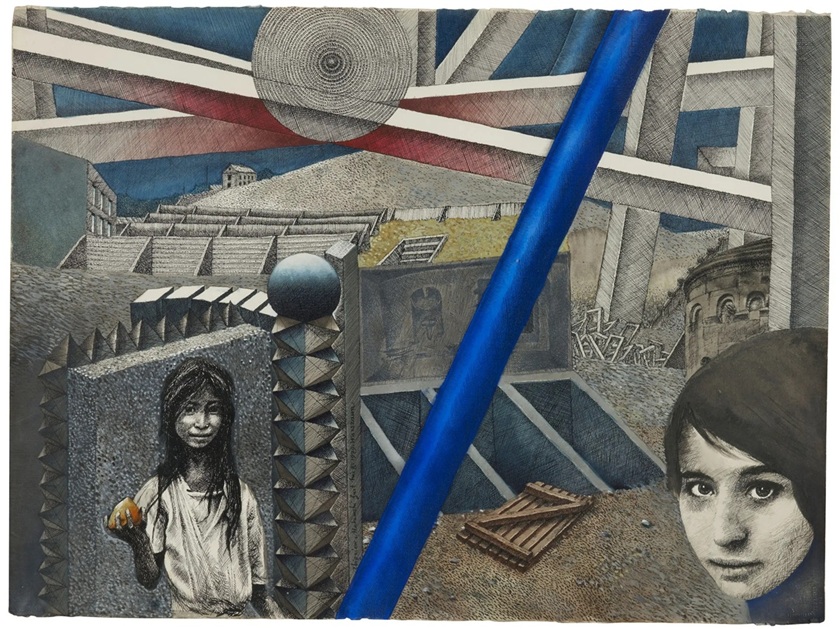
Zbigniew Makowski. Dungue, chi sei tu? Parla, Now Temere, 1979
Lot 231. Zbigniew Makowski (Polish, 1930-2019). Dungue, chi sei tu? Parla, Now Temere, 1979, signed, dated, and inscribed ‘Zbigniew Makowski … 1979 Warszawa’ (lower center); with a label from Gallery K, Washington, D.C. (affixed to the frame backing), ink on paper, 76.2 x 94.0 cm (30 x 37 in).framed 74.9 x 94.7 x 3.8 cm (29.5 x 37 1/4 x 1 1/2 in). Estimate $4,000 – 6,000. Skinner-Bonhams. 11/24/25. Sold $3,600
Zaszyfrowany obraz Zbigniewa Makowskiego wymagający od widza wysiłku wyobraźni oraz wiedzy. Jubilerska precyzja rysunku.
Franciszek Ksawery Lampi. Bildnis der Karolina Beata Hauke-Bosak
Lot 6056. Lampi, Franz Xaver von(1782 Klagenfurt – 1852 Warschau). Bildnis der Karolina Beata Hauke-Bosak. Oil on canvas, relined. 83 x 66.5 cm. Signed “Lampi.” lower left. Estimate 16.000€ (US$ 17,778). Bassenge. 11/27/25. Passed
Cymes dla osób kolekcjonujcych portrety postaci związanych z historią Polski. Mamy nazwisko znakomitego portretcisty Franciszka Ksawerego Lampiego oraz nazwisko osoby sportretowanej czyli Karoliny Hauke-Bosak, matki Józefa Hauke-Bosaka (1834 – 1871), generała walczącego z Rosjanami w Powstaniu Styczniowym. Ojciec Józefa, również o nazwisku Józef Hauke (1790 – 1837), zakończył swoją karierę wojskową w randze generała wojska rosyjskiego, choć wcześniej zaciągnął się do Legionów Dąbrowskiego a potem do armii Księstwa Warszawskiego. Jego stryj, Maurycy Hauke (1775 – 1830), został pod koniec burzliwej wojskowej kariery również genarałem wojska rosyjskiego choć wcześniej był uczestnikiem Insurekcji Kościuszkowskiej i walczył z Rosjanami w obronie Warszawy. Będać później lojalnym generałem armii rosyjskiej zginął w Warszawie pierwszego dnia Powstania Listopadowego od kul podchorążych obok jednego z pomników lwów przed Pałacem Namiestnikowym (obecnie Pałacem Prezydenckim). Można napisać ciekawą opowieść o rodzinie Hauke, pochodzenia flamandzkiego, związanej powiązaniami rodzinnymi z obecnie żyjącymi rodzinami królewskiemi.
The muted, almost monochromatic palette of the painting seems almost perfectly attuned to the beautifully defined, gray eyes of the sitter. She gazes out at us with a face of delicate features, framed by a wonderfully airy headdress of translucent lace—a hallmark of the painter Franz von Lampi, as a comparison with portraits of women in the Belvedere in Vienna (Inv. 6218) and in the National Museums of Warsaw (Inv. MP 2982 MNW) and Wrocław (Inv. MNWr VIII-3245) demonstrates.
The sitter is Karolina Beata Jozefa Hauke-Bosak, née Steinkeller (1803 Warsaw – 1874 Palermo), whose name is primarily known because of her son, Józef Hauke-Bosak, a leader of the Polish Uprising of 1863. Karolina was the daughter of a German-Polish industrialist. In 1827, she married Colonel Jozef Hauke von Bosak, who had recently been ennobled by Nicholas I. The Tsar then promoted him to aide-de-camp in 1829, prompting the family to relocate to St. Petersburg. Karolina may have commissioned this portrait shortly before her departure, perhaps as a farewell gift for her Polish relatives. In any case, her dress and hairstyle suggest that it dates from the 1820s. At that time, Franz Xaver von Lampi, who had lived in Warsaw since 1815 with shorter and longer interruptions, was one of the most sought-after portrait painters in the Polish kingdom. He was the youngest son of the famous Austrian portraitist Johann Baptist the Elder, who had passed on his talent to him.
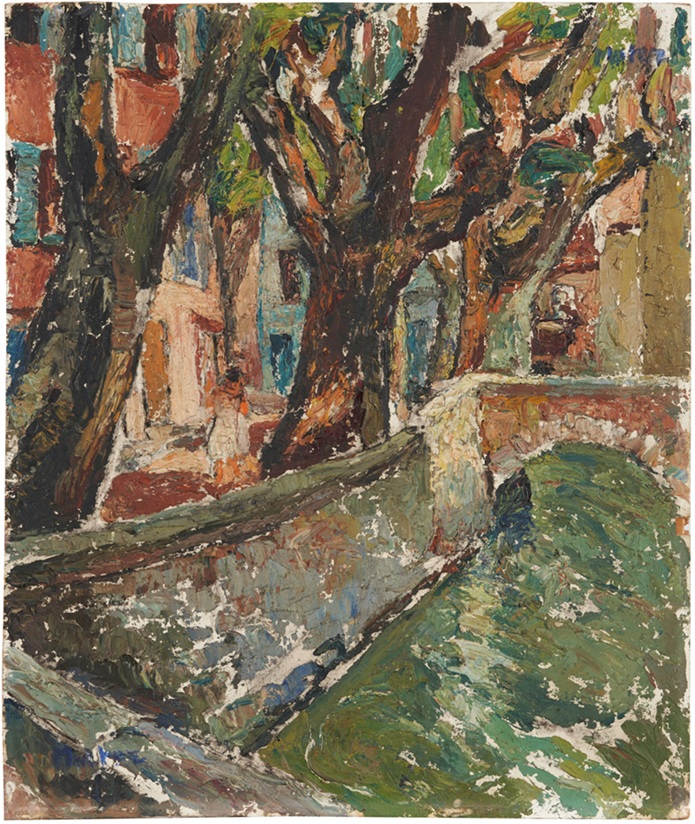
Lot 53. Mela Muter (Polish, 1876-1967). Rue des Roues, Avignon. c.1940s, signed ‘.. / Muter’ in two places (lower left and upper right), oil on board, 54.6 x 45.7 cm (21 1/2 x 18 in), unframed. Provenance: a private California collection. Estimate $20,000 – 40,000. Skinner-Bonhams. 11/24/25. Sold $20,000
Podwójnie sygnowany olej Meli Muter malowany grubą pastą. Nie byłem w Avignion a zatem przyjmuję wg opisu, że to jest rzeczywiście uliczka tego miasta.












 Polish Art Corner