Romuald Władysław Giedroyć (1842 – 1899)

Romuald Władysław Giedroyć. Portrait of Tsar Alexander II wearing the coat and cap of the Imperial Guard Knights Regiment

Przykład serwilizmu litewskiego księcia Romualda Władysława Giedroycia wobec caratu, konkretnie cara Aleksandra II. Rzeźba ta była już wczesniej na aukcji w Millon z wyższą wyceną (6,000 – 8,000 euro). Obecnie próbowano ja sprzedać startując z 3,000 euro jednak po chwili obniżono cenę wyjściową do 1,500 euro. Nie jestem zachwycony ani tym Giedroyciem ani podmiotem jego rzeźby.

Lot 232. Romuald Władyslaw GIEDROYĆ (1842-1899). Portrait of Tsar Alexander II wearing the coat and cap of the Imperial Guard Knights Regiment. Original terracotta, signed on the edge of the bust on the right. H. 41 cm. Related works The model used for the sculpture is a portrait of Tsar Alexander II by an unknown artist circa 1888, currently in the Hermitage Museum (inv. ЭРЖ-633) (illustration 1). With ours, only one other terracotta is known, it was shown at Bonham’s in London on June 5, 2019, lot no. 156 (sold for £15,062) and came from the collection of India Early Minshall (1885-1965). Estim. €4,000 – 6,000. Millon. 12/11/23. Sold 1,800 euro

Prince Romuald Giedroyć was the son of Prince Konstantin Giedroyć, State Councillor and Chamberlain to the Tsar. After studying literature in France and publishing works mainly on Russian history, in 1881 he published “The Death of Alexander II – extracts from the memoirs of Romuald Giedroyć”, a copy of which was sent to Queen Victoria. Very close to Tsar Alexander II and his morganatic wife, Princess Yuryevskaya, Romuald Giedroyć most likely created these sculptural works as a sign of his deep admiration for his sovereign. To date, only two terracotta creations by this artist are known, and one alabaster sculpture featuring Tsar Alexander II and his dog Milord (circa 1880) in the Peterhof Museum-Reserve (inv. PDMP 1153-sk), whose sculptural quality suggests that Prince Romuald Giedroyć excelled in the mastery of the ronde bosse. During Russia’s participation in the 1899 Exposition Universelle in Paris, he was awarded honorable mention for his works presented in the works in the “Sculpture and Medal of Art” category.
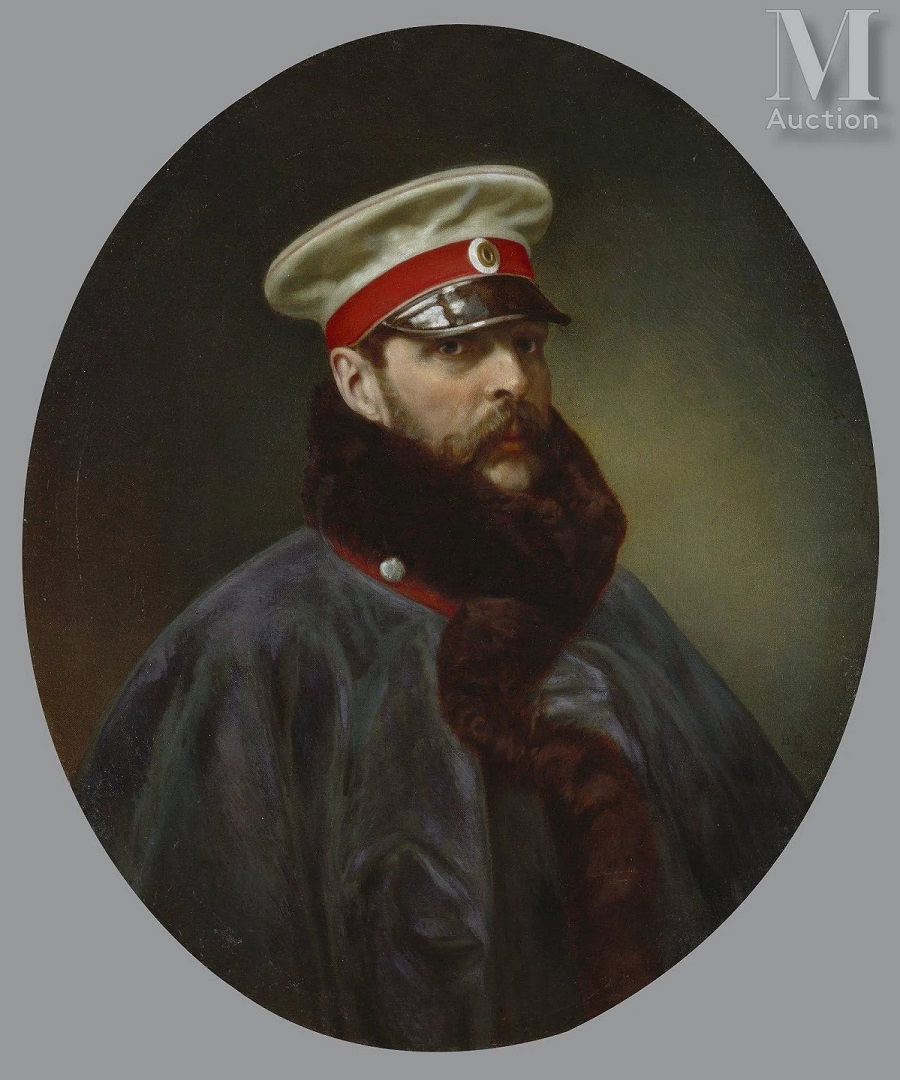
Wsponiany w opisie portret Aleksandra II

Stanisław Żukowski (1873 – 1944)

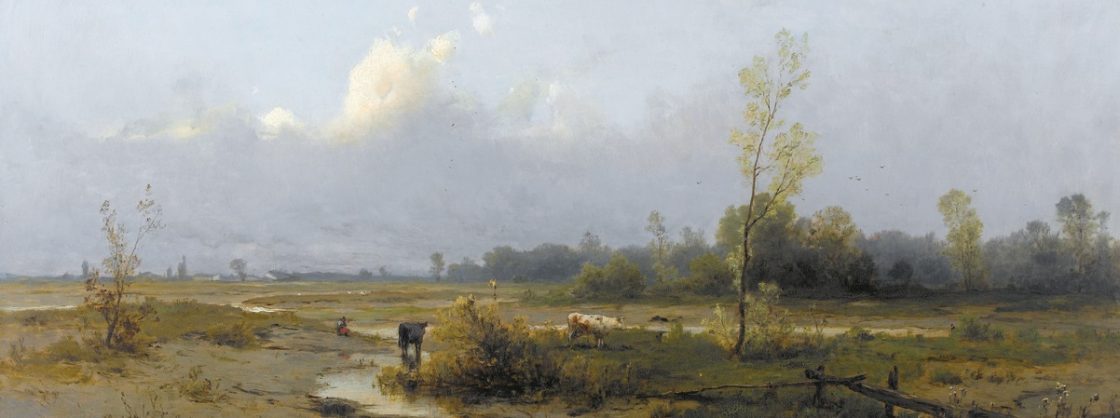
Stanisław Żukowski. Landscape with cranes

Lot 198. STANISLAV ZHUKOVSKY (1873–1944.) Landscape with cranes, signed in Cyrillic and dated ‘S. Zhukovsky 1908 -1910’ (lower right) oil on canvas 89 x 142.5 cm painted circa 1908-1910. Estimate 120,000 – 150,000 euro. Hermitage Fine Art. 12/11/23. Not sold

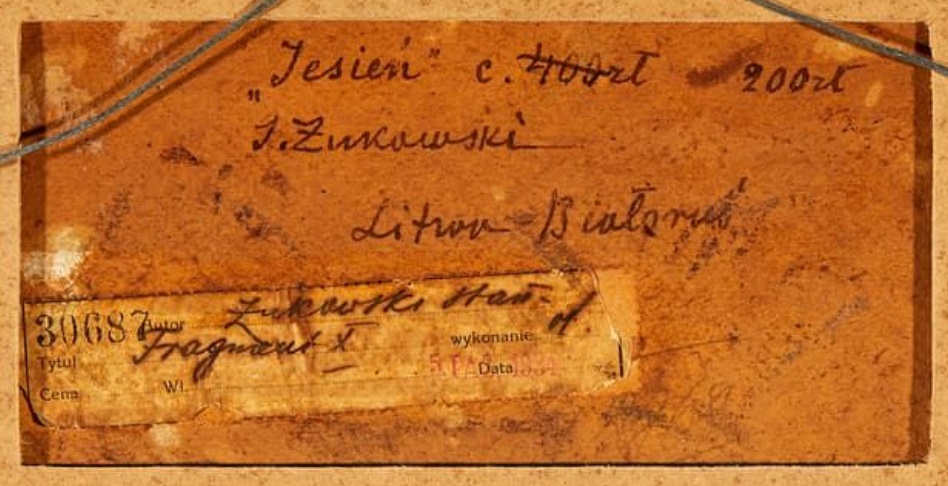
Oleje Stanisława Żukowskiego z aukcji w Hermitage Fine Art ustawiłem na blogu wg wysokości proponowanych cen estymacyjnych. Żadna z tych prac nie została sprzedana i generalnie dom aukcyjny niewiele sprzedał na tej aukcji. Najmniejszy olej Zukowskiego (lot 193) mial bardzo przekonywującą polską nalepkę aukcyjną sprzed około 100 lat oraz odręczny napis artysty z tytułem pracy i miejscem powstania – co z tego kiedy i tu cena wywoławcza wynosiła 5,000 euro. O analitycznym spojrzeniu tego domu aukcyjnego może świadczyć tytuł pracy oznaczonej numerem 199.


Stanisław Żukowski. Autumn lake

Lot 197. STANISLAV ZHUKOVSKY (1873–1944). Autumn lake, signed in Cyrillic and dated ‘S. Zhukovsky 1894 (?)’ (lower right) oil on canvas 67 x 84.5 painted circa 1894. Estimate 50,000 – 60,000 euro. Not sold


Stanisław Żukowski. Autumn

Lot 199. STANISLAV ZHUKOVSKY (1873–1944). Autumn, signed ‘S Zukowski’ (lower right), inscribed (on the reverse) gouache on paper laid on board 16.5 x 22.5 cm (à vue). Estimate 15,000 – 20,000 euro. Not sold


Stanisław Żukowski. Autumn

Lot 193. STANISLAV ZHUKOVSKY (1873–1944). Autumn, signed ‘S Zukowski’ (lower right), inscribed (on the reverse) oil on board 16.5 x 22.5 cm (à vue). Estimate 5,000 – 7,000. Not sold

Tył

Wilhelm Kotarbiński (1849 – 1921)

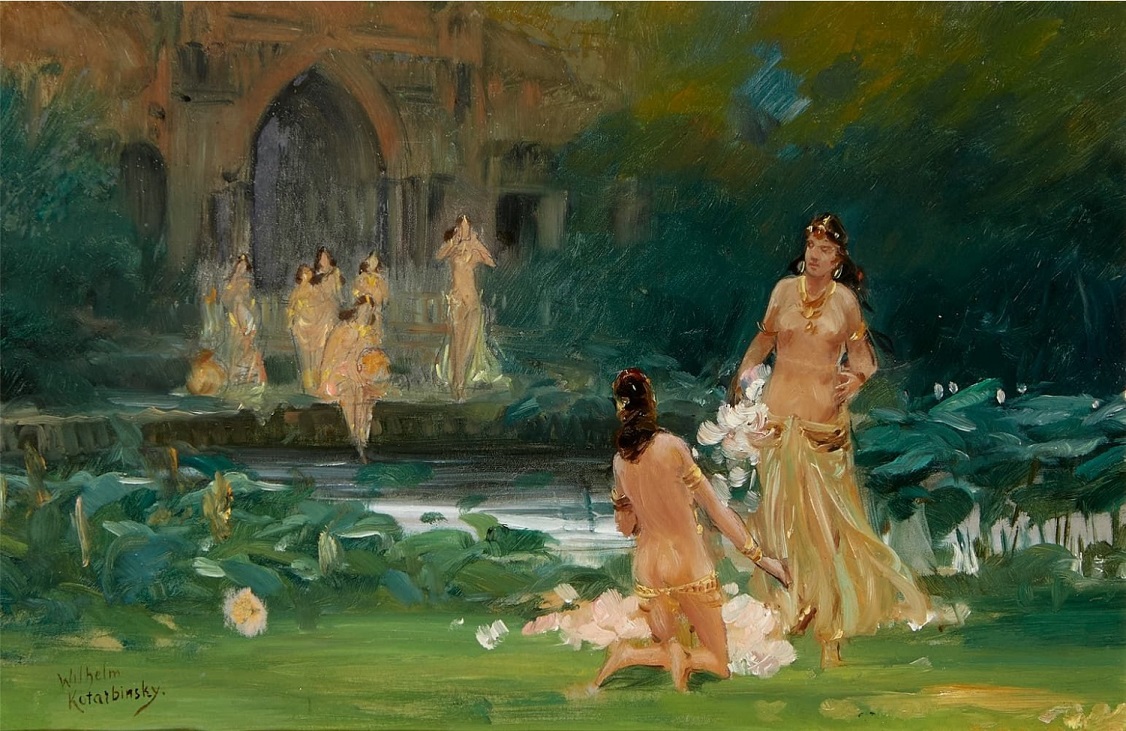
Wilhelm Kotarbiński. Water nymphs

Obraz był prawdopodobnie szkicem do większej kompozycji.

Lot 29. WILHELM KOTARBINSKI (1849-1921). Water nymphs, signed ‘Wilhelm Kotarbinsky.’ (lower left), oil on canvas 25.5 x 37.5 cm. Estimate 8,000 – 10,000 euro. Hermitage Fine Art. 12/11/23. Not sold

Władysław Bakałowicz (1833 – 1903)

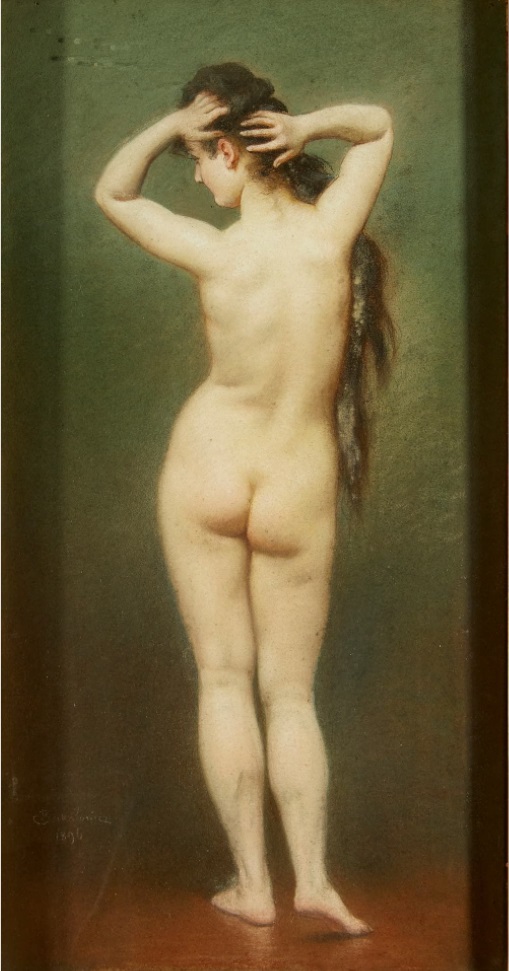
Władysław Bakałowicz. Standing nude, 1986

Wladysław Balakałowicz pojawia sie głównie na blogu z racji jego wyszukanych francuskich scen dworskich z czasów Ludwików. Malował jednak również dość odważne jak na swoje czasy sceny erotyczne i akty lecz te należą do mniejszości. Duży wymiarami spokojny i neuralny akt kobiecy, namalowany w pastelu, nie wzbudził jednak obecnie zainteresowania.

Lot 27. WŁADYSŁAW BAKAŁOWICZ (1831-1904). Standing nude, signed and dated ‘Bakalowicz 1896’ (lower left), pastel on paper 74 x 39 cm, paint in 1896. Estimate 4,000 – 6,000 euro. Hermitage Fine Art. 12/11/23. Not sold

Tadeusz Styka (1889 – 1954)

Tadeusz Styka. Portrait of Elisabeth Balletta

Z punktu widzenia historii może to być ważna praca dla Rosjan a z punktu widzenia malarstwa ważna dla Polaków. Elizabeth Balletta była bowiem za czasów carskich primabariną Teatru Michajłowskiego w Petersburgu a co ważniejsze i dużo ciekawsze była równocześnie kochanką Wielkiego Księcia Aleksieja Aleksandrowicza Romanowa, syna cara Aleksandra II. Ten obsypywał ją drogimi podarkami co było źródłem wielu skandali, zwłąszcza po porażce floty rosyjskiej z japońską w 1905 roku. Carewicz był bowiem podobno skorumpowanym i niekometentym dowódcą floty i został usuniety z tego stanowiska po tej wielkiej porażce. Tadeusz Styka chyba spotkał Elizabeth Balettę we Francji i użył swojego najlepszego talentu by ją tam sportretować i oddać rys psychologiczny postaci. Obraz sprzedano w sumie niedrogo a licytowano go od 8,000 euro.

Lot 60. Tadeusz STYKA (1889-1954). Portrait of Elisabeth Balletta (c.1870-1959). Oil on canvas, signed lower left. Framed. H. 92.2 x 72.5 cm. Provenance Commissioned by Elisabeth Balletta from the painter Tadeusz Styka, Paris. Private collection of her descendants, Paris. Estimate 10,000 – 15,000 euro. Millon. 12/11/23. Sold 13,000 euro

This superb portrait of Elisabeth Balletta, known as the Balletta, is the best-known painting of the famous ballerina from the Michel Theater in St. Petersburg. It is presented to the public for the first time and has been kept in the family of her descendants until now. Elisabeth Balletta achieved dazzling success when she embarked on a brilliant career as a ballet dancer at the Imperial Michel Theater in St. Petersburg. She became its Prima Donna and was noticed by Tsarevich Nicholas Alexandrovich, before meeting his uncle, Grand Duke Alexis Balletta. Grand Duke Alexis Alexandrovich (1850-1908). This much-maligned love affair marked a turning point in the life of the woman known as “La Balletta”. Covered in jewels by the Czar, most of them commissioned from the greatest jewelers, notably Fabergé, she proudly wore them during her theatrical performances. She is notably known for having received or ordered exceptional pieces from suppliers to the imperial court, including a bracelet by F. Koechli, which she wears on this portrait on her right wrist, and which was sold in 2008 (Artcurial sale). After being accused of being responsible for the Tsushima debacle, Elisabeth Balletta left Russia after a twenty-five-year career at the Théâtre Michel, and settled in Paris in her sumptuous apartment on Avenue Bosquet. Heiress to a large fortune following the death of the Grand Duke, it was during this period in Paris that she met Tadeusz Styka and commissioned him to paint this large portrait. As the embodiment of her new life, she is portrayed serene and accomplished, wrapped in a large fur stole and jewels symbolizing her success.