Jeśli to Żmurko to jest słaby Żmurko. Należy kolekcjonować jedynie dobre ‘główki’ Żmurki.
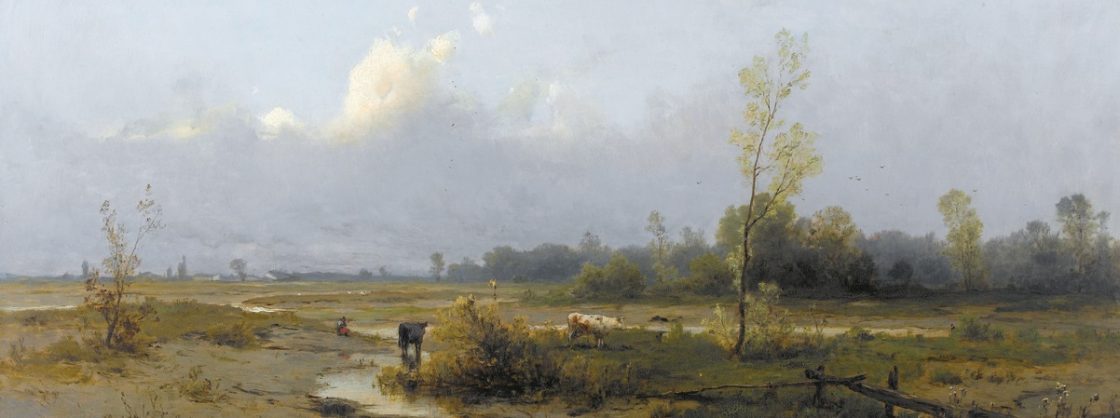
Lot 9. ZMURKO, Frantiszek (1859-1910). “Lady with earring“. Oil on board, 21x16cm – 8,25×6,25”. Signature on the lower left. Titled on a small metal plaque upfront. Provenance: Collection of a Polish lady, Montreal. Estimate C$1,500 – 2,000. Iegor. 06/16/20
Lot 10. MATEJKO, Jan (1838-1893). The prayer. Pencil. Signature on the lower left, 31x25cm – 12,25×9,75″. Provenance: Collection of a Polish lady, Montreal. Estimate C$2,000 – 3,000. Iegor. 06/16/20
Czy to są autentyczne rysunki Jana Matejki czy też nie są autentyczne kupujący się dowie dopiero po przedstawieniu ich w Domu Matejki w Krakowie i otrzymaniu opinii od odpowiedniego kustosza. Nie mnie o tym sądzić.
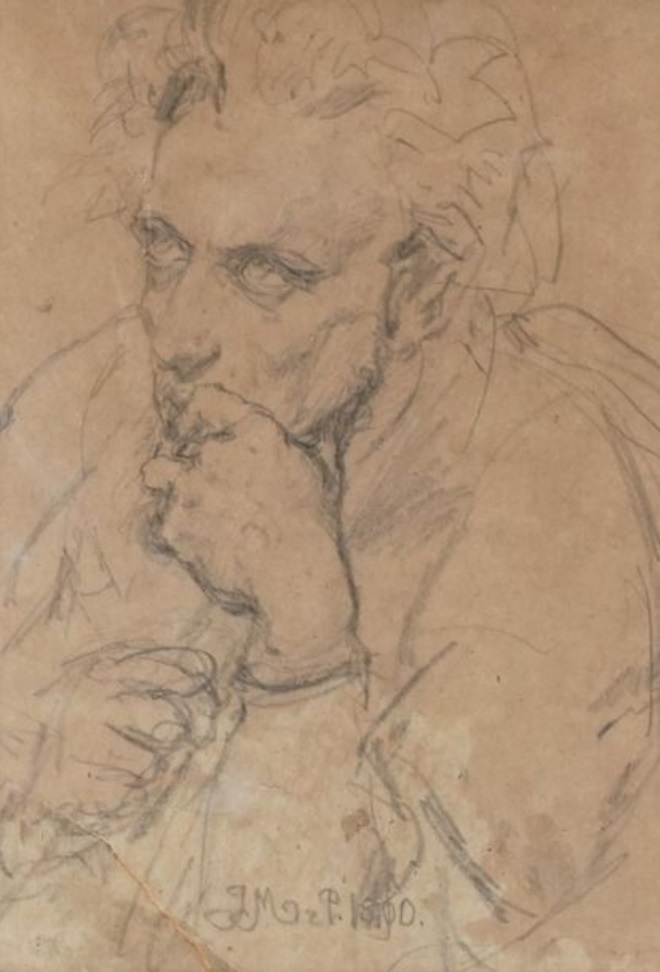
Jan Matejko. Pensive
Lot 10.1. MATEJKO, Jan (1838-1893). Pensive. Pencil. Signature on the lower center. Provenance: Collection of a Polish lady, Montreal. 20x13cm – 8×5,25″. Estimate C$600 – 800. Iegor. 06/16/20
Lot 589. VLASTIMIL HOFMAN(Polish 1881-1970). The Annunciation– 1944. Oil on canvas unstretched, unframed, and some losses. Signed and dated upper right and verso with label, 11 inches x 17.75 inches (28 x 45 cm). Provenance: The estate of the late Monsignor Michael R. Dylag (1938-2018). Estimate $400 – 600. Jackson’s Auction. 06/24/20
Kilka obrazów Wlastimila Hofmana, z okresu po II wojnie światowej. Jedynie ten ze Zwiastowaniem (na górze) jest moim zdaniem warty zainteresowania. Wszystkie prace pochodzą ze spuścizny po zmarłym księdzu i stąd treść prac taka religijna. Hofman to znakomity malarz ale trzeba szukać prac sprzed I wojny światowej lub moga być późniejsze ale w tym przypadku trzeba być bardzo, bardzo wybiórczym. Bardzo dużo jego prac jest na rynku ale dobrych jest mało.
Wlastimil Hofman. A Mother and Daughter Holding Self Portrait of Artist, 1956
Lot 588. WLASTIMIL HOFMAN(Polish 1881-1970). A Mother and Daughter Holding Self Portrait of Artist– 1956. Oil on board. Signed and dated at center and further inscribed in Polish on verso, “In the memory of the seventy fifth anniversary” and further “And my creation is your creation.” 18.5 inches x 23 inches (47 x 58.5 cm). Estimate $2,000 – 3,000. Jackson’s Auction. 06/24/20
Wlastimil Hofman. Christ at Emmaus, 1966
Lot 590. WLASTIMIL HOFMAN(Polish 1881-1970). Christ at Emmaus– 1966. Oil on board. Signed and dated lower right. 24 inches x 36 inches (61 x 91.5 cm). Estimate $300 – 500. Jackson’s Auction. 06/24/20
Wlastimil Hofman. Christ with Chalice, 1950
Lot 592. WLASTIMIL HOFMAN(Polish 1881-1970). Christ with Chalice– 1950. Oil on board. Signed and dated upper left. 26 inches x 21.5 inches (66 x 54.5 cm). Estimate $800 – 1,200. Jackson’s Auction. 06/24/20
Wlastimil Hofman. Our Prayers, 1960
Lot 597. WLASTIMIL HOFMAN(Polish 1881-1970). Our Bread and Our Prayers– a pair of paintings, c. 1960. Oil on board. Each signed upper right, one dated 1960, both inscribed on verso and numbered. Perhaps from a series illustrating the “Our Father” prayer. 17 inches x 14 inches (43 x 35.5 cm). Estimate $600 – 800. Jackson’s Auction. 06/24/20
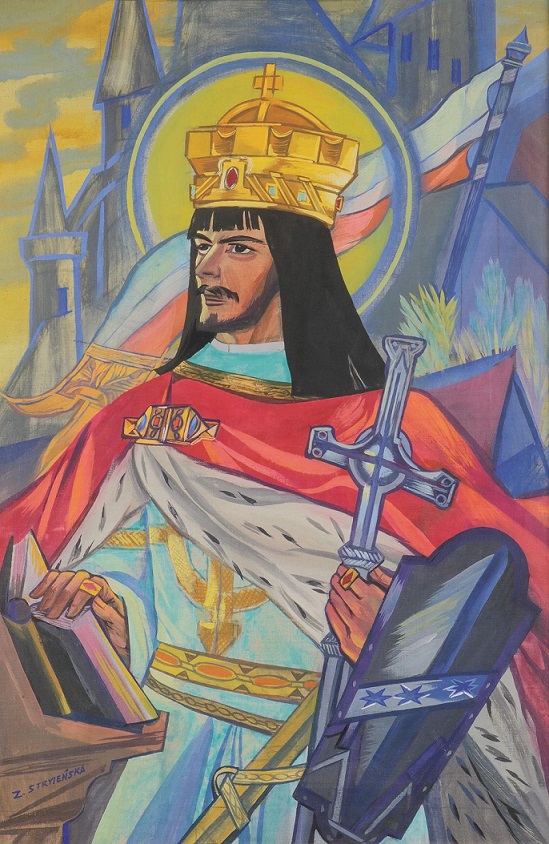
Lot 595. ZOFIA STRYJENSKA(Polish 1894-1976). A Polish King. Oil on board. Signed lower left, 34 inches x 23 inches (86.5 x 58.5 cm). Estimate $1,500 – 2,000. Jackson’s Auction. 06/24/20
Kolejne prace z nadchodzącej aukcji w Jackson’s Auction. Podobno wszystkie pochodzą z tego samego źródła, tj. z kolekcji zmarłego księdza. Bardzo możliwe, że i te dwie prace Styjeńskiej są prawdziwe. Wycena niska, odzwierciedlająca polskie ceny podkolorowanych odbitek Styjeńskiej z teki strojów ludowych. Warto pokorespondować z domem aukcyjnym.
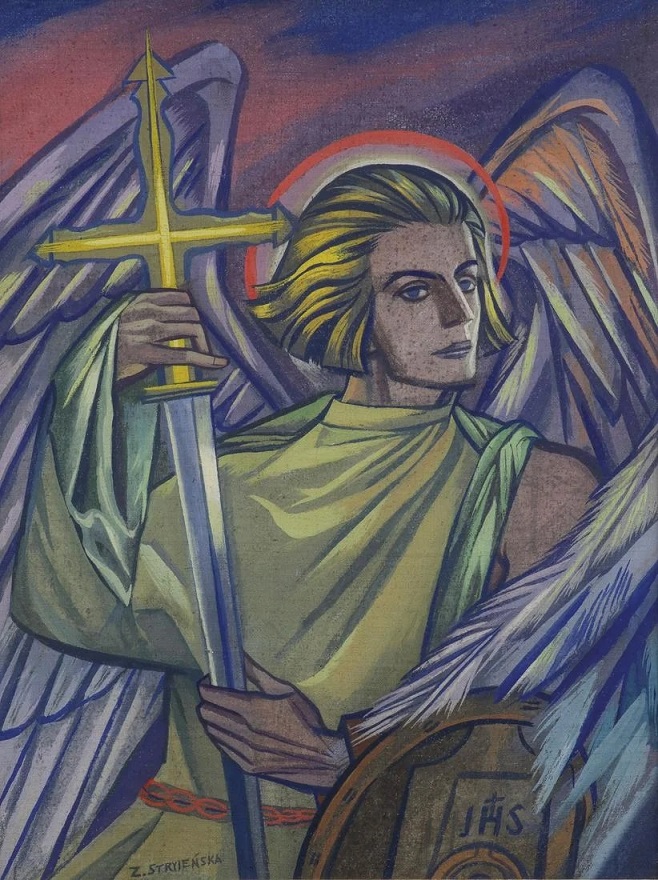
Zofia Stryjeńska. A Guardian Angel
Lot 594. ZOFIA STRYJENSKA(Polish 1894-1976). A Guardian Angel– probably Michael. Oil on artist board. Signed lower left. 26 inches x 20 inches (66 x 51 cm). Estimate $1,000 – 1,500. Jackson’s Auction. 06/24/20
Adam Styka.Marrakech with Distant View of Atlas Mountains
Bez zachwytu.
Lot 584. ADAM STYKA(Polish 1890-1959). Marrakech with Distant View of Atlas Mountains. Oil on board. Signed lower right, 6 inches x 9.5 inches (15 x 24cm). Provenance: The estate of the late Monsignor Michael R. Dylag (1938-2018). Estimate $800 – 1,200. Jackson’s Auction. 06/24/20
Jeśli to prawdziwa praca Juliusza Kossaka (a wygląda na to, że bardzo prawdziwa) to może być to najważniejsza praca na czerwconej aukcji w Jackson’s Auction. Wycena sugeruje brak znajomości rynku polskiego (vel handlarskiego). Przypuszczam, że licytacja skończy się w okolicach $10,000. Znakomita praca do kolekcji a jeszcze lepsza na handel w Polsce – stąd spodziewam się obecności sępów/hien (niepotrzebne skreślić) z polskich domów aukcyjnych.
Lot 593. JULIUSZ FOTUNAT KOSSAK (Polish 1824-1899). A Triumphant Polish King- 1882. Pen & ink heightened with white. Signed and dated lower right, 18 inches x 14.25 inches (46 x 36.5 cm). Estimate $800 – 1,200. Jackson’s Auction. 06/24/20
Bronisława Rychter-Janowska.A Sun-Drenched Country House
Lot 579. BRONISLAWA RYCHTER-JANOWSKA (Polish 1868-1953). A Sun-Drenched Country House. Oil on artist board. Signed lower right, 6.75 inches x 9.25 inches (17.5 x 24 cm). Estimate $250 – 500. Jackson’s Auction. 06/24/20. Sold $750.
Dwa małe obrazki Bronisławy Rychter Janowskiej z dobrego domu. Mogą się podobać, choć te dworki mają teraz sporą wartość sentymentalną a ta może być większa od wartości monetarnej.
Bronisława Rychter-Janowska.A Sunlit Interior
Lot 578. BRONISLAWA RYCHTER-JANOWSKA(Polish 1868-1953). A Sunlit Interior. Oil on paper board. Signed lower right, 10 inches x 13.5 inches (25.5 x 34.5 cm). Estimate $00 – 750. Jackson’s Auction. 06/24/20
Czytelnik kwestionuje oryginalność dolnej pracy Bronisławy Rychter-Janowskiej. Przysłał mi obrazek (bardzo słabej jakośći) rzekomo prawdziwy, bo sprzedany w 2018 roku – fotografia poniżej. Każdy może się ustosunkować na podstawie tych dwóch fotografii. Dodam, że cała seria prac polskich artystów, jaka była sprzedawna tego dnia w Jackson’s Auction pochodziłą ze starej kolekcji zmarłego księdza, przyjaciela kard. Dziwisza. Pozostałe prace były prawdziwe i dlatego sądzę, że i ta jest prawdziwa. Pierwszy raz jednak widzę repliki prac tej malarki.
Każdy jednak ma prawo do własnej opinii odnosnie autentycznośći.
Obraz prawdziwy wg, czytenika
Poniżej, jeszcze jedno ujęcie tego samego wnetrza jakie przysłał mi czytelnik:
Fals wg, czytelnika
oraz to samo wnetrze, choć to już nie jest replika:
Praca prawdziwa wg, czytelnika
Wracając do aukcji w Jackson’s, czytelnik sugeruje, że sprzedany tam obrazek Rychter-Janowskiej jest falsyfikatem, jak równiez później mi dosłana przez niego trzecia praca (sprzedawana w Polsce wg. artinfo. pl) również jest falsyfikatem. Może to jednak prawda? Rzeczywiście, z trzech replik, dwie są kiepsko namalowane.
Opis wiele wnoszący do tej bardzo dobrej pracy lecz pobicia rekordów cenowych nie należy sie spodziewać (to nie lata 30-te). Może to dobra okazja dla kogoś ze sporą forsą lecz nie milionami?
Lot 34. Tamara de Lempicka (Warsaw 1898–1980 Cuernavaca /Mexico). Jeune fille au châle blanc – Girl with white shawl, c. 1952, inscribed Cha on the stretcher, oil on canvas, 45.7 x 35.5 cm, on the reverse of the canvas stamp of the de Lempicka Estate (barely legible), framed. According to Tamara’s granddaughter, Victoria de Lempicka, the painting was dedicated to her sister Cha, the second granddaughter of Tamara de Lempicka. The girl in the painting is unknown to Victoria de Lempicka. We are grateful to Victoria de Lempicka for this information.
Photo-Certificate: Alain Blondel, Paris, 14.10.2004. Provenance: Private Collection, Germany. Literature: Alain Blondel, Lempicka, Catalogue Raisonné 1921–1979, Lausanne 1999, p. 363, no. B.312 with the comment that the face was not completed.
A trip to Italy with her grandmother in 1911 was the first time that Tamara de Lempicka was exposed to Italian Renaissance painting, which had a lasting effect on her subsequent development as an artist. “Madame dragged her protégée through the museums of Florence, Rome, and Venice, issued forth comments and explanations, showed her Renaissance painters, explained the modelling of a cheek, the foreshortening of a hand, picture composition, chiaroscuro, impasto. It was a journey that the young girl would never forget.” (Tamara de Lempicka, Femme fatale des Art déco, Ostfildern-Ruit 2004, p. 17). Numerous journeys throughout Europe followed in the subsequent decades, during which the artist repeatedly withdrew to museums to immerse herself in paintings by the Old Masters. In 1939, Tamara de Lempicka moved to New York with her Hungarian husband Baron Kuffner. This gave a new impetus to her own psyche and also to her artistic work, as well. In the years thereafter, she exhibited old and new works alike both in America and in Europe, mainly in Paris, which testifies to her desire to create continuity in her overall oeuvre while also demonstrating her perfectionist techniques. At the end of the 1940s, she returned to Italy for the first time and drew new inspiration from the art of the Italian Renaissance, which led to a revival of the Italianate style in her paintings. Tamara de Lempicka’s penchant for all things expressive moved her to take an interest in people whose bodies and faces featured clear characteristics, with the aim of integrating them into her work in a targeted manner. She approached strangers on the street and asked them to be her models for works that already existed in her head. As an artist, she was fascinated by the human body, its movements and the depiction of the ‘serpentinata’ taken from the Italian Renaissance. This profile portrait of a girl, which could be Tamara de Lempicka’s own granddaughter Victoria, is modelled on Renaissance portraits. According to Alain Blondel, the girl’s face remains unfinished. The sculptural quality of the face puts the girl’s physiognomy in the background, instead focusing the viewer’s attention on the long white cloth. The white, bouffant scarf gently envelopes her head, her body and the backrest, painted in various light shades. The different shades of pink, red and brown on the girl’s body and clothes and the chair contrast sharply with the background, which is iridescent in dark green tones. This extreme contrast leads to the white scarf becoming a near-tangible element in the entire composition. With this colour composition, Tamara de Lempicka succeeds in elevating the plasticity of the white cloth into an apparently three-dimensional entity.
Estimate 80,000 – 120,000 euro. Dorotheum. 06/23/20. Sold 161,900 euro
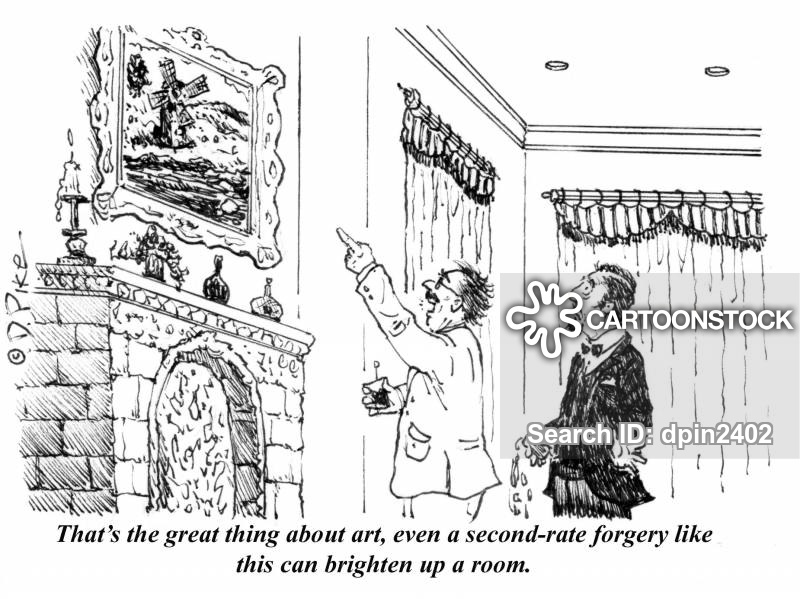
“That’s the great thing about art, even a second-rate forgery like this can brighten up a room.”
Zachęcam wszystkich do dokładnego przeczytania książki on-line traktującej o różnych przejawach falsyfikowania polskich antyków: malarstwa, porcelany, monet, o próbach legalizacji polskich antyków za granicą, etc, etc. Problematyka autentyczności dzieł sztuki na polskim rynku. Teoria, praktyka, prawo (https://issuu.com/nimoz/docs/problematyka_autentyczno__ci_dzie__)
Książka wydana kilka lat temu ale nic nie starcila na aktualności. Około 400 stron do uważnego przeczytania. Zachęcam szczególnie tych, którzy nie wierzą moim ostrzeżeniom i gotowi są wyrzucić pieniądze w błoto. Prace jakie przedstawiam na mojej stronie Bid All Your Wealth są przecież kupowane za grube pieniądze a to przecież ewidentne falsyfikaty. Jest tam również artykuł o falsyfikatach porcelany w Korcu (https://issuu.com/nimoz/docs/problematyka_autentyczno__ci_dzie__/98), bardzo auktualny w związku z pojawieniem sie właśnie na rynku pieknej filiżanki z portrtem księcia Józefa Poniatowskiego (https://polishartcorner.com/porcelain/). Książka ta to bezcenna lektura dla każdego, kto kolekcjonuje poskie antyki lub zamierza je kolekcjonować.
Wszystko sie zgadza, prócz tego, że autorem tej pracy nie jest Erich Erler lecz Erno Erb oraz, że stragan nie jest we Wrocławiu (Bleslau) lecz we Lwowie (Lemberg). Cena wyjściowa była atrakcyjna a cena sprzedaży (1,400 euro) rozsądna.
Lot 148. Gemälde Erich Erler 1870 Frankenstein/Schlesien – 1946 Icking “Gemüsemarkt in Breslau” u. li. sign. E.Erler, verso bez. Öl/Karton, 25 x 35 cm. Starting 450 euro. Kunst- und Auktionshaus Wilhelm M. Döbritz. 06/06/20








 Polish Art Corner