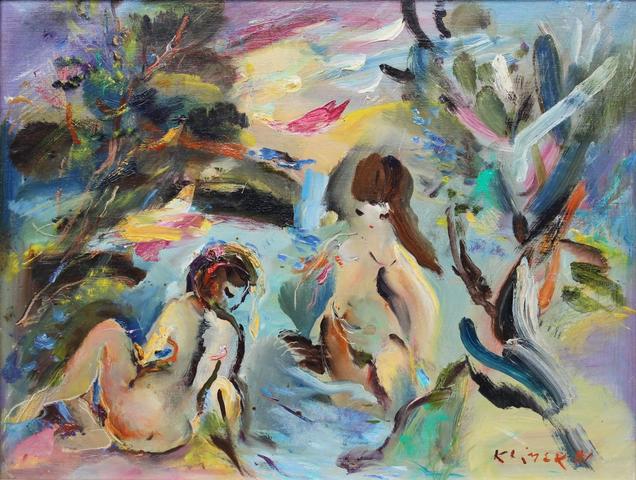
Ludwik Klimek (1912 – 1992)

klimek

Jeden z czytelników, z którym prywatnie i anonimowo miło koresponduję, zwrócił mi uwagę na opinię o moich komentarzach wyrazoną przez pana Sławomira Bołdoka zawartą w jednym dawnym jego  odcinku „Wędrówek po internecie” jakie publikuje regularnie na łamach Artinfo.pl.  (http://www.artinfo.pl/pl/publikacje/artinformacje/byle-do-wiosny/?page=2). Odcinek ten został przeze mnie niezauważony, stąd brak mojej wcześniejszej reakcji.

Bardzo sobie cenię opinie pana Bołdoka, chylę przed nim czoła i chyba sporo nauczyłem się od niego w przeszłości z różnych felietonów a także książek, zwłaszcza tej porządkującej znaki na polskim srebrze. Przyznam, że nie zawsze w ciągu ostatnich lat sięgałem do jego felietonów w jakich opisuje on i komentuje to co ja również opisuję (tj. prace polskich artystów na zagranicznych rynkach), lecz robi to bardziej cywilizowanym i grzecznym językiem. Mamy podobne zainteresowania. Broń Boże nie jestem obrażony jego opinią o moich ‘zajawkach’, być może mój wybór ma charakter ‘indywidualny’ (co to może oznaczać? Czy jest to komplement czy też nie jest?) a moje „opinie…kontrowersyjne i apodyktyczne”. Rzeczywiście, nie przebieram czasami w słowach kierując się jedynie własnym smakiem. Staram się jednak w większości przypadków nie komentować (czasami jestem jednak rozsierdzony) a jedynie pokazać pracę Polaka, jaka wypłynęła na aukcji poza Polską. Do takich malarzy należy też Ludwik Klimek, którego malarstwo chyba bardzo rozpropagowałem, choć ani go nie znałem, ani nie posadam ani jednej jego pracy ani też nikt mi nie zapłacił za to rozpowszechnianie. „Przyznam się, że wolę dobre rzemiosło, nawet przy oklepanym temacie, niż maziaje Ludwika Klimka, którymi zachwyca się autor polishartcorner.” tak podsumował nie tylko twórczość Klimka pan Bołdok ale też moje zainteresowanie tym malarzem. Nie jestem krytykiem sztuki, piszę blog wyłącznie dla siebie i nikogo doprawde nie namawiam do czytania. Są lepsze strony o sztuce jakie sam czytam. Nie wprowadzam jednak żadnych reklam i nie czerpię żadnych korzyści materialnych, tj. nikt mi nie płaci „od strony”. Blog jest formą bazy danych jaką stworzyłem dla siebie ale jaką udostepniam też innym. To wszystko. W historii sztuki niejednokrotnie współcześni tępili malarzy z konkretnego okresu (tak jak p. Bołdok Klimka) by kolejne pokolenia padały przed potępionymi na kolana. Proszę przypomnieć sobie z polskiego podwórka o ‘brunatnych sosach monachijskich’ i nie tylko.

Nie konkuruję z artykułami żadnych krytyków i …proszę mnie zostawić w spokoju. Nie potrzeba mnie tępić. I tak będę kiedyś potępiony. Proszę nie zwracać uwagi na to co piszę i nie tracić na to swój czas.

Aby zamknąć moją bardzo spóźnioną replikę, pozwalam sobie pokazać (tj. wprowadzam do swojej bazy danych) kolejny obraz Ludwika Klimka z nadchodzącej aukcji we Francji. Przyznam, że o niebo wolę te żywe kształty na pracach Klimka (maziaje) od kół, kółek, kropek, linii, chluśnięć farbą innych współczenych malarzy. Ale to sprawa mojego gustu. A co mówili Rzymianie o gustach?

—————————————-

Lot 1230. Ludwig KLIMEK ( 1912 – 1992) : Baigneuses en automne au bord du Loup à Villeneuve Loubet, toile sbd et datée 81, 50 x 65 cm

Estimate 600-800 euro. Maître LEFRANC Frédéric. 10/15/16
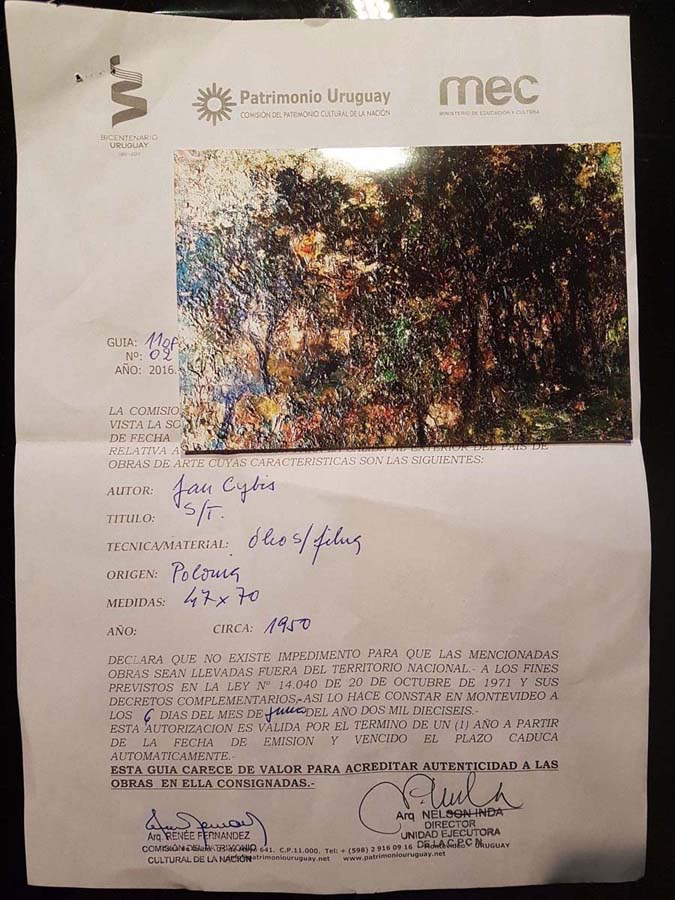
Jan Cybis (1897 – 1972)

cybis

A to już groteska.

 ————————————-

Lot 4811. Jan Cybis 1897-1972 Original Oil on wood from 1950. Hand signed by the artist. Impressionist Colorist Movement in Poland 28×19 inches approx.

Condition Report: This is in good condition.

Medium: Original oil

Estimate: $40,000 – $55,000. Art Legacy. 10/15/16

Witold Chomicz (1910 – 1984)

chomicz

Lot 78. WITOLD CHOMICZ (1910-1984). KRAKOV. 1935.
39×27 inches, 99×68 1/2 cm. Narodowa, Krakov.
Condition A: repaired tears, creases and time-staining in margins, some affecting image. Mounted on Japan.
“Wawel Hill was the residence of the Polish kings from the 11th to the late 16th century” (Polish Poster p. 54). This is the Slovak version. Polska Sztuka Plakatu p. 184 (var).

Estimate: $800 – $1,200. Swann.10/27/16

Tadeusz Gronowski (1894 – 1990)

gronowski

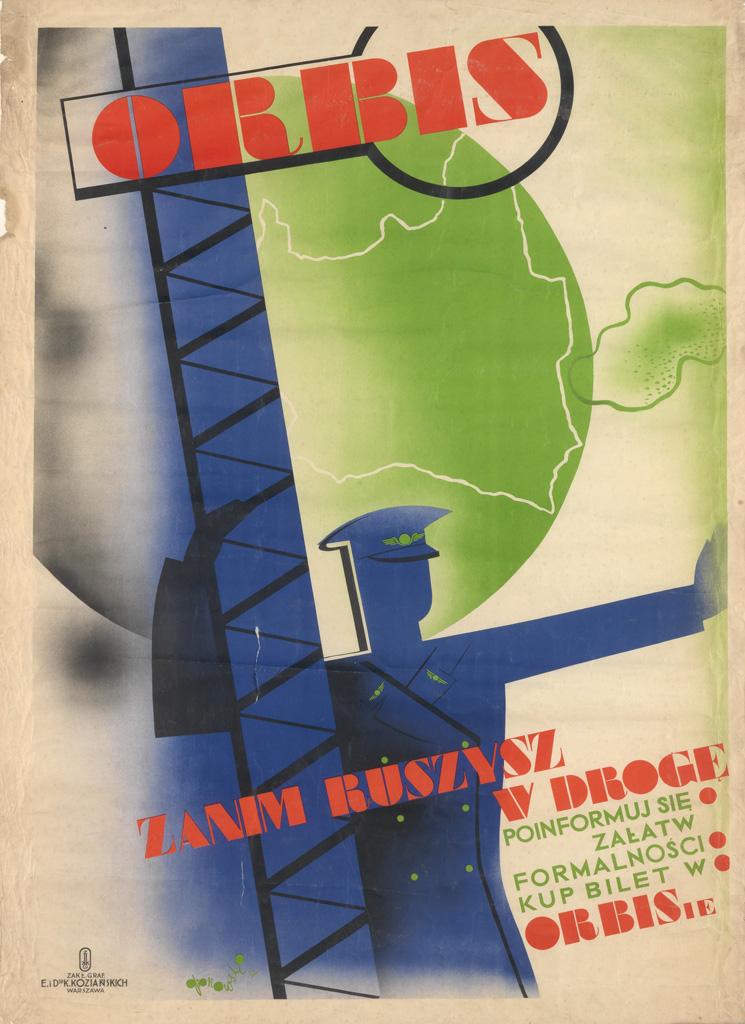
Lot 69. TADEUSZ GRONOWKSI (1894-1990). ORBIS. 1932.
57 1/2×37 1/2 inches, 146 1/4×95 1/4 cm. K. Kozianskich, Warsaw.
Condition B: extensive creases and tears in margins and image; minor losses and time-staining at edges. Paper.
Gronowski was an influential Polish graphic designer who studied architecture in his native country and at the École des Beaux-Arts in France. In the years between the wars, Gronowski worked in both countries. While in Paris, he was influenced by Cubism and the work of A.M. Cassandre, specifically his mastery of the airbrush, which is reflected in his posters. Here, advertising Poland’s largest travel agency, the message “Buy tickets with Orbis before you travel” is illustrated using the universal travel iconography of a conductor, a train signal and the globe. Biblioteki Glownej 190.

Estimate: $800 – $1,200. Swann. 10/27/16

Edmund Bartłomiejczyk (1885 – 1950)

bartlomiejczyk

Lot 71. EDMUND BARTLOMIEJCZYK (1885-1950) JARMARK GDANSKI / DZIAL POLSKI. 1920.
35 3/4×27 1/4 inches, 91×69 1/4 cm. G. Geowczewski, Warsaw.
Condition A: time-staining in image; minor loss at left edge.
Bartlomiejczyk was a graphic artist and an art professor who is “best known for his book illustrations and murals, but also designed posters, banknotes, postage stamps and advertising” (Polish Poster p. 77). Here he depicts goods being loaded onto ships to promote a trade fair in Gdansk.

Estimate: $1,500 – $2,000. Swann. 10/27/16 (161750)

Henryk Uziembło (1879 – 1949) – Plakat

uziemblo

Lot 77.  HENRYK UZIEMBLO (1879-1949). WIELICZKA / POLEN. 1938.
39×24 1/2 inches, 99×62 1/4 cm. B. Wierzbicki, Warsaw.
Condition A- / B+: replaced losses and restoration in corners; repaired tear at lower right edge slightly into image. Paper.
“The Wieliczka mines are one of the oldest in the world dating back to the 11th century. They are famous for their magnificent subterranean galleries and chambers beautifully adorned with figures of sculptured salt. Before 1939 approximately 400,000 tons of sale were extracted annually from these mines by some 1,500 miners” (Polish Poster p. 61). This is the German version. Polish Poster 104.

Estimate: $800 – $1,200. Swann. 10/27/16 (16875)

Stefan Norblin (1892 – 1952)

norblin-70

Lot 70. STEFAN NORBLIN (1892-1952). TORUN. Circa 1927.
39 1/4×24 1/2 inches, 99 3/4×62 1/4 cm. Bibljoteka Polska, Warsaw.
Condition B / B+: repaired tears, replaced losses, creases and overpainting in margins and image. Paper affixed to board at lower corners.
Norblin was a painter, illustrator, set and costume designer, portraitist and poster designer. In 1939, Norblin left Poland and wound up in Iraq, where he painted portraits of the royal family. The war, which had started while he was gone, prevented Norblin from returning home, and in 1941 he moved to India where he stayed for five years. While there, he was commissioned to design the interiors of the royal palace at Umaid Bhawan which included murals, furniture and portraits. This led to other commissions for which he designed interiors for several other palaces. In 1946, unwilling to return to his homeland now under Communist control, Norblin moved to San Francisco, where he continued painting portraits, including that of General Douglas MacArthur, which hangs in the Pentagon. Norblin took his own life in 1952 when he was diagnosed with glaucoma and couldn’t face the prospect of losing his eyesight. “Torun, once the largest and most important Hanseatic trading center on the Vistula, is best known for its Gothic architecture and as the birthplace of Nicolaus Copernicus (1473-1543). It was the capital of Pomerania and had a pre-war population of 80,000” (Polish Poster p. 59). Polish Poster 99, Gebrauchsgraphik April 1, 1936, p. 44 (var).

Estimate: $800 – $1,200. Swann. 10/27/16 (165850


norblin-72

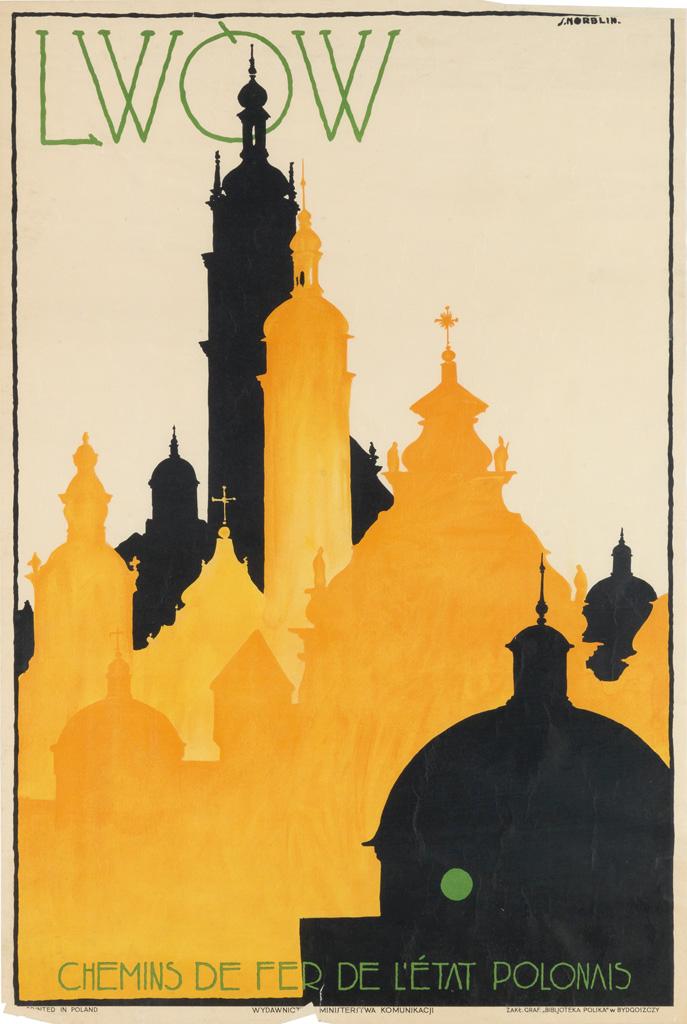
Lot 72. STEFAN NORBLIN (1892-1952). LWÒW. 1928.
29 1/4×19 1/2 inches, 74 1/2×49 1/2 cm. Bibljoteka Poliska, Bydgoszczy.
Condition B+: minor tears, creases and folds in margins and image. Paper.
Lwòw has had a tumultuous geo-political history. Historically a prominent Polish, Ukrainian and Jewish city, it was one of the intellectual centers of Eastern Europe. Over the centuries, it has been fought over and claimed by the Hapsburgs, Russians, Poles and Germans. Poland took control of the city in late 1920, and it was part of Poland until the beginning of the Second World War when it was retaken by the Soviets and then again by the Germans. Norblin, in a silhouette style reminiscent of posters by Ludwig Hohlwein, depicts some of the city skyline’s most prominent structures: The Bernadine Cathedral and Monastery, the Clock Tower and the domes of the Assumption Dormition Church and the Dominican Church, amidst other spires and steeples. In addition to its size, architecture and cultural prominence, Lwow is now also infamous for the Jewish Ghetto established there during the Second World War, which was liquidated in June 1943. Simon Wiesenthal was one of the most prominent of the ghetto’s few survivors. Polish Poster 92, Biblioteki Glownej 178, Polska Sztuka Plakatu p. 79.

Estimate: $600 – $900. Swann. 10/27/16 (161560)


norblin-73

Lot 73. STEFAN NORBLIN (1892-1952). WILNO. Circa 1930.
39 1/4×24 1/2 inches, 99 3/4×62 1/4 cm. K. Kozianskich, Warsaw.
Condition A: minor creases in margins and image.
Vilnius, the capital of Lithuania, was a hotly contested metropolis among Europe’s largest powers throughout the 20th century. World War I found her captured first by the Germans, followed by the Poles and then the Russians. In 1923, the League of Nations confirmed Vilnius as part of Poland. After the Second World War, she was retaken by the Germans and then the Russians and in 1944, restored to Lithuania. In a style which Norblin clearly found effective (see the previous lot) he depicts the ancient rooftops of the city in soft, complimentary twilight colors. In the background he depicts the recognizable spires of St. John’s Church, St. Anne’s Church and the Church of St. Francis and St. Bernard. Polish Poster 101, Biblioteki Glownej 179.

Estimate: $1,000 – $1,500. Swann. 10/27/16 (162K)


norblin-74

Lot 74. STEFAN NORBLIN (1892-1952). KRAKÓW. Circa 1935.
39×24 3/4 inches, 99×63 cm. Kozianskich, Warsaw.
Condition B+: creases, repaired tears, replaced losses and minor overpainting in margins, into image; minor soiling in upper image.
An evocative depiction of Krakow’s gothic Wawel Hill and its three towers: The Cathedral, the Silver Tower and the Clock Tower. This view from the Vistula River also includes the spires of St. Mary’s Church (the Mariacki) in the distance. Gebrauchsgraphik April 1, 1936, p. 42.

Estimate: $700 – $1,000. Swann. 10/27/16 (161235)


norblin-75

Lot 75. : STEFAN NORBLIN (1892-1952). WARSZAWA. 1925.
38 3/4×24 3/4 inches, 98 1/2×63 cm. K. Kozianskich, Warsaw.
Condition A-: minor repaired tears and creases in margins and text.
A view of Warsaw’s Old Town Market Place, seen from Nowomiejska Street, looking past the gothic House of the Mazovian Dukes. The spire of the Sanktuarium Matki Bozej Laskawej (Shrine of Our Lady of Grace) and the towers of the Basillica of St. John the Baptist tower over the buildings on the East side of the square. Polish Poster 100, Polnische Plakat 207, Polska Sztuka Plakatu p. 174.

Estimate: $1,000 – $1,500. Swann.10/27/16 (161625)


norblin-76

Lot 76. STEFAN NORBLIN (1892-1952). WARSZAWA. Circa 1925.
38 3/4×24 1/2 inches, 98 1/2×62 1/4 cm. K. Kozianskich, Warsaw.
Condition B+: repaired tears, creases and restoration in margins and image and along vertical and horizontal folds.
Norblin “was well-known for his poster designs for the Polish tourist industry. His poster work is distinguished by its unconstrained expression of subject matter, fine hand and intense color. It depicted specific Polish regions, towns and historical buildings for the Ministry of Transportation” (Polish Poster p. 87). Here, we see a view of the old buildings and spires of Warsaw seen from the Vistula river. Gebrauchsgraphik April 1, 1936, p. 43.

Estimate: $800 – $1,200. Swann. 10/27/16 (161560)