Posrebrzana wersja kamizeki dżinsowej Tomka Kawiaka. Wersje tej kamizelki w patnowanym na niebiesko brązie, ok 2x większe, były wyceniane znacznie wyżej.
Lot 54. Tomek Kawiak (Polish, b.1948) – Bad Boy Tomek Vest, Silvered Bronze Sculpture. Signed, numbered – 8/8. Height: 38cm. Estimate $2,000 – 4,000. Pasarel. 11/26/24. Sold $1,500
Lot 73. Hyacinthe ALCHIMOWICZ (1841 Szczucin-1897 Vilnius). Landscape near Perpignan. Watercolor on paper; 16 x 25 cm. Signed lower left “Alchimowicz”. Estimate 100 – 150 euro. Millon. 11/26/24. Sold 95 euro
Młodszy brat Kazimierza Alchimowicza specjalizujący się w tematyce pejzażu techniką akwareli. Panują spore rozbieżności odnośnie daty śmierci artysty. Obie prace sprzedano za bardzo drobne pieniądze. Artysta mieszkał i pracował w Perpignan, to tak odrośnie powyższego pejzażu.
Hiacynt Alchimowicz. The tower by the river
Lot 74. Hyacinthe ALCHIMOWICZ (1841 Szczucin-1897 Vilnius). The tower by the river. Watercolor on paper; 9.5 x 14.3 cm. Estimate 100 – 150 euro. Millon. 11/26/24. Sold 80 euro
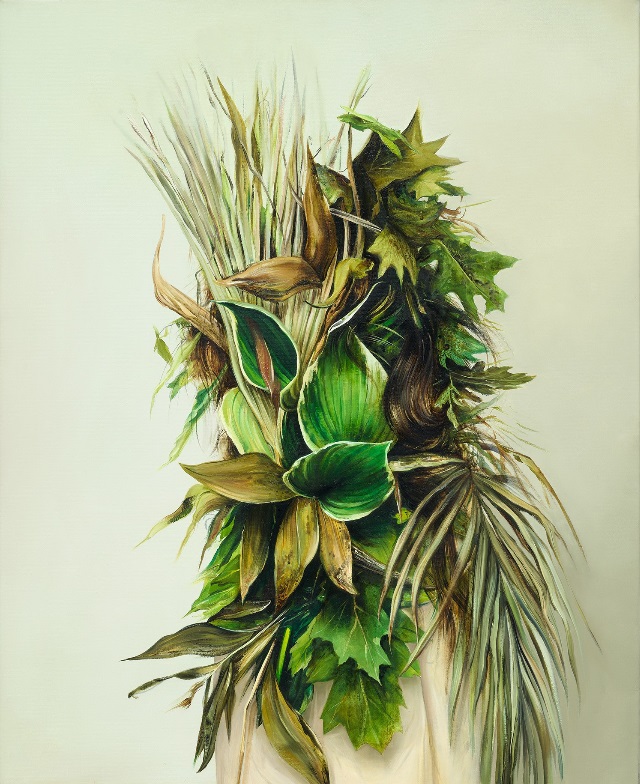
Lot 20. Ewa Juszkiewicz (1984). Grove. signed and dated ‘Ewa Juszkiewicz 2014’ on the reverse, oil on canvas, 100 x 80 cm. (39 3/8 x 31 1/2 in.). Painted in 2014. Estimate HK$2,400,000 – 3,500,000 (€292,000-427,000; $308,000-449,000). Phillips. 11/25/24. Passed
Phillips na aukcji Modern and Contemporary Art sprzedał 21 pozycji z wystawionych 23. Obraz Ewy Juszkiewicz należy do tych dwóch którym się nie powiodło. Poniżej bardzo obfity opis katalogowy Phillipsa do tej pracy wzmiankujący między innymi “technical virtuosity” artystki. Warto uważnie w nim się zgalębić:
“I developed a strong need to reference those portraits, and to establish a dialogue with them. I was driven by a desire to revitalise history, or rather to create my own story on the basis of it.” — Ewa Juszkiewicz
Rewriting the Narrative
Having been extensively exposed to classical European portraits, Ewa Juszkiewicz found herself both fascinated and perplexed by them. While the artistry in these works is impeccably executed, with intricate brushwork that enlivens each figure, the representation of women remains strikingly monotonous. As Juszkiewicz noted in an interview with ARTNews, “Their poses, gestures, and facial expressions were very similar and showed no deep emotion or individuality”.
In response, Juszkiewicz created artworks that challenge the conventions of European portraiture while honouring the significant aspects of tradition. She draws inspiration from female portraits spanning the Renaissance to the 19th century, meticulously recreating the technical virtuosity and stylistic elements of this historical genre. However, she introduces a radical transformation by obscuring or entirely replacing the subject’s faces. Through this practice of recreation and deliberate obstruction, Juszkiewicz articulates her critique of the complex history of female representation in Western art, where female identity has often been shaped by patriarchal societal expectations. Her works engage in a subtle yet powerful critique of classical portraiture, using its very language to expose the underlying mechanisms of control and display.
Juszkiewicz elaborates on her creative process and the ideas behind her works in the following interview: Ewa Juszkiewicz: Locks with Leaves and Swelling Buds, which was conducted in conjunction with her latest solo exhibition at the 2024 Venice Biennale.
Artistry in Precision
The present work, Grove, exemplifies Juszkiewicz’s mastery of the medium, particularly in portraying the intricate layers of botanical textures. Unlike many of her other pieces, which often showcase sumptuous details of fashion, the torso of the main figure in this painting is barely visible. Instead, she is depicted wearing a monochromatic robe that seamlessly blends with the background. This minimalist approach shifts the focus to the lush vegetation that obscures the figure’s identity. The vertical composition creates a dynamic sense of upward movement, while the interplay between withered brown leaves and vibrant greenery reflects Juskiewicz’s sophisticated understanding of colour dynamics and natural forms. Her brushwork aligns with her classical training, capturing the life cycle of plants with exquisite attention to detail, including the veins and speckles on the leaves.
Conceal, Rebel, and Question
Almost entirely engulfed by foliage, the present work conceals not only the main figure’s face but also a significant portion of her hair, which becomes entwined in the verdant backdrop. The artist has once remarked ‘Hair is very interesting; it’s often a status symbol.’ii This concealment can be interpreted as a means to protect the figure from scrutiny and to obscure any indication of her social status. By completely obscuring both the face and hair, Juszkiewicz disrupts the traditional principles of portraiture, which often rely on visual tropes shaped by societal expectations regarding women’s appearance and behaviour. In this way, Grove presents a potential manifestation of female portraiture in the absence of the male gaze. Through this exploration, Juszkiewicz challenges the patriarchal conventions that permeate society.
“There is also a theme of being overgrown, the fusion of hair and plants, and blurring the boundaries of what is human.” — Ewa Juszkiewicz
Beyond her critique of social norms, Juszkiewicz’s portrayal of overgrown vegetation on the figure’s head also invites a broader contemplation of humanity. She considers these paintings part of the historical vanitas genre, explicitly exploring the cycle of life. The plants depicted vary in stages of their life cycles–some are fragile new leaves, others are vibrant, while some are withering. This representation of life’s cycles, combined with the subversion of social conventions, enhances the contemplative nature of her work, prompting a direct interrogation of what it means to be human and the implications that entails.
Dorothea Tanning of the 21st Century
Juszkiewicz’s works evoke the artistry of Dorothea Tanning, the American modernist painter profoundly influenced by Surrealism, known for amplifying the female experience of confrontation. Juszkiewicz shares Tanning’s fascination with hair, overgrown plants, and the female figure, presenting an uncanny portrayal that blends realistic brushwork with Surrealist themes. Despite being separated by seven decades, Juszkiewicz’s work resonates with Tanning’s, as both artists contribute to a reimagining of the grand narrative from a female perspective– aggression and power.
“It’s about confrontation. Everyone believes he/she is his/her drama. While they don’t always have giant sunflowers (most aggressive of flowers) to contend with, there are always stairways, hallways, even very private theatres where the suffocations and the finalities are being played out, the blood red carpet or cruel yellows, the attacker, the delighted victim.” — Dorothea Tanning
Lot 187. WOJCIECH RITTER VON KOSSAK (1857-1942). Cavalerie polonaise, 1935. Signée et datée en bas à gauche. Huile sur toile, 50 x 100 cm. Estimate €10,000 – €15,000. Bonhams-Cornette de Saint Cyr. 11/25/26. Passed
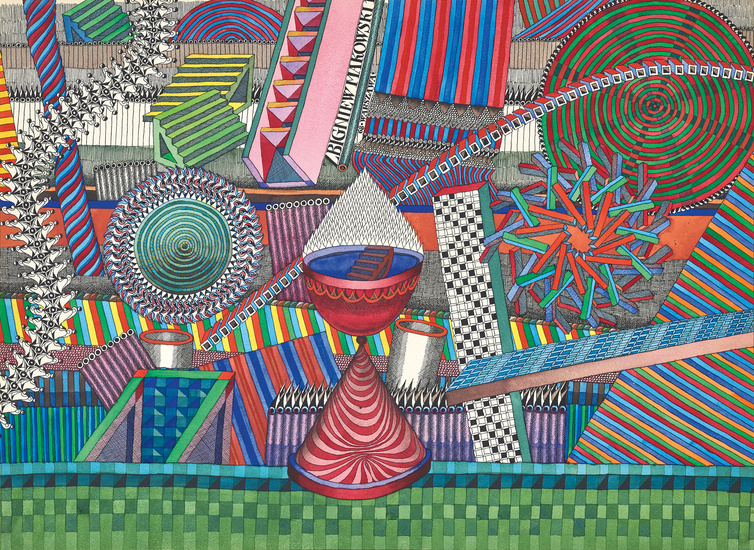
“Metafizyczny iluzjonizm’ Zbigniewa Makowskiego w domu aukcyjnym o dość przewrotnej nazwie.
Lot 28. Zbigniew Makowski, 1930-2019 (PT), Untitled, 1968. Untitled, 1968. Watercolor and india ink on paper. H 730 mm W 530 mm (visible measurement). Signed, dated and inscribed in the center: Zbigniew Makowski, 68, Warszawa. (Frame). Provenance: Galerie Bernard, Grenchen; Swiss Private Property. Estimate CHF 4,000 – 6,000. German Switzerland. 11/25/24. Sold CHF 7,500
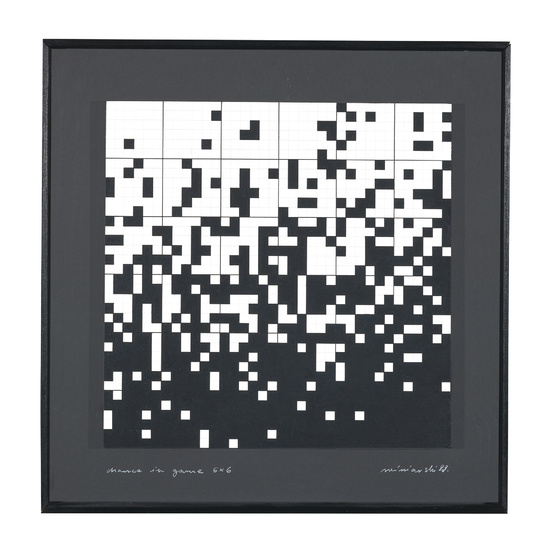
Na rynkach zachodnich mamy obecnie zatrzęsienie prac Ryszarda Winiarskiego.
Lot 54. Ryszard Winiarski, 1936-2006 (PL). Chance in Game 6×6, 1983. Acrylic on wood, mounted on painted fiberboard. H 479 mm W 479 mm. Signed and dated lower right: Winiarski, 83. Titled lower left: chance in game 6×6. Verso signed, dated and inscribed: winiarski, 83, chance in game 6×6 with return to the black box. (Frame). Provenance: Richard Paul Lohse, Zurich; Estate Johanna Lohse James, Zurich. Estimate CHF 4,000 – 6,000. German Auktionen. 11/25/24. Sold CHF 6,500
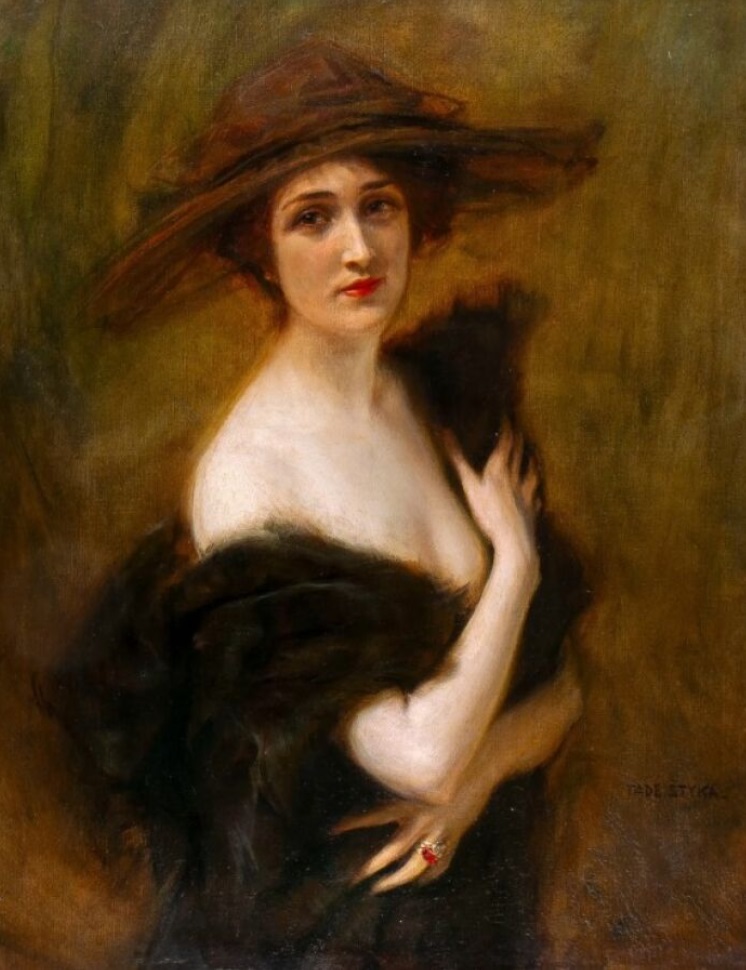
Miłośnik talentu Tadeusza Styki lub może zwyczajnie, tak po ludzku, zakochany w tym konkretnym kobiecym portretcie stracił głowę w trakcie licytacji. Być może portetowaną była bardzo znana kobieta, o czym nie wiem. A może zwycięzca tej licytacji liczy na obecność jeszcze większego miłośnika talentu Tadeusza Styki na terenie Polski? Moim zdaniem kupione zostało solidne nazwisko.
Lot 40. Tadeusz dit Tadé STYKA (1889-1954). Portrait de femme aux bijoux. Oil on canvas signed lower right – Restorations – lining – 90 x 72 cm. Estimation 3,000 – 5,000 euro. Chevau-Legers Enchères. 11/23/24. Sold 7,500 euro.
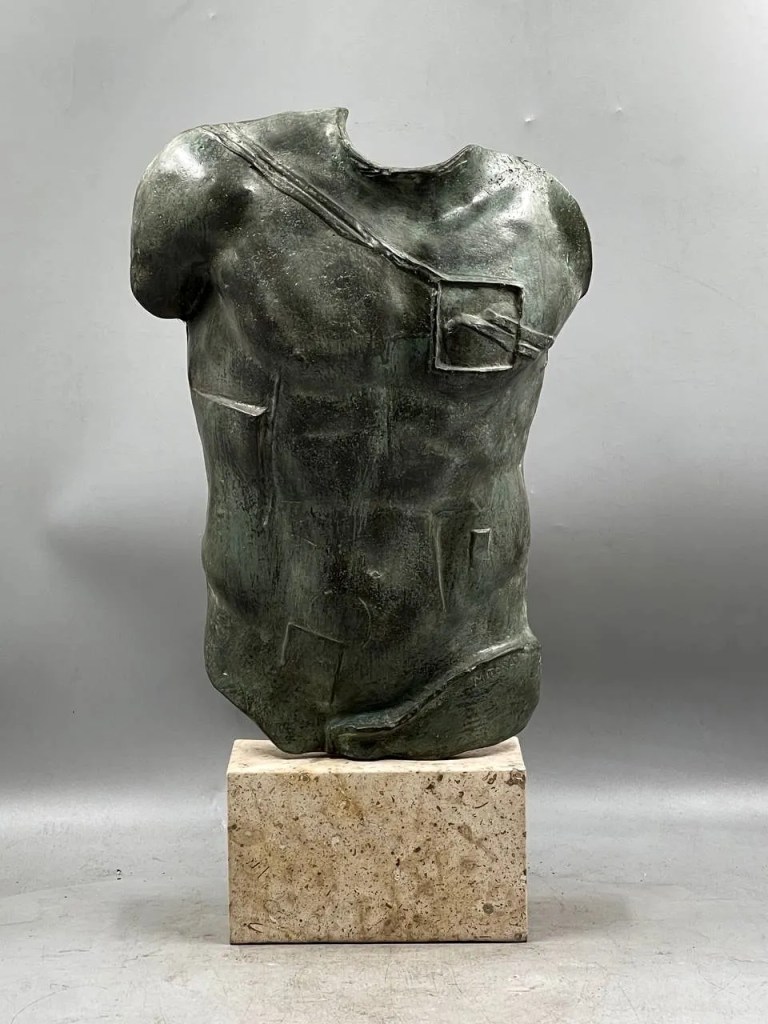
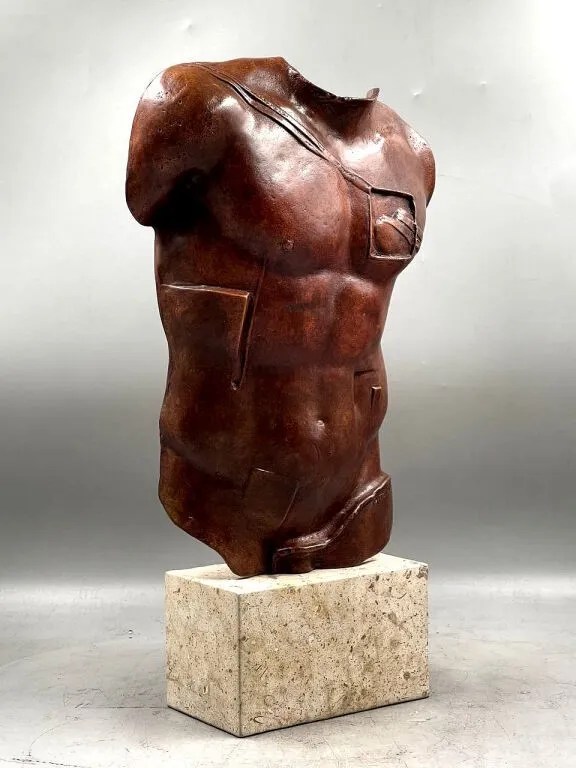
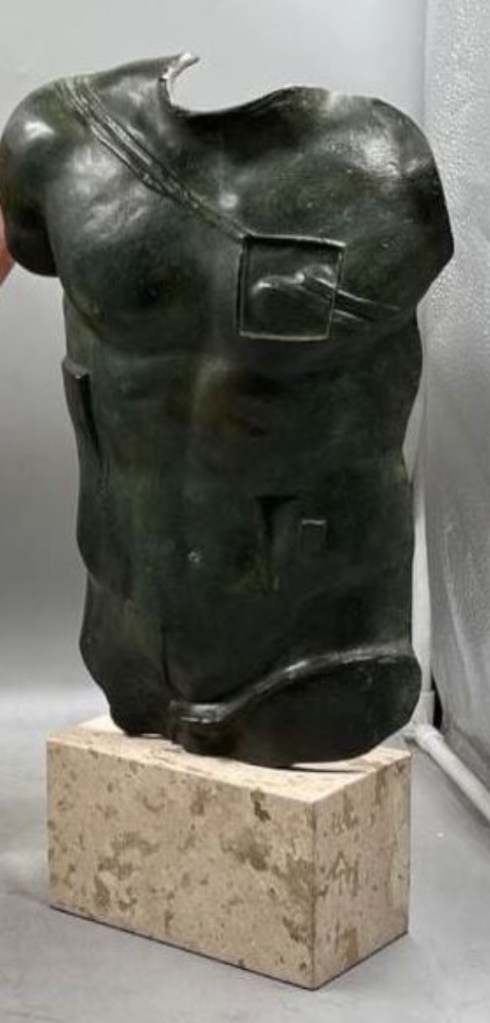
Lot 45. Igor MITORAJ (1944/2014). D’après. Persée. Important bronze à patine verte, signé et numéroté (609?) sur 1000. Socle en travertin. Hauteur : 38 cm hors socle. Mise à prix : 3 400 €. Estimation : 3 500 € – 4 000 €. Hôtel des ventes de la Haute-Marne. 11/23/24
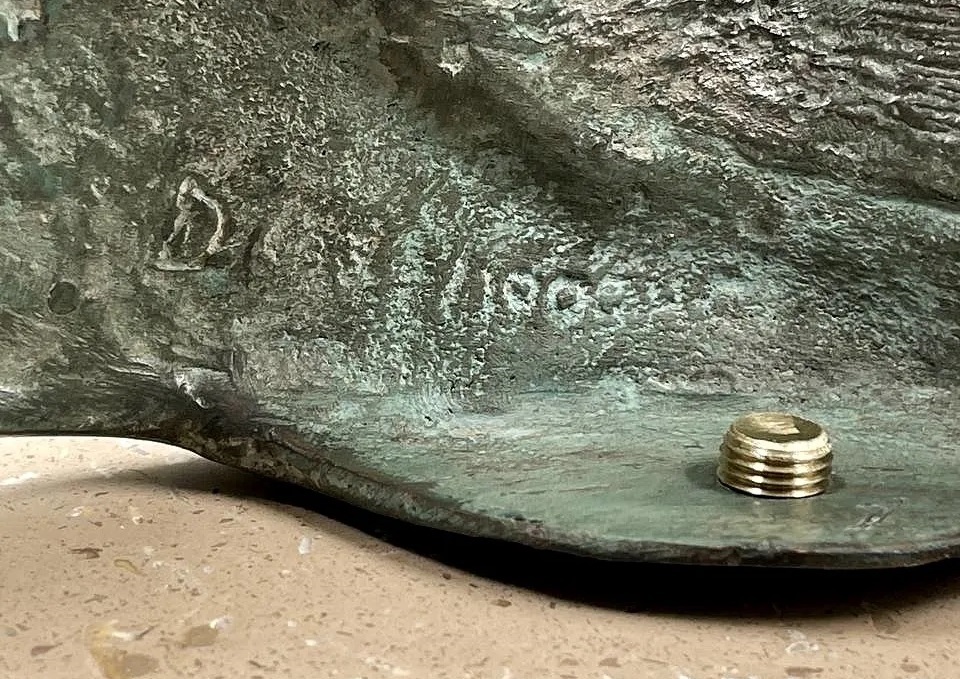
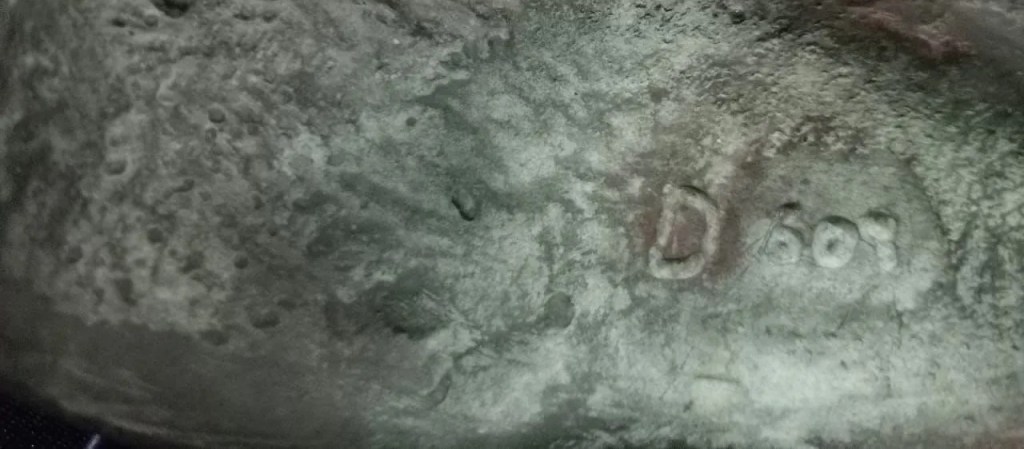
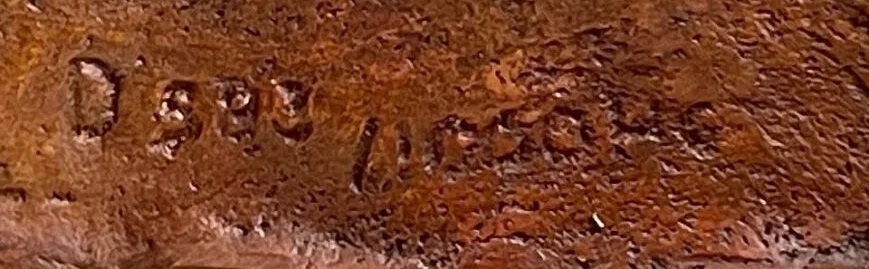
Nadarzyła się okazja by znowu napisać o rzeźbach Igora Mitoraja, brutalnie wybitych sztancą w ilości kilku tysiący egzemplarzy (np. Perseusz – 6,000 numerowanych sztuk, serie literowe A, B, C, D, E, każda po 1,000 sztuk). Tym razem o falsyfikatach tych rzeźb, ODLEWÓW z prawdziwego egzemplarza. Motorem tym jest sprzedaż wyżej pokazanej rzeźby Perseusza, bardzo rzetelnej opisanej przez dom aukcyjny jako D’après. Dom aukcyjny pokazał bez ukrywania fotografie numeracji tej rzeźby (poniżej).
Numeracja na falsyfikaciePowiększenie numeracji na falsyfikacie
Jako amator, który obserwuje rynek poloników i wytyka tu i tam pewne grube i cienkie nierzetelności czy nawet przekręty, zauważyłem kilka różnic wobec analogicznych rzeźb Perseusza wybitych sztancą.
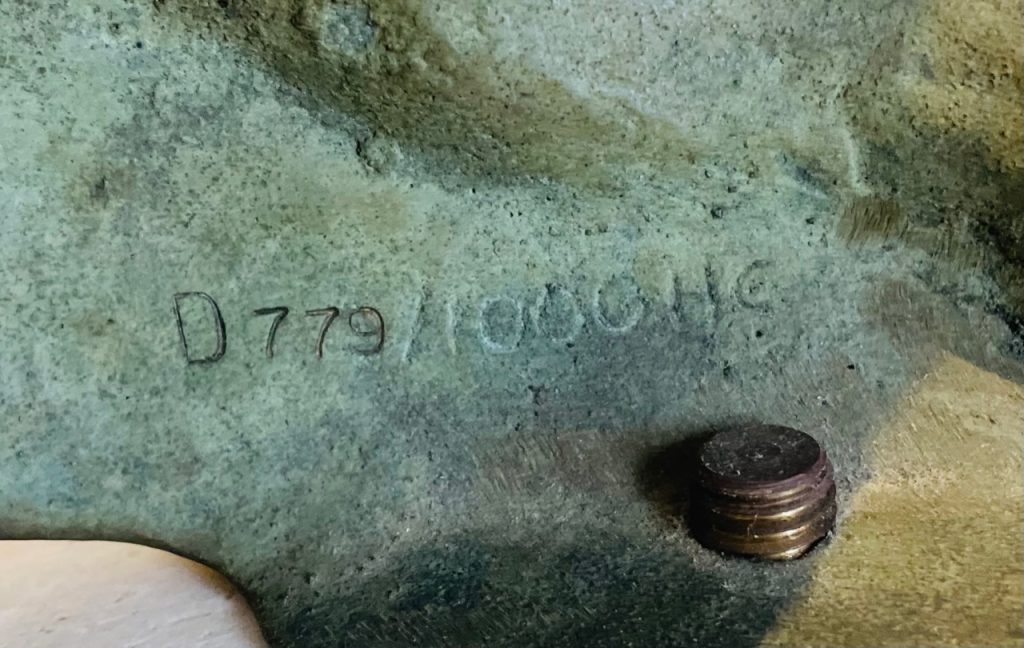
Po pierwsze, egzemplarze wygniecone prasą hydrauliczną mają identyczną numerację “/1000 HC“. Ten napis jest nieco rozmyty, nie ma ostrych krawędzi. Dopiero obok tego napisu ręcznie nabijano literę serii oraz numer egzemplarza. Poniżej przykład prawdziwego egzemplarza o numeracji D 779:
Numeracja z egzemplarza D 779/1000 HC
Na egzemplarzu D 779 widzimy, że zarówno litera D jak i mumery zostały indywidualnie nabite ręcznie. Te numery wyglądają bardzo ostre porównując je do obok numeru ze sztancy /1000 HC. Warto przypatrzeć się fotografiom falsa oraz fotografii prawdziwego egzemplarza. Na odlanym falsyfikacie, numeracja została wydrapana na (gipsowej) matrycy i dlatego nie odróżnia się od fragmentu ‘/1000 HC’.
Po drugie, bardzo drobna lecz zauważalna różnica to kolor śruby przymocowującej Perseusza do postumentu. Obie śruby w pokazanych egzemplarzach są moziężne ale oksydację mosiądzu widzimy jedynie na egz D779. Należy pamiętać, że Perseusza wykonano w 1988 roku i każda nowa mosiężna śruba powinna ulec po ponad 35 latach wyraźnej oksydacji, jak widać jedynie na egz D779. Wynika z tego, że fałszywego Perseusza zamocowano stosunkowo niedawno.
Po trzecie, obserwując egzemplarz Perseusza należy przyjrzeć się położonej patynie. Oryginalne (prawdziwe) egzemplarze mają różne patyny, jej kolor, w zależności oczywiście od użytych związków chemicznych. Ta patyna zwykle jest niejednorodna na poszczególnym egzemplarzu, choć zdarzają się oczywiście wyjątki. Ogólna obserwacja: patyny kładziono ze znawstem i osoby, które je tworzyły posiadały spore umiejetności jej tworzenia. Na sprzedawanym dzisiaj egzemplarzu widzimy jednorodną ‘nudną’ patynę (przyznaję, że jest to moja subiektywna ocena).
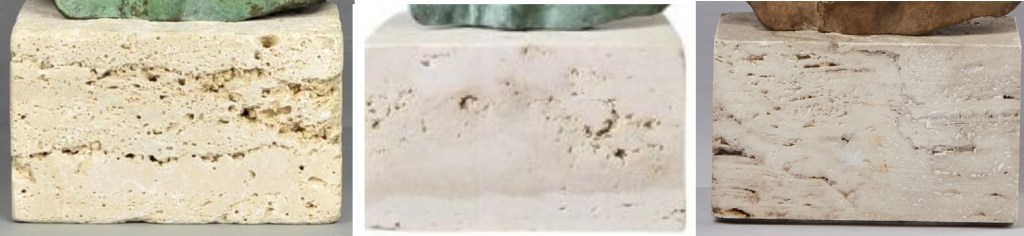
Po czwarte, warto zwrócić uwagę na postument na którym jest zamocowany Perseusz. Oryginalne egzemplarze zostały zamocowane na postumencie z jasnego i bardzo porowatego trawertynu. Patrząc na te rzeźby od numeru A do D daje się zauważyć, że zamocowano je na postumentach pochodzących z pociętych kamiennych kawałków wapiennej skały, prawdopodobnie pochodzącej z tego samego miejsca. Egzemplarz-falsyfikat zamocowano na trawertynie(???) wydobyym z innego miejsca, różniącym się kolorem oraz porowatością. Typowe postumenty na których mocowano Preseusza w 1988 roku pokazane są poniżej:
Postumenty na których mocowano Perseusza
Czytelnicy mają prawo przyczepić się do każdej z omawianych przeze mnie różnic. Jednak, gdy się weźmie wszystko razem (‘do kupy’) to nasuwają się oczywiście wątpliwości. Dom aukcyjny bardzo rzetelnie napisał, że ta rzeźba Perseusza została wykonana ‘według’ i nie jest oryginał. Ja nie trzymałem w ręku tej pracy w odróżnieniu do pracowników domu aukcyjnego i oceniam jedynie na podstawie fotografii. Prawdopodobnie mając pracę przed oczami widać i inne różnice, np. wysokość rzeźby będzie inna porównując do prawdziwego egz.
Powstaje teraz oczywiste pytanie, czy jest to pojedyńczy falsyfikat czy jest ich więcej na rynku. Obserwując rynek francuski wydaje mie się, że należy być bardzo ostrożny przy zakupach. Obecnie zauważyłem bardzo podejrzane dwa egzemplarze na nadchodzących aukcjach w tym innym domu aukcyjnym:
Perseusz-fals?Numeracja
(podobna fałszowana numeracja)
Lot 540. Igor MITORAJ (1944/2014) Persée. Important bronze à patine brune, signé et numéroté sur 1000. Socle en travertin. Hauteur : 38 cm hors socle. Estimation : 3 000 € – 6 000 €. Hôtel des Ventes de Metz – Martin et Associés. 12/01/24
(brak dodatkowych fotografii oraz informacji o serii)
Lot 620. Igor MITORAJ (1944/2014). Perseus. Large green patina bronze, signed and numbered on 1000. Travertine base. Height : 38 cm excluding base. Estimate 3,000 – 6,000 euro. Hôtel des Ventes de Metz – Martin et Associés. 12/01/24
Narzuca się oczywiste kolejne pytanie czy takie falsyfikaty dotarły już na polski rynek a może są one tworzone w Polsce? Obserwowałem już podobny przypadek w jednej z galerii w Polsce. Również, chyba rok temu zwróciła się do mnie czytelniczka z Polski bym popatrzył jej zakup Perseusza w innej polskiej galerii, który wzbudził wątpliwości lecz niestety po fakcie – próbowała odzyskać pieniądze.
Ogólnie mówiąc, zakup rzeźby, która została wykonana w ilości 6,000 egzemplarzy nie jest żadną ‘inwestycją’ i również nie przeniesie dumy kolekcjonerowi. Zostały te rzeźby wykonane w Paryżu i należy je traktować jako suvenir czyli tzw. ‘Pamiątkę z Paryża’. Trudno będzie odzyskać wydane pieniądze a jedynym wygranym jest dom aukcyjny. Pisałem o tym na stronie https://polishartcorner.com/igor-mitoraj/ narażając się oczywiście tym co handlują tymi rzeźbami. Rynek francuski każdego dnia jest nimi zawalony a polski podąża tą samą drogą.
Ładna i dekoracyjna martwa natura wykonana przez Emila Lindemana (Lindemanna). Dom aukcyjny przyłożył się bardzo dobarwiając pracę życiorysem artysty, powołując się nawet na autorytet Wikipedii, której hasło może każdy bezkrytycznie tworzyć by uchodziło za prawdę, całą prawdę i tylko prawdę.
Lot 4372. Emil Lindeman, Rose Still Lifeopulent bouquet of pink and white roses in a silver vase on a small side table against a grey-blue background, impasto still life painting in finely coordinated colours, oil on canvas, c. 1920, signed “E. Lindeman” lower right, some craquelure and crazing, in need of restoration, framed, folded, dimensions approx. 81 x 69 cm.
Artist information: also Emil Lindemann, German-Polish painter. Polish painter, church painter, graphic artist, illustrator and restaurateur (1864 Warsaw to ca. 1945 Ozorków near Lodz), attended secondary school in Warsaw, until 1887 pupil of Wojciech Gerson at the Warsaw drawing school, 1887-89 studied at the Krakow Academy under Jan Alojzy Matejko, worked with Matejko on the painting of the Basilica of the Assumption of the Virgin Mary in Krakow, from 1890 in Paris, where he studied at the École nationale supérieure des beaux-arts, later pupil at the Académie Julian under William-Adolphe Bouguereau, finally pupil at the Académie Colarossi under Raphaël Collin, 1893 first prize at the Paris Tygodnik Ilustrowany competition, 1897 study trip through Italy, with stays in Naples and Rome, in Rome further training at the Accademia nazionale di San Luca, then study visit to St. Petersburg, 1897 return to Warsaw. Petersburg, returned to Warsaw in 1897 and worked here as a freelance artist, organised various exhibitions such as the Warsaw Society for the Promotion of Fine Arts, the Aleksande Krywult Salon, the Warsaw Artists’ Salon and the Czesław Garliński Salon, took part in exhibitions in Krakow, Lublin, Lviv, Katowice, Vilnius, Poznan, Częstochowa, Gdynia as well as exhibitions in Germany, the United States and Great Britain, active in Warsaw, from 1939 in Ozorków, source: Saur “Bio-Bibliographisches Künstlerlexikon”, Bénézit, Polnisches Künstlerlexikon and Polish Wikipedia. Starting 180 euro. Mehlis. 11/23/24. Sold 700 euro
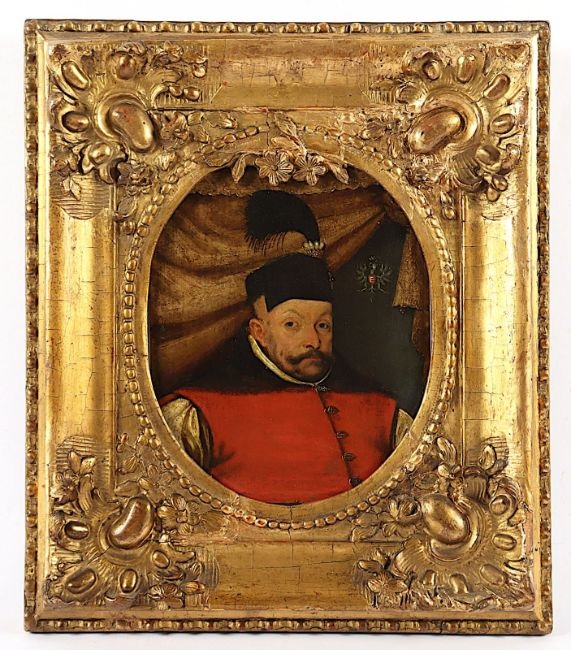
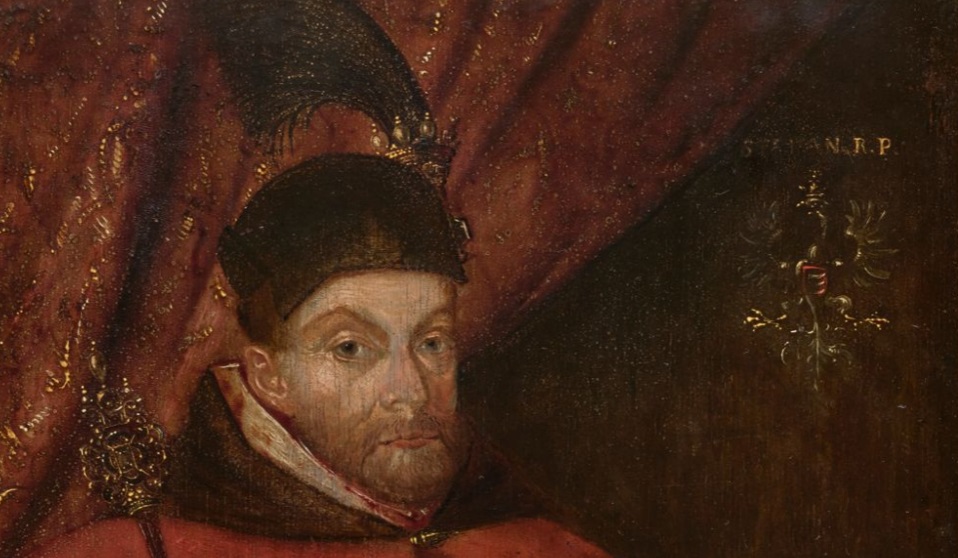
Lot 1471. Portraitmaler des 16./17.Jh., “Stephan IV Báthory, König von Polen”, Öl/Kupfer, 18 x 15, R. Opening 300 euro. Von Zengen. 11/22/24. Sold 5,500 euro
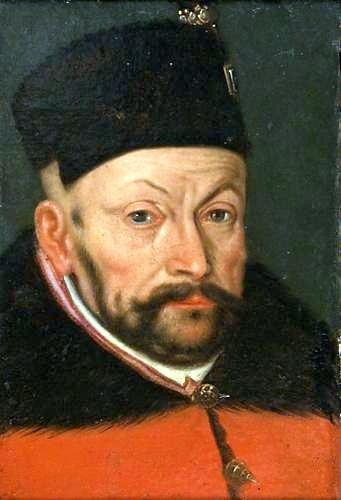
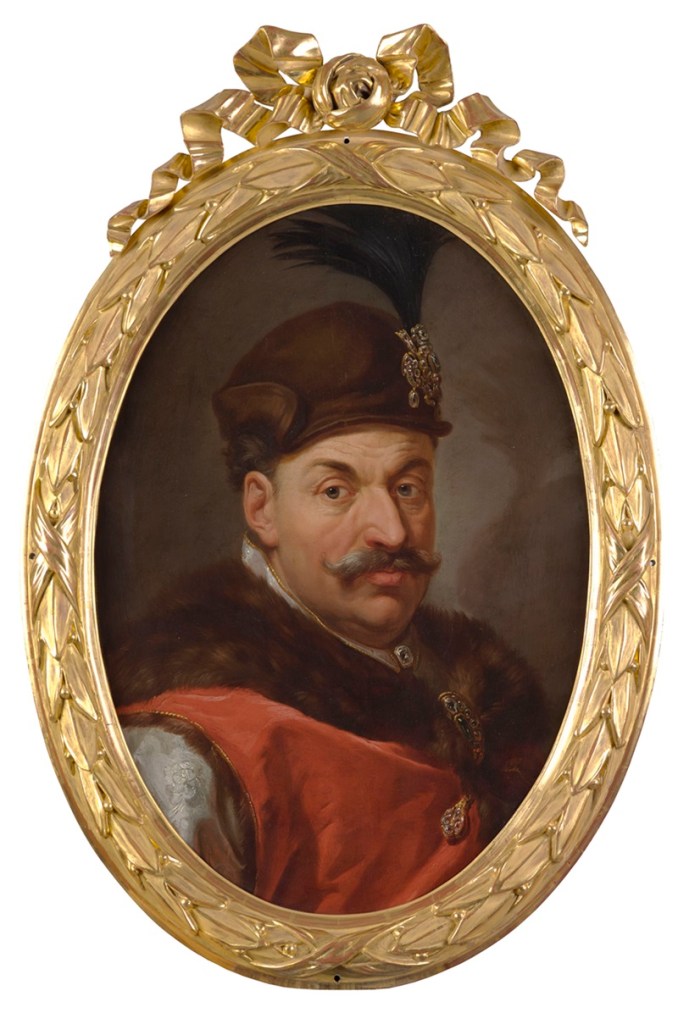
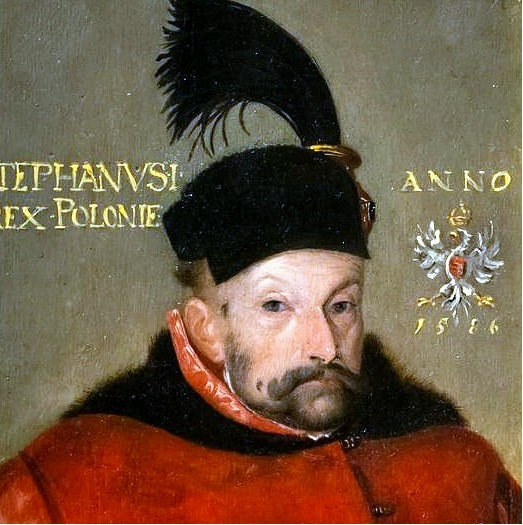
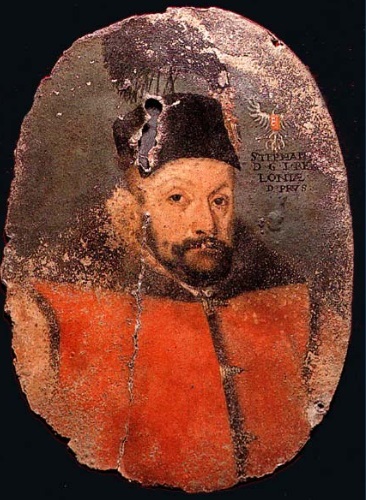
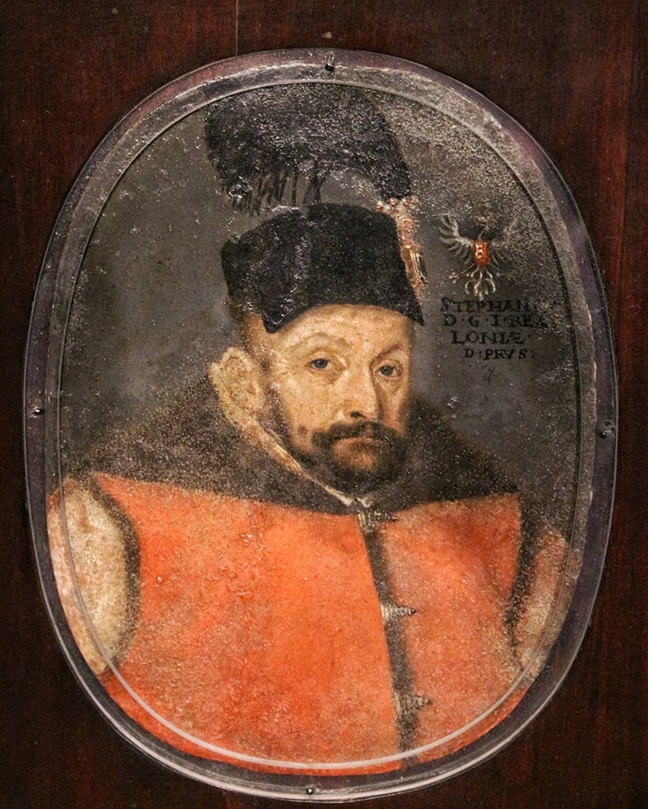
NIewielki olej na blasze miedzianej przedstawiający polskiego króla Stefana Batorego był przedmiotem aukcji w Niemczech. Praca może wyglądać iż powstałą w epoce panowania króla i jest bardzo podobna (może nawet lepsza) do znanego portretu wykonanego przez Marcina Kobera ok 1580 r. (poniżej) o nieco mniejszych wymiarach, będącego w muzealnej kolekcji w Wiedniu. Nawet sam Baciarelli namalował bardzo ‘mięsisty’ portret tego króla, wzorując sie pewnie nieco na innych znanych mu obrazach, kierując się jednak w malowaniu własną estetyką i wyobraźnią. Znanych jest również wiele jest innych portretów tego króla. Obraz z domy Von Zengen warty był zainteresowania i został słusznie zauważony.
Marcin Kober.Stefan Batory , olej, karton 16 x 13 cmMarcello Baciarelli.Stefan Batory. Muzeum Zamku Warszawskiego
Fotografie wizerunków Stefana Batorego wymieniane w komentarzu Adartem:
Zamek Królewski na Weweluok 1583Portret trumiennyPortret trumienny




 Polish Art Corner