Krzysztof Lubieniecki (1659 – 1729)

Krzysztof Lubieniecki.

Lot 152. Christoffel Lubieniecki Szczecin 1659–1729 Amsterdam. A merry band of travelling musicians, or an allegory of sound, signed centre left on the rock below the bushes: CLubieniecki (CL in ligature), oil on canvas, unframed: 56.5 x 48.2 cm.; 22¼ x 19 in., framed: 80.7 x 72.7 cm.; 31¾ x 28⅝ in. Property from the Estate of Ambassador J. William Middendorf II, Rhode Island. Estimate GBP 50,000 – 70,000. Sotheby’s. 12/04/25. Sold GBP 38,000

Provenance: Sir Joseph Benjamin Robinson Bt (1840–1929), Dudley House, Park Lane, London, and subsequently in store; His sale, London, Christie’s, 6 July 1923, lot 72, for £294 to Hyde; Subsequently bought back by Sir Joseph Benjamin Robinson; Thence by descent to his daughter, Princess Ida Louise Robinson Labia (1871–1961), Wynberg, Cape Town, South Africa; By whose estate sold (‘The Property of the Late Princess Labia (Sold by Order of her Heirs)’), London, Sotheby’s, 27 November 1963, lot 17 for £400 to ‘Spiller’; Count Maurycy Klemens Zamoyski (1871–1939), Poland; Thence by inheritance to his daughter-in-law, Nicole Zamoyska; Thence by descent to a private collector; By whom anonymously sold, London, Christie’s, 7 December 2018, lot 165, for £125,000; Where acquired.

Exhibited: Cape Town, National Gallery of South Africa, The Joseph Robinson Collection, 1959, no. 47.

Literature: The Sir Joseph Robinson Collection, Lent by the Princess Labia, exh. cat., Capetown 1959, p. 13, no. 47; M. Stevenson, Old Masters and Aspirations: The Randlords, Art and South Africa, PhD thesis, University of Cape Town, Cape Town 1997, pp. 294 and 428.

Catalogue note: This work relates to a series of genre scenes by Lubieniecki of comparable dimensions depicting allegories of the five senses, for example: Taste (Muzeum Narodowe w Warszawie, Warsaw),1 Smell (Statens Museum for Kunst, Copenhage),2 Sight (Private collection),3 and Touch (Muzeum Narodowe w Warszawie, Warsaw).4

Trudno znaleźć lepsze nazwisko malarza pochodzącego z polskiej rodziny, zaliczanego do starych mistrzów, jak Krzysztof (Christoffel) Lubieniecki. Artysta pochodził z rodziny polskich arian, którzy wyemigrowali z Rzeczpospolitej pod koniec XVI wieku i osiedlili się na terenach obecnej Holandii. Historię rodziny Lubienieckich można prześledzić w książce Michała Walickiego “Lubienieccy” wydanej w latach 60-tych w Polsce. Bratem Krzysztofa był Teodor, również malarz, który pod koniec życia wrócił na tereny Rzeczpospolitej natomiast Krzysztof wtopił się w środowisko holenderskie i pozostał tam do śmierci. Obraz, który pojawił się obecnie na rynku był opisany na łamach PAC w 2018 roku. Ministerstwo Kultury i Dziedzictwa Narodowego ma pieniądze by wyrzucić je w błoto na dwie żeliwne wanny (GBP170,000) pokazywane obecnie w bunkrze Trzaskowskiego Muzeum Sztuki Nowoczenej na Placu Defilad w Warszawie (https://ewarszawa.pl/news-news-3340-wanny_w_muzeum_w_warszawie_za_ponad_800_tys_zl_moze_by_tak_trzaskowski_je_wstawil_do_tej_toalety_w_parku_skaryszewskim) Może by tak zakupić obraz Krzystofa Lubienieckiego i przekazać go do Muzeum Narodowego w Warszawie? Pamiętam, że ok 20 lat temu to muzeum ekponowało w specjalnej sali malarstwo braci Lubienieckich i prac obydwu malarzy było niewiele. Kilka lat temu MKIDZN odzyskało ‘Portret młodzieńca’ Krzysztofa Lubienieckiego, skradziony w czasie oststniej wojny. Obecnie jest możliwość zakupu do zbiorów znakomitego obrazu tego malarza a wycena jest bardzo atrakcyjna za tej klasy malarstwo. Pieniądze pewnie by się znalazły, gdyby p. Cienkowska mniej podróżowała do Australii a tak to trzeba je ‘zabezpieczyć’ na kolejne jej zwiedzanie świata.

Christoffel Lubieniecki was a Polish-born Baroque painter and engraver who spent most of his career in Amsterdam. Born in Szczecin, he apprenticed in Hamburg under Juriaan Stuhr before relocating with his brother Theodor to Amsterdam in 1675, where he was taught by Adriaen Backer. He became noted for his refined portraits, genre scenes, and moralizing compositions, often echoing the style of Dutch artists such as Adriaen van Ostade.

Note on provenance: The first recorded owner of this painting, the South African magnate Sir Joseph Robinson Bt (1840–1929) was born in the Eastern Cape. A self-made man, he made his fortune in diamond and gold-mining. A contemporary of another great Randlord collector, Alfred Beit, he had settled in London by the mid-1890s, taking out a lease in 1894 on Dudley House on Park Lane, with its magnificent eighty-foot long picture gallery. With the help of his advisors, the dealers Sir George Donaldson (1845–1925) and Charles Davis (1849–1914), he set about amassing a highly important collection of around 170 Old Master and British paintings, many purchased during the period 1894–99. These included superlative Italian works, notably the Tornabuoni–Albizzi spalliera panels of the Departure of the Argonauts and the Argonauts in Colchis bought from the Ashburnham Collection, and Giambattista Tiepolo’s superb Madonna of the Rosary. From the same source came his fine late Murillo of The Vision of Saint Francis Paola. Dutch and Flemish paintings formed the core of the collection and included Van Dyck’s Portrait of Elizabeth, Lady Herbert, and those of Jacob de Witte and his wife Maria; a fine Family group by Gonzales Cocques; outstanding genre scenes by Eglon Hendrick van der Neer and Jacob Ochtervelt; and a Portrait of a gentleman by Frans Hals. Major British paintings included works by Gainsborough, Constable’s oil sketch for The opening of Waterloo Bridge, now in Anglesey Abbey, and Turner’s Falls of the Clyde, now in the Lady Lever Art Gallery, Port Sunlight. After 1900 the pace of Robinson’s collecting slowed, but fine French eighteenth-century works were bought for the reception rooms at Dudley House. Created a Baronet in 1908, Robinson returned to South Africa in 1910, where he spent the duration of the First World War, while the contents of Dudley House were put into storage. From these a selection of 116 works was put up for sale at Christie’s in July 1923. However, Robinson, who was by then nearly eighty, was struck on the eve of the auction by an apparent attack of vendor’s remorse. Too late to be able to withdraw the pictures, he placed instead prohibitive reserves on the collection succeeding in retaining all but twelve works. In 1958, eighty-four works, including the present painting, were exhibited at the Royal Academy in London and the following year at the National Gallery of South Africa in Cape Town. It is not known, however, when and from what source the present Lubieniecki was acquired.  

1 https://cyfrowe.mnw.art.pl/en/catalog/454519

2 https://open.smk.dk/artwork/image/KMSsp772?q=Lubieniecki&page=0

3 https://rkd.nl/images/20218

4 A period copy after a lost original by the artist, possibly executed in his workshop; https://cyfrowe.mnw.art.pl/en/catalog/454523

Henryk Glicenstein (1870 – 1942)

Henryk Glicenstein. Self Portrait Holding Flowers

Lot 163. Glicenstein, Enrico (Henryk) (Polish/Jewish/American, 1870-1942), Self Portrait Holding Flowers, c.1920s, oil on board, signed upper right, 23 x 19.5 inches, unframed. Provenance: The Estate of Hugo Dreyfuss (the son-in-law of the artist, who was married to Beatrice Glicenstein). Estimate $400 – 600. Concept Art Gallery. 12/06/25. Sold $1,700

Kolejna szarża prac Henryka Glicensteina ze zbiorów Hugo Dreyfussa, zięcia artysty, pojawiła się w Concept Art Gallery. Obok kilku rzeźb znajdują sie dwa oleje tego artysty. Jeden z nich to autoportret przedstawiający zamyślonego Glicensteina z bukietem kwiatów, ubranego ‘do wyjścia’, w garniturze, z kapeluszem, dość niedbale zawiązanym krawatem. Ten autoportret oraz drugi olej, pejzaż włoski, obrazują mało znany rozdział twórczości Henryka Glicensteina jako malarza.


Henryk Glicenstein. Hillside Village in Narni, Italy

Lot 164. Glicenstein, Enrico (Henryk) (Polish/Jewish/American, 1870-1942), Hillside Village in Narni, Italy, 1926, oil on wood panel, signed lower right, 15.75 x 11.5 inches, unframed. Narni is an ancient hilltown and commune of Umbria, in central Italy. Glicenstein estate label attached to the verso. Glicenstein lived in Italy from 1924-1928. Provenance: The Estate of Hugo Dreyfuss (the son-in-law of the artist, who was married to Beatrice Glicenstein). Estimate $200 – 400. Concept Art Gallery. 12/06/25. Sold $500

Katarzyna Kobro (1898 – 1951) ?

Katarzyna Kobro ? Cubist woman

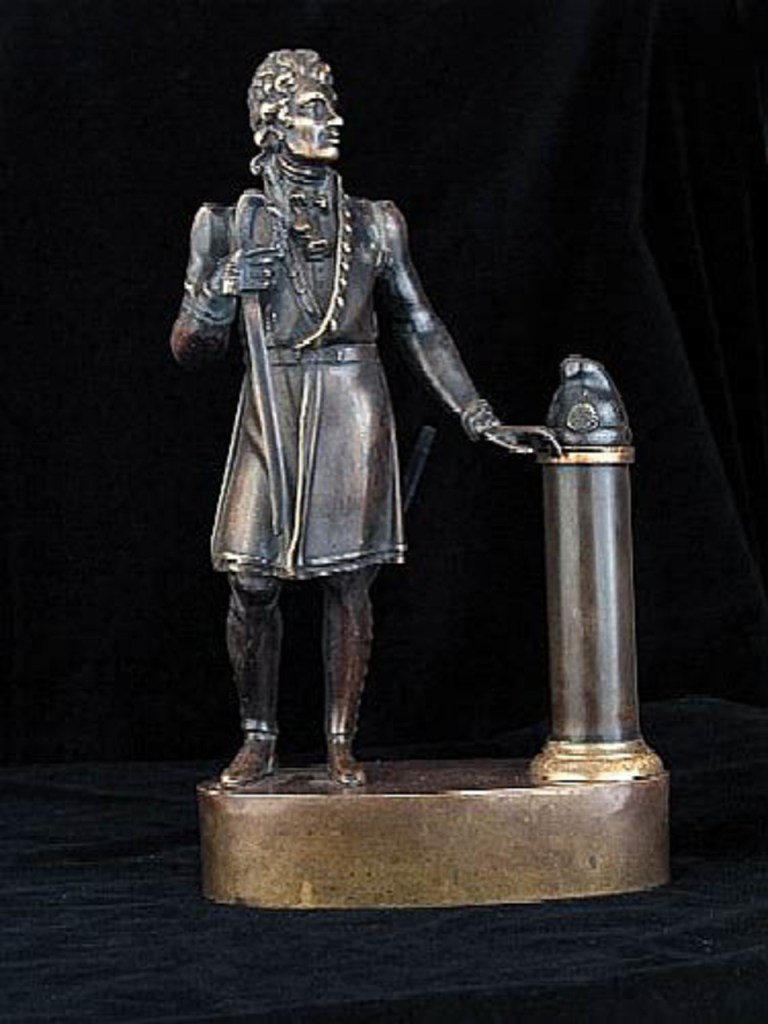
Lot 65. KATARZYNA KOBRO (1898-1951). IN THE TASTE OF. Cubist woman. Bronze with dark brown patina, founder’s stamp J. Lamy, Paris, lost-wax casting, minor patina wear patina Height: 57 cm, with base: 64 cm Base: 7 x 15 x 10 cm Provenance: Galerie Urban, Paris. Estimate €4,000 – 5,000. Boisgirard Antonini. 12/02/25

Wielokrotnie pisałem już o tej rzeźbie wycenianej od €30,000 do 35,000 w 2019 roku (https://polishartcorner.com/2019/10/14/katarzyna-kobro-1898-1951-3/), licytowanej do €30,000 i chyba nie sprzedanej. Już rok później wyceniano ją od €20,000 do 25,000 i sprzedano za €20,000 (https://polishartcorner.com/2020/03/24/katarzyna-kobro-1898-1951-5/). Było jeszcze kilka innych podejść licytacji bo rzeźba ta nieustannie wracała na rynek. W 2023 roku ten sam co obecnie dom aukcyjny dodał rozsądnie do opisu “ECOLE XX SIECLE dans le goût de Katarzyna KOBRO” z wyceną €8,000 – 10,000 by obecnie opuścić poprzeczkę do €5,000 – 6,000 z opisem ” IN THE TASTE OF”. Rzeźba ta staje się sławna, ma swoje życie i chętnym na nią proponuję poczekać jeszcze rok-dwa bo chyba nie jest to final sale.

Zofia Stryjeńska (1891 – 1976)

Zofia Stryjeńska. Harvest

Lot 27. ZOFIA STRYJEŃSKA (1891-1976). Harvest, signed ‘Z Stryieńska’ (lower left), gouache on canvas laid down on card, 48 x 35.7cm (18 7/8 x 14 1/16in). Provenance: Private collection, Poland (acquired directly from the artist). Private collection, UK (by descent from the above). Estimate £10,000 – £15,000. Bonhams. 11/28/25. Sold GBP 28,000 (bp)

Bardzo soczysta, zdecydowana kolorystyka portretu młodej i pięknej żniwiarki. Należy ufać podanej proweniencji.

Henryk Musiałowicz (1914 – 2015)

Henryk Musiałowicz. Abstract portrait

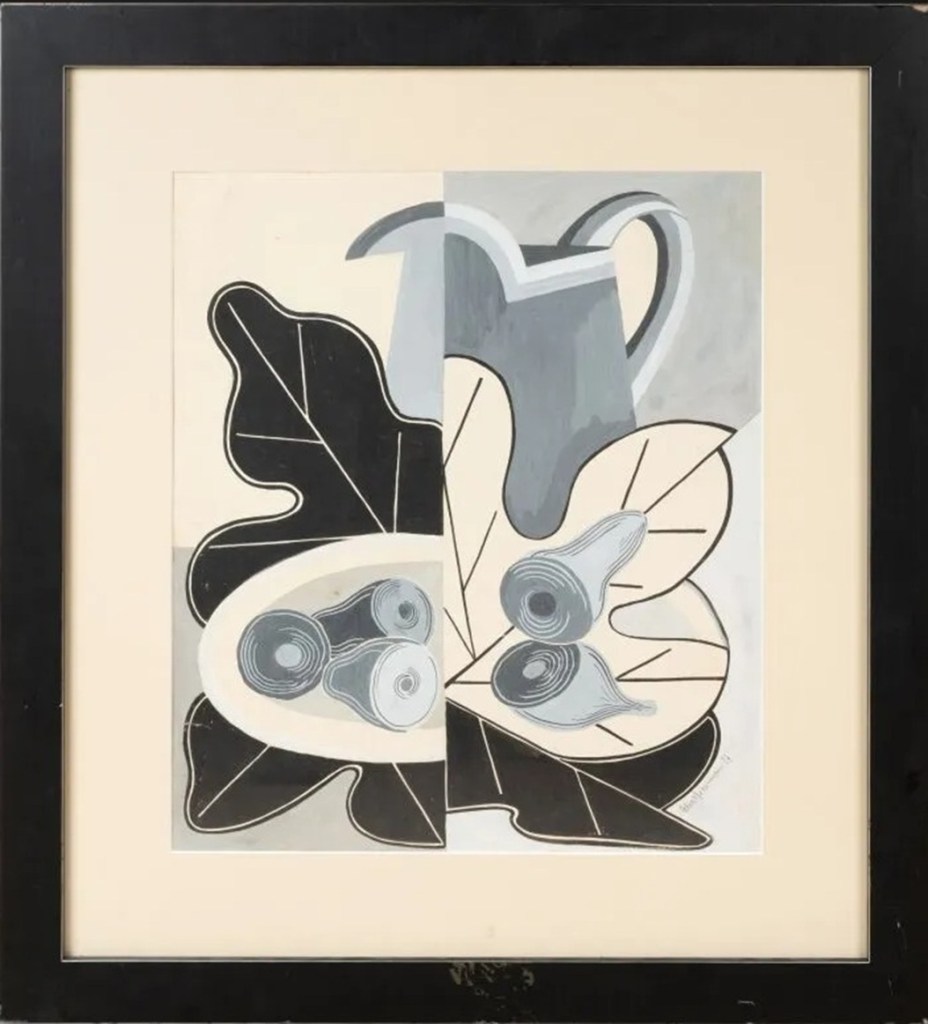
Lot 553. Musialowicz, Henryk (Gniezno 1914 – 2015). Abstract portrait. Oil and gold colours/paper. 51 x 38 cm. Framed under glass, uninspected out of frame. Upper right signed Musialowicz. Shallow bend. – Polish painter. M. began studying in 1936 at the Posen art a. crafts school. Since 1937 he continued his studies at the Warsaw academy udner F. S. Kowarski a. L. Pekalski. In 2009 he was awarded the ‘Gloria Artis’ medal, the highest Polish order for artistical achievements. Opening €2,000. Auktionshaus Stahl. 11/29/25. Passed

Prawdopodobnie jest to wczesny obraz Henryka Musiałowicza z cyklu ‘Epitafie’. Sylwetka ludzka osadzona na osi posiada u artysty różnorodne treści i jest motywem wielu cykli malarskich.

Franciszek Maśluszczak (1948)

Franciszek Maśluszczak. Gra, 1985

Lot 70. MASLUSZCZAK, Franciszek (1948-). Sans titre – Garçon et son chien. Huile sur toile. Signée et datée en haut à droite: F. Masluszcak 1985. Inscriptions en polonais, contresignée et datée au dos. Provenance: Collection de M. M.G., Montréal 33 x 24cm – 13 x 9,5″. Estimate C$600 – 800. Iegor. 12/09/25. Sold C$800

Mam sporą słabość do prac Franciszka Maśluszczaka. Myślę, że jest to jest nie tylko dobry malarz współczesny ale też dobry człowiek.

Ludwik Gędłek (1847 – 1904)

Ludwik Gędłek. After the meeting, 1882

Lot 5042. Ludwig Gedlek. After the meeting (Ukrainian Cossacks), 1882. Oil on wood; framed 31.5 x 63 cm. Signed, inscribed and dated lower right: L. Gedlek. Vienna 1882 Inscribed on label on reverse: “Nach dem Treffen” / Ukrain’sche Kosaken / (17th century) /. Original painting by / Ludwig Gedlek. Art trade, Germany, 1986; Private collection, Austria. Estimate €5,000 – 10,000. Im Kinsky. 12/11/25

Im Kinsky sugeruje się polskimi cenami w wycenie tego oleju Ludwika Gędłka. Obraz niczym nie zaskakuje i moja opinia o tym malarzu, na podstawie dużej ilości podobnych prac, pozostaje niezmienna. Handlarze będą szukali słabego klienta.

Karol (Karl) Witkowski (1860 – 1910)

Karol (Karl) Witkowski. Children playing with kitten

Lot 169. Karl Witkowski (Polish/American, 1860-1910) oil on canvas, children playing with kitten. 30 x 20 inches. signed lower right, antique gold leaf frame 26-3/4 x 36-3/4 inches. Has some Inpainting. Estimate $500 – 1,500. Bill Hoods & Sons. 12/02/25. Sold $450

W USA aż dwa obrazy Karola Witkowskiego, ucznia Matejki. Witkowski sporo malował podobne ja te cukierkowe prace z dziećmi, czy z dziećmi z marginesu ulicznego, zastrzegjąc sobie czasami na obrazach copyright (jak na poniższym) jako, że jego prace stanowiły ilustracje czasopism amerykańskich. Ceny jego prac są umiarkowane i chyba spadły porównując do tych sprzed kilku lat.


Karol (Karl) Witkowski. The Little Chick, 1907

Lot 281. Karl Witkowski Austrian, 1860-1910. “The Little Chick“, oil on canvas, 1907, signed and dated lower right, illegibly inscribed on tape on upper stretcher bar, framed. 25 x 30 1/8 in. (63.5 x 76.5 cm.), Frame: 32 x 37 x 3 in. (81.3 x 94 x 7.6 cm.). Estimate $2,000 – 3,000. Neal Auction Company. 11/20/25. Sold $1,200

Hanna Rudzka-Cybisowa (1897 – 1988)

Hanna Rudzka-Cybisowa. Strassenszene, 1933

Lot 3052. Hanna Radzka-Cybisowa (Mlawa 1897–1988 Krakau). Strassenszene. 1933. Gouache auf Papier. Unten rechts signiet und datiert. Blattgrösse 31×44,2 cm. Gerahmt. – Blatt gebräunt. Dunkler Lichtrand. In den Ecken je mehrere kleine Einstichlöcher. Ränder und Ecken leicht bestossen mit Fehlstellen am unteren Rand. Verso am oberen Rand partiell an Passepartout montiert. Estimate CHF 1,200 – 2,000. Schuler Auktionen. 12/02/25. SOLD CHF1,200

Artystka, uczennica Miłosza Kotarbińskiego, Ignacego Pieńkowskiego oraz Józefa Pankiewicza malowała głównie pejaże i martwe natury. Oba gwasze o wyraźnych wpływach postimpresjonizmu, wystawione na aukcji w Szwajcarii, pochodzą z okresu międzywojennego.


Hanna Rudzka-Cybisowa. Blumenstillleben mit Büchern, 1936

Lot 3056. Hanna Radzka-Cybisowa (Mlawa 1897–1988 Krakau). Blumenstillleben mit Büchern. 1936. Gouache auf Papier. Unten links signiert und datiert. Blattgrösse 62,8×44,2 cm. Gerahmt. – Blatt leicht gebräunt und wenig fleckig. Hellerer Lichtrand. Ränder und Ecken leicht bestossen. In den Ecken mit winzigen Einstichlöchern. Verso am oberen Rand an Passepartout montiert. Estimate CHF 1,000 – 1,800. Schuler Auktionen. 12/02/25. Sold CHF1,000

Rajmund Kanelba (Kanelbaum) (1897 – 1960)

Rajmund Kanelba (Kanelbaum). A young woman wearing a hat

Lot 317. Rajmund Kanelba (Polish, 1897-1960). A young woman wearing a hat, signed ‘Kanelba’ u.r., ​watercolour and gouache 68 x 56cm. Condition Report: Framed: 91 x 78cm. Time staining. Work faded and soft with rubbing and abrasions in areas please refer to illustration. There is some light cockling to the paper. Pin hole to lower right corner. Estimate £300-£500. Sworders Fine Art. 12/02/25. Sold GBP 280

Niedbalstwo poprzedniego właściciela doprowadziło do chyba nieodwracalnego zniszczenia tego gwaszu. Rajmund Kanelba jak mało kto potrafił portretować kobiety, oddawać nastrój i ich rys psychologiczny. Dlatego szkoda tej pracy. Sygnatura ledwo widoczna.