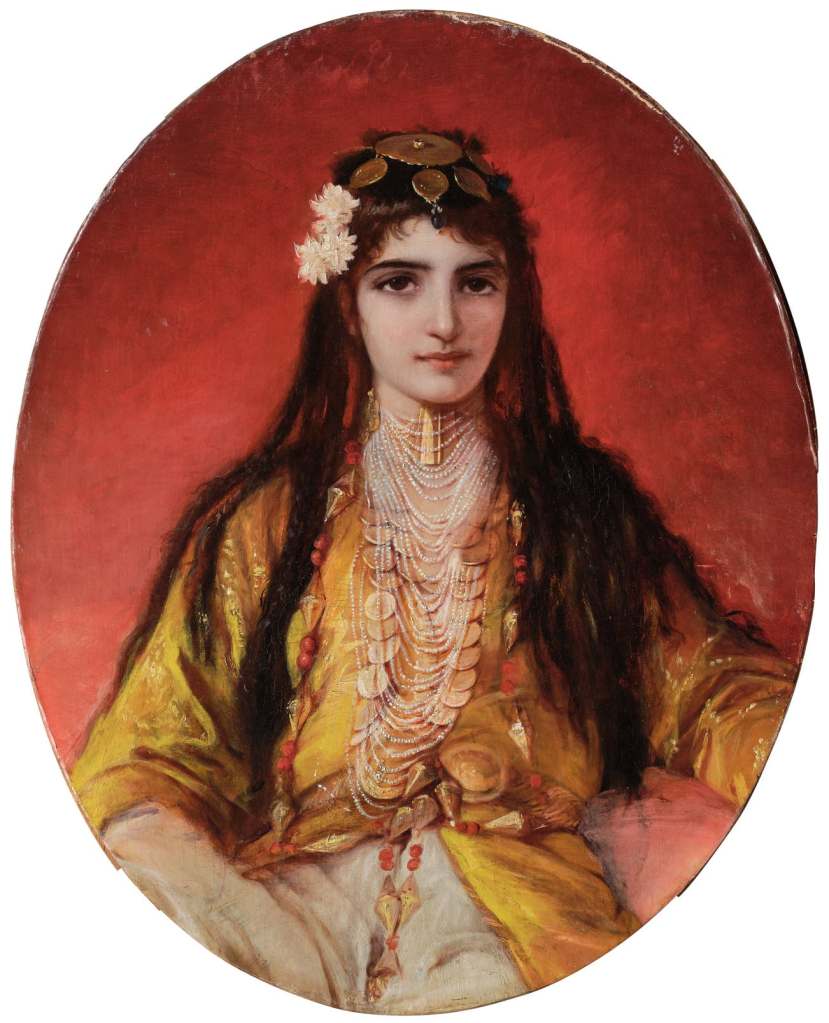
Lot 58. Elisabeth Jerichau-Baumann. Zarina, a Jewish Girl from Smyrna (Zarina, jødisk pige fra Smyrna). Oil on canvas, 31 5/8 x 25 1/2 in. (80.3 x 64.8 cm). Estimate $2,000 – 4,000. Phillips. 06/02/26. Sold $17,000 ($21,930 with bp)
Wiele prac Elisabeth Baumann nie jest sygnowanych. Mają one jednak znakomite proweniencje i to w zupełności wystarcza. Portret pięknej żydowskej dziewczyny pochodzi ze znaczącej kolekcji prac artystów skandynawskich ambasadora Josepha Loeba. Cena tej pracy na dzień przed zakończeniem aukcji osiągnęła już $7,000, co mnie wcale nie dziwi.
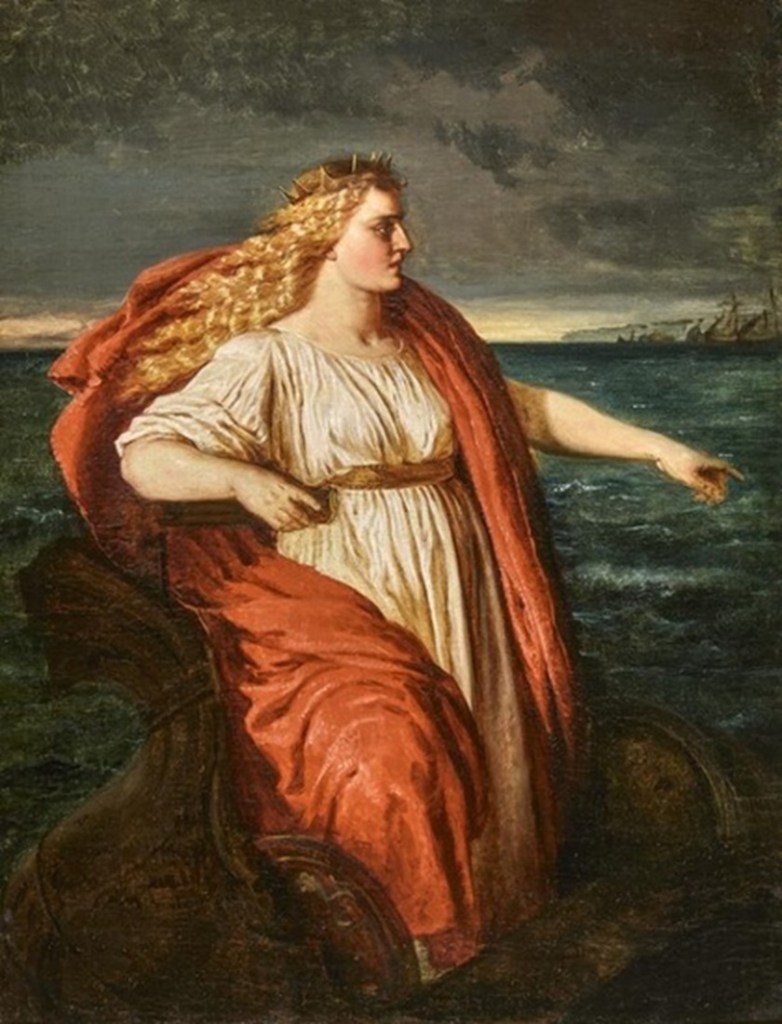
Lot 337. Elisabeth Jerichau Baumann: “Britannia“. Study. Unsigned. Oil on canvas. 58 x 45 cm. Estimate 40,000–50,000 DKK ($6,200–$7,800). Rasmussen. 06/16/26
Elisabeth Jerichau Baumann (b. Warsaw 1819, d. Copenhagen 1881) “Britannia”. Study. Unsigned. Oil on canvas. 58×45 cm. The present painting is a study for a painting entitled “Britannia / Britannia Rules the Waves”. A large (218×164 cm) version of the motif from 1873 can be found at the Kunsten Museum of Modern Art Aalborg (Inv. No. NK 119).
The motif “Britannia Rules the Waves” refers to the British national anthem, which Elisabeth Jerichau-Baumann also alluded to in the title when she exhibited the first version of the work at The Society of Female Artists in 1863. Britannia, the ruler of the sea, is rendered in a rich symbolic language that reveals the artist’s deep familiarity with British legends and mythology. Behind her hovers a dark bear-like figure, an allusion to King Arthur, often referred to as “the Bear of Britain” or “the Guardian Bear,” and regarded as an idealised image of the British monarch in both war and peace. At Britannia’s left foot, a black woman with a nursing child seeks protection, referring to Britain’s colonial expansion in Africa at the time, while a viking shield at her right foot points back to the viking age in Britain. The motif exists in at least two versions and was exhibited repeatedly, including in London and Manchester (1860), London (1862 and 1863), Dublin (1865), and at the Royal Academy of Fine Arts in Berlin (1866 and 1879). (Jerzy Miskowiak, Elisabeth Jerichau-Baumann. Nationalromantikkens enfant terrible, 2018, p. 104)

