Lot 42. Tamara de LEMPICKA (1898-1980)
Femme à la mandoline – circa 1933
Eau-forte et aquatinte en couleurs sur Japon signée et numérotée “91/100”
65 x 42 cm (25,59 x 16,54 in.)
Bibliographie :
Blondel, A152
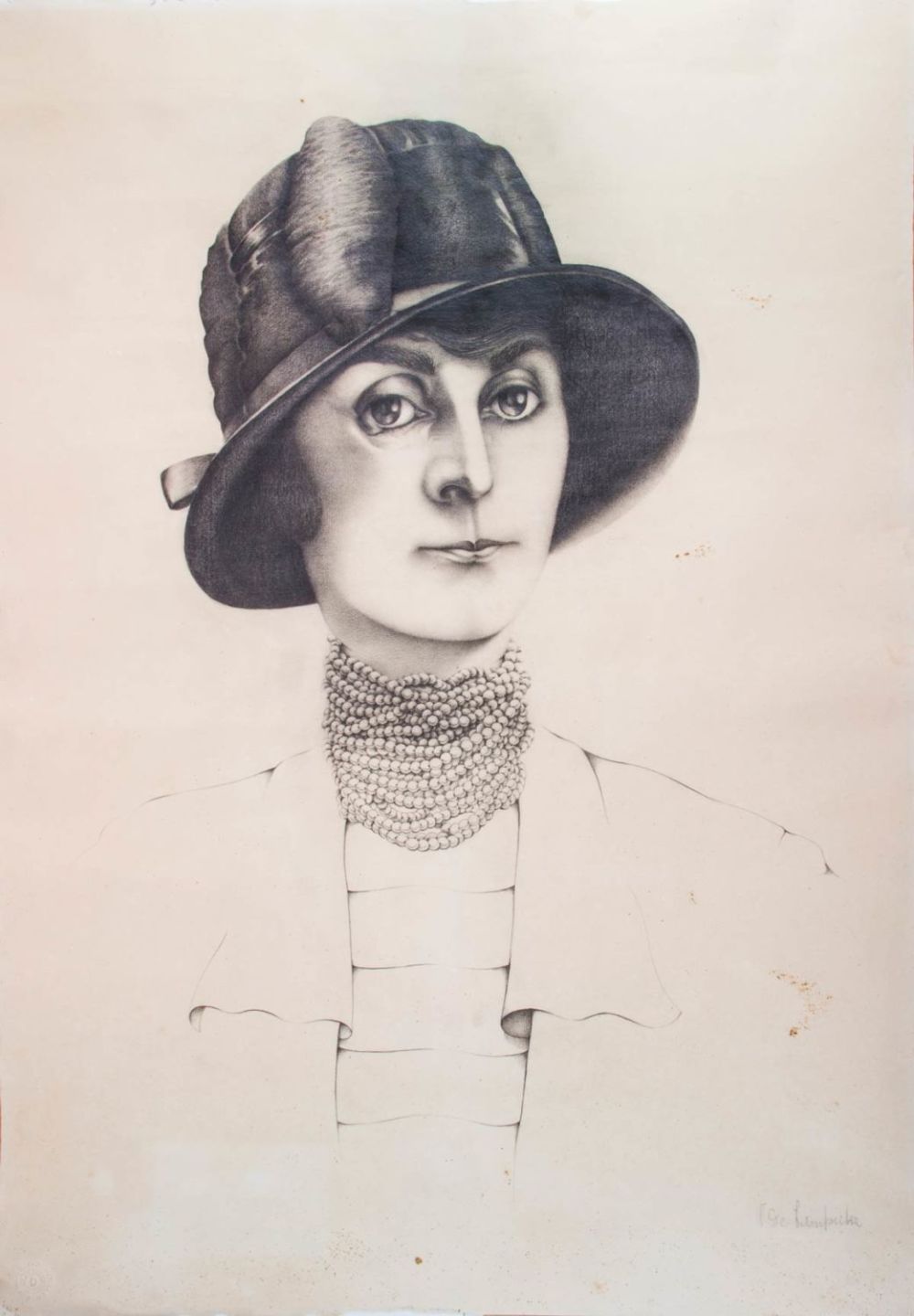
Technique: Graphite on paper
Signature: Signed (lower right), paper mark “Schoeller Durex”
Dimensions: 68 x 49 cm
Condition: Some creases and scattered minor foxing.
Provenance: Joaquim Eugenio de Lima, Sao Paulo
Purchased from the above by the present owner – Lavard Skou Larsen
Lot 1293. Tamara De Lempicka (1898-1980). Portrait de Madame G., signed ‘DE LEMPICKA’ (lower right), oil on canvas, 16 ¼ x 13 in. (41.3 x 33 cm.). Painted circa 1930. Estimate $200,000-300,000. Christies. 05/13/17. Sold $509,000
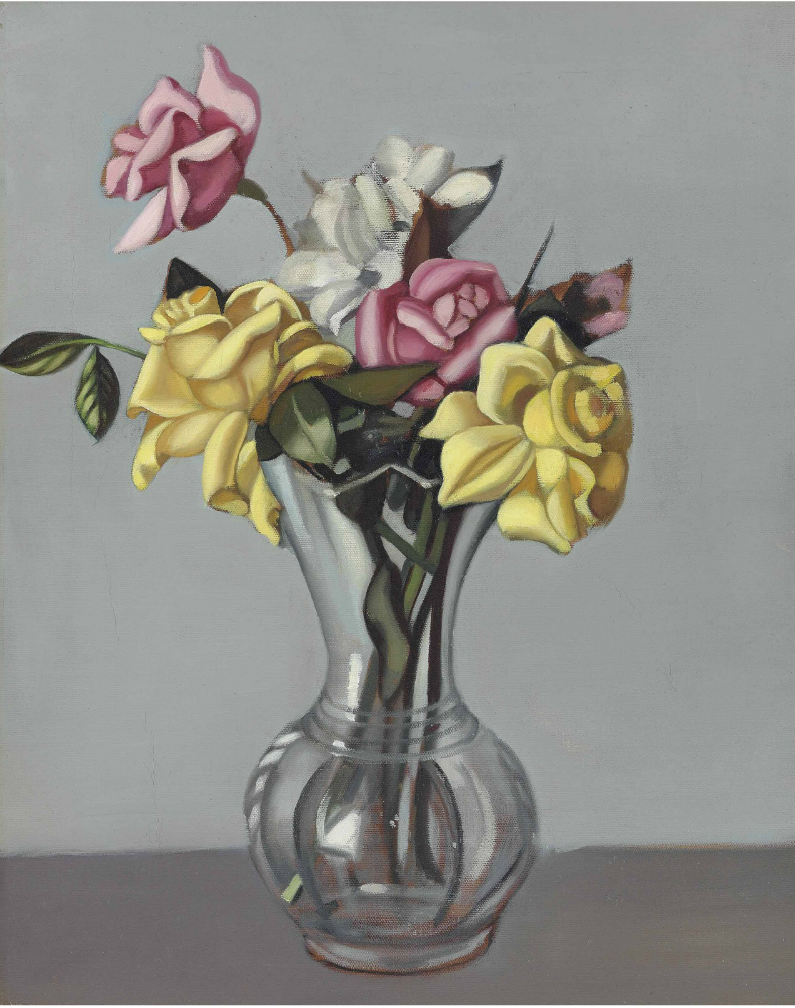
Lot 416, Tamara de Lempicka (1898-1980). Roses dans un vase, oil on canvas, 20 1/8 x 16 1/8 in. (51 x 41 cm.). Painted circa 1952. Estimate GBP 80,000 – GBP 120,000. Christies. 03/01/17
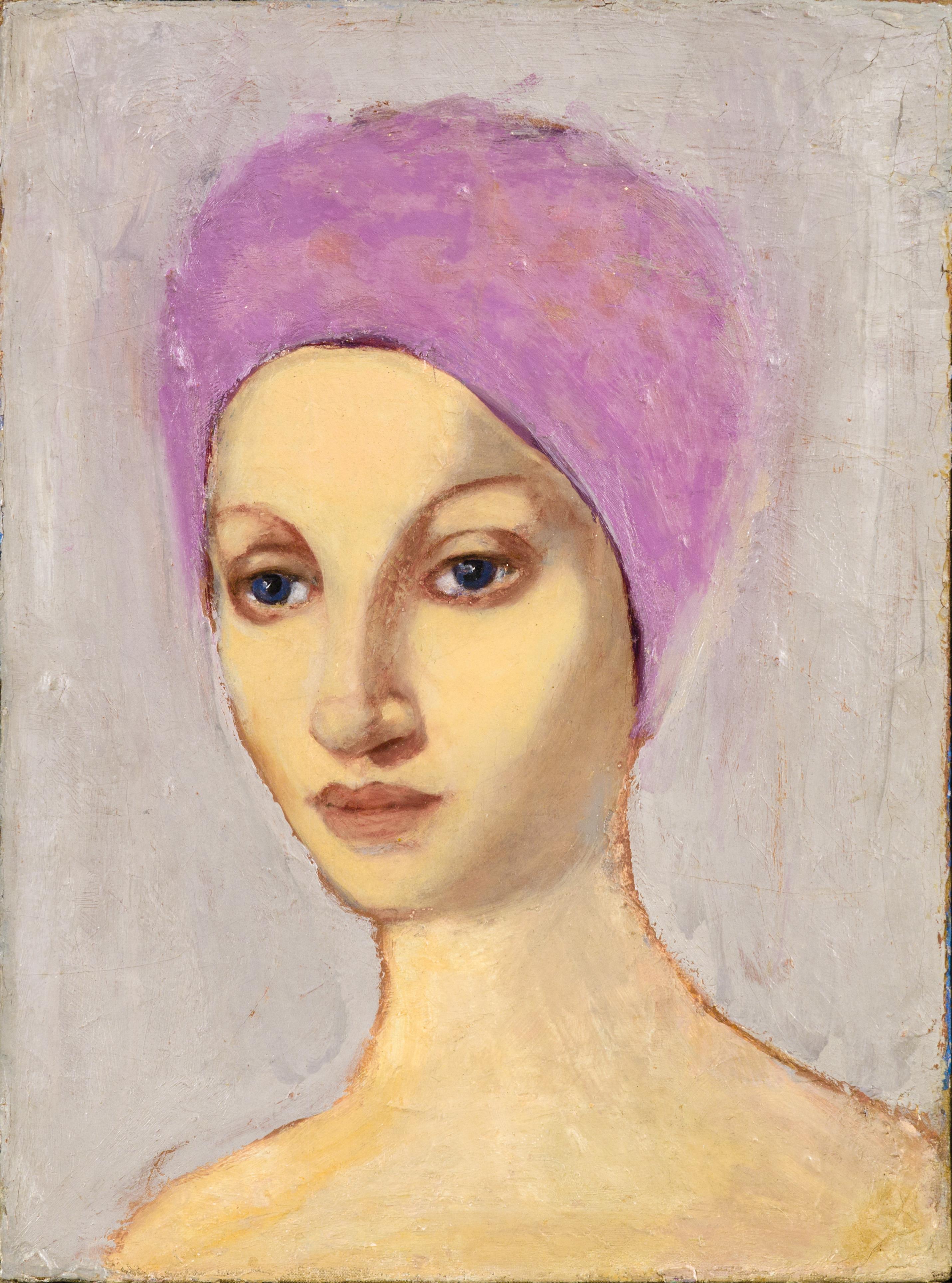
Lot 545. Tamara de Lempicka *(Warsaw 1898–1980 Cuernavaca /Mexico)
Figure de jeune femme, c. 1967, oil on canvas, 31 x 23 cm, framed
Provenance:
European Private Collection
Christie’s, New York, 10 May 2007
European Private Collection
Literature:
Alain Blondel, Tamara de Lempicka. Catalogue Raisonne, 1921–1979, Acatos, Lausanne, 1999, p. 413, no. 469 with ill.
Lot 146. Tamara de LEMPICKA 1898 – 1980
JEUNE FEMME A LA COURONNE DE FLEURS
Huile sur carton toilé
Cachet de l’atelier en bas à droite “T. DE LEMPICKA”
24,30 x 27,50 cm (9,57 x 10,83 in.)
Expositions : Tokyo, Bunkamura Museum of Art, Kobé, Hyogo Prefectural Museum of Art, Tamara de Lempicka Seduction of Elegance, The Legendary Painter Who Lived by Her Instinct, mai-juillet 2010
Rome, Complesso Monumentale del Vittoriano, Tamara de Lempicka. La Regina del Moderno, mars-juillet 2011
Paris, Pinacothèque, Tamara de Lempicka La Reine de l’Art déco, avril-septembre 2013
Turin, Palazzo Chiablese, Verone, Palazzo Forti, Tamara de Lempicka, mars 2015 – janvier 2016
Commentaire : Un certificat de Monsieur Alain Blondel sera remis à l’acquéreur (dimensions erronées).
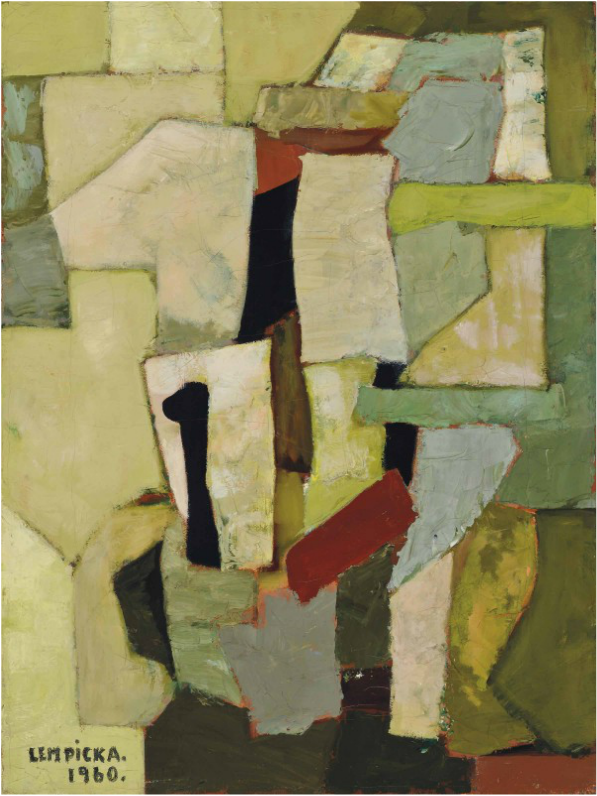
lot 8. Tamara de Lempicka (1898-1980)
Composition abstraite
signed and dated ‘LEMPICKA.1960.’ (lower left)
oil on canvas
16 1/8 x 12 in. (41 x 30.5 cm.)
Painted in 1960
Special Notice
Artist’s Resale Right (“Droit de Suite”). Artist’s Resale Right Regulations 2006 apply to this lot, the buyer agrees to pay us an amount equal to the resale royalty provided for in those Regulations, and we undertake to the buyer to pay such amount to the artist’s collection agent.
These lots have been imported from outside the EU for sale using a Temporary Import regime. Import VAT is payable (at 5%) on the Hammer price. VAT is also payable (at 20%) on the buyer’s Premium on a VAT inclusive basis. This VAT is not shown separately on the invoice. When a buyer of such a lot has registered an EU address but wishes to export the lot or complete the import into another EU country, he must advise Christie’s immediately after the auction.
Provenance
Private collection, Mexico; sale, Christie’s, New York, 5 November 1991, lot 227.
Anonymous sale, Christie’s, New York, 20 September 2011, lot 105.
Acquired at the above sale by the present owner.
Literature
Blondel, Tamara de Lempicka, Catalogue raisonné, 1921-1979, Lausane, 1999, no. B.391 (illustrated p. 393).
Lot 66. Tamara de Lempicka 1898 – 1980. POLISH. VASE WITH FLOWERS, signed LEMPICKA lower left, oil on canvas, 41 by 30.5cm., 16 by 12in. Estimate 120,000-180,000 GBP. Sothebys. 12/2/15
Provenance
Enrique de la Medina, Mexico (acquired from the artist in the 1950s)
Sale: Christie’s, New York, 6 October 1988, lot 61
Private Collection Switzerland
Sale: Burkard, Lucerne, 23 November 1996, lot 67
Private Collection, Great Britain
Purchased by the present owner in 2010
Exhibited
Rome, Complesso del Vittoriano, Tamara de Lempicka, La regina del moderno, 2011, no. 78, illustrated in the catalogue
Literature
Alain Blondel, Tamara de Lempicka, Catalogue Raisonné Peintures, 1921 – 1979, Lausanne, 1999, p. 364, no. B.316, catalogued & illustrated
Catalogue Note
Painted in 1952 Vase with Flowers is a typical example of the elegant floral still-lives Tamara de Lempicka painted in the post war period.
Tamara de Lempicka, nee Maria Gorska, was an artist of Russian origin born in Poland. Her family was very wealthy and Tamara grew up accustomed to a lavish, cosmopolitan lifestyle, which found expression in her iconic, Art Deco inspired depictions of the glamorous and wealthy in the 1920s. In 1914 she moved to Saint Petersburg where she met her first husband, Tadeusz Lempicka. They were forced to move to France following the Russian revolution, and it was here that Tamara took up painting in earnest and became a pupil of Andre Lhote and Maurice Denis. A talented painter who combined the influences of cubism, neoclassicism and Art Deco, Lempicka created elegant, stylish and sensual portraits which were stylistically instantly recognisable and commercially successful.
Her husband divorced her following a string of affairs, and Lempicka subsequently moved to America in 1930, where she met her second husband, Baron Raoul Kufner, and settled in New York, continuing the enchanted life of a successful artist and wealthy jetsetter. It was during the war years that Lempicka withdrew from public life and her artistic direction changed, shifting from portraits and depictions of the human form to still-life painting. More intimate in feel than her figurative compositions, these works nevertheless have all the hallmarks of Lempickas’ painterly virtuosity and innate elegance.
Indeed, in Vase with Flowers the graceful flower composition, the white vase and the crisp sheet of paper bearing the artist’s name convey both purity and a nostalgic feeling, and despite the change in subject matter, her painterly style is immediately recognizable. Lempicka herself wrote of her work: “Among a hundred paintings, you could recognize mine. My goal was: Do not copy. Create a new style, colours light and bright, return to elegance in my models.” True to this idiom, to this day, Tamara de Lempicka remains one of the twentieth century’s most popular and iconoclastic artists.






 Polish Art Corner