Bolesław Biegas (Biegalski). Throne of the Queen of Marine Treasures, 1919
Porywają mnie rzeźby Bolesława Biegasa, mało natomiast jego prace malarskie. Jeden z jego symbolicznych obrazów z serii ‘mistycznej’ licytowano od 5,000 euro.
Lot 149. Boleslas BIEGAS (1877-1954). Throne of the Queen of Marine Treasures, 1919, Oil on panel, signed lower right, on the back a label with title, date and n°368, 50.5 x 61 cm. (Slight crack on reverse, opaque varnish, fine scratch marks) on the back, Jan Szymanski inventory label with no. 368, another label with title and date Provenance: Atelier de Biegas – Jan Szymanski inventory no. 368 – Gift to the Polish Historical and Literary Society in 1954 – Galerie Jan Krugier, Geneva – Sale Ader Picard Tajan, 10/26/1990, no. 48. A notice of inclusion in the catalog raisonné of the Biegas Committee with the support of the Polish Historical and Literary Society, signed by Mr. Xavier Deryng and Mrs. Anna Czarnocka, will be given to the purchaser. Estimate 6,000 – 10,000 euro. Art Valorem. 11/29/23. Sold 13,000 euro
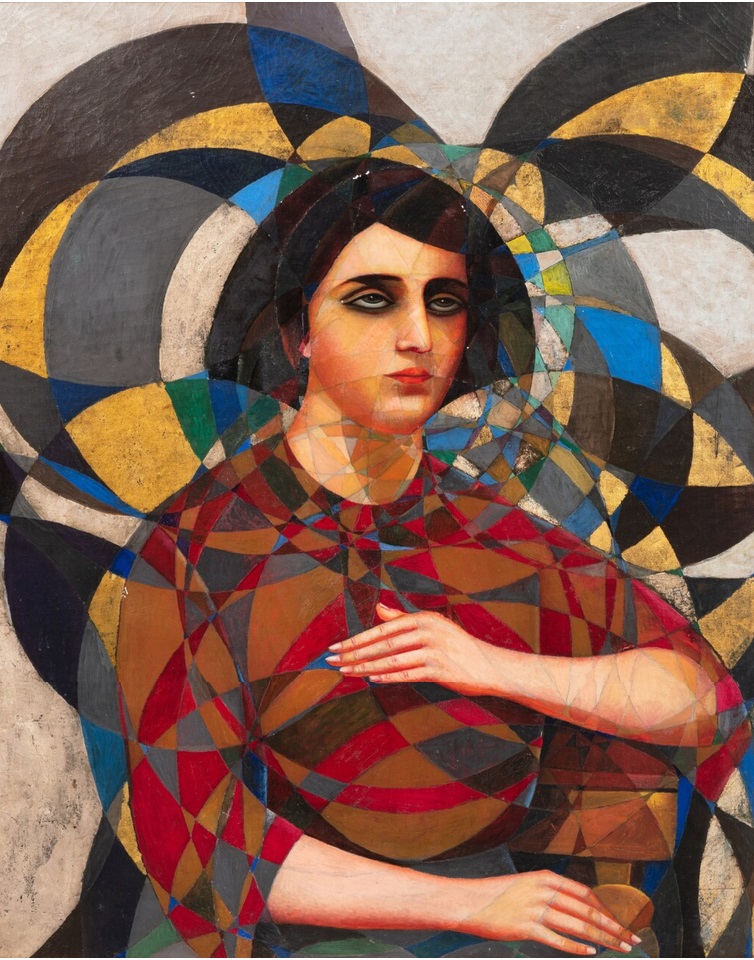
Bolesław Biegas (Biegalski).Spherical Portrait of Countess Maria Kwilecka
Lot 41. Bolesław Biegas, Polish 1877 – 1954. Spherical Portrait of Countess Maria Kwilecka, oil on canvas. Unframed: 92 by 73cm., 36 by 28¾in.; (sight measurements 90 by 71cm., 35½ by 28in.). Framed: 103 by 84cm., 40½ by 33in. Painted circa 1920-1922. Provenance: Studio of the artist, Bequeathed to the Polish Historical and Literary Society of the Polish Library, Paris in 1954 (inventory Szymanski no. 259), Galerie Jan Krugier, Geneva (purchased from the above in the early 1970s), Galerie Valois, Paris (purchased from the above in the early 1980s). Estimate 18,000 – 25,000 euro. Sotheby’s. 11/09/23. Sold 40,640 euro (bp)
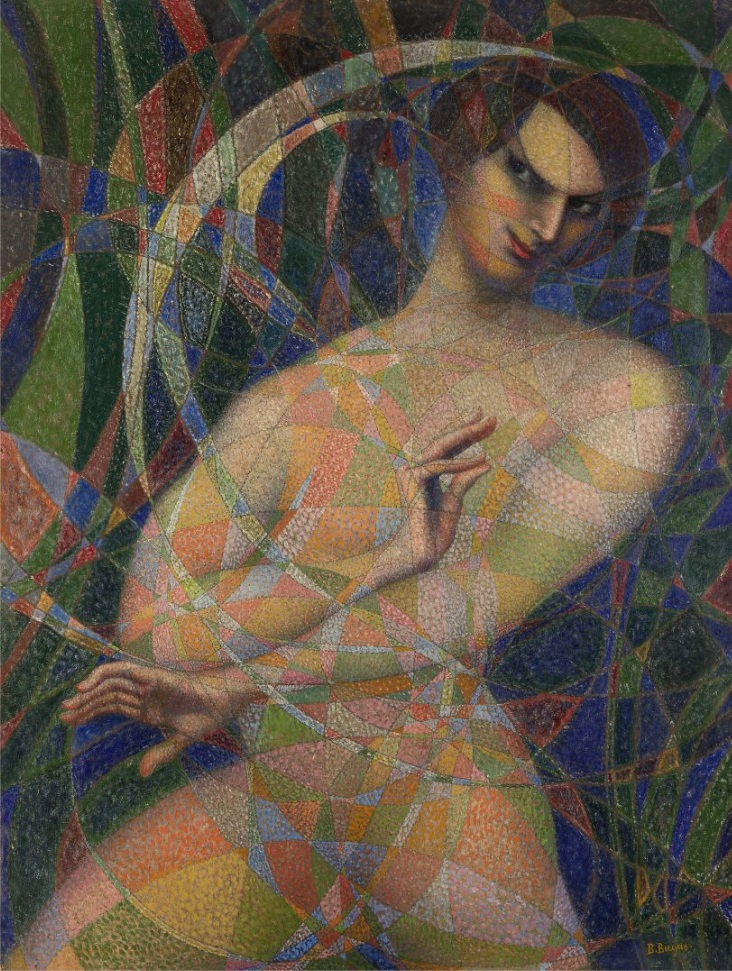
Sotheby’s w Niemczech licytowało dwie figury sferyczne Bolesława Biegasa. Ciekawa proweniencja jednej z nich (Maria Kwilecka): Polish Historical and Literary Society of the Polish Library. Pozyskano ją tam jako dar po czym sprzedano i tak krąży po świecie. Natomiast drugą z figur Sotheby’s usiłował sprzedać w ubiegłym roku bez powodzenia z wyceną 40,000 – 60,000 euro i obecnie skończyło się sukcesem lecz dużo niżej (50% off). Spora rożnica pędzla pomiędzy obu pracami (trójwymiarowa vs dwuwymiarowa czyli płaska) i bardzo enigmatyczna proweniencja tej drugiej pracy, co razem powoduje moje skrobanie się w głowę. Zastanawiam się, czy tę drugą artysta nie namalowal pośmiertnie; to tylko myśli nie poparta jednak żadnymi faktami i tym zastrzeżeniem kończę bo nie chcę być targany przez sądy.
Bolesław Biegas (Biegalski). Le sourire de l’amour
Lot 44. Bolesław Biegas Polish 1877 – 1954. Le sourire de l’amour, signed B. Biegas lower right, oil on panel. Unframed: 64.5 by 50.5cm., 25½ by 20in. Framed: 73 by 59.5cm., 28¾ by 23½in. Sale: Frank Lombrail-Jean Pierre Teucquam, Paris, 23 April 1996, lot 98. Purchased by the present owner in 1996. Estimate 20,000 – 30,000 euro. Sotheby’s. 11/09/23. Sold 25,400 euro (bp)
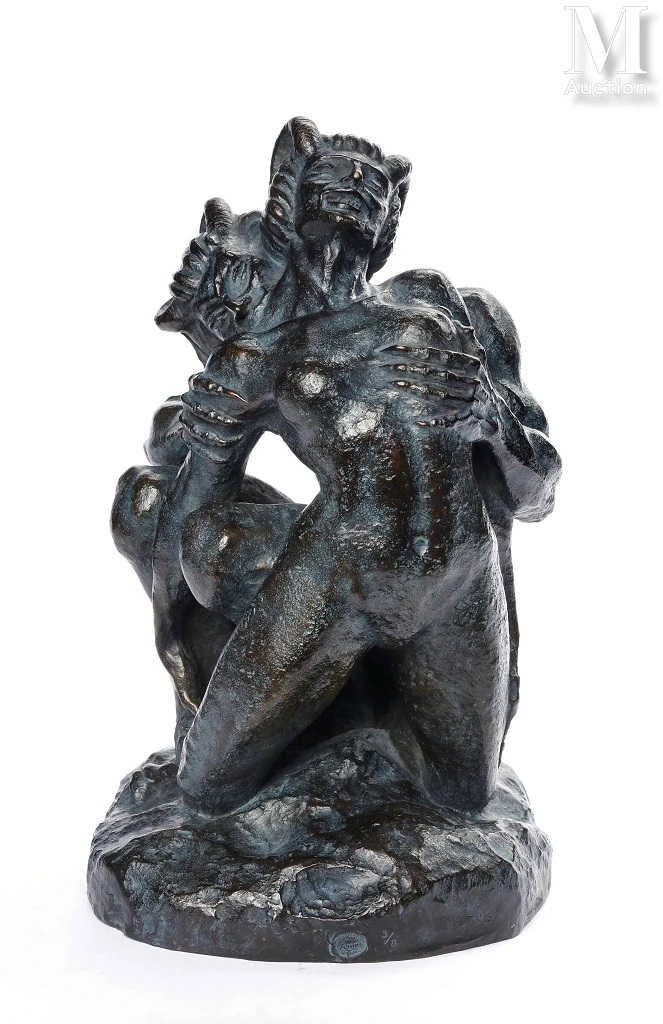
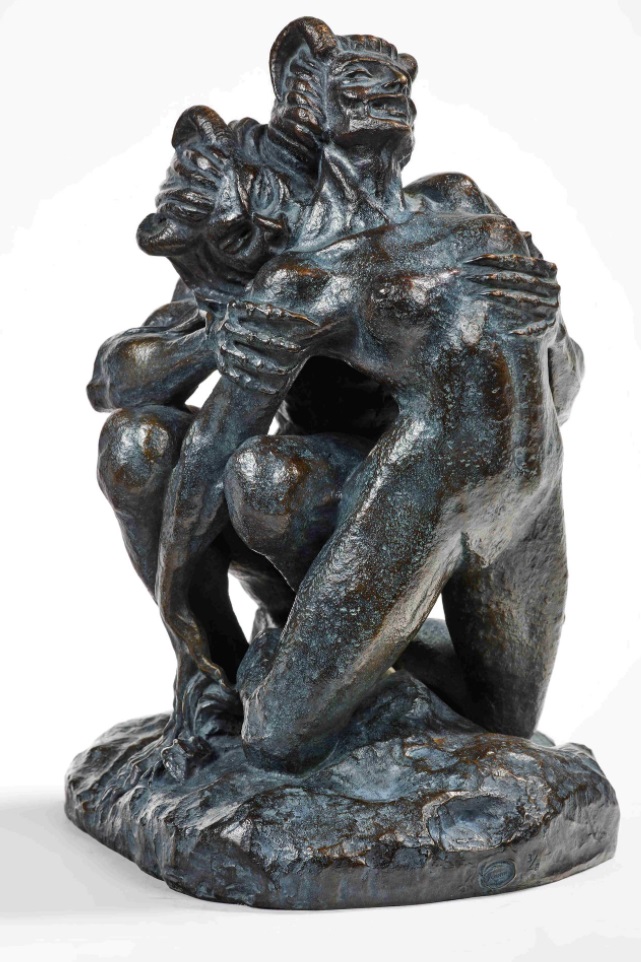
Pośmiertny odlew rzeźby Bolesława Biegasa. Może właśnie dlatego, że to jest pośmiertny praca nie zastała sprzedana a może dlatego również, że detale są nie są ostre (np. ręce) lub może patyna została dobrana mało atrakcyjna. W zasadzie należałoby mieć dla porównania gips tej rzeźby. Dodam, że ten sam numerowany egzemplarz (3/8) był na aukcji w Bonhams w czerwcu tego roku z wyceną 10,000 – 15,000 euro.
Lot 46. Boleslas BIEGAS (Koziczyn 1877- Paris 1954). L’Étreinte. Bronze à patine brun foncé nuancée 38 x 22 x 27 cm. Signé sur la base B. Biegas. Numéroté 3/8 et le cachet du fondeur Rosini Fondeur d’Art à la cire perdue Paris. Fonte posthume d’après le modèle en terre cuite datant de 1922-1925. Un avis d’inclusion dans le Catalogue Raisonné de Boleslas Biegas, du Comité Biegas, avec le soutien de la société historique et Littéraire Polonaise (SHLP), signé par Monsieur Xavier Deryng et Madame Anna Czarnocka sera remis à l’acquéreur. Estimate 6,000 – 8,000 euro. Millon.10/24/23. Not sold
Skopiowałem niemal z obowiązku ten informacyjny opis katalogowy. Znakomita proweniencja oraz relatywna rzadkość prac sferycznych tego artysty na rynku aukcyjnym zaowocowały dużym zainteresowaniem tą pracą i wysoką ceną sprzedaży.
Lot 34. Boleslas BIEGAS (1877-1954). La danse du mépris, circa 1922-1925. Huile sur carton marouflé sur toile signée en bas à droite « B. Biegas ». Au dos sur une étiquette à l’encre : « 1937. APM/87 danse du mépris, 1937 ». 99 x 75 cm. Provenance : – Atelier de l’artiste légué à la Société Historique et Littéraire Polonaise de Paris (1954); – Galerie Jan Krugier, Genève, acquise auprès de la précédente au début des années 1970; – Galerie Valois, Paris, acquise auprès de la précédente au début des années 1980; – « Vente atelier Boleslas Biegas » Me Pierre Cornette de Saint Cyr, 30 juin 1987, Hôtel Drouot, n° 70, reproduit en couleurs. – Collection particulière. Un avis d’inclusion dans le catalogue raisonné du Comité Biegas avec le soutien de la Société Historique et Littéraire Polonaise (SHLP), signé par Monsieur Xavier Deryng et Madame Anna Czarnocka, sera remis à l’acquéreur. Estimate 25,000 – 30,000 euro. Nicolas Nouvelet Commissaire-priseur. 06/27/23. Sold 48,000 euro
Boleslas Biegas probably began painting his first spherical paintings in1912. Guillaume Apollinaire, on the occasion of his exhibition organized from the 21st of June to the 5th of July by the Amicale des Arts, in the Femina Theatre avenue des Champs Élysées, remarked on the circular elements in his paintings in L’Intrangiseant dated June 28th : “The firmament to which his fervor raises him is populated by beings in symbolic colors, in beautiful and simple shapes to which the artist imprints his melodious spherical movement. This elevated art, that should be linked with religious art, is worthy of attention”. Biegas will only start using the term “sphérisme” after WWI, during his participation at the Exposition des artistes Peintres et Sculpteurs Polonais, a fundraiser for the Polish soldiers wounded in France, open to the public on November 30th, 1918 in the Palace of the Count Nicolas Potocki, 27 avenue de Friedland, and to which Biegas had sent 49 paintings and 7 sculptures.
In the catalog of the exhibition, 6 pieces are preceded by the statement “Biegas’s invention of spherical paintings”. Biegas painted more than a hundred spherical paintings which he presented at the Salon d’Automne of 1919, at the Salon des Indépendants in 1920, 1921, 1922 and 1923, and especially at the Pavillon de Magny, located 55 avenue Victor Hugo. Unfortunately, no catalog of this exhibition entirely dedicated to spherism was ever published. However, several articles make it possible to establish that it took place from the 20th of March to the beginning of May 1919 and that it included about forty paintings. Spherism had a real impact on the Parisian artistic scene then, as shown by the articles from Pascal Forthuny, Michel Georges-Michel, Gustave Kahn, Louis Vauxcelles and Claude Chauvière. L’Éclair’s columnist entitled his article dated March 20th : “Art or mystification ? Cubism is dead ! We now know “spherism”…which would almost make us regret its predecessor!” In l’Heure dated May 19th, Claude Chauvière entitles his article “Round-Round” and defined Biegas as “the master of circles” : “Biegas sees everything round and he explains it logically : the Earth is round, the moon is round : humans have brain convolutions, blood circulation and the belt-railway make the circular motion uniform ; liquids’ concave or convex menisci ; the spheroidal embryo ; the sound that spreads through waves, sensibility which is projected and perceived through waves, etc…”
Until 1914, Biegas had not shown any kind of interest for the motion of the human body. After WWI, dance occupied a special place in spherism, as well as in the Mystique de l’Infini. The Danse du Mépris perfectly illustrates Biegas’ art’s new orientation, which gave rise to connections that had not yet been explored. In the early 20’s, Biegas was very close to the American dancer Paul Swan “ The Most Beautiful Man in the World”(1) who was very successful with Isadora Duncan and animated his parties in his studio on rue Bagneux. Biegas also knew Jan Reszke, who was approached by Vaclav Nijinsky in 1919 to get Polish citizenship. Starting in 1917, Nijinsky realized drawings based on circles that present, for some of them, astonishing kinship with Spherism. It is difficult to date the Danse du Mépris with precision because Biegas signed his paintings but never dated them, unlike his sculptures. We can assume that the Danse du Mépris was painted around 1922-1925 because after 1925, Biegas only exposed paintings from the Mystique de l’Infini. Xavier Deryng
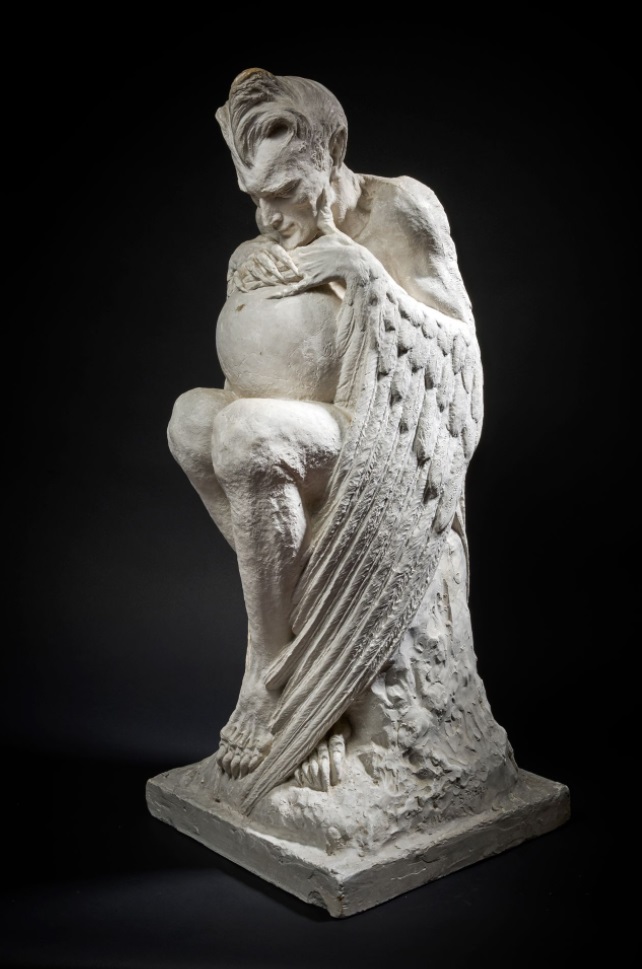
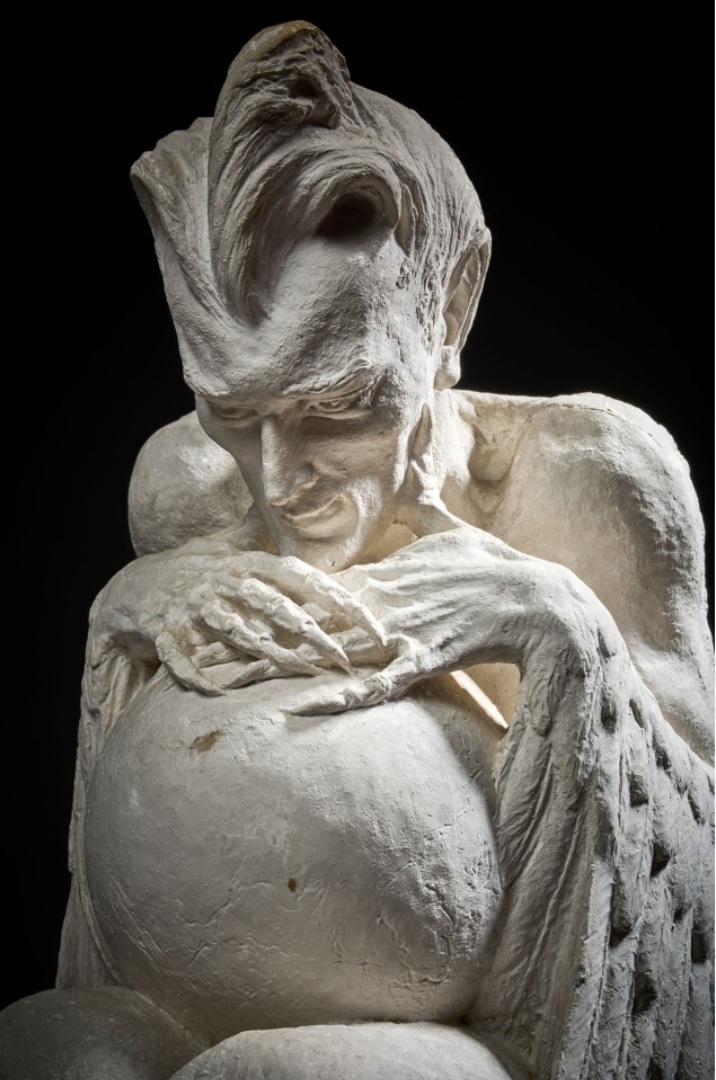
Bolesław Biegas. Demon of the Earthly Sphere, 1924
Dla mnie ta rzeźba Bolesława Biegasa – oryginalny plaster – była przebojem tego roku. Praca została dobrze zauważona przez kolekcjonerów (może jako gips nadaje się bardziej do muzeum?) bo walka rozpoczęła się od 15,000 euro i cena wartko pięła się co 1,000 euro (począwszy od 40,000 euro czasami co 2,000 euro) by zatrzymać się na 63,000 euro. Nie widziałem odlewów tej pracy i chyba warto te 8 sztuk wykonać w brązie.
Sygnatura
Lot 193. Boleslas BIEGAS (1877-1954). Demon of the Earthly Sphere, 1924. Original plaster, signed and dated 1924 lower left Height: 88 cm. Provenance: acquired at the studio sale on June 30, 1987 at Cornette de Saint-Cyr, Drouot, catalog no. 56. Printing rights for 8 copies. Boleslas Biegas, whose real name was Biegalski, was a Symbolist painter, sculptor, writer and playwright born in 1877 in Koziczyn, near Warsaw, Poland, and died in Paris in 1954. His childhood was marked by the death of his parents and brother, which inclined him towards a meditative, morbid temperament. Hailed as a new Giotto, like Berger, after studying at Krakow’s Academy of Fine Arts, he joined the Viennese Secession, before settling in Paris in his rue de Bagneux studio. His primitive-looking, monolithic, totemic sculpture is reminiscent of dark, spiritual imagery, the cycles of which are numerous: mysterious castles, infinite mysticism, war vampires recalling Balkan legends. Estimate 15,000 – 20,000 euro. Tessier & Sarrou et Associés. 06/23/23
Odlew współczesny i w dodatku wygląda jakby został po cygańsku wykonany. Detalom brakuje ostrości. W sumie wcale się nie dziwię, że ten egzemplarz nie został sprzedany, choć chylę nisko czoła przed tym (przede wszystkim) rzeźbiarzem.
Lot 124. BOLESLAS BIEGAS (1877-1954). The Embrace, signed, numbered 3/8 and stamped Rosini Fondeur d’Art à la cire perdue Paris bronze signed, numbered 3/8 and with the foundry mark Rosini Fondeur d’Art à la cire perdue Paris bronze 38 x 22 x 27 cm. 14 15/16 x 8 11/16×10 5/8 in. Created in 1925, this work is a posthumous casting. Footnotes: A notice of inclusion in the Catalogue Raisonné of Boleslas Biegas, from the Biegas Committee, with the support of the Polish Historical and Literary Society (SHLP), signed by Mr. Xavier Deryng and Mrs. Anna Czarnocka will be given to the purchaser. Provenance Private collection, Paris. Estimate 10,000 – 15,000 euro. Bonhams-Cornette de Saint Cyr. 06/07/23. Not sold
Baron Henryk Trutschel i jego żona Jadwiga zajęli się młodym i początkującym polskim rzeźbiarzem chłopskiego pochodzenia, Bolesławem Biegasem, po jego przyjeździe do Paryża. Sponsorowali jego pracownię, pomagali w rozbujaniu jego kariery, finansowali odlewy rzeźb w brązie. Jak czytałem, ta przyjaźń byłą dość szorstka w różnych okresach ze strony Biegasa. Bez obecności tej pary małżeńskiej, kto wie czy Biegas wypłynąłby na bruku paryskim.
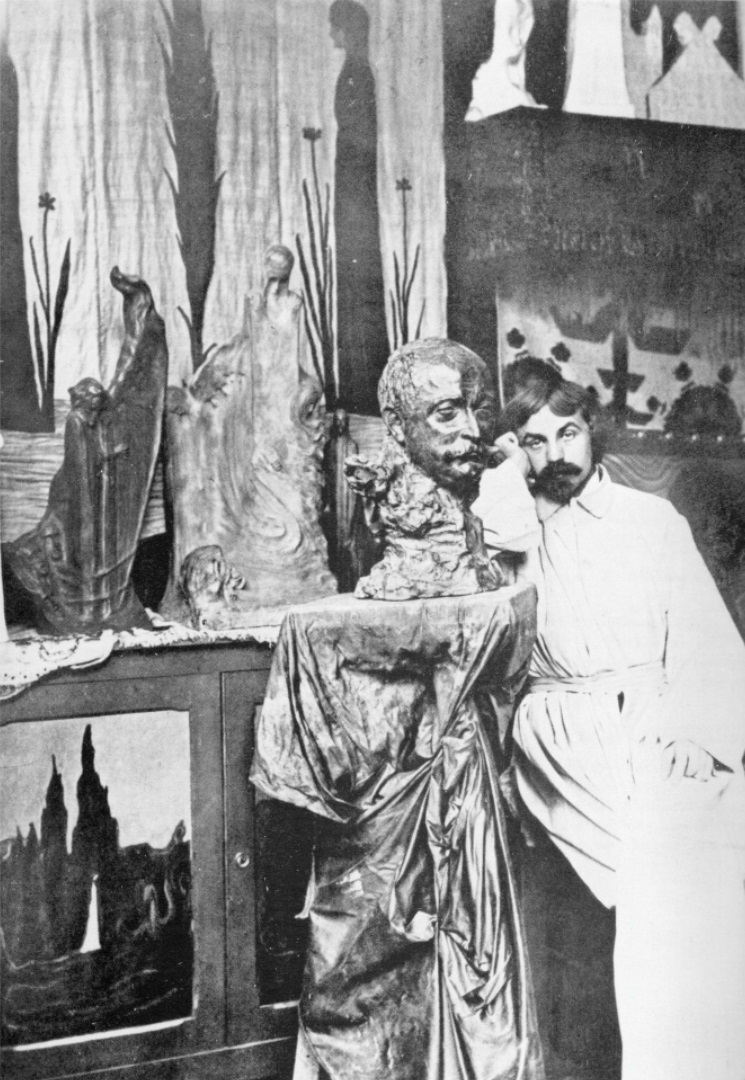
Obecnie na tym samym rynku mamy odlew głowy Henryka Trutschela, wąsatego pana w wieku ok 60 lat. Obie rzeźby były prawdopodobnie formą podziękowania Biegasa za ich życzliwość i opiekę. Obie prace są bardzo dobrze udokumentowane w literaturze a obecnie dom aukcyjny Ader przedstawia historyczne fotografie rzeźby Henryka Trutcheal jak też jej oryginalnego gipsu.
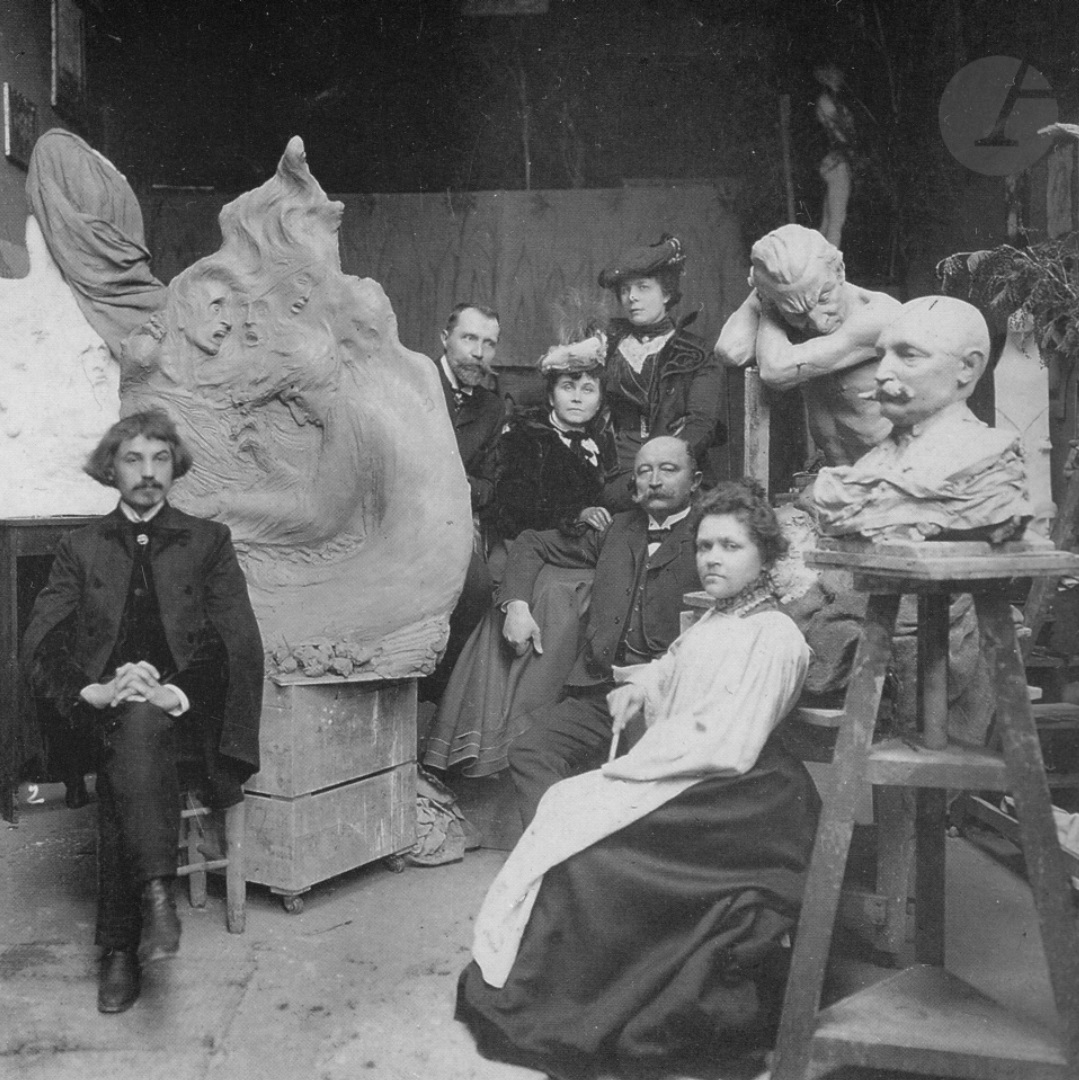
Pracownia Bolesława Biegasa
Lot 2. BOLESLAS BIEGAS (1877-1954) (BOLESLAW BIEGALSKI). Baron Henryk Trutschel (1844-1928) patron and protector of the artist, the model designed in [1902], our print made before 1906, unique piece, presented at the Galerie des Artistes Modernes, Paris, 1908 Sculpted portrait; the hollow back. Proof in bronze with a shaded brown patina. Signed and located B. BIEGAS – Paris towards the base on the right side. Height : 46,5 cm Provenance : American collection. Important: A notice of inclusion in the catalog raisonné of the Biegas Committee with the support of the Polish Historical and Literary Society (SHLP), signed by Mr. Xavier Deryng and Mrs. Anna Czarnocka, will be given to the buyer. Exhibitions : – Bolesław Biegas – City Museum, Kiev, 1905. The plaster of our work presented at this event.
Bolesław Biegas – Galerie des Artistes Modernes, Paris, 1908. Our work presented at this event and bearing the No. 47 in the catalog. Bibliography: – Boleslas Biegas; sculptor and painter – Album, Louis Theuveny editions, 1906. The plaster of our work reproduced on page 27. – Xavier Deryng – Bolesław Biegas – Catalogue of the exhibition organized from May 31 to August 30, 1992 at the Trianon de Bagatelle, Boulogne-Billancourt. Éditions de la Société Historique et Littéraire Polonaise (SHLP), Paris, 1992. Boleslas Biegas, Henry and Jadwiga Trutschel and the studio plaster of our work in a period photograph reproduced on page 16; another old photograph of the studio plaster of our work next to the artist (Kiev exhibition, 1905) reproduced on page 249. Our work in a period photograph, with the artist leaning on the saddle receiving it, reproduced on page 226.
Estimate 15,000 – 20,000 euro. Ader. 06/09/23. Not sold
Bolesław Biegas w swojej pracowni na tle odlewu rzeźby Henryka Trutchela
Na powyższej fotografii widzimy nie tylko Bolesława Biegasa stojącego obok rzeźby Henryka Trutschela lecz jako bonus jest oparty na szafce na której stoja inne jego prace. Ta szafka, której panele zostały namalowane przez artystę, była dwa lata temu przedmiotem aukcji we Francji i została sprzedana za blisko 43,000 euro (precyzyjniej, były wtedy na aukji dwie szafki jako jeden lot), https://polishartcorner.com/2020/11/13/boleslaw-biegas-1877-1954-25/.
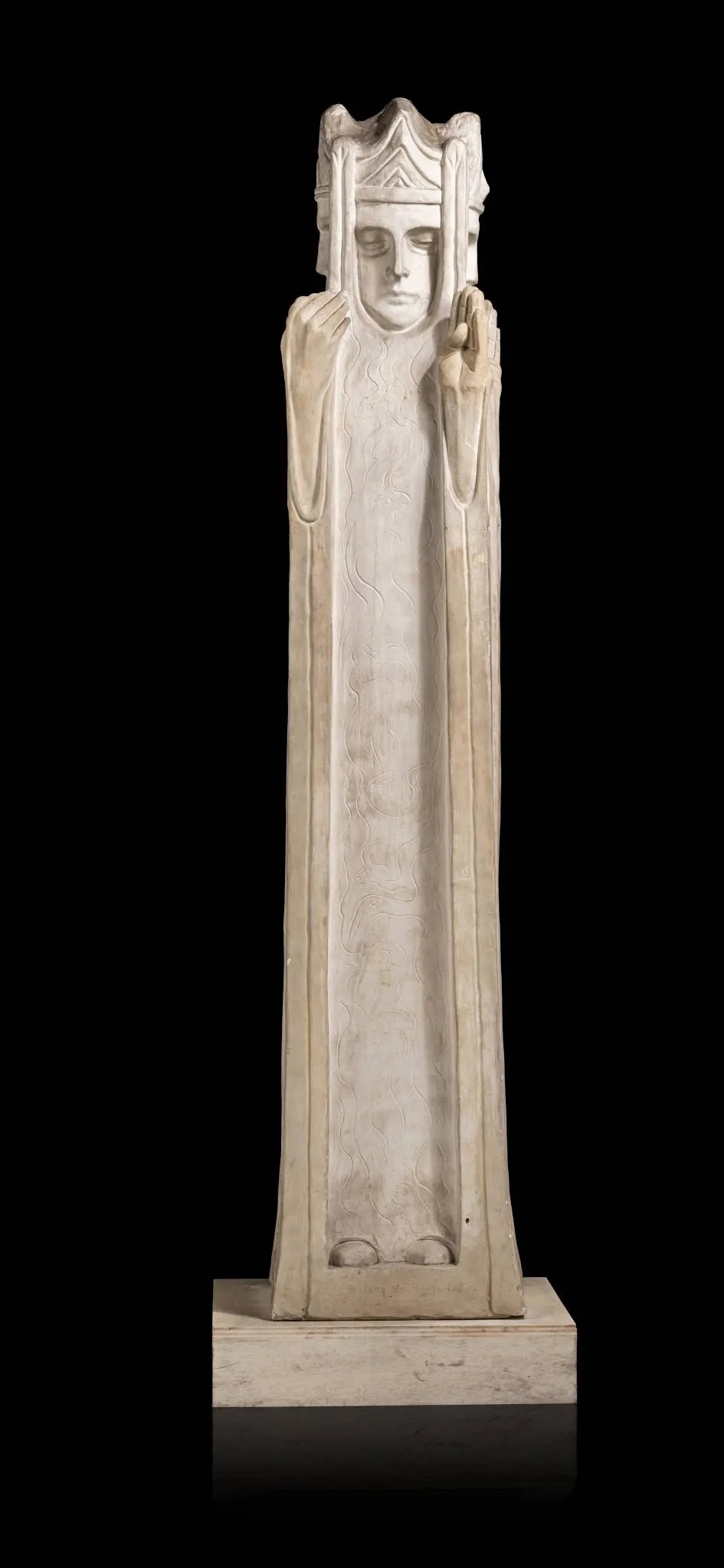
Światowid Bolesława Biegasa w postaci oryginalnego gipsu. Wartość muzealna i w dodatku być może rzeźba ta nie była odlana w brązie. Spora niespodzianka rynkowa. Millon sprzedane na tej aukcji sporo poloników lecz żaden z nich wartością nie dorówna tej pracy.
Lot n°73. Boleslas BIEGAS (Koziczyn 1877- Paris 1954) Swiatowid Réalisé en 1912 Plâtre original à patine blanche et beige nuancée Hauteur : 203 cm Largeur : 34 cm Profondeur : 35 cm Signé sur la base “B. Biegas” et sur une autre face titré “Cztery Strony Surata” (Manques, éclat au nez) Avis d’inclusion dans le catalogue raisonné des sculptures de Boleslas Biegas en cours d’élaboration par Xavier Deryng, sous l’égide de la Société Historique et Littéraire Polonaise/Bibliothèque Polonaise de Paris, légataire universel de l’artiste. Un droit de tirage est accordé sous réserve de remettre un exemplaire à la société Historique et Littéraire Polonaise. Swiatowid était la principale divinité polycéphale adorée par les anciennes tribus slaves, qualifié de « deus deorum » par les chroniqueurs du Moyen Âge, comme Helmold de Bossau et Saxo-Grammaticus, Svantovit était considéré comme le Dieu suprême du panthéon slave. En 1848, une colonne en pierre, de 2,57 mètres de hauteur, à quatre faces fut découverte en Ukraine, dans le Zbrucz, affluent du Dniestr, à Horodnica. Elle fut transportée dans la propriété du comte Mieczyslaw Potocki qui l’offrit à la Société des Sciences de Cracovie. La statue fut ainsi baptisée en polonais Swiatowid et exposée dans le vestibule du siège de l’Académie des Sciences Polonaise, située non loin de l’École des Beaux-Arts rue Slawkowska. Le Swiatowid de Zbrucz marquera ainsi profondément Biegas au cours de ses études. Cette idole constituera l’une des sources du primitivisme et du géométrisme de ses sculptures, comme le soulignait dès 1902, Stanislas Gierszynski dans sa contribution au numéro spécial de la Plume : « Swiatowid » l’antique dieu de la mythologie slave renait avec lui. Ses quatre faces providentielles embrassent les autres coins de l’univers » Swiatowid apparaitra également dans les pièces de théâtre de Biegas. En 1904, dans son drame, Lechit, il décrit un Sphinx à la tête énorme à quatre faces et en 1915, dans la dernière scène des Mystères de la Guerre, Swiatowid intervient pour annoncer la résurrection de la Pologne. Provenance : Atelier de l’artiste Inventaire de Jan Szymanski, n° 62 Galerie Jan Krugier, Genève, 1975 Atelier de Boleslas Biegas (1877-1954), sculptures et tableaux par le ministère de Me Pierre Cornette de Saint Cyr, Paris, Nouveau Drouot, Mardi 30 juin 1987, n° 77. Exposition : Salon de l’Union Internationale des Beaux-Arts et des Lettres, Paris, Champs-Élysées (Alcazar d’Été), 1er octobre – 3 novembre 1911, n° 91, Les quatre coins du monde, plâtre. Le catalogue précise que la version en marbre était proposée pour 12. 000 francs. Biegas avait également envoyé à ce Salon deux autres plâtres, La Terre, Le Soleil ainsi que Le Penseur (Naissance de la pensée) en bronze. Edvard Munch avait également participé à ce salon avec six peintures. Exposition Boleslas Biegas, Galerie Jan Krugier, Genève, 1975, reproduit p. 19, n° 41. Bibliographie : Xavier Deryng, Boleslas Biegas, sculptures-peintures, catalogue d’exposition, Paris, trianon de Bagatelle, 1992, pp.33-39. Estimation : 20 000 € – 25 000 €. Millon et Associes. 02/15/23. Sold 58,000 euro
Jedna z wielu symbolicznych, tajemnicznych, emitujacych bajkowością, mrocznością i kontrastem prac Bolesława Biegasa. Wenus i Pegaz jest znakomicie udokumentowany w literaturze i na wystawach.
Lot 38. Boleslaw BIEGAS (1877-1954). Vénus et Pégase, vers 1925 Huile sur panneau signée en bas à droite. Au dos, l’étiquette de l’inventaire de Jan Szymanski, n°379. 60 x 81 cm Provenance : – Collection personnelle de l’artiste. – Société Historique et Littéraire Polonaise (par versement de l’artiste). – Galerie Jan Krugier, Genève. Œuvre acquise au début des années 1970 auprès de la précédente. – Galerie Thessa Herold, Paris. Œuvre acquise au milieu des années 1970 auprès de la précédente. Expositions : 1929, Paris, Galerie Bernheim-Jeune, n°25 du catalogue. 1973, Paris, Galerie de Seine, Philippe Soupault, Collection Fantôme, reproduit p. 37. Bibliographie : – R. Passeron, Encyclopédie du surréalisme, Somogy, Paris, 1977, reproduit p.125. – X. Deryng (dir.), cat. exposition Boleslas Biegas : Sculptures, peintures, Studio Reynes, Paris, 1992, reproduit p. 285. – X. Deryng, La Mystique de l’Infini in : Collectif, Hommage à L’Ile des Morts d’Arnold Böcklin, cat. exposition Meaux, Musée Bossuet, 2001-2002, reproduit p. 42. Un avis d’inclusion dans le catalogue raisonné du Comité Biegas avec le soutien de la Société Historique et Littéraire Polonaise (SHLP), signé par Monsieur Xavier Deryng et Madame Anna Czarnocka, sera remis à l’acquéreur. Estimate 8,000 – 12,000 euro. Ader. 12/19/22. Sold 22,000 euro
Tym razem nie będę gdybał i wymądrzał się na temat rzadkości odlewu tej rzeźby Bolesława Biegasa bo wszystko jest w opisie. W innym przypadku zostałbym znowu przywołany do porządku przez pewną warszawską galerię. Wycena jest rzeczą umowna lecz rzadkośc tej rzeźby wykonanej wkrócej za życia artysty, na początku XX wieku, to fakt.
Lot 1. BOLESLAS BIEGAS (1877-1954) (BOLESLAW BIEGALSKI, KNOWN AS). The Ride (Galopujača), the model conceived in [1904], our print made before 1908, most likely the only ante-mortem print, and shown at the Galerie des Artistes Modernes, Paris, 1908 Symbolist high relief. Black patina bronze print. Signed, located and dated B. B. BIEGAS – Paris R* 1904 at the bottom on the right side (*for Rok, year in Polish). Height : 54 cm – Length : 67 cm Provenance : – Personal collection of the artist. – Polish Historical and Literary Society (by payment from the artist). – Gallery Jan Krugier, Geneva. Work acquired in the early 1970s from the previous one. – Succession X., Paris. Work acquired in the mid-1970s from the previous one. Important : A notice of inclusion in the catalog raisonné of the Biegas Committee with the support of the Polish Historical and Literary Society (SHLP), signed by Mr. Xavier Deryng and Mrs. Anna Czarnocka, will be given to the purchaser.
Exhibitions : – Galerie des Artistes Modernes, Paris, 1908 – Our work (or an identical model) presented during this event and bearing the n° 23 of the catalog. – L’Atelier Boleslas Biegas (3, rue Jean-Ferrandi), Paris, 1949 – Our work presented during this event and bearing the n° 43 of the catalog. – Galerie Krugier, Geneva, 1975 – Our work presented during this demonstration and bearing the n° 37 and reproduced page 18 of the catalog. Public collections : Muzeum Mazowieckie, Plock (Poland) – A plaster print of our sculpture model kept in the collections of this institution. Bibliography : Xavier Deryng – Bolesław Biegas – Polskie Towarzystwo Historyczno-Literackie Biblioteka Polska w Paryżu, Paris, 2011. A plaster print of our sculpture model reproduced on page 275.
Estimate 20,000 – 30,000 euro. 12/09/22. Sold 50,000 euro






 Polish Art Corner