Maria Melania Mutermilch (1876 – 1967)

Maria Melania Mutermilch. Barge on the banks of the Seine

Lot 33. Mela MUTER (Warsaw 1876 – Paris 1967). Barge on the banks of the Seine. Circa 1930. Oil on canvas 60 x 73 cm. Signed lower right “Muter”. Estimate €40,000 – 60,000. Millon. 10/28/25. Sold €39,000

Millon i jego eksperci dołączyli do tego obrazu opis biograficzy Meli Muter napisany przez innych, który pominąłem. Takie przepisywanie opisów z książek niewiele dodają wartości do sprzedawanej pracy. Jestem przekonany, że osoba, która rozważa wydanie €40,000 – 60,000 zna biografię artystki i potrafi umiejscowić ten obraz w jej twórczości. Czego brakuje w opisie? Oczywiście informacji o proweniencji. Wygląda jakby obraz został właśnie po raz pierwszy odkryty na rynku. Tak oczywiście nie jest i Millon pominął fakt sprzedaży tej pracy 19 listopada 2021 roku pod tytułem “Paris, la Seine au Pont-Marie, ca. 1930″, czyli stosunkowo niedawno. Spora niedbałość domu aukcyjnego i niepotrzebnie firma ukrywa falt tej sprzedaży. Można było oczywiście dodać informację o bardzo podobnej pracy Meli Muter sprzedanej w 2020 roku przez Desę-Unicum (fot poniżej) i jakoś odnieść się do niej. W sumie odnoszę wrażenie dużej nonszalancji ekspertów Millon mogącej sprawiać wrażenie pogardy w stosunku do klientów od których firma oczekuje, że sami wykonają za nich pracę.

Dla kontrasu przedstawiam obraz Meli Muter z nadchodzącej aukcji w Bonhams pt. Le sculpteur François Pompon dans son atelier. Opis (praca chyba nie jest sygnowana) zawiera znakomity esej o przedmiocie obrazu przedstawiającego znanego rzeźbiarza zajętego pracą w swojej pracowni.

Mela Muter. Pont Marie in Paris, circa 1946, oil/canvas, 50 x 61 cm. Żródło: Desa-Unicum

Maria Melania Mutermilch. Le sculpteur François Pompon dans son atelier

Lot 2. MELA MUTER (1876-1967). Le sculpteur François Pompon dans son atelier, oil on canvas, 81 x 64.8cm (31 7/8 x 25 1/2in). Painted circa 1925. The authenticity of this work has been confirmed by Urszula Lazowski. Provenance: Gérald Schurr Collection, Paris. Leicester Galleries (Peter Nahum), London. Private collection, UK. Private collection, UK (by descent from the above). Exhibited: Neuilly-sur-Seine, Centre Culturel Arturo Lopez, Portraits et autoportraits de la Collection Gérald Schurr, 16 April – 5 May 1986, no. 58. Literature: G. Schurr, Les petits maîtres de la peinture de valeur de demain, Vol. V, Paris, 1981 (illustrated p. 28).

Estimate £70,000 – £100,000. Bonhams. Passed

Le sculpteur François Pompon dans son atelier is a painting that masterfully blends visual realism and psychological depth. Painted from a viewpoint just inside the threshold of the sculptor’s studio, the composition evokes the sense of having quietly entered the space, catching the artist absorbed in his work. Pompon sits at a modest table, his posture hunched in concentration, his hands obscured by a tall stool placed between him and the viewer. Atop the stool rests a pristine white sculpture of a cockerel (Coq, 1914), one of Pompon’s signature animal forms. Rendered with remarkable fidelity, it mirrors the polished, essentialist aesthetic for which he became known – to show the animal in its truest and most undeniable essence. A hammer lies casually beside the sculpture, implying that the piece is still in progress, yet the artist’s focus has shifted, suggesting a moment of contemplation or perhaps a natural pause in the rhythm of his day.

The painting is saturated with tactile details that give it a documentary quality, yet Muter’s loose, confident brushwork imbues the scene with a painterly vitality. The use of an earthy palette, with ochres, browns, deep reds and soft whites, captures the warm, lived-in atmosphere of the atelier. In this painting, as in several of Muter’s works, the use of bold black contours defines forms with clarity and emotional intensity – a technique likely inspired by the noted polish painter Władysław Ślewiński. Lining the wall behind Pompon are semi-abstracted sculptures, their smooth, rounded forms hinting at animal figures. Though their features are indistinct, they echo the recurring themes in Pompon’s career: the distillation of the animal form into something rhythmically pure and timeless. These forms are not incidental. They represent decades of observation and refinement, whether from the farmyards of his native Normandy or from exotic creatures studied at the Jardin des Plantes in Paris, where he famously set up a portable studio to model animals from life.

To the right, two figurative sculptures subtly broaden the range of Pompon’s artistic practice. A large figure of a girl with a basket (Cosette, 1888) and a Neoclassical bust serve as reminders that Pompon had mastered the human form before gaining recognition for his animal sculptures. Trained under the animalier Pierre Louis Rouillard and having worked in the studio of Auguste Rodin, who once predicted Pompon would become ‘a great artist’, Pompon’s grounding in traditional sculpture was robust (P. Kjellberg, Les bronzes du XIXe siècle, Paris, 2005, p. 583). Yet, it was only after 1905 that he devoted himself exclusively to animals, reducing their forms, smoothing away detail, and searching for ‘the essential’, as he self-described his method.

The present work was formerly part of the collection of Gérald Schurr, a French art critic and passionate collector with a unique focus on portraits of painters and writers, whether self-portraits or depictions by fellow artists such as Maurice Vlaminck, Pablo Picasso, and Paul Cézanne. François Pompon is thereby placed within this pantheon, one that truly celebrates his talent and enduring art historical significance. Schurr’s collection grew to around 700 works, reflecting his unwavering dedication and profound fascination with the faces, emotions, and enigmatic presence of each artist. He firmly believed that these portraits served as a bridge between the artist and their work, revealing deeper truths about their identity. Schurr explores this idea in Portraits et Autoportraits, a text published to accompany an exhibition of the same name held at in Neuilly-sur-Seine in 1986, within which the present work formed a critical touchstone of his artistic philosophy. Alongside works such as Louis Valtat’s portrait of Pierre-Auguste Renoir (circa 1910), Maximilien Luce’s portrait of Georges Seurat (1888), and Jean Cocteau’s portrait of Pablo Picasso (1917), the present work shone in remarkable company, contributing to a vital dialogue between artists.

In Le sculpteur François Pompon dans son atelier, Mela Muter brings the hallmarks of her mature style to bear: psychological insight, expressive brushwork, and a profound sensitivity to her subject’s inner world. Just as she approached her portraits of political thinkers and anonymous exiles with unflinching emotional honesty, here she captures the quiet dignity of an artist whose life was devoted to form, restraint, and essence. This painting is not merely a depiction of a studio – it is a meditation on artistic integrity and solitude, rendered by an artist who herself navigated the complexities of identity, displacement, and belonging. The result is a rare double portrait: of the sculptor and of the very nature of artistic creation. This level of authenticity reveals not only Muter’s keen sensitivity as an observer, but also her embeddedness in the intellectual and artistic circles of the École de Paris. She was an artist who, despite her outsider status, saw and understood her subjects with remarkable clarity. In capturing Pompon within the sanctum of his creative life, Muter affirms her enduring ability to translate the invisible – concentration, humility, and genius – into powerful visual form.

Please note that this work has been requested for the landmark François Pompon retrospective at the Château de Frontenay in the summer of 2026, currently being prepared by Côme Remy and Liliane Colas from the Association François Pompon, authors of the François Pompon catalogue raisonné. This work will be reproduced in the exhibition catalogue and would be featured alongside Pompon’s seminal works in the exhibition, including Coq (1914), which appears in the foreground of this portrait.

Edward Lövy (Loevy) (1857 – 1910)

Edward Lövy (Loevy). Nana, 1886

Lot 1. Édouard LOËVY (Warsaw 1857 – Paris 1910). Nana. Executed in 1886. Oil on canvas, 76 x 60 cm. Signed, dated and localized lower right “Edward Loevy 1886 Paryz”. Nanais a famous novel by Émile Zola, first published as a serial in Le Voltaire from October 16, 1879 to February 5, 1880, then in volume by Georges Charpentier on February 14, 1880. It is the ninth volume in the Les Rougon-Macquart series. Nana, the famous character from the novel of the same name, is a seductive, ambitious young woman who becomes a famous courtesan. Edouard Loëvy created this work during his first years in Paris in 1886. Here, he depicts a smiling Nana, seated in an armchair, a book open at her feet. Estimate €4,000 – ,6000. Millon. 10/28/25. Sold €3,200

Znakomity rysownik, znakomity ilustrator. Wiele jego rysunków pojawia się nawet na ebay natomiast jego oleje to dużo rzadkość. Nana z aukcji w Millon to w zasadzie ilustracją książki Emila Zoli i obraz ten nie ma pretensji do zakwalifikowania jako ważna praca tego artysty. Dlatego wycena €4,000 – 6,000 budzi moje spore zdziwienie.

Henryk Hayden (1883 – 1970)

Henryk Hayden. Joueur de mandoline, 1920

Lot 142. Henri Hayden (1883-1970). Joueur de mandoline, signed ‘H. Hayden’ (lower centre); signed and dated ‘Hayden VI-1920’ (on the reverse), oil on canvas, 43 ½ x 19 ¾ in. Painted in June 1920

Provenance: Jacques et Colette Ulmann, Paris. Galerie Rive Gauche, Paris. Nannette et Herbert Rothschild, New York et Ossining (acquis auprès de celle-ci en mai 1956). Puis par descendance au propriétaire actuel.

Literature: Encounters with Modern Art, The Reminiscences of Nannette F. Rothschild, Works from the Rothschild Family Collections, cat. exp., National Gallery of Art et Philadelphia Museum of Art, Washington D.C. et Philadelphie, 1996, p. 83 (illustré, fig. 59).

Exhibited: Providence, Annmary Brown Memorial, University et Rhode Island School of Design Museum of Art, Herbert and Nannette Rothschild Collection, An Exhibition in Celebration of the Seventy-fifth Anniversary of the Founding of Pembroke College in Brown University, octobre-novembre 1966, no. 65 (illustré). Estimate €200,000 – 300,000. Christie’s. 10/24/25. Sold €150,000

Dziwne sprawy obecnie dzieją się na rynkach zagranicznych. Ten obraz Henryka Haydena jest kolejną wielką przeceną a przecież wszystko miało tylko rosnąć i rosnąć. W maju tego roku ten sam obraz został wyceniony w Christie’s na $500,000 – 700,000: https://polishartcorner.com/2025/05/07/henryk-hayden-1883-1970-14/ a obecnie stracił 50% na wartości wyceny. Osoby wyceniające ten obraz pewnie są te same jak w maju a zatem coś innego się wydarzyło. Przypuszczam, że klienci opamiętali się w końcu i okazało się, że sztuka to jak moda – często się zmienia. Trzeba zauważyć, że ten kubistyczny obraz Henryka Haydena pochodzi z kolekcji Rothschildów, ma znakomitą historię wystawienniczą i publikacyją. Okazuje się, że obecnie to jest już mało bo panuje pewna zapaść na rynkach. Skąd o tym wiem? Obserwuję, zaś moje obserwacje potwierdza właśnie wczoraj otrzymany ‘The Contemporay Art Market 2025 Report‘ z Artprice.com. Raport ten (PDF, 22MB za duży by go umieścić na blogu) jest o rynku artystów wspólczesnych (contemporaty) oraz młodych (super-contemporary). Z czytania wyłania się obraz osunięcia się prac wysoko wycenionych natomiast spory ruch w górę jest na rynku prac tanich (ok $1,000). Może na tym tle warto wrócić do wpisu sprzed kilku dni o naszej artystce (EJ) bo pasuje jak ulał do tej oceny. Być może niektórzy wyczuli pismo nosem i dlatego w Polsce znajdują się aukcje np. z kolekcji WF. Postaram się w osobnym wpisie pokazać pewne tabele czy grafiki z tego raportu. Ze sztuką współczesną, okazuje się, jest jak z giełdą papierów wartościowych (stock market). Wszyscy kupują bo myślą, że zawsze ceny będą rosły a okazuje się, że tak nie jest i w sytuacjach ekstremalnych rozwiązaniem osobistej sytuacji finansowej jest skok z dachu wieżowca. Strzeźcie się radosnych, optymistycznych raportów czy analiz krajowych wydawanych na konkretne zlecenia, drukowanych na dobrej jakości papierze.

Dość przygnębiająca okładka raportu

Magdalena Abakanowicz (1930 – 2017)

Magdalena Abakanowicz. Standing Figure, 1988

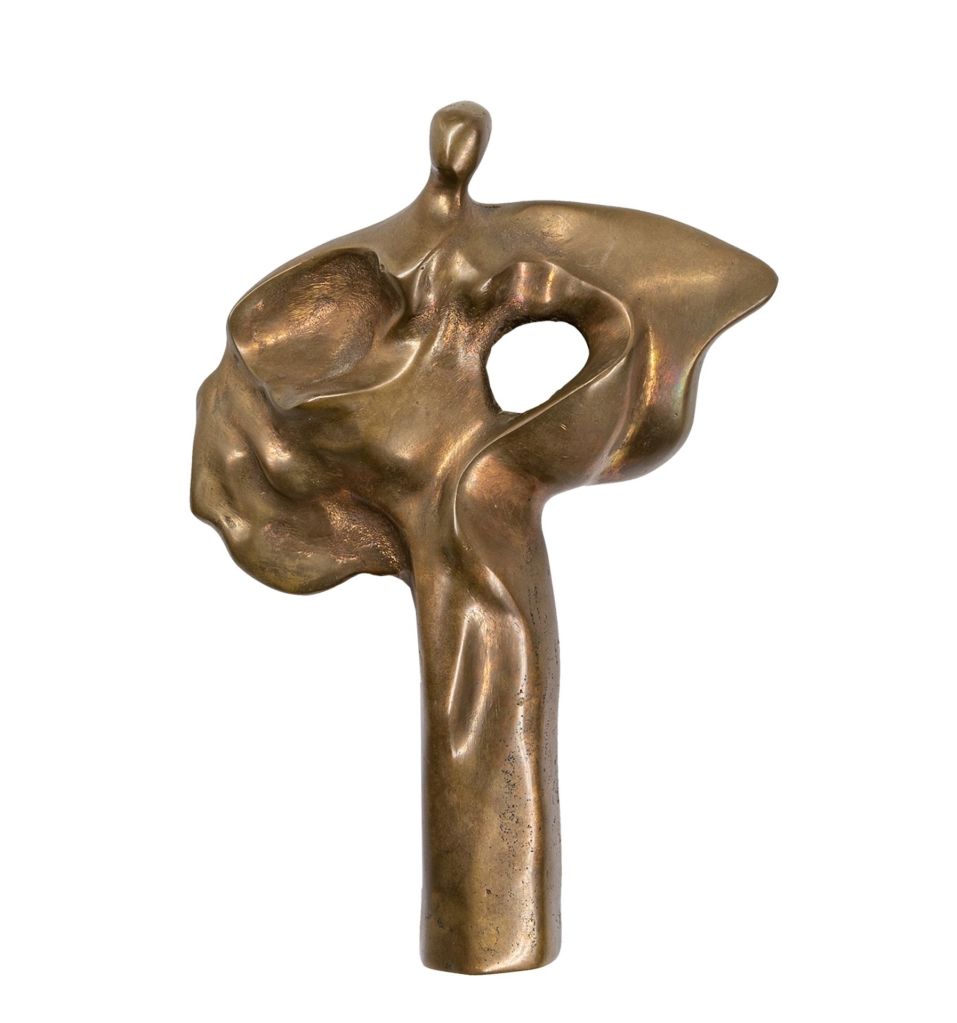
Lot 286. Magdalena Abakanowicz 1930 – 2017. Standing Figure, incised with the artist’s monogram and dated 1988 (on the reverse), bronze, 160 by 48.3 by 30.5 cm. 62 by 19 by 12 in. Executed in 1988. This work will be included in the forthcoming Magdalena Abakanowicz Catalogue Raisonné. Estimate 40,000 – 60,000 GBP. Sotheby’s. 10/17/25. Sold GBP 70,000

Zauważyłem, że Wojtek Fibak wyprzedaje ze swojej kolekcji rzeźby Magdaleny Abakanowicz (aukcja w Desie-Unicum: https://bid.desa.pl/lots/view/1-BBQN3O/magdalena-abakanowicz-1930-2017-grupa-figur-dziecicych-2008). Narzuca się zatem pytanie czy jest to właściwy moment by kupować podobne prace tej artystki skoro Wojtkowi jej prace się już ‘opatrzyły’?

Alicja Halicka (1895 – 1975)

Alicja Halicka. Equestrian statue in the snow

Lot 52. Alice HALICKA (Krakow 1895 – Paris 1975). Equestrian statue in the snow. Gouache and watercolor on paper 23.5 x 31 cm. Signed lower right “Halicka”. Estimate €1,000 – 1,200. Millon. 10/28/25. Sold €1,200

Dziwię się, że p. Mielniczuk-junior, pracownik Millon i co-autor obecnego katalogu Ecolle de Paris, ma tak słabą wiedzę o Warszawie i jej historii i nie potafił rozpoznać na akwareli Alicji Halickiej pomnika Księcia Józefa Poniatowskiego stojącego w okresie międzywojennym na Placu Saskim. Budzi to zdumienie i stanowi ostrzeżenie by przyjrzeć się bacznie innym pracom tego katalogu bo kto wie co tam jest jeszcze. Przypominam zatem fotografię z okresu lat 30-tych XX wieku. Akwarela Halickiej ‘so-so’.

Pomnik Księcia Józefa Poniatowskiego na Placu Saksim. Lata 30-te XX wieku

Maurycy Minkowski (1881 – 1930)

Maurycy Minkowski. Children of the Shtetl

Lot 75. Maurycy Minkowski Polish 1881 – 1930. Children of the Shtetl, signed lower right: M Minkowski, oil on canvas, canvas: 31 ½ by 39 ⅜ in.; 80.0 by 100.0 cm, framed: 32 ½ by 40 ½ in.; 82.5 by 102.9 cm. Estimate $10,000 – 15,000. Sotheby’s. 10/15/25. Passed

Obrazy Maurycego Minkowskiego są zwykle bardzo smutne, refleksyjne i może dlatego wzrok zatrzymują.

Tadeusz Styka (1889 – 1954)

Tadeusz Styka. Girl with Goat

Lot 110. Tadeusz Styka French/Polish 1889 – 1954. Girl with Goat, signed lower left: TADE.STYKA, oil on board, board: 32 by 24 in.; 81.3 by 61 cm, framed: 42 by 33 ¾ in.; 106.7 by 85.7 cm. Estimate $7,000 – 9,000. Sotheby’s. 10/15/25. Sold $7,400.

Pogodny portret nastolatki z młodą kozą autorstwa Tadeusza Styki. Feministki pewnie by się zdenerwowały, gdybym nazwał tę pracę Dwie kozy.

Alfred Wierusz-Kowalski (1849 – 1915)

Alfred Wierusz-Kowalski. Peasant Riding a Cart

Lot 45. Alfred Kowalski Polish 1849 – 1915. Peasant Riding a Cart, signed lower left: A. Weirusz-Kowalski, oil on panel, panel: 17 ⅛ by 12 ⅝ in.; 43.5 by 32.1 cm, framed: 19 ¼ by 15 ⅜ in.; 48.9 by 39.1 cm. We are grateful to Dr. Mariusz Klarecki for confirming the authenticity of this work on the basis of digital images. Estimate $80,000 – 120,000. Sotheby’s. 10/15/25. Sold $107,950 (bp)

Trwa jesienny wysyp niedużych wymiarami prac Alfreda Wierusza-Kowalskiego. Cena wyściowa to $45,000 i jestem przekonany, że praca ta przetrwa kolejne 150 lat i jej wartość będzie tylko rosłą, czego nie da się powiedzieć o obrazach z poprzedniego wpisu. Kolekcjonerzy ‘monachijczyków’ z najwyższej półki mają swoje dobre dni.

Ewa Juszkiewicz (1984)

Ewa Juszkiewicz. Untitled, 2014

Lot 115. EWA JUSZKIEWICZ (B. 1984). Untitled, signed and dated ‘Ewa Juszkiewicz 2014’ (on the reverse), oil on canvas, 19 5⁄8 x 15 5/8in. (49.7 x 39.7cm.). Painted in 2014. Provenance: lokal_30, Warsaw. Acquired from the above by Ole Faarup. Estimate GBP 80,000 – GBP 120,000. Christie’s. 10/16/25. Sold GBP 85,000

Na przykładzie tych trzech Ewy Juszkiewicz z październikowych aukcji zostanę prawdopodobnie posądzony o stronniczość i brak jakiejkolwiek wiedzy na temat współczesnego polskiego malarstwa. Artstka została obwołana niemal gwiazdą polskiej współczesnej sztuki. Przykłady bardzo wysokich, milionowych sprzedaży niektórych jej prac na zachodnich rynkach kilka lat temu zawróciły niejednemu w głowie. Rzeczywiście tak było, że prace Ewy Juszkiewicz były mocno reklamowane przez Galerię Gagosian i to doprowadziło do ‘wybuchu’ jej talentu na rynkach. Te zachodnie sukcesy wykorzystały polskie domy aukcyjne, gdzie bito kolejne rekordy jej prac, nie tylko olejów ale i wydruków plakatowych. Przykładem na ten sukces może być okładka sprawozdania półrocznego polskiego rynku w 2025 przygotowanego przez artinfo.pl. Obecnie ekscytacja opadła, ceny gwałtownie obniżyły się a kolekcjonerzy czy inwestorzy vel spekulanci, którzy kupili w szczycie cen będą lizali rany bo nie sądzę by kiedykolwiek wróciły an ten sam poziom.

Na aukcjach zagranicznych widzimy zapowiedzi aż trzech prac Ewy Juszkiewicz: dwa oleje i jeden kolaż (ocena domu aukcyjnego). Ceny estymacyjne olejów są już ‘umiarkowane’ porównując do tych sprzed zaledwnie kilku lat.

Portret kobiety z zakrytą tkaniną głową pochodzi z 2014 roku czyli chyba z początków tworzenia podobnego typu prac przez Ewę Juszkiewicz. Przypuszczam, że skoro praca ta została kupiona w galerii warszawskiej (lokal_30) to była wówczas stosunkowo tania, wyceniona rynkowo. Właściciel tej pracy spóźnił się o kilka lat z jej sprzedażą ale jeśli do jej dojdzie obecnie to i tak wyjdzie mu na dobre. Myślę, że cena zakupu w warszawskim Lokal_30 była najlepszym miernikiem wartości 10 lat temu jak również obecnie. Warto zanaczyć jak określa się lokal_30: As the only gallery in Warsaw dedicated solely to supporting feminist art and exhibition-making, Lokal_30 is a home for women and queer artists in Poland.


Ewa Juszkiewicz. Untitled 49, 2017

Lot 3. Ewa Juszkiewicz. Untitled 49, oil on canvas, signed and dated ‘Ewa Juszkiewicz 2017’ on the reverse, 155 x 110 cm (61 x 43 1/4 in.). Painted in 2017, in Poland. Provenance: Galerie Rolando Anselmi, Rome; Acquired from the above by the present owner. Exhibited: Rome, Galerie Rolando Anselmi, Ewa Juszkiewicz: Pearl, Eye, Worm, 18 November-12 December 2017; Milan, Cabinet, Giacinto Cerone & Ewa Juszkiewicz, 22 March-30 June 2019. Literature: Ch. Schloss, “Ewa Juszkiewicz”, Juliet Art Magazine, June 2018, p. 52, illustrated. Estimate £80,000 – 120,000. Phillips. 10/18/25. Sold £100,000

Drugi olej, przedstawiający oczami Ewy Juszkiewicz popiersie Izabelli Lubomirskiej był niedawno dyskutowany na PAC (https://polishartcorner.com/2023/10/06/ewa-juszkiewicz-1984-8/). Dwa lata temu obraz ten był licytowany bez powodzenia w Sotheby’s w Hong Hongu z wyceną ok $230,00 – 320,000. Obraz pojawił się teraz w Philips z wyceną dwukrotnie niższą (£80,000 – 120,000). Trend cenowy jest dość klarowny.


Ewa Juszkiewicz. Lady Singing (Śpiewaczka), 2017

Lot 298. Ewa Juszkiewicz b. 1984. Lady Singing, titled (lower centre), collage on paper; 26 by 19.5 cm. 10¼ by 7⅝ in.; framed: 30.7 by 24 cm. 12⅛ by 9½ in. Executed in 2017. Provenance: Galerie Rolando Anselmi, Rome. Acquired from the above by the present owner. Exhibited: Rome, Galerie Rolando Anselmi, Ewa Juskiewicz: Pearl, Eye, Worm, November – December 2017. Estimate GBP 5,000 – 7,000. Sotheby’s. 10/17/25. Sold GBP 2,000

Inaczej wygląda historia trzeciego obrazu Ewy Juszkiewicz, czyli Śpiewaczki. Artystka chyba nawet nie wzorowała się na oryginalnej pracy Fransa van Mierisa lecz zakupiła kopię, bo raczej nie oryginał, XIX wiecznego miedziorytu tego oleju na którym zaznaczyła swoje miejsce w postaci papierowego kolażu na twarzy kobiety. Ten wielki wkład artystyczno-intelektualny artystki wyceniono na GBP 5,000 – 7,000. Kopię miedziorytu można kupić on-line za ok $30-50, zależnie od wymiaru (np. https://www.posterazzi.com/mieris-lady-singing-nsteel-engraving-19th-century-after-a-painting-by-frans-van-mieris-1635-1681-poster-print-by-granger-collection-item-vargrc0097352/?srsltid=AfmBOopgMXwfJKcpN8mRTYfIBUygQBHO-lCQD7N5OQA3KwiQR9bJNOYO).  Warto w tym miejscu dodać, że Polswissart będzie licytował 14 października podobny kolaż tej artystki z estymacją 35,000 – 45,000 złotych: https://online.polswissart.pl/lots/view/1-B9W8TB/ewa-juszkiewicz-xx-2017. Polskie ceny zawsze górą!

Frans van Mieris, the Elder. A Woman Playing the Lute, 1663. Oil on panel, 33.7 x 29.2 cm. (National Galleries in Scotland)
Miedzioryt powyższej pracy wykonany w XIX wieku

Igor Mitoraj (1944 – 2014)

Igor Mitoraj. Ikaria, 1987 (3/3)

Lot 933. IGOR MITORAJ (1944-2014). Ikaria, incised with the title ‘IKARIA’ (on the right thigh); incised twice with the number ‘3 3/3’ (on the base), bronze with golden brown patina, 98 x 2712 x 2638in. (249 x 70 x 67cm.). Executed in 1987, this work is number three from an edition of three. Provenance: Acquired directly from the artist by the present owner in 1998. The authenticity of this work has been confirmed by the Atelier Igor Mitoraj, Pietrasanta. Estimate GBP 40,000 – 60,000. Christie’s. 10/22/25. Sold GBP 90,000

Wersja Ikarii z Christie’s wykonana została jedynie w liczbie 3 egzemplarzy i jest nieco inna od tej niedawno sprzedanej w USA (6 egz.) (https://polishartcorner.com/2025/02/17/igor-mitoraj-1944-2014-86/). Obecnie mamy drugą próbę licytacji tej samej kopii (3/3), bowiem w grudniu 2023 roku Christie’s wycenił ją znacznie wyżej, na € 80,000 – 120,000. Raz jeszcze zwróciłem uwagę na potwierdzenie autentyczności egzemplarza Ikarii przez Atelier Igor Mitoraj. Czy jest to dmuchanie na zimne czy też zaobserwowano coś groźniejszego na rynku?