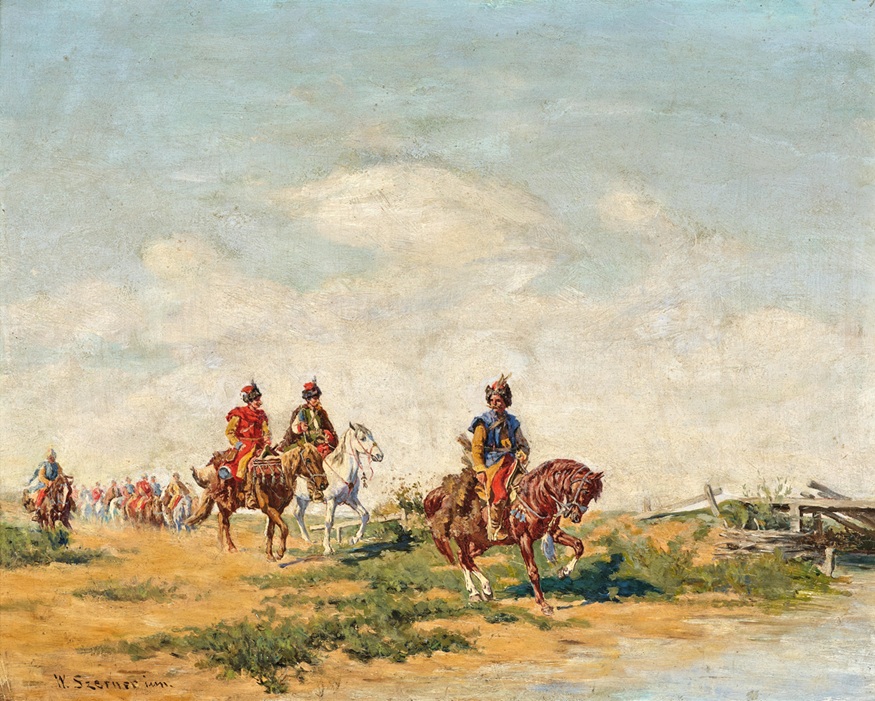
Władysław Karol Szerner. A Rider Crossing a Stream
Lot 56. Wladislaw Karel Szerner (Przybenice 1870–1936 Wosniki). A Rider Crossing a Stream, signed W. Szerner jun., oil on panel, 40 x 50 cm. Estimate €2,000 – 2,400. Dorotheum. 06/23/26. Sold €2,200
Można odnieść wrażenie, że jest kopia obrazu Władysława Szernera wykonana przez jego syna Władysława Karola Szernera. Karol Szerner próbował własnych sił na polu malarskim, nawet wystawiał swoje kompozycje, lecz dorównać ojcu mu się udało. Scena na płótnie jest dość prozaiczna a wykonanie nie jest porywające. Dlatego skłaniam się, że jest to raczej oryginalna kompozycja Karola Szernera.
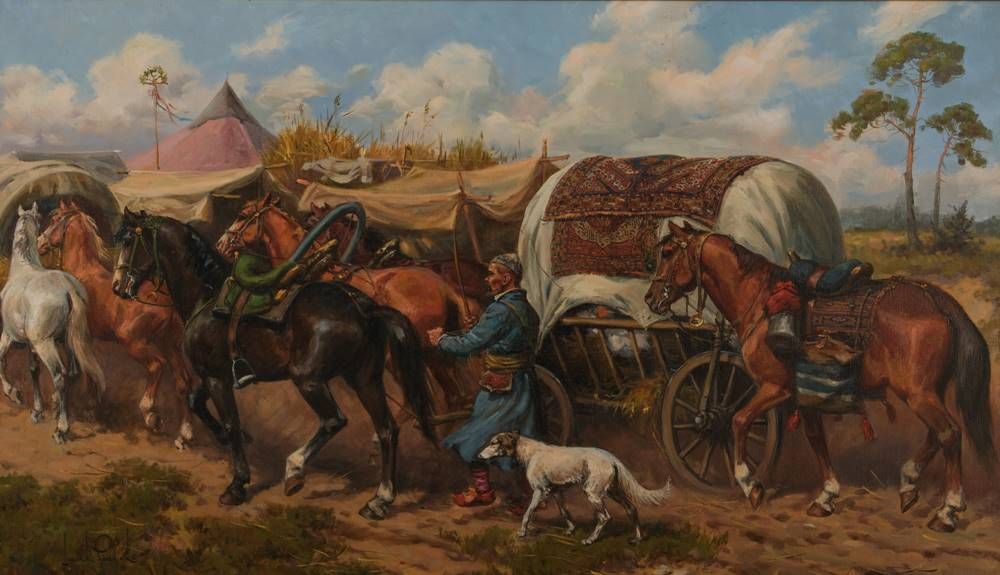
Leszek Piasecki. Pferdekutschen auf dem Weg zum Markt
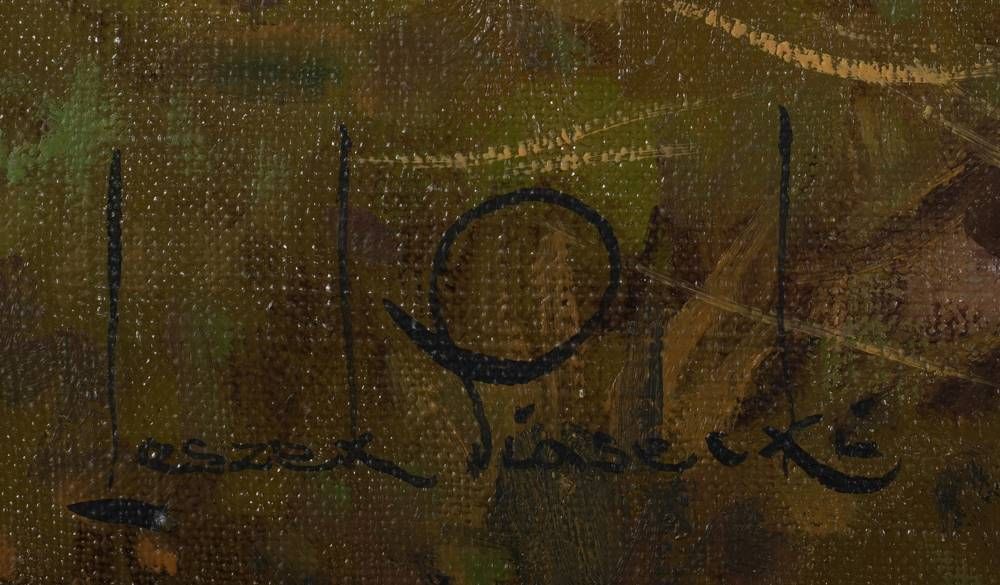
Lot 1216. Piasecki, Leszek (1928 Lemberg – 1990 Vienna), “Pferdekutschen auf dem Weg zum Markt“, Oil on canvas, signed lower left Leszek Piasecki, 70.5 x 121.5 cm. Provenance: Privately owned in the Rhineland for decades. Estimate €500 – 750. Auktionshaus Plückbaum. 06/20/26. Sold €1,500
Jedna z bardziej udanych kompozycji Leszka Piaseckiego.
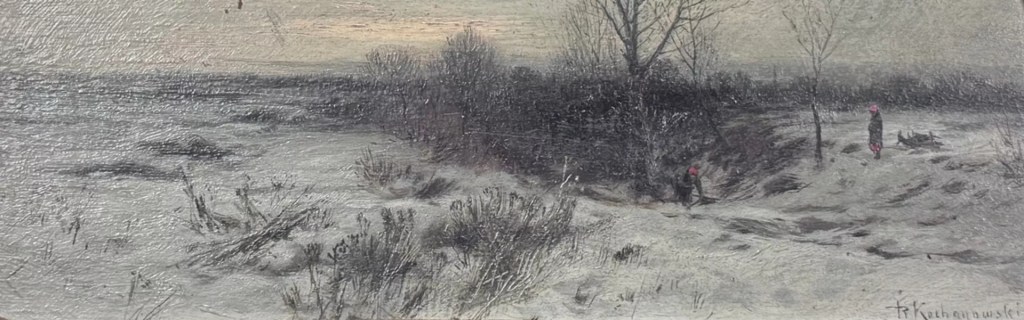
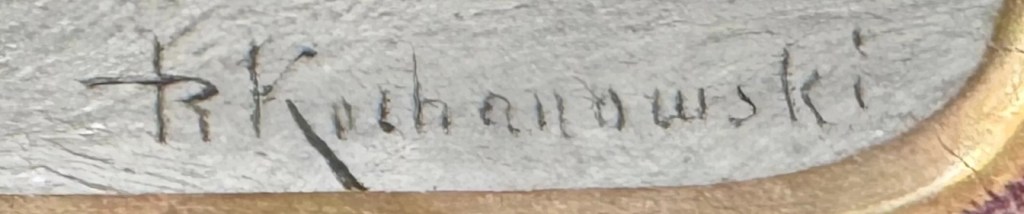
Lot 1167.Kochanowski, Roman (1857 Krakow – 1945 Freising) “Winter Landscape“, oil on panel, signed lower right, image section 7×21.5cm, 23x35cm in frame (counterpart). Starting €400. Auktionshaus am See. 06/07/26. Sold €3,000
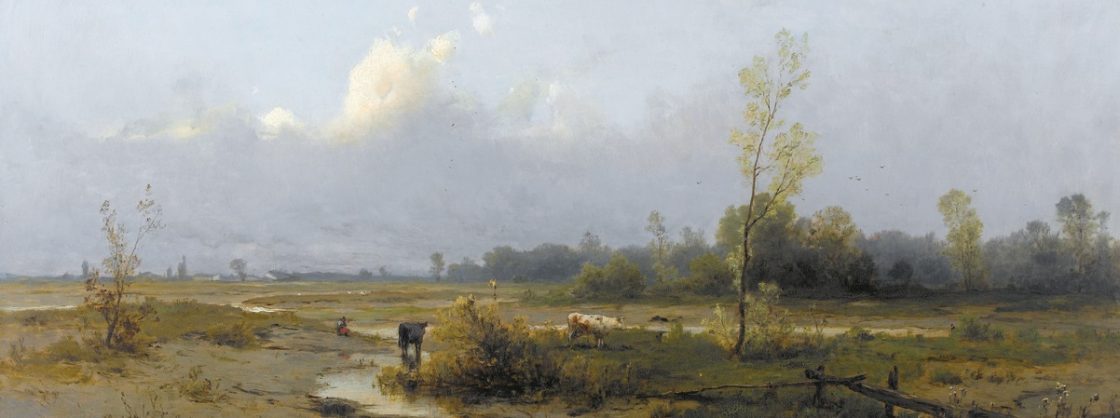
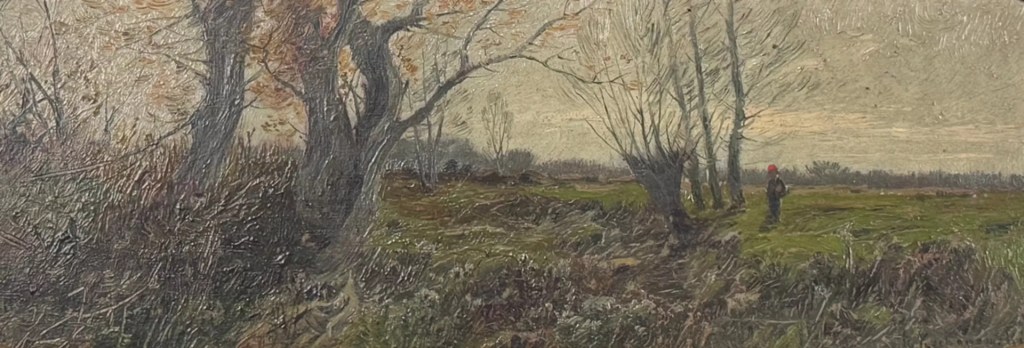
Parka bardzo porządnych prac Romana Kochanowskiego była przedmiotem aukcji w niemieckim Auktionshaus am See. Oba oleje namalowane na wąskich deseczkach powstały około 1900 roku lub nieco przedtem. Prace przedstawiające zimowe krajobrazy, stosunkowo rzadkie u tego artysty, są bardzo cenione przez kolekcjonerów. Warto przyjrzeć się obu tym pracom, by w przyszłości nie ulegać złudzie wyłącznie sygnatury jak to czynią niektórzy nie tylko w dorzeczu Wisły lecz również często na terenach niemieckich.
Roman Kochanowski. Autumn Landscape
Lot 1169. Kochanowski, Roman (1857 Krakow – 1945 Freising) “Autumn Landscape“, oil on panel, signed lower right, image section 7×21.5cm, 23x35cm in frame (counterpart). Starting €400. Auktionshaus am See. 06/07/26. Sold €2,000
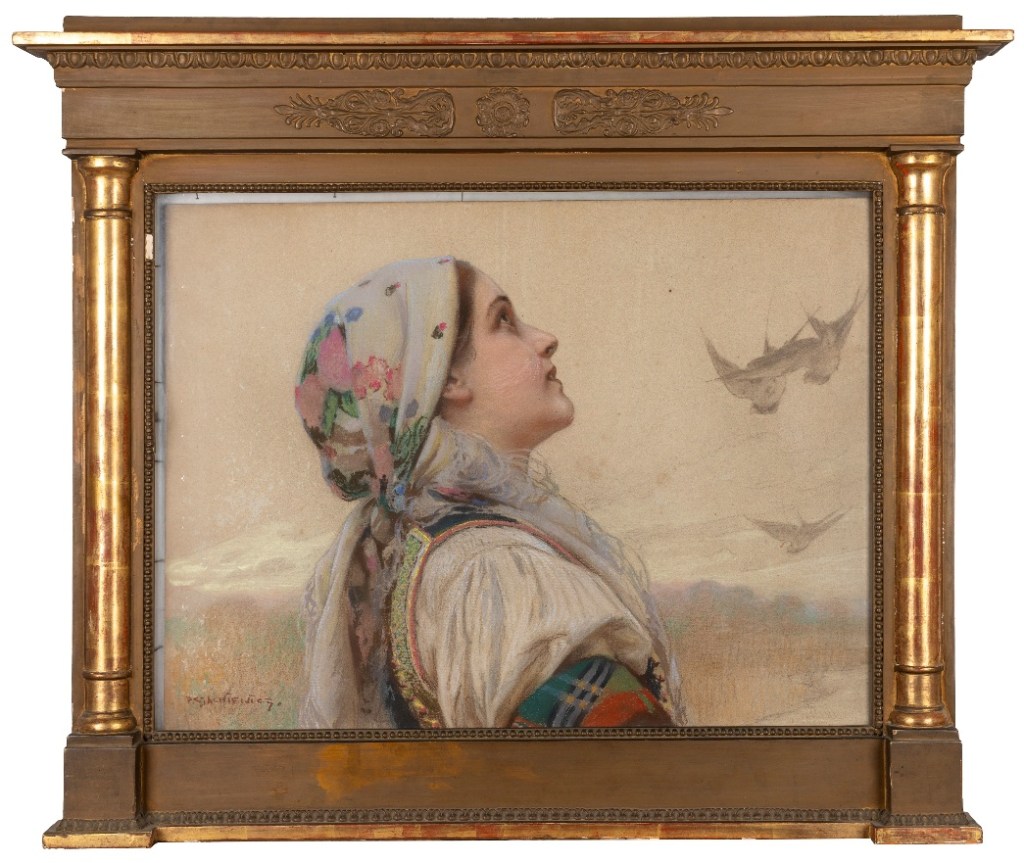
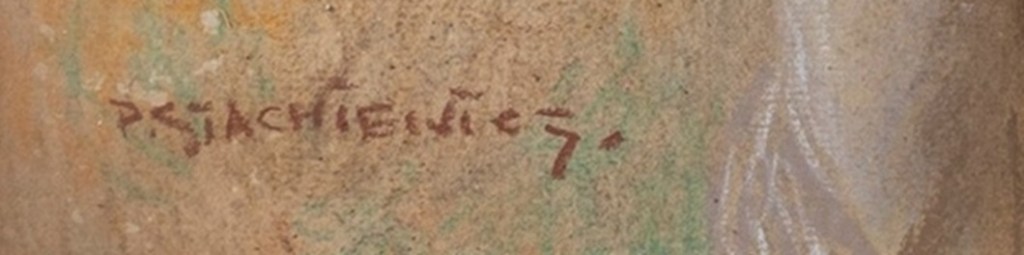
Lot 160. Piotr Stachiewicz (Novosilky-Hostynni 1858 – Cracovia 1938). The first swallows, pastel on card, within original frame and cut glass, 46.5 x 61.5 cm, signed lower left: P. STACHIEWICZ. Estimate €2,000 – 3,000. Finarte. 06/18/26. Sold €2,800
Ładny pastel Piotra Stachiewicza a w dodatku oprawiony został w znakomitą ramę.
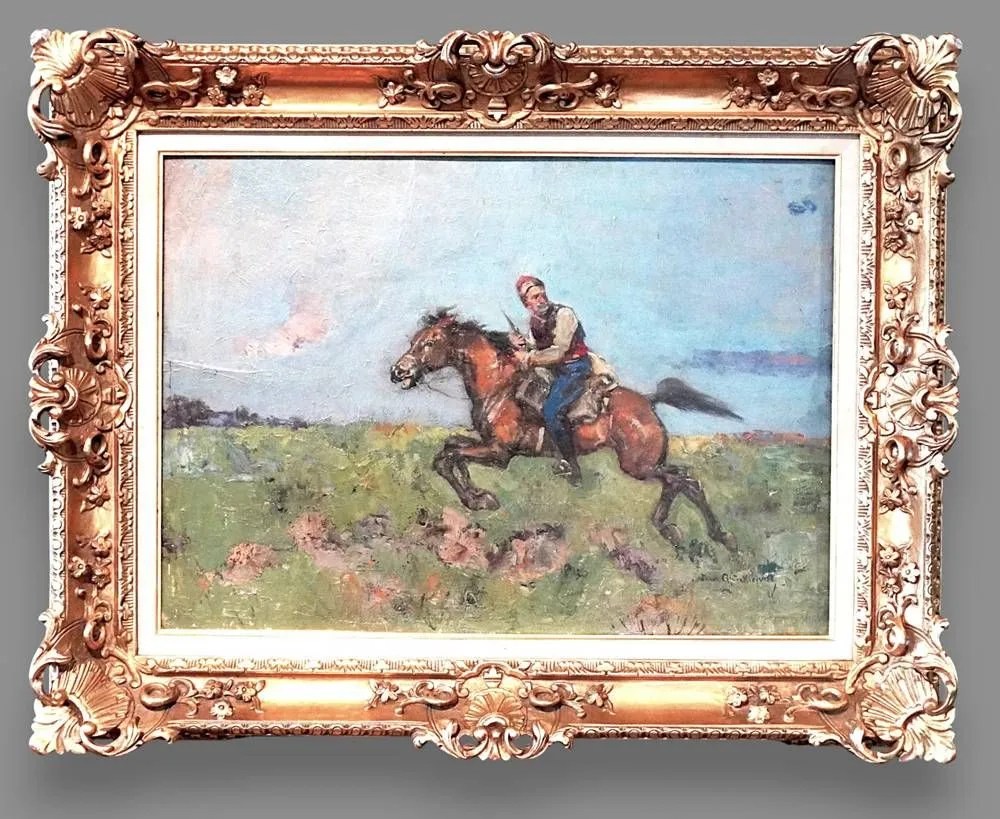
Lot 6053. Tadeusz Ajdukiewicz 1852 -1916. “Caucasian Rider at a Gallop”, oil on cardboard / painting board . Oil on cardboard / cardboard, approx. 50 × 70 cm, without frame. Estimate €12,000 – 16,000. Auktionshaus Nord. 07/04/26. Sold €4,000
Dynamic depiction of a rider with a horse galloping at full speed to the left and an armed rider in colorful, oriental or Caucasian-looking costume. The rider wears a red headdress, red vest and blue trousers; in his right hand he holds a short whip or riding crop. The scene is set in a wide, loosely suggested landscape with a low horizon and bright sky. The painting style is impasto and expressive, with strong brushstrokes, a moving surface structure and lively shades of red, brown, green and blue. The horse’s head, mane and rider figure in particular are modelled with swift, confident strokes, emphasizing the impression of speed and movement.
The motif is most likely to be described as a Caucasian horseman, a Cossack on horseback or generally as an oriental rider at a gallop. Ajdukiewicz is known in particular for portraits, equestrian paintings, battle and genre scenes as well as oriental motifs; museum collections also include comparable subjects such as a “Horseman from the Caucasus”. Signed “Tadeusz Ajdukiewicz” lower right. Framed in a richly ornamented, gilded magnificent frame.
Strach patrzeć na ten obraz, strach patrzeć na wycenę. Dom aukcyjny powinien być zażenowany wystawieniem tej pracy i przypisaniem jej Tadeuszowi Ajdukiewiczowi. Im więcej tekstu w opise tego obrazu tym mniejsza jego wiarygodoność. Dlaczego dom aukcyjny nie przedstawił proweniencji???
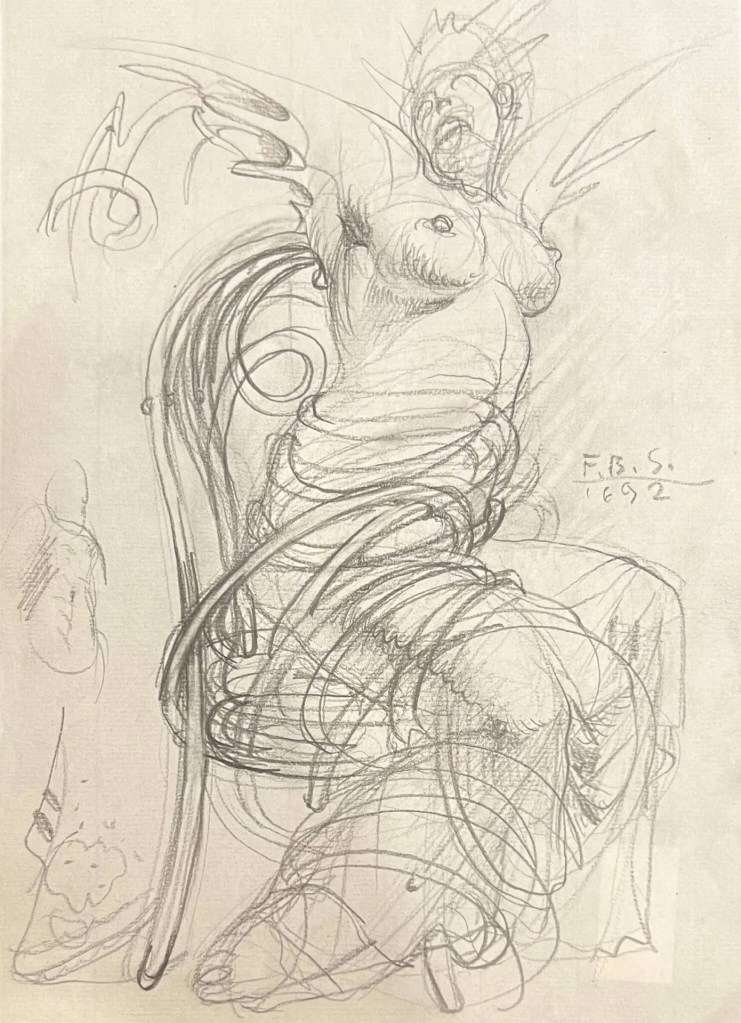
Lot 257. STAROWIEYSKI Franciszek (1930-2009). Winged Woman, 92 Graphite, monogrammed and dated upper right, some soiling 21 x 29.5 cm. Estimate €200 – 300. Rossini. 06/11/26. Sold €550
Rysunki Franciszka Starowieyskiego na dwóch aukcjach we Francji.
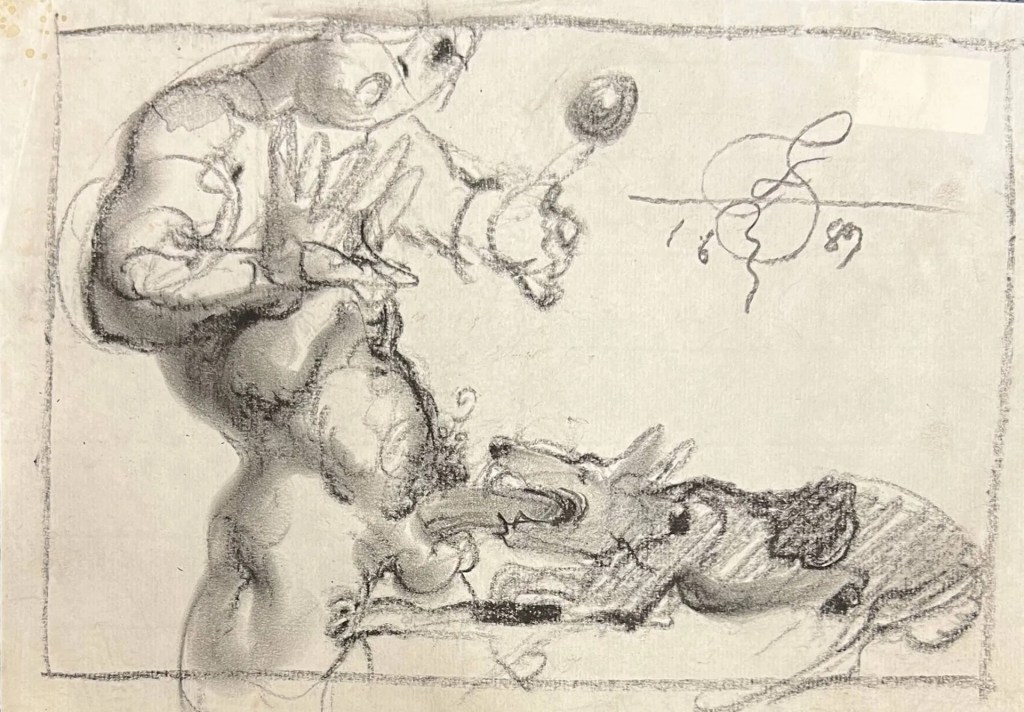
Franciszek Starowieyski.The Surprise Attack, 1989
Lot 258. STAROWIEYSKI Franciszek (1930-2009). The Surprise Attack, 89. Charcoal, monogrammed and dated upper right, backstamped ARE, rue de Flandre soiling and minor rubbing 21 x 29.5 cm. Estimate €200 – 300. Rossini. 06/11/26. Sold €600
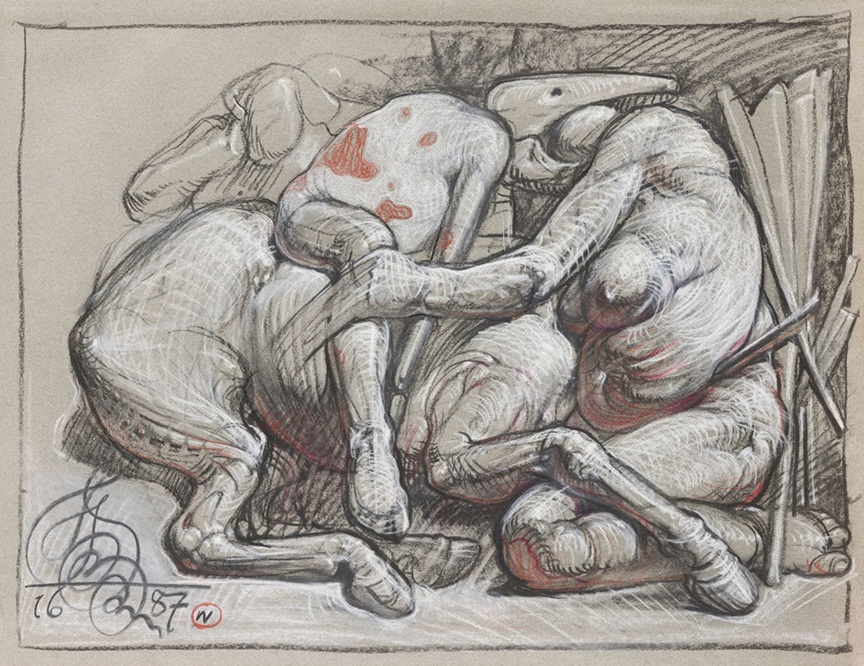
Franciszek Starowieyski.Untitled, 1987
Lot 93. Franciszek STAROWIEYSKI (1930-2009). Untitled, 1987. Charcoal and chalk. Monogrammed, dated 1687 and located W(arszawa) lower left. (Stains). 50 x 64.8 cm. Estimate €2,000 – 3,000. Ader. 06/15/26. Sold €10.813 (bp)
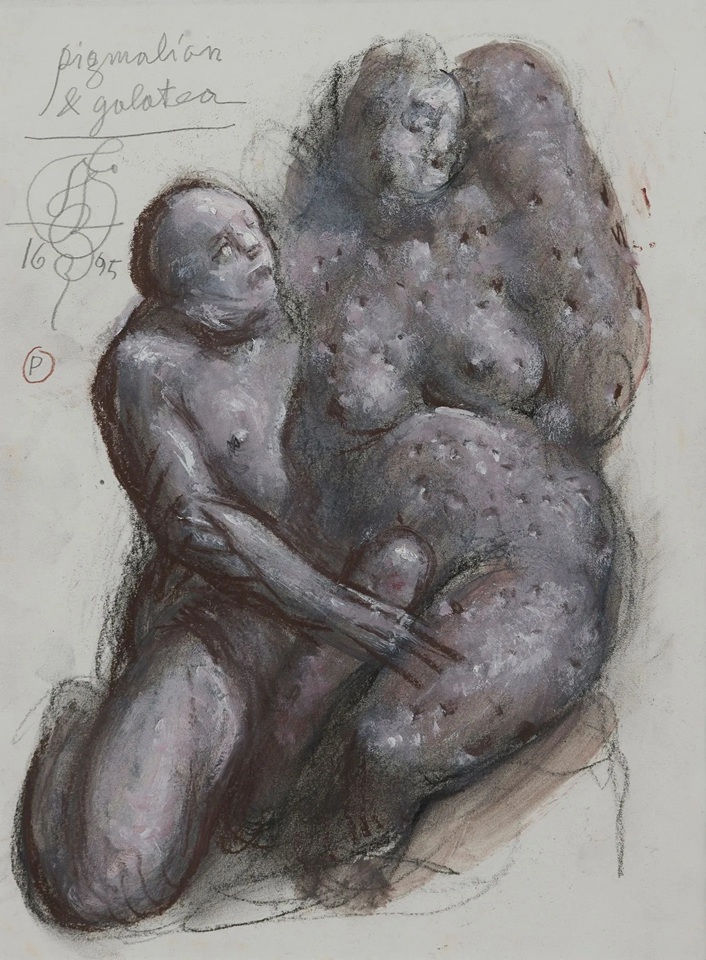
Franciszek Starowieyski.Pigmalion & Galatea, 1995
Lot 94. Franciszek STAROWIEYSKI (1930-2009). Pigmalion & Galatea, 1995. Mixed media. Signed, dated 1695 and located P(aris) upper left. 31 x 23 cm on view. Estimate €800 – 1000. Ader. 06/15/26. Sold €1,318 (bp)
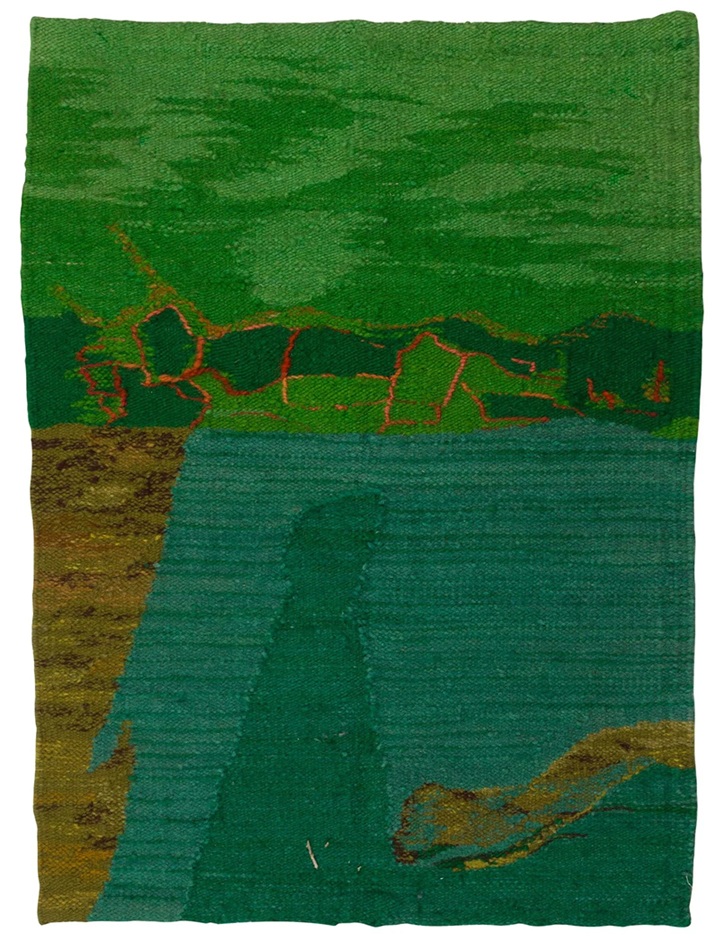
Lot 15. Anna BUCZKOWSKA (1943-2026). Czerwienie (the reds). Tapestry. 62 x 85 cm. Handwritten bolduc sewn on reverse (“Autor: Buczkowska / Gobelin: “Czerwienie” / Symbol: SD/153/098/Cepelia / Wymiary: 0,62 x 0,85 / Cena det. 1m2 = 4,320 zl”). Estimate €100 – 120. Ader. 06/15/26. Sold €263 (bp)
Graduating in 1971, Buczkowska headed the Ład decorative arts cooperative in the years 1972-75, in the post-war period under the aegis of Cepelia. This cooperative (Centrala Przemyslu Ludowego i Artystycznego, Central of Popular and Artistic Industry), was created after the war to support Poland’s traditional and folk crafts (under state control). It grouped together several workshops and sales outlets. It ceased operations in 1990.
Gobelin, zmarłej w styczniu tego roku Anny Buczkowskiej, która była nie tylko malarka lecz również wykonywała gobeliny sprzedawane w Cepelii a także w Ładzie (kto pamięta ten sklep na Nowym Świecie w Warszawie?). Chciałoby się zobaczyć drugą stronę gobelinu lecz Ader niestety oszczędza na fotografiach.
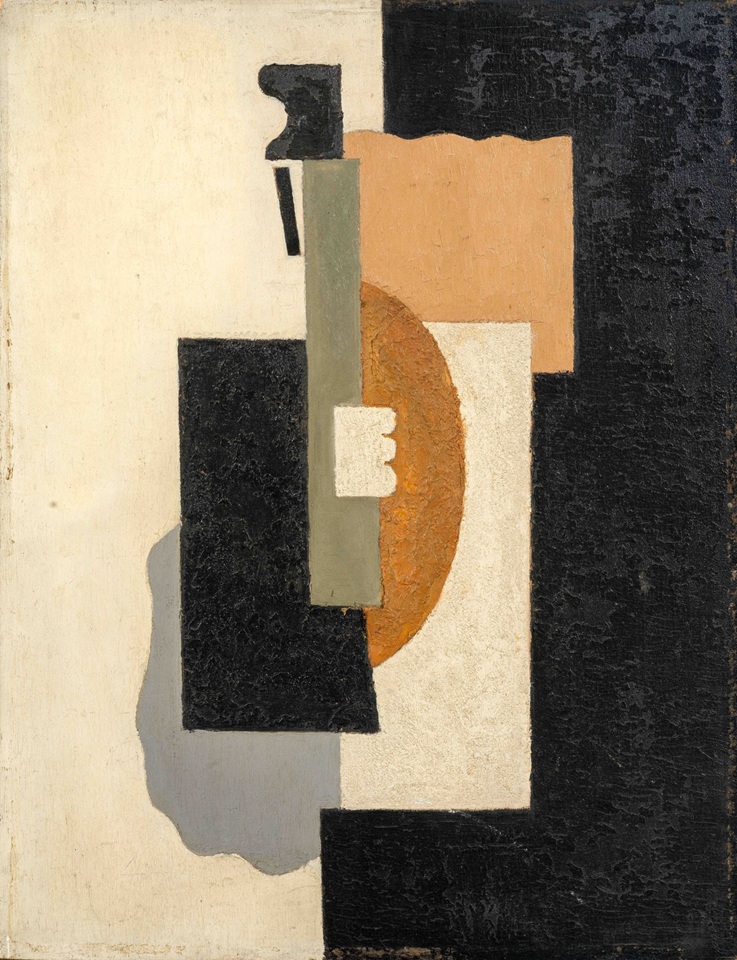
Lot 167. Stanislas Grabowski 1901-1957. Composition, around 1927. Oil on wood 53 x 40.6 cm. Estimate CHF 6,000 – 8,000. Artcurial Beurret Bailly Widmer. 06/24/26. Sold CHF 11,000
Stanisław Grabowski chyba nie wypracował sobie własnego stylu, zmarniał w Paryżu zamiast rozbłysnąć. Ożenił się z Nadieżdą Chodasiewicz późniejszą, po rozwodzie z nim i ponownym zamążpójściu, Nadią Leger. Artysta zmarl w zapomnieniu, w przytułku dla ubogich. Jego prace spotka się czasami na polskim rynku lecz nie wzbudzają entuzjazmu u kolekcjonerów. Olej z obecnej aukcji nie jest sygnowany ani też datowany a na odwrociu również nie da się znaleźć jego nazwiska. Jeszcze jest trochę czasu do aukcji i warto zapytać dom szwajcarski o proweniencję tej pracy bo rzeczywiście może to być dobra i nieznana dotąd praca awangardowa z lat 20-tych XX wieku Stanisława Grabowskiego.
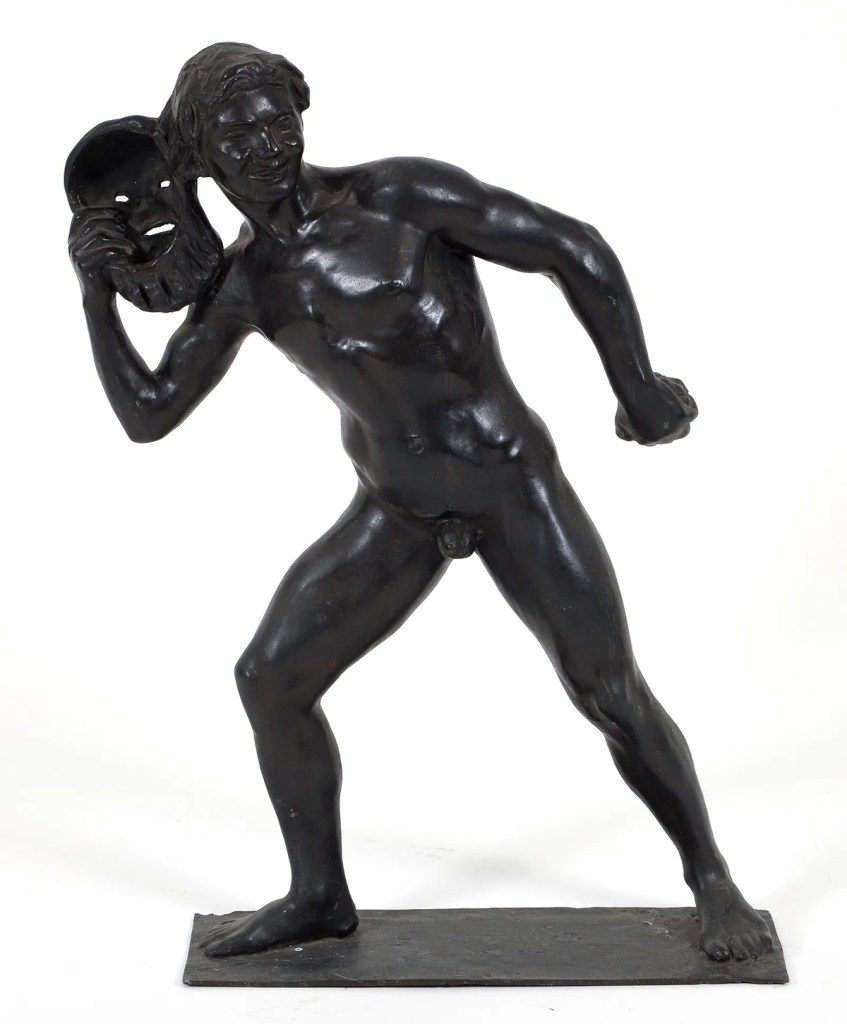
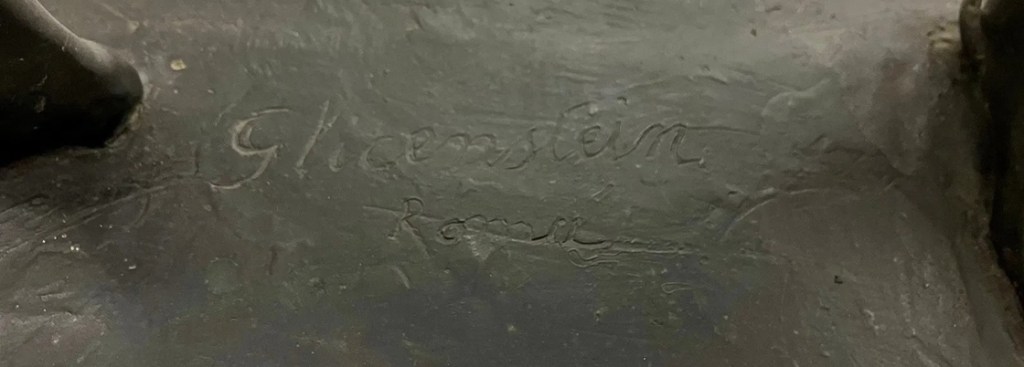
Lot 71. Glicenstein, Enrico (Henryk) (Polish/Jewish/American, 1870-1942), Youth with Mask (Love Abducting Power), 1910, bronze sculpture, etched signature and “Roma” at base, 22.5 x 13 x 5 inches. Catalogue Raisonne number 46. A copy of the catalogue raisonne is included with purchase. Provenance: The Estate of Hugo Dreyfuss (the son-in-law of the artist, who was married to Beatrice Glicenstein). Estimate $900 – 1,500. Concept Art Gallery. 06/06/26. Sold $4,200
Ciąg dalszy wyprzedaży rodzinnego dorobku artystycznego po Henryku Glicensteinie. Tym razem kilka rzeźb, z których najciekawszą jest dość wczesna, powstała we Włoszech około 1910 roku, przedstawiająca chłopca z maską. Praca unikatowa.
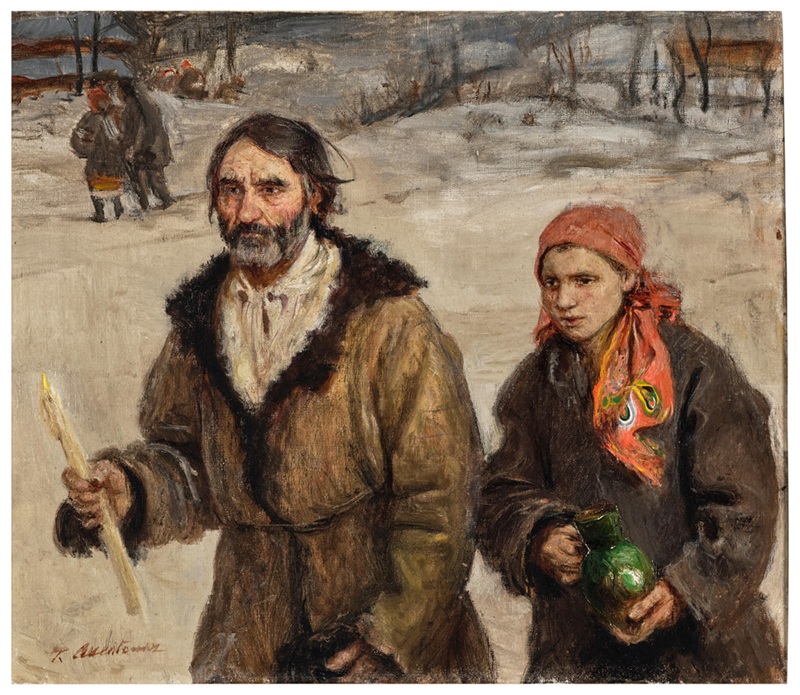
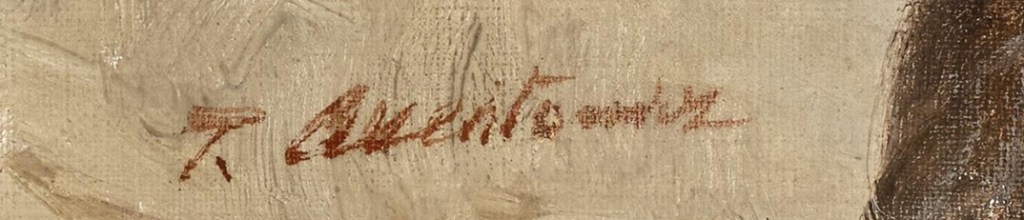
Lot 53. Teodor Axentowicz (Kronstadt 1859–1938 Kraków). On the Way to Candlemas, signed T. Axentowicz, oil on canvas, 47 x 54.5 cm. Estimate €4,000 – 6,000. Dorotheum. 06/23/26. Sold €6,000
„Na Gromniczną” była jedna z najbardziej replikowanych kompozycji przez Teodora Axentowicza.