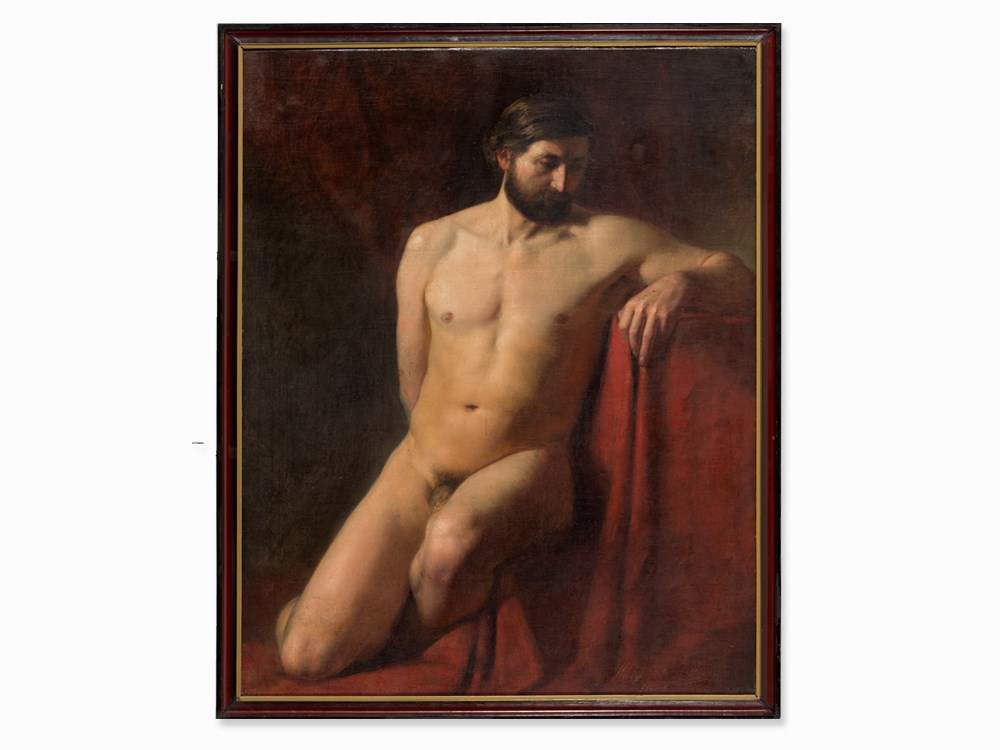
Henryk Siemiradzki (1843 – 1902)

Siemiradzki

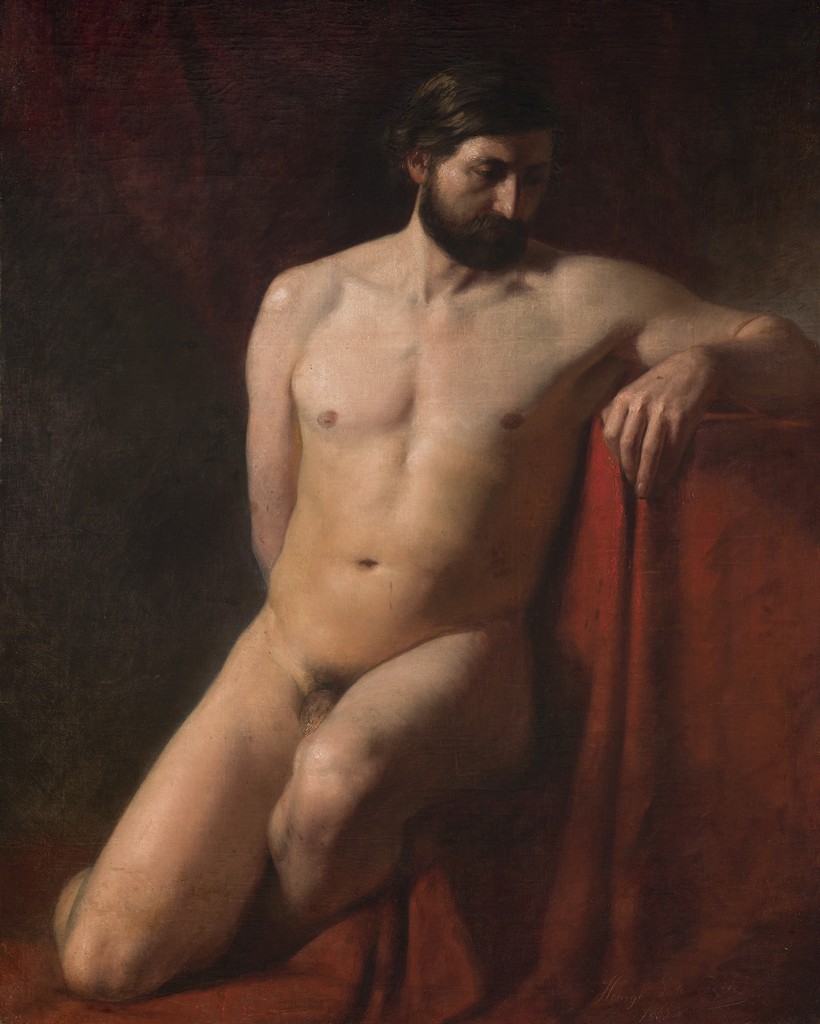
Pół roku temu praca ta była przedmiotem aukcji u MacDougala w UK z dużo wyższą ceną szacunkową (£45,000 – £60,000). Nie sprawdzałem wyników tamtej aukcji ale prawdopodobnie obraz nie został wtedy sprzedany pomimo orzecznictwa autentyczności i tu wspomnianego Vladimira Petrova (pisałem już poprzednio co sądzę o jego ekspertyzach). Tym razem obraz zawędrował do Berlina,czyli jest już wpół drogi do Rosji. Trochę mnie niepokoi ta dosłownie wydrapana ręką (rzekomo?) Siemiradzkiego sygnatura. Węszę zdradę (“Zdrada Mości Panowie! Zdrada!”) choć mogę nie mieć racji. W tym przypadku, gdyby to był falsyfikat to domalowaną później sygnaturę łatwo byłoby stwierdzić, z wydrapaną jest o niebo gorzej. Siemiradzki ‘kładł’ pięknie stylizowane sygnatury a tu nagle zachciało mu się ją drapać. Trzeba pytać wysokiej klasy eksperta – ja jedynie dzielę sie swoimi wątpliwościami. Temat pracy jest dla specyficznego amatora. Do zobaczenia, moim zdaniem, za kolejne pół roku z nową wyceną!

———————————————————-

Lot 24. Henryk I. Siemiradzki (1843-1902), Male Nude, Öl, 1865. Oil on canvas, relined. Russia, 1865
Henryk Ippolitovich Siemiradzki (1843-1902) – Russian-Polish painter and famous member of the St. Petersburg Art Academy. Signed and dated lower right ‘Henryk Siemiradzki 1865‘. The authenticity of the painting has been confirmed by Vladimir Petrov to the former owner. Dimensions: 101 x 80.5 cm. Frame: 107 x 86 cm. Good condition.

Exhibitions: ‘Henryk Siemiradzki 1843-1902’, Society for the Promotion of Fine Arts, Warsaw, 1939
Provenance: Private collection Dr. Leopold Brennejsen, Warsaw, c. 1939 (see label on the stretcher)
Depiction of a male nude in the artist’s studio; Siemiradzki was a true master of the treatment of light, which is especially characteristic for his monumental, multi-figured compositions that have already ółfetched 7-figure hammer prices at international auctions
Estimate by Auctionata Expert: 55,000 Euro

Condition:
The painting is in good condition, consistent with age. The canvas is relined. Inspection under UV light reveals larger areas of retouching to the background as well as smaller retouchings to the sitter. The stretcher measures 101 x 80.5 cm and the frame 107 x 86 cm.

Literature:
Exh.-Cat.: Henryk Siemiradzki 1843-1902, Towarzystwo Zachety Sztuk Pieknych, Warsaw 1939, p. 15, no. 1 (listed).

Henryk Ippolitovich Siemiradzki (1843-1902)
Henryk Siemiradzki was a prominent member of the St. Petersburg Academy of Arts and regularly won a number of silver and gold medals. In 1871 he left Munich, where he had studied at the academy for a year. From 1872 he settled permanently in Rome and established two studios far beyond 1884. Siemiradzki was focused on mythical, historical and religious themes, but was also inspired by the ancient Greece and Rome. He is especially famous for his monumental, stage-like paintings, but he occasionally also painted small idyllic genre scenes.

Estimate 28,000 EUR – 36,400 EUR. Auctionata. 6/23/15.


Sygnatura

Sygnatura


Nalepka

Nalepka

Henryk Siemiradzki (1843 – 1902)

441768-14

Dla rejestracji sprzedaży a nie w celu admiracji.

=====================================

Lot 154. SEMIRADSKY, GENRIKH (1843-1902) Male Nude with a Drape , signed and dated 1865. Oil on canvas, 101 by 81 cm. Provenance: Collection of doctor Leopold Brennejsen, Warsaw, c. 1939 (label on the stretcher). Authenticity of the work has been confirmed by the expert V. Petrov. Exhibited: Henryk Siemiradzki 1843–1902, Towarzystwo Zachety Sztuk Pieknych, Warsaw, 1939 (label on the stretcher). Literature: Exhibition catalogue, Henryk Siemiradzki 1843–1902, Warsaw, Towarzystwo Zachety Sztuk Pieknych, 1939, p. 15, No. 1, listed. Estimate:£45,000 – £60,000.MacDougal. 11/26/14.

Henryk Siemiradzki (1843 – 1902)

441842-5

Właściwie to należałoby paść na kolana przed kolejnym obrazem Siemiradzkiego i podziwiać tak piekną proweniencję oraz oczywiście samą pracę malarską. Jednak pragnę zauważyć, że jak na pracę powstałą ok 1895 roku to proweniencja jest niezwykle mizerna, krótka. Pojawia się dopiero w domu państwa Fibaków, którzy poprzez p. Legutko i jego firmę nowojorską sprzedali tę pracę p. Barbarze Piaseckiej-Johnson. Ta zaś odsprzedała ją na jednej z dorocznych aukcji dobroczynnych w Jasnej Polanie (NJ, USA). Poraża mnie szybkość przechodzenia pracy z rąk do rąk i zapewne podbijanie ceny przy każdej okoliczności. Wyglada to mi na ‘tulipanowy’ interes w Holandii z czasów Rembrandta, gdy w podobny sposób za cebulkę płacono majątek a potem cała ta piramida zawaliła się tworząc rzeszę nowych żebraków. Piszę o tym wyłącznie dlatego, że nie widzę proweniencji do czasów Fibaków. To trochę zdumiewające by taka praca cicho wypłynęła na rynek dopiero pod koniec XX wieku bez śladów metryki pochodzenia. Dlaczego ta praca jest przerzucana z rąk do rąk jak gorący kartofel?

Zgoda, że Siemiradzki malował repliki swoich prac ale trzeba pamiętać, że żyli też zdolni kopiści malujący repliki prac Siemiradzkiego. Zatem, byłbym ostrożny do czasów wyjaśnienia tej sprawy. Poza tym, zaobserwowałem już dawno i głęboko podziwiam ekspertów tego domu aukcyjnego tak znających się dobrze na malarstwie; ten sam ekspert bez zmrużenia oka potwierdza autentyczność pracy współczesnej i zaraz obok o 100-200 starszej. To są moje pytania i wątpliwości warte 500,000-700,000 funtów. Zwykle zadaję sobie podobne pytania również przy wartości prac dużo niższych, 500-700 funtów (może dlatego, że brakuje mi 500,000-7000,000 funtów?).

Na marginesie, bawi mnie ostatnie zdanie z opisu katalogu:

The Idyll, as one of Semiradsky’s masterpieces, is worthy of a place in a most distinguished collection.

Czy to oznacza, że kolekcje Fibaka, Piaseckiej-Johnson i obecnego właściela nie były dostatecznie ‘most distinguished’ by ta praca znalazła tam swoje miejsce? A może właśnie dlatego, że były? Lubię zasiać uzasadnione ziarno niepewności.

========================================

Lot 34. SEMIRADSKY, GENRIKH (1843-1902). The Idyll, signed. Oil on canvas, 66 by 114.5 cm. Executed in the late 1880s–early 1890s

Provenance: Collection of Wojciech and Ewa Fibak, New York.
Collection of Michael Legutko of the Lippert Gallery, New York.
Collection of Barbara Piasecka Johnson, New Jersey.
Art for Autism at Jasna Polana, Christie’s/TPC, Princeton, New Jersey, 22 September 2000, lot 16.

Acquired at the above sale by the previous owner.
Authenticity certificate from the expert T. Goryacheva. Estimate 500,000-700,000 GBP.

Related literature: For another version of the present lot, see S. Lewandowski, Henryk Siemiradzki, Warsaw-Krakow, Nakl. i wlasnosc Gebethnera i Wolffa, 1904, p. 100, illustrated.
T. Karpova, Genrikh Semiradsky, St Petersburg, Zolotoi vek, 2008, p. 142, illustrated.

Genrikh Semiradsky’s work The Idyll offered here for auction was painted in the late 1880s–early 1890s. This period can be considered as the peak of the famous artist’s creative life. The precision of the compositional arrangement, the exquisite palette and the focus on conveying the air and light are the features of the artist’s painting. His works, depicting scenes from the antiquity, become more intimate and romantic, characterised by a more humane, idyllic rendering of their protagonists. During this period, the master created his well-known masterpieces By the Spring (late 1880s), Christ and Samaritan Woman (1890), Talisman (early 1890s), and Roman Woman (early 1890s).

The present lot is an eponymous version of the painting, executed by Semiradsky in 1895. The artist frequently repeated his most successful compositions, which the public loved. As a rule, he modified the composition and changed the landscape. New elements enriched familiar works, lending value to the author’s replications.

The Idyll offered here for the auction contains some important differences in the way the artist treats the landscape in the background and in some secondary elements, such as the marble relief and the mosaic decorating the swimming pool. Some decorative patterns on the protagonists’ robes have also been slightly modified, as well as the arrangement of the flowers on the foreground. The work exhibits all characteristic traits of Semiradsky’s style, based primarily on the conveying of the interplay between the light and the shadow. Bright sunbeams enliven the whole composition, emphasising the vitality of the luscious Southern nature, the heat of the summer midday, and the coolness of the pool. A Roman family by the spring, framed by the marble border, are enjoying their leisure. The parents are engaged in an unhurried conversation with their little son. This idyllic family scene is very typical for salon art of the last quarter of the 19th century, which largely rejected realistic interpretations of historical events and mundane dramatic conflicts so beloved by the Itinerants. Pursuit of beauty, bliss and romantic love are the main components of the Russian and European genre painting of the 1880s and 1890s. Particular focus on the “draughtsmanship” of the art ensured the unrivalled mastery of salon artists, securing them a wide recognition and presence in the largest museums and private collections

The Idyll, as one of Semiradsky’s masterpieces, is worthy of a place in a most distinguished collection.

MacDougall Auctions. Nov 26, 2014

Henryk Siemiradzki (1843 – 1902)

Siemiradzki

Jedna z wcześniejszych prac bardzo młodego Siemiradzkiego. Dwa razy próbowano ją sprzedać w Remepxie bez powodzenia (250,000 złotych wycena). Wróciła do Szwajcarii z wyceną o połowę niższą a biorąc pod uwagę, że ‘limit price’ u Dobiaschofskiego może stanowić połowę wyceny to może ktoś kupić tę pracę doprawdę tanio. Dlaczego tak tanio? Wystarczy porównać ją z późniejszymi pracami autora.

=================================

Lot 377. SIEMIRADZKI, HENRYK IPPOLITOVICH

Nowobelgorod 1843 – 1902 Strzalków

Auffindung Mose (Wylowienie Mojzesza z Nilu). Öl auf Leinwand, doubliert, sig. u. dat. 1864 u.r.,
99×80 cm Provenienz: (Auktionshaus) Rempex, Warschau, 28. August 2013, Lot 166; Privatbesitz, Schweiz.

Henryk Ippolitovich Siemiradzki entstammte einem polnischen Adelsgeschlecht und studierte ab 1864 an der Akademie der Schönen Künste in St. Petersburg, wo er sich auch ausgiebig dem Studium der italienischen Meister in der Eremitage widmete. Dank eines Stipendiums reiste er 1871 nach Krakau und München, im Folgejahr nach Neapel zur Beobachtung des Vesuvausbruches und schliesslich nach Rom, wo er sich dauerhaft niederliess. Gemäss Siemeradzkis Vorstellung bildete die Antike ein historisches Arkadien voller Ästhetik und Sorgenlosigkeit. Meisterhaft war sein Umgang mit Lichteffekten und Farbe, die er gekonnt mit dem Reiz italienischer Landschaften zu verbinden wusste.

Das vorliegende Werk schuf Henryk Ippolitovich Siemiradzki im Alter von 21 Jahren; es ist das früheste je in den Auktionshandel gelangte Gemälde des Künstlers. Obwohl noch deutlich von barocken Vorbildern und klassischer Pyramidenkomposition geprägt, zeugt die Arbeit bereits von der Suche nach einer eigenen künstlerischen Sprache.

Estimation CHF 39’000
EUR 33’333
USD 43’333

Dobiaschofsky. Nov 7, 2014.

Henryk Siemiradzki (1843 – 1902)

Brakuje proweniencji a być powinna, wiadomo dlaczego.

============================

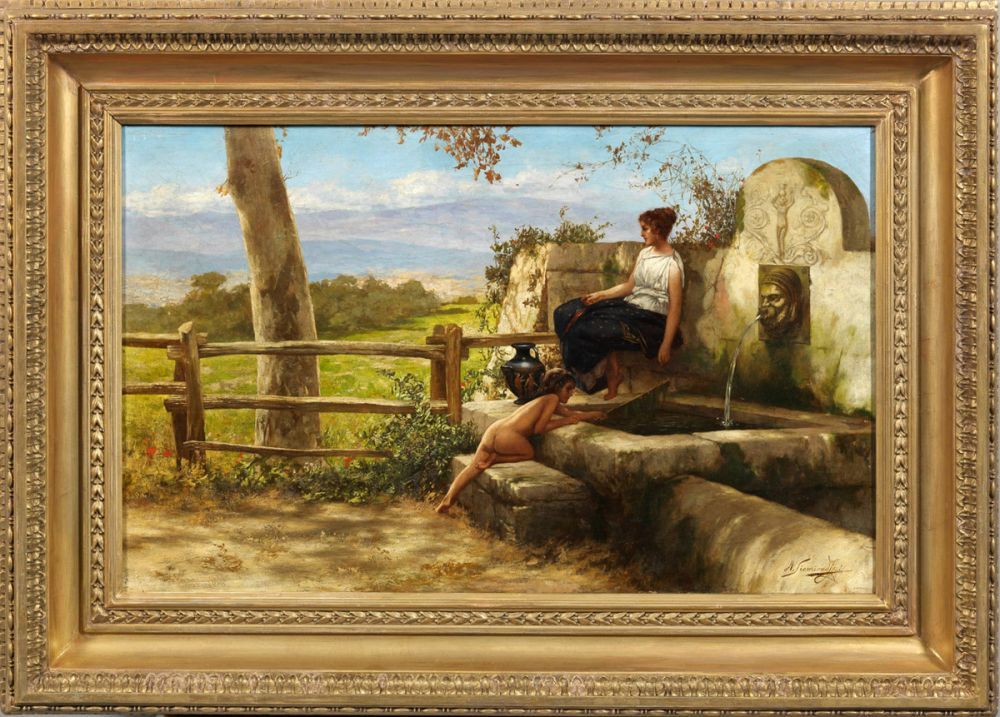
Lot 1291. Henryk Siemiradzki (Polnisch-ukrainisch. 1843 – 1902). Am Brunnen. Motiv aus der griechischen Antike. An einem Brunnen sitzende, junge Griechin in sinnierender Pose. Am Brunnenrand kniender unbekleideter Knabe. In Motiv, Komposition und Stil repräsentatives Werk des bedeutenden polnisch-ukrainischen Malers. Siemiradzki studierte 1864-1870 an der Akademie in St. Petersburg; mit einer Goldmedaille und einem Stipendium ausgezeichnet, wurde er 1870/71 Schüler Karl Theodor v. Pilotys an der Münchener Akademie. Ab 1872 war Siemiradzki in Rom ansässig, später auch auf seinem Gut Strzalków bei Tschenstochau. 1878 erhielt er eine Goldmedaille auf der Pariser Weltausstellung. Siemiradzki wählte die Motive für seinen Historien- und Genrebilder meist aus dem griechischen und römischen Altertum, zuweilen auch aus dem Neuen Testament. Ihre genaue Wiedergabe des Stofflichen, ein nuanciertes Kolorit und ein subtiles Spiel mit Effekten des Sonnenlichts steigern die Bildwirkung. Dieses vermutlich unter Werkstattbeteiligung ausgeführte Gemälde gehört zu einer Reihe von Darstellungen mit arkadischen Szenen und Brunnen-Motiven. Siemiradzkis Werke werden u.a in der Tretjakow-Galerie in Moskau sowie in den Nationalmuseen in Warschau und Krakau gezeigt. Öl/Lwd.; R. u. sign.; 42,5 cm x 68 cm. Rahmen.
Lit. zum Künstler: Thieme-Becker, Bd. XXXI, S. 1 f.
At the fountain. Oil on canvas. Signed. Reserve 18,500 €.

Schloss Ahlden. 14 September 2014.

Henryk Siemiradzki (1843 – 1902)

Henryk Siemiradzki. The Chat (The new bracelet)

Rozmowa Henryka Siemiradzkiego na kwietniowej aukcji Dorotheum. Trochę wzbudza moje zdumienie i niepokój autentykacja tej pracy przez pracowników Galerii Tretiakowskiej. Proweniencja musi być słabiutka skoro do tego doszło. Trochę falsyfikatów prac Siemiradzkiego krąży po świecie, które to po latach są uznawane za prace autentyczne. Tak czy owak trzeba bardzo uważnie przeczytać ów list potwierdzający autentyczność, słowo po słowie, zanim wyłożymy pieniądze. Kierowałbym się pierwszym swoim odczuciem.

[Sprzedano za 49,100 euro]


Lot No. 81. Henryk Siemiradzki (Bilhorod near Kharkiv 1843–1902 Strzalkow). The Chat (The new bracelet), signed H. Siemiradzky, oil on canvas, 42.5 x 59.5 cm, framed. Estimate EUR 40.000,- to 60.000,-. Dorotheum 08.04.2014.

Provenance: Private collection. Letter of authentication issued by Lydia I. Gladkova and Tatiana L. Karpova, State Tretyakov Gallery, dated 2006 available. We are grateful to Dr. Olga Sugrobova-Roth for her assistance in cataloguing this work. This so-called “ancient idyll” is an earlier variation on the composition The New Bracelet (1883) which is illustrated in Stanislaw Lewandowski’s book Henryk Siemiradzki (Warsaw 1904) on page 32.

Henryk Siemiradzki (1843 – 1902)

Henryk Siemiradzki. The Temptation of St Jerome

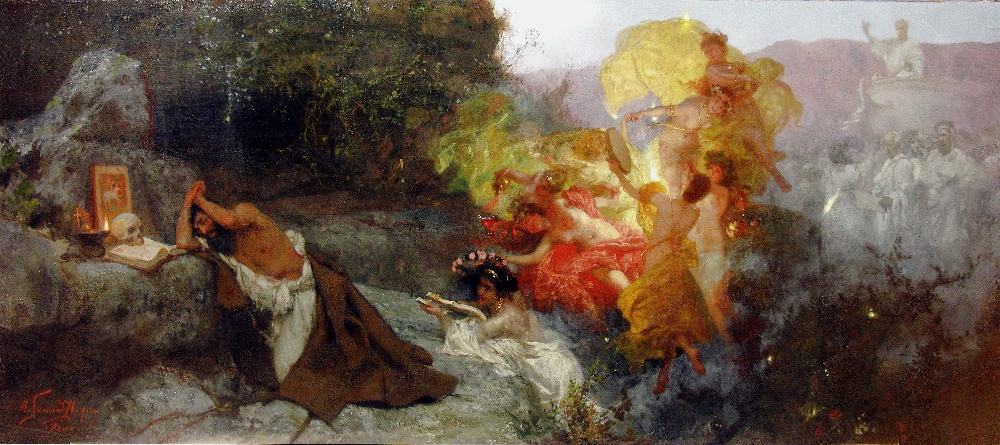
MacDougall’s Art, brytyjski dom aukcyjny, przedstawia na nadchodzącej aukcji 27 listopada 2013 pracę Henryka Siemiradzkiego The Temptation of St Jerome (olej na płótnie, 74.5 by 179.5 cm; lot #27). Praca ma znakomitą proweniencję, stąd też i wysoką cenę szacunkową £500,000 – £1,000,000. Praca ta (Kuszenie św. Hieronima) była poprzednio wystawiona na sprzedaż w Polsce w 2009 roku (Rynek Sztuki) z cena szacunkową 1 900 000 złotych lecz nie została sprzedana.


Provenance: Collection of the Scheibler family, the prominent Polish industrialists, collectors and patrons of the arts, Lodz, from c. 1901.

The painting is believed to have been displayed at the Scheiblers’ palace (currently Muzeum Kinematografii), Lodz, until 1944.

Private collection, Munich, c. 1980s–1990s.

Private collection, Krakow.

Anonymous sale; Aukcja Dziel Sztuki, Rynek Sztuki, Lodz, Poland, 20 September 2009, lot 72.

Acquired at the above sale by the present owner.

Authenticity certificate from the expert T. Karpova.

Authenticity certificate from the expert V. Petrov.

We are grateful to Mr Wojciech Niewiarowski, the President of the Galeria Rynek Sztuki, Lodz, Poland, for providing additional cataloguing information.

Exhibited: Vystavka pyati kartin G. Semiradskogo, Lviv, May–June 1888.

Vystavka pyati kartin G. Semiradskogo, Krakow, July 1888.

Vystavka pyati kartin G. Semiradskogo, Imperial Academy of Arts, St Petersburg, 1889.

Personal’naya vystavka Semiradskogo, Warsaw, April 1892.

Pervaya vystavka kartin istoricheskogo soderzhaniya, Moscow, March 1895, No. 35.

Charitable exhibition, Ogolnokrajowa Kwesta Ratujcie Dzieci “Kropla Mleka”, Juliusz Heinzel Palace (currently City Hall), Lodz, 11 June–6 July 1916.

Literature: Vsemirnaya illyustratsiya, 1889, No. 1052, p. 202, mentioned in the text.

F. Bulgakov, Al’bom russkoi zhivopisi. Kartiny G.I. Semiradskogo, St Petersburg, 1890, p. 8, mentioned in the text.

G. Semiradskii, Perechen’ osnovnykh moikh rabot, 1890, Manuscript Department, Russian National Library, St Petersburg, fund 127, file 3939, pp. 1–2, No. 49, listed.

Tygodnik illustrowany, 1895, No. 26, pp. 416, 422, illustrated.

Exhibition catalogue, Pervaya vystavka kartin istoricheskogo soderzhaniya, Moscow, March 1895, No. 35, illustrated and listed.

S. Lewandowski, Henryk Siemiradzki, Warsaw–Krakow, 1904, p. 106, mentioned in the text.

J. Dużyk, Siemiradzki: Opowiesć ́ biograficzina, Warsaw, 1986, pp. 423, 426, 447, mentioned in the text.

T. Karpova, Genrikh Ippolitovich Semiradskii, St Petersburg, Zolotoi vek, 2008, p. 142, illustrated; p. 168, mentioned in the text; p. 386, listed.”