Dlaczego tylko 300,000 euro? To przecież jedynie €17.75/cm2 zamalowanego płótna.
Inne koło, E43, sprzedane niedawno w Christie’s (https://polishartcorner.com/2023/10/14/wojciech-fangor-1922-2015-34/), o mniejszych wymiarach (70.9 x 70.9 cm), ma przelicznik cenowy £33.82/cm2, czyli €40.58/cm2. Zatem, obraz z Van Ham ma bardzo duży potencjał handlowy i wykazałem to czarno na białym. Czyżby nikt jeszcze na to nie wpadł?
Warto zauważyć, że wirujące koło tegoż artysty, M-14, o wymiarach 91.4 x 91.4 cm, sprzedało Christie’s w 1995 roku za jedyne $1,035 (z opłatami) co czyni $0.12/cm2.
Wniosek: płótna Fangora są oceniane i wyceniane obecnie przez nowe pokolenie, lepiej wyedukowanych krytyków sztuki jak też mamy nowe pokolenie bardzo wysmakowanych kolekcjonerów (Płoński do kosza, Fangor na ścianę!).
Lot 32. FANGOR, WOJCIECH Warschau 1922 – 2015. “B23“, 1965. Öl auf Leinwand. 130 x 130cm. Signiert, betitelt und datiert verso oben rechts: FANGOR B23 1965. Die Arbeit ist auf der offiziellen Internetseite des Künstlers aufgeführt.(www.fangorfoundation.org). Provenienz: – Galerie Wilm Falazik, Bochum (Aufkleber); – Privatsammlung Hessen. Estimate 80,000 – 120,000 euro. Van Ham. 11/27/28. Sold 300,000 euro
Unikatowa rzeźba w marmurze Igora Mitoraja, pominięta przez rynek.
Lot 25. Igor Mitoraj (1944-2014). Torse écorse, 1979. Marble on steel structure. Signed and dated lower right ,104 × 70 × 20 cm (the marble) 170 × 90 × 90 cm (the whole). Provenance :- Artcurial, Paris – Galerie Mitterrand, Paris. The original certificate from Galerie Mitterrand will be provided with to the buyer. Estimate 50,000 – 70,000 euro. Piasa. 11/27/24. Not sold
Michał Płoński. Zehn Szenen mit Bauern- und Figurenstudien, 1802
Typy ludzkie Michałą Płońskiego, pochodzące z teki wydanej w 1802 roku. W oczach kolekcjonerów i handlarzy ta oryginalna akwaforta nie warta była nawet 200 euro. Słowem, szukamy dalej Kossaczków.
Lot 5388. Plonski, Michal — Zehn Szenen mit Bauern- und Figurenstudien. Radierung. 9,6 x 18,6 cm. 1822. Le Blanc 13 II. Der polnische Zeichner, Radierer und Miniaturmaler Michal Plonski war in Warschau Schüler des Jean Pierre Norblin de la Gourdaine und bildete sich u.a. in Berlin, Kopenhagen und Amsterdam weiter. Auch ist sein Stil deutlich von dem Werk Rembrandts geprägt, was sich in vorliegenden Studien zeigt. Ganz ausgezeichneter, gegensatzreicher und zarttoniger Abzug mit gleichmäßig schmalem Rand um die Facette. Nur geringe Gebrauchsspuren, unbedeutend stockfleckig, unter dem stehenden Mann mit Hut unten rechts winzige dünne bestoßene Stelle von verso, sonst tadellos schönes Exemplar. Starting 200 euro. Estimate 250 euro. Bassenge. 11/27/24. Passed
Zaglądam raczej regularnie ale dopiero teraz pozwalam sobie na komentarz.
Dziękują za bardzo smutną konstatację, bo kossakowisko w różnych odmianach od lat. Raz to się nazywa malczeskowisko, mutterowisko…..itd. Nie deprecjonuję dobrych obrazów, ale w większości wypadków elyty kupują nazwiska. Cóż cały problem pozostaje w edukacji, którą zastępuje się agresywnym prostactwem.
Lubię ryciny a tą, którą chciałem mieć i szukałem, jakoś przeoczyłem. Przebudzenie, bo już niebawem będę patrzył na rembrandtowskie drgania igły Płońskiego.
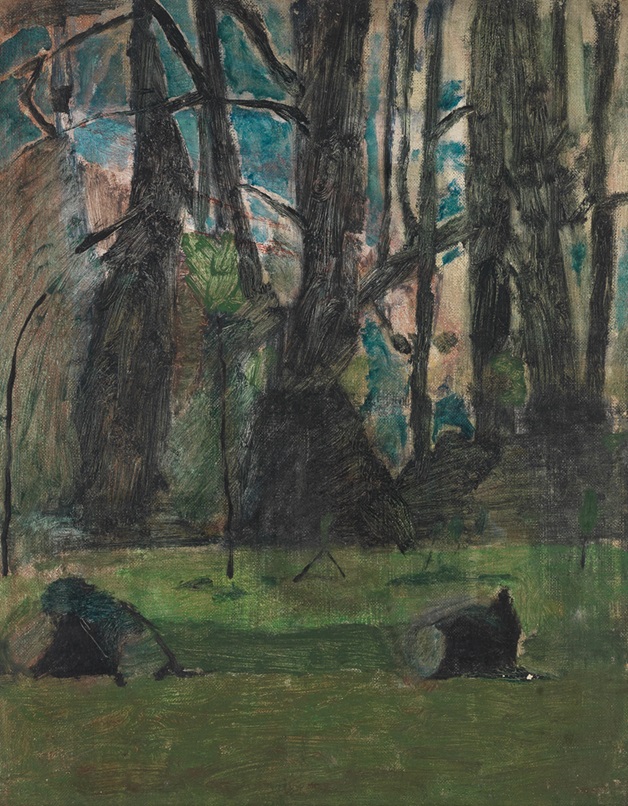
Nieduży, niesygnowany lecz z proweniencją krajobraz Piotra Potworowskiego, niezauważony lub zlekceważony.
Lot 27. Piotr Potworowski (Polish, 1898-1962). Landscape, oil on canvas, 51 x 40.5cm (20 1/16 x 15 15/16in). Executed circa the early 1950s. Estimate GBP1,900 – 2,500. Bonhams. 11/27/24. Sold 1,400 GBP
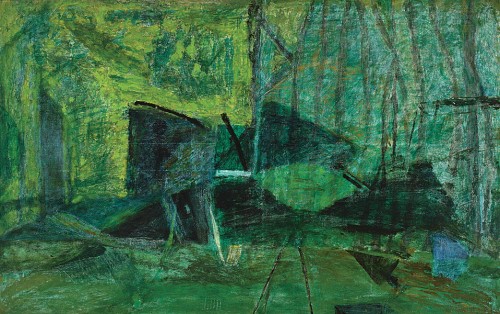
Obraz Piotra Potworowskiego wymieniony przez Adartem w komentarzu:
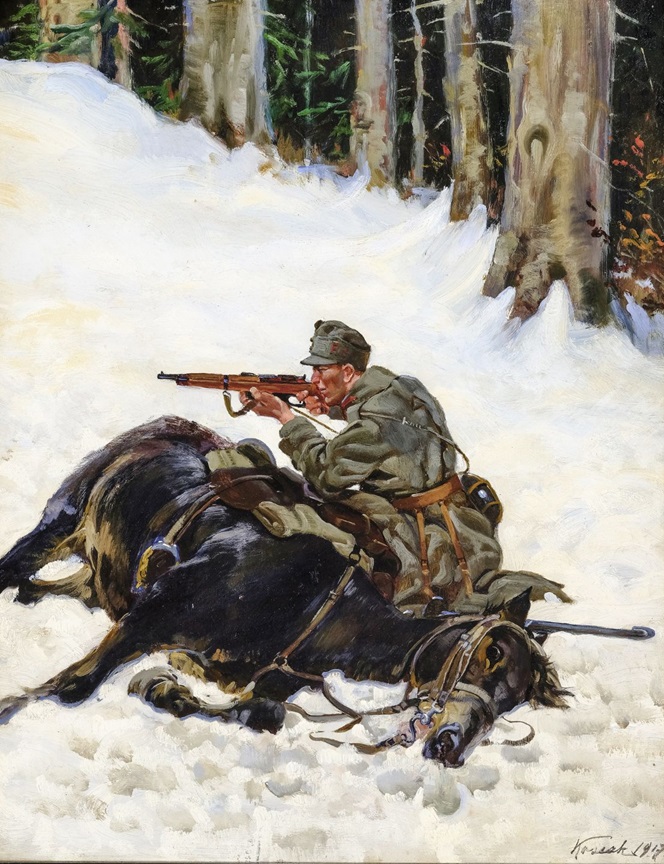
Jerzy Kossak ma się bardzo dobrze i nadal maluje. Każdy początkujący kolekcjoner a może początkujący handlarz znajdzie coś dla siebie na rynku. Czasami, jak na powyższym obrazku nie zawsze wszystko sie uda, ale klienci czekają z otwartymi portfelami. God Bless Jerzy Kossak!
Lot 392. Jerzey Kossak Krakow 1886 – 1955 Krakow. Soldier in winter. Oil on cardboard; 50 x 40 cm, framed 61.5 x 50.5, signed and dated 1917 on lower right. Tiberius. 11/26/24. Sold 2,200 euro
Datowanie tej pracy trochę mi nie pasuje do mojej teorii
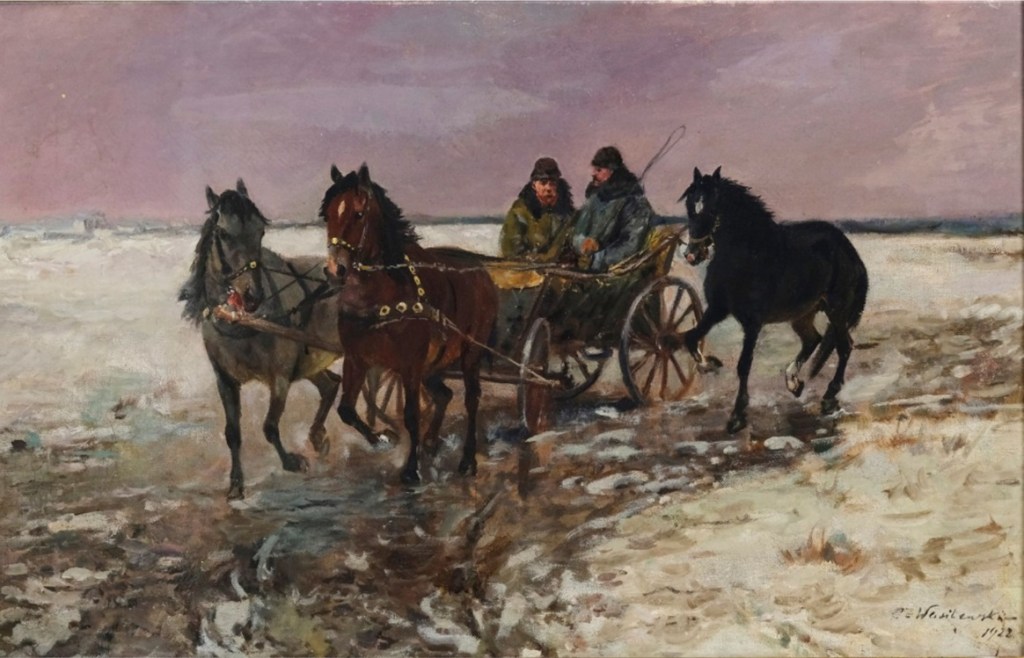
Lot 403. Czesław Wasilewski Warsaw 1875 – 1947 Łódź. Horse and cart. Oil on canvas, 51.5 x 80.5 cm, framed 70.5 x 99.5 cm, signed and dated 1922 on lower right. Starting price 150 euro. Estimate 300 – 600 euro. Tiberius. 11/26/24. Sold 1,600 euro
Posrebrzana wersja kamizeki dżinsowej Tomka Kawiaka. Wersje tej kamizelki w patnowanym na niebiesko brązie, ok 2x większe, były wyceniane znacznie wyżej.
Lot 54. Tomek Kawiak (Polish, b.1948) – Bad Boy Tomek Vest, Silvered Bronze Sculpture. Signed, numbered – 8/8. Height: 38cm. Estimate $2,000 – 4,000. Pasarel. 11/26/24. Sold $1,500
Lot 73. Hyacinthe ALCHIMOWICZ (1841 Szczucin-1897 Vilnius). Landscape near Perpignan. Watercolor on paper; 16 x 25 cm. Signed lower left “Alchimowicz”. Estimate 100 – 150 euro. Millon. 11/26/24. Sold 95 euro
Młodszy brat Kazimierza Alchimowicza specjalizujący się w tematyce pejzażu techniką akwareli. Panują spore rozbieżności odnośnie daty śmierci artysty. Obie prace sprzedano za bardzo drobne pieniądze. Artysta mieszkał i pracował w Perpignan, to tak odrośnie powyższego pejzażu.
Hiacynt Alchimowicz. The tower by the river
Lot 74. Hyacinthe ALCHIMOWICZ (1841 Szczucin-1897 Vilnius). The tower by the river. Watercolor on paper; 9.5 x 14.3 cm. Estimate 100 – 150 euro. Millon. 11/26/24. Sold 80 euro
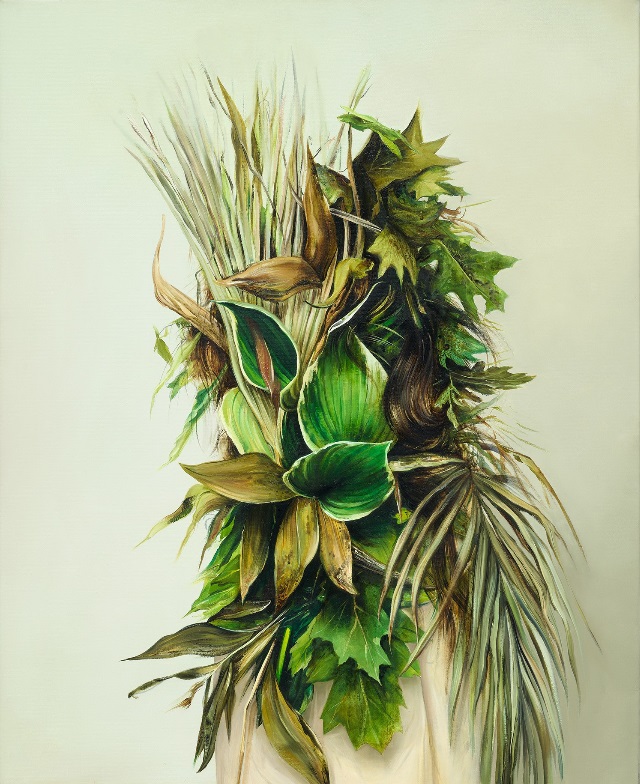
Lot 20. Ewa Juszkiewicz (1984). Grove. signed and dated ‘Ewa Juszkiewicz 2014’ on the reverse, oil on canvas, 100 x 80 cm. (39 3/8 x 31 1/2 in.). Painted in 2014. Estimate HK$2,400,000 – 3,500,000 (€292,000-427,000; $308,000-449,000). Phillips. 11/25/24. Passed
Phillips na aukcji Modern and Contemporary Art sprzedał 21 pozycji z wystawionych 23. Obraz Ewy Juszkiewicz należy do tych dwóch którym się nie powiodło. Poniżej bardzo obfity opis katalogowy Phillipsa do tej pracy wzmiankujący między innymi “technical virtuosity” artystki. Warto uważnie w nim się zgalębić:
“I developed a strong need to reference those portraits, and to establish a dialogue with them. I was driven by a desire to revitalise history, or rather to create my own story on the basis of it.” — Ewa Juszkiewicz
Rewriting the Narrative
Having been extensively exposed to classical European portraits, Ewa Juszkiewicz found herself both fascinated and perplexed by them. While the artistry in these works is impeccably executed, with intricate brushwork that enlivens each figure, the representation of women remains strikingly monotonous. As Juszkiewicz noted in an interview with ARTNews, “Their poses, gestures, and facial expressions were very similar and showed no deep emotion or individuality”.
In response, Juszkiewicz created artworks that challenge the conventions of European portraiture while honouring the significant aspects of tradition. She draws inspiration from female portraits spanning the Renaissance to the 19th century, meticulously recreating the technical virtuosity and stylistic elements of this historical genre. However, she introduces a radical transformation by obscuring or entirely replacing the subject’s faces. Through this practice of recreation and deliberate obstruction, Juszkiewicz articulates her critique of the complex history of female representation in Western art, where female identity has often been shaped by patriarchal societal expectations. Her works engage in a subtle yet powerful critique of classical portraiture, using its very language to expose the underlying mechanisms of control and display.
Juszkiewicz elaborates on her creative process and the ideas behind her works in the following interview: Ewa Juszkiewicz: Locks with Leaves and Swelling Buds, which was conducted in conjunction with her latest solo exhibition at the 2024 Venice Biennale.
Artistry in Precision
The present work, Grove, exemplifies Juszkiewicz’s mastery of the medium, particularly in portraying the intricate layers of botanical textures. Unlike many of her other pieces, which often showcase sumptuous details of fashion, the torso of the main figure in this painting is barely visible. Instead, she is depicted wearing a monochromatic robe that seamlessly blends with the background. This minimalist approach shifts the focus to the lush vegetation that obscures the figure’s identity. The vertical composition creates a dynamic sense of upward movement, while the interplay between withered brown leaves and vibrant greenery reflects Juskiewicz’s sophisticated understanding of colour dynamics and natural forms. Her brushwork aligns with her classical training, capturing the life cycle of plants with exquisite attention to detail, including the veins and speckles on the leaves.
Conceal, Rebel, and Question
Almost entirely engulfed by foliage, the present work conceals not only the main figure’s face but also a significant portion of her hair, which becomes entwined in the verdant backdrop. The artist has once remarked ‘Hair is very interesting; it’s often a status symbol.’ii This concealment can be interpreted as a means to protect the figure from scrutiny and to obscure any indication of her social status. By completely obscuring both the face and hair, Juszkiewicz disrupts the traditional principles of portraiture, which often rely on visual tropes shaped by societal expectations regarding women’s appearance and behaviour. In this way, Grove presents a potential manifestation of female portraiture in the absence of the male gaze. Through this exploration, Juszkiewicz challenges the patriarchal conventions that permeate society.
“There is also a theme of being overgrown, the fusion of hair and plants, and blurring the boundaries of what is human.” — Ewa Juszkiewicz
Beyond her critique of social norms, Juszkiewicz’s portrayal of overgrown vegetation on the figure’s head also invites a broader contemplation of humanity. She considers these paintings part of the historical vanitas genre, explicitly exploring the cycle of life. The plants depicted vary in stages of their life cycles–some are fragile new leaves, others are vibrant, while some are withering. This representation of life’s cycles, combined with the subversion of social conventions, enhances the contemplative nature of her work, prompting a direct interrogation of what it means to be human and the implications that entails.
Dorothea Tanning of the 21st Century
Juszkiewicz’s works evoke the artistry of Dorothea Tanning, the American modernist painter profoundly influenced by Surrealism, known for amplifying the female experience of confrontation. Juszkiewicz shares Tanning’s fascination with hair, overgrown plants, and the female figure, presenting an uncanny portrayal that blends realistic brushwork with Surrealist themes. Despite being separated by seven decades, Juszkiewicz’s work resonates with Tanning’s, as both artists contribute to a reimagining of the grand narrative from a female perspective– aggression and power.
“It’s about confrontation. Everyone believes he/she is his/her drama. While they don’t always have giant sunflowers (most aggressive of flowers) to contend with, there are always stairways, hallways, even very private theatres where the suffocations and the finalities are being played out, the blood red carpet or cruel yellows, the attacker, the delighted victim.” — Dorothea Tanning





 Polish Art Corner