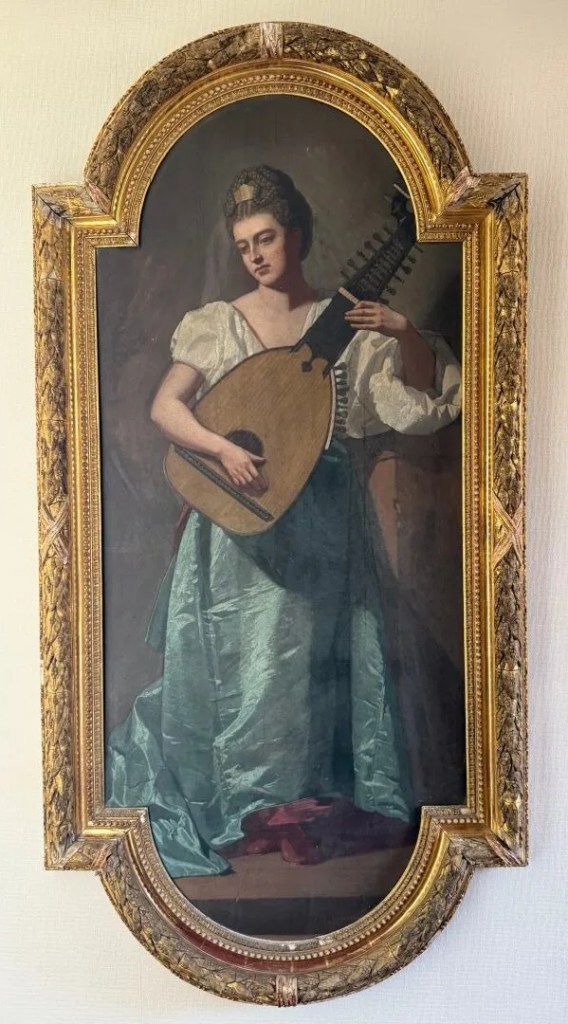
Andrzej Jerzy Mniszech (Mniszek). Jeune femme au luth ou allégorie de la Musique, 1862
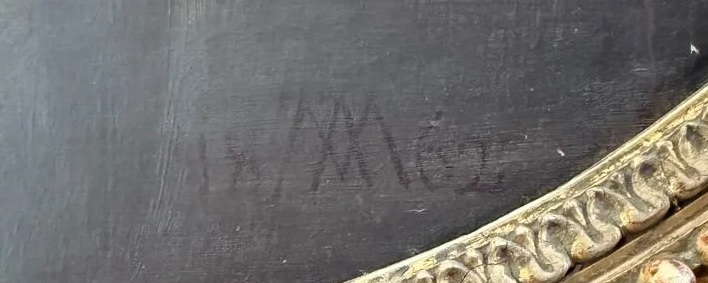
Lot 51. Andrzej Jerzy Filip MNISZECH (1823-1905).Jeune femme au luth ou allégorie de la Musique. Huile sur panneau. Monogrammée AM et datée 1862 en bas. 142 x 63,5 cm Cadre en bois sculpté et doré. Note : une représentation de la “Muse de la peinture, jeune fille à la palette”, datée de 1862 avec un encadrement de forme et de décors identiques au nôtre, a été vendue par Aukcja Dziel Sztuki à Varsovie en Pologne le 6 décembre 2015. PHILOCALE – Matthieu SEMONT. Estimate €3,000 – 4,000. 01/10/26. Sold €3,200
W 2016 roku Agra-Art sprzedała komplementarny do obecnego obraz za ok. €6,800 (30,000 PLN). Obrazem była Alegoria malarstwa, subiektywnie bardziej atrakcyjny od obecnej Alegorii Muzyki. Oba obrazy mają identyczne wymiary, oprawione są w identyczne chyba ramy. Nie wiadomo ile podobnych Alegorii artysta namalował – Słownik Artystów Polskich milczy na ten temat.
Andrzej Jerzy Mniszech (Mniszek). Alegoria malarstwa, 1862. Olej, deska, 147 x 68 cm. Źródło: Agra-Art
Andrzej Jerzy Mniszech (Mniszek). The goldsmith Hendrik Clootens
Lot 126. André Jerzy MNISZECH (Wischnowitz, 1823 – Paris, 1905). The goldsmith Hendrik Clootens. TRYPTIC PANEL 113.5 x 90.5 cm. Central panel: 113.5 x 90.5 cm / Side panels: 119.5 x 44 cm. On the closed trompe l’oeil panel on the left, which reads (translation): “the doors opened and the Ghysult saw the work of the famous Handrick Clootens, who, according to him, was also an experienced goldsmith. See him here with his work and high praise for his long life. He was born in 1602 and was still in good health to this day.” Label on the back of the painting (translated from Polish): “National General Exhibition in Lviv, 1894 section XX, group XXVI A. Art Department Full name: Mniszech (Andrey) Exact address: 47 rue Boissière Paris Title of work: Seventeenth-century Zrotmik (triptych) Return address: 47 rue Boissière Paris”. (old restorations and missing parts) Provenance: Personal collection of the artist, who died in 1905, passed on to his wife Anne-Charlotte MARRIER de LAGATINERIE ( 1840 – 1910 ), then by descent through marriage to the Brochant de Villiers collection.
Exhibition: Lviv, 1894, the painting won a bronze medal at this exhibition.
Count Andzrej-Jerzy Mniszech, a Polish painter who had settled in Paris in 1852, became a sought-after portraitist, thanks in particular to the large Polish community. A great lover of early painting, he revered 17th-century Dutch artists, especially Frans Hals. He retained a lifelong passion for antique costumes, refined objects, draperies and theatrical settings. His models are often dressed in 17th-century Dutch fashion, like the goldsmith depicted in the central panel of the triptych. The identity of the figure who may have inspired Mniszech is unknown: was he a celebrated goldsmith of his time? Seated, he looks at the viewer, as if to present the piece of goldsmithing on a table. The side panels display superb gold and silver objects, proof of his talent and success. On the back of these panels are large draperies on one of which is a trompe l’oeil handwritten document, which seems to compare our triptych with one sold in Paris on April 21, 2023 (sold for €15,000), depicting the bootmaker Hendrick Clootens, known in Flanders in the 17th century. The goldsmith shows Mniszech’s talent for characterizing his model. The sober, restrained color scheme indicates his status as a respectable bourgeois, the smiling face expresses obvious satisfaction, while the lively eyes reveal the perceptive, shrewd and self-confident merchant. The side shutters framing two rich, luminous still lifes energize the whole and give the portrait great visual presence. Mniszech appreciated triptychs, a format uncommon in the 19th century except for religious subjects. It corresponded to the painter’s original temperament, allowing him both to draw attention to the central figure seen against a neutral background, and to imaginatively reveal, on the side panels, objects of significance or value to the goldsmith. This tripartite, structured layout, combining the respectability of portraiture with the fantasy of still life, appealed to Mniszech’s clients, who used it on several occasions.
Malarstwo polskie z najwyższej półki, zupełnie niedocenione. Nie są to Informele, nie są to Wirujące koła, nie są to Reliefy …a zatem nie ma najmniejszych szans nawet na rozsądny wynik sprzedaży. Niedawno podobny tryptyk Mniszka został sprzedany za jedyne 15,000 euro (https://polishartcorner.com/2023/04/05/andrzej-jerzy-mniszech-mniszek-1823-1905-5/). Inaczej mówiąc dwa tryptyki Andrzeja Mniszka są warte np. jeden op-art Juliana Stańczaka z wczorajszej aukcji (którego cenię za niezwykłą konsekwencję).
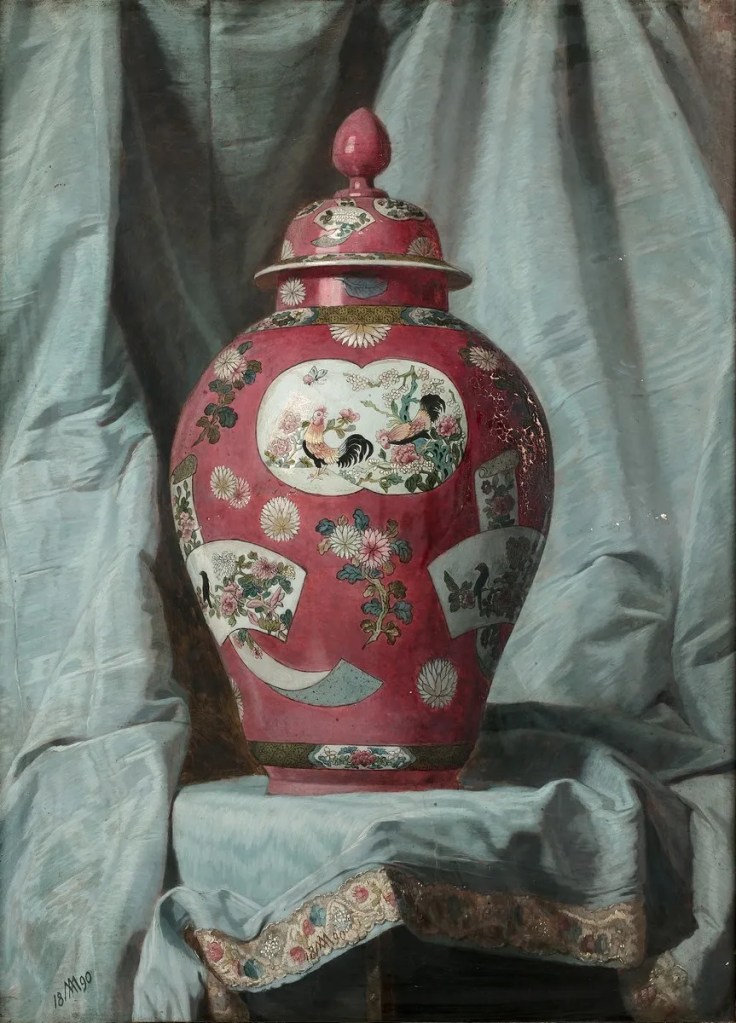
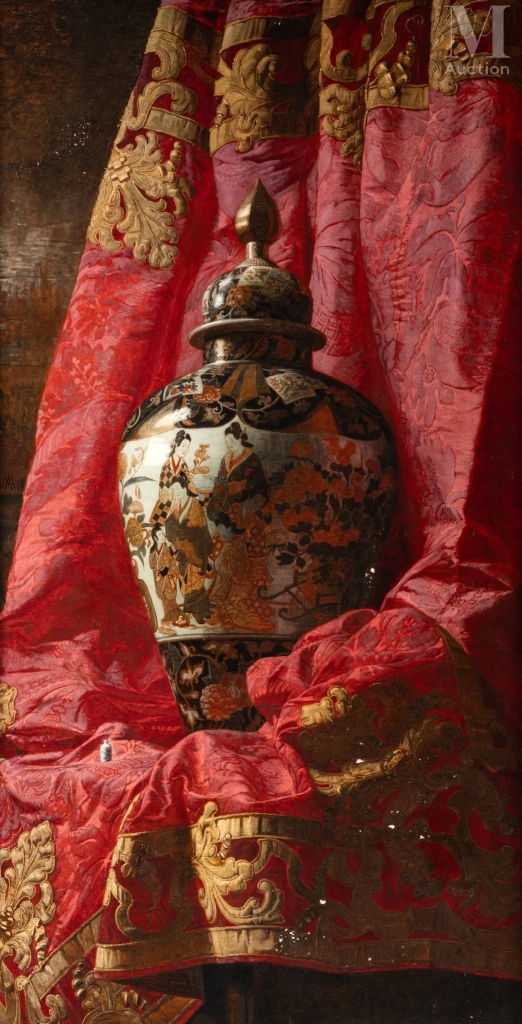
Andrzej Jerzy Mniszech (Mniszek). Still life with Chinese vase
Lot 124. André Jerzy MNISZECH (Wischnowitz, 1823 – Paris, 1905). Still life with Chinese vase. PANEL, 100 x 74.5 cm. Louis XVI-style wood and gilded stucco frame. Signed twice, lower center and lower left MM 1890. Provenance: Personal collection of the artist, who died in 1905, passed on to his wife Anne-Charlotte MARRIER de LAGATINERIE ( 1840 – 1910 ), then by descent and marriage to the Brochant de Villiers collection. Estimate 4,000 – 6,000 euro
Andrzej Jerzy Mniszech (Mniszek). Young woman languid in an alcove
Lot 125. André Jerzy MNISZECH (Wischnowitz 1823 -1905 Paris). Young woman languid in an alcove. PARQUET PANEL, 83 x 116 cm (restorations). Provenance: Acquired in the Paris trade by the current owner’s parents in the 1930s (as attributed to Winterhalter); Private collection in South-West France. Estimate 8,000 – 12,000 euro
Andrzej Jerzy Mniszech (Mniszek). Composition with a ginger jar, 1876
Lot 451, Comte Andrzej Jerzy de MNISZEK( Wisniowiec 1823- Paris 1905). Composition with a ginger jar Oil on parquet panel 180 x 94.5 cm. Signed and dated on the left side AM 1876. Damage and missing parts. He settled in Paris in 1854, in a house on rue Daru, where he brought his famous collection of antique paintings and objets d’art from his family’s château in Poland. Part of this collection was dispersed by his son at a sale on April 9, 1902. He was a pupil of Jean Gigoux. In 1894, he was awarded a bronze medal for a triptych of Japanese subjects at the National Exhibition in Lwow. In Paris, he was the official portraitist of the Polish aristocracy. Following the Paris World’s Fair, where Japan was one of the stars, Mniszek developed a passion for large-scale compositions in which he brought together Japanese and Asian objects. Provenance: Private collection Private collection. Estimate 3,000 – 5,000 euro. Millon. 06/26/24. Sold 18,000 euro
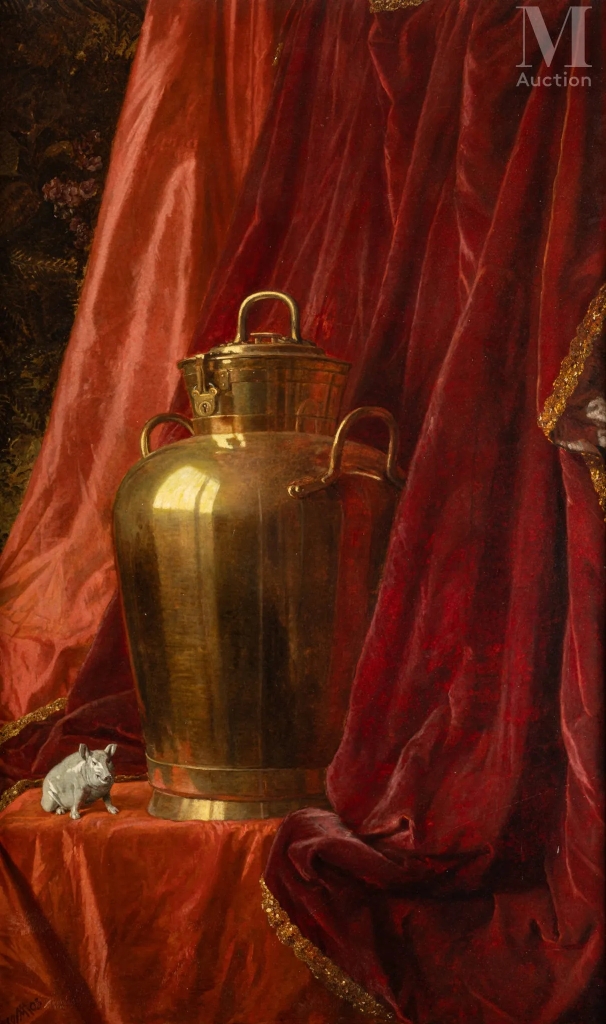
Martwe natury ręki księcia Andrzeja Jerzego Mniszcha zapierające dech i utwierdzające w przekonaniu, że dawniej żyli polscy artyści, mający talent połączony z dobrym wykształceniem malarskim. 18,000 euro za obraz z wazą japońską to doprawdę niewiele porównując do płaskiej i brzydkiej martwej natury Łempickiej dzisiaj sprzedanej za 55,000 GBP. Kompozycja z dzbanem mosiężnym jest znacznie poźniejsza, brak detali tkaniny, brak detali dzbana w porównaniu z wazą japońską i dlatego obraz został sprzedany w widełkach estymacji. Spore wydarzenie dla koneserów polskiego malarstwa. Niejedno polskie muzeum nie powstydziłoby się tych prac. Ceny doprawdę symboliczne jeśli porówna sie cen wymiotnego współczesnego polskiego aukcyjnego malarstwa.
Andrzej Jerzy Mniszech (Mniszek).Composition au pot en cuivre, 1903
Lot 452. Comte Andrzej Jerzy de MNISZEK (Wisniowiec 1823-Paris 1905). Composition au pot en cuivre. Huile sur panneau parqueté, 150 x 91 cm. Signé et daté en bas à gauche AM 1903 Provenance : Collection particulière. Estimation : 3 000 € – 5 000 €. Millon. 06/26/24. Sold 4,500 euro
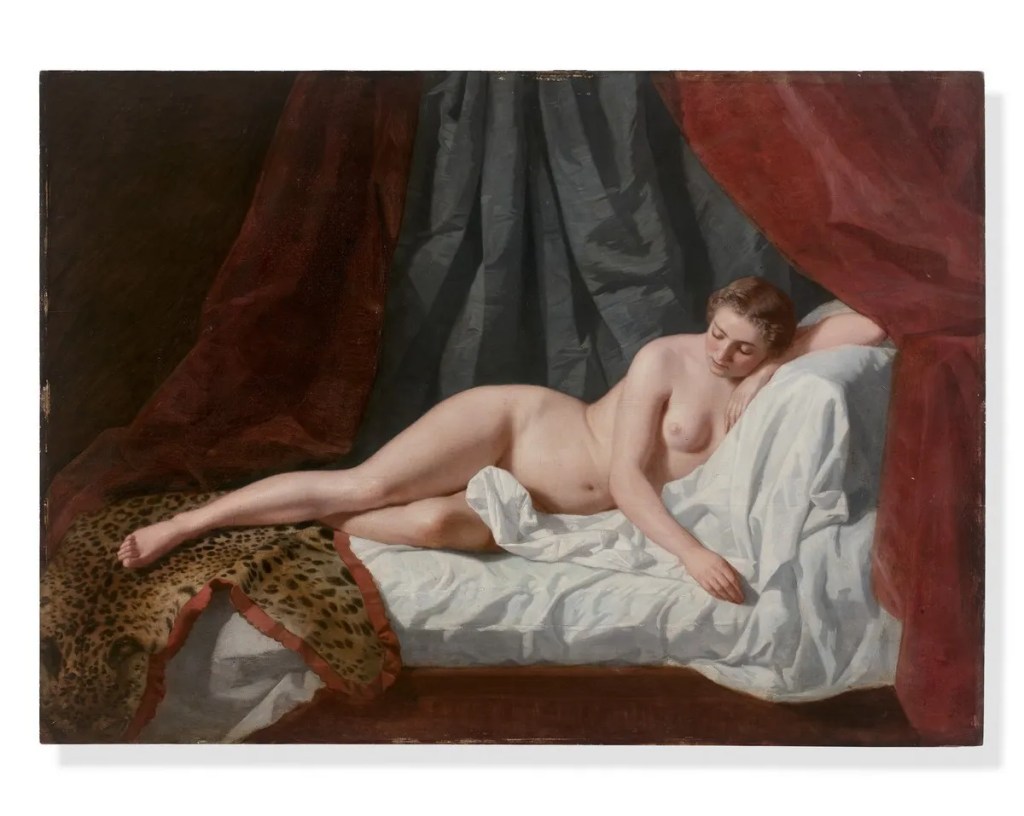
Andrzej Jerzy Mniszech (Mniszek). A young woman reclining in an alcove, panel
Obraz jest niesygnowany lecz z dokładnym wyjaśnieniem atrybucji autorstwa. Chyba to wytłumaczenie nie było wystarczająco przekonywujące bo oferta 10,000 euro, którą ktoś złożył była poniżej ceny rezerwowej i obrazu nie sprzedano.
Lot 186. André Jerzy MNISZECH Wischnowitz, 1823 – Paris, 1905. Jeune femme alanguie dans une alcove. Panneau parqueté (Restaurations). A young woman reclining in an alcove, panel, by A. J. Mniszech; h: 83 w: 116 cm. Provenance : Acquis dans le commerce parisien par les parents de l’actuel propriétaire dans les années 1930 (comme attribué à Winterhalter); Collection particulière du Sud-Ouest de la France
Commentaire : Issu de la noblesse polonaise, André Mniszech s’installe à Paris en 1854. Il étudie avec Jean François Gigoux et Léon Cogniet et devient un peintre réputé, réalisant notamment les portraits de nombreux compatriotes émigrés en France. Il constitue également, suivant en cela ses ancêtres, une remarquable collection d’œuvres d’art qui fut dispersée les 19 avril 1902 et 9 et 10 mai 1910.
Nous attribuons ce panneau à André Mniszech pour des raisons à la fois techniques et stylistiques. On y remarque la matière riche et sensuelle, la touche raffinée et les empâtements chers à Mniszech. Quant aux draperies faisant ressortir la blancheur du corps de la jeune femme, on les retrouve dans nombre de ses œuvres, tout comme la luminosité, l’intensité des blancs et la profondeur des rouges. Citons par exemple ‘Le Portrait du fils de l’artiste Léon’, vendu à Paris le 20 juin 2022, ‘La femme au perroquet’ passée en vente à Paris en 2006, ou encore ‘L’allégorie de la peinture’ vendue à Varsovie le 6 décembre 2015, où les blancs, très présents, jouent et contrastent avec des noirs profonds ou des verts lumineux. Enfin, Mniszech utilisait très rarement des toiles, leur préférant des panneaux de qualité, ce qui lui permettait un travail approfondi sur les couleurs, la richesse sensuelle de la matière, la beauté et la finesse des détails (par exemple, la peau de panthère) que le support de bois rehausse.
Quant au modèle, il s’agit très probablement d’Isabelle de la Gâtinerie (1840-1910), qui devint la seconde épouse du peintre en 1886. Nous connaissons d’elle un petit portrait par Paul Gervais daté de 1888. Le visage rond et plein présente de nombreuses similitudes avec celui de notre jeune femme : des cheveux blonds légèrement frisés sur les tempes, une peau très pâle, un nez droit, de grands yeux surmontés d’épais sourcils et d’un grand front. Enfin, les épaules rondes annoncent un corps aux formes généreuses, tel celui de la belle endormie. Le tableau présenté ici date-t-il de 1886, année du mariage ? Il n’est pas exclu qu’il soit un peu antérieur, la jeune femme semblant un peu plus âgée sur le portrait de Gervais.
André Mniszech connaissait la famille de la Gâtinerie depuis les années 1860, en atteste un ‘Portrait de Berthe de la Gâtinerie’, sœur d’Isabelle, de 1869. Il est possible que Mniszech ait fait la connaissance des deux sœurs par l’intermédiaire de leur mère, Marie-Eugénie Gallian, baronne Marrier de la Gâtinerie, qui était peintre. Dans tous les cas, cette œuvre, empreinte de douceur et de délicatesse, de sensualité, est d’un caractère très intime, ce qui explique qu’elle ne soit pas signée. Estimation 12 000 – 15 000 €. Artcurial. 11/22/23. Not sold
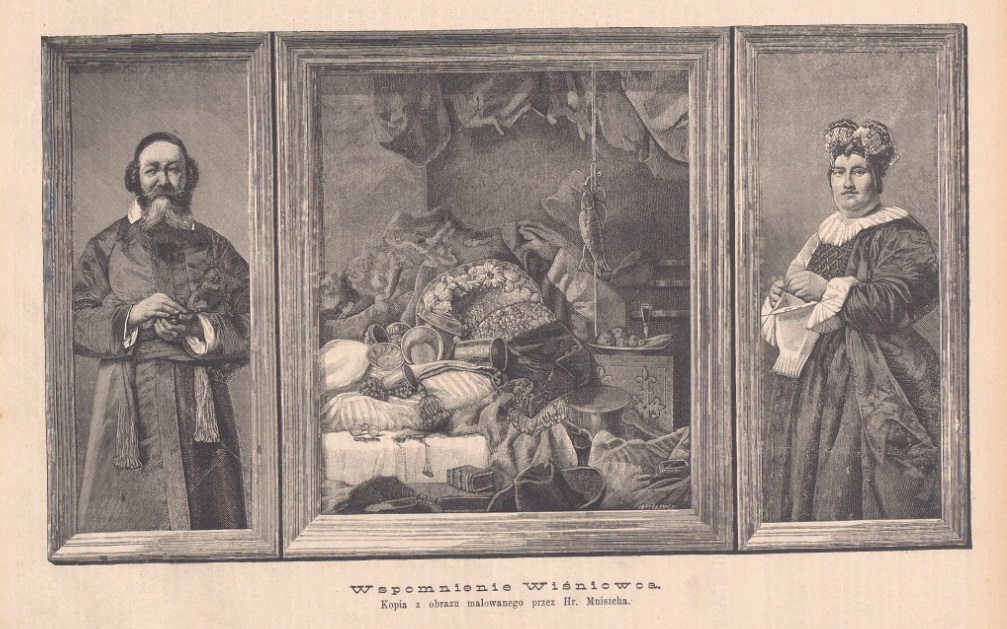
Niedawno licytowany był na rynku tryptyk namalowany przez Andrzeja Mniszcha przedstawiający krawca Clootensa (https://polishartcorner.com/2023/04/05/andrzej-jerzy-mniszech-mniszek-1823-1905-5/). Inny tryptyk tego artysty, związany z Wiśniowcem, siedzibą Mniszchów, opublikował w 1885 roku warszawski periodyk Kłosy. Artysta opuszczając Wiśniwiec i przenosząc się Paryża zabrał ze sobą znaczną część kolekcji domowych obrazów. Tryptyk, Wspomnienie z Wiśniowca, być może przedstawia na skrzydłach rodziców artysty. Nie wiadomo czy obraz ten zachował się do dziś. Dyskusja o jego atrakcyjności może być przedwczesna, gdyż drzeworyt w Kłosach na pewno nie oddaje niuansów płótna.
Andrzej Jerzy Mniszech (Mniszek). Portrait of Hendrick Clootens
Lot 75. André Jerzy MNISZECH (Wischnowitz 1823 -1905 Paris). Portrait of Hendrick Clootens, cutter Panels in triptych 150 x 112 cm and 150 x 57 cm for the flaps Monogrammed on the main panel and dated 1887 and on the flaps 1888 This spectacular triptych, painted by Count Andrej-Jerzy Mniszech, a painter of Polish origin who settled in Paris in 1852, depicts a tailor and bootmaker named Hendrick Clootens. Proudly camped and richly dressed in the Dutch fashion of the 17th century, he occupies the central panel, surrounded on either side by the tools and attributes of his dual profession. On the back of the side panels, the two painted signs indicating his name and trade dominate a cityscape with smoking chimneys, symbols of the industrial and commercial development to which Hendrick industrial and commercial development to which Hendrick Clootens owed his prosperity. In 1883, five years before our triptych, Mniszech had painted a Portrait of Henryk Clootens (National Museum, Warsaw). The dedication on this portrait: Henricus Clootens civis Bruxellensis, sartor atque sutor celeberrimus, natus 1584 – obiit 1662, resurrexit 1839, ad vivum pinxit 1883, tells us that the model of our triptych was a famous bootmaker living in Brussels in the seventeenth century, and that the 1883 portrait depicts a descendant (or simple homonym?) who was probably also a bootmaker and contemporary of Mniszech.
The triptych shows Mniszech’s talent for capturing the personality of a model, whether real or imagined, as is the case here. Hendrick Clootens’ respectability is emphasized by a restricted range of colors on the garment and the background, while his joviality appears on the fully lit face, which also reveals the satisfaction of the tailor-bootman who has become notable. The presence of two still lifes on the side panels gives the portrait monumentality and dynamism. The sumptuousness of the fabrics, the intensity of the colors, the beauty and finesse of the details give a strong visual presence to this portrait full of energy and panache. The work is characteristic of Andrej-Jerzy Mniszech, a great admirer of 17th century Dutch portrait painters, especially Frans Hals. An original artist with a passion for costumes, settings and staging, Mniszech did not hesitate to dress his models in 17th-century Dutch or, later, Japanese fashion and to surround his compositions with decorative motifs. He used here the triptych, a format not usual in the 19th century (except for religious subjects) which allows him to for religious subjects), which allowed him to best express Hendrick Clootens’ personality and social status. Mniszech used this format several times, notably in the portrait of a goldsmith surrounded by his tools and objects of goldsmithery, a composition very similar to ours, which earned him a bronze medal at the Lwow exhibition in 1894. The history of this painting is not known, but it is not impossible that the commissioner was the young Henryk Clootens painted by Mniszech in 1883. Satisfied with his portrait, he would have commissioned a second, much more ambitious one from Mniszech, which would be a tribute to his illustrious predecessor and namesake. Provenance: In the family of painter André Mniszech from the beginning and by descent to the present owners. Estimate 8,000 – 12,000 euro. Millon. 04/21/23. Sold 15,000 euro
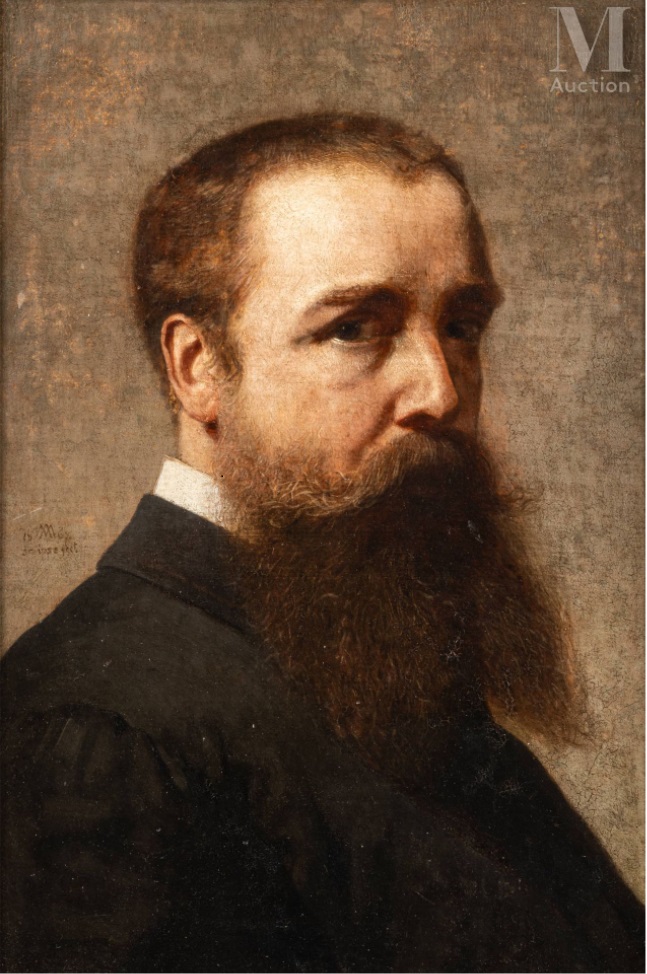
Andrzej Jerzy Mniszech (Mniszek). Autoportrait, 1889
Lot 73. André Jerzy MNISZECH (Wischnowitz 1823 -1905 Paris). Autoportrait. Panneau d’acajou, une planche, non parqueté 50,5 x 35 cm. Signé à gauche du monogramme MM et daté 18-89 (?) Se ipse fect En 1854, André Mniszech quitte la Pologne dont il est originaire et s’installe à Paris où il devient alors un portraitiste recherché. Il bénéficie du soutien de son maître, le peintre Jean Gigoux et surtout de l’importante colonie polonaise émigrée en France. Mniszech exécute principalement des oeuvres de commande pour ses amis et compatriotes immigrés, ce qui lui permet de connaître une grande aisance financière et de constituer ainsi une belle collection d’oeuvres d’art dont les ventes, en 1902 et 1910, marquèrent les esprits. Dans la famille de l’artiste depuis l’origine et par descendance aux propriétaires actuels. Estimate 8,000 – 12,000 euro. Millon. 04/21/23. Sold 13,000 euro
Andrzej Jerzy Mniszech (Mniszek). L’enfant au volant ou Portrait de Léon Mniszech
Lot 29. André Jerzy MNISZECH (1823 -1905). L’enfant au volant ou Portrait de Léon Mniszech. Panneau parqueté. Sans cadre, 158 x 100 cm. Marque au revers du fournisseur “HOSTELLET”. Restaurations anciennes, manques. Provenance :Collection de l’artiste ; Anna Hanska Mniszech, belle-soeur de l’artiste. Par descendance jusqu’aux propriétaires actuels. Estimate 30,000 -40,000 euro. Millon. 06/20/22
Kolejne bliskie spotkanie z polską arystokracją, Potockimi, Mniszkami a także Balzakiem i jego żoną Hańską. Ciekawy opis historyczny podał dom aukcyjny. Obraz jest spory wymiarami, malarstwo bardzo dobre i chyba poszukiwane w Polsce a artysta stosunkowo rzadki. W sumie spore atrybuty do zakupu, zwłaszcza, że jest to portret dziecka.
Peint dans les années 1859-1861, ce beau portrait d’enfant au volant représente Léon Mniszech (1849-1901) fils du peintre André Mniszech et de sa première épouse Anna Potocka, tous deux issus d’anciennes familles aristocratiques polonaises. Quittant la Pologne en 1854 avec sa famille pour s’installer à Paris, Mniszech devint un portraitiste recherché, bénéficiant du soutien de son maître, le peintre Jean Gigoux et surtout de l’importante colonie polonaise émigrée en France. C’est grâce à la fidélité de ses amis et de ses compatriotes que Mniszech connut une grande aisance financière et put constituer une magnifique collection d’oeuvres d’art dont les ventes, en 1902 et 1910, marquèrent les esprits. Le talent de portraitiste de Mniszech, très apprécié de ses commanditaires, est remarquable par son exigence de perfection, son travail approfondi sur la composition et les couleurs, la richesse sensuelle de la matière, la beauté et la finesse des détails que le support de bois rehausse. Toutes ces qualités se retrouvent dans le portrait que Mniszech peint de son fils unique, visiblement très choyé. L’enfant au volant, oeuvre maîtrisée et aboutie, compte certainement parmi les plus beaux portraits connus d’André Mniszech. Agé d’une dizaine d’années environ, Léon est vêtu d’un costume noir et d’une magnifique blouse blanche brodée. A ses pieds, de fines chaussures vernies, dans ses mains une raquette et un volant. Il se détache sur un fond aux tonalités brunes réchauffées par le rouge de la draperie à gauche, auquel répondent la tache rouge du volant que l’enfant tient à la main et celle de la doublure du chapeau en bas à droite. L’ovale du chapeau renvoie en retour à celui de la raquette placée devant la draperie, dont les amples plis évoquent ceux des manches du vêtement. Une certaine théâtralité émane de cette composition d’inspiration classique rappelant les portraits aristocratiques du XVIIe siècle et, peut-être, les illustres ancêtres des familles Mniszech et Potocki. Le petit garçon, dans son costume d’apparat, a le sérieux d’un infant. Fier de sa blouse, magnifique morceau de peinture, il semble attentif à ne pas en déplacer les bouillonnements d’une blancheur immaculée qui illuminent l’oeuvre. Le fort contraste entre la tonalité sombre du vêtement et l’éclat des blancs est tempéré par la douceur et l’arrondi du visage de l’enfant au regard sérieux et à la bouche légèrement boudeuse. Il émane de ce portrait, d’une grande puissance visuelle, une force émotive et un charme incontestable. Le choix du noir et du blanc et la mise en valeur du visage au moyen de la collerette se rencontrent souvent dans les portraits d’homme de Mniszech et dénotent l’influence de la peinture hollandaise du XVIIe siècle et surtout de Franz Hals, qu’il vénérait.
L’enfant au volant évoque d’ailleurs certains portraits de Hals, par exemple le Portrait d’homme conservé à la Frick collection, New York, où tant la pose du modèle que les jeux de blanc de la chemise jaillissant de la veste noire sont proches de notre portrait. Mniszech a peint plusieurs fois son fils. Un petit portrait de Léon à sept ans, vêtu également d’un costume noir et d’une blouse à collerette blanche, est passé en vente à Varsovie (Desa Unicum) le 8 juin 2017. Un autre portrait de Léon à l’âge de quatorze ans est conservé au musée national de Varsovie. La provenance de L’enfant au volant est très intéressante puisqu’il est resté jusqu’à aujourd’hui dans la famille des descendants de la fameuse Madame Hanska, égérie et brièvement épouse de l’écrivain Honoré de Balzac. Le frère d’André Mniszech, Georges Wandalin Mniszech (1822-1881), épousa en effet Anna Hanska (vers 1830-1915), fille de Madame Hanska et de son premier mari, le comte Hanski. Balzac, qui fût témoin à leur mariage à Wiesbaden en 1846, était proche d’Anna et de son mari qui le soutint financièrement à plusieurs reprises. Il dédia d’ailleurs son roman Pierrette (1840) à Anna et Maître Cornelius à Georges (lors de la réédition de 1845). H: 175 x L: 115 cm
Mała nadzieja by Monsieur Jules CORNUAU zawitał pod polski dach.
——————————————————
Lot 49. Andrzej Jerzy Filip MNISZECH (1823-1905). Monsieur Jules CORNUAU. Huile sur panneau d’acajou, monogrammée AM et datée 1884; H 67 L 53 cm. Beau cadre en bois et stuc doré à décor de frises feuillagées et rangs de perles.






 Polish Art Corner