Maksymilian Gierymski (1846 – 1874)

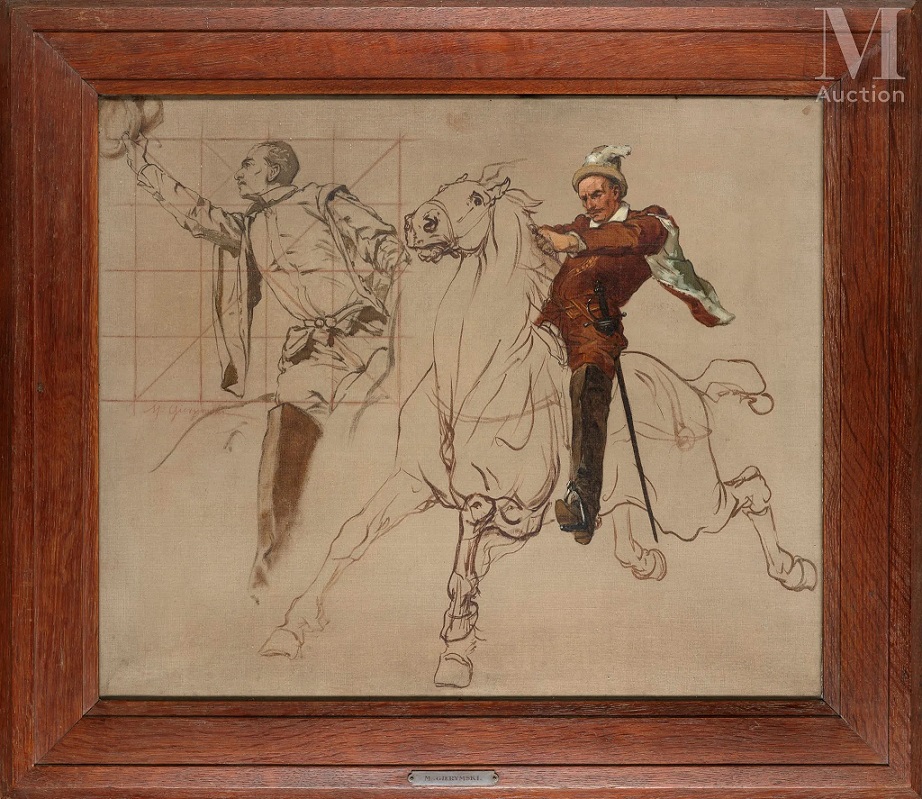
Maksymilian Gierymski. Etude de cavaliers

Sporo jak za szkic i niedokończoną pracę ale obrazow Maxa Gierymskiego praktycznie nie ma rynku.

Lot 1. Maksymilian GIERYMSKI (1846-1974). Etude de cavaliers. Huile et crayon sur toile 54 x 65 cm Signé au milieu à gauche “M. Gierymski” L’étude représente deux cavaliers en mouvement qui semblent vouloir éclater le cadre du tableau, l’un dans un geste de salutation réalisé avec son couvre-chef, l’autre essayant de freiner sa monture en plein galop. Pour le premier, le peintre est en train de l’agrandir, à l’aide de la mise au carreau, à partir d’un dessin préparatoire. Pour l’autre, l’artiste se sert d’un trait à la fois sûr et vif pour rendre le dynamisme d’un cheval et de son cavalier en pleine action. Les deux font preuve de l’exceptionnel talent de dessinateur dont Maksymilian Gierymski était doté. La composition de ces deux esquisses insérées dans le même espace témoigne de l’extraordinaire sensibilité du jeune artiste qui sait jouer sur la dynamique de la géométrie d’un tableau. L’artiste joue également sur le contraste entre les parties déjà peintes avec un soin particulier apporté aux détails et aux parties à peine ébauchées. L’étude garde ainsi toute la fraîcheur d’un dessin, tout en faisant des promesses quant à la peinture terminée. Elle a pu servir d’une étude pour un tableau qui n’a pas été conservé jusqu’à nos jours. Estimate 10,000 – 12,000 euro. Millon. 10/24/23. old 9,500 euro.

Maksymilian Gierymski (1846 – 1874)

38N170427_138_60163_2


Praca była w Neumeister a teraz w Dorotheum. ?


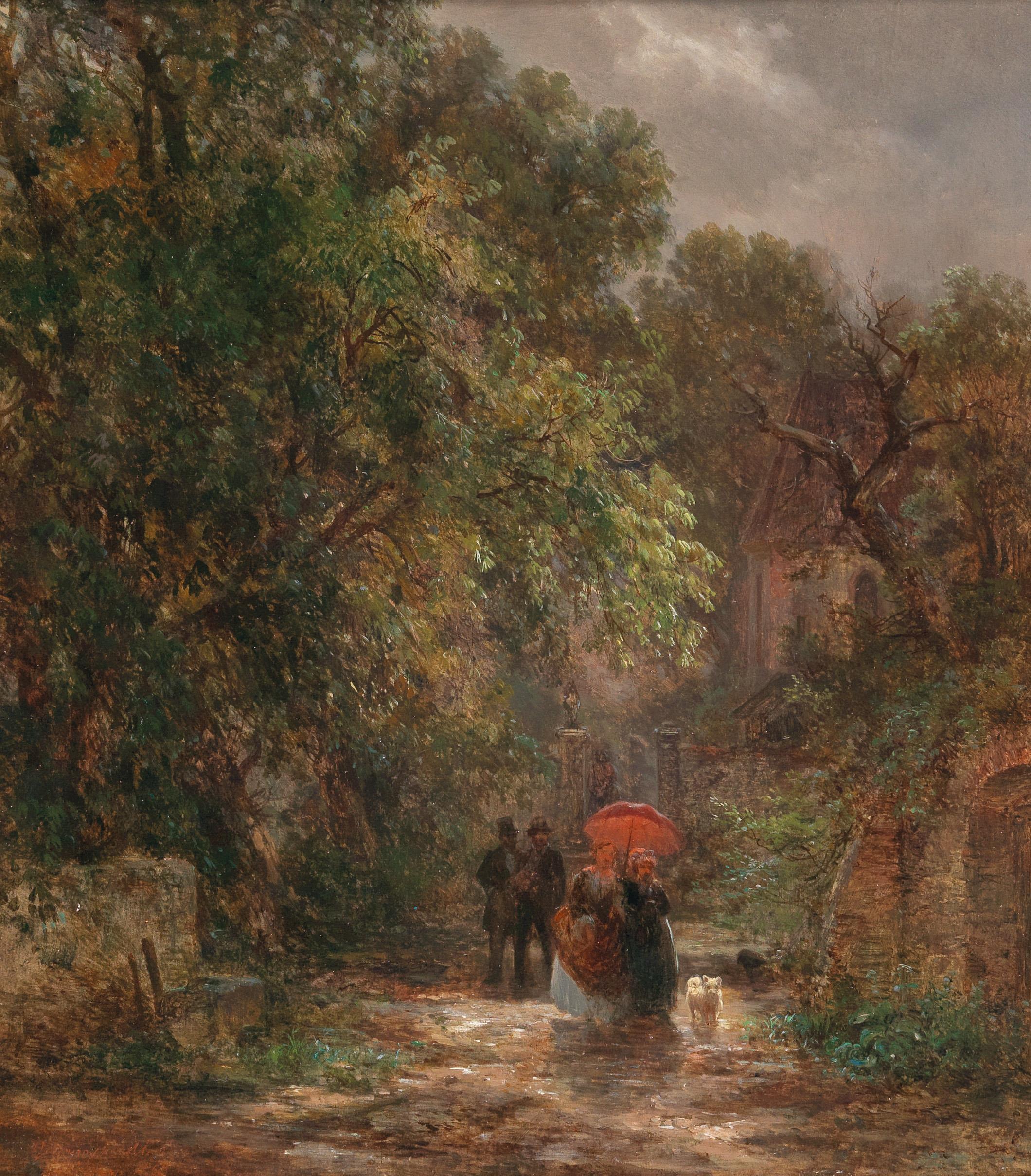
Lot 1152. Maximilian Gierymski

(1846–1874 Bad Reichenhall)
The Sunday stroll, signed, dated and inscribed Gierymski M. München 1868, oil on panel, 25 x 22 cm, framed, (Rei)

Provenance:
Private Collection, Vienna.

Estimate 18,000-25,000 euro. Dorotheum. 04/27/17 (1752500)

38N170427_138_60163_2_b

Maksymilian Gierymski (1846 – 1874)

Gierymski

Paca wzbudzi zainteresowanie.

——————————————————-

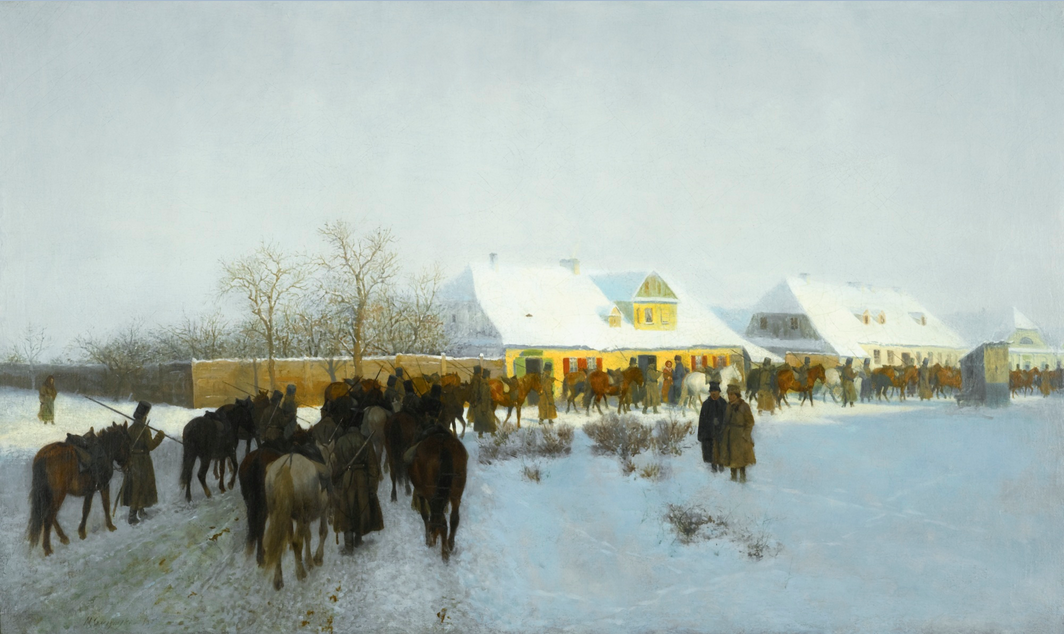
Lot 17. Maksymilian Gierymski 1846-1874 POLISH. POLISH MILITIAMEN; signed M. Gierymski and indistinctly dated 187[?] lower left; oil on canvas laid on panel; 48 by 80cm., 19 by 31½in.

Provenance

Galerie Commeter, Hamburg
Wilhelm Spangenberg (purchased from the above); thence by descent to the present owners

Catalogue Note

Painted circa 1872, the present work was inspired both by Maksymilian Gierymski’s personal experience as a Polish insurgent fighting the Russian forces in the January Uprising of 1863,  and by the landscapes of  his homeland, which he revisited with his brother Aleksander in the summers of 1870-72.

Gierymski was a Munich-based painter and draughtsman, and together with Jozef Brandt and his younger brother Aleksander one of the greatest  Polish representatives of the so-called Munich school. He was a precursor of realism in Polish painting of the second half of the 19th century, an artist capable of finding beauty and poetry in the everyday prose of life and the mundane reality of provincial towns, often depicting autumn or winter landscapes or village scenes that constituted backgrounds for tired soldiers passing through them, as in the present work.

Gierymski was the eldest son of a military clerk and member of the Warsaw intelligensia. In 1863 Gierymski, then aged seventeen, joined the Polish insurgents to participated in the January Uprising, during which he most probably fought in the Lublin and Kielce regions. His experiences from this period – the uneven fight of the poorly armed Polish units against the Russian forces, which ended with defeat for the rebels and the subjugation of the Polish nation – left a permanent mark on his psyche.

After the failure of the uprising, Gierymski managed to avoid the Russian authorities’ reprisals and in 1867 received a government scholarship to study fine art at the Munich academy. He befriended Jozef Brand and became a student at the private workshop of the then-famous battle painter Franz Adam.

From around 1869, Gierymski increasingly focused on depicting  military insurgent themes. Despite being strongly influenced by Adam, he never became a battle painter. Having experienced war first hand, Gierymski was not interested in the noise of battle,  or in showing the brutal violence and the heroism of fighting soldiers. Instead he depicted the dull, everyday reality of soldiers – slow marches, horse patrols, stops at poor country farmsteads and forest camps. ‘’His youthful memories from 1863 were coming back to him. He was capable of transferring them to canvases, with an authenticity that moves with the tragic truth about those days. In an analogic way, he created scenes referring to the times of the November Uprising, in which he accentuated not the historical-documentary values but the tiresome, toilsome character of a soldier’s life (A March of Polish Cavalrymen in 1830, around 1869; A Staff Adjutant from the Year 1830, around 1869). Being faithful to his style, he presented Polish insurgents, Russian Cossacks and Austrian hussars similarly. Just as important as the anonymous, nameless figures of soldiers are the landscapes. Most often set in autumn or winter, they constitute not only a background for the depicted events but also the world of the portrayed people which determines the conditions of these people’s fight and their everyday lives.’’ (Ewa Micke-Broniarek, The National Museum in Warsaw, December 2004).

Works such as Polish Militiamen skillfully render an atmosphere of sad reverie tinged with the bitter consciousness of defeat and the lost hopes for regaining independence: ‘The world captured on his canvases was most often a warm recollection of his homeland, filtered through the imagination of a realist painter with a masterful technique. Gierymski closely observed his surroundings, he made use of precise sketches and photographs of motifs or posing models, he finished certain details with the precision of a miniaturist, nevertheless his works were never solely imitations of nature but “imitations of the world’ born from personal emotions. This representative of the generation of positivists, who had been fascinated with Polish romantic poetry from his childhood days and admired Artur Grottger’s works, was both calmly rational and romantically sensitive and emotional. His artistic stance was characterized by a total lack of ostentation – Gierymski never dramatized, strengthened expression or imposed himself on the viewer; his paintings combine subtlety of form and power of expression, a personal contemplative approach to nature and faithfulness in the reproduction of nature’.

Sothebys. Estimate 80,000 — 120,000 GBP. 5/21/15
Maksymilian Gierymski (1846 – 1874)

Gierymski Max

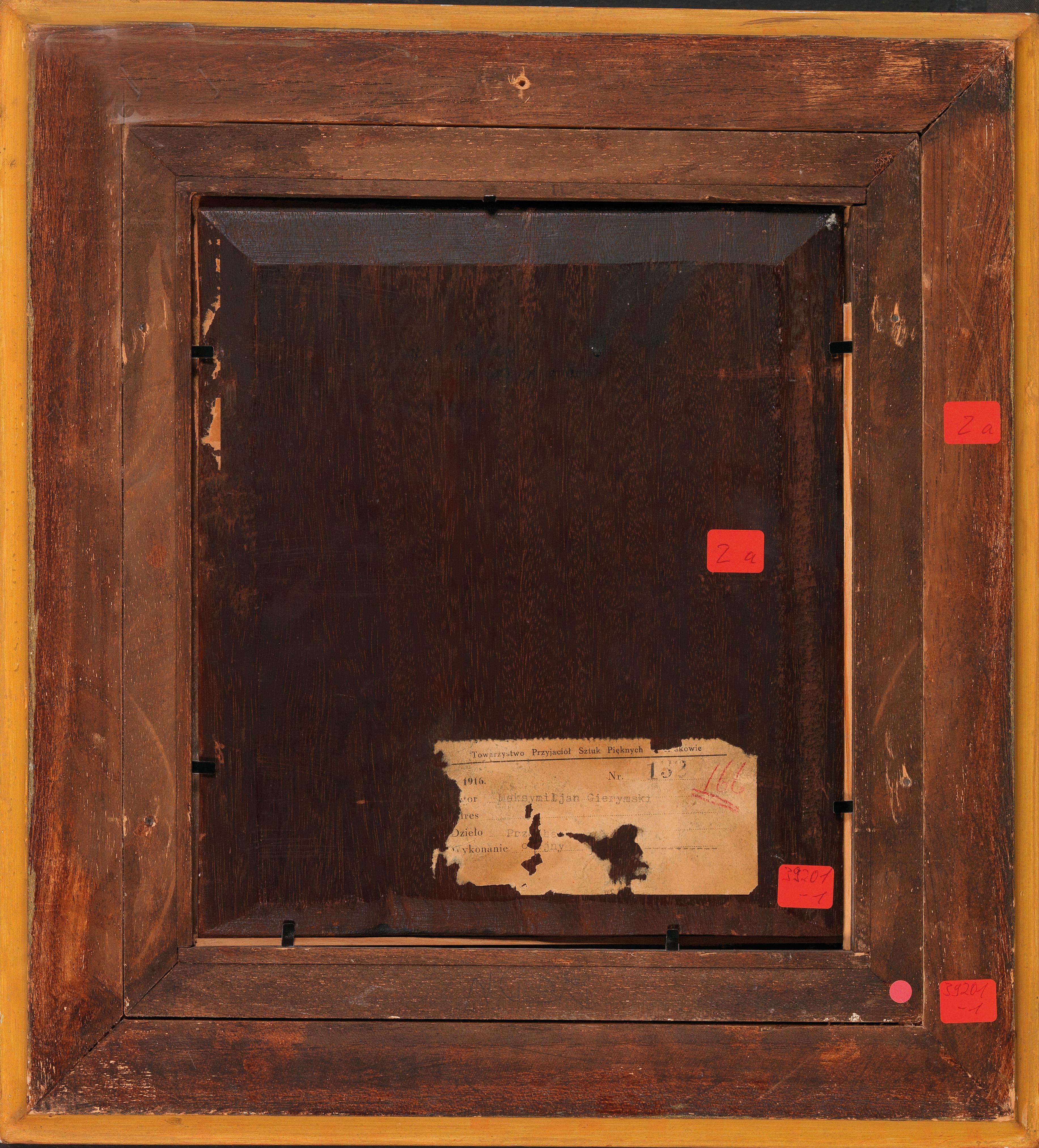
Druga praca Marksymiliana Gierymskiego na rynku aukcyjnym i to w tym samym niemal czasie to niezwykła rzadkość. Praca byla wystawiona w 1916 roku w Krakowie w Towarzystwie Przjaciół Sztuk Pięknch. Wystarczy odszukać w katalogu wystawy i porównać.

==============================

Lot 543. Gierymski, Maksymilian 1846 Warschau – 1874 Bad Reichenhall. Spaziergänger auf der Straße eines kleinen Städtchens. L. u. signiert, Ortsbezeichnung München und 1868 datiert. Rücks. Klebeetikett der Gesellschaft der Freunde der Schönen Künste in Krakau, 1916, mit Nummerierung 132 (besch.). Öl auf Holz. 25,8 x 22,9 cm. Rest. Rahmen.

Zwei Paare mit einem weißen Spitz auf der regennassen, von hohen Bäumen gesäumten Straße, im Hintergrund eine kleine Kirche. Die beiden Damen, eine sorgsam ihr Kleid raffend, im Schutz eines roten Schirmes. Durch die dunklen Wolken eines abziehenden Unwetters fällt das Sonnenlicht auf die Frauen mit ihrem Hund. Maksymilian Gierymski gehörte wie sein Bruder Aleksander zu den bedeutendsten polnischen Künstlern des 19. Jahrhunderts. Seine Gemälde zeichnen sich durch ihre realistische Auffassung, vorbereitet durch Pleinairstudien, aus. Die Behandlung rein malerischer Werte wie Farbe und Licht bildet einen Schwerpunkt im Schaffen des noch jung an der Schwindsucht verstorbenen Künstlers. Zahlreiche seiner Werke wurden im 2. Weltkrieg zerstört. 1867 bis 1868 studierte Maksymilian Gierymski mit einem Stipendium der polnischen Regierung an der Münchener Kunstakademie, seine Lehrer in München waren u. a. Alexander Strähuber, Arthur Georg von Ramberg und schließlich Franz Adam, bei dem er bis Mai 1870 ein Atelier mietete. Nach dem Studium blieb der Künstler in München, wo er sich rasch in der hiesigen Kunstszene etablieren konnte, ab 1868 war er Mitglied des Münchener Kunstvereins. Zusammen mit Józef Brandt zählte er zu den führenden Vertretern der sog. Polenkolonie in München.

Estimate 25,000 – 30,000 €. Neumeister. 11/26/14.

Maksymilian Gierymski (1846 – 1874)

Gierymski Max

Taka praca pojawia się raz na dziesięciolecie. Maksymilian Gierymski jest praktycznie nieobecny na rynku aukcyjnym. Trudno zatem wycenić taką pracę a dom aukcyjny w Szwecji będzie prawdopodobnie zaszokowany gdy spadnie młotek. Prace Maksymiliana Gierymskiego o treści powstańczej są chyba cenione najwyżej ale też nieosiągalne na rynku a jedynie w muzeach. Ta praca z aukcji, choć nie powstańcza a troche sielska, również wzbudzi emocje. Można jedynie pomarzyć i we śnie zobaczyć ją na ścianie u siebie. Jednej osobie ten sen sie spełni ale nie mnie. Nie wierzę by sprzedano ten obraz w widełkach wyceny. Wg mojej oceny jest to wydarzenie roku nie tylko dla miłośników ‘monachijczyków’.

            =================================

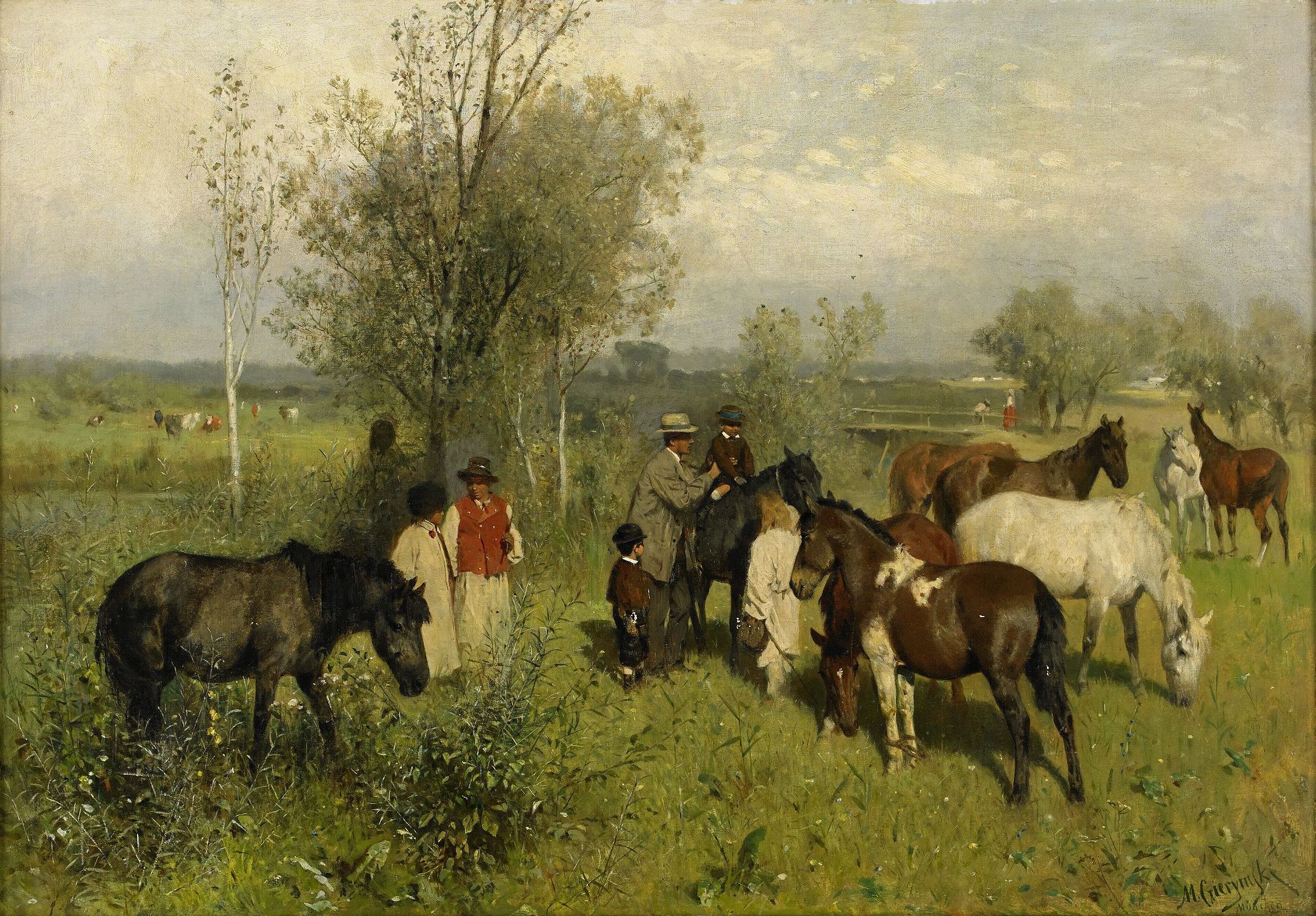
Lot 2397. MAKSYMILIAN GIERYMSKI Polen 1846-1874. Ridlektionen. Signed. Oil on canvas.
65 x 96 cm
Maksymilian Gierymski was a Polish painter. He was the older brother of painter Aleksander Gierymski. As a seventeen-year-old boy, he participated in the January Uprising in 1863. He was educated at the Warsaw Drawing School initially, but then received a government scholarship in 1867 and went to study at the Academy of Fine Arts in Munich under professors Alexander Straehuber, Karl von Pility and Alexander Wagner. He became one of the leading painters of the Munich realistic school. Initially best known for this battle paintings, he also created many landscape paintings, especially from southern Poland, which he visited several times. Completely successful in western Europe, he did not gain approval nor popularity in Poland of the 19th century, although he sent paintings to exhibitions in Warsaw regularly from 1868 on. He did however win awards at exhibitions in Munich (1869) and in Berlin (1872).

Estimate SEK 400 000-450 000; € 43 000-48 500. Stockholms Auctionsvork. Dec 2-4, 2014.