Wojciech Fangor (1922 – 2015)

fangor

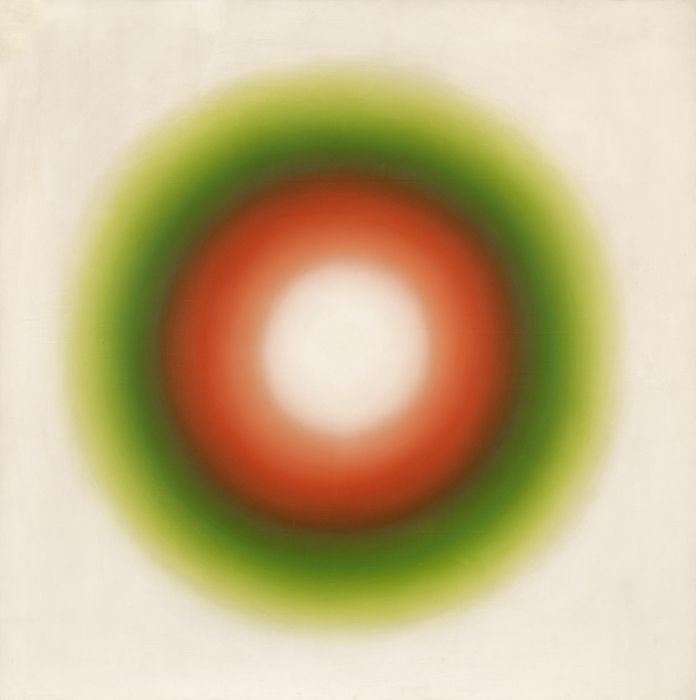
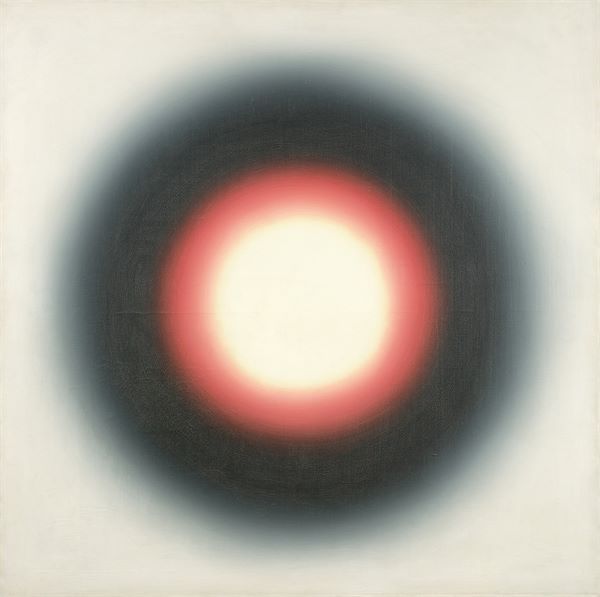
Lot 811. Wojciech Fangor (Warsaw 1922 – 2015 Błędów)
„B 71“. 1965
Oil on canvas. 60,5 × 60,5 cm ( 23 ⅞ × 23 ⅞ in.). On the reverse signed, titled and dated in black felt-tip pen: FANGOR B[erlin] 71 1965. On the stretcher a label of Galerie Springer, Berlin.
[3229]
Provenienz: Private collection, Berlin

Estimate 70,000 – 90,000 EUR. GRISEBACH. 12/02/16


1

Wojciech Fangor (1922 – 2015)

fangor

OHNE LIMIT!!!. Auch für 1 € zu verkaufen!


'Gentlemen, it's a fake!'

 ————————————————

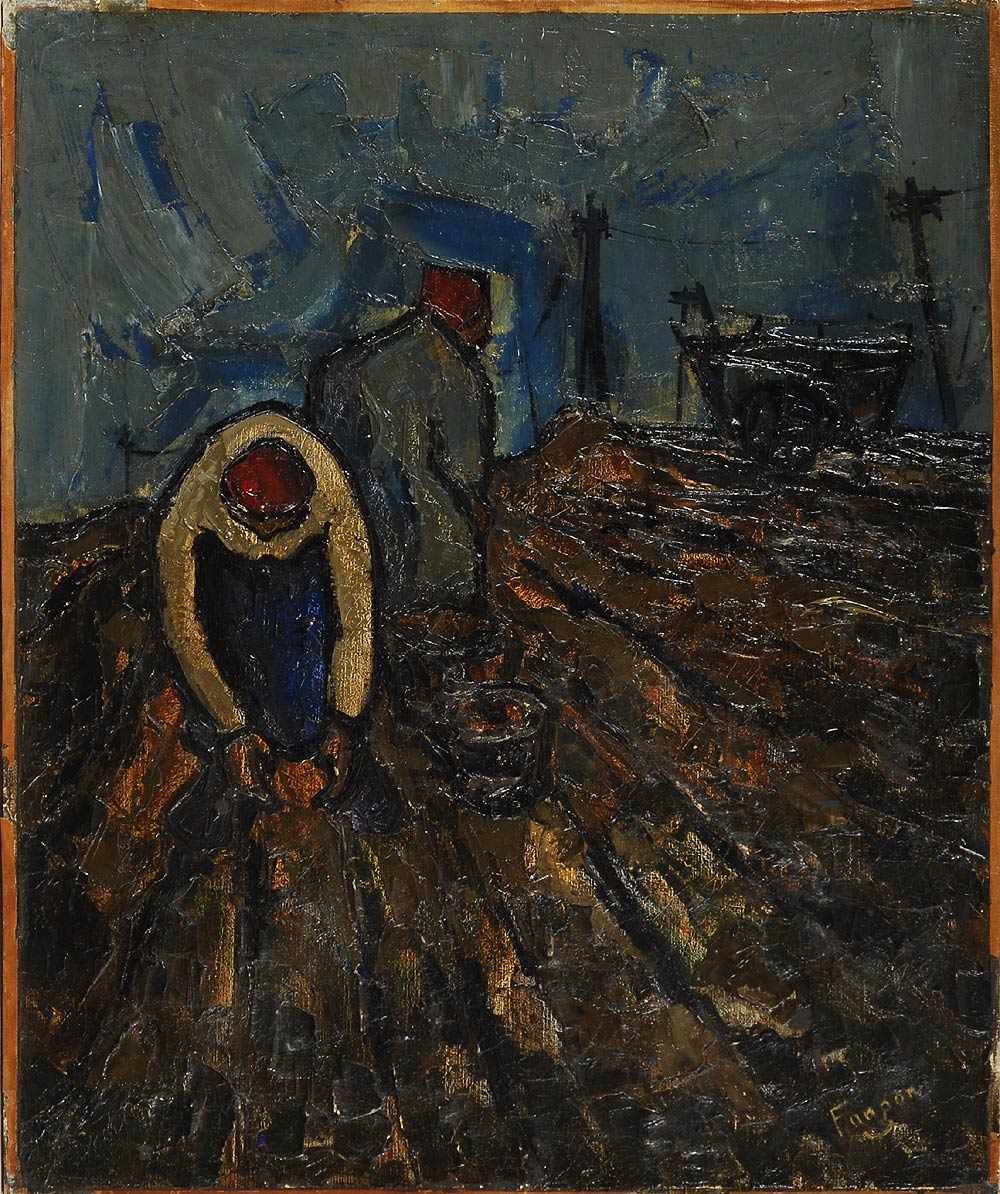
Kat.Nr.: 4090, Fangor, Wojcieck: Bauernpaar auf dem Acker. Öl/Leinwand, rechts unten signiert. Paar auf dem Feld bei der Arbeit unter blauem Himmel. Minimale Altersspuren. 65 x 54 cm, ungerahmt Vollmer: Polnischer Maler, Freskant, Grafiker und Plakatkünstler (1922 Warschau – 2015 Bledów), ansässig in Janówek bei Warschau. Schüler der Akademie Warschau unter Pruszkowski und Kowarski, später Professor ebd.

Limit: ohne Limit. Wendl. 10/22/16

fangor-sign

Wojciech Fangor (1922 – 2015)

Fangor-1
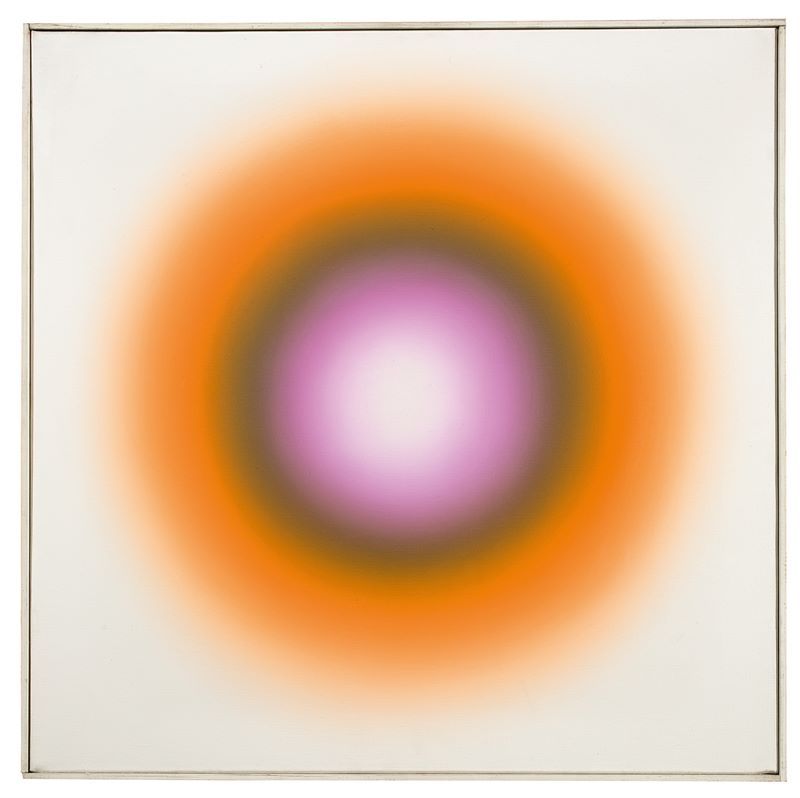
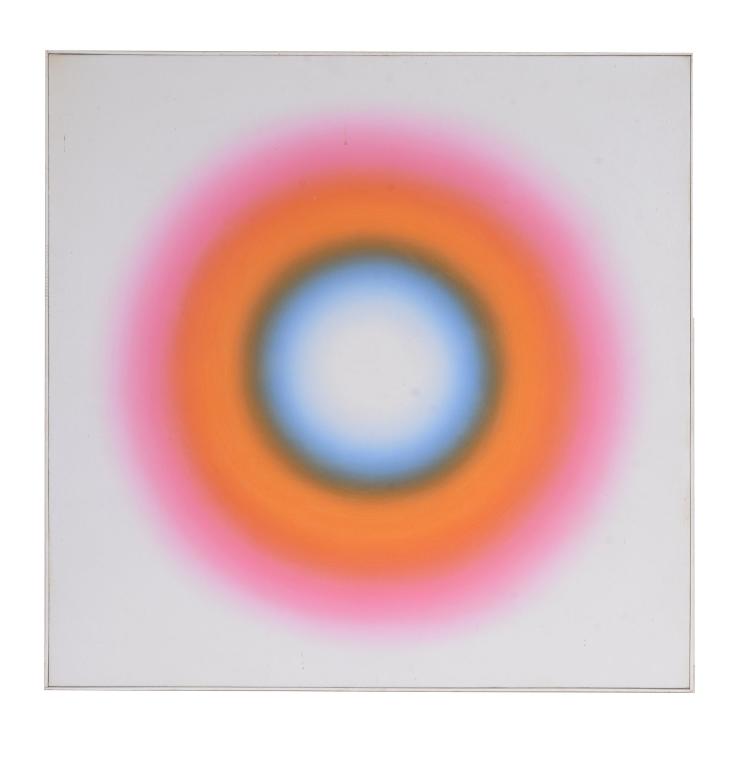
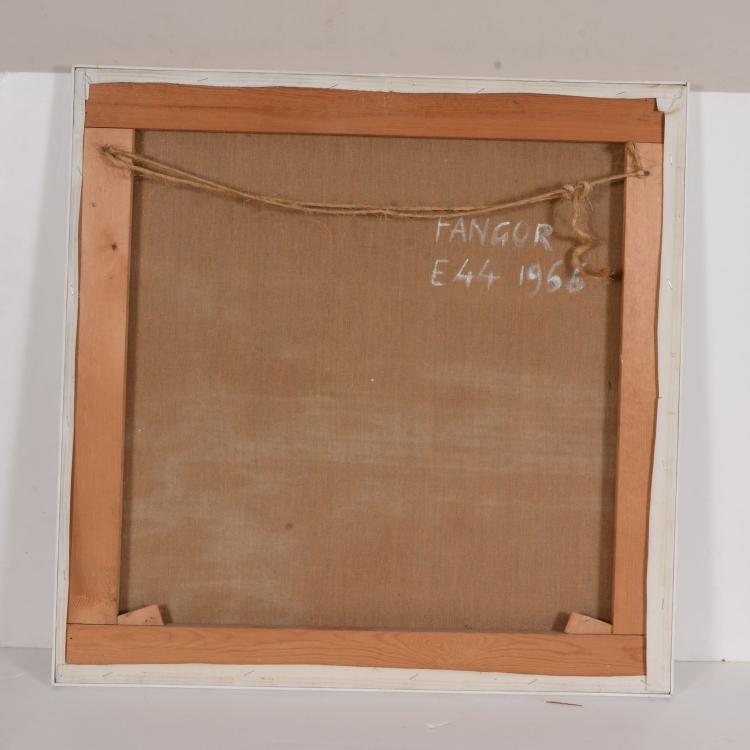
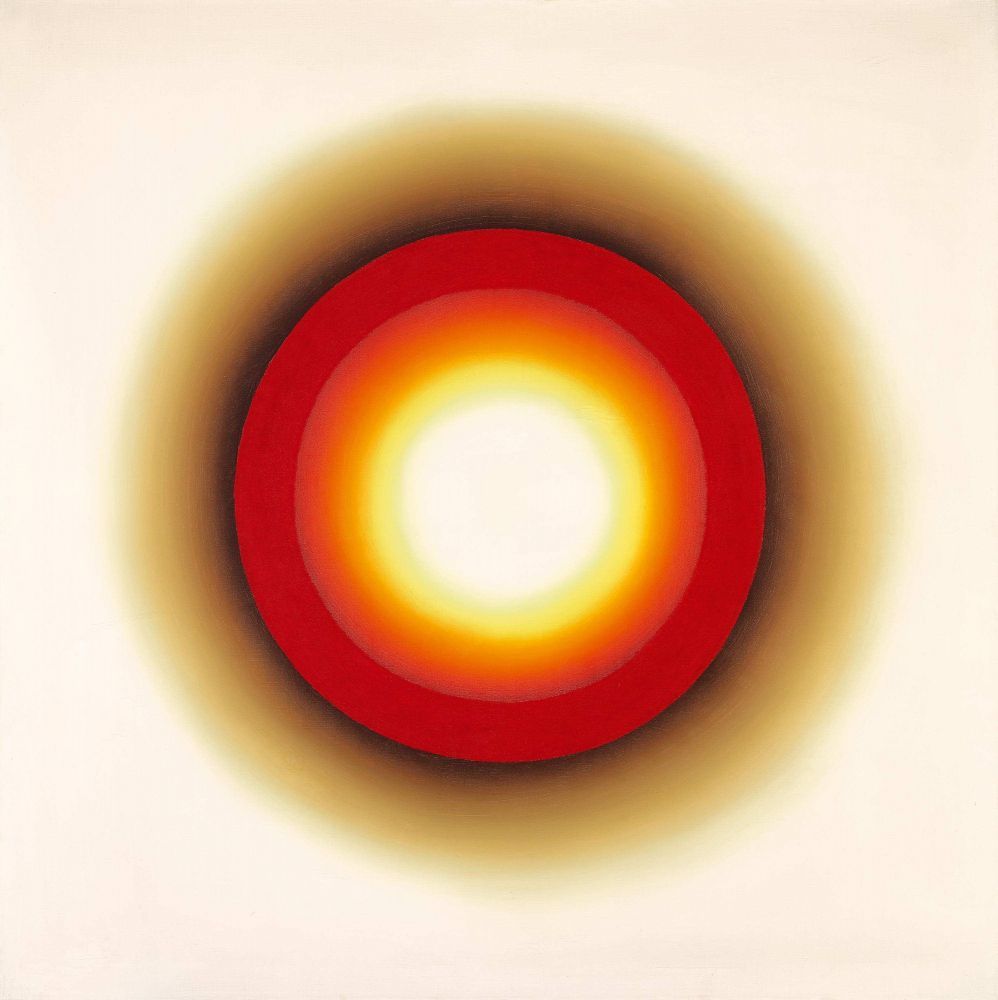
Wojciech Fangor. E 44, 1966

Lot 93: Wojciech Fangor (1922-2015) – E 44. Estimate: £50,000 – £70,000. Dreweatts & Bloomsbury. 07/13/16 (111600)

Description: -10 Oil on canvas Signed, titled and dated 1966 on the reverse 71 x 71 cm. (27 7/8 x 27 7/8 in) Wojciech Fangor was one of the most influential artists to emerge from post-war Poland. His distinctive blurred circles and cloud-like formations came to the notice of an American audience in the 1960s when it was included in 15 Polish Painters (1961) at the Museum of Modern Art, New York and then four years later alongside Bridget Riley and Frank Stella in the seminal Op-Art exhibition The Responsive Eye , also at MoMa. These vibrant and densely coloured compositions were reminiscent of Color Field painting although in truth their inspiration was significantly different. Whilst Color Field artists such as Robert Motherwell, Frank Stella and Barnett Newman were primarily concerned with the application of colour on the flat picture plane, Fangor took his cue from an exploration of architecture. In the 1950s he had collaborated with an architect friend, Stanislaw Zamecznik on ideas about space, colour and public interaction.This culminated in an exhibition in 1958 entitled Study for a Space considered to one of the first environmental exhibitions.Fangor was interested in the effect that the painting had on the space between the viewer and the canvas and the way in which this changed the viewer s perception of their environment. In the later 1960s, after emigrating to the United States, he became a key figure in the Op-Art movement continuing to develop his theories on light and colour. In 1970, he was the first Polish artist to have a solo show at the Guggenheim Museum in New York. Between 1965 and 1966, prior to leaving for the United States, Fangor came to teach at Corsham Court in Wiltshire and the present painting dates from him time there. It is a dazzling example of a painter at the height of his powers with the colours merging enticingly before the viewer s eyes. At once, somewhat unsettling to the vision, the simplicity and purity of form produce an almost hypnotic effect. Fangor was born to a wealthy family in Warsaw in 1922 and took private lessons from artists Tadeusz Pruszkowski and Felicjan Kowarski. After the end of the Second World War, when social realism became the official style of Communist Poland, Fangor produced a number of political paintings which have since become regarded as some of the most canonical examples of Polish social realism. IMPORTANT: This lot is sold subject to Artists Resale Rights, details of which can be found in our Terms and Conditions.

Fangor-2

Wojciech Fangor (1922 – 2015)

Fangor-1

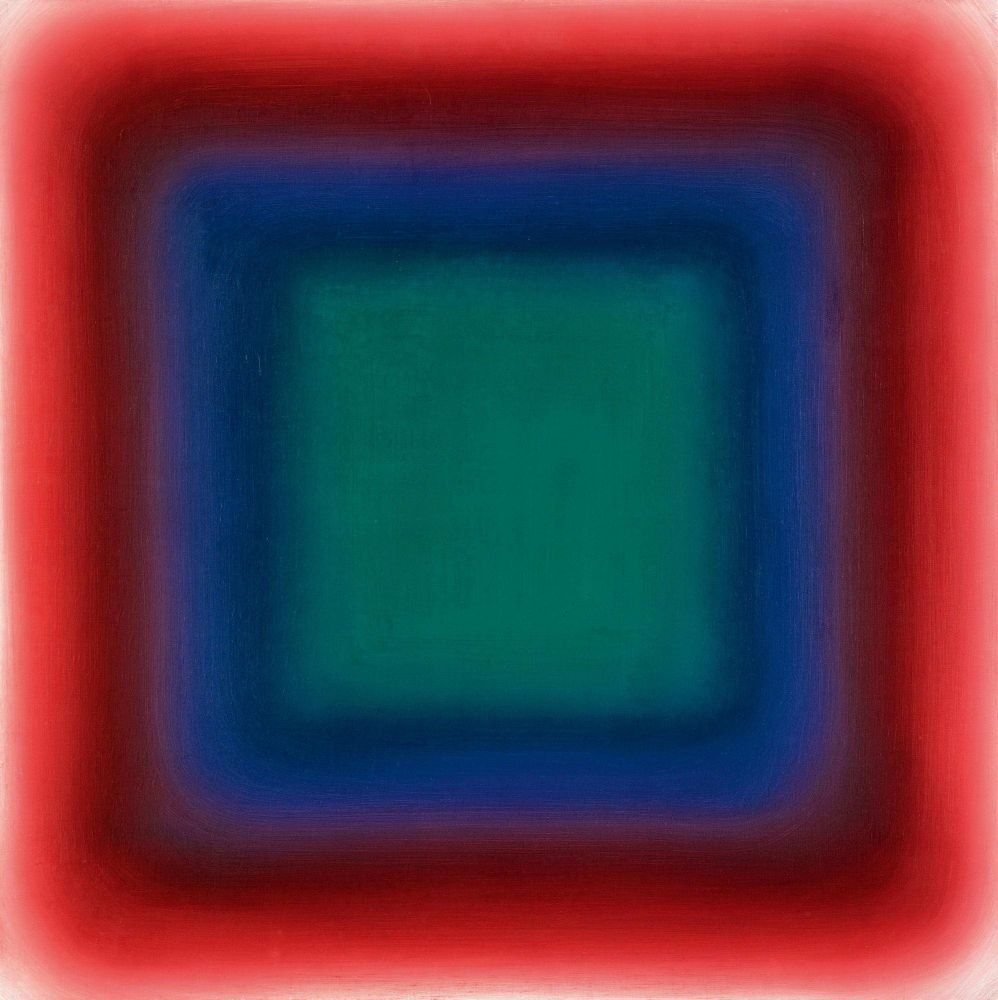
Lot 161. FANGOR, WOJCIECH
Warsaw 1922 – 2015
“B13”. 1964. Oil on canvas. 130 x 130cm. Signed, titled, and dated verso: FANGOR B13 1964. Framed.
Provenance:
Private collection, South Germany.
Estimation 60,000-80,000 euro. VAN HAM Kunstauktionen. 06/01/16
Fangor-2

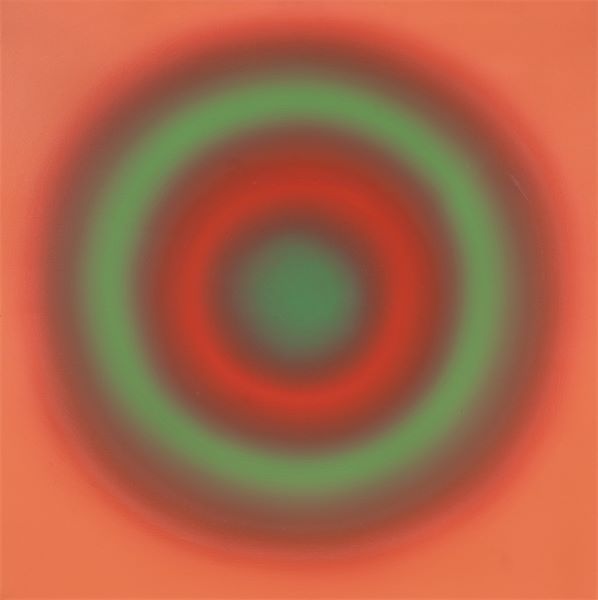
Lot 162. FANGOR, WOJCIECH
Warsaw 1922 – 2015
“E 30”. 1966. Oil on canvas. 71 x 71cm. Signed, titled and dated verso on the canvas: FANGOR, E30 1966. Framed.
Provenance:
Grabowski Gallery, London (stamp).

Wojciech Fangor began dealing with the interplay of simple forms (circle, square, wave, etc.) and diffuse colours and their transitions in the 1950s. What is remarkable in this context is that Fangor developed his style secluded from the then contemporary tendencies like “Op-Art” and “Color-Field-Painting” in quasi isolation, independently in Poland. Interrupted ink zones – diffluent shapes, tinges, and layers – and the optical illusions they produce can be found in his work as early as 1956.
As a participant of the program “Artists in Residence” of the Ford Foundation Berlin in 1965 Fangor wrote: “Today the painting begins to radiate outward from its colour fields. The painting has become a source of radiation that creates a zone of physical impact in space. In contrast to an imaginary space that works inwardly, a space working outwardly can be created.”
In 1966 the Grabowski Galerie, which was prestigious in the 1960s and 70s, dedicated a large solo exhibition in London to the artist. The painting “E30” was presented there for the first time. After having lived in Poland, France, Germany, England, and the USA, Fangor permanently transferred his residence to New York that same year, where he taught at Fairleigh Dickinson University.
A short time before the Museum of Modern Art had already ennobled the artist’s oeuvre with the sensational exhibition “The Responsive Eye”.
To use a sentence by Josef Albers, illusion in the visual context is “the discrepancy between physical facts and physical effects.” The momentum of Fangor’s space can be found somewhere between the observer and the canvas, in mid-air, where the eyes perceive it. Every attempt to focus on Fangor’s blurred and fluent paintings causes an immediate activation of colours and shapes, which disintegrate and revolve. Like an “imaginary painting” they escape a fixation by the eye. When it finally does permeate the kinetic field to rest on the canvas, the observer realises that the colours and compositions that he sees from a distance are not paint applications and actual forms, but illusionistic pictures in the foreground that are created by the individual perception
The interaction of colours is the key to Fangor’s illusionistic spaces. According to Josef Albers the same intensity of light of two shades prompts the dispersal of shapes, which he describes in his publication “Interaction of Color”. Fangor goes even a step further than Albers: to the three existing factors shade, optical impact, and mental perception he adds a fourth, the compression of space between the spectator’s eyes and the colourful surface. The area in front of the canvas is called “P.I.S.” (“Positive Illusory Space”) by Fangor. It is the opposite of “N.I.S.”, the “Negative Illusory Space” of traditional perspective. The observer always remains in relative distance to a spatial experience that takes place on or behind the painted surface. (Fangor, Wojciech in: Ford Foundation, Berlin Confrontation. Künstler in Berlin, Berlin, 1965, p. 30; Cp. Rowell, Margit: Einführung, in: Fangor, Ausstellungskatalog des Guggenheims Museums New York, 1970, p. 11 ff)

Estimate 30,000-50,000 euro. VAN HAM Kunstauktionen. 06/01/16
Fangor-3

Lot 700. Wojciech Fangor (Warsaw 1922 – 2015 Błędów)
„B 70“. 1965
Oil on canvas. 60 × 60 cm ( 23 ⅝ × 23 ⅝ in.). Signed, titled and dated with brush in black on the reverse: FANGOR B 70 1965. On the stretcher a label of Galerie Springer, Berlin.
[3177]
Provenienz: Private collection, Rhineland (acquired in 1966 at Galerie Springer, Berlin)

Estimate 70,000-90,000 euro. GRISEBACH GmbH. 06/03/16. Sold 112,500 euro
Fangor-4

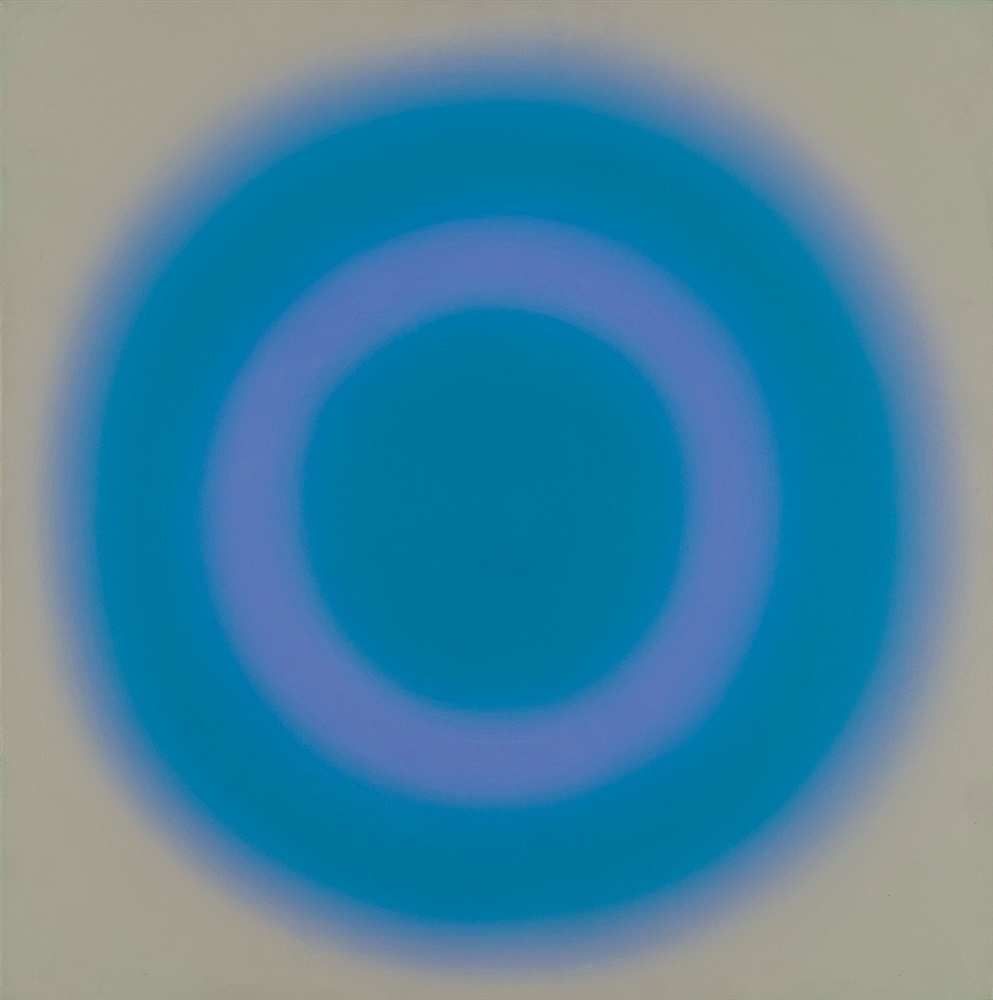
Lot 606. Wojciech Fangor
B 68
Oil on canvas. 60 x 60 cm. Framed. Signed, dated and titled ‘FANGOR B 68 1965’ verso on canvas. – Minor traces of age.

The present work will be included in the forthcoming catalogue raisonné by Stefan Szydlowski, Warsaw.

Provenance
Galerie Springer, Berlin (with label verso); Private collection, North Rhine-Westphalia

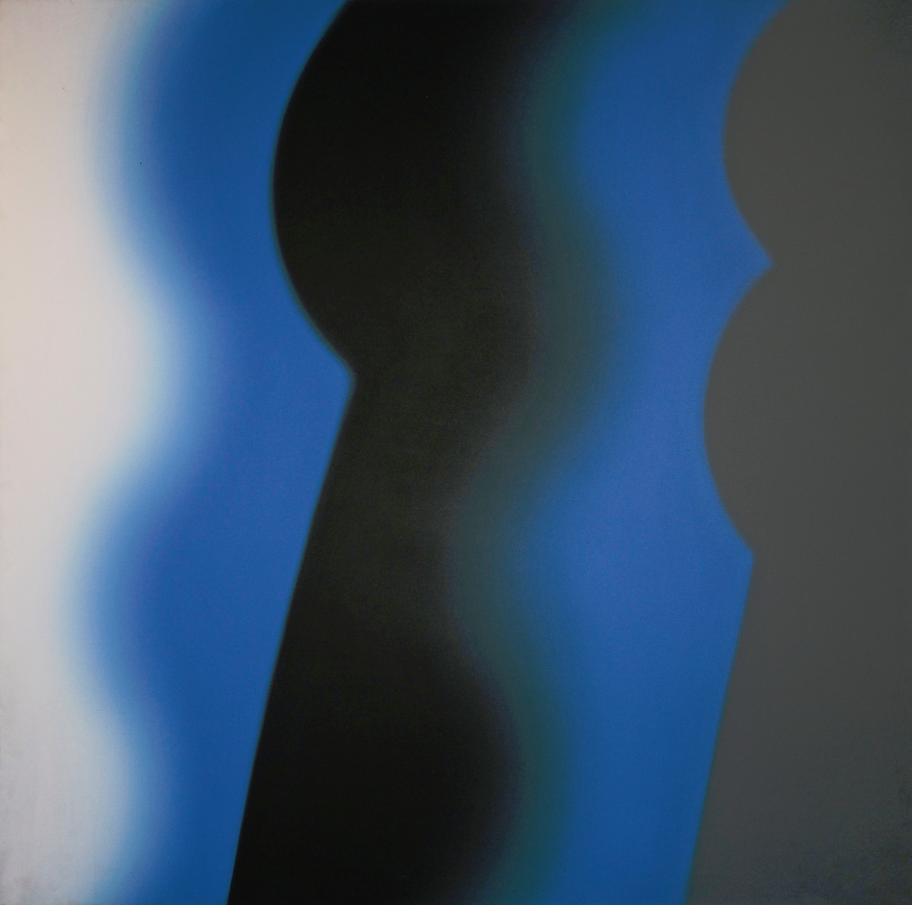
The Polish artist Wojciech Fangor gains international fame as co-founder of the Polish Poster School. Beside his early works, which were heavily influenced by socialist realism in the beginning, first abstract works emerge from the late 1950s onwards. At the same time, his radiant circle compositions constitute the main emphasis in his oeuvre. As also becomes apparent in this present work, the vibrating bands of colour that fluidly merge into one another, generate an almost hypnotic effect spellbinding the observer. Thus, the luminous colours in a spectrum of green and blue violet give the impression of becoming blurred in front of their grey background. „Fangor’s spatial dynamics take place somewhere between the viewers and the canvas, at a point in mid-air where the eye perceives. Any attempt to focus on the blurred and fluid images provokes an immediate activation of color and contour which disintegrate and reintegrate and, like an after-image, elude the eye’s fixation. When the eye finally penetrates this kinetic field to settle upon the canvas, the viewer realizes that the colors and configurations he sees at a distance are not pigmentary hues and factual shapes but illusory foreground images engendered by the activity of perception. It is here that the above definition of optical illusion rings true: the eye’s perception do not stand up when their implication are tested.” (Margit Rowell, in: Fangor, exhib.cat. The Solomon R. Guggenheim Museum, New York 1970, p. 12)

Estimate 70,000-90,000 euro. Kunsthaus Lempertz KG. 06/04/16
Wojciech Fangor (1922 – 2015)

Fangor
Wojciech Fangor. M 62

Lot 28. WOJCIECH FANGOR
(polish/american, 1922-2015)
“M-62”
Signed, titled and dated 1966 verso, oil on canvas.
66 x 66 in. (167.6 x 167.6cm)
Unframed
provenance:
Galerie Chalette, New York, New York.
The Estate of Jack L. Wolgin, Philadelphia, Pennsylvania (acquired from the above in April 1970).
Freeman’s, Philadelphia, “Modern and Contemporary Art,” November 6, 2011, lot 55.
Private Collection, Philadelphia, Pennsylvania (acquired directly from the above sale).

Estimate $60,000-100,000. Freemans. 05/01/16 (16310000)

Wojciech Fangor (1922 – 2015)

Fangor

Fangor $5,000?

—————————————————

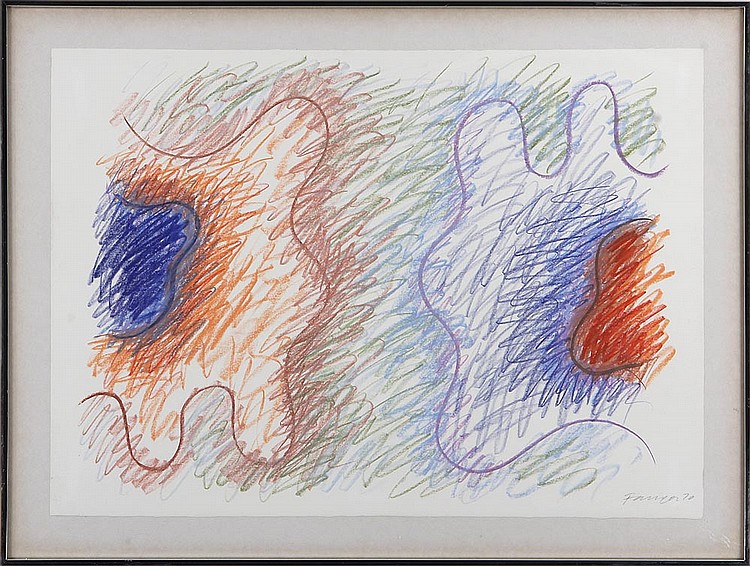
Lot 174. WOJCIECK (VOY) FANGOR (Polish, 1922-2015), abstract, pastel on paper, pencil signed and dated 70 lower right. Sheet 20”h, 28”w. Float mounted. Provenance: Gift from the artist to the present owner.

Estimated Price: $3,000 – $5,000. South Bay Auctions. 12/5/15

Wojciech Fangor (1922 – 2015)

Fngor-B-1

Lot 903. Wojciech Fangor (1922 Warschau – 2015 Błędów)
„B 1“. 1964
Öl auf Leinwand. 100 × 100 cm ( 39 ⅜ × 39 ⅜ in.). Rückseitig mit Pinsel in Schwarz signiert, betitelt und datiert: FANGOR B 1 1964.
Craquelé, leichte Unregelmäßigkeiten in der Oberfläche. [3478]
Provenienz: Privatsammlung, Süddeutschland (1964/65 erworben)
Ausstellung: Fangor. Berlin, Galerie Springer, 1965, Kat.-Nr. 17 (o. Abb.)
Das Werk des polnischen Malers, Graphikers und Bildhauers Wojciech Fangor ist geprägt von den Brüchen und Konflikten des 20. Jahrhunderts. Nach dem Zweiten Weltkrieg schuf er zunächst postimpressionistisch und expressionistisch geprägte Bilder, wurde aber durch die Diktatur in Polen zum Sozialistischen Realismus gezwungen. Als Mitgründer der Polnischen Schule für Plakatkunst konnte sich Fangor eine gewisse künstlerische Freiheit zurückerobern. Die Dogmen des kulturpolitisch erwünschten Realismus wurden hier weniger streng angewendet. Seine Plakate zeichnen sich durch einfache, dafür monumental und kraftvoll inszenierte Motive aus. Sie dürften Grundlage für seine späteren, einfachen Kreis- und Wellenformen gewesen sein. Zusammen mit Architekten entwickelte der Künstler 1958 im Neuen Kultursalon Warschau eine Ausstellung mit dem Titel „Raumstudie“. Hier zeigte er erstmals 20 Gemälde, deren spezifische, durch optische Wirkungen hervorgerufene Eigenschaften später als Op-Art bekannt geworden sind. Fangor bekannte, daß er durch einen Zufall darauf gestoßen sei. Eigentlich wollte er über eine Kontur mit diffusem Umriß eine Figuration legen, doch als die lediglich als Hintergrund dienende Kontur fertig gewesen sei, habe sie plötzlich den Raum zwischen Betrachter und Bild aktiviert. Er hatte sein Thema gefunden. Da er seine künstlerischen Ziele in Polen nicht verwirklichen konnte, emigrierte er 1965 in die USA, wo er zu einem der führenden Repräsentanten der Op-Art avancierte.
Auf neutralem quadratischen Grund erscheint ein blauer breiter Ring, dem sich ein schmalerer roter Ring anschließt. Das Zentrum des Bildes wird durch eine weiße Scheibe markiert. Die diffuse Kontur erzeugt eine immaterielle, schwebende Stimmung. Während der blaue Ring zurückzuweichen scheint, aktiviert das Rot die weiße, nun gleißend helle und in den Raum wirkende Scheibe. „Das Bild ist zu einer Strahlungsquelle geworden, die eine Zone der physischen Wirkung im Raum schafft.“ (Wojciech Fangor, in: Ford Foundation, Berlin Confrontation. Künstler in Berlin, Berlin 1965, S. 30) Der Betrachter vor dem Bild wird zum Mitschöpfer einer Raumkomposition aus Farben. OH

Wojciech Fangor (1922 Warsaw – 2015 Błędów)
„B 1“. 1964
Oil on canvas. 100 × 100 cm ( 39 ⅜ × 39 ⅜ in.). Signed, titled and dated with brush in black on the reverse: FANGOR B 1 1964.
Craquelure, slight irregularities in the surface. [3478]
Provenienz: Private collection, southern Germany (acquired in 1964/65)
Ausstellung: Fangor. Berlin, Galerie Springer, 1965, cat. no. 17 (no ill.)

Estimate 80,000-10,000 euro. Grisebach. 11/27/15

Wojciech Fangor (1922)

Fangor

Lot 48. Wojciech Fangor (b. 1922) M30; signed, titled and dated ‘FANGOR M30 1967’ (on the reverse), oil on canvas, 52 x 52 in. (132.1 x 132.1 cm.). Painted in 1967.

Provenance

Private collection, New Jersey, acquired directly from the artist, 1967
By descent from the above to the present owner

Estimate $70,000-90,000. Christies. 9/30/15

—————————————-

“No sir. That isn’t the artist’s telephone number. That’s the price tag”

Wojciech Fangor (1922)

Fangor

Lot 3274. WOJCIECK (VOY) FANGOR (Polish, Born 1922) M1 Oil on canvas 48 x 48 inches / 121.9 x 121.9 centimeters Signed, titled and dated upper right verso: Fangor, “M1-1969” [PROVENANCE: Gallerie Chalette New York label verso.]
Starting Price: $40000. Estimate 80,000 USD – 120,000 USD. Michaans. 6/19/15.

———————————————-

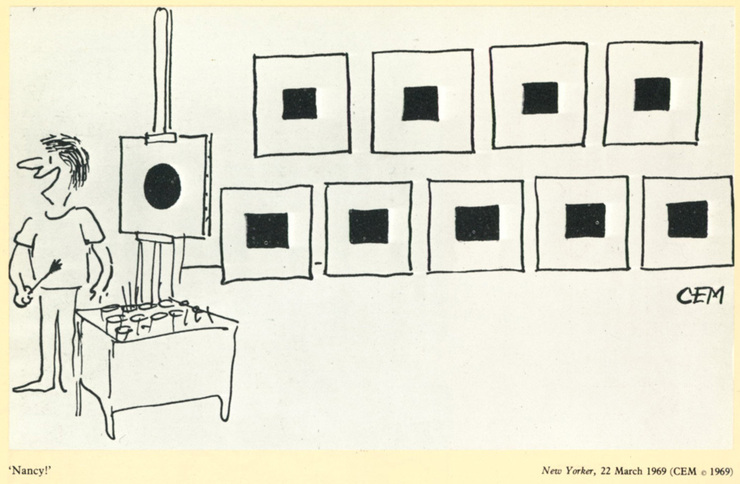
Cartoon