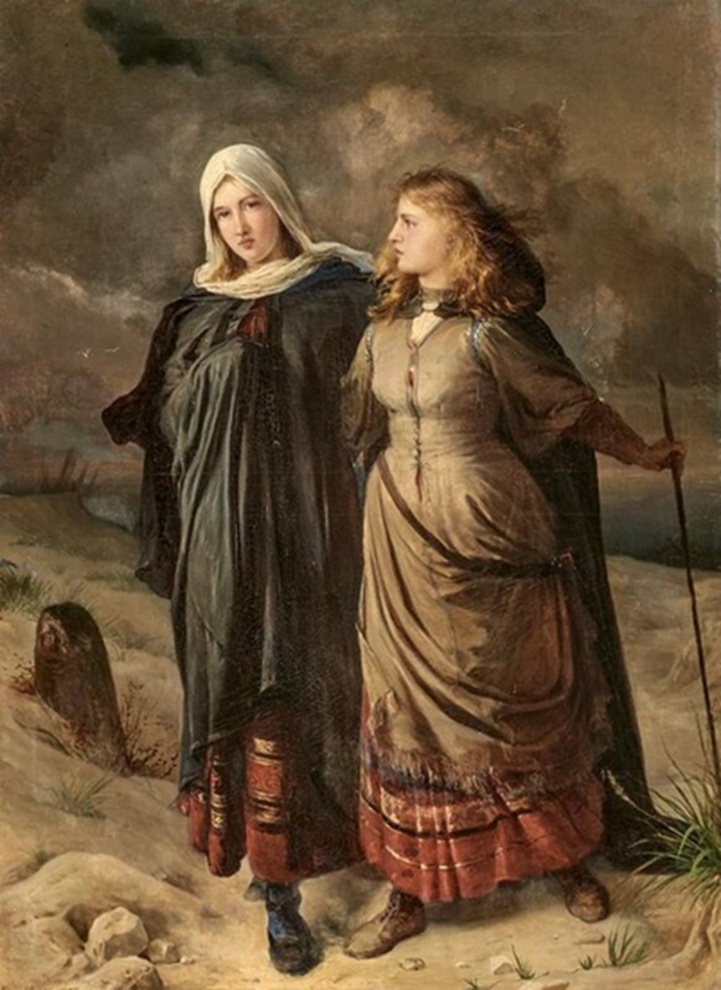
Lot 79. Elisabeth Jerichau Baumann (b. Warsaw 1819, d. Copenhagen 1881). “Marsk Stigs døtre”. The daughters of Marsk Stig. Signed and dated Elisabeth Jerichau 1873. Oil on canvas. 124×92 cm. The frame reads the following lines of verse: “Marsk Stiig han havde de Döttre to Saa krank en Skjæbne monne de faae, Den Ælste tog den Yngste om Haand Og de droge vide om Verden” (Marsk Stiig had two daughters. Such a cruel fate they must have had. The eldest took the youngest by the hand, And they travelled the world). Exhibited: Charlottenborg 1875 no. 105. Øregaard Museum & Fyns Kunstmuseum, “Elisabeth Jerichau Baumann”, 1997–98. Literature: Sigurd Müller, “Nyere dansk Malerkunst: et Billedværk”, 1884, a print after the painting is ill. p. 171. Nicolaj Bøgh, “Elisabeth Jerichau Baumann”, 1886, mentioned p. 111. Jerzy Miskowiak, “Elisabeth Jerichau-Baumann. Nationalromantikkens enfant terrible”, Frydenlund, 2018, ill. p. 96 and mentioned p. 97. Jerzy Miskowiak, “Elisabeth Jerichau-Baumann”, Bosz, Polen, 2020, mentioned p. 66 and ill. p. 67. Provenance: The artist’s daughters Agnete and Sofy (inscribed on the reverse of the canvas (in Danish): Belongs to Mrs Agnete Læssøe, née Jerichau). Mrs Court Master of the Hunt S. von Holstein Rathlau. Bruun Rasmussen auction 424, 1981 no. 516, ill. p. 15. Marsk Stig was a powerful member of the Hvide family, who, along with nine other men, was outlawed with their families for the murder of Erik Klipping in Finderup Lade in 1282. The murder was never unravelled. In the present painting the two outcasts are fleeing in a dark and sinister landscape. The subject of this painting derives from the ballads of the 17th century (Peder Syv’s Ballads, 1612) – “Marsk Stigs døtre”. The motif has been painted by different Danish painters, such as Dankvart Dreyer (“Marsk Stigs Døtre”, 1838) and Julius Exner (“Birger Jarl advarer Marsk Stigs døtre”, 1851). Elisabeth Jerichau Baumann herself painted several versions of the topic. She has used her own daughters as models for the faces of the two girls. Estimate 200,000–250,000 DKK ($31,000–$39,000). Rasmussen. 03/09/26. Sold DKK 220,000
Bardzo dobre oleje Elżbiety Baumann, urodzonej w Warszawie. Książka Jerzego Maćkowiaka jest najczęściej cytowana przy prezentacji i omawianiu prac tej artystki (https://polishartcorner.com/book-reviews/).
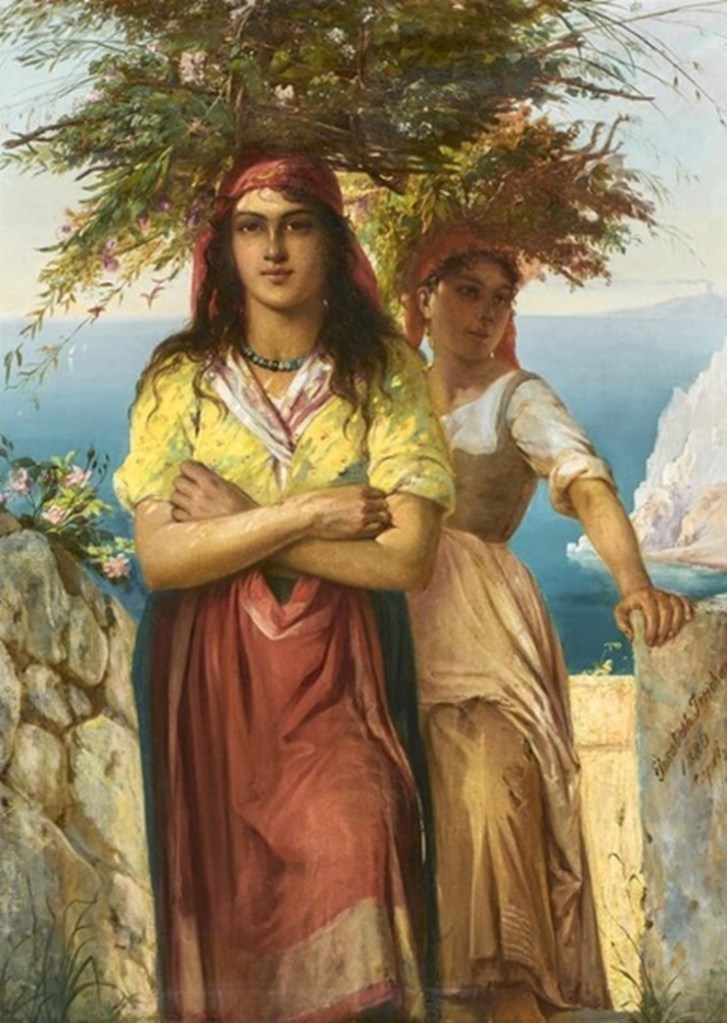
Lot 82. Elisabeth Jerichau Baumann (b. Warsaw 1819, d. Copenhagen 1881). “Fra Capri. To Capri-Piger bærende Foder til Gederne”. From Capri. Two Capri Girls Carrying Feed for the Goats. Signed and dated Elisabeth Jerichau Capri 1880. Oil on canvas. 137×99 cm. Exhibited: Charlottenborg 1881 no. 363. Øregaard Museum & Fyns Kunstmuseum, “Elisabeth Jerichau Baumann”, 1997–98. Literature: Jerzy Miskowiak, “Elisabeth Jerichau-Baumann. Nationalromantikkens enfant terrible”, Frydenlund, 2018, ill. p. 272. Jerzy Miskowiak, “Elisabeth Jerichau-Baumann”, Bosz, Polen, 2020, ill. p. 215. Provenance: The artist’s estate auction 1881 no. 54. Estimate 150,000–200,000 DKK ($23,500–$31,000). Rasmussen. 03/09/26. Sold DKK 200,000
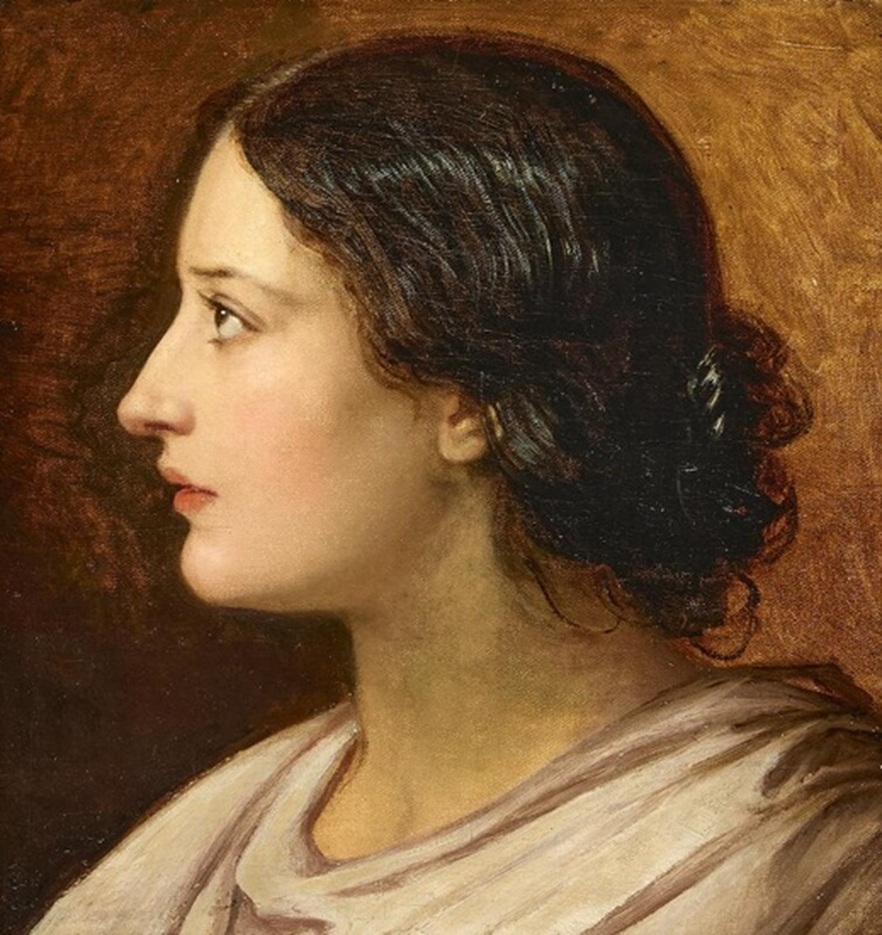
Lot 81. Elisabeth Jerichau Baumann (b. Warsaw 1819, d. Copenhagen 1881). Profile portrait of a young woman. Unsigned. Oil on canvas. 43×41 cm. Provenance: Bruun Rasmussen auction 25, 1951 no. 82. Estimate 25,000–30,000 DKK ($3,900–$4,650). Rasmussen. 03/09/26. Sold DKK 38,000
 Polish Art Corner