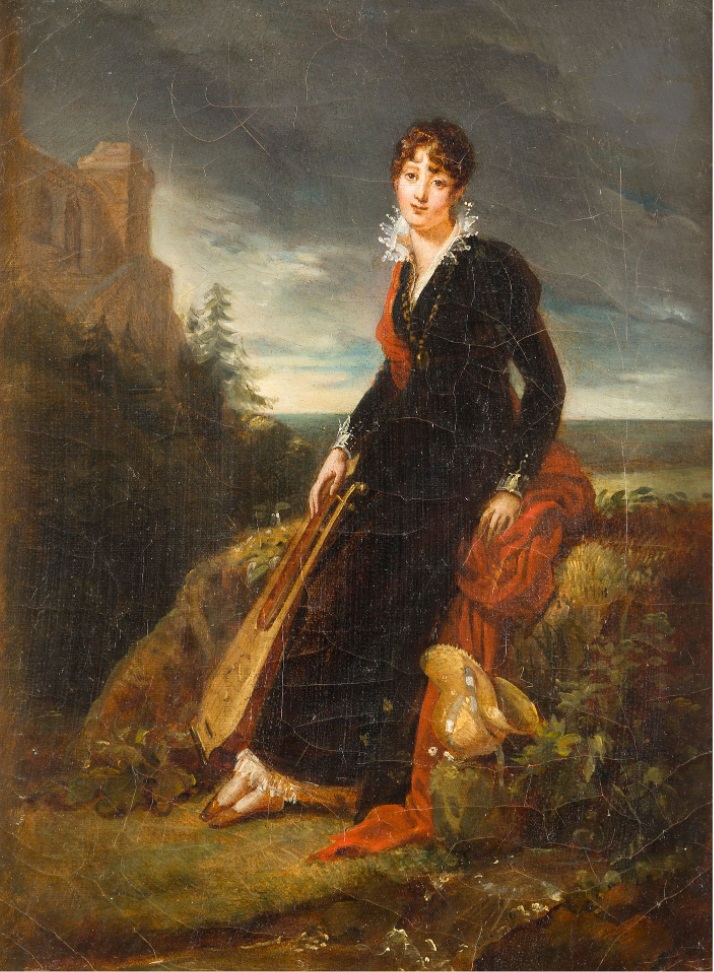
Lot 59. FRENCH SCHOOL circa 1830, workshop of François GERARD, known as BARON GERARD Portrait of Katarzyna Jaworska, Countess Starzenska (1782 – 1862) Original canvas 33 x 24.7 cm Inscribed on the stretcher “Ctesse Stra…”. Reprise du ricordo du Baron Gerard conservé au musée national du château de Versailles et du Trianon (Toile, 32 x 20 cm. See the catalog des peintures du musée national du château de Versailles, Paris, 1995, no. 2076). The full-length portrait painted by Gerard in 1803-1804 (Canvas, 215 x 130.5 cm), which served as the model for the ricordo, is in the National Art Gallery, Lviv (formerly Lwow), Ukraine. Countess Katarzyna Joanna Gabrielle Starzenska was an important figure in the Polish aristocracy of the first half of the 19th century. During her wanderings through the courts of Europe, “La Belle Gabrielle” met Eugène de Beauharnais, with whom she had a love affair that ended with Empress Josephine. We would like to thank Mr. Alain Latreille for sharing his opinion with us: “All these ricordi were produced in the painter’s studio under his supervision and sometimes retouched, and are comparable with the set kept at the Château de Versailles, purchased by King Louis-Philippe’s civil list at the sale after the painter’s death in 1837”. Estimate 4,000 – 5,000 euro. Ader. 03/26/24
Francuski dom aukcyjny Ader reklamuje na nadchodzącej marcowej aukcji portret doprawdę pięknej polskiej arystokratki Katarzyny Joanny Gabrieli Starzeńskiej z domu Jaworskiej (1782 – 1862), zwanej La Belle Gabrielle. Kobieta ta mocno ‘namąciła’ na salonach paryskich, galicyjskich i wiedeńskich swoją urodą pewnie też inteligencją oraz swobodą obyczajów (czwórka nieślubnych dzieci, kilkadziesiat romansów) o czym można w skrócie przeczytać na stronach Wikipedii: https://pl.wikipedia.org/wiki/Katarzyna_Starze%C5%84ska, choć należałoby sie odnieść do źródeł pierwotnych: https://www.wilanow-palac.pl/kim_byla_slynna_la_belle_gabrielle.html czy plotklarskich: https://www.podkarpackahistoria.pl/artykul/53,milosne-podboje-hrabiny-starzenskiej. Francuski dom Ader uznał, że obraz powstał w warsztacie François Gerarda co może być potwarzą dla tego warszatatu. Obraz ten był już raz sprzedawany (nieudanie) rok temu w Sotheby’s (https://www.sothebys.com/en/buy/auction/2023/tableaux-et-dessins-1300-1900-session-i/countess-katarzyna-joanna-gabrielle-starzenska) z wyceną 20,000 – 30,000 euro. Obraz namalowany przez François Gerarda jest obecnie właśnością Lwowskiej Narodowej Galerii Sztuki jako powojenna terytorialna zdobycz. Inną kopię tego obrazu (mniejszą) posiada Zamek Królewski w Warszawie i ta fotografia jest pokazana poniżej https://kolekcja.zamek-krolewski.pl/obiekt-421283-hrabina-katarzyna-joanna-gabrielle-starzenska.

Zastanawia mnie brzydota portretu z francuskiego Ader (porównanie buź poniżej) i co dałoby sie zrobić z tym obrazem. Myślę sobie, że gdyby na tym portrecie udałoby się domalować trochę włosów zasłaniających całą twarz księżnej to obraz nabrałby innego wymiaru oraz tak wielkiej wartości artystycznej, że Galeria Gagosian sprzedałaby go przynajmniej za $500,000. Warto pomyśleć o takim ‘interesie’ bo sam obraz obecnie choć jest już drogi (4,000 – 5,000 euro) to ‘poprawkach’ żyjących artystów o znanych nazwiskach dostąpiłby zaszczytów sztuki wspólczesnej, byłby on fetowany na salonach i stanowiłby bardzo dobrą inwestycję.

 Polish Art Corner