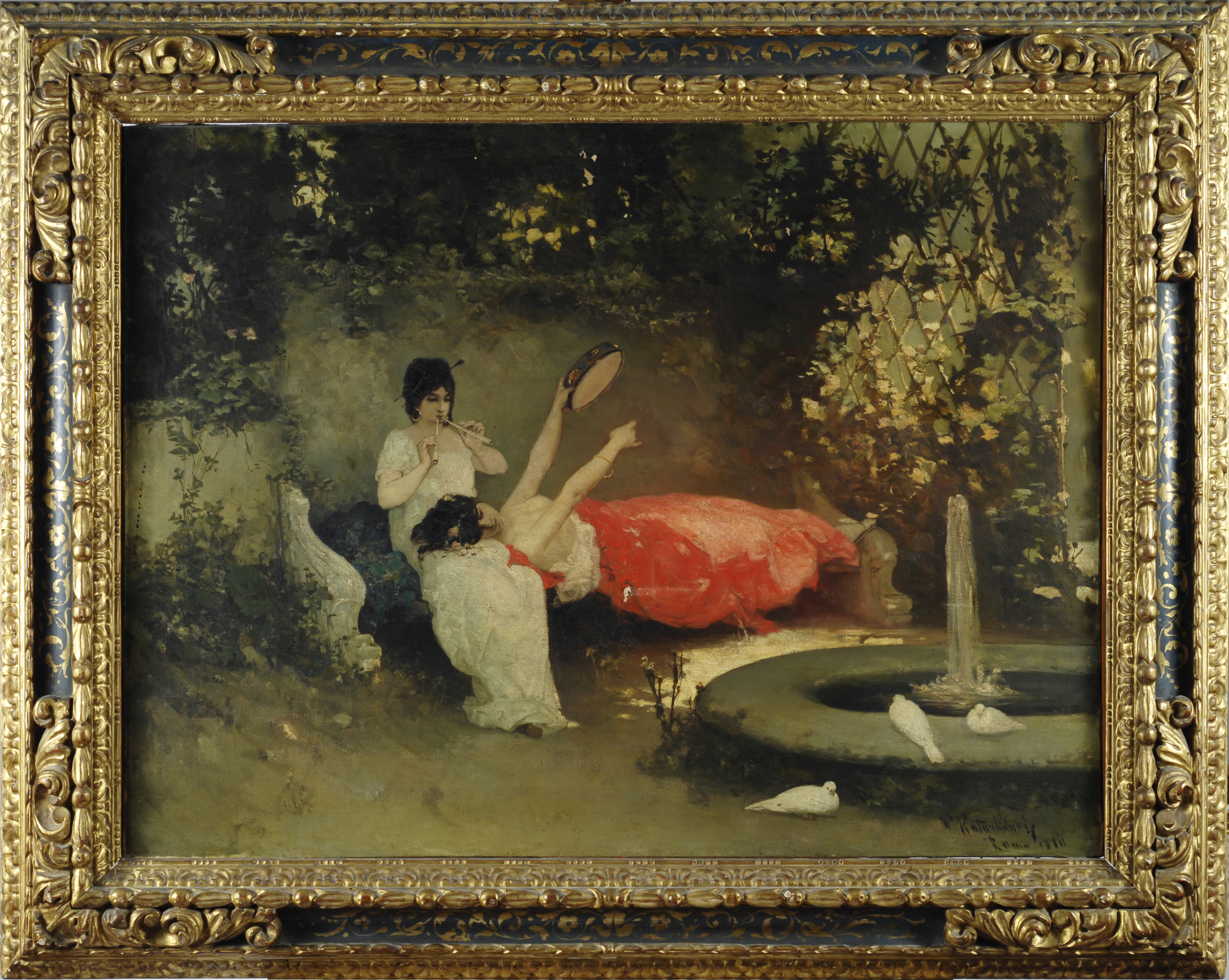
Wilhelm Kotarbiński (1849 – 1921)

441101-4


Ekspert V. Petrov zawsze na miejscu i potwierdza autentyczność.

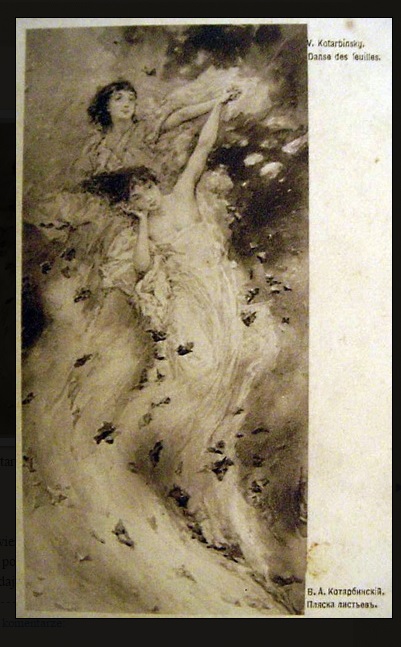
Dom aukcyjny winien pokazać owe pocztówki sprzed 1917roku by kupujący mogli sami osądzić jakie są różnice pomiędzy pracami . Ciekawe czy te dwie prace są replikami autorskimi czy też…. Wątpliwości za 50,000-70,000 funtów. Poza tym, pisanie o proweniencji jako ‘prywatnej kolekcji’, bez szczegółów jest żenujące.


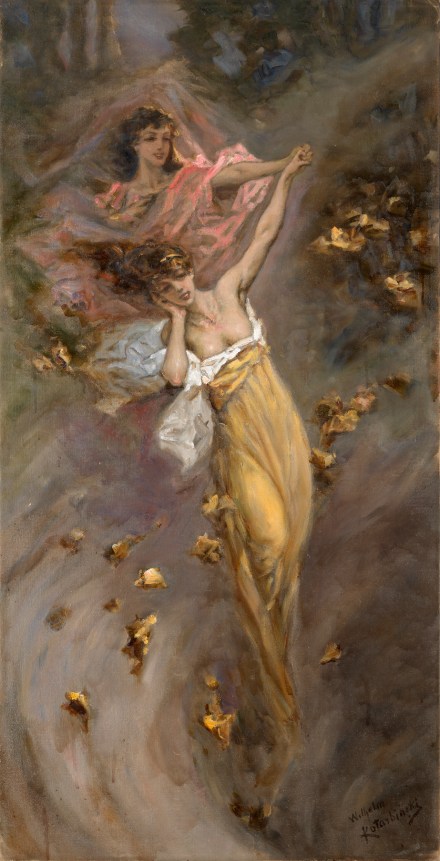
Lot 62. KOTARBINSKY, VASILY (1848-1921)
Dance of the Leaves, signed.
Oil on canvas, 124.5 by 62.5 cm.
Provenance: Private collection, UK.
Authenticity of the work has been confirmed by the expert V. Petrov.
Related literature: For another version of the present lot, see the postcard, Kiev, Razsvet, before 1917, published as Tanets Listiev.
The postcard, Moscow, Moskovskaya Gubernskaya Komissiya Pomoshchi Golodayuschim, c. 1921–1922, published as Tanets Listiev.

Estimate 50,000-70,000. MacDougall. 11/30/16


Jeden z czytelników przysłał mi fotografię pocztówki powyższej pracy Kotarbińskiego.

Wnioski nt pracy z MacDougall nasuwają się same.

tanieclisci


441101-5

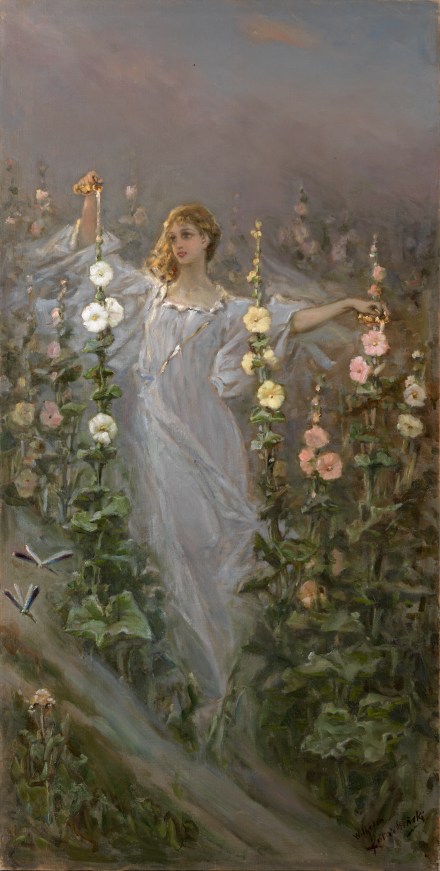
Lot 63. KOTARBINSKY, VASILY (1848-1921)
Morning Dew, signed.
Oil on canvas, 124 by 62 cm.
Provenance: Private collection, UK.
Authenticity of the work has been confirmed by the expert V. Petrov.
For another version of the present lot, see the postcard, Kiev, Razsvet, before 1917, published as Rosa.
G. Romanov, A. Muratov, Zhivopis russkogo salona (1850–1917 gg.). Entsiklopediya, St Petersburg, Zolotoi Vek/Sankt Peterburg Orkestr, 2004, p. 324, illustrated and listed as Rosa.

Estimate 50,000-70,000. MacDougall. 11/30/16

Wilhelm Kotarbiński (1849 – 1921)

kotarb


images

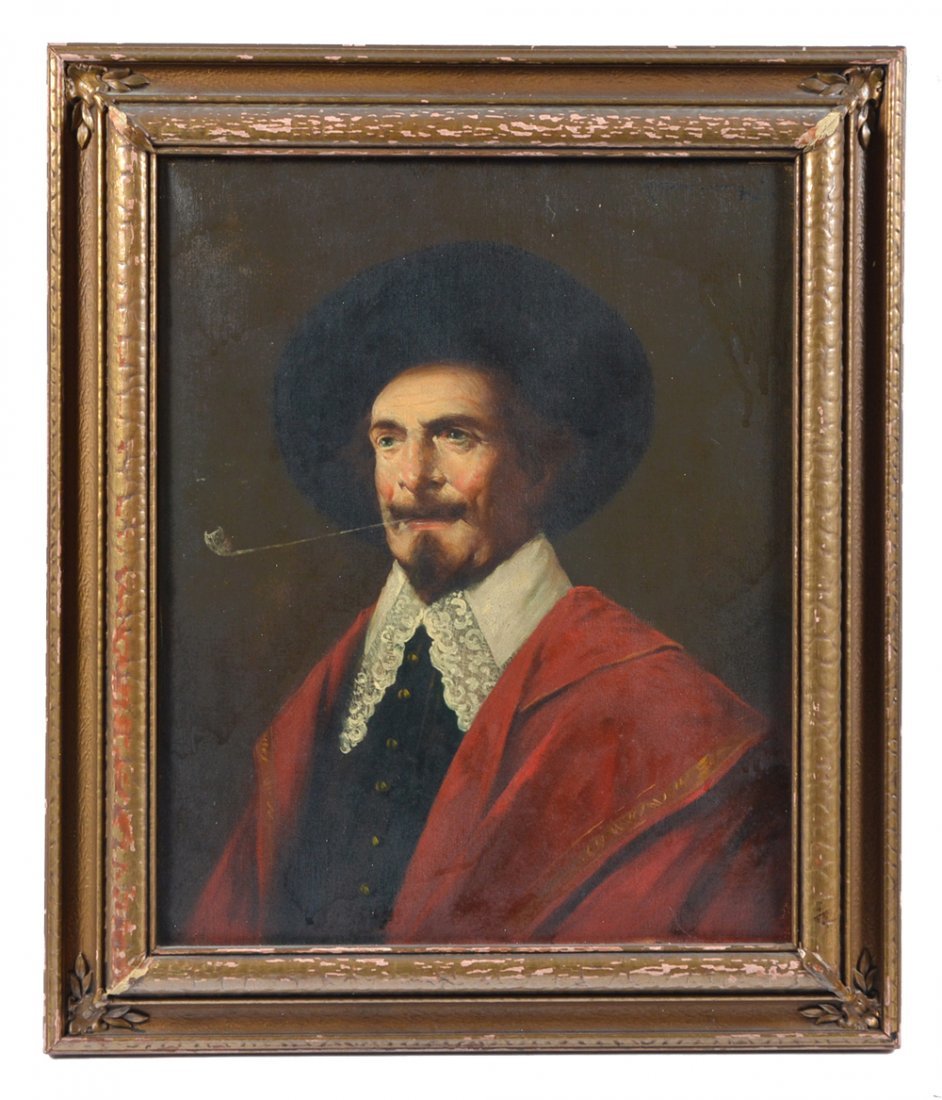
Lot 0248. Wilhelm Kotarbinski (Polish, 1848-1921), oil on canvas, portrait of a man with wide brimmed hat and lace collar, smoking a pipe. Signed “Kotarbinski” upper right. Painting appx 20 1/2″ x 16 1/2″, frame appx 26 1/4″ x 22 1/4″. Very good overall condition.

Estimate $1,000-2,000. San Rafael Auction. 10/22/16

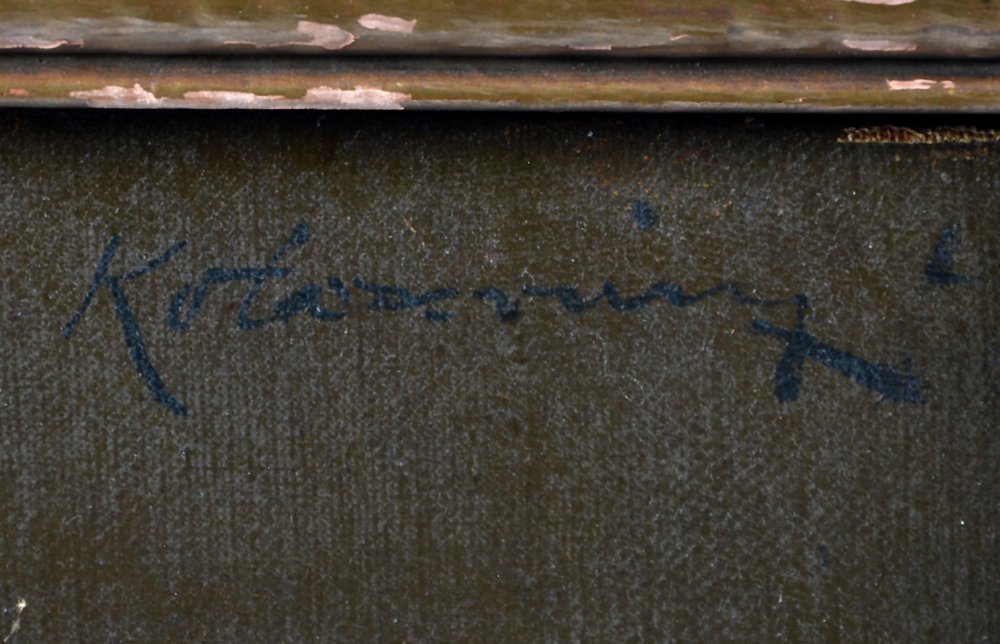
kotarb-sign

Wilhelm Kotarbiński (1849 – 1921)

1

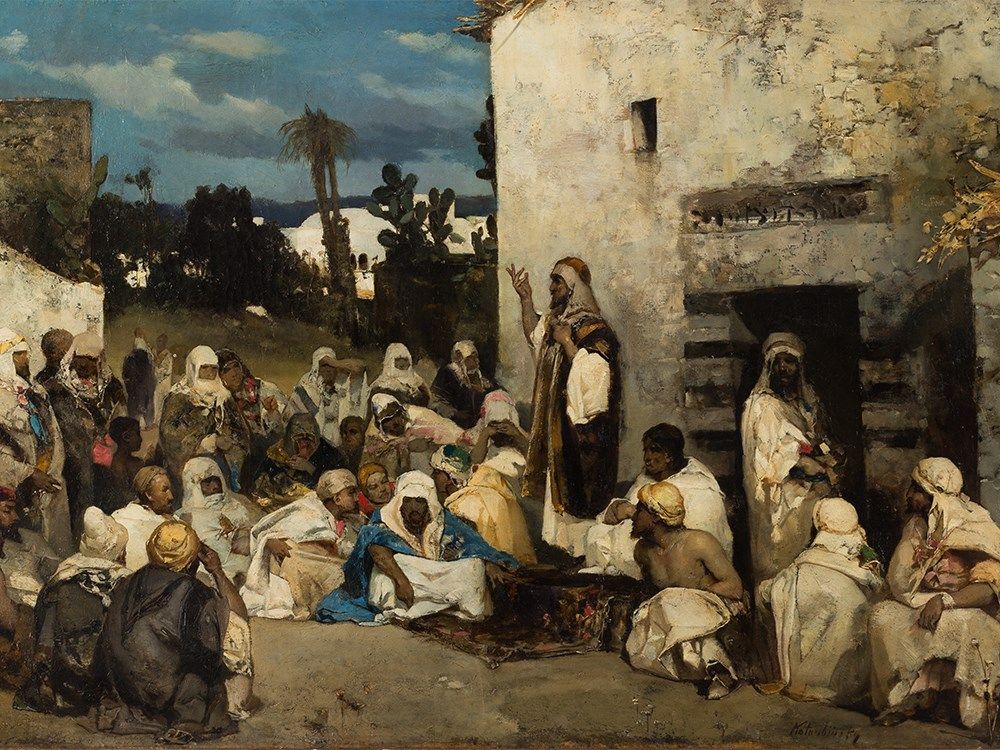
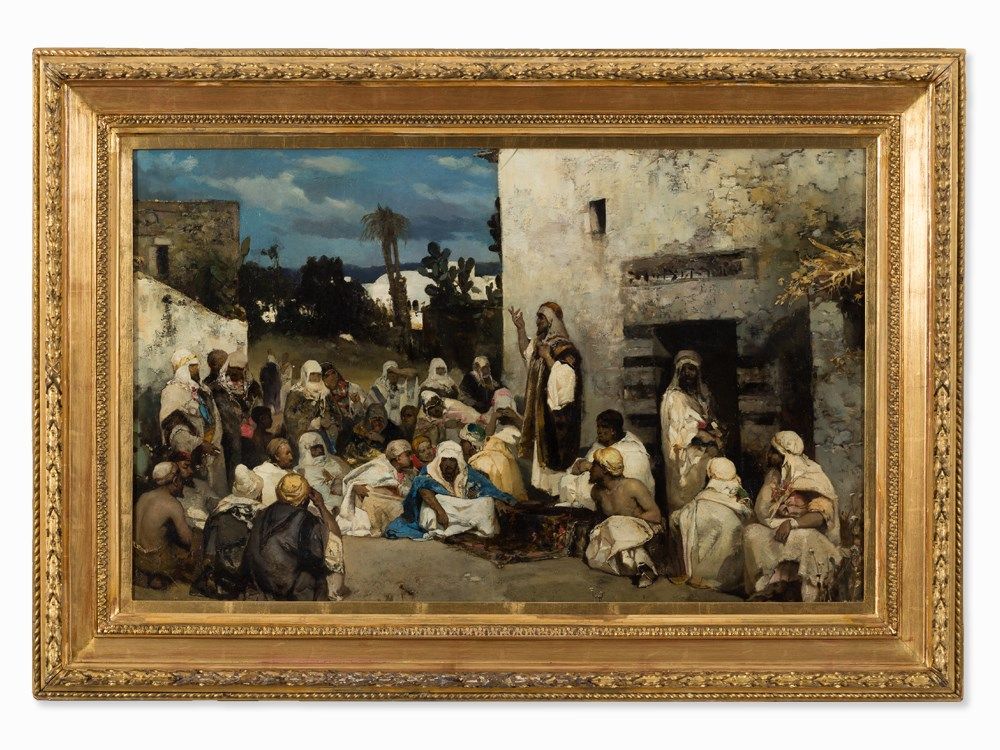
Lot 36. Vasily Alexandrovich Kotarbinsky, Sermon at Capernaum, 19th C.
Oil on canvas
Poland, 19th century
Vasily Alexandrovich Kotarbinsky (1849-1921) – Polish-Russian painter
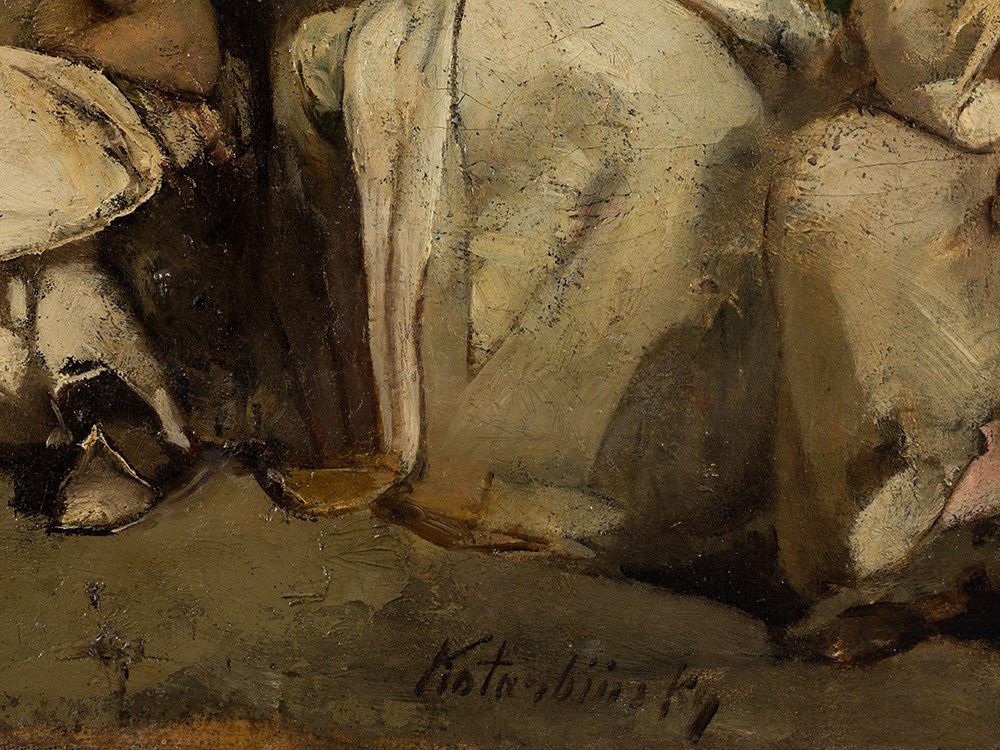
Signiert ‘Kotarbinsky’ lower righ
Dimensions: 78.5 x 120.3 cm
Gilt stucco frame: 105 x 150.5 cm
Good condition
Vivid scenic depiction of the Capernaum-story in front of a magnificent Far Eastern backdrop

This beautiful and epic interpretation of the Sermon at Capernaum belongs to the highlights of the auction and is a typical work of the artist concerning scale, subject and way of painting of the Russian-Polish painter Vasily Alexandrovich Kotarbinsky who favored the depiction of biblical motives. The alternation of dark and bright parts brings vitality to the painting and can be seen in the color of the clothes of the figures as well as on houses and plants, were light and shadow change.

2

Condition:
The painting is in good condition consistent with the age. The varnish is slightly darkened and tiny craquelé can be seen overall on the canvas. There are areas with scuffing due to the frame along the upper edges and corners of the canvas and scattered marks can be seen. The painting has been skillfully repaired. Several retouched spots can be seen mainly affecting the part of the figures as well as the sky and the house. On the reverse the canvas shows relined spots. The frame shows traces of usage such as tears, scratches, marks and spots with loss of color, resp. loss of material. The dimensions are 78.5 x 120.3 cm and the frame measures 105 x 150.5 cm.

3

Vasily Alexandrovich Kotarbinsky (1849-1921)
Vasily Alexandrovich Kotarbinsky was a Polish painter of the 19th and early 20th century. Kotarbinsky started his artistical career at the Warsaw School of Drawing in the 1870s, later he studied at the art academy in St. Petersburg. Very important for his development were several longer stays in Rome, which had a deep impact on his way of painting and his choice of subjects. He borrowed money from his family for his first trip to Rome during his education and stayed there for three years. Characteristic for his oeuvre are the depictions of biblical subjects as well as classical Roman themes and fantastic-mythical images. One of his main works are the frescos in the St. Vladimir Cathedral in Kiev. Works of the artist are in collections in St. Petersburg and Moscow.

Estimate 90,000 – 117,000 EUR

Auctionata. 04/27/16

4

Wilhelm Kotarbiński (1849 – 1921)

Kotarbinski-1

Komuś strasznie zależy na sprzedaży tych dwóch prac. Pojawiają się jak zły szeląg.

——————————————

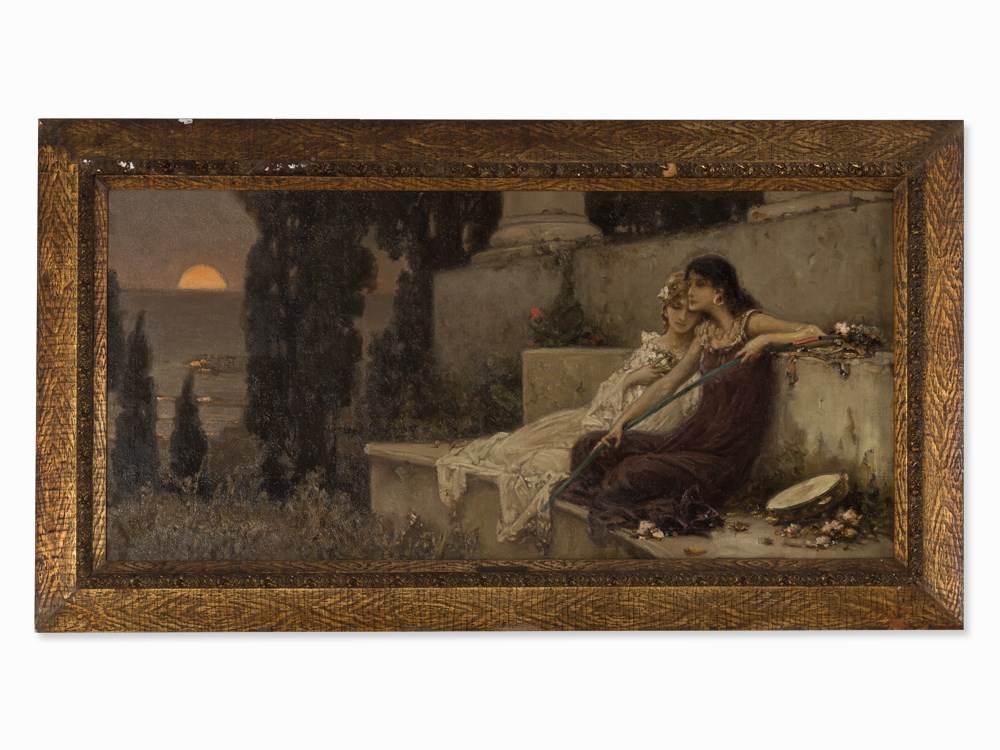
Lot 94. Vasily Kotarbinsky (1849-1921) – Polish painter and draftsman
Oil on canvas, relined Poland, 1890s
Dimensions: 66.5 x 139.5 cm
Framed: 89.5 x 164 cm
Very good condition
Provenance: MacDougall’s, auction November 28, 2012, lot 190; private collection, Warsaw
Phantasmagoric -symbolical painting in the style of the Art Nouveau with an aura, that seems to be biblical
Estimate by Auctionata Expert: 80,000 Euro

Two dreamy musing women are depicted on a terrace, that appears to be antique, with a from cedars seamed sea on the background, in which the orange-red sun incandescently sinks. This is a characteristic-symbolic painting of the artist, which imparts the light atmosphere almost impressionistic. Kotarbinsky often composes his poetic, allegoric depictions on terraces, where he intensifies the panorama impression through the wide format of the painting. The bright light atmosphere and the subtle melancholy let the mostly in dark colors made painting to be related to the Fin de Siecle and the Art Nouveau.

Condition:
The painting in a landscape format is in very good condition. It shows slight traces of use and age. Some color losses are partially noticeable, especially at the margins. The surface is craqueled in places. Under UV-light some retouches are noticeable. The dimensions of the canvas are 66.5 x 139.5 cm, the frame measures 89.5 x 164 cm.

Vasily (Wilhelm) Alexandrovich Kotarbinsky (1849-1921)
the born in Bieborow artist studied in Warsaw from 1867-71 and visited there the drawing class of Rafal Hadziwics. Since 1872 he visited the die Accademia di San Luca in Rome. In 1888 Kotarbinsky came back to Poland and settled in his house in Kalsk. He often took part at exhibitions of the Kiev’s Art Society and was in a regular exchange with several Russian artists. Together with other painters he participated in the design of the Vladimir Cathedral in Kiev and a lot of other churches. His works are to be found in the exhibitions of some Moscow’s, Cracow’s and Warsaw’s museums.

Starting Price : 40000. Auctionata. 12/7/15

———————————————-

Kotarbinski-2

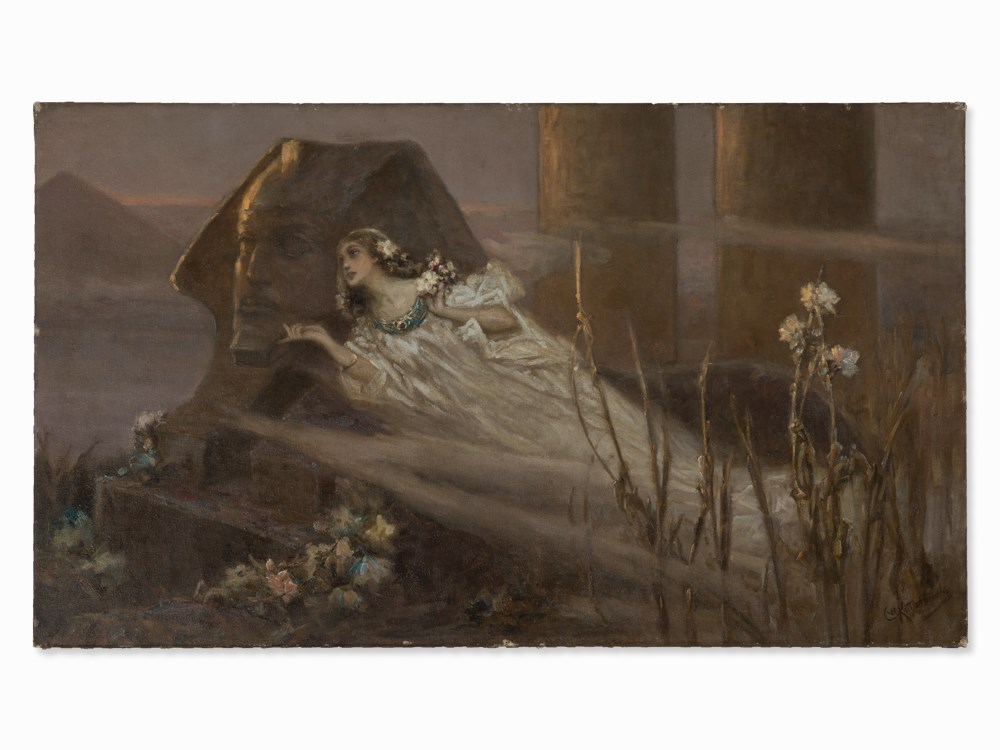
Lot 95. Vasily (Wilhelm) Alexandrovich Kotarbinski (1849-1921) – Polish painter and draftsman Oil on canvas, relined Poland, 1890s
Signed ‘W Kotarbinski’ on the lower right
Dimensions: 80 x 136 cm
Gilt Stucco frame: 101 x 158 cm
Provenance: Russian private collection
Good condition
Monumental painting in landscape format with a subject, that is typical for the artist
Estimate by Auctionata Expert: 70,000 Euro

This is a characteristic symbolic painting of the artist, which imparts the light atmosphere almost impressionistic. Kotarbinski chose for this painting, as often, the Egypt’s pyramids as a curtain for his poetic allegorical depictions.
Condition:
The painting is in good age-consistent condition. The canvas is relined. Under UV-light some small retouches at the margins and on the figures are to be noticed. The frame is a bit chipped on the rims and edges and also shows small color losses. The picture dimensions are 80 x 136 cm. The frame measures 101 x 158 cm.

Starting Price : 34000. Auctionata. 12/7/15

Wilhelm Kotarbiński (1849 – 1921)

MAC_291015_ 004

Prawdopodobnie praca tego malarza o tej tematyce, o tym wymiarze płótna i o tej cenie może się znaleźć raczej w muzeum a nie w prywatnej kolekcji. Trzeba jednak zwrócic uwagę w opisie na słowa ‘another version‘ (moje wytluszczenie). Co to znaczy i co to ewentualnie może oznaczać za te pieniądze? Warto również zwrócić uwagę na mnogość słów w opisie a niczego o proweniencji TEGO konkretnie płóna, ani jednego słowa o proweniencji. Dlaczego?

——————————————————–

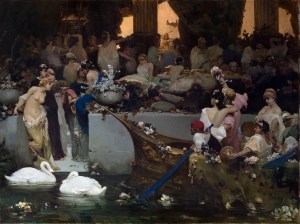
Lot 18. KOTARBINSKY, VASILY (1849-1921). Roman Orgy, signed, inscribed Roma and indistinctly dated 189?. Oil on canvas, 166 by 221 cm.
Related literature: For another version of the present lot, see G. Romanov,A. Muratov, Zhivopis russkogo salona (1850–1917 gg.). Entsiklopediya, St Petersburg, Zolotoi Vek/Sankt-Peterburg Orkestr, 2004, p. 321, illustrated.

The painting offered here at auction, entitled Roman Orgy, is a version by Vasily Kotarbinsky of the best-known historical composition that he created. According to the 1899 catalogue of the State Russian Museum, a variant of this picture of truly monumental proportions (300 by 500 cm) was in the museum’s first collection, having been acquired from the Imperial Academy of Arts in 1898 using funds provided by Nikolai II. There is another, somewhat scaled-down, version in the collection of Donetsk Art Museum.

There are other, similar examples in Kotarbinsky’s oeuvre addressing the very same subject matter. These are not rare and, as with Aivazovsky and Semiradsky, they are linked to a desire on the part of patrons in the highest circles of St Petersburg society to have their own versions of their favourite works in the Imperial Museum.

Naturally, in addressing a well-known theme and reproducing elements that already existed, the artist introduced certain variations to the composition to give the new canvas individuality and allow particular details to be further developed. So, by comparison with the painting in the Russian Museum, this version has a better portrayal of the old man with the gold coins, and several characters have also been added in the background. There are additional changes to the appearance and pose of the last passenger in the boat, the angle of the cymbals held by the musician and the angle of the girl’s head in the foreground.

In the main, however, the painting remains unchanged: it has a captivating variety and interplay of textures – naked bodies, fabrics, feathers, flowers, water, a variety of poses, unique use of tiers in the composition, and masterly depiction of objects. The centre of the composition is a group of sculptural beauty: a patrician Roman in a dark cloak standing by a balustrade (possibly, the Emperor Nero) next to a half-naked Roman woman and a girl with a fan and bowl.

The scene is given its theatricality and great artistic expressiveness by the idealised figures draped in classical garb, their classical profiles and sculptural poses. Another protagonist of the picture is the warm light of an impending sunset, which embellishes everything in gentle, peach-coloured tones and envelops the composition in a romantic haze that lends it a certain sense of enigma.

This effect of light, conveyed with technical perfection, subtlety and a multitude of nuances, as well as the harmonious way in which tones are combined – from rosy fulvous to deep blue – constitutes one of the main virtues of the work, which comes across as a large decorative panel.

It is no secret that the events and the characters of Ancient Greece and Ancient Rome remained a source of inspiration for Kotarbinsky throughout his life. Devoting himself to the study and reproduction of the history and way of life of antiquity, the artist would often portray on canvas the environment, clothing and utensils of that time with archaeological accuracy. Arriving in Italy for the first time in 1868, Kotarbinsky became irrevocably enchanted with the Eternal City. He lived in Rome for many years, and even when he subsequently returned to Russia and worked in St Petersburg and Kiev, he remained, as before, a “captive” to the beauty of the southern Italian sun, and the luxuriance of the landscape and colours that characterised it, providing such abundant material for creativity.

Kotarbinsky was one of Nicholas II’s favourite artists. He was admired by his contemporaries, compared to Genrikh Semiradsky and Pavel Svedomsky, called the Russian Alma-Tadema and eulogised for the astonishing mastery and fineness of his painting, the beauty of his composition and draughtsmanship and the poetic grace of the subjects he painted. His talent for turning any subject into a vision of beauty, for conveying the delight and sweet remembrance of humanity’s “golden times” was in extraordinary demand at the time.

The painter recreated not so much the history of antiquity but rather the legends associated with it. It goes without saying that Kotarbinsky was not original in his choice of subject matter. As a rule, he borrowed subjects that had already been interpreted by other artists, but dealt with them in his own way and often with no less success. In Munich, Wilhelm von Kaulbach was acknowledged as the master when it came to scenes from the life of Nero, whereas in London the Dutchman Lawrence Alma-Tadema remained the luminary of the Neo-Greek style, with his painting of a banquet in the time of Augustus entitled Roses of Heliogabalus (1888). The Bacchanalian feasts and orgies of Nero and Tiberius were also an attraction for Kotarbinsky’s fellow countrymen. Henryk Sienkiewicz’s novel Quo Vadis came out in 1896, whereas Semiradsky’s Roman Orgy in the Illustrious Time of the Caesars (1871) and Orgy in the Time of Tiberius on the Island of Capri (1881), and Svedomsky’s Orgy (1883) and Buried in Flowers (1886) appeared even earlier.

In all these canvases the world of antiquity is presented as eye-catching spectacle involving many human figures, or as beautifully idyllic scenes and dramas of no less ravishing a nature. The tradition of antiquity is perceived by Kotarbinsky and his contemporaries as the origin and basis of European civilisation, and addressing this subject allows artists and their followers to feel they are not Poles, Russians or Romans, but Europeans in the broad sense of the word – people who are part of a common human history.

Estimate 550,000-900,000 GBP. MacDougall’s. 12/2/15
Wilhelm Kotarbiński (1849 – 1921)

441002-18

441002-18

Niezła scena rodzajowa przenosząca nas kilkasaset wstecz lat do Wenecji.

———————————————–

  1. KOTARBINSKY, VASILY (1849-1921). Dignitaries Boarding a Gondola on a Venetian Backwater. Estimate 30,000-40,000 GBP. McDougall’s. 6/3/15

Wilhelm Kotarbiński (1849 – 1921)

Kotarbinski

Lot 26. Vasili (Wilhelm) Aleksandrovich Kotarbinsky (Russian, 1849-1921), A collection sketches and studies circa 1880-1990; size of the largest: 36.5 x 71cm (14 3/8 x 27 15/16in.) (9)

A collection sketches and studies circa 1880-1990; the largest with inscription on verso in Cyrillic ‘Property of N. A. Prakhov. E. Prakhova. 1 IX 45 Kiev; to my daughter Lyolya (daughter of Nikolai Prakhov – Elena Mazyuk)’

two signed with initials in Latin and dedicated to Elena Adrianovna Prakhova; the largest is titled ‘Moonrise’ (on verso); sepia ink on paper; size of the largest: 36.5 x 71cm (14 3/8 x 27 15/16in.) (9)

Provenance
Prakhov family collection, Kiev
Nikolai Adrianovich Prakhov, 1873-1957
Private collection, Kiev

The present group of studies offered was made when Kotarbinsky worked on the decoration of Vladimirsky Cathedral in Kiev under the guidance of Adrian Prakhov. The work of Kotrabinsky in this period was influential for such prominent artists as Vrubel, who also participated in this project during his early years.

Estimate £10,000 – 12,000. Bonhams. 6/3/15.

Wilhelm Kotarbiński (1849 – 1921)

Kotarbinski

Widziałem w muzeum na wystawie pracę Wilhelma Kotarbińskeigo ‘Wskrzeszenie Łazarza’. Dużej klasy to jest praca i ktoś kto widział ją to zapamięta na zawsze. Teraz pojawiło się na rynku jakieś (przepraszam za określenie) gówno jakie przypisuje temu malarzowi V. Petrov. Znowu pojawia się znajomy rosyjski ekspert Vladimir Petrow, który potwierdza pociagnieciem pióra autentyczność dziesiątek różnych prac, najrozmaitszych artystów (polskich, rosyjskich, sowieckich, etc) nie bacząc na czas malowania, szkołę i okres arystyczny. Ekspert na zawołanie.

Praca powyższa  przechodzi na aukcjach z rak do rąk jak gorący kartofel.   Bardzo wątpliwa praca a w najlepszym przypadku dużej klasy ckliwy kicz za drobne wyjściowe $55,000. Im więcej słów w opisie tym miej wiarygodności (‘Czysty typ nordycki i bez mydła jest czysty’).

++++++++++++++++++++++++++++++++

A oto ‘Wskrzeszenie Łazarza” na pewno pędzla Wilhelma Kotarbińskiego.

Wskrzeszenie Lazarza-Kotarbinski

+++++++++++++++++++++++++++++++++

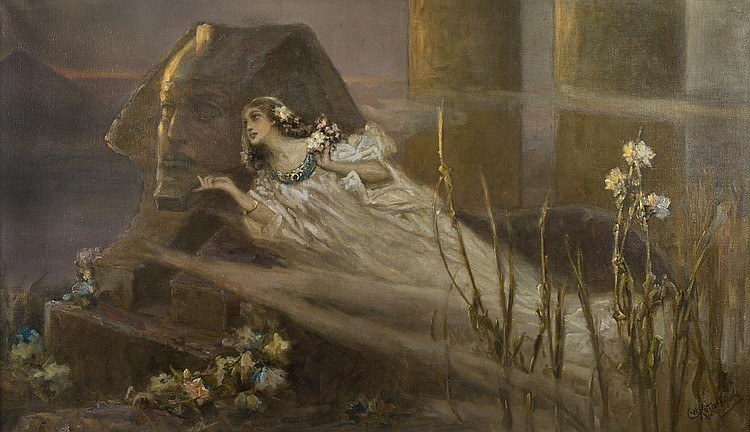
Lot 55. WILHELM [VASILY] ALEXANDROVICH KOTARBINSKY (POLISH-RUSSIAN 1849-1921). The Nile Mist, oil on canvas; 80 x 136 cm (31 1/2 x 53 1/2 in.), signed lower right

PROVENANCE: MacDougall’s Auctions, London, June 5, 2013, lot 129

LOT NOTES: Focusing on fantastical, biblical and otherwise ancient-inspired subjects, Wilhelm Kotarbinsky’s work exists at the nexus of academism, Art Nouveau, and Symbolism. The aestheticism, and at times sentimentalized exoticism of Kotarbinsky’s paintings has been attributed to such widely different origins as his Polish heritage, and the artist’s extended stay in Rome during the early part of his career.

Kotarbinsky had a rather difficult climb to prominence, with abject poverty being one of the few constants during the early years of his training. Lacking the support of his father, Kotarbinsky was obliged to borrow money from his uncle in order to fund his study in Italy in 1871, where he would remain for the next 16 years. While there, he met the artist brothers Pavel and Alexander Svedomsky, who along with Professor Adrian Prakhov invited Kotarbinsky to participate in the painting of fresco decoration for the St. Vladimir Cathedral in Kiev, alongside such luminaries of Russian art as V. Vasnetsov, M. Vrubel, and M. Nesterov. The project greatly contributed to Kotarbinsky rise to prominence, and brought him into contact with the upper echelons of the Kievan society, resulting in commissions for the decoration of homes belonging to various illustrious families, such as Tereshchenko, Khanenko, and Soldatenkov.

Despite his inclination towards large-scale canvases, Kotarbinsky was an incredibly prolific artist – showcasing over 100 works in a variety of media at the 1898 Imperial Academy of Art exhibition, where he was elected as an academic in 1905. As his works were in high-demand, following the established procedure of the time, Kotarbinsky would sometimes repeat particularly successful compositions, often with slight adjustments. The Nile Mist, appears to have been one such work, as postcards featuring this particular painting, as well as a close variant, were printed in the early years of the 20th century.

LITERATURE:
This painting was featured on a postcard, reproduced here, published by Rassvet, Kiev, c. 1905-1917. Another version of this work was depicted on a postcard published by G. Lazovsky, Kiev, before 1905.

EXPERTISE
The authenticity of the work has been confirmed by the expert Vladimir Petrov.

Starting bid $55,000. Estimated Price: $70,000 – $90,000. Shapiro. 2/28/15.