Leopold Gottlieb (1883 – 1934) ?

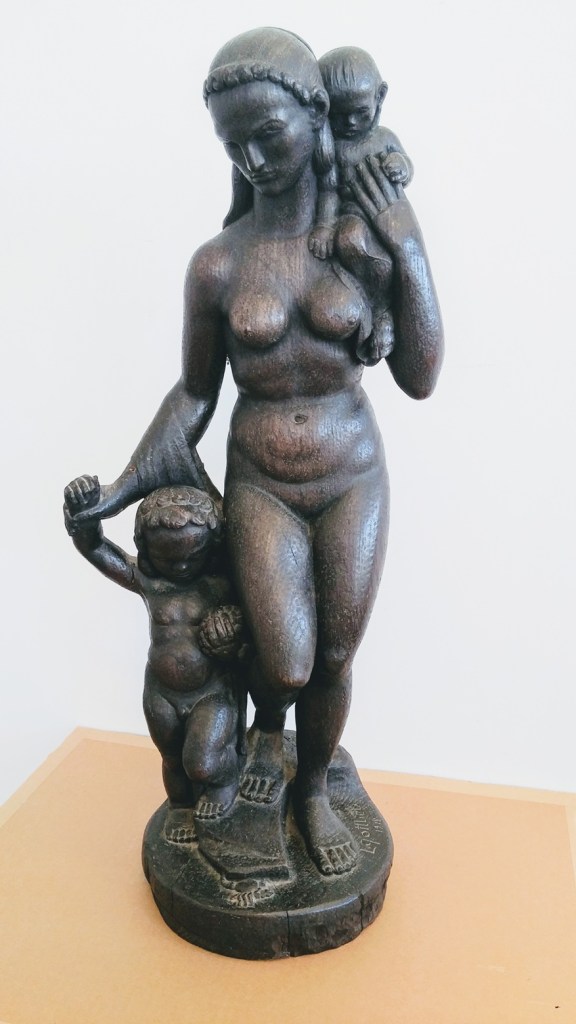
Leopold Gottlieb. Motherhood, 1918

Lot 192. Leopold GOTTLIEB (1879-1933). Motherhood(1918). Sculpture, wood. Original artwork (unique). Certificate issued by gallery. Signature base. Size of the artwork 72 x 40 cm (28.35 x 15.75 in) . Condition: very good, considering its time. Artwork description: Extremely rare unique work, signed and dated. Private collection in Tel Aviv. In 1904, at the age of 21 he settled in Paris and became a member of the Circle of Montparnasse artists. Following his return to Paris. In the years 1917-1919, he took part in exhibition of Polish Expressionists (Formists) and became friends with another Polish artist, Moses Kisling, Eugene Zak and Mela Muter. His works were displayed in the Salon of Autumn, Independents, Société Nationale des Beaux Artes, and the Tuileries. He participated in exhibitions in the Vienna Secession. He also participated in the exhibition of Polish art, organized in 1912, at Galeries Dalmau in Barcelona.

Gottlieb is kwon for his paintings and drawings, very little is known on his sculpture abilities

” is a very interesting work of art, considering its rarity in comparison to the Gottlieb’ s oeuvre, and its complex symbolism. ” (A. M. from the National Museum in Krakow, 23.5.2017). Starting price $24,000. Art for All. 01/20/25. NOT SOLD
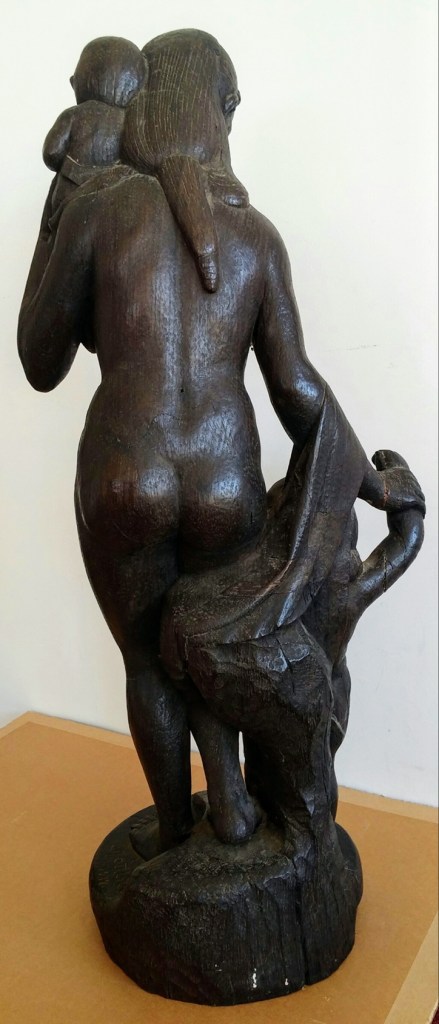
Leopold Gottlieb. Motherhood, 1918

Ta rzeźba Leopolda Gottlieba jest bardzo zaskakującym odkryciem na rynku. Chyba ani żadne z polskich muzeów nie posiada w swoich zbiorach rzeźby w wykonaniu tego artysty. Co ciekawsze, Słownik Artystów Polskich nie wspomina o rzeźbiarskiej jego działalności. Rzeźba Macierzyństwo znajduje sie w Izraelu i ciekawe będzie prześledzić jej proweniencję. Nowy Rok dopiero co się zaczął a tu takie niespodziewane i duże odkrycie, nieznanego rodziału twórczości Leopolda Gottlieba.
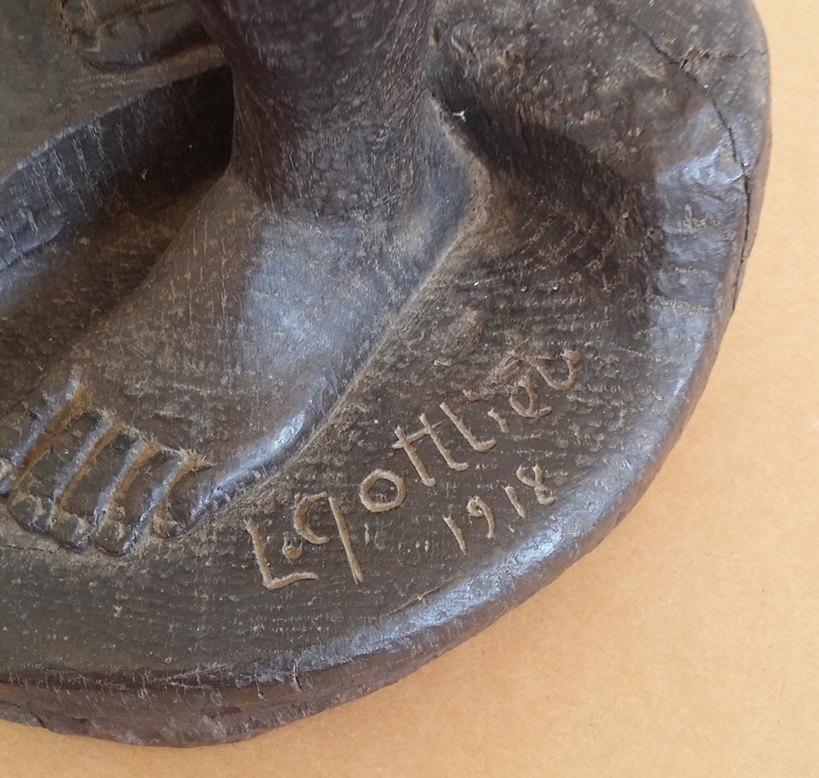
Sygnatura

Zdrowia WSZYSTKIM CZYTELNIKOM I OBSERWATOROM ORAZ TWÓRCY P.A.C. ŻYCZĘ!

(…). Ad vocem sygnatury rzeźby przypisywanej L.Gottleba ma bardzo wyraźne białe wytłoczenie-świeży podpis? Niemniej przypomina sygnaturę L.Gottleba

Motherhood (1918)

Skonsultowałem właśnie ww. kwestię z wybitnym ekspertem twórczości Leopolda Gottleba aktualnym kuratorem poznańskiej Anno domini 2025 r. wystawy “- École de Paris – Artyści Polsko-Żydowscy”  w Muzeum Archidiecezjalne – Galeria Sztuki Współczesnej, Akademia Lubrańskiego, oraz autorem opracowania dot. twórczości Leopolda Gottlieb (w tłum. z niemieckiego Boże drogi?) “Wizerunki człowieczeństwa, rytuały powszedniości” oraz szalenie ciekawego artykułu porównującego  “Portret podwójny z czasów młodości. Leopold Gottlieb i Xawery Dunikowski (rzeźbiarza!!)”  

“Nie ma żadnego znanego mi powodu oraz dowodu na to, by Leopold Gottlieb kiedykolwiek zajmował się rzeźbą”. Niech więc wniosek co do atrybucji rzeźby każdy zainteresowany wysnuje sam. Pozdrawiam! Gdy wszystko nic warte, Eiva l’arte! Adartem

Dom aukcyjny z Izraela cytuje opinię osoby o inicjałach A. M. z Muzeum Narodowego w Krakowie. Jeśli ta opinia jest prawdziwa to można pewnie dowiedzieć się kim jest (była) ta osoba i jaką wiedzą kierowała się. Może jednak tak być, że to wszystko jest rzeczywiście oszukaństwem, jak mocno powyżej sugeruje Adartem, i rzeźbiarkiej karty u Leopolda Gottlieba nigdy nie było, nawet gdyby chciałoby się taką nieznaną kartę odkryć.

Dotarło teraz do mnie właśnie ze przecież Pan pisał o tej samej rzeźbie (…) w 2022 r. ! http://www.montefiore.co.il/Artists/364/Leopold_Gottlieb/238-22a. Czy ona wtedy poszła za 40.000 $? Proszę wrzucić na stronę wykadrowaną samą głowę załączam. BARDZO w duchu boticielowskich głów i szyji Egeniusza Zaka. Chat GTP wskazał podobieństwo do twórczości Xawerego Dunikowskiego oraz Stanisława Jagmina.
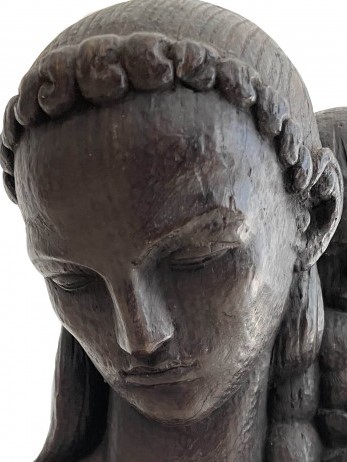
Rzeczywiście rzeźba ta pojawiła się trzy lata temu na aukcji z Montefiore (Izrael) i nie została wtedy sprzedana (wycena $30,000 – 40,000). Nie wzbudziła ona wówczas żadnego zainteresowania czytelników na forum. Dom aukcyjny Montefiore nie wspomniał z jakiś względów o krótkiej opinii z Muzeum Narodowego w Krakowie z 2017 roku, którą, jak sądzę, powinien wówczas znać. Usiłuję obecnie dociec, korzystając z uprzejmości innych osób, czy to zdanie (opinia) z MNK nie zostało wyrwane z innego konekstu. Mam nadzieję, że ciąg dalszy wkrótce nastąpi.


Być może powstało tu i tam trochę szumu medialnego na temat tej rzeźby bo dom aukcyjny Art for All dodał właśnie następujący akapit na końcu opisu, który podaję poniżej w oryginalnej ich pisowni. Cena wyjściowa ($24,000) nie została zmieniona.

“will be sold as attributed to the artist, but we are sure that the fact that there are no other exampels of sculptuers by Gottlieb, does not aliminate the fact that in his early work the artist has tried also to make a sculpture, this make our item to be a very important work in Polish Art world. with a big quatation mark and an solved riddel.”


Art for All w swoim katalogu skopiował właśnie z mojego blogu całą wypowiedź czytelnika Adartem, po cygańsku oczywiście nie podając źródła, czyli Polish Art Corner. Cytuję:

“Skonsultowałem właśnie ww. kwestię z wybitnym ekspertem twórczości Leopolda Gottleba aktualnym kuratorem poznańskiej Anno domini 2025 r. wystawy “- École de Paris – Artyści Polsko-Żydowscy” w Muzeum Archidiecezjalne – Galeria Sztuki Współczesnej, Akademia Lubrańskiego, oraz autorem opracowania dot. twórczości Leopolda Gottlieb (w tłum. z niemieckiego Boże drogi?) “Wizerunki człowieczeństwa, rytuały powszedniości” oraz szalenie ciekawego artykułu porównującego “Portret podwójny z czasów młodości. Leopold Gottlieb i Xawery Dunikowski (rzeźbiarza!!)”

“Nie ma żadnego znanego mi powodu oraz dowodu na to, by Leopold Gottlieb kiedykolwiek zajmował się rzeźbą”. Niech więc wniosek co do atrybucji rzeźby każdy zainteresowany wysnuje sam. Pozdrawiam! Gdy wszystko nic warte, Eiva l’arte! Adartem

Dom aukcyjny z Izraela cytuje opinię osoby o inicjałach A. M. z Muzeum Narodowego w Krakowie. Jeśli ta opinia jest prawdziwa to można pewnie dowiedzieć się kim jest (była) ta osoba i jaką wiedzą kierowała się. Może jednak tak być, że to wszystko jest rzeczywiście oszukaństwem, jak mocno powyżej sugeruje Adartem, i rzeźbiarkiej karty u Leopolda Gottlieba nigdy nie było, nawet gdyby chciałoby się taką nieznaną kartę odkryć.

Dotarło teraz do mnie właśnie ze przecież Pan pisał o tej samej rzeźbie (…) w 2022 r. ! http://www.montefiore.co.il/Artists/364/Leopold_Gottlieb/238-22a. Czy ona wtedy poszła za 40.000 $? Proszę wrzucić na stronę wykadrowaną samą głowę załączam. BARDZO w duchu boticielowskich głów i szyji Egeniusza Zaka. Chat GTP wskazał podobieństwo do twórczości Xawerego Dunikowskiego oraz Stanisława Jagmina.”

Screen shot z katalogu

W sumie, potrzeba wypowiedzi z wymienionego Muzeum Narodowegow Krakowie by zakończyć tę sprawę. Sadly, tam jednak PAC nie jest chyba czytany.
Leopold Gottlieb (1883 – 1934)

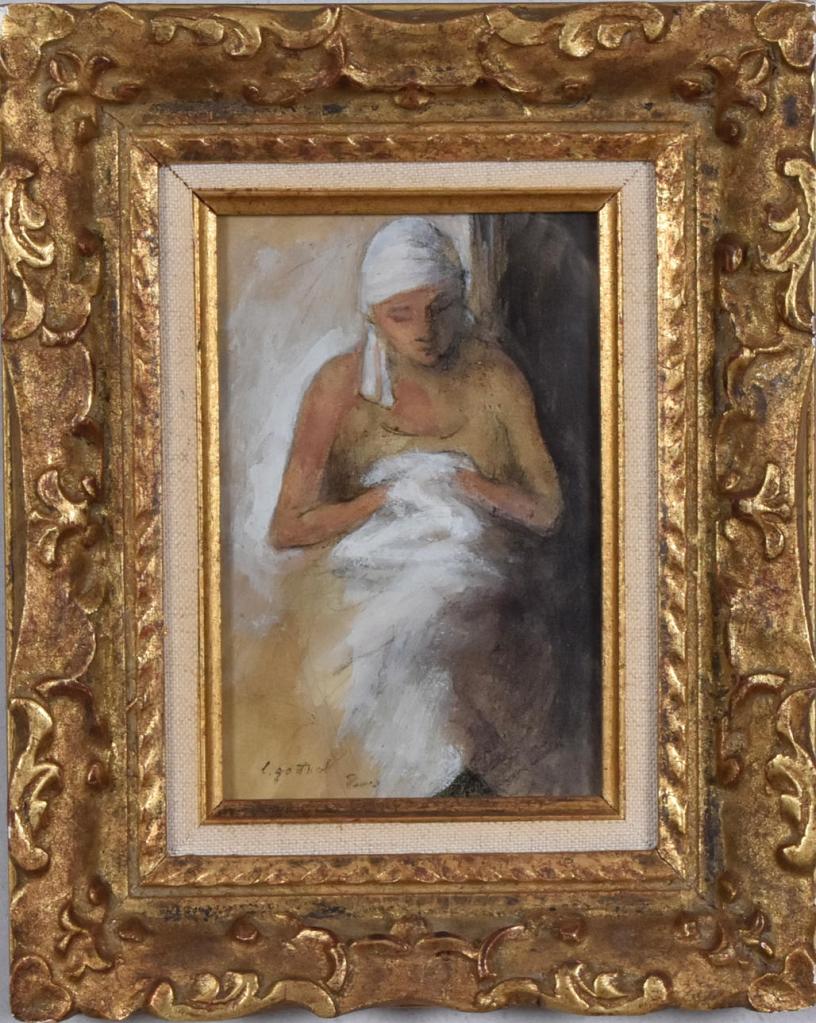
Leopold Gottlieb. Seated woman

Brakowało w opisie choćby wzmianki o pochodzeniu tego pastelu. Zaryzykować było warto.

Lot 3942842. LEOPOLD GOTTLIEB. Seated woman. Signed. 21 x 15 cm. Pastel. Estimate 609 euro. Halmstadts Auktionskammare. 12/22/24. Sold 522 euro

Leopold Gottlieb (1883 – 1934)

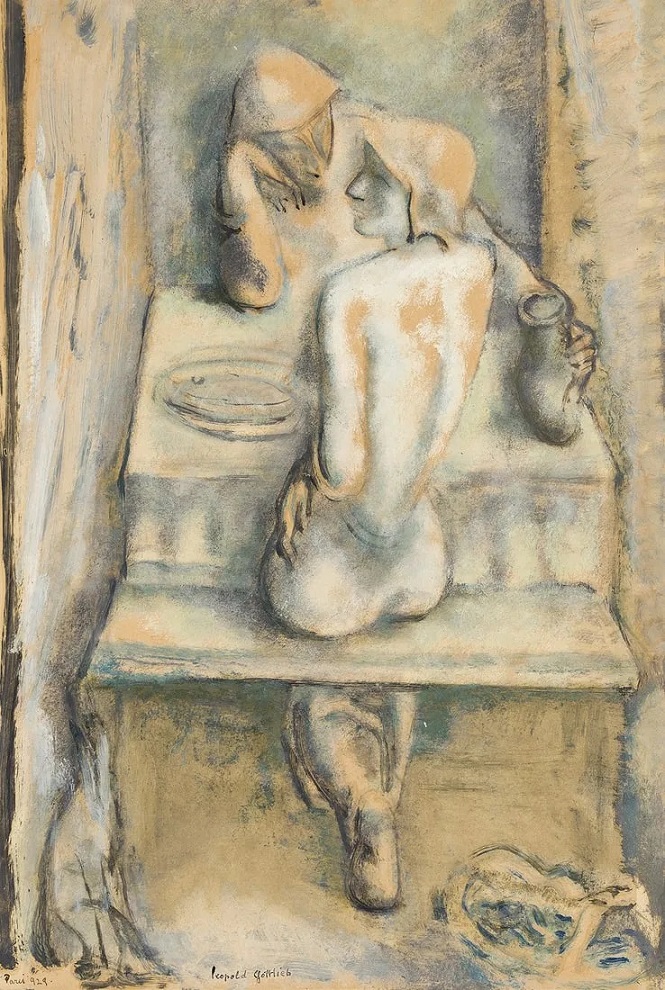
Na podstawie jednej i to nie najlepszej jakości fotografii trudno czasami przekonać się i nabrać pewności do pracy. Wiele osób nie miało zastrzeżeń bo choć poprzeczkę dom aukcyjny ustawił nisko na $2,600 to aukcję zakończono na $6,500.

Lot 297. LEOPOLD GOTTLIEB. Une table pour deux. Oil on board, 1929. 600 x 406 mm; 23⅝x16 inches. Signed, partially dated, and inscribed “Paris” in ink, lower edge recto. Estimate $5,000 – $8,000. Swann Auction Gallery. 03/14/24. Sold $6,500

Leopold Gottlieb (1883 – 1934)

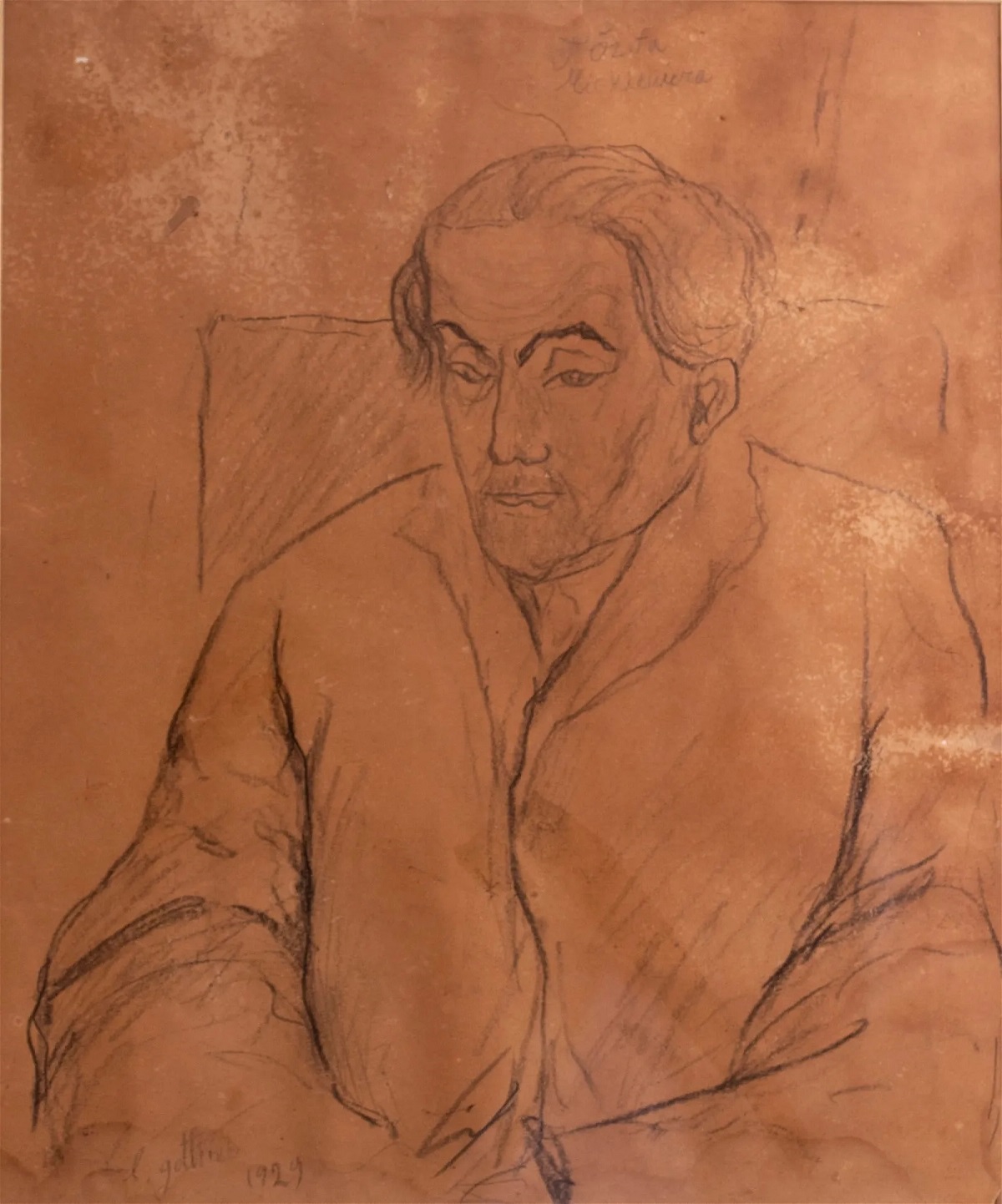
Leopold Gottlieb. Portrait of Jozefa Mickiewicz, 1929

Portret Józefa Mickiewicza, syna wieszcza, udzielającego się wsród polonii fancuskiej i często cytowanego również w polskiej prasie.

Lot 508. Leopold Gottlieb (1883-1934), Portrait of Jozefa Mickiewicz, 1929, pencil and ink on paper, 32.5X27 cm, signed and dated. Flaws. Estimate $100 – 150. Ishtar. 11/01/23. Sold $350

Leopold Gottlieb (1883 – 1934)

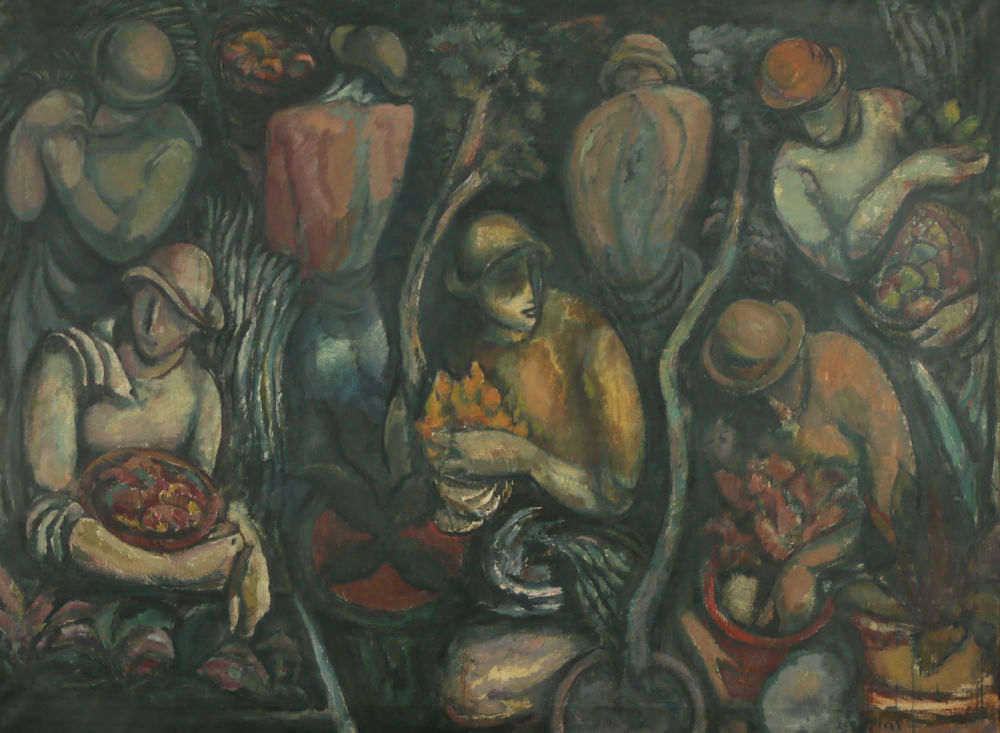
Leopold Gottlieb. Figures in the Garden

O ten obraz Leopolda Gottlieba toczyła się niezwykle zażarta walka. Licytacja rozpoczęła się od $40,000. W katalogu brakowało informacji o pochodzeniu tej pracy ale musiała być potężna. Obraz niewątpliwie muzealnej wartości.

Lot 98. Leopold Gottlieb 1883 – 1934. Figures in the Garden. Oil on canvas, 104×144 cm. Signed. Estimate $70,000 – 100,000. Tiroche. 09/10/23. Sold $170,000

Leopold Gottlieb (1883 – 1934)

Leopold Gottlieb. Soldiers of the Polish Legions, 1916

Dom aukcyjny zastrzegł, że obie odbitki (prints?) zostały wykonane ‘after’ Lepopold Gottlieb. Wydaje się, że oryginały były ręki Gottlieba, autora wielu podobnych prac z okresu legionowego. Chciałoby się, aby obie prace były oryginalnymi rysunkami ale trudno to ocenić na podstawie jedynie fotografii. Może kupujący zostanie mile zaskoczony.

Lot 335/ After Leopold GOTTLIEB (1879-1933). Soldiers of the Polish Legions. Two prints signed in the plate. 45 x 33 cm (1) 36 x 25;5 cm (2) Provenance: KUPFER Collection. Estimate 50 – 100 euro. Oger – Blanchet. 09/08/23. Sold 140 euro.

Leopold Gottlieb. Soldiers of the Polish Legions, 1916

Leopold Gottlieb (1883 – 1934)

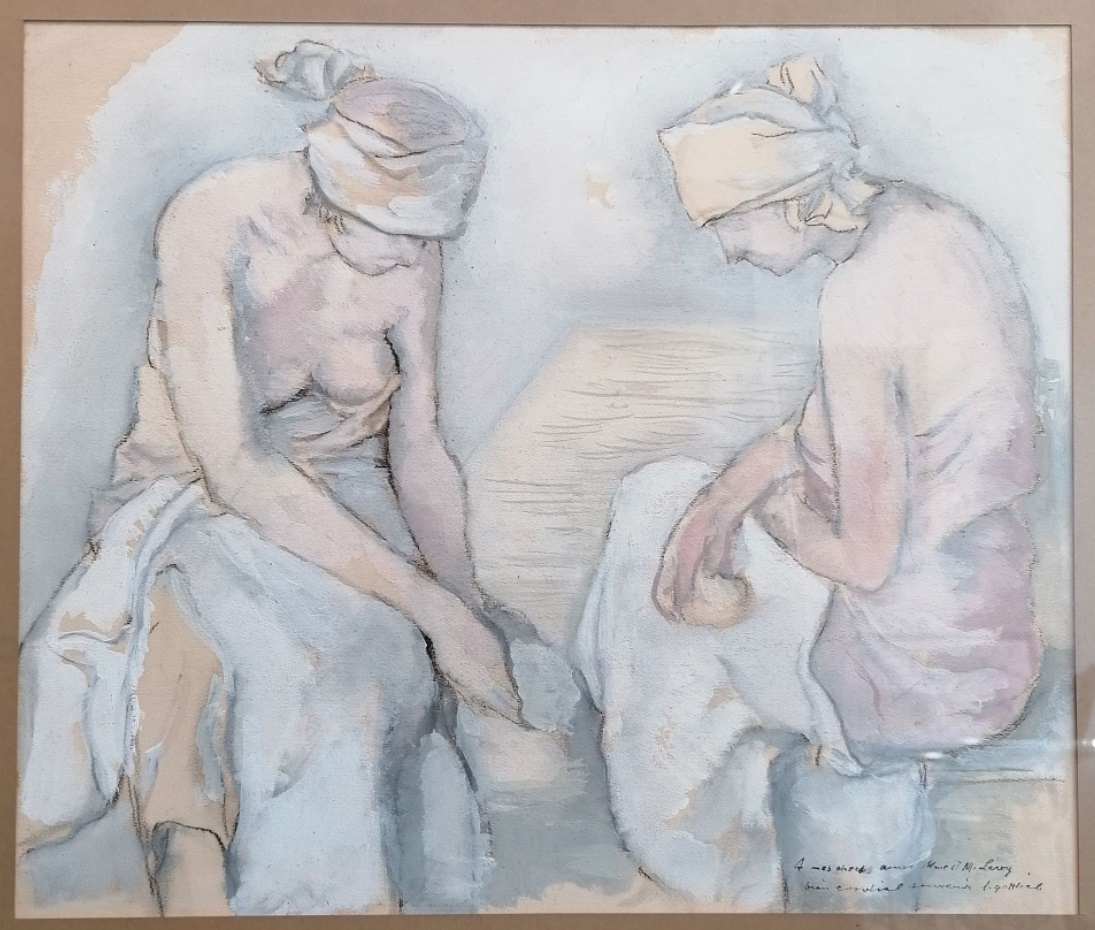
Leopold Gottlieb. Femmes à la toilette

5,000 euro za niedużą lecz bardzo dobrą akwarelę Leopolda Gottlieba. Oprócz sygnatury jest też dedykacja autorska dla przyjeciela.

Lot 131. Leopold GOTTLIEB (1879-1933). Femmes à la toilette. Gouache et crayon sur papier. Signé en bas à droite et dédicacé “A mes chers amis Mme et M. Lévy, bien cordial souvenir”. Dim. : 40 x 34,5 cm (à vue). Estimate 1,000 – 2,000 euro. Auctie’s. 06/21/23. Sold 5,000 euro

Leopold Gottlieb (1883 – 1934)

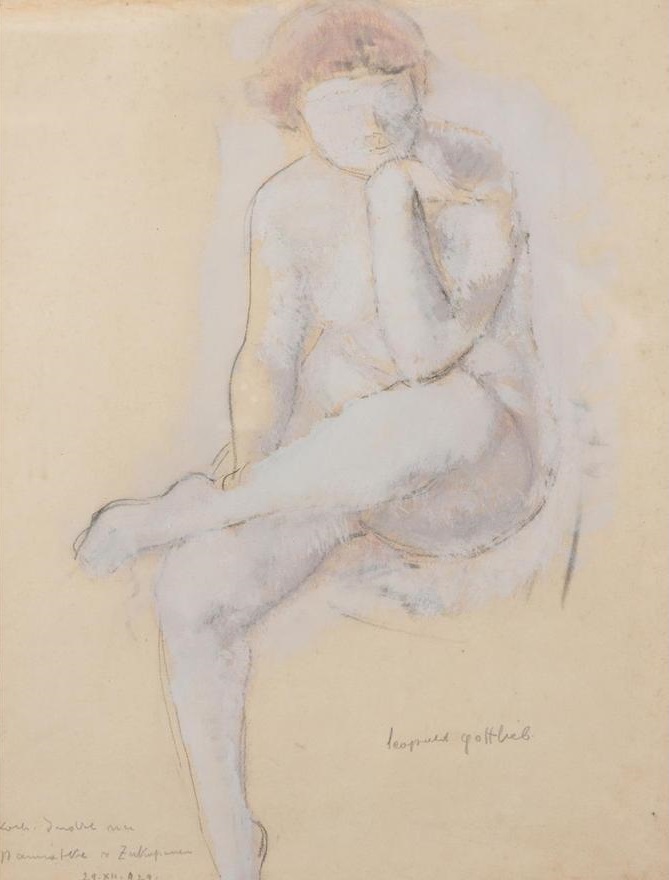
Leopold Gottlieb. Seated Nude Study, 1929

Cene wyjściowa została obniżona z $3,000 do $2,000 lecz chętnych nie było. Stąd się wzięła taka ‘warszawska’ wycena w Atlancie, GA?

Lot 375. Leopold Gottlieb (Polish /French 1883-1934). “Seated Nude Study,” graphite and mixed media on paper depicting a seated nude female figure with short hair, pencil signed to lower right, inscribed “29.XII.929″, possibly for 12/29/1929, at lower left, framed.  Approximate dimensions: paper h.18.125″, w. 14.375″; frame h. 23.75, w. 19.625″, d..75”. Provenance: From the Private Collection of Jillian Diamond, Atlanta, Georgia; by descent. Estimate $6,000 – 12,000. Ahlers & Ogletree. 06/16/23. Not sold

Leopold Gottlieb (1883 – 1934)

Leopold Gottlieb. Portrait of the painter’s wife, Aurelia Polturak, 1912

Portret żony Lepolda Gottlieba ze znakomitą proweniencją wzbudził spore zainteresowanie licytujących. Być może został kupiony przez któreś z muzeów. Jak wynika z opisu, prtretowana została zamordowana przez Niemców w Oświęcimiu.

Lot 15. Léopold GOTTLIEB (Drohobycz 1879 – Paris 1934). Portrait of the painter’s wife, Aurelia Polturak. Made in 1912. Oil on canvas 111 x 89 cm. Signed lower right “Leopold Gottlieb. Localized and dated upper left “Lwow 1912 Exhibition: Wystawa Sztuki Wspόłczesnej [Contemporary Art Exhibition], Society of Friends of Fine Arts, Lwow (Lviv) 1913. Bibliography: Wystawa Sztuki Wspόłczesnej [Exhibition of Contemporary Art], Society of Friends of Fine Arts, Lwow (Lviv) 1913, reproduced in black and white Artur Tanikowski, Wizerunki człowieczeństwa, rytuały codzienności. Leopold Gottlieb i jego dzieło, Kraków, Universitas 2011, reproduced p. 34. Estimate 12,000 – 15,000 euro. Millon. 05/31/23. Sold 24,000 euro.

Born in Drohobycz in 1879 (now Ukraine) to a Polish Jewish family, Leopold Gottlieb, a painter, draughtsman, and printmaker, was the younger brother of the famous painter Maurycy. He studied at the Academy of Fine Arts in Krakow in the years 1896-1902 under the direction of Jacek Malczewski and Teodor Axentowicz, among others. He already made portraits in pastel and watercolor on commission. In 1903, he continued his studies in Munich with Anton Ažbé. In 1904, he travels to Paris. On his return to Krakow, he frequented the circle of young Jewish artists and intellectuals formed around the painter Samuel Hirszenberg, Leon’s older brother (portrayed by Gottlieb in Paris, cf. lot no. 30). In 1905, Gottlieb initiated the formation of the Group of Five. From Krakow, he went to Lwow (Lviv) and Vienna, where he was a member of the Hagenbund. In 1906 he traveled to Jerusalem where he held the chair of painting at the Bezalel School of Arts and Crafts. In 1908, he was again in Paris, where he rubbed shoulders with Polish artists and intellectuals, including Mela Muter, Moses Kisling, Simon Mondzain, Elie Nadelman and Adolf Basler. During the First World War, he joined Pilsudski’s Polish legions. He left Poland again in the early 1920s, living first in Germany and then, from 1926, in Paris. In 1929, he became a member of the artistic group Rytm [Rhythm]. In France, he regularly exhibited his work in Parisian salons, notably the Salon d’Automne, the Salon des Indépendants, the Société Nationale des Beaux-Arts, the Tuileries, as well as in galleries in the capital. He participated in exhibitions of Polish art, notably in Barcelona, Vienna and Paris. Author of symbolic, biblical and genre scenes, he is especially appreciated as a portraitist. His portraits of men, painted with large flat tints of sustained colors, sometimes dark, are synthetic and powerful. The female models are represented in light and pleasant colors.

In 1912 in Lwow (Lviv), he painted the portrait of his wife, born Aurelia Polturak. It represents the graceful silhouette of a young woman with a benevolent smile. The range of soft pastel colors plays on the complementarity of different shades of blue and yellow, supported by a large patch of colored white of the model’s dress. The only dark spot in the painting is the young woman’s hair, which draws the viewer’s gaze to her head and thus symbolically underlines her intelligence. Indeed, born in 1892 in Lwow (Lviv), Aurelia Gottlieb was known as an art and literary critic. Among other things, she wrote a scholarly analysis of the art of Marc Chagall (1931), from a Zionist point of view. Her contemporaries emphasized her kindness, but also her willingness to act and the need to express her opinions in favor of the Zionist idea, to which she was strongly devoted. Her husband, on whom she would have had a great influence, also on the artistic level, had a deep respect for her. After the death of Leopold Gottlieb, she devoted herself to social work. During the Occupation, she took refuge in Lyon and became the secretary of Marc Jarblum, leader of the Zionist Organization of France and the Federation of Jewish Societies of France. Despite the risks, she continued to work underground to help Jewish families and was arrested by the Gestapo during the 1943 roundup in rue Sainte-Catherine in Lyon. She died in Auschwitz. Dr. Ewa Bobrowska – CEBM SAS (Cabinet d’expertises Bobrowska-Mielniczuk)

Leopold Gottlieb (1883 – 1934)

Leopold Gottlieb. Portrait of Leon Hirszenberg

Dość ważny obraz Leopolda Gottlieba z początków XX wieku przedstawiający malarza Leona Hirszenberga. Ciekawe jest w jaki sposób obraz ten trafił z bardzo znanej Ben Uri Collection na rynek (https://www.benuricollection.org.uk/). W tej kolekcji znajduje się obecnie tylko jeden obraz namalowany przez Leopolda Gottlieba. Zdumiewające dla mnie jest wyzbycie się tego obrazu lub może był jedynie w depozycie od 1930 roku(?). Może proweniencja tej pracy nie została dokładnie opisana. Należałoby zapytać p. Mielniczuka, eksperta tej aukcji.

Lot 30. Leopold GOTTLIEB (Ukraine 1883 – France 1934). Portrait of Leon Hirszenberg. Circa 1904-1907. Oil on canvas, 74,5 x 62 cm. Signed upper right “L. Gottlieb
Provenance:
Leopold Pilichowski Collection
Ben Uri Collection, 1930
Exhibition:
1930, Mansell Street Gallery Opening: Catalogue and Survey of Activities, Jewish Art and Literary Society Ben-Uri
1934, Exhibition of Paintings and Sculpture by Jewish Artists, Ben Uri Jewish Art Gallery
1935, Israel Zangwill Memorial Exhibition, Ben Uri Jewish Art Gallery
1944, Opening Exhibition, Ben Uri Art Gallery
1945, Exhibition of Paintings by A. A. Wolmark (Konstam Collection), Dobrinsky Paris, and a selection of work from the Ben Uri Collection, Ben Uri Art Gallery
1946, Ben Uri Collection of Paintings, Sculpture and Drawings, Ben Uri Art Gallery
2009, Homeless & Hidden 1: World Class Collection Homeless & Hidden, Ben Uri Gallery
2016/17, Bracia Hirszenbergowie. W poszukiwaniu ziemi obiecanej/Hirszenberg Brothers. In search of the Promised Land, Museum of the City of Lodz, Lodz; Emanuel Ringelblum Jewish Historical Institute, Warsaw

Bibliography:
Walter Schwabe and Julia Weiner, eds, Jewish Artists: The Ben Uri Collection – Paintings, Drawings, Prints and Sculpture (London: Ben Uri Art Society in association with Lund Humphries Publishers Ltd, 1994), reproduced p. 48
Bracia Hirszenbergowie. W poszukiwaniu ziemi obiecanej/Hirszenberg Brothers. In search of the Promised Land (Lodz, Warsaw: Muzeum miasta Lodzi and Emanuel Ringelblum Jewish Historical Institute, 2017), p. 93
The Ben Uri Gallery and Museum in London holds one of the most important collections of works by immigrant artists of the late 19th, 20th, and 21st centuries in the United Kingdom and the international museum sector.
Emerging from and representing the Jewish community, the Ben Uri Gallery and Museum’s collection primarily reflects the work, lives and contributions of British and European artists of Jewish origin, interpreted within the broader context of 20th and 21st century art history, politics and society.
The funds raised will be reinvested to finance new acquisitions and to strengthen the museum’s research unit.

Various subjects are represented in the work of Leopold Gottlieb (1879 Drohobycz – 1934 Paris). There are figurative scenes, religious scenes and landscapes. But it is in the portrait that the artist excels. After studying art at the Academy of Fine Arts in Krakow and in Munich, Gottlieb went to Paris for the first time in 1904. He returned in 1908 and remained there for many years. It was during this period that he painted powerful effigies of prominent figures in the artistic and intellectual life of the French capital: the writer André Gide, the poet André Salmon and the sculptor Rembrandt Bugatti. The painter was also involved in the life of the Polish artist colony in Paris. Befriended by many of them, he often painted their portraits, such as the sculptor Xawery Dunikowski or the painter Mieczysław Jakimowicz. The striking portrait of another of his compatriots, the painter Leon Hirszenberg, which we present here was painted around 1904. We do not know exactly how Leon and Leopold met, but their Jewish background certainly brought them together. They were part of a larger circle that included the sculptor Elie Nadelman and the painter Mela Muter. Their works also met in the columns of the Polish art magazine “Sztuka” [Art] published in Paris by Antoni Potocki. In issues 8-9 of this magazine, a reproduction of Hirszenberg’s painting (From Brittany) is displayed alongside portraits painted by Gottlieb.

Léon (Lajbuś) Hirszenberg (Herszenberg) born in 1869 in Łódź and died in 1945 in Paris, came, like Gottlieb, from a family of artists. He was the younger brother of Samuel, also a painter, dedicated to themes related to the Jewish diaspora, and elder to Henryk (Izrael Hersz), an architect. Leon’s life is still a secret. He studied painting either with his brother Samuel or in Munich around 1890. He was present in Paris from 1902. His work testifies to his attachment to Brittany, where he made several trips, notably to Concarneau and probably lived in Perros Guirec. He exhibited at art shows in the capital as well as in Poland. Having become blind at the end of the 1920s, he was no longer active as an artist.
Léon made his debut in Paris at the Salon de la Société Nationale des Beaux-Arts in 1904 and was noticed by French and Polish critics. His portrait by a renowned Polish painter, Olga Boznańska, was presented at the same salon and met with a lively

Estimate 50,000 -60,000 euro. Millon. 11/29/22. Sold 44,000 euro